Our readers keep the lights on and my smoothie glass nicely filled. As an Amazon Associate, I earn from qualifying purchases.
Choosing the right aquarium sand is a balancing act between grain size, biological compatibility, and aesthetic vision — use sand that is too coarse and waste settles deep; use sand that is too fine and cloudiness becomes a weekly battle. The wrong substrate can trap harmful gases, stress bottom-dwelling fish, or struggle to anchor live plant roots.
I’m Mohammad Maruf — the founder and writer behind WellFizz. I’ve spent years analyzing substrate formulations, customer feedback trends, and biological filtration mechanics across hundreds of freshwater tank setups to understand what separates a resilient sand layer from a problematic one.
This guide breaks down five top contenders by real-world performance, grain consistency, and rinsing behavior so you can confidently choose the best aquarium sand for your specific tank goals.
How To Choose The Best Aquarium Sand
The right sand for your tank rests on three interconnected factors: grain geometry, biological safety, and visual purpose. Here is how to weigh them for your specific setup.
Grain Size & Texture
Grains between 0.3 mm and 1.5 mm strike the best balance — fine enough for corydoras and shrimp to sift without injury, yet heavy enough to resist suspension during water changes. Powdery sands below 0.2 mm require relentless rinsing and can cloud a tank for days despite filtering.
Rinsing Behavior
Every bag of aquarium sand carries residual dust from the manufacturing and bagging process. A sand that rinses clear after two or three bucket washes saves hours of frustration. Watch for reviews that mention “cloudy water for days” — that sand forces you to run extra mechanical filtration or wait for gravity to settle particles.
Biological Compatibility
Sand serves as the primary home for nitrifying bacteria that break down fish waste. Inert sands do not alter pH or hardness, making them safe for most freshwater fish. If you keep goldfish or cichlids that dig, choose a heavier grain that will not get sucked into the filter intake during their excavation.
Quick Comparison
On smaller screens, swipe sideways to see the full table.
| Model | Category | Best For | Key Spec | Amazon |
|---|---|---|---|---|
| Aqua Natural Galaxy Sand | Premium | Aquascaping drama & cory-safe beds | 20 lb bag, sparkle finish | Amazon |
| Seachem Fluorite Black Sand | Mid-Range | Planted tanks & shrimp colonies | 7.7 lb, 0.1–0.3mm grain | Amazon |
| Imagitarium Black Sand | Premium | Large tanks & high-contrast displays | 20 lb bag, matte finish | Amazon |
| LANDEN Namale Sand | Mid-Range | Natural biotope & riverbed scapes | 2L bag, 0.3–0.5mm grain | Amazon |
| Estes Aqua Sand | Entry-Level | Goldfish tanks & first-time sand users | 5 lb bag, larger grain | Amazon |
In‑Depth Reviews
1. Aqua Natural Galaxy Sand

The Aqua Natural Galaxy Sand delivers a deep black base with shimmering mineral flecks that catch light at every angle — a visual effect that transforms any planted or hardscape layout into a dramatic aquascape. Its grain size falls in the sweet spot: fine enough for corydoras and shrimp to sift naturally, yet heavy enough that the sparkle particles do not float into the water column during routine maintenance.
Customers consistently report that this sand rinses clean after just two bucket washes, with the water running clear far faster than most black sands on the market. The 20-pound bag provides ample coverage for tanks up to 30 gallons at a standard 1.5-inch depth, and the weight of the grains prevents them from being sucked into filter intakes even during aggressive gravel-vac sessions.
Where this sand truly stands out is biological safety — multiple reviews confirm zero fish loss or shrimp stress after setup, and the inert composition keeps pH stable without leaching. The sparkle effect does fade slightly after several months as biofilm colonizes the surface, but a gentle stir restores the shimmer.
Why it’s great
- Minimal rinsing required — two washes and water runs clear
- Sparkle finish creates high-contrast aquascapes
- Soft enough for bottom-dwellers, heavy enough to stay put
Good to know
- 20 lb bag may not be enough for 40+ gallon tanks at 2-inch depth
- Sparkle effect diminishes as biofilm builds up
2. Seachem Fluorite Black Sand

Seachem Fluorite Black Sand operates in a class of its own: it is the finest sand in this comparison, with grains that look and feel almost like powdered clay. This extreme fineness makes it exceptional for densely planted aquariums where roots need to weave through substrate with zero resistance — valisineria, crypts, and stem plants anchor rapidly and send runners through the layer within weeks.
The trade-off for that rooting performance is rinsing effort. Multiple long-term users emphasize that this sand requires aggressive, repeated rinsing — five or six bucket cycles minimum — before the dust stops clouding the water. Even then, the initial setup often produces a haze that takes a high-quality filter 24 to 48 hours to polish clear. This is not a sand for impatient scapers.
Once settled, the color reads more gray-black than pure jet-black, but planted tank owners frequently prefer this tone because it creates a natural, soil-like backdrop that does not overwhelm bright green foliage. The sand is completely inert and safe for shrimp and dwarf fish, with zero reports of trapped gas pockets thanks to the dense packing of the ultra-fine particles.
Why it’s great
- Ultra-fine texture lets plant roots spread freely
- Inert composition — no pH or hardness shifts
- Gray-black tone complements green plants beautifully
Good to know
- Requires extensive rinsing — expect 5+ washes
- Initial cloudiness can take a full day to filter out
3. imagitarium by Petco Black Aquarium Sand
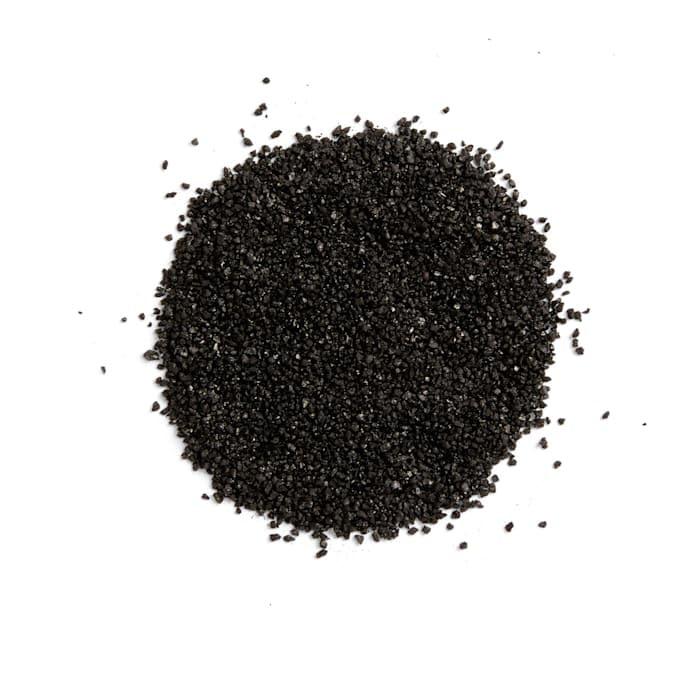
Imagitarium Black Sand offers a true matte black finish that makes fish colors — especially neon tetras, cherry barbs, and apistogramma — pop with striking contrast. The 20-pound bag gives generous coverage for tanks up to 40 gallons at a stable bed depth, and the grain falls between medium and fine, offering a smooth texture that bottom-dwellers can sift without abrasion.
Quality control emerges as the central theme in user experiences. The majority of bags arrive extremely clean — some owners report dumping the entire bag directly into the tank with zero rinsing and no cloudiness at all. However, a smaller subset of bags produce black water and persistent haze that requires a full week of rinsing before the sand behaves. This inconsistency means you may get a perfect bag on your first try or a problematic one, with no way to predict which.
The sand’s light weight creates a practical drawback during cleaning: floating particles and trapped air pockets resist sinking, and the fine grains get pulled into canister filters and gravel vacuums faster than heavier sands. Regular filter sponge maintenance becomes necessary to prevent clogging. Still, for the price per pound, this remains one of the most economical ways to achieve a high-contrast black-bottom tank.
Why it’s great
- Matte black finish creates vivid fish color contrast
- Many bags arrive extremely clean — no rinsing needed
- 20 lb bag offers excellent tank coverage for the cost
Good to know
- Quality inconsistency — some bags produce black water haze
- Light grains get pulled into filters and vacuums easily
4. LANDEN Namale Aquarium Sand

LANDEN Namale Sand breaks the pattern of black-and-white substrates with a warm tan-brown tone that mimics real riverbed environments. The 0.3 to 0.5 millimeter grain size places it firmly in the fine sand category, but its natural weight keeps it settled on the bottom rather than suspended — a crucial characteristic for blackwater biotope tanks and South American themed setups.
The sand arrives vacuum-sealed and tests show it requires modest rinsing: two to three bucket washes usually produce clear water. That said, the bag size is smaller than it looks — the 2-liter volume covers roughly one centimeter of depth in a 45P (45×27 cm) tank, so larger setups will need multiple bags. Users note a faint mineral smell upon opening that dissipates after rinsing and does not affect water chemistry.
Where this sand excels is visual authenticity. The organic hue does not look painted or dyed, and the grains maintain their color even after months of bacterial colonization. Planted tank owners appreciate that the natural tone hides mulm and waste better than stark white or black sands, reducing the pressure to vacuum the bed every week.
Why it’s great
- Natural tan-brown color looks like a genuine riverbed
- Moderate rinsing requirement — 2 to 3 washes
- Hides mulm and waste better than white or black sand
Good to know
- 2L bag is small — multiple bags needed for larger tanks
- Faint mineral smell upon opening that rinses away
5. Estes Aqua Sand

Goldfish dig constantly, and this sand’s heavier particles settle back into place quickly rather than floating into the water column.
The 5-pound bag is compact — smaller than many first-time buyers expect — but the sand itself rinses with minimal effort. Users report that a single soak followed by gentle stirring clears most of the dust within minutes, and the tank water settles crystal clear within hours after setup. The color is a soft white, not a blinding bright white, which looks natural under LED lighting.
That larger grain size means this sand is less suitable for planted tanks where fine root penetration matters, and the white surface shows algae and mulm more readily than darker substrates. However, for a beginner setting up a goldfish or cichlid tank who wants a forgiving, low-maintenance substrate that will not develop toxic gas pockets, this sand remains a reliable choice.
Why it’s great
- Larger grain prevents gas pocket formation
- Quick and easy rinsing — minimal cloudiness
- Proven track record for goldfish and cichlid tanks
Good to know
- 5 lb bag is small — multiple bags needed for deeper beds
- White surface shows algae and mulm faster than darker sands
FAQ
How do I rinse aquarium sand without losing grains down the drain?
Can I use any aquarium sand for live plants, or do I need special plant substrate?
Why does my black sand look gray after a few weeks in the tank?
Final Thoughts: The Verdict
For most users, the best aquarium sand winner is the Aqua Natural Galaxy Sand because it combines stunning visual shimmer, effortless rinsing, and the perfect grain size for both fish and plants. If you want an ultra-fine substrate that gives plant roots maximum freedom to spread, grab the Seachem Fluorite Black Sand. And for a budget-friendly entry into larger grain sand that avoids gas pockets and rinses clean in minutes, nothing beats the Estes Aqua Sand.

Mo Maruf
I created WellFizz to bridge the gap between vague wellness advice and actionable solutions. My mission is simple: to decode the research and give you practical tools you can actually use.
Beyond the data, I am a passionate traveler. I believe that stepping away from the screen to explore new environments is essential for mental clarity and physical vitality.