Our readers keep the lights on and my smoothie glass nicely filled. As an Amazon Associate, I earn from qualifying purchases.
Snoring isn’t just a nuisance; it’s often the audible warning of an airway struggling to stay open during sleep, and the journey to find a reliable mouth guard can feel like an endless loop of bulky trays and jaw pain. The sheer number of options—boil-and-bite, adjustable, slim-fit, dual-laminate—makes it nearly impossible to know which design actually holds your jaw in the correct forward position without triggering tooth soreness or TMJ issues the next morning.
I’m Mohammad Maruf — the founder and writer behind WellFizz. My research focuses on the engineering and medical standards behind anti-snoring mouth guards, specifically analyzing material science, FDA clearance protocols, jaw advancement geometry, and real-world durability from thousands of consumer reviews.
Whether you need a budget-friendly starter guard or a premium FDA-cleared device, this guide breaks down the designs that actually keep your airway open, comparing critical specs like jaw advancement range, material hardness, and adjustability to help you find the best apnea mouth guard for your specific anatomy and snoring severity.
How To Choose The Best Apnea Mouth Guard
Selecting the right mouth guard for sleep apnea isn’t about picking the most expensive model; it’s about matching the device’s mechanical design to your specific anatomy and snoring severity. The wrong guard can cause jaw misalignment, tooth migration, or simply fall out mid-sleep. Here are the three criteria that separate a successful fit from a failed one.
Jaw Advancement Range: The Key Metric
The entire purpose of an apnea mouth guard is to shift your lower jaw forward, opening the airway behind the tongue and soft palate. The critical spec is the range of this advancement, measured in millimeters. A guard offering only 2mm of movement is sufficient for mild positional snoring, while a device that provides up to 6mm or 10mm is better suited for moderate sleep apnea. Look for guards with at least two distinct settings so you can fine-tune the position without overshooting and causing jaw pain.
Fit Method: Boil-and-Bite vs. Pre-Molded
Boil-and-bite guards offer a semi-custom fit by softening the material in hot water and then biting down to mold it around your teeth. This method works well for standard dentition but requires careful execution—overheating or improper positioning can ruin the fit. Pre-molded guards, on the other hand, come ready to wear out of the box with no molding required, offering immediate consistency but potentially less retention for unusual bite patterns. Your choice depends on whether you prefer customization risk or immediate convenience.
Material and FDA Clearance
Medical-grade materials are non-negotiable for a device that sits in your mouth for 6-8 hours. BPA-free, latex-free polymers reduce the risk of allergic reactions and tissue abrasion. FDA clearance is a higher bar, indicating the device has passed specific safety tests for over-the-counter anti-snoring use. A guard with an FDA clearance number and a “BPA-free” label offers a baseline of safety that generic store-brand guards simply cannot guarantee.
Quick Comparison
On smaller screens, swipe sideways to see the full table.
| Model | Category | Best For | Key Spec | Amazon |
|---|---|---|---|---|
| ZQuiet Advance | Premium | Adjustable jaw positioning | 4 strap sizes up to +6mm | Amazon |
| SilentZPro 2.0 | Mid-Range | FDA-cleared comfort | 5 adjustment settings | Amazon |
| Dentemp SleepTight | Premium | Dual-laminate durability | Custom boil-and-bite fit | Amazon |
| ZQuiet Starter Pack | Premium | No-mold convenience | 2 sizes (2mm & 6mm) | Amazon |
| Somnos Adjustable | Mid-Range | Wide advancement range | 1-10mm jaw setting | Amazon |
| DreamEZ Nightguard | Budget | Grinding relief | Remoldable material | Amazon |
| BruxArmor Nightguard | Budget | Dental clenching | Microwave custom fit | Amazon |
In‑Depth Reviews
1. ZQuiet Advance

The ZQuiet Advance is the most thoughtfully engineered anti-snoring mouth guard in this lineup, solving the primary failure of competitors: incorrect hinge direction. While many adjustable guards pull the top plate backward when you attach the straps, the Advance uses a contactless front design that eliminates front-tooth pressure and keeps the lower jaw genuinely advanced forward. The four strap sizes (ranging from minimal to +6mm) allow you to dial in the exact protrusion needed without guesswork.
The boil-and-mold trays for both upper and lower teeth create a secure dual-arch retention that prevents the device from slipping during sleep. Early adopters report that the custom mold prevents the loose fit common with pre-sized guards. The slim, low-profile form factor also reduces bulkiness, making it far less intrusive than the thick Somnos or the bulky SilentZPro at a similar setting.
Long-term testers note that the molded inserts can detach from the tray after several months of use, though a dab of super glue resolves this. The adjustment period is about 2-3 days, with some early jaw soreness that resolves as the mandible adapts. For users who have tried three or four guards without success, the ZQuiet Advance’s precise strap system and correct biomechanics often deliver the breakthrough.
Why it’s great
- Four precise jaw advancement increments allow fine-tuning from 0mm to +6mm.
- Contactless front design eliminates painful front-tooth pressure common with other adjustable guards.
- Custom-mold trays for both arches provide superior retention compared to one-size-fits-all alternatives.
Good to know
- Molded inserts inside the trays can detach after prolonged use and may require adhesive to re-secure.
- The boil-and-mold process must be followed precisely; overheating can ruin the fit.
2. SilentZPro 2.0
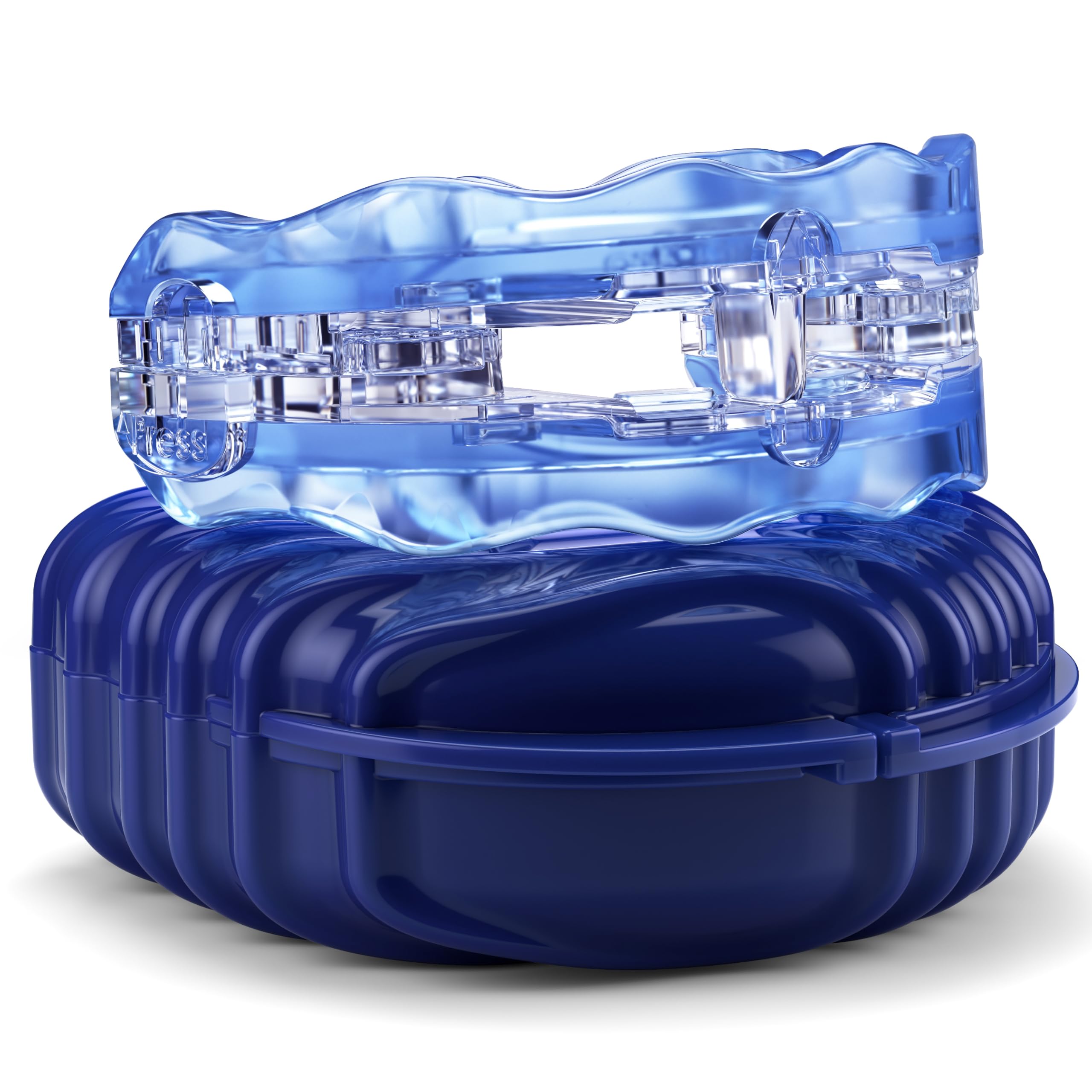
The SilentZPro 2.0 earns its spot as a top-tier mid-range option by pairing FDA clearance with a patented hinge design that permits lateral and vertical jaw movement. Most anti-snoring guards lock the jaw in a fixed forward position, which can cause muscle stiffness overnight. SilentZPro’s living-hinge approach allows your mandible to shift naturally, mimicking the micro-movements of normal sleep without popping the mouthpiece out or creating excessive pressure points.
The five adjustment settings are easy to click through, though the lower adjustment tab is small and can be difficult to manipulate for users with larger fingers. The medium size fits the average mouth well, but users with very narrow or wide arches may experience a loose fit. The material is BPA-free and the FDA clearance number is present, providing assurance for those concerned about chemical leaching or oral irritation over long-term use.
Customer feedback over a 6-month period shows consistent results: snoring reduction is high for mild-to-moderate cases, and the device stays in place for most users. The bulkiness of the frame is the most common complaint, with some users reporting that the edges feel sharp against the inside of the cheek. Trimming the edges with fine-grit sandpaper can resolve this, though a smoother edge finish from the factory would be ideal.
Why it’s great
- FDA-cleared and BPA-free construction meets medical safety standards for OTC use.
- Patented hinge permits lateral and vertical jaw movement for natural sleep mechanics.
- Five-step adjustment system allows incremental jaw positioning for personalized airway opening.
Good to know
- The frame can feel bulky, and some users need to sand down sharp edges for oral comfort.
- Lower adjustment tab is small and can be fiddly to operate.
3. Dentemp SleepTight
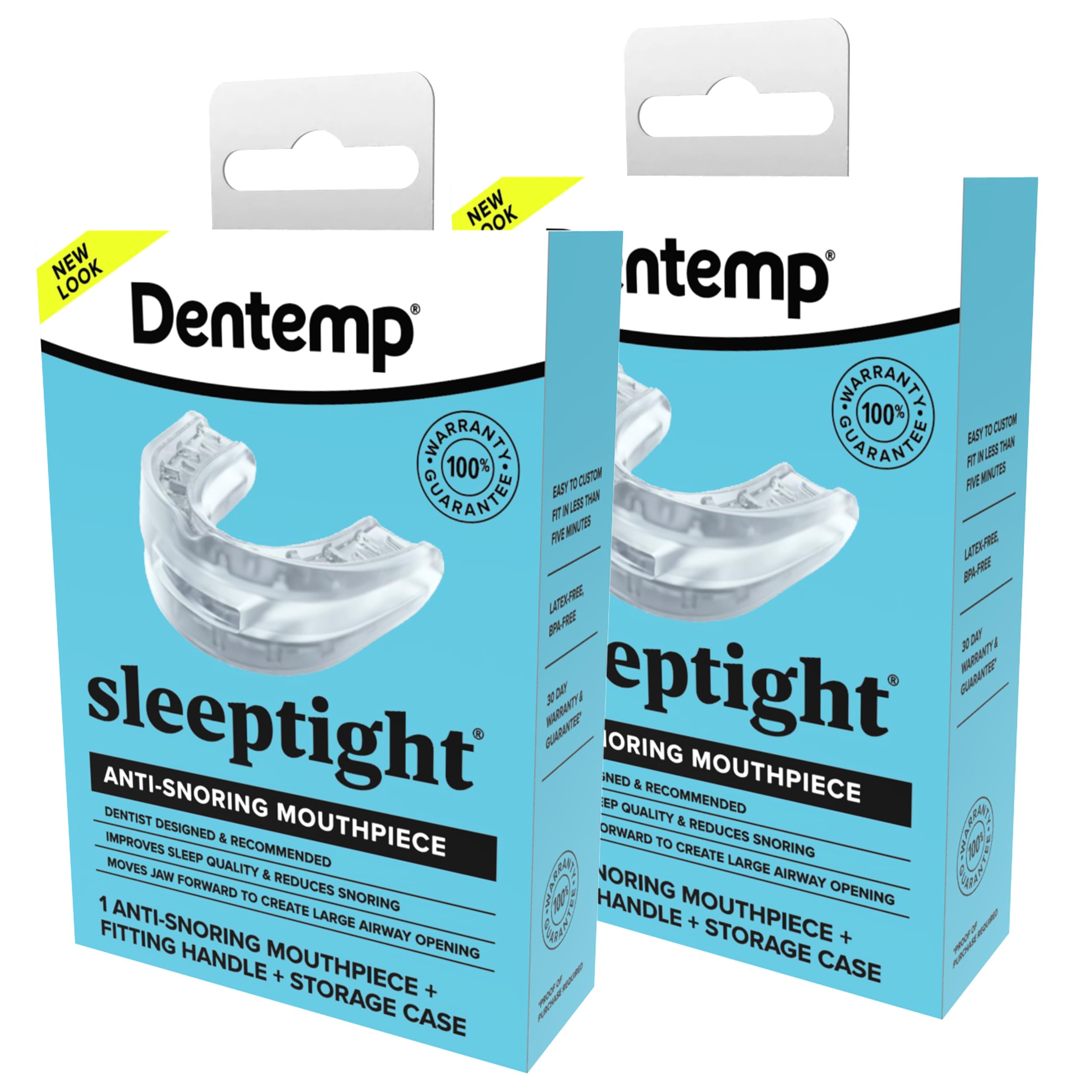
The Dentemp SleepTight distinguishes itself with a dual-laminate design—a soft inner layer that molds to the teeth for retention and a harder outer shell that prevents bite-through and maintains jaw positioning. This two-material construction is uncommon at this price tier, as most guards use a single-density polymer that can either be too soft (poor retention) or too hard (uncomfortable). The large front channel is specifically designed to allow natural oral breathing, a critical feature for sleep apnea patients who also suffer from nasal congestion.
While the boil-and-bite process is straightforward, the dual-laminate material requires precise timing—overheating can cause the layers to separate, making the guard unusable. Users who nail the mold report that the guard stays in place for the entire night, even during side-sleeping. The 2-pack design offers good value, providing a backup unit for travel.
The trade-off is that the sleepTight lacks the fine adjustability of the ZQuiet or SilentZPro models. It offers a fixed jaw position, meaning you cannot dial in a specific millimeter increment. For users whose snoring is positional rather than structural, this fixed design works beautifully; for those needing precise mandibular protrusion, the lack of adjustability may be a dealbreaker. Some users also report that the guard falls out after 3-4 hours, highlighting the importance of a perfect initial mold.
Why it’s great
- Dual-laminate construction blends soft inner molding with a rigid outer shell for durability and comfort.
- Large front opening permits natural breathing through the mouth for congestion-prone users.
- Comes in a 2-pack for backup or travel, with a 30-day satisfaction guarantee.
Good to know
- Fixed jaw position offers no millimeter-level adjustability for fine-tuning.
- Dual-layer material can delaminate if the boil-and-bite process is not executed precisely.
4. ZQuiet Starter Pack

The original ZQuiet Starter Pack remains a strong contender for users who want immediate relief without the hassle of boiling or molding. The package includes two mouthpieces—a Size 1 with a 2mm jaw advancement and a Size 2 with a 6mm advancement—allowing you to test which protrusion level works best. The living hinge technology keeps the front open, reducing the claustrophobic feeling that some users experience with full-coverage trays.
The medical-grade, BPA-free material is noticeably softer than the rigid plastics used in the Somnos or DreamEZ guards. This softness reduces initial jaw soreness but also leads to a shorter lifespan; the material wears down and loses retention after roughly 3-6 months of nightly use. The included 1.5oz dental appliance cleaner is a practical bonus for maintaining hygiene without using harsh toothpaste that can scratch the surface.
The lack of a custom mold means the fit relies entirely on the pre-formed shape. For users with a standard dental arch, this works perfectly and the guard stays put. For those with uneven teeth, a narrow palate, or a pronounced overbite, the pre-molded fit may feel loose, causing the guard to dislodge during sleep. The return policy also notes that opened packages cannot be returned, so it’s a calculated risk for those with non-standard dentition.
Why it’s great
- No molding required—ready to wear out of the box for immediate snoring relief.
- Two distinct sizes (2mm and 6mm advancement) let you test and choose the right protrusion.
- Soft, medical-grade material is comfortable and reduces initial jaw soreness compared to rigid guards.
Good to know
- Not returnable after opening, so fit is not guaranteed for non-standard dental arches.
- Soft material wears out faster than rigid boil-and-bite designs, typically lasting 3-6 months.
5. Somnos Adjustable
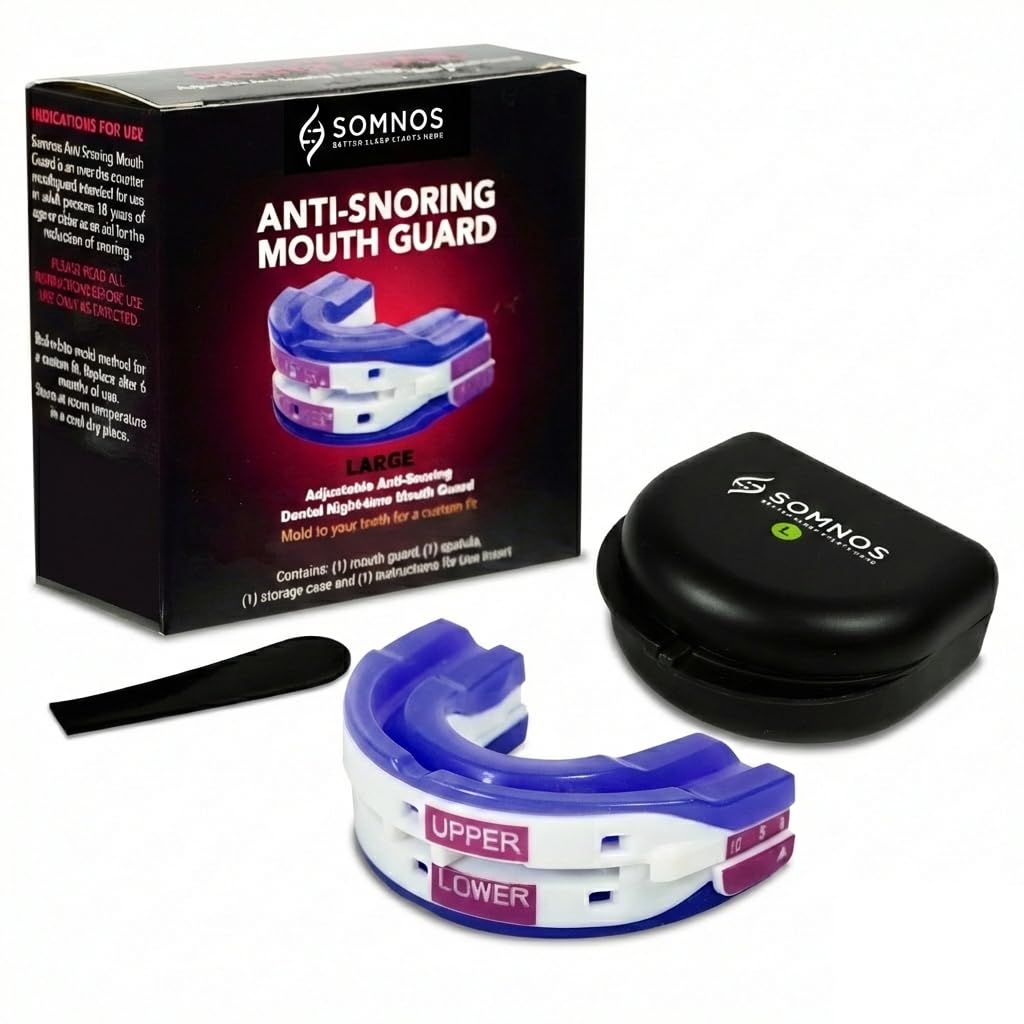
The Somnos Adjustable covers the widest jaw advancement range in this lineup—1mm to 10mm—making it the most versatile option for users with severe airway collapse who have not responded to shorter-throw guards. The two-piece design separates the upper and lower trays, linked by adjustable side arms, which allows independent positioning. This is beneficial for users with an uneven bite, as the left and right sides can be advanced asymmetrically if needed.
The boil-and-bite molding is straightforward, but the thick plastic construction creates a noticeable bulk in the mouth. Multiple reviews note that the material requires multiple reheating cycles to achieve a truly custom fit, and even then, some users report that the guard does not stay anchored on the lower teeth. The adjustment arms are also somewhat fragile; overtightening can cause the plastic to crack at the connection point.
For users who can achieve a solid mold, the Somnos delivers exceptional snoring reduction. Many users report that their partners notice a complete cessation of snoring from night one. However, the same thick plastic that provides durability also causes tissue abrasion in some users, and the material has been linked to a loss of taste and oral swelling in rare cases. This guard is best suited for users who need a wide adjustment range and are willing to invest time in perfecting the fit.
Why it’s great
- Offers the widest jaw advancement range (1-10mm) for severe snoring or mild sleep apnea.
- Two-piece design with independent side adjustment allows asymmetric positioning for uneven bites.
- One of the most affordable options for users who need a significant mandibular protrusion.
Good to know
- Thick plastic construction creates bulk that can cause tissue irritation or a gag reflex.
- Adjustment arms can crack if overtightened, and the material may require repeated remolding for proper fit.
6. DreamEZ Nightguard
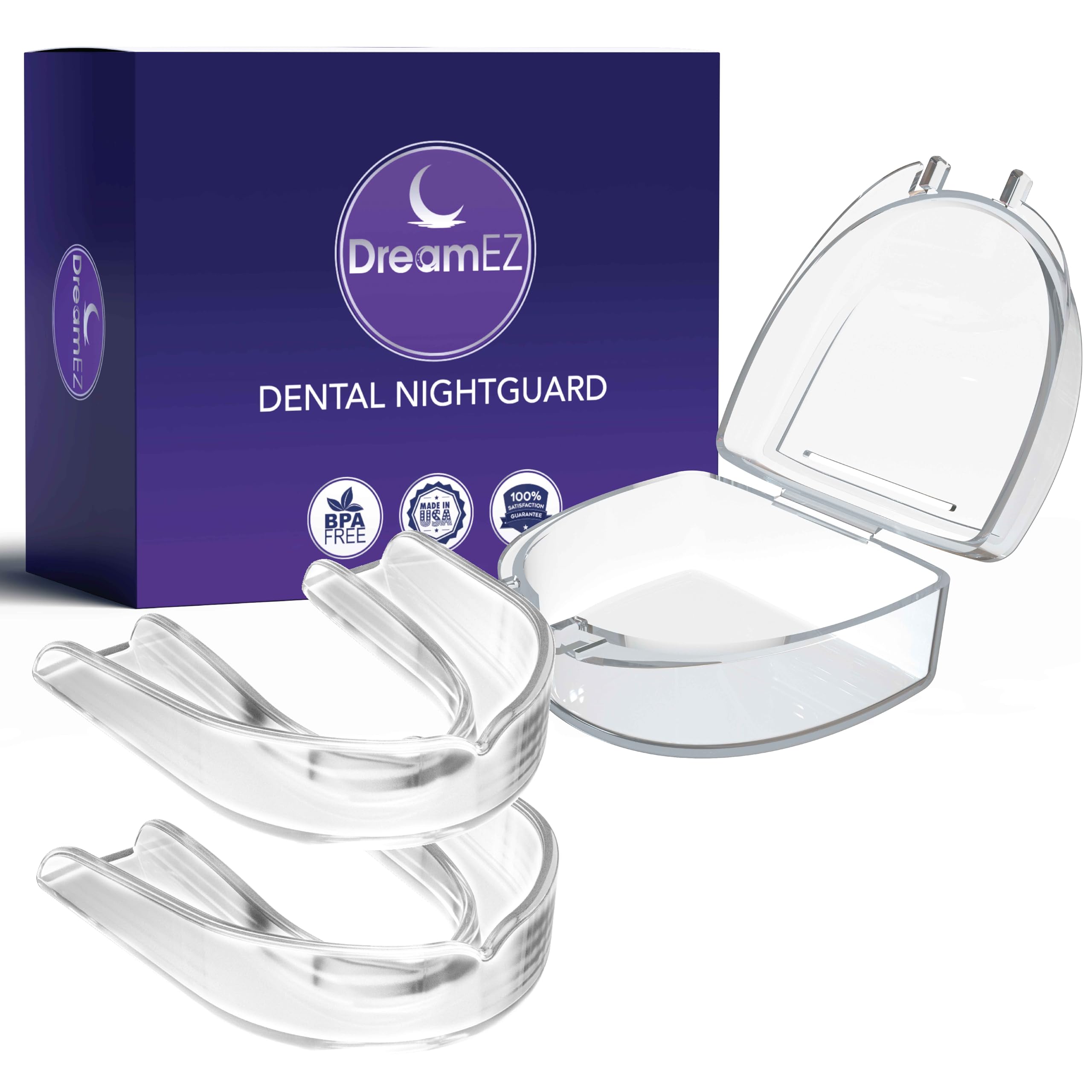
The DreamEZ Nightguard is technically marketed as a bruxism guard for clenching and grinding, but its 2-pack design and custom-fit material make it a viable entry-level option for apnea patients who also grind their teeth. The patented fitting material can be molded using either boiling water or a microwave, and it can be remolded multiple times if the first attempt is off. This reset-ability is a major advantage over one-shot boil-and-bite guards.
The guard is noticeably thinner than the Somnos or SilentZPro, making it less intrusive for users with a sensitive gag reflex. It covers only the upper teeth, unlike the dual-arch designs of the ZQuiet or Dentemp models. For apnea users, this means the guard does not actively advance the jaw; it merely prevents the teeth from clenching. This limits its effectiveness for snoring relief, as it does not open the airway directly.
Made in the USA and backed by a 100% satisfaction guarantee, the DreamEZ is a low-risk trial for users who are new to mouth guards. The ventilated carrying case is a thoughtful inclusion for hygiene during travel. However, users with severe apnea who need a measurable jaw protrusion will find this guard insufficient; it is best suited for those whose snoring is secondary to bruxism or mild airway obstruction.
Why it’s great
- Remoldable material allows multiple fitting attempts if the initial process goes wrong.
- Thin, low-profile design is comfortable for users with a strong gag reflex or sensitive soft palate.
- Proudly made in the USA with a ventilated storage case included for hygiene.
Good to know
- Does not provide jaw advancement; primarily designed for clenching and grinding, not snoring relief.
- Covers only the upper teeth, offering no mandibular protrusion for airway opening.
7. BruxArmor Nightguard

The BruxArmor Nightguard is the most affordable 2-pack in this review, designed primarily for bruxism protection rather than active snoring cessation. Its main selling point is the patented fitting material that softens in the microwave, avoiding the deformation risks associated with boiling water. This is a practical feature for first-time users who may not have a kitchen thermometer to ensure proper water temperature for traditional boil-and-bite guards.
Dentist-designed and constructed from a durable polymer, the BruxArmor provides a tight, custom fit for many users, with several reviews noting it stays in place better than dentist-fitted guards costing multiple times more. However, the guard’s initial shape has high side walls that can fold over during molding if not seated correctly, leading to a loose fit. Trimming the edges is possible but adds an extra step to the process.
For apnea users specifically, the BruxArmor is a compromise. It protects teeth from grinding damage and may slightly open the airway by separating the jaws, but it does not actively advance the mandible. Users who snore primarily due to jaw relaxation during deep sleep may see some improvement, while those with structural airway narrowing will not. It is a budget-friendly starting point for those who want to test whether a mouth guard helps without spending on an apnea-specific design.
Why it’s great
- Microwave activation avoids boiling water mishaps and material deformation during molding.
- 2-pack provides excellent value for first-time users or those who need a backup.
- Patented fitting material creates a tight, professional-quality fit for most dental arches.
Good to know
- Primarily designed for grinding protection, not active jaw advancement for apnea relief.
- High side walls can fold during molding if the tray is not seated correctly, compromising fit.
FAQ
Can an apnea mouth guard shift my teeth over time?
Why does my mouth guard fall out during sleep?
What is the difference between a snoring mouth guard and a sleep apnea mouth guard?
Final Thoughts: The Verdict
For most users, the best apnea mouth guard winner is the ZQuiet Advance because it combines a correct biomechanical hinge design with four precise jaw advancement settings and custom-mold trays for superior retention. If you want FDA clearance and a living hinge that permits natural jaw movement during sleep, grab the SilentZPro 2.0. And for a durable dual-laminate design at a great value with a dentist’s touch, nothing beats the Dentemp SleepTight.

Mo Maruf
I created WellFizz to bridge the gap between vague wellness advice and actionable solutions. My mission is simple: to decode the research and give you practical tools you can actually use.
Beyond the data, I am a passionate traveler. I believe that stepping away from the screen to explore new environments is essential for mental clarity and physical vitality.