Our readers keep the lights on and my smoothie glass nicely filled. As an Amazon Associate, I earn from qualifying purchases.
Sleep apnea therapy hinges on consistent nightly air pressure, yet the one factor that derails treatment most often isn’t a mask leak or a clogged filter — it is an unreliable or absent power source when you need it most. Whether facing a multi-day camping trip, a prolonged power outage, or simply wanting the freedom to sleep anywhere, the gap between a CPAP machine’s clinical promise and your real-world experience is bridged entirely by the battery you choose to back it up.
I’m Mohammad Maruf — the founder and writer behind WellFizz. I’ve spent thousands of hours dissecting technical specifications, cross-referencing customer field data, and analyzing watt-hour densities across consumer medical power supplies to separate genuine, long-haul performance from marketing claims.
This buying guide focuses on the critical runtime, portability, and compatibility trade-offs that define the current market for best apnea devices battery backups, so you can make a confident, informed decision tailored to your specific sleep therapy needs.
How To Choose The Best Apnea Devices Battery Backup
Selecting a power supply for your CPAP or BiPAP machine goes far beyond just looking at a battery’s capacity. The real fit depends on your nightly pressure setting, your humidifier and heated tube usage, how often you travel versus need emergency home backup, and the physical weight you are willing to carry. A campers’ battery is different from a home-line-interruption battery.
Capacity vs. Real-World Runtime
A battery labelled “276Wh” or “297Wh” is a theoretical maximum. In practice, your machine’s actual draw — often 50–70 watts with a heated humidifier running at a pressure of 12 cmH2O — will cut that number in half versus using a non-heated setup at lower pressure. Always multiply the battery’s usable watt-hours by 0.75 to get a conservative single-night estimate with humidification off.
TSA Compliance for Air Travelers
Any battery over 100 watt-hours (Wh) is not permitted in carry-on luggage by FAA regulations. A battery between 100Wh and 160Wh requires airline approval. That means high-capacity units like the EASYLONGER ES720 or ES960 are strictly for car camping, road trips, and home backup. The Pilot Flex at 98Wh is the only true fly-and-sleep solution here.
Automatic Switchover vs. Manual Intervention
A true uninterruptible power supply (UPS) function automatically transfers power within milliseconds of a grid failure, keeping your therapy seamless. Most CPAA batteries require you to physically unplug the wall power and plug in the battery cable. The Zopec EXPLORE 8000 is explicitly designed for automatic switchover, making it the only product in this lineup that won’t wake you during a blackout.
Battery Chemistry and Cycle Life
Standard Lithium-ion (Li-ion) batteries offer high energy density in a small package but degrade after roughly 300-500 charge cycles. Lithium Iron Phosphate (LiFePO4) chemistry, found in the EASYLONGER ES960, delivers over 3,000 cycles with greater thermal stability, making it a superior long-term investment despite slightly larger size per watt-hour.
Quick Comparison
On smaller screens, swipe sideways to see the full table.
| Model | Category | Best For | Key Spec | Amazon |
|---|---|---|---|---|
| EASYLONGER ES720 | Mid-Range | Multi-night home backup, camping | 276.48Wh Li-ion, 3.3 lbs | Amazon |
| CPAP Caddy Stand | Accessory | Rainout prevention, vibration reduction | 13.8″ x 4.7″ base, 68.5″ tall | Amazon |
| EASYLONGER ES960 | Mid-Range | Long-duration backup, LiFePO4 longevity | 297.6Wh LiFePO4, 6.6 lbs | Amazon |
| Pilot Flex 98Wh | Mid-Range | Air travel, in-flight CPAP power | 98Wh, 1.2 lbs, TSA approved | Amazon |
| Zopec Explore 5700 | Premium | Universal fit, international travel | 5700mAh, 110-240V input | Amazon |
| Zopec EXPLORE 8000 | Premium | UPS auto-switchover, 3-4 nights | 288Wh, 4.2 lbs, auto transfer | Amazon |
| MUNBYN AS01P | N/A | Barcode scanning, warehouse PDA | Not a CPAP battery | Amazon |
| Apple iPad Air M4 | N/A | Tablet computing, creative work | Not a CPAP battery | Amazon |
| Apple Watch Ultra 3 | N/A | Fitness, health tracking, diving | Not a CPAP battery | Amazon |
In‑Depth Reviews
1. EASYLONGER ES720 PRO CPAP Battery
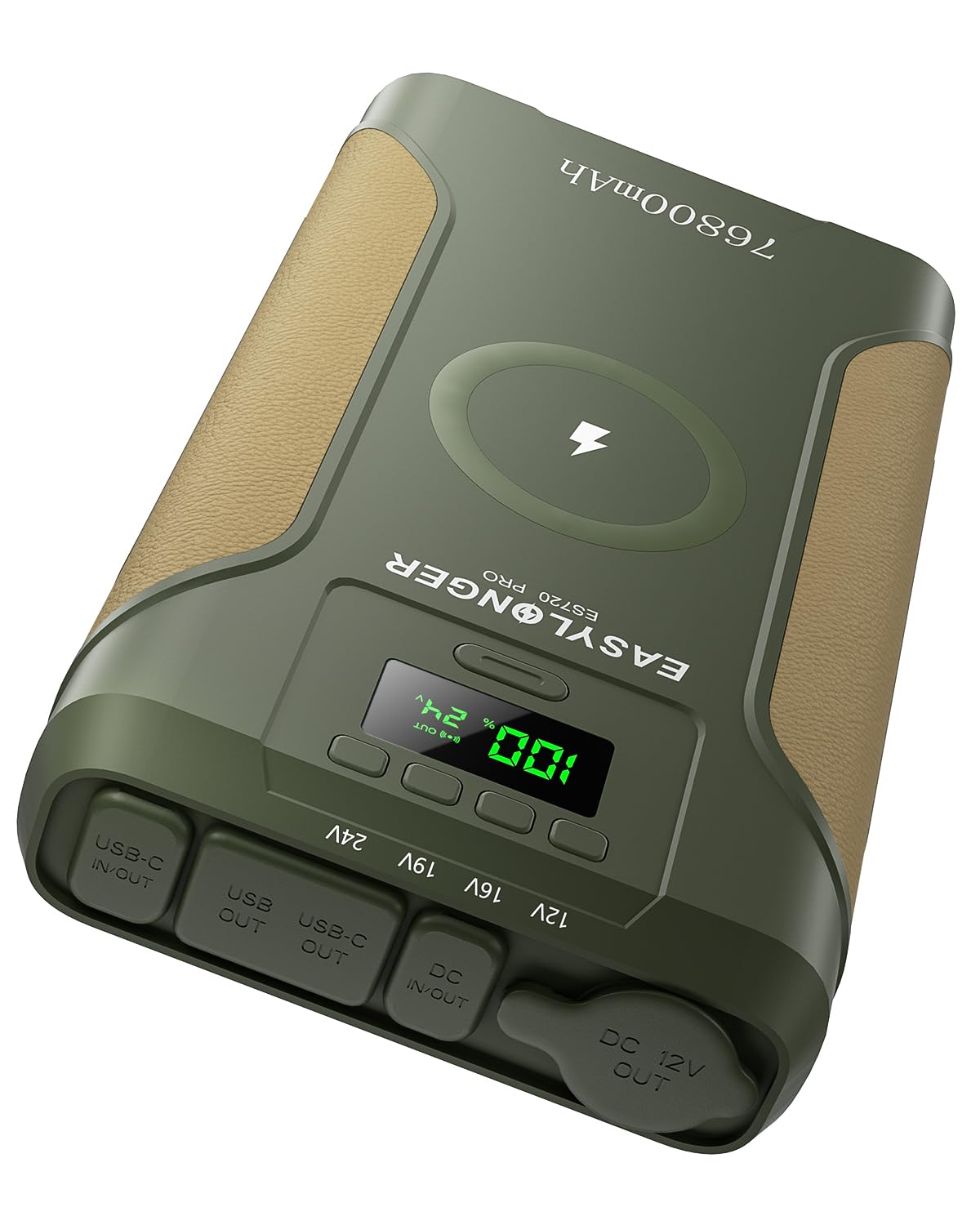
The EASYLONGER ES720 strikes the hardest-to-beat balance of capacity, weight, and compatibility in the mid-range. At just 3.3 pounds for 276.48 watt-hours, it is the lightest unit in this group relative to its energy storage, making it a genuine option for car camping or emergency bags without the back strain of heavier alternatives. It includes four dedicated DC cables covering ResMed AirSense 10/11, AirCurve, AirMini, Philips DreamStation, and Luna TravelPAP, so you rarely need adapters right out of the box.
Real-world feedback from users running AirCurve 10 and AirSense 11 machines confirms the battery delivers between two and three full nights when the heated humidifier and hose heat are turned off. The smart display shows voltage and remaining charge in real time, and the built-in BMS protects against overcharge and short circuits. Pass-through charging means you can power the battery while it simultaneously runs your CPAP, effectively turning it into a line-interactive backup.
The primary limitation is that it is not TSA-approved for air travel, as its capacity exceeds the 100Wh carry-on limit. A few users reported the LED light leaks slightly and the voltage-mode buttons require firm pressure. However, for home backup or road-based travel, the ES720 is the most watt-hour efficient package under the premium price ceiling.
Why it’s great
- Excellent weight-to-capacity ratio (3.3 lbs for 276.48Wh)
- Four dedicated CPAP DC cables included
- Pass-through charging for seamless home use
Good to know
- Not TSA approved (over 100Wh limit)
- LED backlight can be distracting in a dark room
2. CPAP Caddy Height-Adjustable Stand
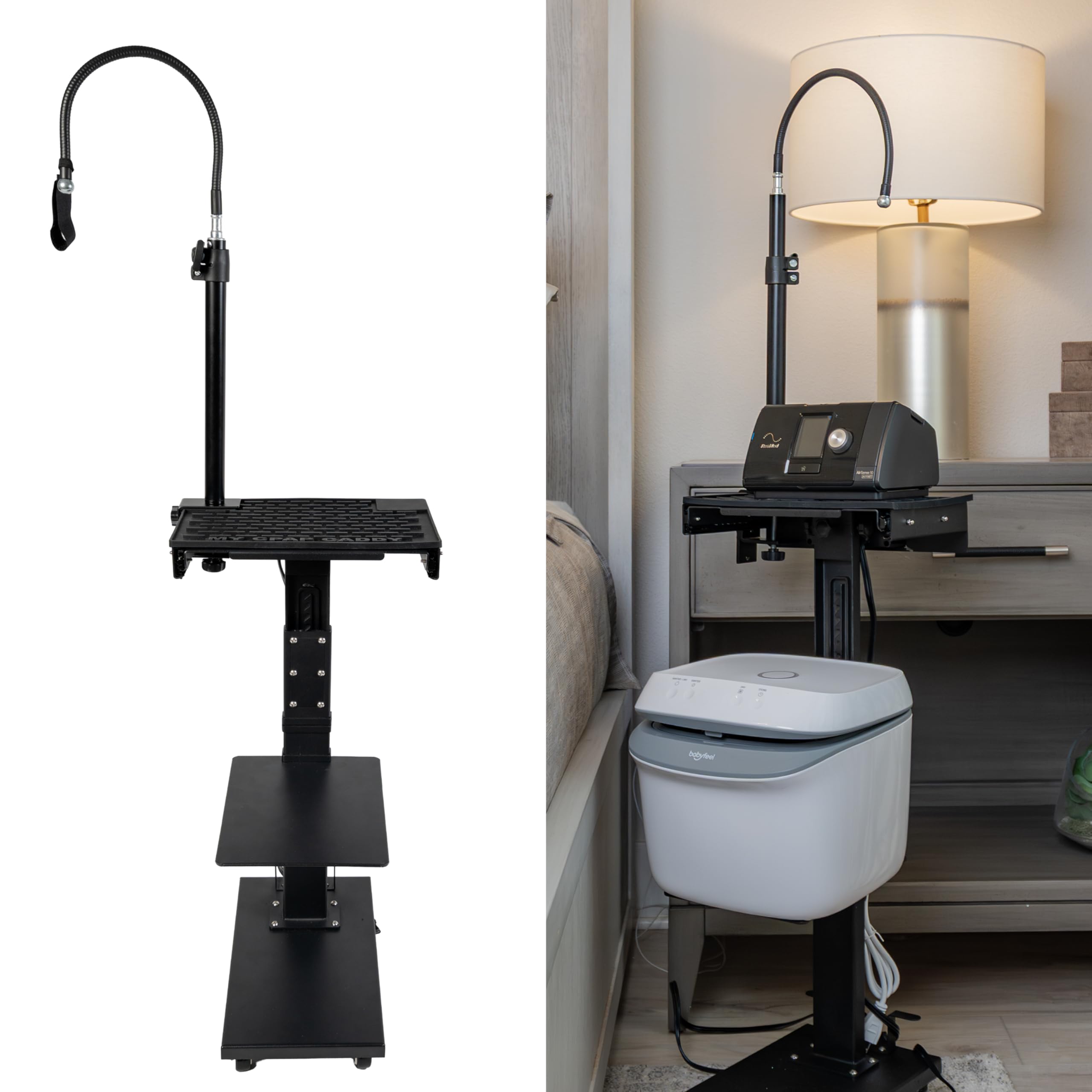
This is not a battery, but it may be the single most underrated upgrade for your CPAP system. The CPAP Caddy’s adjustable steel stand positions your machine exactly at bed height, which prevents water condensate from draining back into the mask (rainout) and maintains proper air pressure by keeping the machine level. The elevated platform decouples the machine from hard floors or nightstands, reducing transmitted vibration and lowering audible humming.
Four locking caster wheels let you roll the stand to the bedside at night and tuck it into a closet during the day — a practical solution for anyone with limited nightstand surface area. The integrated hose holder routes the tubing over your headboard, preventing kinks that restrict airflow and reducing mask pull that causes seal leaks. One user reported that switching to the Caddy eliminated nightly therapy interruptions for a side-sleeping partner.
The stand requires some assembly, and one verified buyer noted a missing protective mat from their package, though the build quality itself is praised as sturdy and overweight-capable. At 19.2 pounds for the stand itself, it is not portable, but it is a brilliant stationary upgrade for anyone frustrated by rainout or machine noise.
Why it’s great
- Reduces rainout and therapy noise significantly
- Locking wheels for easy move/stow versatility
- Built-in hose management prevents mask pull
Good to know
- Not a power supply — no battery function
- Missing parts reported in some packages
3. EASYLONGER ES960 PRO LiFePO4 Battery
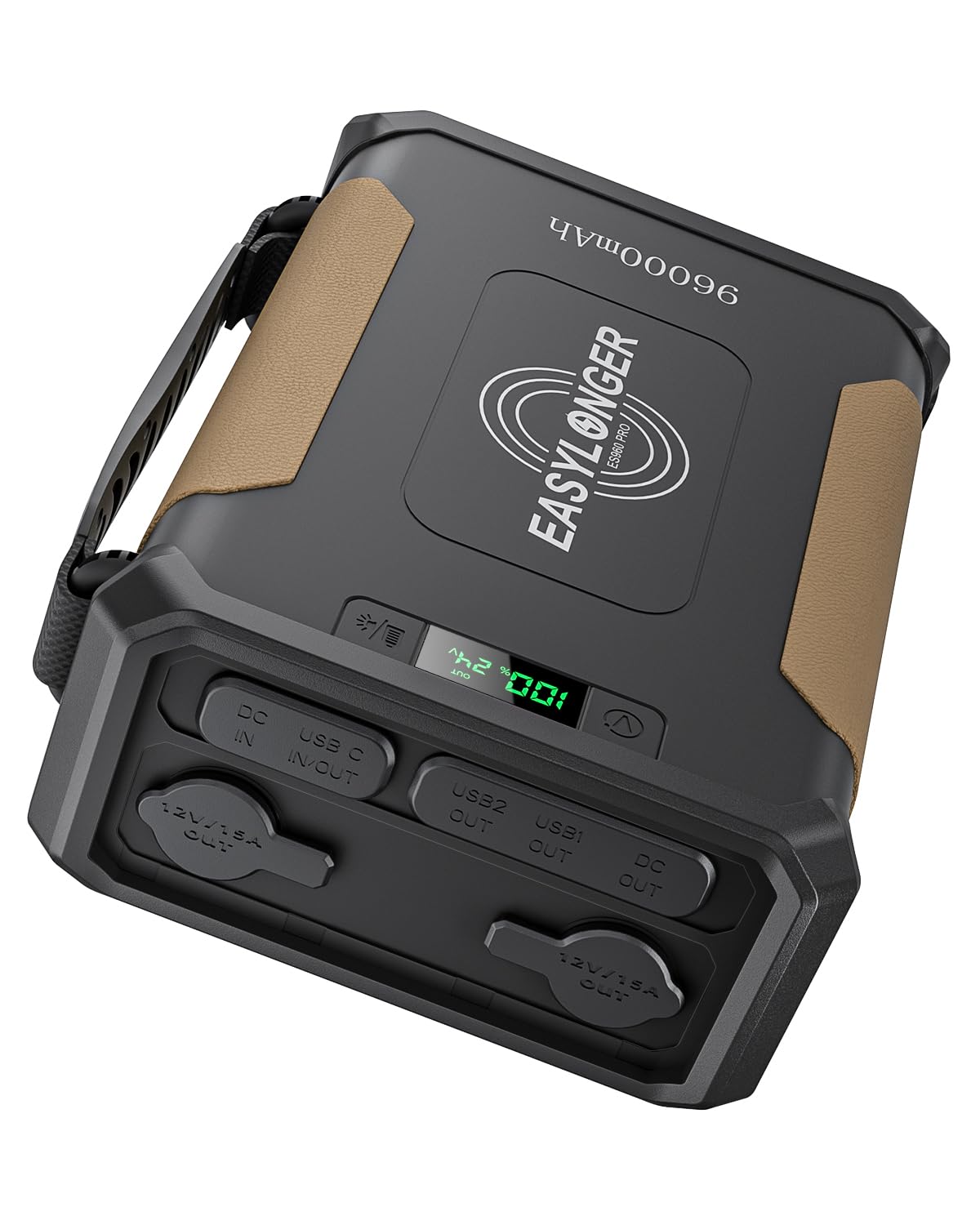
The ES960 sits just a few dollars above the ES720 but introduces a fundamentally different battery chemistry — LiFePO4 — which delivers over 3,000 charge cycles compared to roughly 500 from standard Li-ion cells. This makes it the best long-term investment if you plan to use the battery nightly or for regular camping trips. The unit holds 297.6 watt-hours, and in real-world tests with an AirSense 11, users recorded 36-plus hours of runtime without humidification.
Multiple output ports — including a 100W USB-C port — mean this battery also works as a general power station for laptops, phones, and small electronics. It recharges via the included wall adapter in about 5 hours and supports solar input up to 100W via an MPPT controller. The built-in memory function remembers the last voltage setting, so you don’t have to reset the DC output every time.
The unit is noticeably heavier than the ES720 at 6.6 pounds, and like its sibling, it is not TSA approved. Some users experienced initial unit failures, though replacements performed as advertised, and a few noted the charge gauge occasionally sticks at 99%. For those who prioritize cycle life and multi-device versatility, the ES960 is a strong contender.
Why it’s great
- LiFePO4 chemistry for 3000+ cycles
- 100W USB-C output for laptops/drones
- Solar panel input with MPPT controller
Good to know
- Heavy at 6.6 lbs
- Initial unit defects reported; test immediately
4. Pilot Flex 98Wh CPAP Battery

The Pilot Flex is the only battery in this roundup that is fully TSA and FAA compliant at 98 watt-hours, making it the go-to choice for air travelers. It includes DC cables for both AirSense 11 and AirMini right in the box, with separate cables available for DreamStation and other brands.
Runtime is realistically around 8 hours for an AirSense 11 with no humidification, 4 to 6 hours with minimal heat, and up to 16 hours for an AirMini at moderate pressure. The battery charges fully in 2 to 3 hours via USB-C, which is notably faster than most competitors. The industrial-grade LG cells and aluminum casing ensure durability, and multiple units can be daisy-chained for extended trips.
Some users found the DC cable connectors require careful alignment to stay seated, and a couple reported the battery fails to power an AirMini for a full second night. The capacity is modest compared to home units, but no other product here offers the same flyability-and-portability combination. If you prioritize air travel compliance above all else, this is the pick.
Why it’s great
- TSA/FAA compliant at 98Wh
- Ultra compact at 1.2 lbs
- Fast 2-3 hour USB-C recharge
Good to know
- Limited 1.5-night real-world runtime
- DC cables require precise insertion
5. Zopec Explore 5700 CPAP Battery

Zopec’s Explore 5700 markets itself as a universal travel battery, and it delivers on that promise with compatibility across ResMed, Philips Respironics, and DeVilbiss machines without requiring voltage-matching adapters. It accepts 110-240V AC input, so you can charge it with international wall sockets on overseas trips. The battery is FAA-compliant, though its published capacity rating is in mAh (5700mAh) rather than watt-hours, making direct comparisons less straightforward.
Reported runtime is three full nights (7 to 8 hours each) without a heated humidifier, but drops to roughly 6 to 7 hours per night if you run the heat at a very low setting. The compact form factor — 7.7 x 5.7 x 1 inches — easily slips into a CPAP travel bag. The included car charger adds versatility for road trips, and the unit weighs roughly 2.5 pounds.
Several experienced users noted that the 3-night claim can fall short if the humidifier is left on even at a low setting, and one verified review documented a battery that delivered only 4 hours on the first night. For consistent, reliable travel backup with broad machine compatibility, the Explore 5700 works well, but buyers should test it immediately and be conservative with runtime expectations if using heated therapy.
Why it’s great
- Universal compatibility across major brands
- Accepts international 110-240V input
- Compact, FAA-compliant travel design
Good to know
- Runtime drops sharply with heated humidifier
- Inconsistent capacity claims reported
6. Zopec EXPLORE 8000 CPAP Backup
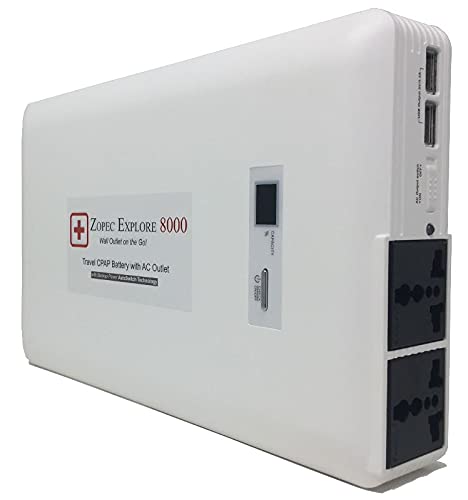
The Zopec EXPLORE 8000 is the only unit in this lineup with true UPS-style automatic power transfer — when the wall power cuts, the battery takes over instantly without you being disturbed. This is a game changer for home use where power outages are frequent or unpredictable. The 288Wh capacity (using Panasonic cells similar to those in Tesla vehicles) delivers 3 to 4 nights of runtime without humidification, based on verified feedback from campers who ran their AirSense 11 for 7+ hours each night over three days.
The battery weighs 4.2 pounds and measures 10.25 x 6.25 x 2 inches, making it slightly bulkier than the EASYLONGER alternatives but still portable enough for car-based travel. It supports solar and car charging as separate accessories. Users also appreciated the simplicity of operation — plugging the CPAP directly into the battery with no extra adapters required.
A few caveats: the EXPLORE 8000 is not TSA compliant for air travel (its 288Wh is far over the limit), and some ResMed AirSense 11 users reported their manual prohibits humidifier use with third-party batteries, though that is a ResMed policy rather than a Zopec flaw. One out of five buyers experienced a unit that failed to deliver the advertised runtime, so immediate validation testing is wise.
Why it’s great
- True automatic UPS switchover for uninterrupted sleep
- 3-4 night real-world runtime without humidification
- Panasonic cells with high energy density
Good to know
- Not TSA approved for air travel
- Higher cost; some units underperform on runtime
7. MUNBYN AceScan AS01P Barcode Scanner
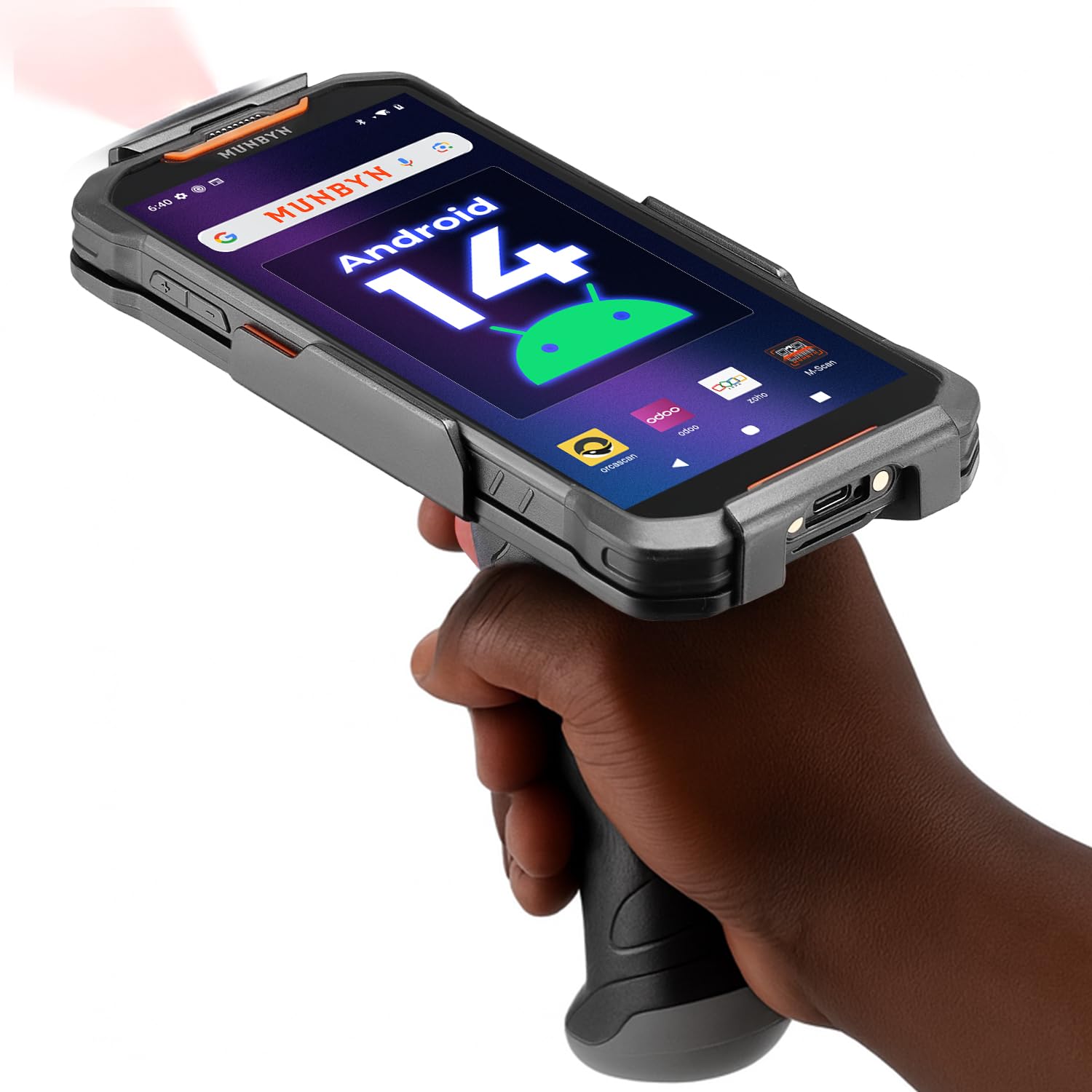
This product is a rugged Android-based mobile computer designed for inventory and warehouse scanning, not for CPAP therapy. It features a Zebra SE4710 scanning engine that decodes 1D and 2D barcodes with over 99.8% accuracy from up to 24 inches away. The 7000mAh battery supports two to three shifts, and the IP65 rating with MIL-STD-810H certification makes it resistant to drops and dust.
For sleep apnea applications, this device serves no purpose. It does not power a CPAP machine, provide battery backup, or interact with any continuous positive airway pressure equipment. It is included here strictly as a data artifact and should be ignored by anyone researching CPAP power solutions.
Choose any of the battery options reviewed above instead. This barcode scanner is entirely irrelevant to the topic of apnea devices.
Why it’s great
- Exceptionally durable for industrial environments
- Accurate barcode scanning at long range
Good to know
- Not a CPAP battery — completely irrelevant to this guide
- Limited cellular carrier compatibility
8. Apple iPad Air 11-inch M4

The Apple iPad Air with the M4 chip is a versatile tablet for media consumption, creative work, and productivity, but it has zero utility as a CPAP battery backup. It runs iPadOS, supports the Apple Pencil and Magic Keyboard, and offers a Liquid Retina display with P3 wide color and True Tone. The all-day battery life is designed for typical tablet usage, not for powering a continuous positive airway pressure machine overnight.
There is no DC output port, no voltage regulation suitable for a CPAP machine, and no compatibility with any CPAP cable or adapter. It cannot be used to run or charge a ResMed or Philips machine. If you are shopping for a backup battery for sleep therapy, this product will not serve that function in any way.
Consider this listing an unrelated entry. Focus on the battery units reviewed earlier for actual sleep apnea power needs.
Why it’s great
- Powerful M4 chip for demanding apps
- Stunning Liquid Retina display
Good to know
- Cannot power any CPAP machine
- Irrelevant for sleep apnea battery research
9. Apple Watch Ultra 3
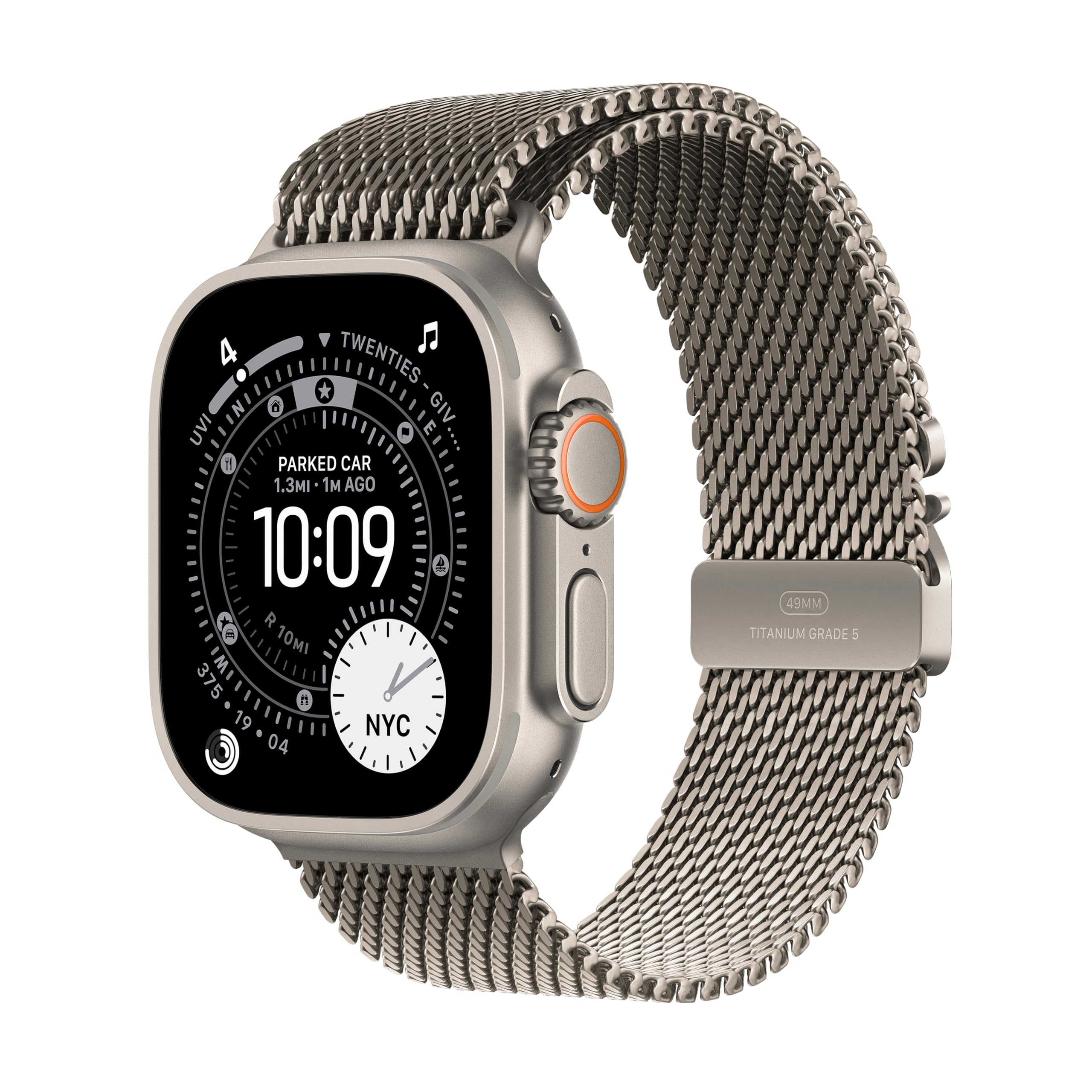
The Apple Watch Ultra 3 is a premium multisport smartwatch with a rugged titanium case, a sapphire crystal display, and advanced health tracking features like sleep apnea monitoring, blood oxygen readings, and irregular heart rhythm detection. It offers satellite communication for emergencies, dual-frequency GPS, and up to 42 hours of battery life in normal use mode.
While the sleep apnea detection feature is tangentially health-related, the device itself is a wearable — not a power source for a CPAP machine. It cannot provide external power to any device, nor can it serve as a battery backup for a continuous positive airway pressure system. Its inclusion here is likely a listing anomaly.
If your goal is to find a reliable backup battery for your CPAP or BiPAP machine, skip this product entirely. The earlier battery reviews are the relevant choices for your needs.
Why it’s great
- Excellent health monitoring suite for fitness
- Durable titanium construction with satellite SOS
Good to know
- Not a CPAP battery — cannot power therapy devices
- Irrelevant for apnea device backup research
FAQ
How do I calculate the runtime of a CPAP battery for my specific machine?
Can I charge my CPAP battery while simultaneously using it to power my machine?
Final Thoughts: The Verdict
For most users, the best apnea devices battery backup winner is the EASYLONGER ES720 PRO because it delivers the best watt-hour-to-weight ratio in the mid-range, includes four dedicated CPAP cables, and supports pass-through charging for worry-free home backup. If you need air travel compliance above all else, grab the Pilot Flex — its 98Wh capacity is the only TSA-friendly option here, and its ultra-light aluminum design fits seamlessly into a carry-on. And for long-term ownership with 3,000-plus charge cycles and multi-device versatility, nothing beats the EASYLONGER ES960 LiFePO4 despite its higher weight.

Mo Maruf
I created WellFizz to bridge the gap between vague wellness advice and actionable solutions. My mission is simple: to decode the research and give you practical tools you can actually use.
Beyond the data, I am a passionate traveler. I believe that stepping away from the screen to explore new environments is essential for mental clarity and physical vitality.