Our readers keep the lights on and my smoothie glass nicely filled. As an Amazon Associate, I earn from qualifying purchases.
Aphid infestations can turn a thriving garden into a sticky, stunted mess in days. These soft-bodied pests cluster on new growth, draining the life from your roses, vegetables, and ornamentals while excreting honeydew that invites sooty mold. Choosing an aphid killer that actually delivers without damaging your plants or the environment requires understanding the chemistry behind the spray.
I’m Mohammad Maruf — the founder and writer behind WellFizz. I’ve spent years analyzing horticultural pest control products, comparing active ingredients, concentration levels, and real-world user outcomes so you don’t have to guess.
Whether you need a gentle organic solution for edible crops or a potent systemic treatment for stubborn infestations, this guide covers the top options to help you find the best aphid killer for your specific garden scenario.
How To Choose The Best Aphid Killer
Selecting the right aphid killer depends on your plant type, the severity of the infestation, and your tolerance for synthetic chemistry. The most common mistake is using a contact-only spray on a mature colony, while a systemic product would provide lasting control. Understanding three key factors will steer you to the right bottle.
Contact Killers vs. Systemic Insecticides
Contact killers like botanical oil sprays (neem, rosemary, peppermint) smother aphids on contact but have no residual effect. They are ideal for light infestations on edible crops and flowering plants because they break down quickly. Systemic insecticides, such as those containing acephate or permethrin, are absorbed into the plant’s vascular system and kill aphids that feed on treated foliage. These provide up to four weeks of protection but require careful handling around edible crops and pollinators.
OMRI and Organic Certification
If you’re treating vegetables, fruits, or herbs, an OMRI-listed formula ensures the active ingredients meet organic gardening standards. These products rely on citric acid, botanical oils, or beneficial bacteria rather than synthetic neurotoxins. While they are safer for pollinators and beneficial insects when applied correctly, they typically need more frequent reapplication—every 7 to 10 days—to maintain control.
Concentrate vs. Ready-to-Use Format
Ready-to-use sprays are convenient for spot treatments and small gardens. Concentrates, on the other hand, require mixing but deliver far lower cost per application and allow you to adjust the concentration for tough infestations. A 16-ounce concentrate that makes 16 gallons of finished spray will treat a large rose bed or vegetable patch multiple seasons, while a 24-ounce ready-to-use bottle may only cover a few plants before running out.
Quick Comparison
On smaller screens, swipe sideways to see the full table.
| Model | Category | Best For | Key Spec | Amazon |
|---|---|---|---|---|
| Grower’s Ally Crop Defender 3 | Triple-Action | Organic gardens & edible crops | 24 oz RTU / OMRI listed | Amazon |
| Bonide Systemic Insect Control | Systemic | Ornamentals & stubborn infestations | 16 oz conc. / 16 gal mix | Amazon |
| Ortho Rose and Flower Insect Killer | Dual-Action | Roses & flowering ornamentals | 24 oz RTU / 4-week protection | Amazon |
| Earth’s Ally Disease Control | Fungicide | Fungal diseases & light pests | 32 oz conc. / 10 gal mix | Amazon |
| Martin’s Permethrin 13.3% | Broad-Spectrum | Perimeter & perimeter pest control | 32 oz conc. / 13.3% active | Amazon |
In‑Depth Reviews
1. Grower’s Ally Crop Defender 3
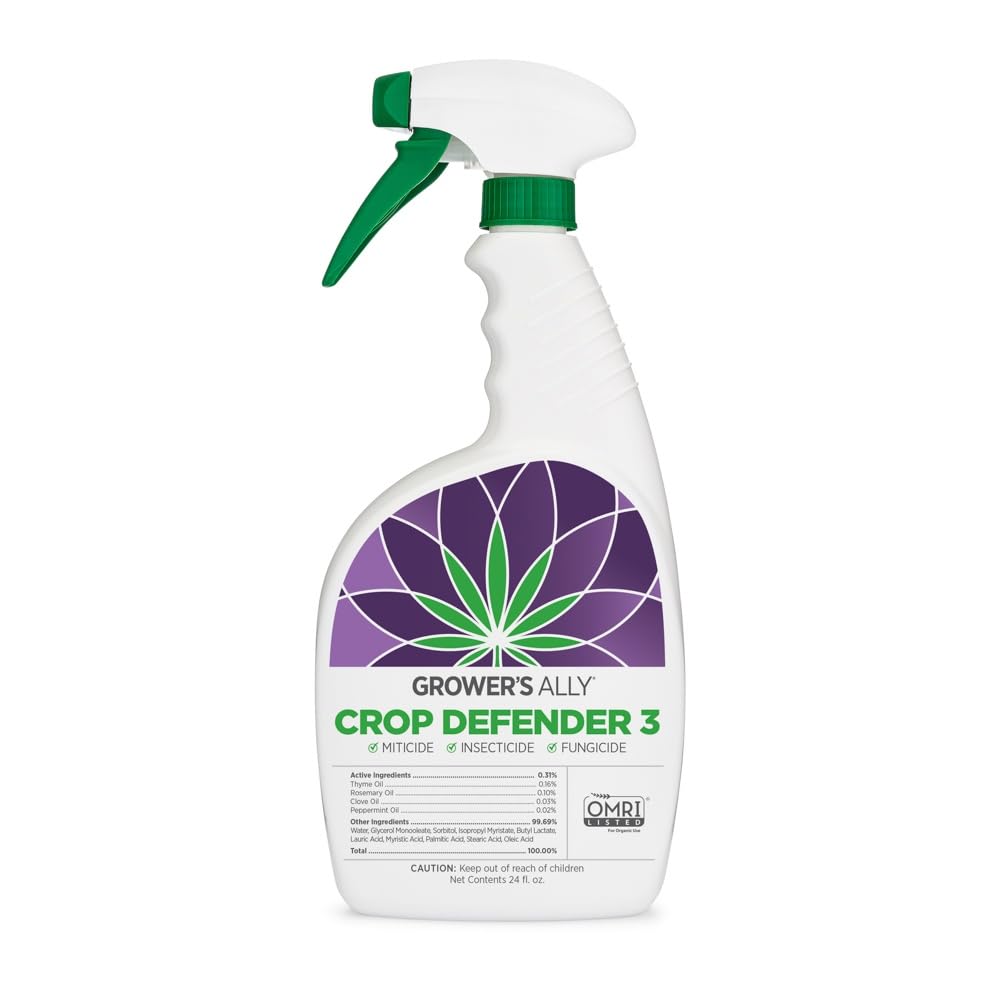
The Grower’s Ally Crop Defender 3 is a ready-to-use formulation that combines botanical oils into a single miticide, insecticide, and fungicide spray. With an OMRI-listed certification and FIFRA 25(b) exempt status, this product is designed for growers who need a clean, residue-free option for vegetables, herbs, and flowering crops. Users consistently report that it kills aphids and spider mites on contact without burning tender leaves, even on seedlings—a rare claim among multi-action sprays.
At 24 ounces in ready-to-use format, this bottle is best suited for small to medium gardens or targeted spot treatments. The built-in surfactant ensures even coverage on waxy leaf surfaces where aphids typically hide. Multiple verified reviews confirm that the solution smells pleasant—like fresh herbs—rather than like harsh chemicals, making indoor and greenhouse applications more tolerable.
Where this product truly shines is in its safety profile. It can be applied through all stages of plant growth, including the flowering cycle, and users can harvest the same day. For organic gardeners who need a reliable knockdown without worrying about synthetic residues, this is the most complete option in the mid-range tier.
Why it’s great
- Does not burn sensitive seedlings or delicate flowers
- Triple-action formula (miticide + insecticide + fungicide) reduces number of products needed
- Bee-safe when applied according to label, suitable for organic gardening
Good to know
- Ready-to-use format runs out faster than concentrates for large gardens
- Requires weekly reapplication for continuous aphid control
2. Bonide Systemic Insect Control

The Bonide Systemic Insect Control is a 16-ounce concentrate that makes up to 16 gallons of finished spray, targeting hard-to-kill insects like thrips, mealybugs, scale, whiteflies, and spider mites. Its active ingredient, acephate, is absorbed into the plant tissue and moves through the vascular system, killing aphids that feed on treated foliage for up to several weeks. This product is specifically labeled for outdoor ornamental plants, roses, shrubs, and flower beds—not for vegetable or fruit crops.
Users consistently note the strong, unpleasant odor of this concentrate, comparing it to chemical or manure-like smells, which means mixing and application should be done outdoors with proper ventilation. Despite the smell, the efficacy is near-universal: verified reviews report that even persistent bagworms on arborvitae and mealybugs on begonias were controlled after one to two applications. The included measuring cup simplifies dilution, and the formula can be mixed with certain fungicides or fertilizers for combination sprays.
For gardeners battling heavy, recurring aphid populations on ornamentals, this systemic option provides the long residual control that contact sprays cannot match. It is not for the faint of nose, but for tough jobs, it consistently outperforms gentler alternatives. Apply every 7 to 10 days during active infestations, and avoid spraying on hot, sunny afternoons to prevent leaf burn.
Why it’s great
- Long residual protection through systemic plant uptake
- Concentrate makes 16 gallons—extremely economical for large gardens
- Effective against a wide range of sucking insects beyond aphids
Good to know
- Strong, unpleasant odor that lingers indoors
- Not labeled for use on vegetables or edible fruit plants
3. Ortho Rose and Flower Insect Killer

The Ortho Rose and Flower Insect Killer is a household name among gardeners, and for good reason. This 24-ounce ready-to-use spray delivers a dual-action formula that kills over 100 listed insects by both contact and systemic action, providing up to four weeks of protection on roses, flowers, and indoor ornamental plants. Japanese beetles, aphids, leafhoppers, and spider mites are all on the label, and the product is formulated to not harm blooms or foliage when used as directed.
Verified reviews highlight its rapid knockdown: users report seeing results within hours of application, with Japanese beetles falling off rose bushes and aphid colonies collapsing. However, some experienced gardeners note that the systemic component is weak—it works primarily as a contact spray, and heavy infestations of mealybugs or scale may require multiple applications or a stronger concentrate. The scent is mild compared to systemic concentrates, making it suitable for use on patio containers and entryway plantings.
For the rose enthusiast or casual flower gardener who wants a straightforward, widely available solution without mixing or measuring, this is the most convenient option. It is not the most potent or economical for large-scale use, but for quick control on prized flowering plants, it delivers consistent results.
Why it’s great
- Immediate contact kill with up to 4 weeks of residual protection
- Safe for use on blooms and ornamental foliage
- Trusted brand with broad retailer availability
Good to know
- Weak systemic action—works mostly as a contact spray
- Requires frequent reapplication for severe infestations compared to concentrates
4. Earth’s Ally Disease Control Concentrate
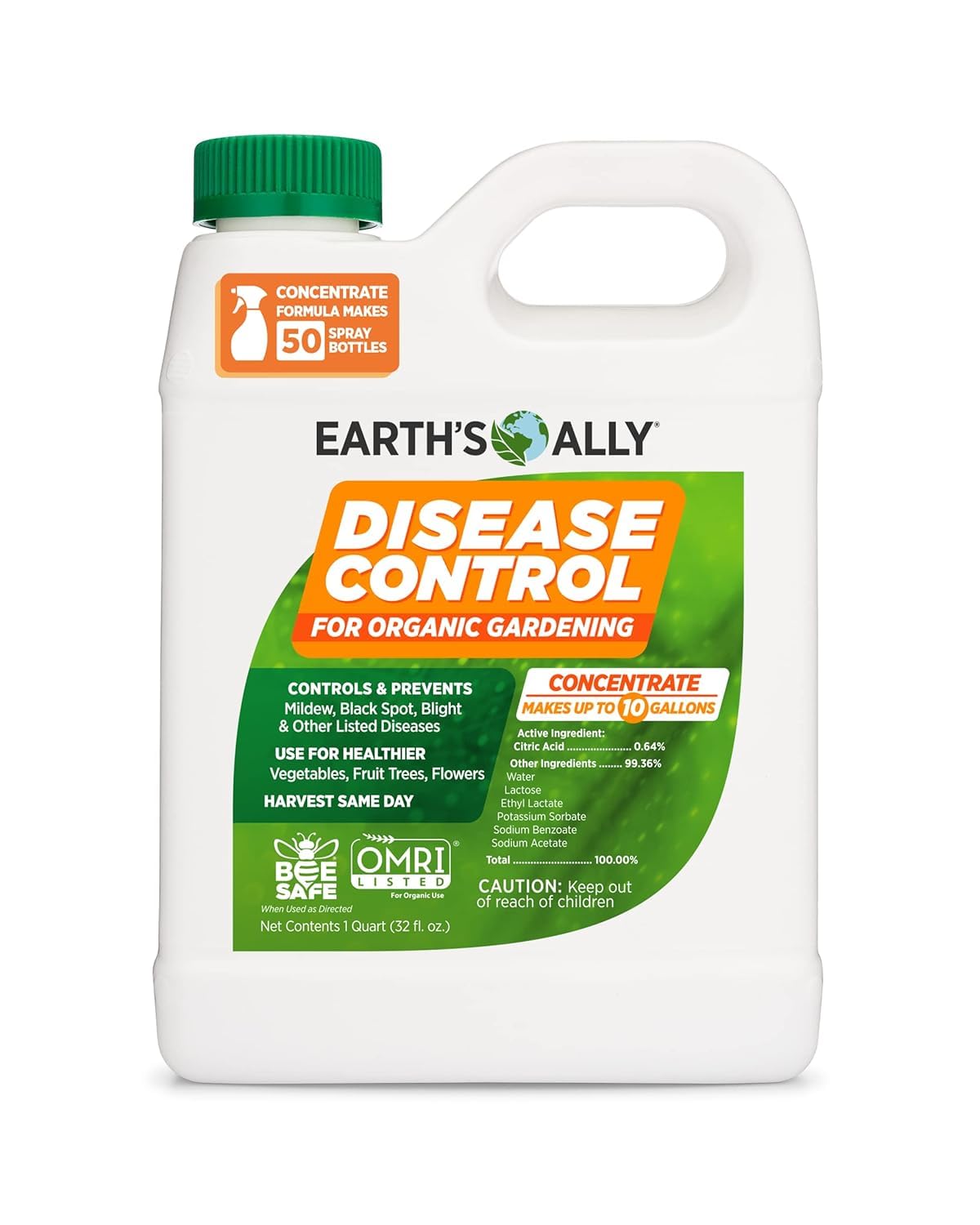
Earth’s Ally Disease Control Concentrate is primarily a fungicide built around citric acid, labeled for powdery mildew, downy mildew, blight, black spot, and leaf spot. While its primary target is fungal disease, many gardeners find it useful as a gentle, OMRI-listed spray that can suppress light aphid populations when combined with good cultural practices. The 32-ounce concentrate makes 10 gallons of ready-to-use solution, offering strong value for those managing multiple disease and pest issues simultaneously.
Users report visible improvement on rose leaves within days, with healthier foliage and reduced spotting. However, this product’s efficacy against aphids is indirect—it does not contain a true insecticidal active ingredient, so heavy aphid infestations will not be controlled. For the organic gardener whose primary concern is fungal prevention and who has only incidental aphid pressure, this is an excellent all-in-one tool that leaves no harsh chemical residues on fruits and vegetables.
It can be used up until the day of harvest, which is a major advantage for edible crop growers. Mixing 6 tablespoons per gallon of water is straightforward, and the formula is safe around people, pets, and the environment when applied as directed. For aphid-specific control, pair this with a dedicated insecticidal soap or botanical oil spray.
Why it’s great
- OMRI-listed and safe for use on edibles up to harvest day
- Concentrate makes 10 gallons—very economical for large gardens
- Excellent fungal prevention while providing gentle pest suppression
Good to know
- Primarily a fungicide, not a dedicated insecticide for heavy aphid infestations
- Requires combination with true insecticides for substantial pest populations
5. Martin’s Permethrin 13.3% Concentrate
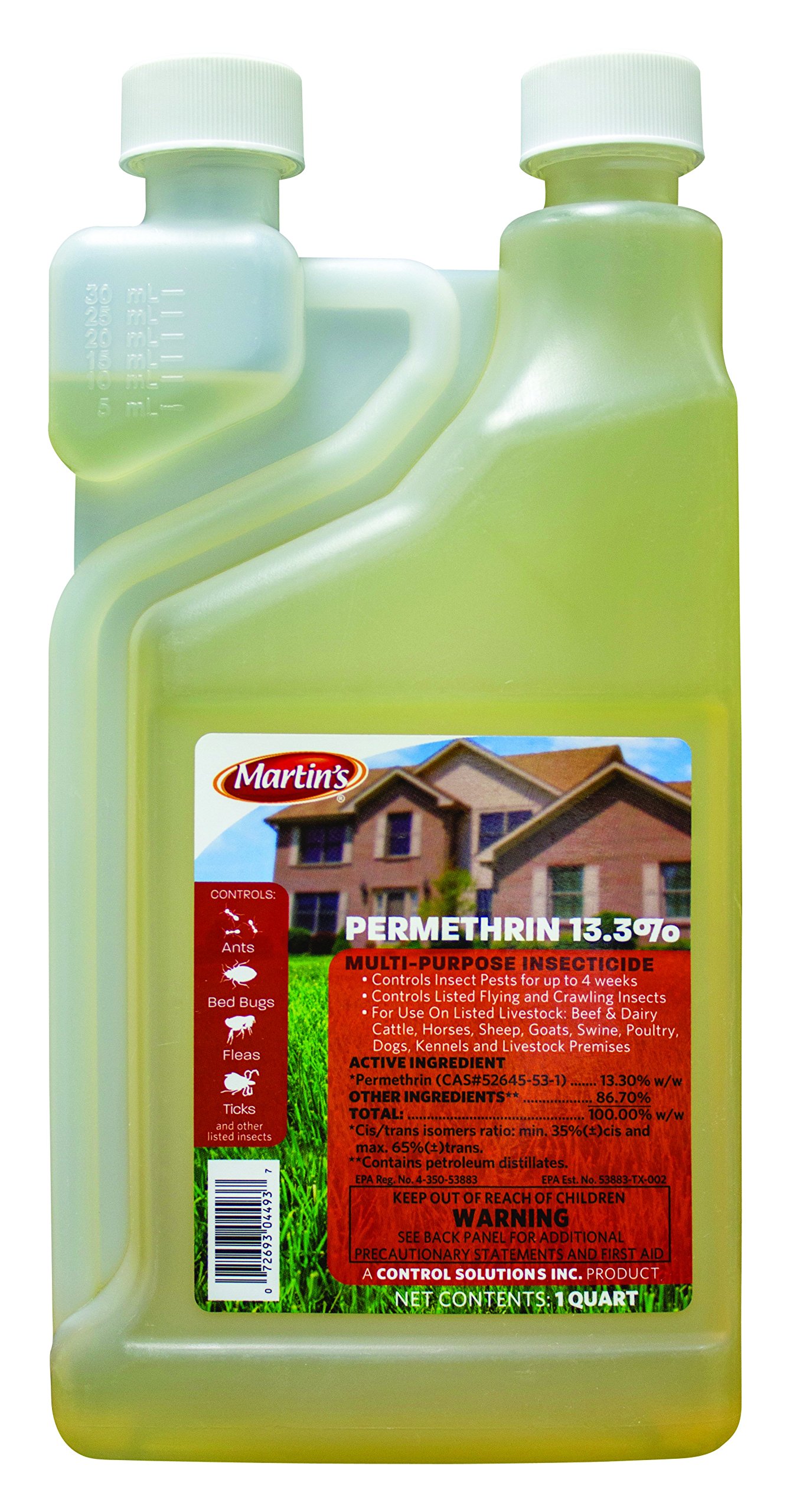
Martin’s Permethrin 13.3% Concentrate is a high-strength synthetic pyrethroid formulated for both indoor and outdoor use. At 13.3% active permethrin, this is the most potent concentrate in this lineup—just 1.5 ounces per gallon creates a solution that controls ticks, mosquitoes, aphids, fleas, and dozens of other listed pests for up to four weeks. The 32-ounce bottle goes a long way; users report treating 800 to 1,000 square feet per gallon of mixed solution, making this the budget choice for perimeter and perimeter pest control.
Verified reviews consistently praise its effectiveness against ticks and mosquitoes on acreage and around chicken runs, dog areas, and yards. The powerful smell is a recurring note: users describe it as paint-thinner strength and strongly recommend outdoor mixing and application only. While it kills aphids and other garden insects rapidly upon contact and provides excellent residual protection, it is not selective—it will also harm beneficial insects and pollinators if sprayed directly on blooms during daytime hours.
For the gardener who needs a large-volume, low-cost solution for perimeter treatment or who is facing an overwhelming aphid invasion on non-edible ornamentals, this concentrate delivers unmatched value per gallon. It requires careful handling, storage away from children and pets, and strict adherence to label rates, but for sheer knockdown power and economy, it is in a league of its own.
Why it’s great
- Extremely cost-effective—makes over 21 gallons of ready-to-use spray per bottle
- Long residual protection of up to 4 weeks against a wide range of pests
- Highly effective against tough perimeter pests like ticks and mosquitoes
Good to know
- Strong chemical odor requires outdoor use and proper ventilation
- Non-selective—will harm beneficial insects and pollinators if applied incorrectly
FAQ
How long does it take for an aphid killer to work?
Can I use aphid killer on vegetables and herbs?
What is the most effective treatment for a severe aphid infestation?
Final Thoughts: The Verdict
For most gardeners dealing with aphids on a mix of ornamentals and edibles, the top aphid killer is the Grower’s Ally Crop Defender 3 because it combines three modes of action in a single OMRI-listed bottle that won’t burn delicate leaves or flowers. If you need long-lasting systemic control for stubborn infestations on roses or shrubs, grab the Bonide Systemic Insect Control. And for large-scale perimeter protection against aphids plus ticks and mosquitoes, nothing beats the economy and potency of Martin’s Permethrin 13.3% Concentrate.

Mo Maruf
I created WellFizz to bridge the gap between vague wellness advice and actionable solutions. My mission is simple: to decode the research and give you practical tools you can actually use.
Beyond the data, I am a passionate traveler. I believe that stepping away from the screen to explore new environments is essential for mental clarity and physical vitality.