Our readers keep the lights on and my smoothie glass nicely filled. As an Amazon Associate, I earn from qualifying purchases.
Anxiety rarely announces itself with a warning label. It shows up as a racing heartbeat before a meeting, a restless night before a big day, or a knot in your stomach that just won’t unravel. A structured anxiety journal is one of the most effective tools for slowing that spiral, helping you identify triggers, reframe negative thought patterns, and build daily coping strategies without relying on guesswork.
I’m Mohammad Maruf — the founder and writer behind WellFizz. I specialize in analyzing consumer wellness products and therapeutic tools, focusing on the research-backed features that separate a meaningful guided journal from a generic notebook.
For anyone looking to take a practical step toward emotional regulation, finding the best anxiety journal means identifying one that offers proven therapeutic frameworks like CBT or ACT, high-quality paper that won’t bleed through, and a structure that encourages consistency without feeling like homework.
How To Choose The Best Anxiety Journal
Not every guided notebook is built for anxiety work. The most effective journals use evidence-based therapeutic techniques, durable materials, and a prompt structure that keeps you showing up even on hard days. Here are the critical factors to evaluate before you buy.
Therapeutic Framework: CBT vs. ACT vs. DBT
A journal that simply says “write what you feel” won’t help much when your mind is spiraling. The strongest anxiety journals are built on established therapies. Cognitive Behavioral Therapy (CBT) journals help you identify irrational thoughts and reframe them. Acceptance and Commitment Therapy (ACT) journals focus on accepting difficult emotions while committing to value-driven actions. Dialectical Behavior Therapy (DBT) adds emotional regulation and distress tolerance skills. Choose a journal whose framework matches your personal therapy goals or your therapist’s recommendations.
Paper Quality and Physical Build
You’ll be writing in this journal daily, often with gel pens, fountain pens, or markers. Paper thickness, measured in grams per square meter (GSM), determines whether your ink bleeds through to the next page. Look for 100GSM or higher for a smooth, bleed-resistant writing experience. A lay-flat binding is also essential — you don’t want to fight the spine while trying to pour your thoughts onto the page. Hardcover eco-leather covers offer durability and discretion for carrying in a bag.
Prompt Structure and Undated Flexibility
The best anxiety journals guide you through specific steps: identifying triggers, naming emotions, assessing thought accuracy, and building coping strategies. Undated pages allow you to start any day of the year and skip days without wasting paper. This flexibility reduces pressure and supports long-term consistency, which is far more important than a perfect 30-day streak.
Quick Comparison
On smaller screens, swipe sideways to see the full table.
| Model | Category | Best For | Key Spec | Amazon |
|---|---|---|---|---|
| Clever Fox Mental Health & Anxiety Journal | Guided CBT | Structured trigger identification & reframing | 120GSM paper, A5, hardcover | Amazon |
| ACT, CBT & DBT Workbook: 3 in 1 | Multi-Therapy | Deep therapeutic exercises with 180+ prompts | 330 pages, 3 therapy frameworks | Amazon |
| ⩓ Per Se Wellness Journal | All-in-One Wellness | Daily habit, mood & health tracking | 91 undated pages, 100GSM paper | Amazon |
| The Cognitive Behavioral Workbook for Anxiety | CBT Workbook | Science-backed, step-by-step anxiety program | 280 pages, 2nd edition, classic CBT | Amazon |
| ACT Daily Journal | Therapist-Recommended | Structured ACT exercises for personal growth | 240 pages, 8-week program | Amazon |
In‑Depth Reviews
1. Clever Fox Mental Health & Anxiety Journal
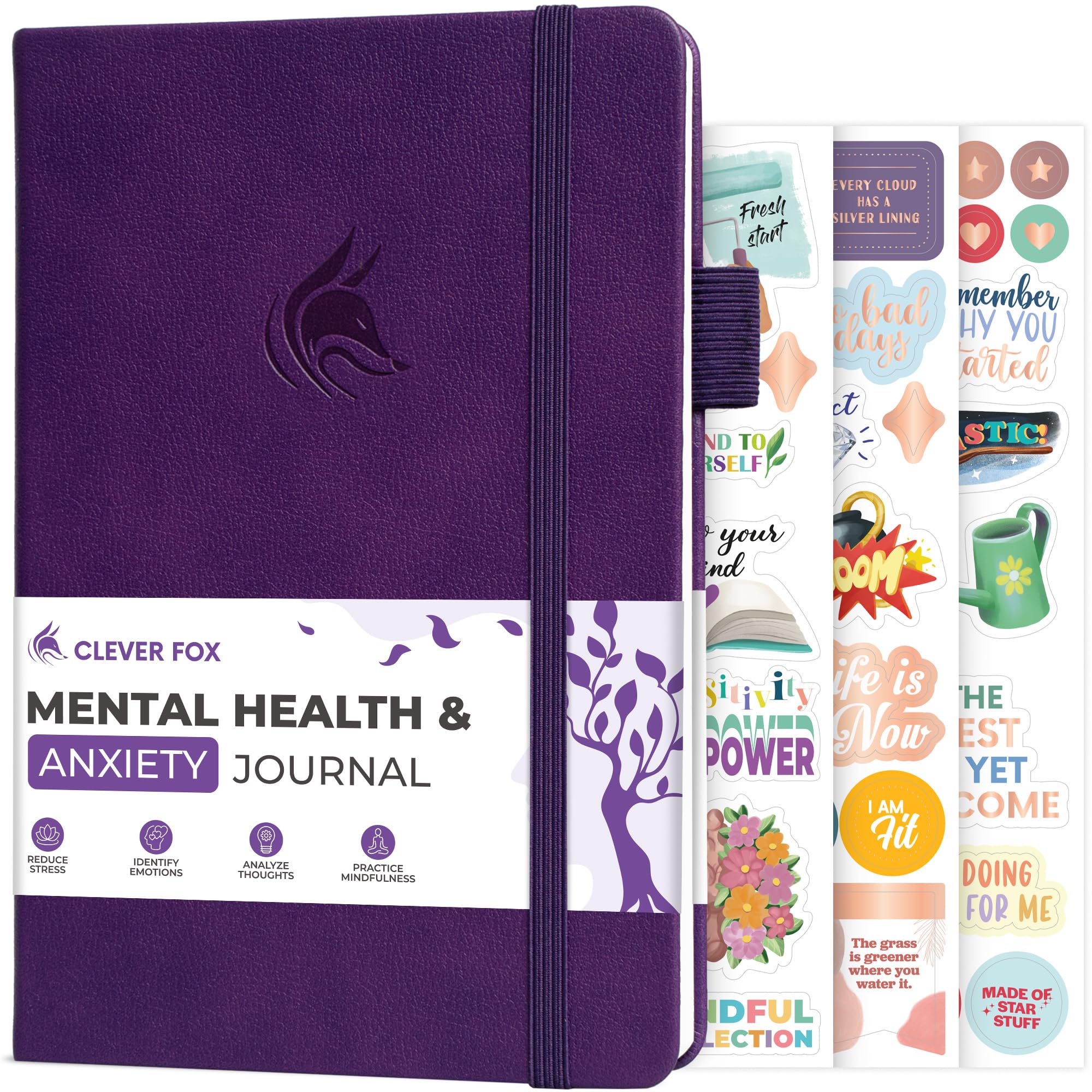
The Clever Fox Mental Health & Anxiety Journal stands out because it is purpose-built for exactly what the name promises: managing anxiety through a guided Cognitive Behavioral Therapy framework. Its daily pages prompt you to identify the specific event that triggered your anxiety, name the emotions you experienced, and then consciously reframe irrational negative thoughts into balanced ones. This structured system transforms a vague feeling of unease into a concrete, manageable thought pattern you can actively work on.
The physical build backs up the smart content. The A5 size is compact enough to slide into most handbags, a feature praised by reviewers who carry it with them throughout the day. The cover is a discreet eco-leather that doesn’t scream “self-help book,” and the 120GSM paper is noticeably thicker than average, effectively eliminating the shadowing and bleed-through that cheaper journals suffer from when using gel or fountain pens. A pen loop and elastic closure keep everything tidy between uses.
Reviewers consistently note that the journal helps them “figure out what their emotions are” and that they plan to show it to their therapist. The included stickers add a small but appreciated element of reward for daily consistency. The only common critique is that some users wish for slightly more free-writing space on each daily page, but for those who prefer a guided, efficient format, this trade-off is worth it.
Why it’s great
- Dedicated CBT framework with trigger, emotion, and reframing prompts.
- Thick 120GSM paper prevents ink bleed from gel and fountain pens.
- Compact A5 size with pen loop, discreet eco-leather cover, and elastics.
Good to know
- Limited free-space for open-ended daily journaling.
- Soft cover may not feel as protective as a hardcover option.
2. ACT, CBT & DBT Workbook: 3 in 1
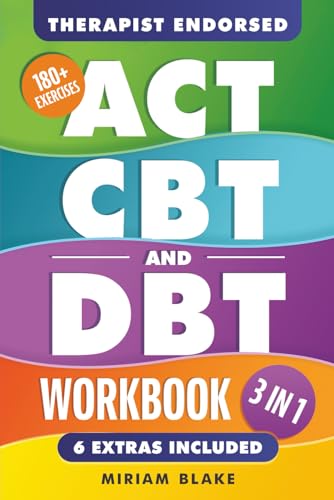
If you want a comprehensive therapeutic tool rather than a simple prompt journal, this 3-in-1 workbook delivers the most content of any option on this list. It combines Acceptance and Commitment Therapy, Cognitive Behavioral Therapy, and Dialectical Behavior Therapy into one structured volume with over 180 exercises. The progression is deliberate: you first learn to break mental barriers with ACT, then reframe harmful thought patterns with CBT, and finally regulate intense emotions with DBT skills. This layered approach ensures you aren’t just writing — you’re building real psychological resilience.
The book is designed for both beginners and experienced users of therapy workbooks. Explanations are clear and scientific without being dry, and each exercise ties directly to a real-life scenario, like dealing with a difficult boss or stopping a rumination spiral. The author provides free bonus resources via a website and QR code, including a self-reflection challenge and a self-love roadmap, extending the value far beyond the 330 printed pages.
Customer feedback consistently highlights how practical the exercises feel. One reviewer noted that the workbook was “life-changing” for helping clients addicted to substances manage difficult thoughts and emotions. Another praised its logical progression and accessibility. The only drawback is that this is a softcover workbook, not a hardcover journal, so it may feel less like a keepsake and more like an active study tool. But for depth and therapeutic rigor, this workbook is unmatched in this category.
Why it’s great
- Integrates three major therapeutic frameworks (ACT, CBT, DBT) in one volume.
- Over 180 exercises with practical real-life applications.
- Includes free bonus resources and a structured step-by-step progression.
Good to know
- Softcover binding feels more like a textbook than a personal journal.
- Requires dedicated time to work through exercises; not a quick daily write.
3. ⩓ Per Se Wellness Journal

The ⩓ Per Se Wellness Journal takes a holistic approach, blending anxiety management with broader wellness tracking. Unlike pure CBT or ACT journals, this one dedicates room to sleep, meals, water intake, exercise, emotional patterns, and gratitude alongside traditional journaling prompts. For someone whose anxiety manifests in physical habits like poor sleep or skipped meals, this integrated tracking can reveal connections a purely emotional journal might miss. The 91-day undated layout means you can start on any Tuesday in the middle of the year without guilt.
The hardware is genuinely impressive for this tier. The hardcover features gold foil stamping that looks and feels premium, and the lay-flat binding allows the journal to open a full 180 degrees on any surface — no cracking the spine or holding pages open with your elbow. The 100GSM paper is thick enough for most gel pens, though some reviewers noted that heavier ink applications can create slight shadows. A faux leather cover and practical 6.5 x 8-inch size make it comfortable to write in at a desk or on the couch.
Reviews praise the journal for promoting “organization and mindfulness without being overwhelming” and for helping users be “more mindful of eating, movement, and self-care.” The venting section on each page gets special mentions for providing a pressure-release valve for anxious thoughts. The main critique is that some users wished the paper were even thicker, as certain pens can cause bleed-through. For a 91-day all-in-one journal that covers both mental and physical wellness, this is a strong mid-range pick.
Why it’s great
- Integrates mood, sleep, food, water, and exercise tracking on every page.
- Durable hardcover with gold foil and true 180-degree lay-flat binding.
- Undated design allows starting any day with zero wasted pages.
Good to know
- 100GSM paper may shadow with wet or heavy gel pens.
- Focus is broader wellness; less depth on cognitive reframing than CBT-specific journals.
4. The Cognitive Behavioral Workbook for Anxiety

Published by New Harbinger Publications, a respected name in therapeutic workbooks, this second edition of The Cognitive Behavioral Workbook for Anxiety is a comprehensive step-by-step program grounded entirely in proven CBT methods. It doesn’t rely on trendy layout designs or stickers — it focuses on substance. The book presents different anxiety scenarios, from generalized worry to panic triggers, and guides you through worksheets and questionnaires designed to change how you cognitively process stress. A therapist recommended it for its straightforward, practical, science-based approach.
The format is pure workbook: 280 pages with structured exercises, reflection questions, and space to write your responses. It emphasizes that anxiety is a natural and functional response that can become hindering, then offers clear solutions without relying on unproven theory. The reading level is accessible but not simplistic, making it suitable for both individuals working on their own and mental health professionals using it with clients. One aspiring therapist noted it “helped me meet my clients where they were.”
Reviewers consistently describe it as an “excellent book, easy reading” that “had a significant influence” on their anxiety disorder. The main trade-off is presentation: this is a print-length workbook with a straightforward, academic appearance rather than a decorative journal you’d display on a coffee table. If your priority is proven therapeutic content over aesthetic design, this resource delivers immense value. It also lacks the daily prompt structure of a journal, functioning better as a program you work through at your own pace.
Why it’s great
- Deep, research-backed CBT content from a respected publisher.
- Structured worksheets and questionnaires for systematic progress.
- Used and recommended by therapists for both self-help and client work.
Good to know
- Classic workbook format; lacks decorative elements and daily journal structure.
- Paperback binding; smaller page dimensions than standard letter-size workbooks.
5. ACT Daily Journal
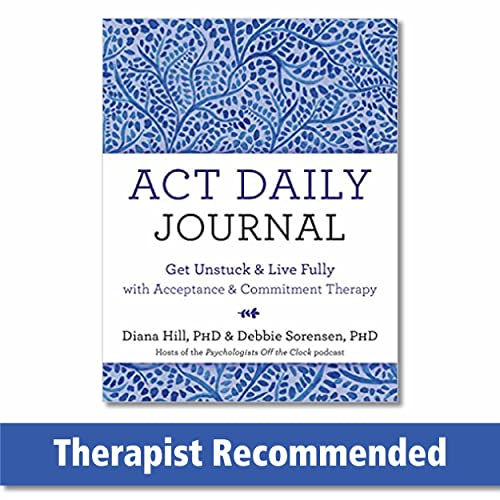
The ACT Daily Journal, published by New Harbinger Publications, is built on Acceptance and Commitment Therapy — a framework that encourages accepting uncomfortable emotions rather than fighting them while committing to actions aligned with personal values. This journal prescribes an 8-week program with a daily page that includes a prompt, an activity, space for journaling, and a practice to implement. It assumes a morning routine, helping you set an intention for the day ahead rather than just reflecting on the past.
What makes this journal different is its educational depth before the writing begins. The first section teaches you the core principles of ACT, which some users found surprising but ultimately beneficial. The authors are licensed psychologists who host the “Psychologists Off the Clock” podcast, giving the content a credible, research-backed foundation. The prompts are designed to help differentiate your own voice from harsh internalized societal or family narratives, focusing on self-compassion and value-driven living. One reviewer described it as “a great mental health workbook” that helped with healing and personal growth.
The main consideration is format: because this journal contains substantial instructional material, once you write in it, re-reading certain passages becomes difficult. Several reviewers recommend keeping a separate companion journal for longer entries or using a Bible-marker pen to avoid marking up the instruction pages. At 240 pages and an 8-week duration, it’s a shorter commitment than the 91-day journals, which can feel more approachable for someone new to structured journaling. For anyone whose therapist specifically recommends ACT, this is the most targeted option available.
Why it’s great
- Structured 8-week ACT program from a credible publisher with licensed psychologists.
- Teaches core ACT principles before journaling begins, building foundational understanding.
- Prompts foster self-compassion and differentiate personal voice from harsh internal narratives.
Good to know
- Significant upfront reading content; once written in, instructions are harder to revisit.
- Assumes a morning-focused routine; may not suit evening journalers.
FAQ
Should I choose a CBT journal or an ACT journal for anxiety?
What paper weight prevents ink bleed in an anxiety journal?
Are undated anxiety journals better than dated ones?
Final Thoughts: The Verdict
For most users, the best anxiety journal winner is the Clever Fox Mental Health & Anxiety Journal because it combines a dedicated CBT framework, thick 120GSM bleed-resistant paper, and a compact A5 size — all at a balanced value point that feels premium without overreach. If you want comprehensive multi-therapy depth with over 180 exercises, grab the ACT, CBT & DBT Workbook: 3 in 1. And for a daily wellness companion that tracks sleep, nutrition, and habits alongside emotions, nothing beats the ⩓ Per Se Wellness Journal.

Mo Maruf
I created WellFizz to bridge the gap between vague wellness advice and actionable solutions. My mission is simple: to decode the research and give you practical tools you can actually use.
Beyond the data, I am a passionate traveler. I believe that stepping away from the screen to explore new environments is essential for mental clarity and physical vitality.