Our readers keep the lights on and my smoothie glass nicely filled. As an Amazon Associate, I earn from qualifying purchases.
A minor cut, a scraped knee, or a razor nick — these happen daily. The difference between a quick heal and a lingering, angry infection often comes down to one choice: what you put on it right after. Plain petrolatum seals the wound, but it does nothing against the bacteria already there. That is where a true clinical-grade formulation makes its case. You need something that actively guards against microbial invasion while letting the skin’s natural repair process work undisturbed.
I’m Mohammad Maruf — the founder and writer behind WellFizz. I have spent hundreds of hours dissecting laboratory data, sterilization protocols, and wound-healing research to separate real antimicrobial power from marketing fluff in the skin infection space.
This guide covers five proven options, from a century-old herbal salve to a medical-grade gel used in hospital wound care. Each product here was selected for its active antiseptic mechanism and real-world results, helping you find the best antiseptic cream for skin infections that fits your specific situation.
How To Choose The Best Antiseptic Cream For Skin Infections
Selecting the wrong formula can delay healing or even worsen a wound. The first decision is the active agent. Phenol-based salves like Rawleigh work by denaturing bacterial proteins, making them effective on surface-level scrapes and chapped skin but they can sting on open tissue. Silver-based gels such as SilvrSTAT use ionic silver particles that disrupt bacterial cell membranes without damaging healthy cells, making them ideal for burns and deeper lacerations. Sodium hypochlorite gels like Anasept are the standard in hospital settings because they break down biofilm on chronic wounds without burning. Always match the agent to the wound type — not all antiseptics are created equal.
Viscosity and Application Method
Thick ointments, such as Aquaphor and Rawleigh, create a physical barrier that locks in moisture and prevents debris from entering the wound. This works well for dry, cracked skin and superficial abrasions. Gels, on the other hand, spread into irregular wound beds and can be applied directly to raw tissue without the suffocating feel. For deep puncture wounds or areas under a bandage, a gel formula ensures the active ingredient reaches every crevice. For everyday dry-skin maintenance or minor cuts on knuckles, a thick ointment stays put longer.
Cross-Use Safety — Humans and Animals
If you live on a farm or have pets that get into scrapes, a multi-species formula saves money and shelf space. Rawleigh Antiseptic Salve is explicitly labeled for horses, livestock, and domestic pets, with a century-old track record. Most medical-grade products like Anasept or SilvrSTAT are tested only on human tissue and should not be used on animals unless specifically indicated. Check the product’s safety data sheet or veterinary guidance before applying a human antiseptic to an animal wound.
Quick Comparison
On smaller screens, swipe sideways to see the full table.
| Model | Category | Best For | Key Spec | Amazon |
|---|---|---|---|---|
| SilvrSTAT First Aid Kit Gel | Premium | Deep wounds & burns | 32 PPM SilverSol Ag₄O₄ | Check Price |
| Anasept Antimicrobial Gel | Premium | Chronic & post-surgical wounds | Sodium Hypochlorite active | Check Price |
| Rawleigh Antiseptic Salve | Mid-Range | Farm & family multi-use | Phenol + turpentine formula | Check Price |
| Aquaphor Healing Ointment | Mid-Range | Dry, cracked skin & post-procedure | Water-free petrolatum barrier | Check Price |
| Dimora Skin and Wound Cleanser | Mid-Range | Sting-free wound prep & cleansing | PHMB formula, pH 5.5 | Check Price |
In‑Depth Reviews
1. SilvrSTAT First Aid Kit Gel

This gel uses SilverSol Ag₄O₄ particles suspended at 32 PPM, a concentration high enough to break bacterial biofilms yet gentle enough for first- and second-degree burns. The silver ions attack multiple microbial targets simultaneously, which drastically reduces the chance of resistance forming — a major advantage over single-mechanism antiseptics. Users report that swelling and redness around infected hand wounds subsided within 72 hours of daily application.
Its low-viscosity gel formulation means it flows into deep lacerations and puncture sites where thicker ointments cannot reach. The texture is smooth, non-greasy, and leaves no residue, making it comfortable under a bandage for extended wear. One reviewer described clearing a severe hand infection within 24 hours after nothing else worked, which aligns with the broad-spectrum action of ionic silver. The 3-ounce tube is compact enough for a bug-out bag or glove compartment.
The primary limitation is price per ounce compared to petrolatum-based options. For a single deep wound or burn, the cost is justified by the speed of healing. However, for daily maintenance of dry skin or chapped lips, a cheaper multi-purpose ointment would be more economical. It is also not labeled for use on animals, so farm households will need a separate product for livestock.
Why it’s great
- Hospital-grade silver particles kill bacteria without burning
- Gel reaches deep into puncture wounds and burns
- Non-greasy, residue-free application under bandages
Good to know
- Higher per-ounce cost than basic ointments
- Not labeled for veterinary use
2. Anasept Antimicrobial Skin & Wound Gel
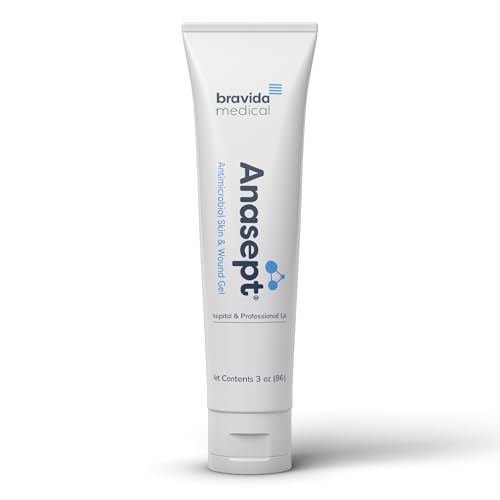
Sodium hypochlorite at a stabilized concentration is the active workhorse here — the same class of agent used in hospital wound care for decades. Unlike iodine-based products that stain skin and can irritate thyroid function, this gel stays clear, odorless, and doesn’t burn even on exposed dermis. Its primary strength is breaking down biofilm, the slimy barrier that bacteria build to resist antibiotics, making it especially effective for chronic wounds and post-surgical incisions.
Wound care specialists often recommend Anasept for abscess packing and deep cavity wounds because the gel can be applied directly to the wound bed or onto the dressing without losing efficacy. One reviewer noted it filled a large hole from a staph infection in just two days, which speaks to how aggressively it clears infection while keeping the environment moist for new tissue growth. The 3-ounce tube is a standard size for a full recovery course, and the nozzle design helps avoid direct contamination of the tube.
On the downside, this product is strictly for human use, and the active ingredient degrades over time. The shelf life is adequate when stored at room temperature, but you should not stockpile multiple tubes for years. It is also not intended as a daily moisturizer — use it only on broken skin or wounds. For general dry-skin care, you would need a separate ointment.
Why it’s great
- Breaks down biofilm on chronic wounds
- Odorless, sting-free, clear application
- Recommended by wound care specialists for abscesses
Good to know
- Active ingredient degrades over time
- Not for daily dry-skin maintenance
3. Rawleigh Antiseptic Salve
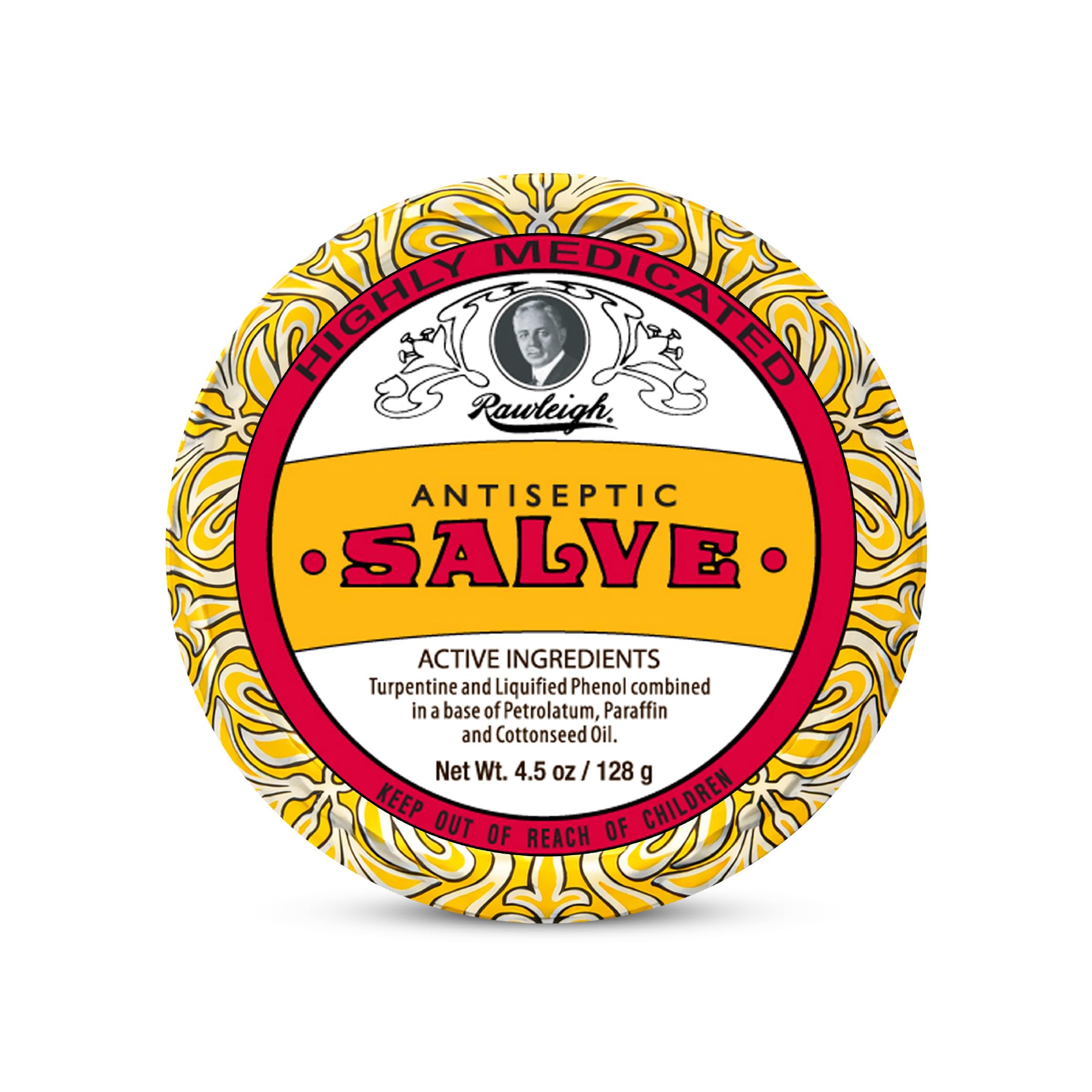
The formula has not changed since 1889 — turpentine and liquefied phenol suspended in a petrolatum, paraffin, and cottonseed oil base. Phenol denatures bacterial proteins on contact, making this salve a potent surface antiseptic for minor cuts, scrapes, blisters, and chapped skin. The thick, waxy consistency creates a physical seal that keeps contaminants out while the skin breathes underneath. Reviewers consistently note that a small dab goes a long way, and the 4.5-ounce tin lasts a family months.
What sets Rawleigh apart is its dual certification for humans and animals. Farmers use it on horse wire scratches, chapped teats on livestock, and dog paw pads — one tin replaces half a medicine cabinet. The herbal, piney aroma is a sensory signature that long-time users describe as medicinal and reassuring. One reviewer reported that it lightened bruising on thin, aging skin within days, which aligns with the anti-inflammatory properties of phenol at low concentrations.
The trade-off is that this is not a gel. It does not flow into deep puncture wounds; it sits on top. For a deep laceration or a burn, you want a silver or hypochlorite gel that can get into the crevices. Also, the turpentine component can cause a mild sting on freshly abraded skin, though it subsides quickly. People sensitive to strong scents may find the aroma off-putting.
Why it’s great
- Safe for use on horses, livestock, dogs, and humans
- Thick protective barrier lasts hours without reapplication
- Generous 4.5-ounce tin at a budget-friendly price per use
Good to know
- Thick consistency won’t penetrate deep wounds
- Mild sting on raw skin; distinct herbal scent
4. Aquaphor Healing Ointment
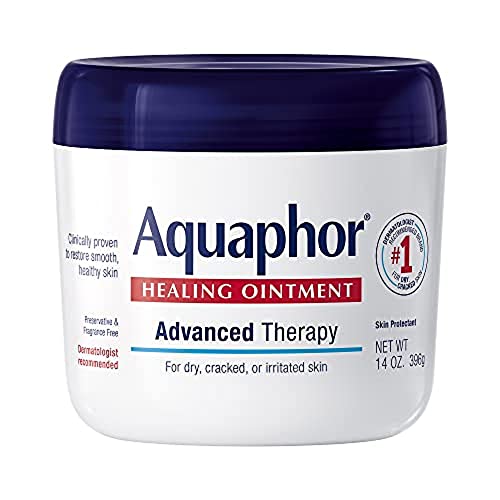
Aquaphor is technically a skin protectant, not a true antiseptic, but its water-free formula creates a semi-occlusive barrier that allows oxygen to flow while keeping bacteria out. This makes it ideal for post-cryotherapy skin, surgical incision lines, and cracked heels where the primary issue is compromised skin barrier rather than active infection. The inclusion of chamomile and natural ingredients gives it a soothing effect that many users prefer over plain petroleum jelly.
The 14-ounce value jar is the most economical option on this list when measured by total volume. Licensed cosmetologists and dermatologists frequently recommend it for dry, brittle nails, chapped lips, and cuticle damage from repeated water or chemical exposure. Users report that nightly application to feet with socks transforms cracked heels within a week. It is also one of the few products here suitable for daily full-body use without risk of over-drying or irritation.
The critical caveat is that Aquaphor contains no active antimicrobial agent. If a wound is already showing signs of infection — redness, warmth, pus — this ointment will not kill the bacteria. It is best used as a preventative seal on clean, already-disinfected skin. For infected wounds, you need one of the silver or phenol-based options above. Also, the jar format can introduce contamination if fingers are dipped repeatedly, so use a clean spatula for multi-user households.
Why it’s great
- Exceptional value for dry-skin and post-procedure care
- Creates a breathable barrier that supports natural healing
- Soothing chamomile base; unscented and non-irritating
Good to know
- No active antimicrobial agent — will not treat active infection
- Jar format risks contamination without clean application tools
5. Dimora Skin and Wound Cleanser

Dimora uses PHMB (polyhexamethylene biguanide) as its active cleansing agent, a compound known for its broad-spectrum antimicrobial activity and near-zero cytotoxicity. This means it kills bacteria, fungi, and some viruses without stinging or damaging healthy granulation tissue. The pH of 5.5 matches healthy skin’s natural acidity, which helps maintain the skin barrier while removing debris and biofilm from cuts, abrasions, and lacerations. It is completely free of alcohol, iodine, and other harsh additives that delay healing.
This is primarily a wound cleanser, not a leave-on antiseptic cream. You spray or apply it to the wound to flush out contaminants before bandaging. Users report excellent results for cleansing large surgical wounds on horses as well as human first-aid kit use, with one equestrian noting a 6-inch wound reduced to 1 inch with no infections. The 8-ounce bottle is a generous volume, and the 2-year shelf life with 8 weeks of stability after opening makes it practical for household first aid supplies.
Because it is a rinse-off cleanser rather than a stay-on gel or ointment, you will need a secondary dressing or antiseptic product to maintain a protective barrier post-cleanse. It also lacks the heavy-duty biofilm disruption power of sodium hypochlorite-based products like Anasept, so for chronic, non-healing wounds, the clinical-grade gel remains the better choice. For a sting-free, gentle first step in wound care, this is the best entry point.
Why it’s great
- Completely sting-free — ideal for children and sensitive skin
- pH-balanced to match healthy skin’s natural acidity
- Large 8-ounce bottle with long shelf life
Good to know
- Designed as a rinse-off cleanser, not a leave-on treatment
- Less effective on established biofilm than hypochlorite gels
FAQ
Can I use a silver-based gel daily on a chronic wound?
Does Rawleigh Antiseptic Salve expire?
Is Aquaphor safe to use on an infected wound?
Can Dimora wound cleanser be left on the skin like a cream?
Final Thoughts: The Verdict
For most users, the antiseptic cream for skin infections winner is the SilvrSTAT First Aid Kit Gel because its silver particles attack a broad spectrum of bacteria without harming new tissue, making it safe for everything from burns to puncture wounds. If you need a hospital-grade solution that breaks down biofilm on chronic or post-surgical wounds, grab the Anasept Antimicrobial Gel. And for a farm-and-family multi-purpose salve that works on humans, horses, and livestock, nothing beats the Rawleigh Antiseptic Salve in its classic yellow tin.

Mo Maruf
I created WellFizz to bridge the gap between vague wellness advice and actionable solutions. My mission is simple: to decode the research and give you practical tools you can actually use.
Beyond the data, I am a passionate traveler. I believe that stepping away from the screen to explore new environments is essential for mental clarity and physical vitality.