Our readers keep the lights on and my smoothie glass nicely filled. As an Amazon Associate, I earn from qualifying purchases.
Persistent pressure on vulnerable skin creates a cascade of tissue damage that standard first-aid ointments are not designed to handle. When you are dealing with a bed sore — also called a pressure ulcer — the goal shifts from simple infection prevention to active tissue repair under a moist environment that encourages granulation. The wrong cream can dry out the wound bed or introduce irritants, so narrowing down the formula that delivers both antimicrobial coverage and moisture balance is critical for preventing stage progression.
I’m Mohammad Maruf — the founder and writer behind WellFizz. I’ve spent years analyzing wound care clinical data, comparing active ingredient profiles, and cross-referencing patient outcomes to identify which topical formulations actually move the needle on stubborn non-healing wounds.
The choice comes down to how the cream handles three variables: microbial barrier, moisture retention, and pH compatibility with broken skin. This guide isolates the products that perform across all three, helping you identify the right best antibiotic cream for bed sores without wasting money on watered-down alternatives.
How To Choose The Best Antibiotic Cream For Bed Sores
Bed sores are not ordinary cuts. They develop from sustained pressure that cuts off blood flow to the tissue, and the resulting damage often extends deeper than what you see on the surface. Selecting a cream requires matching the wound stage and exudate level to a formulation that supports autolytic debridement without clogging the wound.
Active Ingredient Pathway
Look for creams that use medical-grade honey, zinc oxide, or hydrophilic polymers (like CMC) rather than basic neomycin-polymyxin-bacitracin combos. The latter can sometimes trigger contact dermatitis on fragile skin already compromised by pressure. Honey works by osmosis — it pulls fluid from the wound bed, creating a moist low-pH environment that inhibits bacterial proliferation while activating macrophages. Zinc oxide-based pastes provide a physical barrier that prevents friction and maceration, making them ideal for stage 1 sores where skin is still intact but reddened.
Moisture Handling Profile
A dry wound heals slower. The formulation must maintain a moist interface without causing maceration around the peri-wound skin. Creams that are too greasy — those high in petrolatum — can trap heat and moisture against broken skin, increasing the risk of bacterial overgrowth. Hydrophilic gels that contain CMC (carboxymethylcellulose) or medical-grade honey strike a better balance by absorbing exudate while leaving the wound bed hydrated. For low to moderate exudate, a hydrophilic wound dressing cream is often the most efficient delivery system.
Application Compatibility With Dressings
Some creams need to be applied directly to the wound and then left open to air, but most bed sore protocols require a secondary dressing to hold the cream in place and absorb excess moisture. Check whether the formula is compatible with foam, hydrocolloid, or silicone dressings. Products that state “can be used under dressings” or “will not cause dressing adherence” save you from painful dressing changes that tear new granulation tissue. Avoid creams that contain ingredients known to break down adhesive dressings prematurely.
Quick Comparison
On smaller screens, swipe sideways to see the full table.
| Model | Category | Best For | Key Spec | Amazon |
|---|---|---|---|---|
| L-Mesitran Soft | Mid-Range | Moisture-balanced deep healing | 40% medical-grade honey | Amazon |
| TriDerma MD Pressure Sore Relief | Premium | Complete sore + cleanser bundle | AP4 Aloe Complex + niacinamide | Amazon |
| Triad Hydrophilic Wound Dressing | Premium | Moderate exudate control | CMC + zinc oxide sterile | Amazon |
| Nature’s Remedies Antiseptic Cream | Budget-Friendly | Broad natural antimicrobial | 100% natural botanical base | Amazon |
| Formula 2 Skin Care Cream | Budget-Friendly | Stage 1 barrier protection | High wax concentration | Amazon |
In‑Depth Reviews
1. L-Mesitran Soft Medical Grade Honey Wound Gel

This gel contains 40% medical-grade honey, which creates a hyperosmotic environment that draws exudate out of the wound while delivering a steady supply of glucose that macrophages use to accelerate debridement. Unlike synthetic antibiotic creams that can sting on raw tissue, the honey base coats the wound without triggering a chemical burn, and the inclusion of vitamins C and E supports collagen synthesis around the margins. Users report measurable reduction in wound length — one caregiver noted a seven-inch sore shrank by an inch within the first week, which aligns with the expected autolytic action of honey-based formulations.
The gel is light enough to spread evenly over irregular wound surfaces but viscous enough to stay in place under a secondary dressing. It is compatible with foam, silicone, and hydrocolloid dressings, which eliminates the common problem of dressing adhesion to the wound bed during changes. The lanolin base adds a hypoallergenic barrier that protects peri-wound skin from maceration, a feature especially valuable for the elderly whose skin is already fragile from pressure and reduced blood flow.
Each tube holds 0.5 ounce, and the product ships as a two-pack, which gives you roughly 30 applications per tube depending on wound surface area. Some users experience a mild warming sensation on particularly sensitive wounds — this is the osmotic effect pulling fluid and should not be confused with an allergic reaction. If stinging does occur, rinsing and reapplying a thinner layer usually resolves the issue without losing therapeutic effect.
Why it’s great
- Osmotic action debrides slough without mechanical scraping
- Compatible with most secondary dressings — no adherence to wound bed
- Includes vitamins C and E to support collagen regeneration
Good to know
- 0.5 oz tubes are small for large surface area wounds
- Can cause mild transient stinging on deep ulcers with heavy exudate
2. TriDerma MD Pressure Sore Relief Healing Cream & Wound Cleanser Bundle

This bundle pairs a concentrated 4 oz healing cream with an 8.2 oz no-rinse wound spray, which covers the full wound care protocol — cleaning and treating — in one purchase. The cream uses the proprietary AP4 Aloe Complex combined with allantoin and niacinamide to accelerate epithelialization, while the dimethicone content forms a breathable moisture seal that prevents the sore from drying out between dressing changes. The spray cleanser is pH-balanced and removes biofilm debris without requiring a rinse, which is a significant time saver for caregivers managing multiple sores on a bedridden patient.
Clinically, the inclusion of niacinamide is notable because it boosts ceramide production in the skin barrier, helping rebuild the stratum corneum that pressure sores destroy. The cream absorbs quickly — surprising for a product this concentrated — which means it can be applied under a wheelchair cushion or prosthetic liner without leaving a greasy residue that causes slippage. Users who are immobile report that consistent twice-daily application warded off developing sores entirely, suggesting the formula works both as a treatment and a preventive barrier.
The bundle is free from fragrance, parabens, steroids, sulfates, mineral oil, and phthalates, making it safe for sensitive skin that has already been compromised by prolonged pressure. The women-owned brand has been manufacturing wound care products since 1992, and the NDC-listed status confirms it meets pharmaceutical-grade standards. The only downside is that the 4 oz jar may run through quickly if you are covering an ulcer larger than a few centimeters, but the spray cleanser lasts much longer since you only need a few spritzes per session.
Why it’s great
- Combines a no-rinse cleanser with a healing cream for complete protocol
- Niacinamide and allantoin actively rebuild the skin barrier
- FSA/HSA eligible and NDC-listed for pharmaceutical confidence
Good to know
- 4 oz cream jar may require frequent reordering for large surface wounds
- Not a traditional antibiotic — relies on botanicals for antimicrobial action
3. Triad Hydrophilic Wound Dressing with CMC — 6 oz

Triad is a sterile hydrophilic dressing that combines CMC (carboxymethylcellulose) with a zinc oxide base, creating a paste-like consistency designed for light to moderate exudate. The CMC fibers absorb fluid and convert into a soft gel that fills the wound cavity, while the zinc oxide provides a protective barrier against urine, stool, and friction — common irritants for bedridden patients. This dual action makes it especially effective for sacral and heel sores where moisture and shear forces constantly challenge the dressing integrity.
The hydrophilic nature of the gel supports autolytic debridement by loosening dried eschar without requiring sharp debridement. Nurses and wound care specialists often reach for Triad in difficult-to-dress areas because the paste conforms to irregular wound shapes and stays in place without migrating into healthy tissue. The 6 oz tube is generous compared to smaller ointment tubes, and because the paste is thick, a little goes a long way even on stage 2 and 3 ulcers.
One trade-off is the texture: the cream is heavy and does not absorb into the skin like a lotion-based product. It is designed to sit on the wound surface and create a physical barrier, which means you need to apply a secondary dressing such as gauze or foam to hold everything in place. Some users find the paste difficult to remove during dressing changes, but gentle irrigation with saline usually lifts it without disturbing the new granulation tissue underneath. It has been on the market since 2008 with consistently positive feedback from the long-term care community.
Why it’s great
- Hydrophilic CMC absorbs exudate and converts to a protective gel
- Sterile formulation reduces risk of introducing pathogens into deep wounds
- 6 oz tube provides substantial volume for ongoing treatment
Good to know
- Thick paste requires a secondary dressing to stay in place
- Can be difficult to fully remove during dressing changes without saline irrigation
4. 100% Natural Antiseptic Healing Cream by Nature’s Remedies
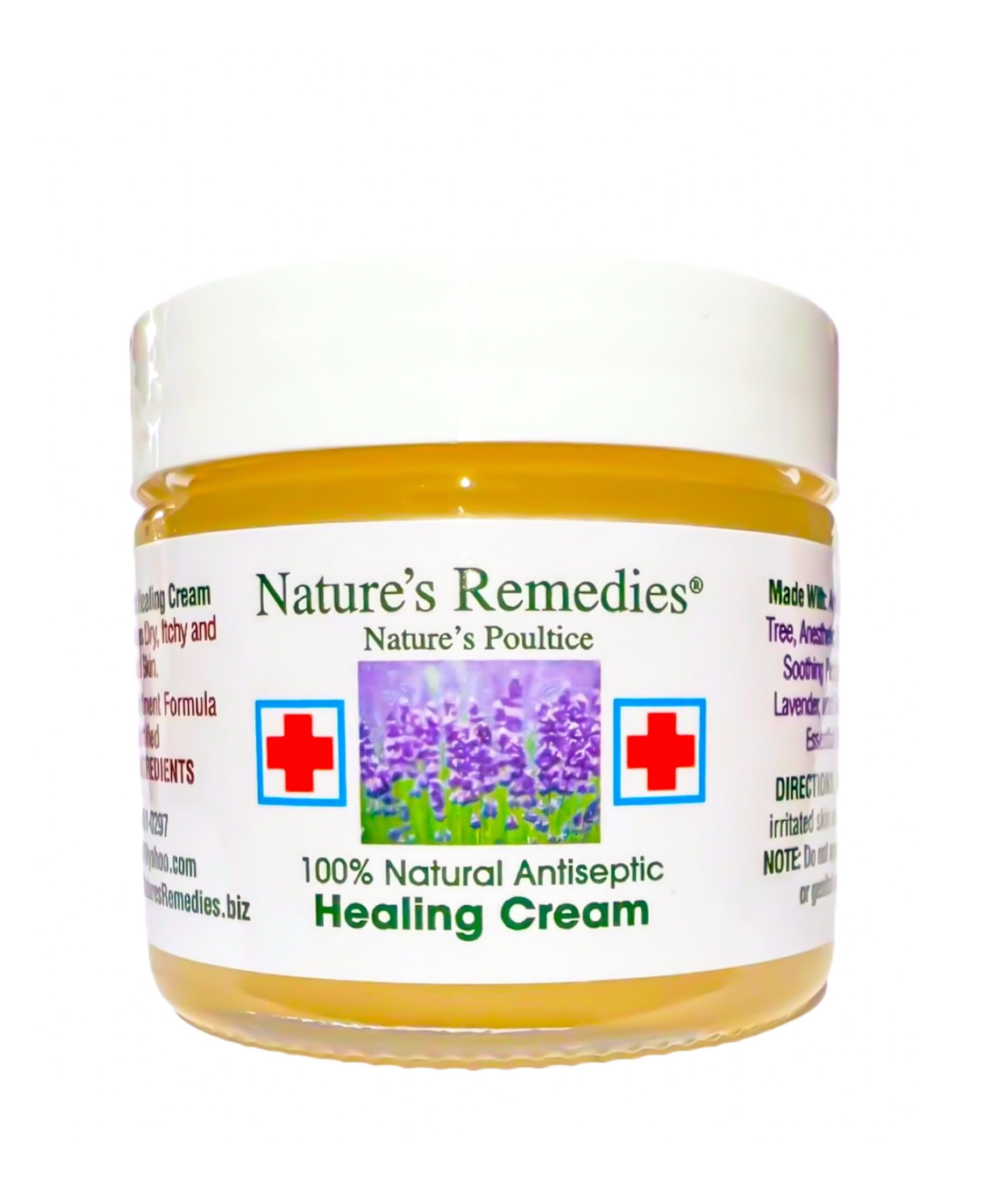
This cream relies on a blend of natural botanical extracts — not synthetic antibiotics — to achieve its antimicrobial effect on bed sores, pressure ulcers, and infected skin. The all-natural platform appeals to caregivers who prefer to avoid neomycin and bacitracin, which can cause contact sensitization on already fragile skin. Several verified reviews describe visible improvement within 24 to 48 hours, including reduced redness and itching cessation, which points to the anti-inflammatory action of the botanical oils in the formulation.
Users report that it stops itching from eczema and allergic reactions within minutes of application, and one reviewer documented complete healing of a German Shepherd’s autoimmune skin sores within 2 to 4 days. While the product is marketed for human use, the antimicrobial and wound-healing properties appear broad enough to support tissue repair across different skin types. The 2 oz jar is compact but dense — a pea-sized amount covers a palm-sized area, so it lasts through several weeks of daily application on a single stage 2 sore.
The most common complaint is the smell, which some describe as strong and medicinal — not unpleasant in the traditional sense, but noticeable enough to mention. Additionally, several users report a burning or stinging sensation upon first application, especially on open wounds. This is a known characteristic of certain botanical antimicrobials acting on raw nerve endings; the sensation typically subsides within a minute. If stinging persists, diluting the cream with a drop of aloe gel before application can help maintain tolerance.
Why it’s great
- 100% natural formula avoids synthetic antibiotic allergens
- Fast-acting relief for itching and inflammation within minutes
- Highly concentrated — small amount covers large wound areas
Good to know
- Strong medicinal smell may be off-putting in close care settings
- Initial stinging on open wounds can be uncomfortable for sensitive patients
5. Formula 2 Skin Care Cream — 8 oz

Formula 2 is not an antibiotic cream in the traditional sense — it is a high-concentration wax-based barrier cream formulated by a father-son pharmacist team to protect intact but vulnerable skin. For stage 1 bed sores where the skin is reddened but not yet broken, this cream provides a thick, impermeable layer that shields against friction, moisture, and irritants that accelerate tissue breakdown. The absence of zinc oxide is deliberate: the pharmacists argue that zinc oxide can cake on irritated skin and cause abrasion, so they rely on a blend of waxes that glide on without the gritty texture.
The cream is intensely thick — you need to warm it between your fingers before application — and it does not absorb quickly, which is exactly the point for barrier protection. It sits on the skin surface and blocks external moisture while sealing in the skin’s natural oils. Users report that deep heel cracks healed within two months of consistent nightly application, and the product is especially popular among diabetics who need to prevent skin fissures on their feet and legs. The 8 oz jar represents excellent volume for the price range, easily lasting several months when used sparingly.
The major limitation is that Formula 2 is not designed for open wounds or stage 2+ ulcers where the epidermis has already broken. Applying a wax-based barrier on an open sore can trap bacteria and delay granulation, so reserve this product for early-stage prevention or intact peri-wound skin around a dressing. The texture can feel greasy for the first 10 to 15 minutes after application — wearing socks or gloves over the cream helps contain the residue while the wax sets.
Why it’s great
- Alcohol-free, fragrance-free, and lanolin-free — safe for hypersensitive skin
- 8 oz jar offers exceptional value for long-term prevention protocols
- No zinc oxide means no caking or abrasion on irritated skin
Good to know
- Not suitable for open wounds or stage 2+ bed sores
- Greasy texture requires 10-15 minutes to fully set on the skin
FAQ
Can I use standard triple-antibiotic ointment on a bed sore?
How often should I reapply antibiotic cream on a pressure ulcer?
Is natural antiseptic cream as effective as prescription antibiotic ointment for bed sores?
Can I apply barrier cream around an open bed sore?
Final Thoughts: The Verdict
For most users, the best antibiotic cream for bed sores winner is the L-Mesitran Soft because the medical-grade honey provides osmotic debridement while maintaining the moist environment required for granulation — all without the contact sensitization risk of synthetic antibiotics. If you want a complete system with a dedicated wound cleanser, grab the TriDerma MD Bundle. And for stage 1 prevention with generous volume, nothing beats the Formula 2 barrier cream.

Mo Maruf
I created WellFizz to bridge the gap between vague wellness advice and actionable solutions. My mission is simple: to decode the research and give you practical tools you can actually use.
Beyond the data, I am a passionate traveler. I believe that stepping away from the screen to explore new environments is essential for mental clarity and physical vitality.