Our readers keep the lights on and my smoothie glass nicely filled. As an Amazon Associate, I earn from qualifying purchases.
Nothing kills a project faster than watching fresh metal bloom into orange rust. You’ve sanded, scrubbed, and prepped — only to see the corrosion return within weeks. The right anti-rust spray doesn’t just cover the problem; it chemically stops the oxidation cycle, buying your equipment, tools, and vehicle parts years of extra life.
I’m Mohammad Maruf — the founder and writer behind WellFizz. I’ve spent years analyzing chemical formulations, military-grade corrosion inhibitors, and industrial sealants to understand which compounds actually halt ferrous oxidation at the molecular level.
After comparing converters, wax-based sealers, and dielectric inhibitors across five top contenders, one thing is clear: you need a spray tailored to your specific metal environment. This guide breaks down the best options so you can find the best anti rust spray for metal for your tools, vehicle, or marine gear.
How To Choose The Best Anti Rust Spray For Metal
Not all rust sprays perform the same job. Some chemically convert existing rust into a paintable primer layer, while others form a physical barrier that moisture cannot penetrate. A third category — dielectric inhibitors — bonds at the molecular level to protect electronics and fasteners. Your choice depends entirely on whether the metal is already rusted, how exposed it is to salt or water, and whether you plan to paint over it later.
Rust Converter vs. Rust Inhibitor vs. Wax Sealant
A rust converter uses tannic acid to chemically transform iron oxide (rust) into a stable, black ferric tannate layer that acts as a primer. This is ideal for surfaces with existing corrosion — think trailers, fences, and outdoor furniture — because it reduces the need for heavy sanding. A rust inhibitor (sometimes paired with a dielectric compound) creates a moisture-repellent film that prevents oxidation before it starts. This works best on clean metal: engine blocks, tools, and electrical terminals. Wax sealants, like those used in automotive undercoating, dry to a flexible, semi-hard film that can self-heal if scratched, making them the most durable option for vehicle chassis and wheel wells.
Application Method and Coverage
Spray cans with an attachable straw let you reach deep into box sections, door sills, and crevices where rust silently forms. Aerosol sprays offer even coverage but can overspray onto surrounding areas. For large projects like a trailer or metal roof, a 16 oz to 20 oz can may be more economical. For precision work on bolts, cables, or electronics, a 6 oz aerosol with a focused nozzle gives you better control and less waste.
Durability and Environmental Resistance
If your metal lives in a salt-heavy environment — coastal air, road salt, or marine use — look for a spray tested in saltwater or qualified under military corrosion specs. Wax-based films stand up better to physical abrasion from road debris, while dielectric sprays resist washout from rain and pressure washing. Always check the cure time: full hardness can take up to 24 hours, and some converters require heat for proper bonding.
Quick Comparison
On smaller screens, swipe sideways to see the full table.
| Model | Category | Best For | Key Spec | Amazon |
|---|---|---|---|---|
| CorrosionX Rust Inhibitor | Dielectric Inhibitor | Electronics, marine engines, fasteners | 6 oz aerosol, 39,000V dielectric rating | Amazon |
| JENOLITE Waxoil Aerosol | Wax Sealant | Vehicle underbody, wheel arches, sills | 16.9 fl oz, self-sealing film | Amazon |
| Rust-Oleum Stops Rust Reformer | Rust Converter | Existing rust on tools, fences, metal furniture | 8 oz, covers 20 sq. ft. | Amazon |
| Seymour 16-45 Rust Converter | Rust Converter | Vehicles, trailers, railings, sheet metal | 16 oz, durable black finish | Amazon |
| Quicksilver Corrosion Guard | Rust Inhibitor | Marine engines, outboards, electrical connections | 12 oz, water-resistant barrier | Amazon |
In‑Depth Reviews
1. CorrosionX Rust Inhibitor
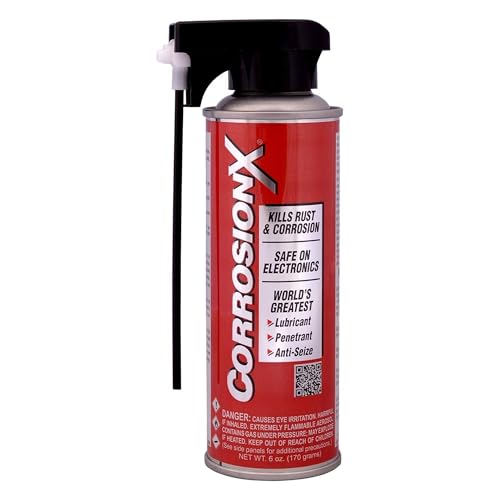
CorrosionX is the only product in this roundup qualified under a U.S. Navy Advanced Corrosion Preventive Compound specification — that alone tells you the engineering behind it. The formula molecularly bonds to metal surfaces, displacing moisture and forming a dielectric film rated over 39,000 volts. This makes it uniquely suitable for electronics, battery terminals, sensors, and any situation where a conductive spray would cause a short. The self-healing film means minor scratches don’t expose bare metal to oxidation.
In real-world use, this spray excels as a penetrating oil for freeing rusted bolts and seized marine fittings. Users consistently report it outperforms other products on salt-exposed outboards, trailers, and coastal tools. The 6 oz can is compact, but the aerosol delivers a focused stream that reaches into tight crevices. It clings aggressively to vertical surfaces without running, which matters when treating engine blocks or suspension components.
The major trade-off is the nozzle design — some users find it sprays a splatter pattern that makes precise, small-dose application frustrating. The smell is also stronger than wax-based alternatives, though it dissipates within minutes. For anyone protecting electronics, marine gear, or tools stored in high-humidity environments, this industrial-strength inhibitor is the most versatile and scientifically proven option on the list.
Why it’s great
- Qualified by U.S. Navy for corrosion protection
- Dielectric rating over 39,000V — safe for electronics
- Self-healing film resists scratches and washout
Good to know
- Nozzle dispenses unevenly; hard to apply small amounts
- Strong chemical odor during application
- Only 6 oz — smaller volume than competitors
2. JENOLITE Waxoil Rust Prevention Aerosol

JENOLITE Waxoil takes a fundamentally different approach: instead of chemically converting rust, it lays down a thick waxy barrier that physically seals metal from moisture. Spray it onto underbodies, wheel arches, chassis rails, or inside door sills, and it dries to a clear, semi-hard film that stays flexible. If the coating gets scratched or punctured by road debris, the wax self-seals — a property that oil-based sprays simply cannot offer.
Users in the salt belt — think Iowa, Michigan, or coastal regions — consistently report this outperforms lanolin-based products, which can leave a sticky, smelly residue that attracts dirt. Waxoil sprays on like paint, dries to a touchable finish within an hour, and doesn’t transfer black smudges onto your hands or clothing. The clear film is also ideal if you want to inspect the metal condition without stripping a coating. One 16.9 oz can treats the front suspension of a full-size pickup, making it a practical choice for seasonal underbody maintenance.
The main drawback is that Waxoil is purely a barrier — it won’t stop existing rust from spreading underneath if you skip surface prep. For heavy corrosion, you need to wire-brush or sand first. Also, the aerosol can lacks a straw attachment, making it harder to reach deep inside box sections compared to some competitors. For long-term protection on vehicle structural metal, this is the most durable sealant in the lineup.
Why it’s great
- Self-sealing wax film repairs minor scratches
- Clear finish — inspect metal without removing coating
- Outperforms lanolin for winter road-salt exposure
Good to know
- No straw for tight crevice application
- Does not convert existing rust; requires prep
- Wax film can chip under heavy impact
3. Rust-Oleum 7830730 Stops Rust Rust Reformer

Rust-Oleum’s Rust Reformer is the most accessible entry point for anyone dealing with surface rust on tools, garden equipment, or outdoor metal furniture. Instead of just coating the rust, the formula chemically converts iron oxide into a black ferric tannate layer that functions as a built-in primer. This means you can skip the heavy sanding step — just wire-brush loose scale, spray, and the conversion happens on contact. It covers about 20 square feet per 8 oz can, which is enough for a medium-sized toolbox or a single trailer fender.
Customer feedback across hundreds of uses is remarkably consistent: the product works well on moderately rusted surfaces, but requires two coats and ambient heat for full curing. If the metal is deeply pitted or coated in oil, you’ll need to sand to bare metal first. The finish dries to a flat matte black that can be top-coated with any oil-based paint, making it a legitimate first step in a multi-layer restoration. Users report great results on mower decks, fence gates, and even cast iron cookware stands.
The downsides are predictable for a converter in this tier. The 8 oz can goes quickly on larger projects, and the finish is not UV-stable — direct sunlight will fade the black over months. For strictly cosmetic indoor projects or as a base layer before painting, this is the most cost-effective chemical rust solution available. Just don’t expect it to act as a standalone exterior finish.
Why it’s great
- Chemically converts rust into paintable primer
- Reduces need for sanding on surface rust
- Low entry cost and widely available
Good to know
- Not UV-resistant; will fade in direct sun
- Requires heat and two coats for best results
- Small can — limited coverage per application
4. Seymour 16-45 Rust Converter

Seymour’s 16-45 Rust Converter is the convertible spray you reach for when you need professional-grade results on vehicles, trailers, or heavy equipment. At 16 oz, it holds twice the volume of the Rust-Oleum alternative, and its black finish lays down more evenly straight from the can — no drips, runs, or uneven patches. The chemical conversion penetrates surface rust and locks it into a durable black barrier that prevents future corrosion from forming underneath. Users report it bonds fast and dries to a touch-ready surface within minutes.
Real-world tests on zero-turn mowers, outdoor grills, and pickup trucks confirm the coating holds up under engine heat and direct weather exposure. One reviewer noted it stopped rust on a decade-old mower deck so effectively that the machine looked nearly new. The spray pattern is consistent and forgiving, allowing multiple light coats without the finish turning gummy or uneven. For large structural metal — railings, storage tanks, sheet metal — this is the converter that saves you hours of prep time.
The only hesitation buyers express is the pricing, which sits slightly above the entry-level converter options. Also, like all converters, it requires that you knock off loose rust and degrease the surface before spraying. The finish is a flat black that accepts top-coat paint well, but it is not a standalone gloss finish. For anyone restoring a vehicle or tackling a big metal project, the extra cost is justified by the coverage and consistent application.
Why it’s great
- Consistent, even spray without drips or runs
- 16 oz can provides generous coverage for large projects
- Bonds fast and holds up under engine heat
Good to know
- Requires clean, loose-rust-free surface for bonding
- Flat black finish needs top-coat for gloss
- Premium pricing relative to smaller converters
5. Quicksilver Corrosion Guard Engine Protectant
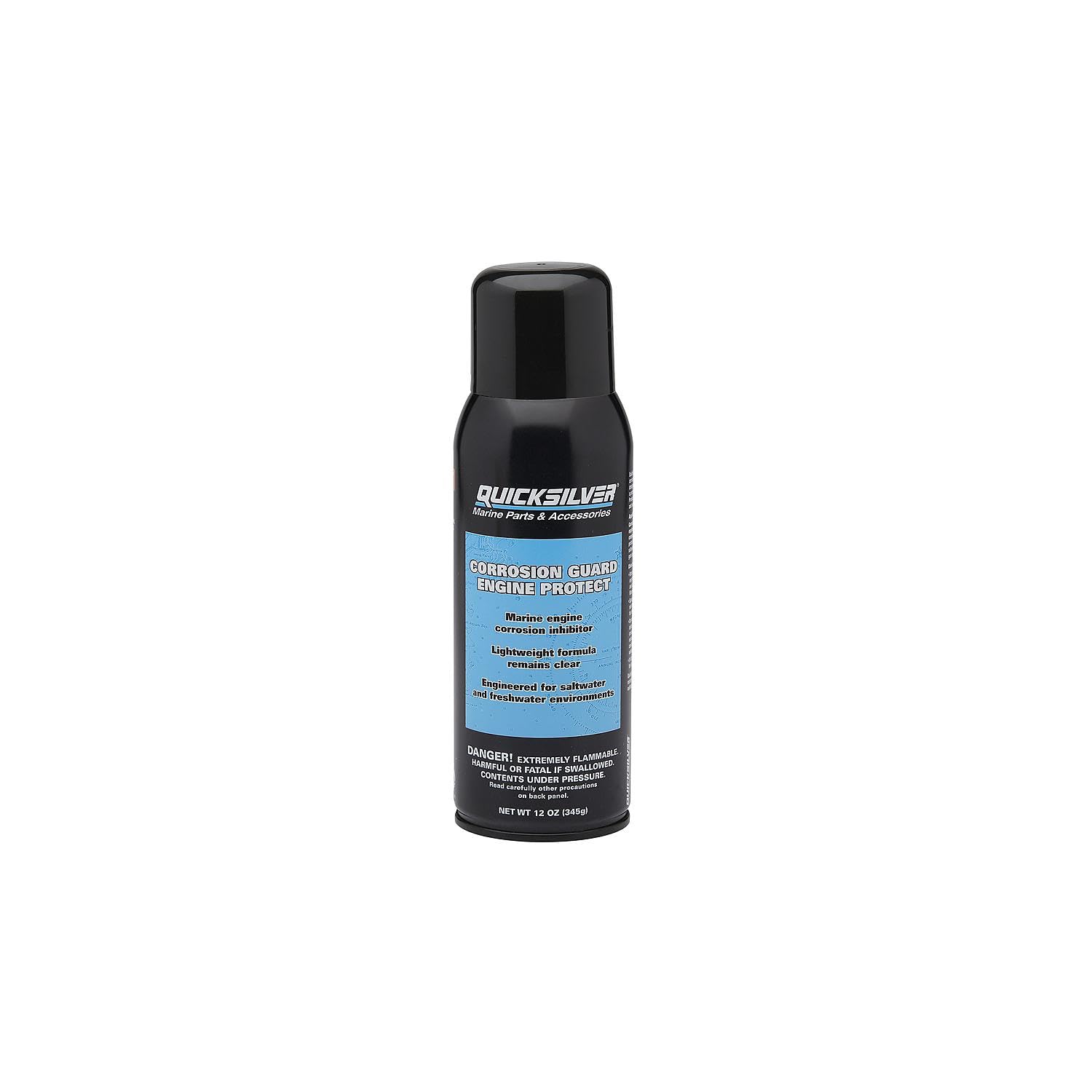
Quicksilver’s Corrosion Guard is engineered specifically for marine environments, where saltwater and freshwater exposure accelerates rust on outboard engines, sterndrives, and electrical connections. The 12 oz spray dries to a clear film that is water-resistant without becoming tacky or gummy over time. An attachable straw lets you direct the spray into tight spaces — electrical harness connectors, throttle cable ends, and hidden engine crevices where moisture collects and starts the corrosion cycle.
Boat owners and winterization specialists consistently rate this as the go-to for pre-storage engine protection. Spray it on before layup, and the film stays active through months of inactivity, preventing oxidation on cylinder walls, gearcase surfaces, and wiring terminals. The formula is also safe to use on painted metal, so you can coat the entire outboard without worrying about damage to the finish. For ATV/UTV owners in wet climates, it performs equally well on exposed frame components and drive shafts.
The film is not as mechanically durable as a wax-based sealant — heavy abrasion from road debris can wear it off. It also lacks the self-healing property of Waxoil. But for marine-specific corrosion prevention, especially on electronics and moving engine parts, this spray hits the balance between protection and serviceability. You can simply reapply each season without stripping old layers.
Why it’s great
- Engineered for saltwater and freshwater marine use
- Attachable straw reaches deep into engine components
- Clear, non-gummy film stays active through storage
Good to know
- Film is less abrasion-resistant than wax sealants
- Does not self-seal if scratched or chipped
- Best suited for seasonal reapplication
FAQ
Can I paint over a rust converter spray?
How long does an anti rust spray last once applied?
Is anti rust spray safe for painted metal surfaces?
Final Thoughts: The Verdict
For most users, the best anti rust spray for metal winner is the CorrosionX Rust Inhibitor because it combines dielectric safety for electronics, deep penetration for seized parts, and a self-healing film that resists moisture. If you need long-term vehicle underbody protection, grab the JENOLITE Waxoil. And for chemically stopping rust on existing corrosion before painting, nothing beats the coverage of the Seymour 16-45 Rust Converter.

Mo Maruf
I created WellFizz to bridge the gap between vague wellness advice and actionable solutions. My mission is simple: to decode the research and give you practical tools you can actually use.
Beyond the data, I am a passionate traveler. I believe that stepping away from the screen to explore new environments is essential for mental clarity and physical vitality.