Our readers keep the lights on and my smoothie glass nicely filled. As an Amazon Associate, I earn from qualifying purchases.
Carrying a smartphone pressed against your body means a transmitter is constantly emitting RF energy inches from your skin. Whether in a pocket, clipped to a belt, or tucked in a bag, the choice of what surrounds that device directly changes your daily exposure. The market has responded with pouches, cases, and inserts, but not all deliver measurable reduction.
I’m Mohammad Maruf — the founder and writer behind WellFizz. My research focuses on the material science behind protective accessories, analyzing third-party lab reports and customer RF measurements to separate real shielding from marketing claims.
After reviewing dozens of options and cross-referencing lab attenuation data with real-world user tests, I have composed a definitive guide to the best anti radiation phone case for anyone serious about reducing their exposure without sacrificing phone usability.
How To Choose The Best Anti Radiation Phone Case
Finding a case that actually reduces your RF exposure requires looking beyond the packaging. The effectiveness of an anti-radiation case depends on three factors: the shielding material, the coverage pattern, and independent verification. Here is what to look for.
Shielding material and coverage
The most effective designs use a metal-plated fabric — often a blend of nickel and copper — sewn or embedded into the side of the case that faces your body. This one-sided approach blocks RF from reaching you while leaving the phone’s antenna free to communicate. Full Faraday bags, by contrast, enclose the device completely and kill all signal. For daily carry, a one-sided shield is the practical choice.
Lab testing and attenuation values
Trustworthy brands publish results from an FCC-recognized or NVLAP-accredited laboratory. Look for attenuation measured in decibels (dB) across the 400 MHz to 4 GHz range, which covers cellular, WiFi, and Bluetooth frequencies. A product that provides -30 dB of attenuation blocks approximately 99.9% of RF energy in that band. If a brand only states “blocks 99%” without citing a test standard, consider it marketing language rather than a spec.
Form factor and daily usability
Radiation-reducing cases come in several form factors: pouches with a belt loop or crossbody strap, flip folio cases with card slots and a stand, and slim stick-on shields that go under your regular case. Pouches offer the most robust shielding but add a step when you want to use the phone. Folio cases provide constant protection and double as a wallet. Stick-on shields preserve your phone’s original look but provide the least measurable reduction. Choose the form factor you will actually use every day.
Quick Comparison
On smaller screens, swipe sideways to see the full table.
| Model | Category | Best For | Key Spec | Amazon |
|---|---|---|---|---|
| SafeSleeve iPhone 16 Pro Case | Flip Folio | All-day carry with wallet | FCC-tested, 99% RF reduction | Amazon |
| RadEnergy iPhone 14 Folio | Leather Flip | Style with certification | NVLAP-tested, 99% reduction | Amazon |
| DefenderShield Phone Pouch | Pouch/Crossbody | Hands-free daily wear | Lab-tested, 5G + WiFi shielding | Amazon |
| Faraday Defense Jacket Pro | Faraday Pouch | Full signal blocking | -85dB attenuation, magnetic closure | Amazon |
| SYB Shield Your Body Pouch | Neoprene Pouch | Budget-friendly protection | Metallic fiber liner, open-top | Amazon |
| RadiArmor EMF Sleeve | Neoprene Sleeve | Value with proven reduction | 91-96% real-world reduction | Amazon |
| WAVEBLOCK Sticker | Stick-on Shield | Low-profile under any case | Patented design, USA-made | Amazon |
In‑Depth Reviews
1. SafeSleeve EMF Protection Anti Radiation iPhone 16 Pro Case
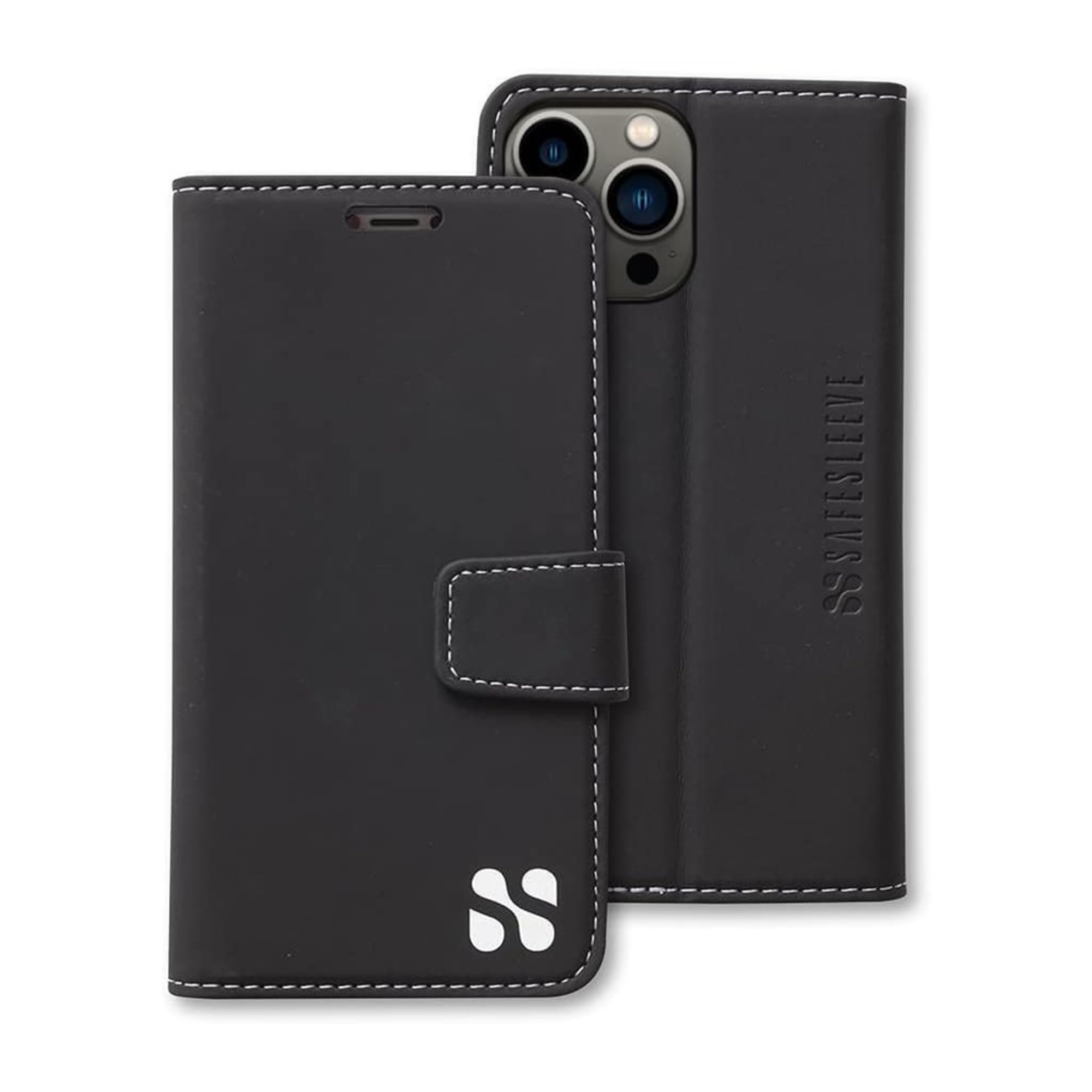
The SafeSleeve is one of the few products on the market with shielding tested at an FCC-accredited lab, verified to deflect up to 99% of RF and ELF radiation from 5G, WiFi, and cellular bands. Unlike simple pouches, this is a full flip folio that wraps your phone continuously, so the shielding layer is always between the device and your body — even while the phone is in your pocket. The vegan leather exterior and precision cutouts for the iPhone 16 Pro’s camera and buttons make it feel like a premium daily case rather than a medical accessory.
Beyond radiation reduction, the SafeSleeve integrates three RFID-blocking card slots, a cash pocket, and a built-in adjustable kickstand for hands-free video calls or streaming. The magnetic clasp keeps the folio securely closed, and the case is drop-tested to military standards (MIL-STD-810G). Users who measured their phone’s RF output with an EMF meter confirmed a dramatic drop when the flap was closed, with no reduction in call quality or data speed.
It is bulkier than a slim silicone case and not ideal for shallow pockets, but the combination of certified shielding, wallet functionality, and drop protection makes it the most complete solution for anyone who wants one case to do everything. The wristlet attachment point is a nice add-on for those who prefer to carry rather than pocket the phone.
Why it’s great
- FCC-accredited lab testing confirms 99% RF deflection
- Functional wallet with RFID-blocking slots and cash pocket
- Built-in kickstand and military-grade drop protection
Good to know
- Adds noticeable bulk to the phone
- No inner screen protector included
2. RadEnergy Anti Radiation Flip Folio Case for iPhone 14
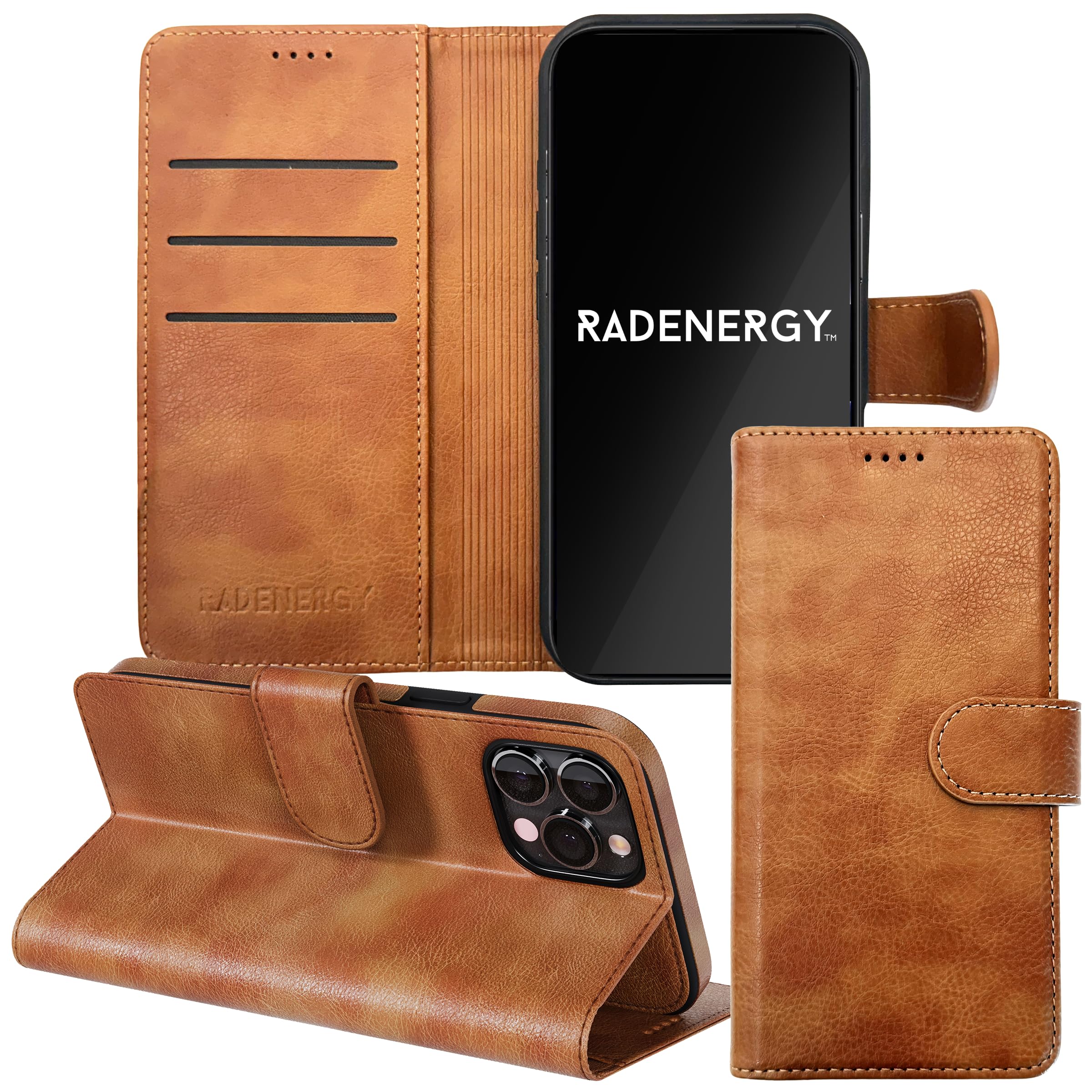
The RadEnergy case stands out because its shielding layer was tested at an NVLAP-accredited laboratory (the gold standard for electromagnetic testing), reducing front-facing radiation by up to 99%. The genuine leather exterior gives it a vintage, handcrafted feel that ages well, and the precise stitching around the edges shows careful assembly. It is a dedicated iPhone 14 case, so the fit is exactly right — no gap around the camera bump or loose corners.
The flip cover folds into a sturdy stand for media viewing, and the interior includes four card slots plus a side compartment for cash or receipts. The magnetic closure is strong enough to keep the folio shut in a bag or pocket, and there is a cutout for wireless charging so you can power up without removing the case. Users particularly liked the detachable magnetic phone holder, which lets you pop the phone out for in-car mounting or one-handed use while the folio stays in your bag.
A small number of users reported inconsistent brown dye on the leather, which could be touched up with leather conditioner. One user also tested the case with an EMF meter and found no reduction — though this seems to be an outlier compared to the majority of verified test results. If you want a stylish leather case with serious lab credentials, this is a strong contender.
Why it’s great
- NVLAP-accredited lab testing for 99% reduction
- Genuine leather with premium stitching
- Detachable magnetic phone holder for car mounts
Good to know
- Leather dye may have slight color variations
- One user reported no measurable reduction with their meter
3. DefenderShield EMF Radiation Blocker Phone Pouch

DefenderShield’s Ultra Armor Shielding Technology is engineered to block RF emissions across the full wireless spectrum, including 5G, WiFi, and Bluetooth frequencies. The pouch is constructed from durable neoprene with a metal-plated fabric liner, and third-party lab tests confirm significant attenuation. Unlike a pouch that kills all signal, this one uses a one-sided shield — so your phone retains connectivity while the side facing your body is protected.
The pouch fits smartphones up to 7.5 x 4 inches, accommodating most phones even with a slim case. A magnetic flap closure keeps the phone secure, and the detachable crossbody strap allows hands-free carry. There is also a VELCRO loop on the back for belt or bag attachment, plus a front pocket for credit cards or IDs. One user measured RF emissions dropping from 22.00 mW/m² to 1.4–2.4 mW/m² with the phone inside the pouch — a reduction of 89–94%.
It is not a full Faraday bag, so it will not stop GPS tracking or block calls entirely. That is by design: it reduces exposure while keeping your phone usable. The main drawback is that you must remove the phone to use it, which can be inconvenient for frequent checkers. For those who carry their phone in a pocket or purse all day, this pouch offers the best blend of protection and practicality.
Why it’s great
- Lab-tested reduction of RF emissions from 22 mW/m² to 1.4 mW/m²
- Detachable crossbody strap for hands-free carry
- One-sided design does not disable phone connectivity
Good to know
- Requires removing phone from pouch to use
- Not suitable for full signal blocking
4. Faraday Defense Faraday Bag Jacket Pro

The Faraday Defense Jacket Pro is a true Faraday bag, using a specialized metal-plated fabric containing nickel and copper shielding elements that dissipate signals from both exterior and interior sources. Lab testing shows -85 dB of attenuation across the 400 MHz to 4 GHz range — enough to block cellular, WiFi, Bluetooth, GPS, and RFID signals entirely. This is not a reduction case; it is a complete signal isolation pouch built for data security and privacy.
The exterior is heavy-duty, water-resistant CORDURA nylon with double-stitched seams and abrasion-resistant materials. The magnetic double-fold closure creates a reliable seal that is faster to open and close than a roll-top design. Interior dimensions of 4.5 x 8 inches accommodate most smartphones plus a key fob or small hard drive. Users confirmed that phones placed inside become completely unreachable — no calls, texts, or GPS tracking.
Because it blocks all signals, this pouch is not suitable for everyday carry if you need to remain reachable. It is best used for secure storage during travel, evidence preservation, or emergency comms gear that should stay silent until needed. The magnetic closure is convenient, but some users noted that the pouch could accidentally open if dropped, though this is rare. For full-tilt signal blocking, this is the most rugged and reliable option.
Why it’s great
- -85 dB attenuation for complete signal blocking
- Water-resistant CORDURA nylon with double-stitched seams
- Fast magnetic closure over roll-top designs
Good to know
- Not for daily carry if you need to be reachable
- Magnetic closure may open if dropped forcefully
5. SYB Shield Your Body EMF Blocker Phone Case
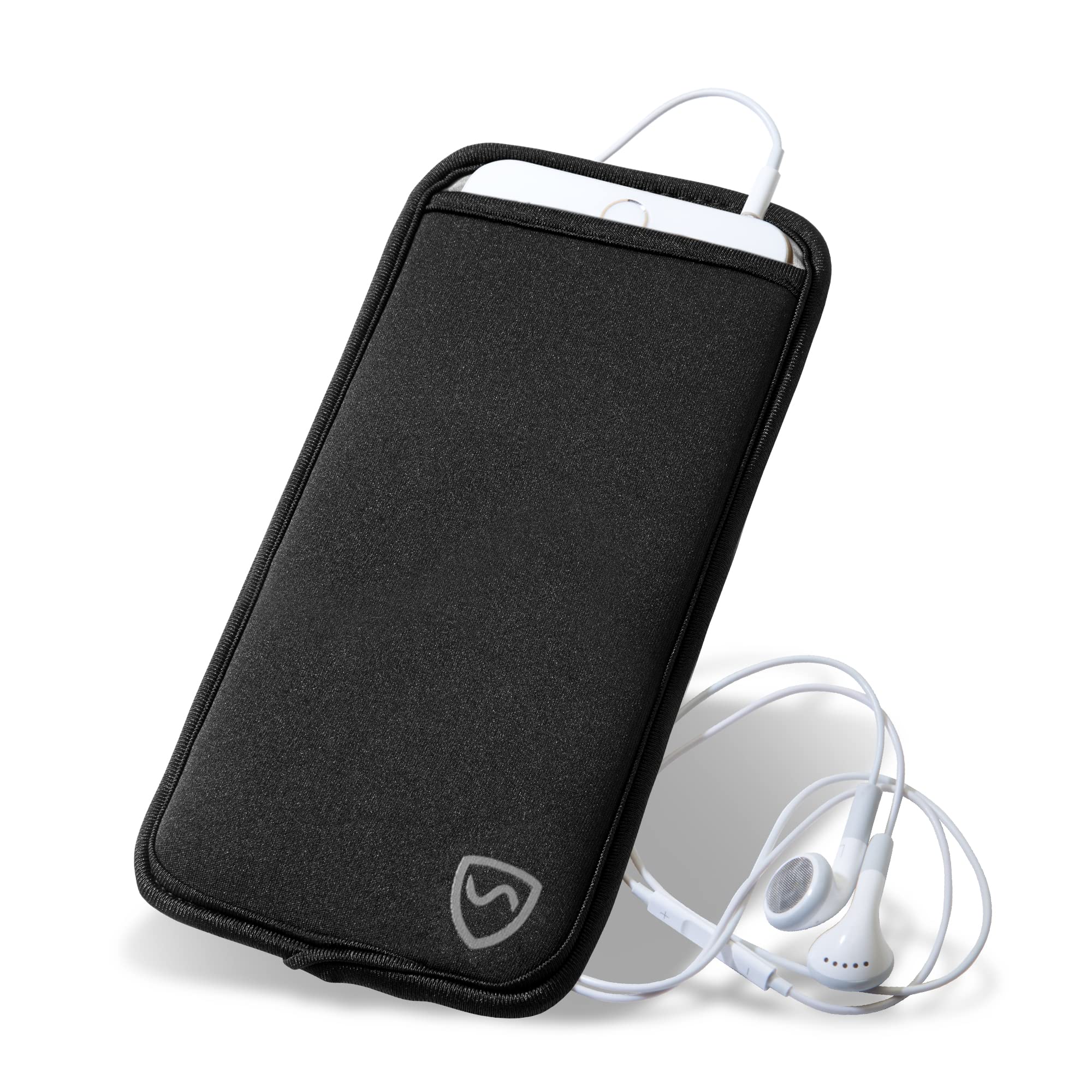
The SYB pouch uses a fine mesh of metallic fibers sewn into the rear lining to block electromagnetic fields emitted by the phone, deflecting radiation away from your body. The design covers only the side between you and the device, leaving the front open so the phone retains full signal and battery performance. The open-top also lets you connect chargers and headphones without removing the phone — a small convenience that matters for daily use.
Made from durable neoprene with premium-quality stitching, the pouch is built to last through years of use. One reviewer reported wearing out their first SYB pouch after two to three years of daily wear and bought this larger XXL size for their iPhone 14. The belt loop on the back allows attachment to a belt or purse strap, and the classic black color blends in without looking technical. It fits phones up to 4.33 inches wide and 7.5 inches tall, which covers most large smartphones even with a case.
The metallic fiber liner is effective, but the pouch is a one-sided shield — it will not block signals from the front of the phone. Some users expected full Faraday-level isolation and were disappointed, but for the stated purpose of reducing body exposure during pocket carry, it works. The neoprene material is soft and comfortable against the body, and the price point makes it an easy entry point for anyone curious about EMF protection.
Why it’s great
- Soft neoprene with durable stitching lasts years
- Open-top design for easy charging and headphone access
- Belt loop for secure pocket or purse carry
Good to know
- One-sided shield — front of phone still emits
- Not a full Faraday bag; signal is not blocked entirely
6. RadiArmor EMF Blocking Cell Phone Sleeve
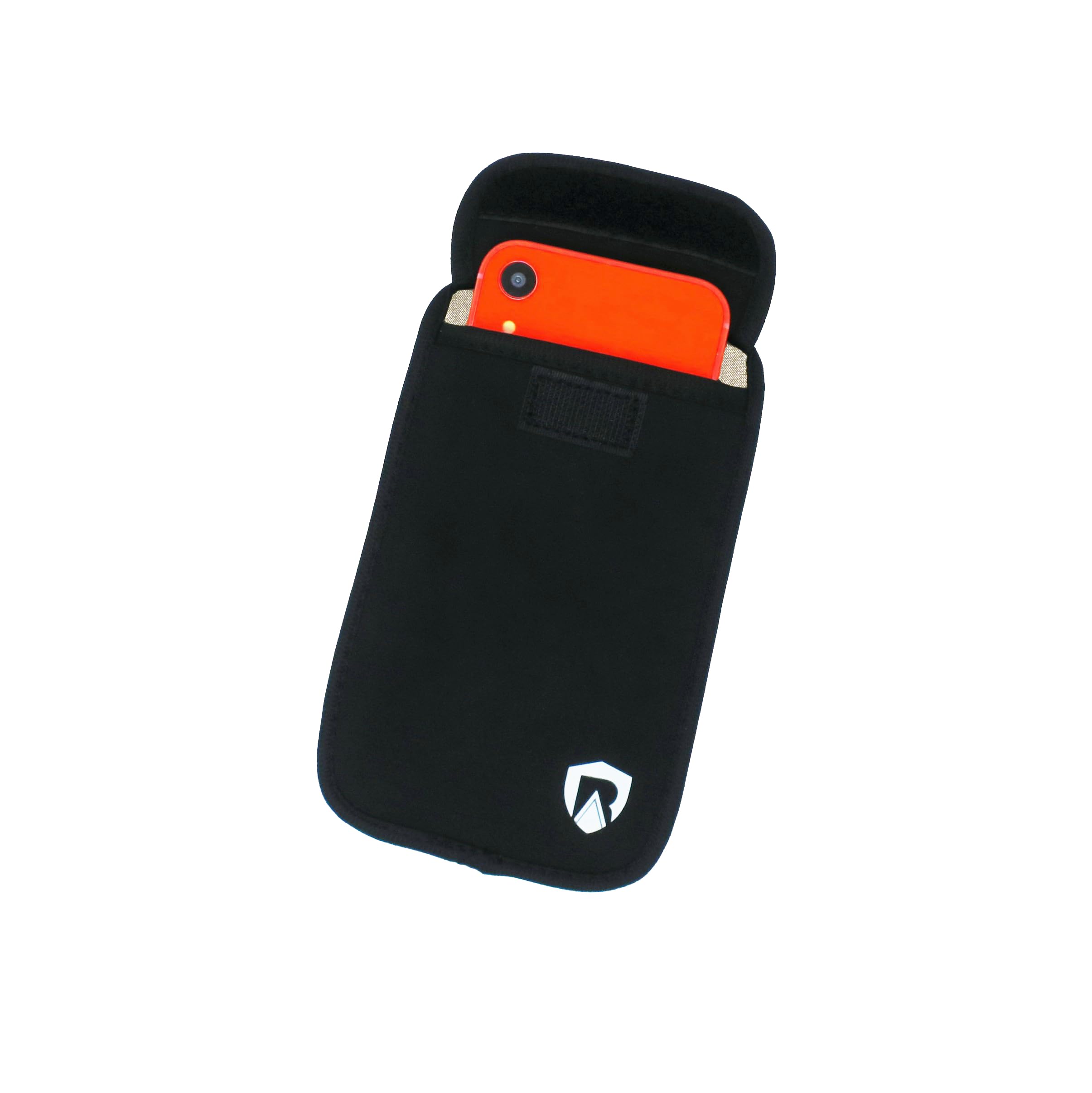
RadiArmor takes an honest approach to marketing: they state clearly that their fabric blocks over 99% of high-frequency RF in the material itself, but the real-world reduction to the user is between 91% and 96%. This transparency is rare in the EMF space, and it reflects a brand that understands the physics of shielding. The sleeve uses a proprietary EMF-blocking material on the backside only, creating a barrier between you and the phone while preserving normal reception.
The sleeve is designed for standard smartphones up to 6.1 inches in total length (including the case). It is made from soft neoprene with a matte finish, and the Velcro closure keeps the flap secure. One user who had used hard clip-on holders for years reported that physical sensations they experienced resolved after switching to this EMF-blocking sleeve. Another confirmed that their Pixel 9 Pro fit snugly and they felt confident in the protection.
Long-term durability is the main concern here. Multiple reviews noted that the elastic belt strap stretches and frays at the stitching, and the Velcro wears out after a few months of daily use. The sleeve is comfortable and effective, but the closure system is the weakest link. If RadiArmor upgraded to a magnetic or snap closure, this would be an easy recommendation for the value tier.
Why it’s great
- Honest marketing with real-world reduction of 91-96%
- Soft neoprene is comfortable for pocket carry
- One-sided design does not interfere with phone signal
Good to know
- Velcro closure and elastic strap fade after months of use
- Not designed for phones larger than 6.1 inches
7. WAVEBLOCK EMF Blocker Sticker for iPhone 17 Pro Max
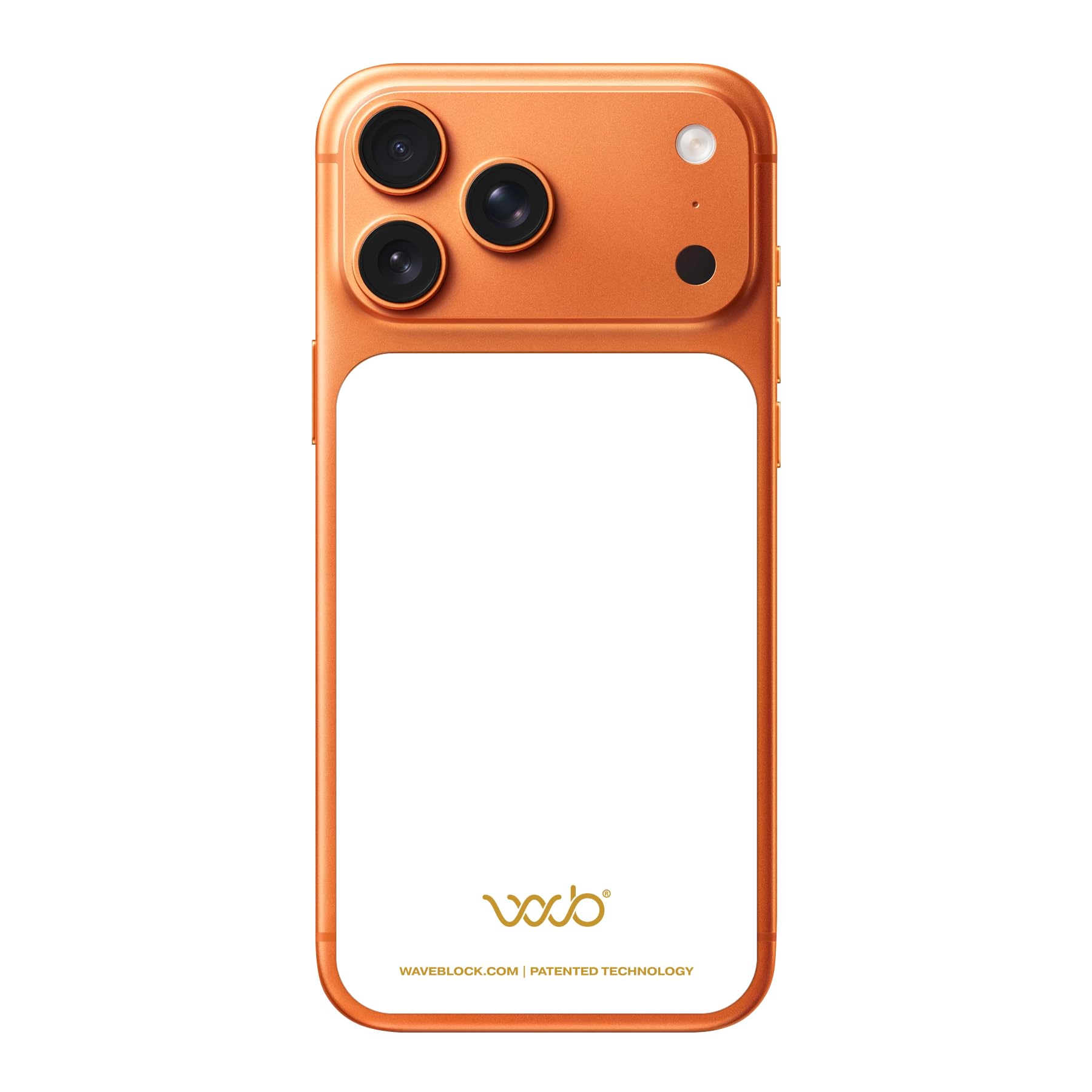
The WAVEBLOCK sticker takes a fundamentally different approach from pouches and folios. Rather than wrapping the phone, it is a thin, patented sticker that attaches directly to the back of your device, designed to be covered by your regular phone case. The company invested over million into research and development, and the sticker is designed and assembled in the USA. It is marketed as a smarter alternative to bulky pouches for users who want a minimal footprint.
Users report that the sticker is easy to apply, leaves no residue, and does not interfere with wireless charging or NFC. One reviewer noted it fits perfectly under any case and allows them to switch cases without losing protection — a flexibility that pouches cannot offer. The white finish blends into most phone backs, and the ultra-thin profile means you forget it is there. Several customers mentioned feeling peace of mind knowing they have added a layer of defense against EMF.
The fundamental question with any sticker is whether a small patch of material can meaningfully reduce the RF exposure your body receives from a phone that emits from its entire back surface. While WAVEBLOCK holds a patent and claims professional lab testing, independent third-party verification is harder to find compared to full-case solutions. For users who prioritize an invisible solution and accept a less dramatic reduction, this is a convenient option. For measurable, certified protection, a pouch or folio remains the more reliable choice.
Why it’s great
- Ultra-thin and invisible under any phone case
- Patented design with significant R&D investment
- Does not interfere with wireless charging or NFC
Good to know
- Independent third-party verification is limited
- Less measurable reduction than a full shielding pouch
FAQ
Will an anti-radiation case block my phone signal completely?
How do I verify that my case is actually reducing radiation?
Can I wirelessly charge my phone through an anti-radiation case?
Final Thoughts: The Verdict
For most users, the best anti radiation phone case winner is the SafeSleeve iPhone 16 Pro Case because it combines FCC-tested shielding, a functional wallet, and military-grade drop protection in one daily-driver case. If you want a stylish leather folio with NVLAP lab certification, grab the RadEnergy iPhone 14 Flip Folio. And for full signal isolation during travel or data-sensitive situations, nothing beats the Faraday Defense Jacket Pro.

Mo Maruf
I created WellFizz to bridge the gap between vague wellness advice and actionable solutions. My mission is simple: to decode the research and give you practical tools you can actually use.
Beyond the data, I am a passionate traveler. I believe that stepping away from the screen to explore new environments is essential for mental clarity and physical vitality.