Our readers keep the lights on and my smoothie glass nicely filled. As an Amazon Associate, I earn from qualifying purchases.
When your dog won’t stop licking a hot spot, wound, or irritated paw, every minute of constant licking delays healing and risks infection. An effective anti-lick spray breaks that cycle by either creating a bitter taste barrier or forming a protective physical layer over the wound, giving your pet’s skin a real chance to recover.
I’m Mohammad Maruf — the founder and writer behind WellFizz. I’ve spent countless hours digging through formulation data, customer reports, and ingredient lists to understand exactly what makes an anti-lick spray work in real-world conditions, not just on a marketing page.
After analyzing dozens of sprays, reviewing hundreds of verified user accounts, and comparing active ingredients, physical barrier mechanics, and safety profiles, I’ve assembled the definitive list of the best anti lick spray for dogs that actually deliver on their promises.
How To Choose The Best Anti Lick Spray For Dogs
Choosing the right spray comes down to what your dog is licking: a fresh wound, a chronic hot spot, or a boredom-driven chewing habit. The wrong type of spray can either sting on application or simply wash off too fast to make a difference.
Understand the Three Mechanisms of Action
Anti-lick sprays fall into three categories. Bitter deterrents like denatonium benzoate work by taste aversion — your dog licks once, tastes something awful, and stops. Physical barrier sprays (polymer-based liquid bandages) dry into a clear film that blocks licking mechanically. Medicated sprays contain ingredients like hydrocortisone or pramoxine to treat the underlying itch while also providing some deterrent effect. Know which mechanism fits your dog’s situation before buying.
Check the Drying Time and Adhesion Duration
Liquid bandage sprays need 30 to 120 seconds to dry into a film. If your dog moves during that window, the film can fail to form. Bitter sprays dry instantly but wear off with moisture, saliva, and time. Some polymer barriers last a full day on dry areas like a paw pad, while bitter sprays may need reapplication every few hours or after water exposure. Look for user reports about how long the protection actually holds in real conditions.
Prioritize Non-Toxic, Safe-if-Licked Formulas
Every anti-lick spray will be licked — that’s its entire purpose. The formula must be non-toxic and free from alcohol, harsh chemicals, BPA, parabens, and dyes. Hypochlorous acid sprays (like Vetericyn) and polymer-based sprays (like Chew + Heal and KeriCure) are generally recognized as safe even when ingested in small amounts. Avoid any product that lists “bitter” as its only mechanism without also confirming the carrier ingredients are safe.
Match the Spray to the Body Location
A spray that works on a paw pad may not work on a belly hot spot. Paw pads are tougher and less sensitive, so a thicker film-forming spray is fine. Belly and armpit areas are more sensitive — a stinging formula can cause your dog to avoid the spray entirely. Check ingredient lists for potential sting factors: alcohol-based sprays are notorious for causing a sharp burn on broken skin, which can make your dog associate the spray with pain.
Quick Comparison
On smaller screens, swipe sideways to see the full table.
| Model | Category | Best For | Key Spec | Amazon |
|---|---|---|---|---|
| Vetericyn Plus Wound Care Spray | Hypochlorous | Open wound healing | Hypochlorous acid, pH-balanced | Amazon |
| Chew + Heal Liquid Bandage Spray | Polymer Barrier | Minor cuts and scrapes | Waterproof, breathable polymer | Amazon |
| Tough Seal by KeriCure | Polymer Barrier | Hot spots and nail tears | Sting-free, dries in under 2 min | Amazon |
| Chew + Heal Hydrocortisone Spray | Medicated | Itch-driven licking | Hydrocortisone + pramoxine | Amazon |
| Grannick’s Bitter Apple | Bitter Deterrent | Puppy chewing training | Denatonium benzoate deterrent | Amazon |
In‑Depth Reviews
1. Vetericyn Plus Dog Wound Care Spray

Vetericyn Plus uses hypochlorous acid technology to clean wounds and promote healing while being completely safe if licked. The pH-balanced formula mimics the body’s natural immune response, creating an environment that discourages licking by treating the wound itself rather than relying on taste aversion. At 8 ounces, the bottle provides a generous volume for repeated applications on larger wounds or for households with multiple pets.
Real-world reports show that applying this spray two to three times daily can turn around a wound that hasn’t been healing. One dog owner noted a lab’s chest blister started healing almost immediately after switching to Vetericyn, where no prior improvement had occurred. The spray head delivers a steady stream that can saturate wound sites effectively, though some users suggest holding a towel underneath to catch runoff.
The hypochlorous formula has an extremely short shelf life once opened — you need to use it within six months for full potency, and the bottle must stay at room temperature. It also works best on open wounds rather than as a barrier against licking dry skin or hot spots. For those cases, pairing it with a physical barrier spray may be necessary.
Why it’s great
- Active wound healing support with non-toxic hypochlorous acid.
- Vet-recommended brand with decades of at-home animal health credibility.
- Generous 8-ounce bottle provides long-term value.
Good to know
- Not a barrier spray — works best when combined with physical protection.
- Requires room temperature storage and has a limited shelf life after opening.
2. Chew + Heal Liquid Bandage Spray
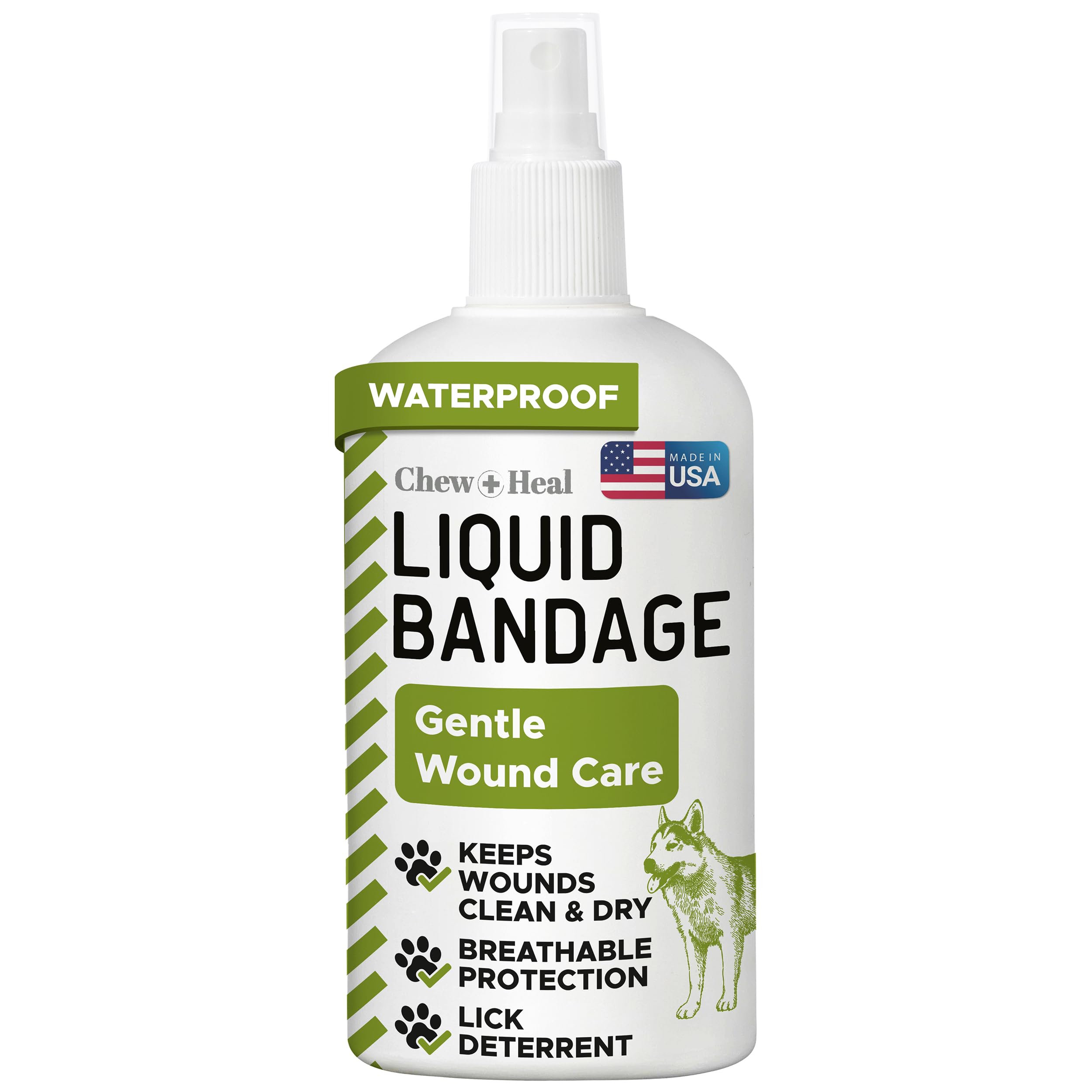
This polymer-based liquid bandage from Chew + Heal Labs forms a flexible, breathable film that sticks to the skin and blocks licking mechanically. The spray nozzle makes application simple even on sensitive areas like paw pads, and the aloe-infused formula adds a soothing element. Users report that a single application can last around a full day on paw skin — enough to break the licking cycle overnight.
Customer reports highlight its effectiveness on licked-raw paws. One owner of a Yorkie found that applying this spray once daily gave the paw enough time to heal without the dog re-irritating the area. The spray dries clear and non-sticky, so it doesn’t attract dirt or debris during outdoor walks.
The main limitation is adhesion on mobile areas like joints or the belly, where movement can cause the film to peel off faster. You may need to hold your dog still for 30–60 seconds after spraying to allow the polymer to set properly. It’s also not designed for treating the underlying itch — it’s purely a physical barrier.
Why it’s great
- Waterproof, breathable film stays in place for up to a day on paws.
- Spray format is much less messy than traditional bandages on pets.
- Made in the USA with aloe vera for added soothing benefits.
Good to know
- Requires a 30–60 second stationary drying period after spraying.
- Film may peel faster on high-motion areas like joints or the belly.
3. Tough Seal Pet Liquid Bandage by KeriCure

Tough Seal uses a medical-grade polymer suspended in purified water to create a second-skin barrier that dries in under two minutes. The formula is free from BPA, GMOs, parabens, latex, dyes, and harsh chemicals, making it hypoallergenic and safe for use on dogs with sensitive skin. It’s effective for hot spots, nail tears, burns, and dermatitis — areas where bitter sprays alone won’t stop the licking.
User experiences show it works on stubborn cases. One German Shepherd owner reported that a bleeding carpal pad sore that hadn’t healed in three weeks resolved in three days after using Tough Seal twice daily. Another owner used it on a cat’s belly sore after surgery, and the protective layer stopped the cat from licking long enough for the area to close fully.
The thin barrier lasts only a few hours on some pets, requiring up to three applications per day to maintain protection. Some dogs also find the initial spray sensation uncomfortable, though the sting-free claim holds for most broken-skin situations. The 2-ounce bottle runs small for large dogs with multiple wounds.
Why it’s great
- Sting-free, hypoallergenic polymer that works on all pet types including cats and rabbits.
- Dries in under two minutes to form a clear, breathable barrier.
- Free from all major irritants — safe for repeated daily application.
Good to know
- 2-ounce bottle provides fewer applications for large wounds.
- Barrier may need reapplication up to three times daily on some dogs.
4. Chew + Heal Hydrocortisone Spray
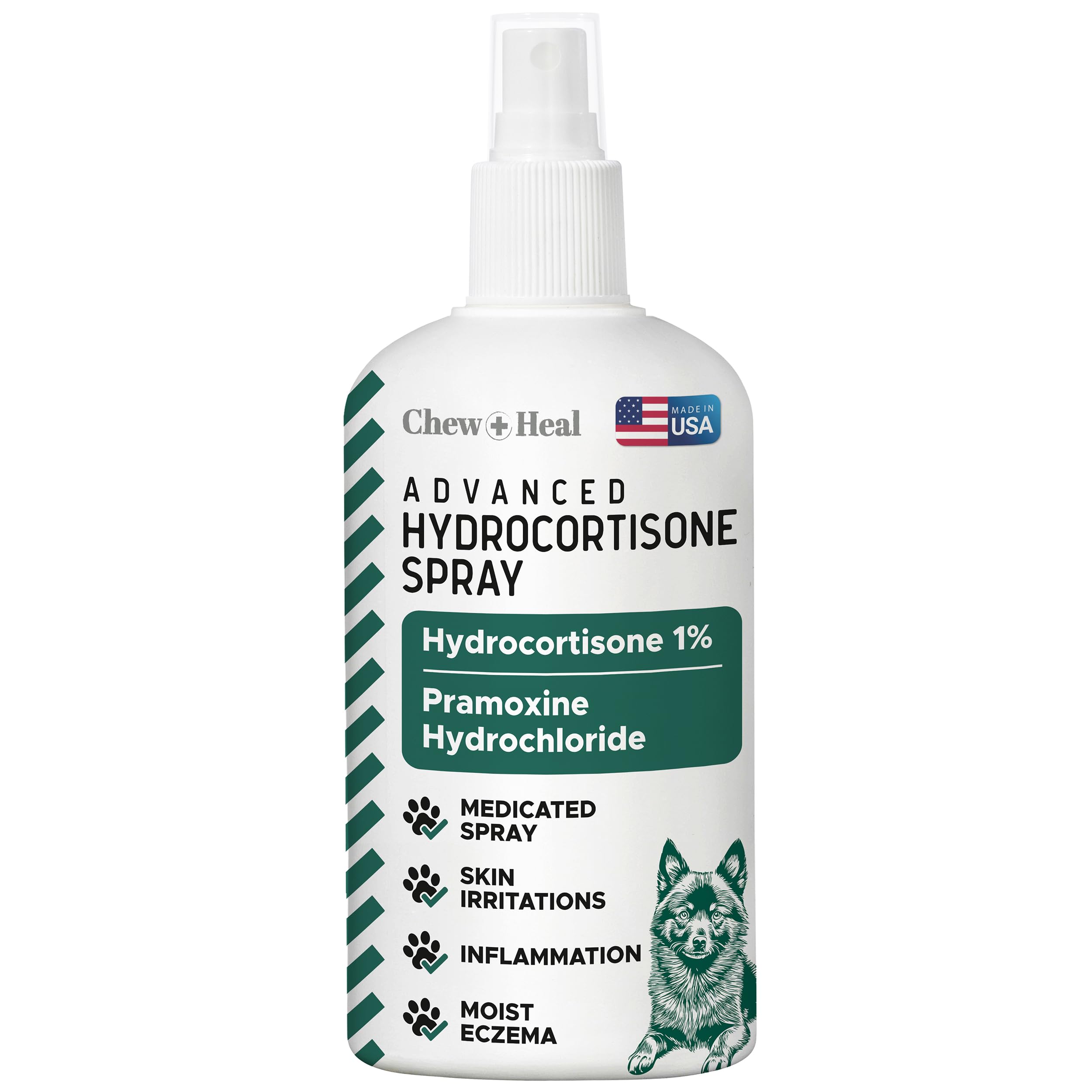
This spray combines hydrocortisone with pramoxine to tackle the root cause of licking: itch. Hydrocortisone suppresses the immune response that causes inflammation, while pramoxine provides a topical numbing effect to break the scratch-itch cycle. It’s designed specifically for hot spots, allergies, flea bites, and dermatitis — conditions where the licking is driven by discomfort, not boredom.
Early user reports are striking. One owner described their dog’s constant chewing and licking from allergies calming down so much after a single application that the dog could actually rest. Another reported that two applications healed an underarm irritation that vet-prescribed steroids and antibiotics hadn’t resolved. The 4-ounce bottle provides enough volume for recurring seasonal allergies.
This is a medicated spray, not a barrier. Your dog can still lick the area after application, so it’s best used in combination with a physical barrier like an Elizabethan collar or a liquid bandage for wounds that need to stay dry. Overuse is possible — the label recommends no more than three applications per day.
Why it’s great
- Treats the underlying itch that drives licking behavior in allergic dogs.
- Contains pramoxine for additional numbing relief beyond hydrocortisone alone.
- Works quickly — many users report visible improvement after one or two applications.
Good to know
- Not a physical barrier — won’t stop licking mechanically.
- Medicated formula should not be used on deep wounds or broken skin without vet guidance.
5. Grannick’s Bitter Apple 16-Ounce Refill

Grannick’s Bitter Apple has been the gold standard for taste-deterrent sprays since a pharmacist developed the formula in 1960. The active ingredient, denatonium benzoate, is the most bitter compound known to science — one lick is usually enough to make most dogs reconsider. This 16-ounce refill bottle is designed to be poured into a sprayer, making it the most economical option for multi-dog households or persistent chewers.
User reviews span decades of use. One owner reported that a Havanese puppy stopped chewing a tail wound, screen door, and carpet after consistent application every 12 hours. The formula is non-sticky and dries clear on most surfaces.
Bitter Apple is bitter by design, but it’s not a wound care product — it will sting on broken skin, which can make some dogs more anxious. It also wears off with moisture, saliva, and time, requiring frequent reapplication every few hours. The refill bottle does not include a sprayer, so you’ll need to transfer it into a spray bottle separately.
Why it’s great
- Proven taste deterrent with over 60 years of market reputation.
- 16-ounce refill offers the lowest cost per application in this guide.
- Non-sticky, clear formula works on furniture as well as fur.
Good to know
- Wears off quickly — may need reapplication every two to four hours.
- No sprayer included in the refill bottle; requires a separate spray container.
FAQ
Can I use bitter apple spray on an open wound?
How often do I need to reapply a polymer barrier spray?
Are hydrocortisone sprays safe for long-term use on dogs?
Final Thoughts: The Verdict
For most users, the best anti lick spray for dogs winner is the Vetericyn Plus Wound Care Spray because it treats open wounds while being completely safe if licked, supporting the body’s natural healing cycle. If you need a waterproof physical barrier for paw injuries, grab the Chew + Heal Liquid Bandage Spray. And for allergy-driven itching that causes constant licking, nothing beats the Chew + Heal Hydrocortisone Spray for rapid relief.

Mo Maruf
I created WellFizz to bridge the gap between vague wellness advice and actionable solutions. My mission is simple: to decode the research and give you practical tools you can actually use.
Beyond the data, I am a passionate traveler. I believe that stepping away from the screen to explore new environments is essential for mental clarity and physical vitality.