Our readers keep the lights on and my smoothie glass nicely filled. As an Amazon Associate, I earn from qualifying purchases.
Chronic low-grade inflammation often manifests as joint stiffness, digestive discomfort, or that foggy feeling that slows your afternoon. Reaching for a warm cup of botanicals is one of the oldest and most accessible ways to support your body’s natural inflammatory response, but the tea aisle is crowded with blends that prioritize flavor over function. The right anti inflammatory tea delivers active levels of curcumin, gingerols, and piperine without relying on sugar or artificial flavoring to mask weak ingredients.
I’m Mohammad Maruf — the founder and writer behind WellFizz. I’ve spent years analyzing the bioavailability of herbal compounds and cross-referencing third-party lab results to identify which tea blends actually contain meaningful concentrations of anti-inflammatory polyphenols.
After reviewing dozens of formulations, these five selections represent the highest standard for anyone seeking an evidence-based anti inflammatory tea that balances therapeutic potential with everyday drinkability.
How To Choose The Best Anti Inflammatory Tea
Not all herbal infusions are created equal when inflammation is the target. The chemistry of extraction, the quality of the source root, and the presence of bioavailability enhancers all determine whether your cup delivers real compounds or just hot water with flavor.
Active ingredients and bioavailability
Turmeric root must contain curcuminoids, and ginger must supply gingerols, but these compounds are poorly absorbed on their own. Look for blends that include black pepper (piperine) which can increase curcumin absorption by up to 2,000 percent. A tea that lists turmeric but omits black pepper is functionally weaker than one that pairs the two.
Form of the root
Whole root powder or chopped dried root releases more active compounds than powdered extracts that have been flash-heated. Tea bags that contain visible root pieces generally indicate less processing and higher retention of volatile oils. Avoid blends where “natural flavor” appears high on the ingredient list—that often signals the use of aromatic oils instead of actual plant material.
Steeping protocol
Curcumin and gingerol require near-boiling water (212°F) and a steep time of at least five to seven minutes to extract fully. Some blends recommend shorter steeps for taste, but that sacrifices compound yield. A proper anti inflammatory tea should instruct you to steep for the full seven minutes to ensure the medicinal compounds transfer into the water.
Quick Comparison
On smaller screens, swipe sideways to see the full table.
| Model | Category | Best For | Key Spec | Amazon |
|---|---|---|---|---|
| HANDPICK Organic Turmeric Ginger Tea | Mid-Range | Daily arthritis support & taste | 100 bags, eco-friendly bags | Amazon |
| Pukka Three Ginger Organic Herbal Tea | Premium | Three-root potency & digestion | 80 bags, includes galangal | Amazon |
| Yogi Sweet Ginger Citrus Turmeric Vitality | Mid-Range | Bright citrus flavor & wellness | 64 bags, USDA Organic | Amazon |
| Anti-Inflammaherb Loose Leaf Tea | Mid-Range | Broad root & spice blend | 60 bags, biodegradable material | Amazon |
| TAZO Calm Chamomile Herbal Tea | Premium | Evening relaxation & sleep | 96 bags, caffeine-free | Amazon |
In‑Depth Reviews
1. HANDPACK Organic Turmeric Ginger Tea
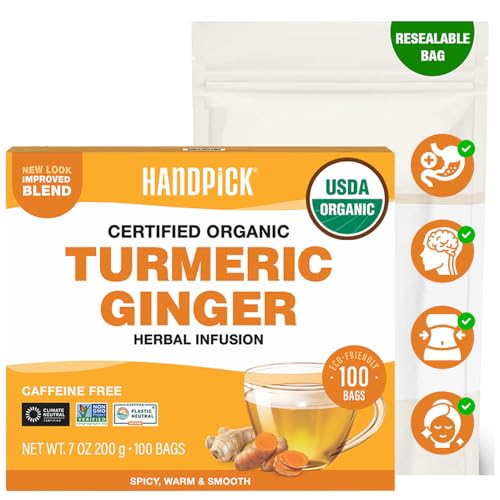
VAHDAM’s HANDPACK series delivers a genuinely spicy turmeric-ginger profile that tastes like fresh root rather than powdered filler. The 100-bag count is generous for a daily wellness ritual, and the eco-conscious tea bags hold the root particles securely so no sediment clouds your last sip. Customer reports of reduced arthritis discomfort after consistent use align with the high concentration of visible root material in each bag.
The non-GMO verification and carbon-neutral production add ethical weight, but the real marker of quality is the lack of “natural flavor” on the ingredients panel—what you taste comes from actual turmeric and ginger root. A pinch of black pepper would theoretically boost bioavailability, but the tea’s strong ginger content already supplies a solid dose of gingerols for systemic support.
For someone who wants a simple, cost-effective daily cup that prioritizes root content over fancy marketing, this is the benchmark. The bags are designed for a five- to seven-minute steep, and the warming infusion works equally well as a morning energizer or an afternoon anti-inflammatory top-up.
Why it’s great
- Clean ingredient list with visible root pieces
- Generous 100-bag supply at a sensible per-cup cost
- Carbon-neutral and plastic-neutral brand commitment
Good to know
- Some users find two bags necessary for a stronger cup
- Does not include black pepper for curcumin absorption
2. Pukka Three Ginger Organic Herbal Tea

Pukka’s Three Ginger stands apart by blending three distinct rhizomes: ginger, turmeric, and galangal. Galangal contains its own set of anti-inflammatory compounds (galangin) that work synergistically with gingerols and curcumin, creating a broader spectrum of activity than single-root blends. The addition of licorice root adds a natural sweetness that balances the spice without sugar.
The 80-bag count across four packs makes this an easy stock-up option, and the organic certification ensures no pesticide residues interfere with the plant compounds. A few customer reports noted tea bags that leaked sediment, which is a sign of whole root powder—tolerable for those prioritizing compound density over crystal-clear liquor.
This tea shines as an after-meal digestive aid because the warming herbs stimulate gastric motility while the anti-inflammatory compounds begin systemic absorption. It is caffeine-free, so it works as an evening beverage without disrupting sleep architecture.
Why it’s great
- Triple-rhizome blend with galangal for added compound diversity
- Naturally sweetened by licorice, no artificial additives
- Organic certification and high-quality Pukka reputation
Good to know
- Some bags may leak fine root sediment into the cup
- Lower bag count per dollar compared to some competitors
3. Yogi Sweet Ginger Citrus Turmeric Vitality
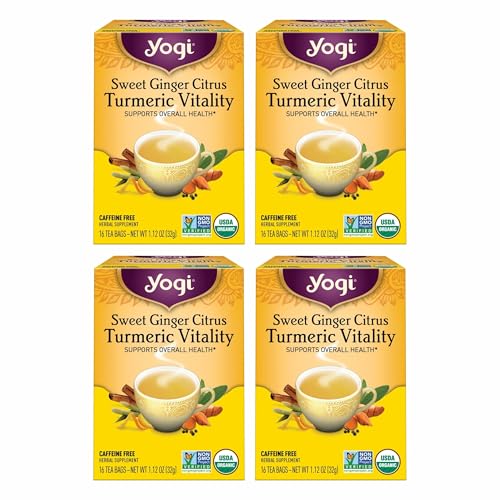
Yogi’s take on turmeric tea leans bright and citrus-forward, with lemongrass and lemon peel cutting through the earthiness of the root. This is a deliberate flavor strategy that makes the tea more approachable for people who find straight turmeric-ginger blends too pungent. The seven-minute steep recommendation is spot-on for extracting curcuminoids, and the inclusion of cinnamon bark adds additional anti-inflammatory polyphenols.
The 64-bag pack is a solid mid-range option that delivers consistent quality across multiple cups. Some drinkers noted that the turmeric flavor is more subdued than in pure turmeric teas, which may be a trade-off for the pleasant citrus lift. If your primary goal is maximum curcumin per cup, you might prefer a single-root blend, but for daily drinkability and compliance, this blend encourages regular consumption.
Vegan and non-GMO certification add assurance, and the individually wrapped tea bags maintain freshness even if you only drink one cup per day. This is a strong choice for someone who wants anti-inflammatory support without the sensory challenge of heavy spice.
Why it’s great
- Citrus notes make turmeric more palatable for daily use
- Seven-minute steep instruction optimizes compound extraction
- Cinnamon and lemongrass add complementary polyphenols
Good to know
- Turmeric flavor is milder than single-root turmeric blends
- Some users prefer pure ginger tea for stronger effect
4. Anti-Inflammaherb Loose Leaf Tea
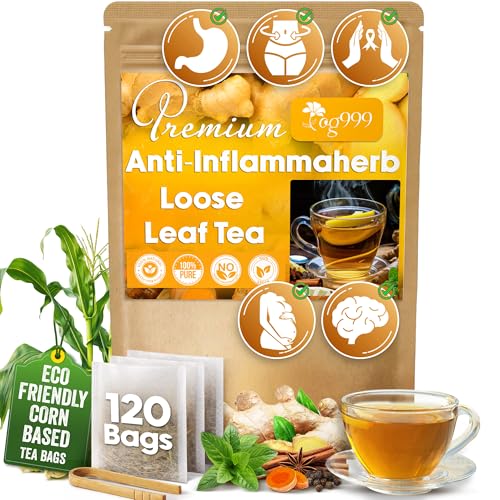
This blend packs five anti-inflammatory botanicals—ginger, turmeric, peppermint, black pepper, and cinnamon—into each biodegradable bag. The inclusion of black pepper is a significant advantage, as piperine directly enhances curcumin absorption in the gut. The cinnamon adds a warm sweetness that balances the pepper’s bite, though multiple customers noted that the pepper flavor is distinctly forward.
The hand-made processing and sun-drying approach preserves volatile oils that are often lost in mass-market steam-drying, resulting in a more aromatic cup. The biodegradable tea bags are a bonus for environmentally conscious drinkers, and the kraft packaging keeps the herbs fresh without plastic liners. Some users felt the strong pepper note was more medicinal than pleasurable, but for functional targeting of inflammation, that piperine content is exactly what makes the blend effective.
It is best approached as a therapeutic tea rather than a casual sipper—consider pairing it with a teaspoon of honey to mellow the spice if needed. The 60-bag supply is generous for a specialty blend, and the bamboo tongs included add a nice touch for bag removal.
Why it’s great
- Black pepper included for curcumin bioavailability enhancement
- Sun-dried herbs retain higher volatile oil content
- Biodegradable tea bags and plastic-free packaging
Good to know
- Strong pepper flavor may not suit all palates
- Some users find the cinnamon dominates the blend
5. TAZO Calm Chamomile Herbal Tea
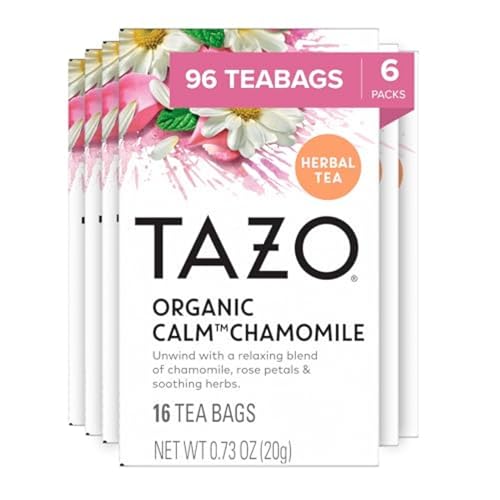
TAZO Calm Chamomile shifts the focus from root-based anti-inflammatory action to a floral-mint approach that supports the body’s stress-inflammation axis. Chronic cortisol elevation drives systemic inflammation, and this blend’s chamomile, spearmint, and rose petals provide apigenin and rosmarinic acid—compounds that exhibit measurable anti-inflammatory activity in their own right. The hibiscus flowers contribute anthocyanins that support cardiovascular health.
With 96 bags across six packs, this is a high-volume option that makes nightly relaxation easy to maintain. The five-minute steep at boiling water is sufficient for the delicate floral compounds, and the mint-forward flavor is refreshing without being overpowering. Multiple user reports mention improved sleep quality, which indirectly lowers inflammation through better rest and cortisol regulation.
This is not a direct replacement for turmeric or ginger tea, but it serves as an excellent complementary evening option for anyone managing inflammation through a multi-pronged approach including sleep hygiene and stress management.
Why it’s great
- High bag count (96) for long-term nightly use
- Apigenin and rosmarinic acid provide direct anti-inflammatory benefits
- Supports sleep quality which reduces cortisol-driven inflammation
Good to know
- Contains no turmeric or ginger for root-based inflammation
- Mint-forward flavor may not satisfy those seeking spicy blends
FAQ
Can anti inflammatory tea replace NSAIDs for joint pain?
How many cups of turmeric ginger tea should I drink per day?
Does adding milk to anti inflammatory tea reduce its effectiveness?
Final Thoughts: The Verdict
For most users, the anti inflammatory tea winner is the HANDPICK Organic Turmeric Ginger Tea because it delivers high root content at a generous 100-bag count with no artificial additives. If you want a triple-rhizome complexity with galangal for added compound diversity, grab the Pukka Three Ginger. And for a budget-friendly blend that includes black pepper for curcumin absorption, nothing beats the Anti-Inflammaherb Loose Leaf Tea.

Mo Maruf
I created WellFizz to bridge the gap between vague wellness advice and actionable solutions. My mission is simple: to decode the research and give you practical tools you can actually use.
Beyond the data, I am a passionate traveler. I believe that stepping away from the screen to explore new environments is essential for mental clarity and physical vitality.