Our readers keep the lights on and my smoothie glass nicely filled. As an Amazon Associate, I earn from qualifying purchases.
The sound of a baby screaming from gas pain is enough to break any parent’s composure. You’ve tried the burping, the bicycle kicks, and the endless rocking, but if the bottle itself is forcing air into that tiny tummy, nothing you do will stop the fussing. The right bottle isn’t about brand names—it’s about a vent system that actually separates air from milk, a nipple that lets the baby pace the feed, and a material that doesn’t introduce unwanted chemicals.
I’m Mohammad Maruf — the founder and writer behind WellFizz. I’ve spent hundreds of hours cross-referencing vent designs, nipple flow rates, and material certifications to separate the bottles that genuinely solve colic from those that just market it.
This guide breaks down the narrow specs that matter—ventless vs. vented systems, nipple orifice geometry, and heat-resistant material grades—so you can pick with confidence. My goal is to help you find the best anti colic bottles that reduce gas and discomfort without adding a dozen extra parts to your nightly cleanup routine.
How To Choose The Best Anti Colic Bottles
Anti-colic bottles are not all created equal. The difference between a bottle that soothes and one that frustrates comes down to a few non-negotiable specs. Ignore the marketing claims and focus on these four factors to find a bottle that matches your baby’s feeding style.
Vent System Design
The vent is the heart of any anti-colic bottle. Internal tube vents, like the one Dr. Brown’s uses, physically channel air away from the milk through a straw-like pathway. This is the most effective at eliminating bubbles, but it adds extra parts to wash. Integrated nipple vents, found on bottles like NUK and Philips Avent, place the air channel inside the nipple itself. These are simpler to clean but rely on the baby’s latch to engage the system. A few budget bottles use a simple pinhole at the base of the nipple, which offers minimal air separation. For severe colic, a dedicated internal vent system is usually better. For moderate gas, a nipple-vent design is more convenient.
Nipple Flow Rate and Material
Too fast a flow causes gulping, which forces air into the stomach. Too slow a flow frustrates the baby and creates a negative-pressure suck that collapses the nipple. Look for bottles that explicitly label their nipple flow levels (Slow/Level 1, Medium/Level 2, etc.). Silicone nipples are the standard—they are durable, tasteless, and heat-resistant. Natural Response nipples, like Philips Avent’s, only release milk when the baby actively drinks, mimicking breastfeeding. This pause during swallowing is critical for reducing swallowed air. A nipple that is too stiff will cause the baby to work too hard; one that is too soft can collapse.
Material Safety and Heat Resistance
Standard plastic bottles are lightweight and drop-proof, but they can leach chemicals if heated repeatedly. BPA-free plastic is the minimum standard. For parents who prefer a safer option, borosilicate glass (like Dr. Brown’s glass bottles) is chemically inert, doesn’t scratch, and resists thermal shock when moving from freezer to hot water. The trade-off is weight and breakability if dropped. PPSU (polyethersulfone) is a high-heat-resistant plastic that is lightweight, shatterproof, and safe for boiling and dishwasher sterilizing. It is the premium material between glass and standard plastic. Stainless steel options exist, but they prevent you from seeing the milk level.
Number of Parts and Cleaning Ease
Every extra part is one more piece to lose or miss during cleaning. Internal vent systems typically require 4-5 parts per bottle, which can be tedious late at night. Integrated vent systems often have just 2-3 parts. Wide-neck bottles are significantly easier to scrub by hand and fit most bottle brushes. Narrow-neck bottles are harder to clean properly. If you plan to use a dishwasher, check that the bottle is labeled top-rack safe and that all small vent pieces can be placed in a mesh basket. A bottle that is difficult to clean will eventually harbor milk residue, which can cause odors and degrade the anti-colic performance.
Quick Comparison
On smaller screens, swipe sideways to see the full table.
| Model | Category | Best For | Key Spec | Amazon |
|---|---|---|---|---|
| Philips Avent Natural 4oz | Mid-Range | Combining breast & bottle | Natural Response nipple (no-drip) | Amazon |
| Dr. Brown’s Options+ Glass 4oz | Mid-Range | Severe gas & spit-up | Internal vent system (borosilicate glass) | Amazon |
| Pigeon PPSU Wide Neck 5oz | Premium | Breastfeeding transition & durability | PPSU body (heat-resistant) | Amazon |
| NUK Smooth Flow Pro | Mid-Range | Easy assembly & cleaning | One-piece nipple & collar | Amazon |
| Avima Baby Starter Set | Budget-Friendly | All-in-one newborn kit | 22-piece set with Duo-Flo nipples | Amazon |
In‑Depth Reviews
1. Philips Avent Natural 4oz (2-Pack)

Philips Avent’s Natural Response nipple is the standout feature here—it only releases milk when the baby actively drinks, pausing flow during swallowing and breathing. This mimics breastfeeding rhythm and eliminates the passive dripping that causes gulping and air intake. The anti-colic valve is integrated into the nipple skirt, keeping air away from the tummy without a separate vent tube.
The 4oz size is ideal for newborns, and the wide neck makes adding formula and scrubbing effortless. Multiple customer reviews confirm zero leaks, a critical advantage over many competitors that drip when shaken or warmed. The soft, breast-shaped nipple material promotes latch acceptance for babies transitioning between breast and bottle.
Some parents note that the Flow 2 nipple may be too slow for faster feeders past three months, requiring a step-up to Flow 3. The 2-pack provides enough capacity for rotation without overwhelming the cabinet. For parents seeking a leak-proof, easy-clean bottle with a biologically accurate feeding rhythm, this is the most balanced choice.
Why it’s great
- Natural Response nipple prevents passive dripping and gulping
- Anti-colic valve is built into nipple—no extra vent parts to clean
- Zero leaking reported by the vast majority of users
Good to know
- Flow 2 nipple may be too slow for older or hungrier babies
- Only two bottles included; you may need to buy additional nipples
2. Dr. Brown’s Options+ Glass 4oz (3-Pack)
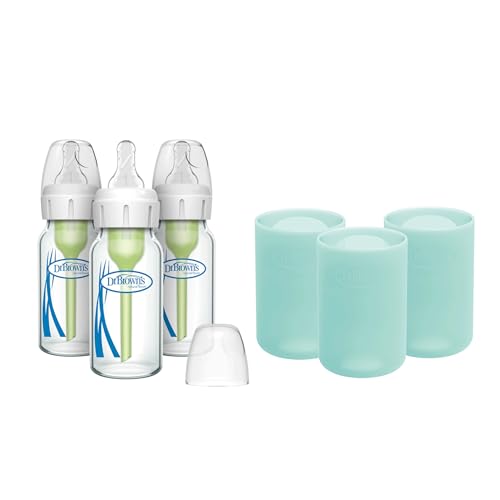
Dr. Brown’s internal vent system is the gold standard for clinical colic reduction. The straw-like vent tube runs inside the bottle, channeling air away from the milk and eliminating vacuum pressure. This design is proven to reduce spit-up, burping, and gas, and it also preserves water-soluble vitamins that heat and agitation can degrade.
The borosilicate glass body is thermal-shock resistant, meaning it can move from the freezer to hot water without cracking. Glass is non-porous and won’t absorb odors, stains, or bacteria like plastic can over time. The included mint silicone sleeves provide impact protection and a grippy surface for tiny hands. The Level 1 slow flow nipple encourages a natural, paced feeding rhythm.
The trade-off is the number of parts—the vent system adds a green vent tube, a vent insert, and a collar, totaling five pieces per bottle. Cleaning requires a small brush for the tube. Several reviewers mention that if the vent is not assembled correctly, leakage can occur. For parents dealing with severe reflux or colic, the extra cleaning is worth the superior air separation.
Why it’s great
- Internal vent system is clinically proven to reduce colic and gas
- Borosilicate glass is durable, non-porous, and thermal-shock resistant
- Preserves milk nutrients better than ventless designs
Good to know
- Five pieces per bottle require thorough cleaning with a small brush
- Improper assembly of vent parts can cause leakage
3. Pigeon PPSU Wide Neck 5oz (2-Pack)
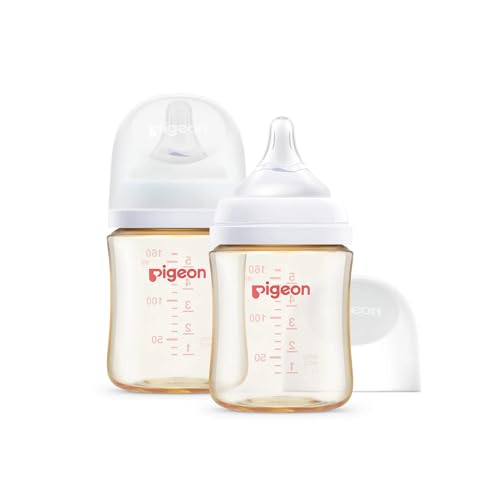
Pigeon’s bottle is engineered around three natural sucking movements observed in Japanese feeding studies: latching, grooving the tongue, and swallowing. The SS nipple (0m+) features a latch-on curve that guides the baby’s mouth into an effective seal, reducing milk leakage at the corners and air swallowing. The soft silicone is flexible enough to allow natural tongue movement.
The PPSU body is a premium material choice—lighter than glass, stronger than standard plastic, and capable of withstanding repeated boiling and dishwasher sterilization without degrading. It is BPA-free and shatterproof, making it a practical alternative for parents who want safety without the breakage risk of glass. The wide neck simplifies filling and scrubbing, and the streamlined shape is easy for small hands to grip.
Nipple sizes range from SS (slowest) to 3L (fastest), allowing you to match flow rate as the baby grows. Some parents report that the SS nipple is extremely slow, which can frustrate a hungry newborn, so having a faster size on hand is wise. The price point is higher than standard plastic bottles, but the build quality and material safety justify it for many families.
Why it’s great
- PPSU material is shatterproof, lightweight, and dishwasher-safe
- Latch-on nipple design reduces milk leakage and air intake
- Multiple nipple flow levels let you customize as baby ages
Good to know
- SS nipple may be too slow for some newborns initially
- Premium price point compared to standard plastic bottles
4. NUK Smooth Flow Pro Anti Colic Bottle

NUK addresses the biggest complaint about anti-colic bottles—too many parts—by integrating the nipple and collar into a single-piece design. This reduces assembly time and eliminates the chance of losing a small vent piece. The advanced venting system is located in the nipple base, pushing air away from the milk as the baby drinks.
The 1-piece nipple-collar also simplifies cleaning; there are fewer crevices for milk residue to hide in. The nipple is shaped to support a natural latch, helping breastfed babies transition to bottle feeding. The bottle body is BPA-free and available in playful, colorful designs that appeal to older babies who want to hold their own bottle.
Some users report leakage when the bottle is shaken to mix formula or warmed with the vent parts attached. A workaround is to mix the formula in a separate pitcher before pouring it in. A few reviews also note that the nipple can still collapse if the baby creates strong suction, though this is less common than with earlier NUK designs.
Why it’s great
- One-piece nipple and collar reduces part count and cleaning time
- Advanced venting keeps air away from milk effectively
- Nipple shape supports natural latch for breastfed babies
Good to know
- May leak when shaken or warmed with vent parts attached
- Nipple can occasionally collapse under strong suction
5. Avima Baby Anti Colic Starter Set (22-Piece)
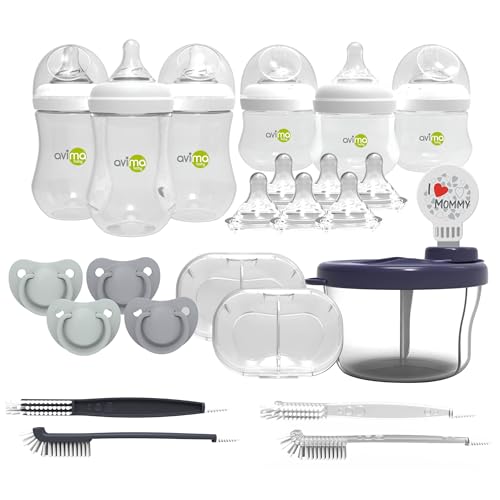
The Avima Baby starter set includes two 4oz and two 9oz bottles, slow and medium flow Duo-Flo nipples, pacifiers, a pacifier clip, a formula dispenser, and cleaning brushes—everything a new parent needs in one box. The Duo-Flo nipples feature two valves that flex to adjust milk flow to the baby’s feeding pace, theoretically reducing colic and nipple collapse.
The wide-neck BPA-free plastic body is dishwasher-safe (top rack) and leak-proof when assembled correctly. The set provides substantial value for the number of components, especially for parents who want to avoid buying separate accessories. The included pacifiers are orthodontic-shaped, and the formula dispenser is larger than most competitors’, making it useful for overnight feeds.
Build quality does not match the premium materials of glass or PPSU options. The plastic can scratch over time, and the Duo-Flo valves may require precise assembly to function correctly—some users report inconsistent air reduction. The nipples are also reported by a few users to be stiffer than silicone nipples from Philips or Pigeon, which may affect latch acceptance for some babies.
Why it’s great
- Complete newborn kit saves money on separate purchases
- Duo-Flo nipples are designed to pace milk flow dynamically
- Wide-neck bottles are easy to clean and dishwasher-safe
Good to know
- Plastic build can scratch over time with frequent scrubbing
- Duo-Flo valves may need careful alignment to work properly
FAQ
Do I really need a vented bottle or is it just marketing?
Can I use anti colic bottles for breastfed babies without nipple confusion?
How often should I replace the nipples and vent parts?
Final Thoughts: The Verdict
For most users, the best anti colic bottles winner is the Philips Avent Natural 4oz because it combines a leak-proof design with a Natural Response nipple that paces the baby’s feeding rhythm, reducing air intake without adding extra vent parts to clean. If you are dealing with severe gas or reflux and don’t mind extra washing, the Dr. Brown’s Options+ Glass provides clinical-level air separation in a durable borosilicate body. And for parents who want a shatterproof premium material that can handle boiling and dishwasher cycles, the Pigeon PPSU Wide Neck delivers the best material durability while supporting a natural breastfeeding latch.

Mo Maruf
I created WellFizz to bridge the gap between vague wellness advice and actionable solutions. My mission is simple: to decode the research and give you practical tools you can actually use.
Beyond the data, I am a passionate traveler. I believe that stepping away from the screen to explore new environments is essential for mental clarity and physical vitality.