Our readers keep the lights on and my smoothie glass nicely filled. As an Amazon Associate, I earn from qualifying purchases.
Every parent knows that hollow, hard cry. It’s not hunger — it’s trapped air churning a tiny stomach long after the bottle is empty. The difference between a peaceful feeding and an hour of pacing with a screaming newborn often comes down to a single, measurable engineering decision: how the bottle manages airflow. Standard bottles let air mix with milk, creating bubbles that swell into gas and colic. Anti-colic designs vent that air away from the liquid, keeping the milk column smooth and the baby calm. The challenge is that each brand solves this problem with a completely different physical system — and the wrong pick means more parts to wash, a latch your baby rejects, or worse, a worse version of the gas you were trying to stop.
I’m Mohammad Maruf — the founder and writer behind WellFizz. I’ve spent hundreds of hours breaking down the patent-level mechanics of infant feeding systems, comparing vent geometries, nipple durometers, and flow-rate consistency across dozens of bottle families to separate what actually works from what just markets well.
This guide walks through the five best-engineered options on the market, from preemie-specific flow rates to three-part cleaning designs, so you can match the right air-elimination system to your baby’s actual feeding style. Whether you are a pumping parent looking for the gentlest transition or a formula-feeding household chasing fewer spit-ups, these are the anti-colic bottles for newborns that deliver a measurable difference in comfort.
How To Choose The Best Anti-Colic Bottles For Newborns
Not all anti-colic bottles are created equal. The term covers three distinct venting philosophies: internal straw-and-vent tubes, passive nipple valves, and integrated air-diversion channels. Each works differently, and each demands a different cleaning commitment. Here is what actually matters when sorting through the options.
Vent System Design: Active vs. Passive Air Management
Active systems, like Dr. Brown’s internal vent tube, create a physical barrier that routes air to the top of the bottle so it never touches the milk. This is the most effective mechanism for eliminating air bubbles, but it adds one or more extra pieces to wash. Passive systems, like the one in Philips Avent, use a small valve integrated into the nipple that lets air enter the bottle from the outside without mixing with milk — fewer parts to clean, but slightly less total air isolation. For a newborn with severe colic, the active route is usually worth the extra minutes at the sink.
Nipple Flow Rate and Material Stiffness
Newborns have weak suction and small oral cavities. A nipple that flows too fast overwhelms their ability to swallow, causing air gulping and milk spillage. Every bottle in this list uses a “slow flow” or “stage 0” nipple, but not all slow flows are equally slow — some are designed for preemies with an even lower feed rate. Softer silicone nipples (around 30-40 Shore A durometer) mimic the natural elasticity of breast tissue and reduce nipple confusion, but they compress faster and may collapse during aggressive sucking. Harder nipples maintain shape but require the baby to develop a stronger latch. Match the nipple’s flexibility to your baby’s individual suck strength.
Part Count and Cleaning Ergonomics
The most common complaint across all anti-colic bottles is cleaning friction. A three-piece system (bottle, collar, nipple) takes about 30 seconds to hand wash and can be thrown in a dishwasher basket. A five-piece system adds a vent insert and a stem — these tiny tubes trap milk residue and need a dedicated brush. Before buying, consider how many bottles you will wash per day. A six-bottle rotation with a complex vent system adds roughly 10 minutes of daily cleaning time. For some parents, that is a fair trade for a calm baby. For others, a mid-complexity option like Smilo or Gulicola hits the sweet spot.
Quick Comparison
On smaller screens, swipe sideways to see the full table.
| Model | Category | Best For | Key Spec | Amazon |
|---|---|---|---|---|
| Dr. Brown’s Natural Flow Options+ | Vent Tube | Premature newborns & severe colic | Preemie flow nipple included | Amazon |
| Philips Avent Natural Response | Nipple Valve | Breast-to-bottle transition | Flow 2 slow flow nipple | Amazon |
| Smilo Anti-Colic Set | Vent Channel | High colic relief + easy cleaning | Stage 0 slow flow nipple | Amazon |
| Gulicola Small Glass Baby Bottle | Glass | Durability & breastfeeding mimic | Borosilicate glass, 4 parts | Amazon |
| Lansinoh Anti-Colic NaturalWave | Nipple Valve | Three-part simplicity | Size S slow flow nipple | Amazon |
In‑Depth Reviews
1. Dr. Brown’s Natural Flow Options+ Narrow Baby Bottle
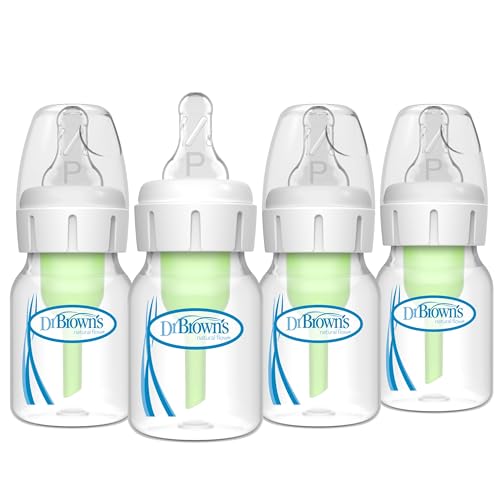
The Dr. Brown’s Options+ is the reference standard for active anti-colic feeding. Its internal vent tube and straw mechanism physically isolate air from the milk, creating a vacuum-free environment that eliminates the negative pressure babies fight against with standard bottles. The 2 oz (60 mL) size with the Preemie Flow nipple is an intentional design choice — it gives the smallest newborns the slowest possible flow rate, reducing choking and air gulping during those first weeks when every milliliter counts.
Clinical data backs the mechanism: the vent system has been proven to preserve bottle-milk nutrients and reduce spit-up, burping, and gas. The breast-like nipple shape encourages a proper latch, and the narrow neck makes it comfortable for small hands to hold during bottle prep. The preemie nipple is not just a marketing label — it is genuinely the slowest flow in Dr. Brown’s lineup, making this set the safest choice for underweight or premature infants who need a controlled feed speed.
The trade-off is cleaning. The vent tube and stem add two extra pieces per bottle, and the tube can bend after repeated sterilization cycles if not handled carefully. Users report that leaks occur primarily when the vent stem is submerged in milk (overfilling past the 2 oz line) or when the cap is overtightened. Despite the part count, the gas reduction is so reliable that many families accept the additional four minutes per wash cycle without complaint.
Why it’s great
- Preemie flow nipple provides the safest, slowest feed for fragile newborns
- Clinically proven active vent system eliminates nearly all feed-related gas
- Vacuum-free feeding allows baby to suck at a natural, self-paced rhythm
Good to know
- Five-piece assembly requires a dedicated brush for vent tube cleaning
- Leaks may occur if bottle is overfilled or the vent stem is blocked
2. Philips Avent Natural Baby Bottle with Natural Response Nipple

The Philips Avent Natural Response bottle flips the anti-colic paradigm from “keep air out” to “let the baby control the flow.” The Natural Response nipple is designed with a slit opening that only releases milk when the baby actively sucks — when they pause to swallow or breathe, the nipple seals, and flow stops. This mimics the breastfeeding rhythm where milk letdown pauses between sucks, drastically reducing the air that gets swallowed during passive feeding.
The anti-colic valve is integrated into the nipple skirt itself, a passive system that vents air from the outside of the bottle into the interior without it ever passing through the milk. This means the bottle has only three main components (nipple, collar, bottle) with no extra tubes or stems to brush. Parents switching from breastfeeding report zero nipple confusion, largely because the wide, soft nipple flange compresses against the palate similarly to human breast tissue during a deep latch.
The slow flow (Flow 2) nipple is appropriate for most newborns, though some parents of very small preemies find it still releases milk faster than a Stage 0 nipple. The bottle body is 4 oz, which fits a newborn’s typical per-feed volume without encouraging overfilling. Users universally praise the leak-free performance — the nipple collar design creates a seal that holds even when shaken, and the wide mouth makes pouring breastmilk from a storage bag straightforward without splashing.
Why it’s great
- Baby-controlled flow mimics breastfeeding rhythm, reducing air intake naturally
- Three-piece assembly is the fastest anti-colic system to clean
- No-drip design and wide neck simplify breastmilk handling and on-the-go use
Good to know
- Passive valve may not eliminate as much total gas as active vent tube systems for severe colic
- Slow flow (Flow 2) can still be fast for some pre-term newborns
3. Smilo Baby Bottle Set with Stage 0 Slow Flow Anti Colic Nipple
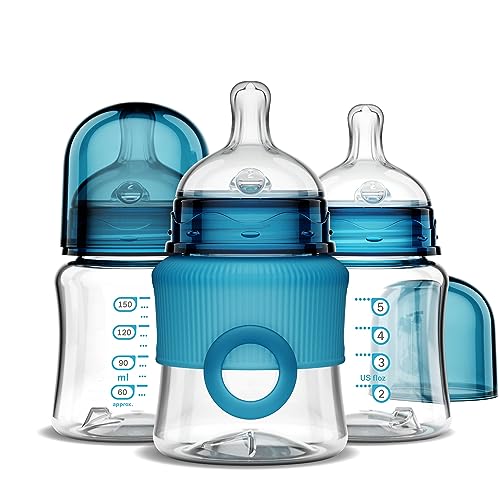
Smilo solves the central tension of anti-colic feeding: high gas reduction without a pile of extra parts. The patented anti-colic vent system uses a channel integrated into the nipple collar rather than a separate tube, which routes incoming air to the top of the bottle so it bypasses the milk entirely. This delivers colic relief comparable to Dr. Brown’s but with only four pieces per bottle instead of five — a small difference that adds up fast over a full day of feedings.
The Stage 0 slow flow nipple is calibrated for 0-3 month olds, and the material has a slightly higher durometer than the ultra-soft nipples from Dr. Brown or Lansinoh. Some parents report that this firmer texture makes Smilo a better “second bottle” after the baby has already developed a basic latch with a softer starter bottle. The narrower, taller bottle shape makes it easier for small hands to grasp during feeding, and the translucent plastic stays optically clear — it doesn’t cloud or discolor after repeated dishwasher cycles like some polypropylene bottles.
Cleaning is straightforward: the vent channel is molded into the collar, so there are no loose stems to lose or brush. The nipple itself comes in separate stages (sold individually) so the same bottle body can scale with the baby from 0 months through toddlerhood. Users transitioning from Dr. Brown’s frequently note that the Smilo system reduced their daily bottle-cleaning time by roughly a third while maintaining the same level of colic prevention.
Why it’s great
- Integrated vent channel delivers active anti-colic performance without extra cleaning parts
- Stage 0 nipple has a firmer, durable texture that holds up to aggressive sucking
- Narrow bottle body fits small hands and stays optically clear after washing
Good to know
- Firmer nipple texture may be harder for some newborns to latch initially without a transition
- Replacement nipple stages must be purchased separately beyond Stage 0
4. Gulicola Small Glass Baby Bottle for Newborn

Gulicola targets the specific pain point of plastic degradation. Over months of repeated sterilization, polypropylene bottles can develop micro-scratches that harbor bacteria, and some parents prefer a material that will never leach or cloud. The Gulicola bottle is made from premium borosilicate glass — the same material used in laboratory glassware — which handles thermal shock from boiling water sterilization without cracking. The bottle body is 3 oz, a small, purpose-built size for newborns that prevents overfilling during early feeds.
The anti-colic vents are built into the nipple itself, with small slits that allow air to enter the bottle from the outside while the baby drinks. It is a passive system similar in philosophy to Philips Avent, but the Gulicola nipple includes alignment guides printed on the silicone surface to help parents position the vent holes against the baby’s palate for optimal air diversion. The ultra-soft nipple is designed specifically for breastfed babies — it flexes and moves like natural breast tissue, and the wide base encourages a deep latch that reduces air swallowing from gaping.
With only four total pieces (bottle, collar, nipple, cap), cleaning is simpler than any active vent tube system. The wide neck accommodates standard bottle warmers and makes pouring breastmilk or formula straightforward. Users report the bottles have survived multiple drops onto tile without chipping, though glass is inherently heavier than plastic, so these are not the best choice for a baby who is just beginning to hold their own bottle. The ounce markings are etched into the glass, though they can be hard to read in low light without contrasting ink.
Why it’s great
- Borosilicate glass is chemically inert, thermally stable, and scratch-resistant
- Ultra-soft, breast-like nipple with alignment guides supports a natural latch
- Four-piece design is simple to clean and sterilize without specialized brushes
Good to know
- Heavier than plastic — not ideal for baby-led self-feeding later on
- Replacement collars and nipples are harder to find from this smaller brand
5. Lansinoh Anti-Colic Baby Bottles with NaturalWave Design
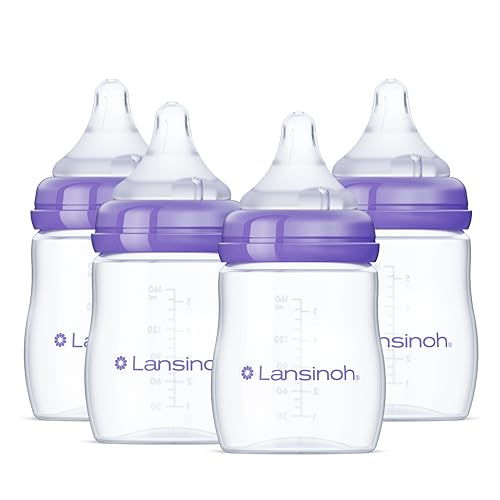
The Lansinoh Anti-Colic bottle uses the NaturalWave Nipple Air Ventilation System, a clinically proven valve design integrated into the nipple base that vents air from the bottle interior without it mixing with the milk. The system is passive, meaning it has no extra tubes, stems, or channels to clean — the bottle breaks down into just three pieces (nipple, collar, bottle) plus a cap. For parents who prioritize cleaning speed over absolute air elimination, this is the most efficient anti-colic system in the lineup.
The nipple is ultra-soft silicone with a gentle, wide slope that molds to the baby’s mouth. The nipple tip stretches with the baby’s sucking motion rather than collapsing, which supports baby-led feeding — the infant controls the pace, and milk flow stops naturally during swallowing breaks. This mechanism closely mirrors the breastfeeding letdown cycle and has been clinically shown to reduce colic by minimizing total air intake during feeding sessions.
The 5 oz capacity is larger than the other bottles on this list, making it suitable for newborns who will quickly grow into bigger per-feed volumes, but the included Size S (slow flow) nipple ensures the flow rate remains appropriate for 1-3 month olds. Users consistently note that the bottles do not leak, even when assembled hand-tight without cranking the collar. The 4-count pack provides a full daily rotation right out of the box, and the plastic body is freezer- and dishwasher-safe without warping.
Why it’s great
- Clinically proven anti-colic valve with three-piece assembly — fastest cleaning time
- Ultra-soft, stretchable nipple supports baby-led flow and seamless breast-to-bottle transition
- 4-bottle pack provides a complete rotation for daily feeding without needing extras
Good to know
- Passive valve system may not eliminate gas as thoroughly as active vent tube designs for severe colic
- Larger 5 oz bottles may encourage overfilling during early newborn stage
FAQ
How do anti-colic bottles prevent gas differently than standard bottles?
Can I use a bottle warmer with glass anti-colic bottles?
Why does my anti-colic bottle leak when I tilt it during feeding?
Do anti-colic bottles help with reflux, or only gas?
Final Thoughts: The Verdict
For most users, the anti-colic bottles for newborns winner is the Dr. Brown’s Natural Flow Options+ because its active vent tube and preemie nipple provide the deepest air isolation and the safest flow for fragile newborns — the clinical standard for colic relief. If you want the easiest clean-up with zero tubes, grab the Lansinoh Anti-Colic NaturalWave. And for durable glass material with a breast-like latch, nothing beats the Gulicola Small Glass Bottle.

Mo Maruf
I created WellFizz to bridge the gap between vague wellness advice and actionable solutions. My mission is simple: to decode the research and give you practical tools you can actually use.
Beyond the data, I am a passionate traveler. I believe that stepping away from the screen to explore new environments is essential for mental clarity and physical vitality.