Our readers keep the lights on and my smoothie glass nicely filled. As an Amazon Associate, I earn from qualifying purchases.
Heartburn during pregnancy is a hard truth for many expecting mothers, driven by hormonal shifts and the growing uterus pressing against the stomach. Finding an antacid that delivers fast relief while meeting the strict safety standards required during pregnancy is a specific challenge that goes far beyond what a standard heartburn sufferer faces. Every ingredient, every additive, and every inactive filler must be scrutinized for safety, not just effectiveness.
I’m Mohammad Maruf — the founder and writer behind WellFizz. My research focuses on analyzing maternal health supplements and over-the-counter remedies, digging into active ingredient profiles, third-party testing data, and clinical guidance to separate safe options from those best left on the shelf.
With so many products on the market, identifying a genuinely pregnancy-safe formula that actually works becomes the central task. This guide cuts through the noise to help you find the most reliable antacid for pregnancy that balances fast symptom relief with clean, well-researched ingredients.
How To Choose The Best Antacid For Pregnancy
Selecting a safe heartburn remedy during pregnancy means evaluating the active ingredient, the additive profile, and the dosage form. Not every antacid on the shelf is formulated with pregnancy in mind, so understanding these three factors will help you make an informed choice.
Active Ingredient Safety
Calcium carbonate is widely considered the first-line antacid choice during pregnancy because it is minimally absorbed systemically and also provides a supplemental source of calcium. Magnesium-based formulas can also be acceptable in moderate doses, but aluminum-based antacids should be avoided due to potential accumulation in maternal tissues. Always check the active ingredient list before purchasing.
Additive and Filler Profile
Many standard antacids contain talc, artificial dyes (including Red Dye 3), titanium dioxide, and artificial sweeteners that serve no therapeutic purpose. During pregnancy, minimizing exposure to these additives is a reasonable precaution. Clean-label products that explicitly state they are free from these ingredients offer a lower-risk option for daily or frequent use.
Dosage Form and Taste
Chewable tablets remain the most popular format for pregnancy antacids due to portability and ease of dosing. However, liquid gel formulations that create a physical barrier (alginate-based products) have gained traction for nighttime reflux because they provide a mechanical block that works independently of stomach acid levels. Consider when your symptoms are worst — daytime versus nighttime — to choose the right format for your routine.
Quick Comparison
On smaller screens, swipe sideways to see the full table.
| Model | Category | Best For | Key Spec | Amazon |
|---|---|---|---|---|
| Wonderbelly Antacid | Chewable Tablet | Clean-ingredient daily use | 1000 mg calcium carbonate | Amazon |
| RefluxRaft Acid Reflux Therapy | Liquid Gel | Nighttime barrier protection | Organic sodium alginate gel | Amazon |
| TUMS Ultra Strength | Chewable Tablet | Fast, familiar relief | 750 mg calcium carbonate | Amazon |
| Rennie Spearmint | Chewable Tablet | Dual-ingredient efficacy | Calcium + magnesium carbonate | Amazon |
| Nature’s Sunshine Stomach Comfort | Herbal Chewable | Herbal-based digestive support | Slippery elm + ginger blend | Amazon |
In‑Depth Reviews
1. Wonderbelly Antacid, Extra Strength Chewable Tablets

Wonderbelly hits the sweet spot for pregnancy-safe antacid use by delivering the full 1000 mg of calcium carbonate per serving — matching the dosing of leading brands — while stripping out the additives most expecting mothers want to avoid. The formula is explicitly free of talc, titanium dioxide, Red Dye 3, artificial sweeteners, gluten, and dairy, making it one of the cleanest chewable options on the market. The Strawberry Milkshake flavor is genuinely pleasant, with a smooth texture that dissolves easily without the chalky residue many antacids leave behind.
Customer reviews consistently highlight the effectiveness of these tablets for pregnancy-related heartburn, with multiple users noting fast relief that works as well as or better than traditional brands. The 120-count canister provides a solid supply for daily use, and the packaging uses 100% industrial compostable materials for the pouch, which is a nice sustainability bonus. The compact canister design fits easily into a purse or diaper bag for on-the-go relief.
One consideration: the label advises consulting a health professional before use if pregnant or breastfeeding, which is standard language for any supplement or OTC medication. The Non-GMO and vegan certifications add further reassurance for those with specific dietary preferences. For most expecting mothers looking for a clean, effective daily antacid, this is the clear first choice.
Why it’s great
- Maximum strength 1000 mg calcium carbonate without talc or artificial dyes
- Pleasant Strawberry Milkshake flavor that masks the chalky taste common in antacids
- Sustainable packaging and Non-GMO, vegan certified ingredients
Good to know
- Label recommends consulting a doctor before use during pregnancy
- Higher price per tablet compared to generic calcium carbonate options
2. RefluxRaft Acid Reflux Therapy
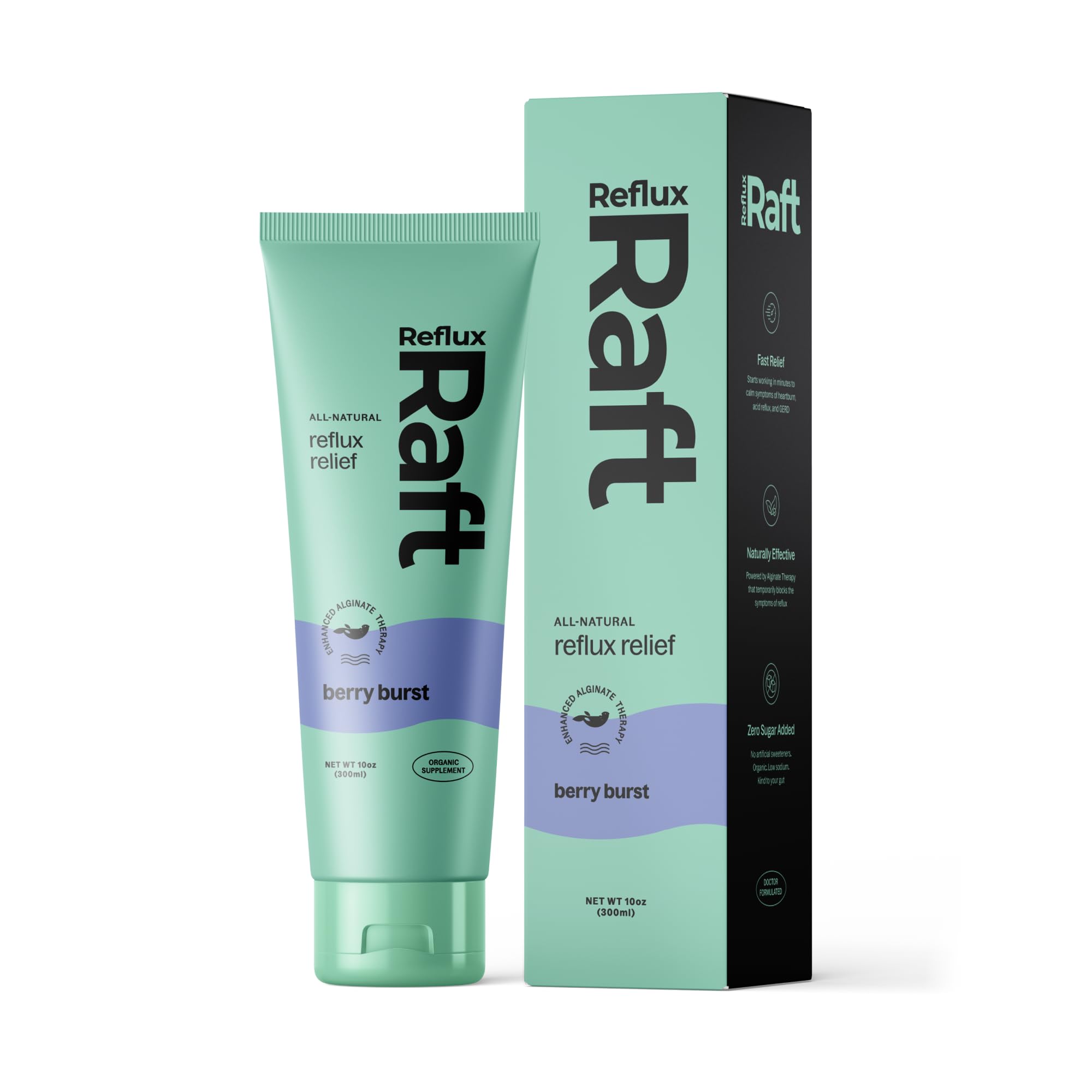
RefluxRaft takes a fundamentally different approach to pregnancy heartburn by forming a physical gel barrier in the stomach that blocks acid from rising into the esophagus, rather than neutralizing acid with calcium or magnesium. The active ingredient is organic sodium alginate derived from kelp, which creates a floating raft on top of stomach contents. This mechanical action is particularly useful for nighttime reflux, when lying down makes gravitational reflux more likely and acid-neutralizing antacids wear off quickly.
Developed by ENT physicians, this formula is specifically labeled as pregnancy safe and contains no added sugar, gluten, parabens, or artificial colors. Each serving contains just 28 mg of sodium — roughly 50% less than leading alginate brands — which is relevant for those monitoring sodium intake during pregnancy. The Berry Burst flavor is well-received, and the gel texture, while unusual at first, coats the throat immediately and provides a soothing sensation that users report improves sleep quality.
The main trade-off is the dosing routine: it works best when taken after meals and before bed, and you should avoid eating or drinking for a period after taking it to allow the gel raft to form properly. The price per serving is higher than chewable tablets, and some users report mild gas as a side effect. For those whose primary struggle is acid waking them up at night, this alginate-based approach is worth the premium.
Why it’s great
- Mechanical barrier blocks acid without suppressing normal stomach function
- Doctor-founded and specifically labeled safe for pregnancy use
- Low sodium and zero sugar formula with pleasant berry flavor
Good to know
- Requires planning around eating and drinking for best results
- Gel texture may take getting used to, and some users experience gas
3. TUMS Ultra Strength, Assorted Fruit

TUMS Ultra Strength is the benchmark that most other antacids are measured against, and for good reason: the 750 mg calcium carbonate formulation provides reliable, fast-acting relief that millions of users trust. The Assorted Fruit flavor variety is the standard-bearer for the category, and the fliptop bottle design is a practical improvement over older packaging that makes it easy to dispense one or two tablets without fumbling. The brand’s long history and widespread availability make it the default choice for many expecting mothers who simply want something familiar that works.
Customer feedback confirms that the Ultra Strength variant delivers noticeably faster relief than the regular strength version, with an improved dissolving texture and a less chalky aftertaste compared to older TUMS iterations. The 7.8-ounce bottle provides a reasonable supply for occasional use, though heavy users may find themselves reordering frequently. The calcium carbonate base also provides a small calcium boost, which can be a secondary benefit during pregnancy when calcium needs are elevated.
The main drawback for pregnancy-specific use is that TUMS does contain talc as an inactive ingredient, along with artificial colors and flavors that some expecting mothers prefer to avoid. If you are not concerned about these additives and prioritize proven effectiveness at a budget-friendly price point, TUMS remains a solid workhorse option. Just be aware that the ingredient transparency is not as clean as some newer competitors.
Why it’s great
- Proven, fast-acting relief with decades of consumer trust behind it
- Pleasant fruit flavors with improved texture and less chalky residue
- Provides supplemental calcium, beneficial during pregnancy
Good to know
- Contains talc and artificial dyes that some users prefer to avoid during pregnancy
- Lower calcium carbonate dose per tablet compared to some competitors
4. Rennie Indigestion and Heartburn Relief Spearmint

Rennie offers a dual-active approach that combines calcium carbonate with magnesium carbonate hydrate, providing a broader acid-neutralizing profile than calcium-only formulas. The magnesium component adds a second pathway for neutralization, which many users report translates to longer-lasting relief compared to standard calcium carbonate tablets. The spearmint flavor is clean and refreshing, avoiding the fruit-forward sweetness that some users find cloying, and the chewable texture dissolves smoothly without excessive chalkiness.
The product is explicitly labeled as suitable for use during pregnancy on the packaging, which provides an extra layer of confidence for expecting mothers. Each tablet is compact and easy to carry, and the 96-count bottle offers a strong value proposition for the price. Customer reviews frequently note that Rennie works better than TUMS for their specific heartburn patterns, with particular praise for the longer duration of relief and the superior flavor profile that makes regular use more palatable.
On the downside, Rennie is not as widely available in US drugstores as it is in Europe and Australia, so Amazon is often the most reliable sourcing channel. The product does contain some inactive ingredients including sucrose and starch, so it is not as clean as the Wonderbelly option. For expecting mothers who find that calcium carbonate alone is not cutting it and want the added magnesium boost, Rennie is a compelling alternative.
Why it’s great
- Dual active ingredients (calcium + magnesium) for longer-lasting relief
- Explicitly labeled as suitable for use during pregnancy
- Pleasant spearmint flavor that dissolves cleanly without chalkiness
Good to know
- Harder to find in US retail stores; often requires online ordering
- Contains sucrose and starch as inactive ingredients
5. Nature’s Sunshine Stomach Comfort Chewable Tablets

Nature’s Sunshine Stomach Comfort takes a fundamentally different approach by relying on a blend of herbal ingredients — slippery elm, ginger, papaya, licorice, and alginic acid — to soothe the digestive tract rather than simply neutralizing stomach acid. Slippery elm forms a mucilaginous coating that can protect the esophageal lining, while ginger and papaya provide traditional digestive enzyme support. The alginic acid component adds a mild raft-forming effect similar to alginate-based products.
Customer reviews are notably positive, with several users reporting that this product replaced prescription acid reflux medications entirely. The chewable texture is described as similar to TUMS but without the chalky residue, and the natural ingredient profile appeals to those who prefer to minimize synthetic additives during pregnancy. The 60-tablet bottle is compact and the formula is made by a well-established herbal supplement company with decades of market presence.
The critical caveat is that this product has not been specifically studied or labeled for pregnancy safety in the same way as calcium carbonate antacids. The herbal blend includes licorice root, which in high doses can affect blood pressure and potassium levels, so pregnant women should consult their healthcare provider before using this formula. It also contains a lower concentration of acid-neutralizing agents compared to conventional antacids, so it may not provide the instant, intense relief that some heartburn episodes demand.
Why it’s great
- Natural herbal blend that supports digestion rather than just neutralizing acid
- Pleasant chewable texture that dissolves without chalkiness
- May replace prescription acid reducers for some users
Good to know
- Not specifically studied or labeled for pregnancy safety
- Contains licorice root, which may affect blood pressure in sensitive individuals
FAQ
Which antacid is considered safest during the first trimester?
Can I take an antacid every day while pregnant?
Are chewable antacids better than liquid antacids during pregnancy?
What ingredients should I avoid in an antacid when pregnant?
Final Thoughts: The Verdict
For most expecting mothers, the top pick for a safe and effective antacid for pregnancy is the Wonderbelly Antacid because it delivers maximum-strength calcium carbonate without talc, artificial dyes, or other unnecessary additives. If you struggle primarily with nighttime reflux and want a longer-lasting barrier, grab the RefluxRaft Acid Reflux Therapy. And for those who prefer a familiar, budget-friendly standby that has decades of proven use, the TUMS Ultra Strength remains a reliable choice.

Mo Maruf
I created WellFizz to bridge the gap between vague wellness advice and actionable solutions. My mission is simple: to decode the research and give you practical tools you can actually use.
Beyond the data, I am a passionate traveler. I believe that stepping away from the screen to explore new environments is essential for mental clarity and physical vitality.