Our readers keep the lights on and my smoothie glass nicely filled. As an Amazon Associate, I earn from qualifying purchases.
That faint rotten egg smell drifting from your hot water tap isn’t a plumbing mystery—it’s a cry for help from your water heater tank. The sacrificial anode rod inside your tank is the only thing standing between your appliance and a slow, corrosive death. When that rod is depleted, your tank becomes the next meal for aggressive minerals in your water supply.
I’m Mohammad Maruf — the founder and writer behind WellFizz. I’ve spent the last 15 years digging into the mechanical details of home appliances, analyzing market trends, and cross-referencing thousands of consumer reports to separate the products that genuinely perform from those that just look good on a shelf. For this guide, I parsed the material science, thread standards, and real-world failure points of today’s most talked-about anode rods.
Whether you’re dealing with hard water, a tight crawl space, or stubborn sulfur odors, finding the best anode rod comes down to matching the right metal and geometry to your specific water chemistry and tank layout.
How To Choose The Best Anode Rod
An anode rod is a simple component with a life-or-death job for your water heater. The wrong choice can accelerate corrosion or, worse, contaminate your water with unwanted flavors and smells. Here are the three factors that determine whether a rod will protect your tank or create new problems.
Material: Magnesium vs. Aluminum vs. Zinc
Magnesium rods are more electrochemically active, meaning they sacrifice themselves faster but provide superior protection, especially in soft water. They also help eliminate sulfur odors—a common complaint with aluminum rods. Aluminum rods last longer but can generate hydrogen sulfide gas, causing that rotten egg smell. Zinc-aluminum alloy rods are a compromise, offering decent longevity with less odor risk, but they’re less common in standard residential sizes.
Configuration: Rigid vs. Flexible vs. Segmented
A rigid rod is a straight, solid bar that requires at least 42 inches of vertical clearance above your heater to install. Most basement and closet installations fail this test. Flexible or segmented rods—hinged sections strung on a cable—bend to fit into tight spaces, often requiring just 12 inches of overhead clearance. If you have a finished ceiling or a narrow utility closet, a flexible rod isn’t optional; it’s the only practical path.
Thread Size and Hex Head Dimensions
Nearly all residential water heaters in North America use a 3/4-inch NPT (National Pipe Thread) connection with a 1-1/16 inch hex head. However, some budget or older models may vary. Always verify the thread diameter before ordering. Using the wrong thread size can strip the tank’s fitting, creating a leak that requires a costly repair. Many premium rods include a hex socket tool in the box, which is a strong signal of thoughtful design.
Quick Comparison
On smaller screens, swipe sideways to see the full table.
| Model | Category | Best For | Key Spec | Amazon |
|---|---|---|---|---|
| Eastman 60286 | Flexible Magnesium | Sulfur Odor Elimination | 5/8″ link diameter / 42″ length | Amazon |
| Camco 11582 | Rigid Aluminum | Long-Lasting Durability | Aluminum / 42″ rigid | Amazon |
| Eau 44″ Flexible Magnesium | Flexible Magnesium Kit | DIY Install with Tools Included | 44″ segmented / 0.8″ diameter | Amazon |
| CMI M341444 Rod | Segmented Magnesium | Tight Installation Spaces | 4-section / 44″ collapsible | Amazon |
| ONENESS 369 3-Pack | RV Magnesium | RV & Suburban Heaters | 9.25″ length / 3/4″ NPT | Amazon |
In‑Depth Reviews
1. Eastman 42 Inch Flexible Magnesium Anode Rod (60286)
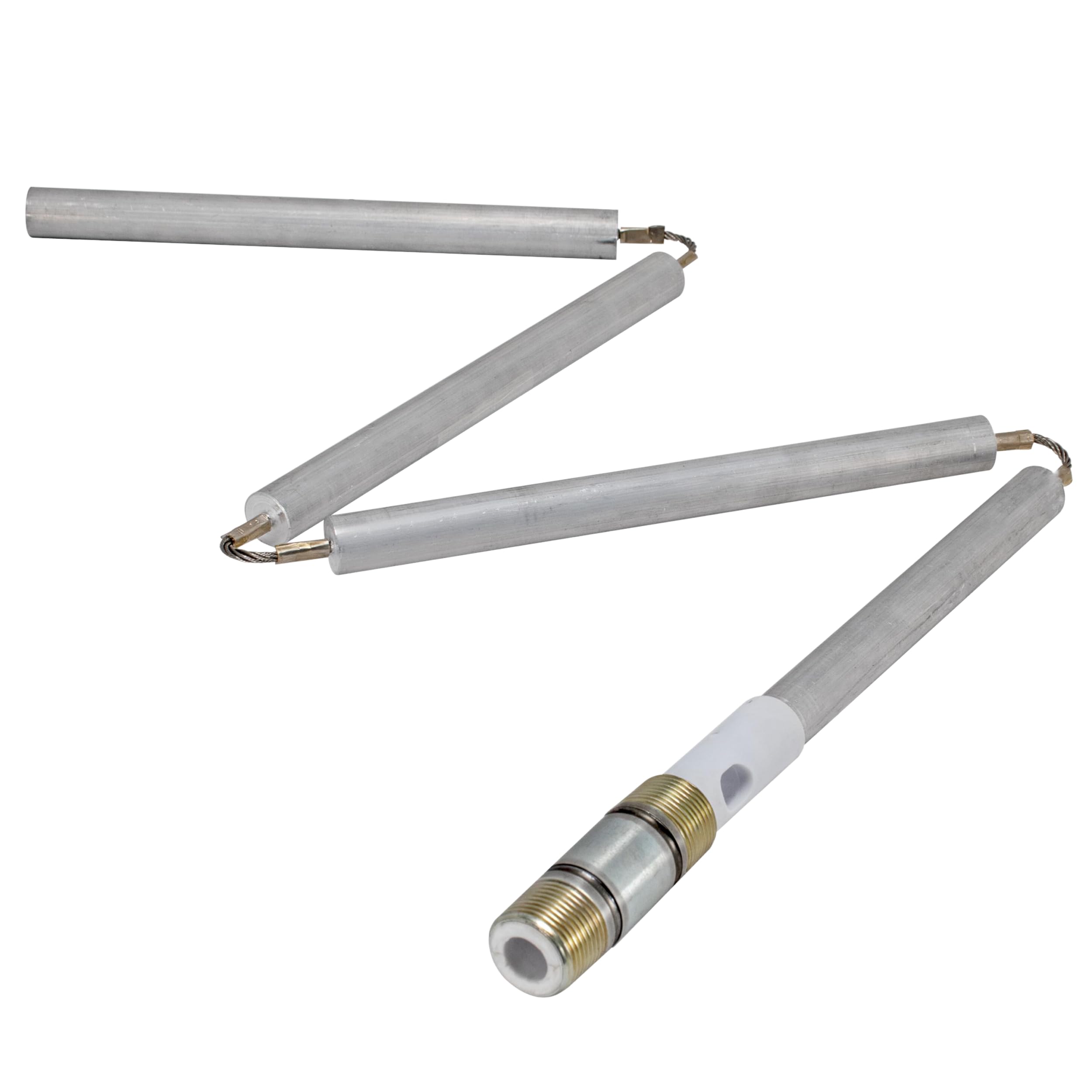
The Eastman 60286 sits at the top because it solves the two biggest complaints about anode rods simultaneously: installation difficulty and sulfur smell. Its four magnesium links, each 5/8 inch in diameter, are strung on a carbon steel cable, allowing you to snake the rod into place even when you have less than 12 inches of headroom above the tank. The chrome finish on the stainless steel 3/4-inch NPT nipple not only looks clean but resists corrosion at the most vulnerable connection point.
What truly sets this rod apart is its effectiveness against hydrogen sulfide gas. Magnesium’s higher electrochemical potential actively reduces the bacteria that produce sulfur odors, making this the go-to choice for well water users or anyone battling that distinctive stench. The flexible design means you can cut the cable to shorten the rod if your tank is unusually shallow, a feature rigid rods cannot offer without special tools.
At this premium tier, you’re paying for the engineering that eliminates future headaches. The included stainless steel fitting is a significant upgrade over standard brass or iron nipples, reducing the risk of galvanic corrosion at the tank opening. Users report easy installation on brands like Bradford White, with the rod bending effortlessly to clear overhead obstructions. If you value water quality and maintenance simplicity, this is the rod you won’t regret investing in.
Why it’s great
- Flexible magnesium design eliminates sulfur odors effectively
- Stainless steel 3/4″ NPT nipple resists corrosion at the tank entry
- Requires only 12 inches of overhead clearance for easy install
Good to know
- Does not include a heat trap device—verify your heater’s existing setup
- Some users may need to shorten the 3-inch nipple for specific tank models
2. Camco Aluminum Anode Rod (11582)

The Camco 11582 is the industry workhorse—a straightforward aluminum rod that does exactly what a sacrificial anode should do without any frills. Its 42-inch length covers the vast majority of residential water heaters, and the 3/4-inch NPT threads with a plated hex bushing ensure compatibility right out of the box. Aluminum is less electrochemically active than magnesium, so this rod will last longer in soft to moderately hard water, potentially stretching replacement intervals to four years or more.
Installation requires at least 42 inches of vertical clearance above the heater, which rules out many closet or finished ceiling setups. However, if you have the space, the rigid aluminum core is soft enough to cut with a basic hacksaw, allowing you to trim it to fit shorter tanks. The trade-off for longevity is odor: aluminum rods are more likely to produce hydrogen sulfide gas in water with high sulfate content, which can create that rotten egg smell. If your water smells fine now, this is unlikely to be a problem.
Customer feedback consistently notes that the rod arrives fully intact and that the hex head accepts a standard 1-1/16 inch socket. Several users reported using an impact wrench to remove the old rod, which is standard for factory-tightened installations. The aluminum construction is noticeably lighter than magnesium equivalents, weighing just over two pounds, making it easier to handle overhead. For a no-nonsense replacement that prioritizes longevity over odor management, the Camco remains the top mid-range pick.
Why it’s great
- Aluminum construction offers extended lifespan over magnesium rods
- Universal 3/4″ NPT threads fit nearly all residential water heaters
- Soft metal core can be hacksaw-cut to custom lengths
Good to know
- Requires 42 inches of overhead clearance for installation
- May contribute to sulfur smells in high-sulfate water conditions
3. Eau 44 Inch Flexible Magnesium Anode Rod Kit

The Eau kit is the only product in this lineup that bundles everything a DIY homeowner needs in one box: the magnesium rod, a 27mm chrome socket, and PTFE sealing tape. This eliminates the frustrating mid-project trip to the hardware store for tools you didn’t know you needed. The rod itself is a four-section segmented design, each segment under 12 inches, connected by a flexible core that allows it to bend into tight spaces without kinking.
Magnesium composition sits at 96% purity, giving it the strongest electrochemical pull of any material on this list. This makes it the ideal choice for homes with soft water, where aluminum rods would corrode too slowly to offer adequate protection. The trade-off is that magnesium rods deplete faster, requiring inspection every two years rather than four. The Eau rod is compatible with major brands including Rheem, Reliance, A.O. Smith, Kenmore, and GE, thanks to its standard 3/4-inch NPT connection.
Users praise the kit for enabling annual maintenance that was previously too cumbersome to attempt with a rigid rod. The included socket is functional but lightweight, so an impact wrench is still recommended for breaking loose the factory-tightened original rod. Several reviewers noted the rod’s metal is soft enough to cut easily with a mini-hacksaw if the full 44-inch length exceeds your tank depth. If you value a complete solution that removes guesswork, this kit delivers solid value for the money.
Why it’s great
- Complete DIY kit with socket, tape, and flexible magnesium rod
- 96% pure magnesium offers maximum corrosion protection
- Segmented design fits heaters with limited overhead access
Good to know
- Included socket is lightweight and may struggle with stubborn rods
- Magnesium depletes faster than aluminum in soft water conditions
4. CMI Flexible Magnesium Anode Rod (M341444 Rod)
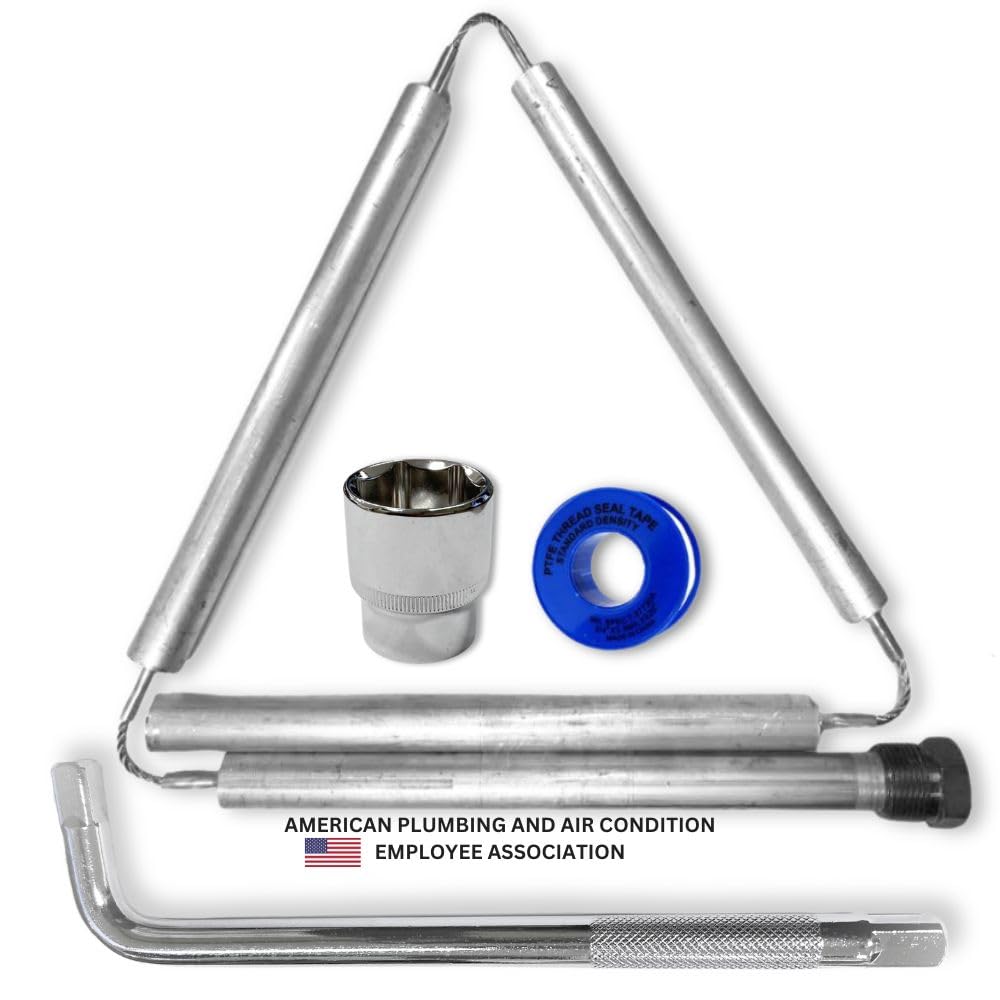
The CMI M341444 Rod is a purpose-built solution for water heaters crammed into corners, closets, or low basements where a rigid rod simply cannot fit. Its four-section design collapses into 11-inch segments, allowing you to push the rod through the top opening and have it articulate inside the tank. The magnesium core provides the same high protection level as the Eastman and Eau rods, making it equally effective against corrosion and sulfur odors.
This rod ships with a socket and a cheater bar, though several users noted the cheater bar is too short to provide sufficient leverage for removing a stubborn factory rod. An impact driver or a longer breaker bar is strongly recommended for the removal step. The magnesium material is noticeably harder than aluminum, so if you need to cut this rod to size, a standard hacksaw will work, but it will require more effort than cutting an aluminum equivalent.
Unlike the Eastman rod, the CMI uses a standard hex plug rather than a stainless steel nipple, which makes it slightly more prone to corrosion at the fitting over a decade-long timeline. Still, for a mid-range price, you get a fully functional segmented rod that solves the clearance problem effectively. Customers report it fits Rheem and A.O. Smith models perfectly, and the ability to articulate each segment independently reduces the risk of damaging the tank’s interior lining during installation.
Why it’s great
- Collapsible 4-section design fits in spaces with under 12 inches of clearance
- Magnesium construction actively reduces hydrogen sulfide odor
- Includes installation socket and cheater bar for convenience
Good to know
- Cheater bar is too short for breaking loose heavily corroded rods
- Standard hex plug fitting is less corrosion-resistant than stainless steel options
5. ONENESS 369 RV Water Heater Anode Rod (3-Pack)

RV water heaters operate under entirely different constraints than residential units, and the ONENESS 369 3-pack is built specifically for Suburban models with stainless steel interiors (SW6DE, SW10DE, SW12DE). At just 9.25 inches long with a 3/4-inch NPT thread, this rod is a fraction of the size of a residential unit, designed to fit the compact tanks found in campers and travel trailers. The magnesium composition (96% Mg, 3% Al, 1% Zn) offers aggressive sacrificial protection, which is critical because RV water heaters see more temperature cycling and variable water quality than home systems.
Each rod in the pack comes pre-applied with Teflon tape on the threads, a small but meaningful convenience that reduces installation time. The pack includes three rods and a dual hex removal tool, effectively providing three years of maintenance if you follow the recommended annual replacement schedule. The white galvanized nut on this version resists corrosion in hard or mineral-rich water, a common scenario for RVers who fill up at campgrounds with unknown water chemistry.
It’s critical to note the compatibility distinction: Atwood RV water heaters (which have black plastic tanks) require a different rod with a 1/2-inch NPT thread and shorter length. Installing this rod in an Atwood unit will damage the fitting. Customer satisfaction is high among Suburban owners, with users confirming perfect fit and easy installation using the included tool. For the price of a single premium residential rod, you get a three-year supply of RV-specific protection—a smart value for seasonal travelers.
Why it’s great
- 3-pack provides three years of maintenance in one purchase
- Magnesium alloy offers superior corrosion protection for RV tanks
- Pre-applied Teflon tape and hex wrench simplify installation
Good to know
- Only compatible with Suburban models—not for Atwood water heaters
- 9.25-inch length is specific to RV tanks; cannot be used in residential heaters
FAQ
How often should I replace my water heater anode rod?
Can I use a magnesium rod if my water heater came with an aluminum rod?
Why does my water smell like rotten eggs after installing a new anode rod?
Do flexible anode rods provide the same protection as rigid rods?
Final Thoughts: The Verdict
For most users, the best anode rod winner is the Eastman 60286 because it combines flexible magnesium protection with a corrosion-resistant stainless steel nipple, effectively eliminating sulfur odors and simplifying installation in tight spaces. If you want a complete DIY kit with tools included, grab the Eau 44 Inch Flexible Magnesium Kit. And for RV owners with Suburban water heaters, nothing beats the value of the ONENESS 369 3-Pack, which provides three years of maintenance in a single purchase.

Mo Maruf
I created WellFizz to bridge the gap between vague wellness advice and actionable solutions. My mission is simple: to decode the research and give you practical tools you can actually use.
Beyond the data, I am a passionate traveler. I believe that stepping away from the screen to explore new environments is essential for mental clarity and physical vitality.