Our readers keep the lights on and my smoothie glass nicely filled. As an Amazon Associate, I earn from qualifying purchases.
A garden buzzing with life isn’t just beautiful — it is a vital refuge for bees, butterflies, and hummingbirds that are struggling to find food. The right flowers provide the nectar and pollen these creatures depend on, turning your outdoor space into a thriving ecosystem.
I’m Mohammad Maruf — the founder and writer behind WellFizz. I spend my time analyzing seed viability, bloom duration, and species diversity to find the mixes that actually deliver on their promise to feed local pollinators.
Whether you start with a seed mix or individual plants, a successful pollinator patch comes down to choosing varieties that bloom across the season. This guide highlights the best annuals for pollinators you can plant this season to create a reliable food source from spring through fall.
How To Choose The Best Annuals For Pollinators
Not all seed packets are created equal. A mix that looks massive on paper may be packed with filler species that bloom for two weeks and then disappear. The goal is continuous bloom from early spring through frost. When scanning options, pay close attention to three factors: bloom period, species diversity, and germination reliability.
Bloom Period and Succession
Pollinators need food from the first warm day to the last. A mix dominated by mid-summer bloomers leaves spring queens and fall migrants without a meal. Look for mixes that include early bloomers like Cornflower and late-season performers like Cosmos to keep the buffet open all year.
Seed Freshness and Germination Rates
A bag of seeds that sat in a warehouse for two years may sprout at half the rate of a freshly packed batch. Reputable brands lab-test their seeds and package them in moisture-proof pouches to lock in viability. Reading recent customer photos can reveal whether a batch is actually germinating in real gardens.
Annual vs. Perennial Balance
Annuals bloom in their first year, which makes them ideal for immediate impact. Some mixes blend in perennials that take a season to establish but return year after year. If you want instant color and reliable pollinator food this season, choose a mix labeled “all annual” or one with a high proportion of fast-growing annual species.
Quick Comparison
On smaller screens, swipe sideways to see the full table.
| Model | Category | Best For | Key Spec | Amazon |
|---|---|---|---|---|
| Eden Brothers All Annual Wildflower Mix | Seed Mix | Immediate, diverse annual blooms | 20 species all-annual mix | Amazon |
| Gardeners Basics 35-Variety Pack | Seed Packets | Curated variety and controlled planting | 35 individual seed packets | Amazon |
| Outsidepride Buckwheat Seeds | Single Species | Cover crop and bee pasture | 1lb, fast-growing annual | Amazon |
| PLANTMEW Wildflower Mix | Seed Mix | Low-cost high-density coverage | 16 perennial varieties, 4oz | Amazon |
| Willard & May Butterfly Weed Root | Bare Root | Long-term monarch habitat | Perennial, 18-36in height | Amazon |
In‑Depth Reviews
1. Eden Brothers All Annual Wildflower Mixed Seeds
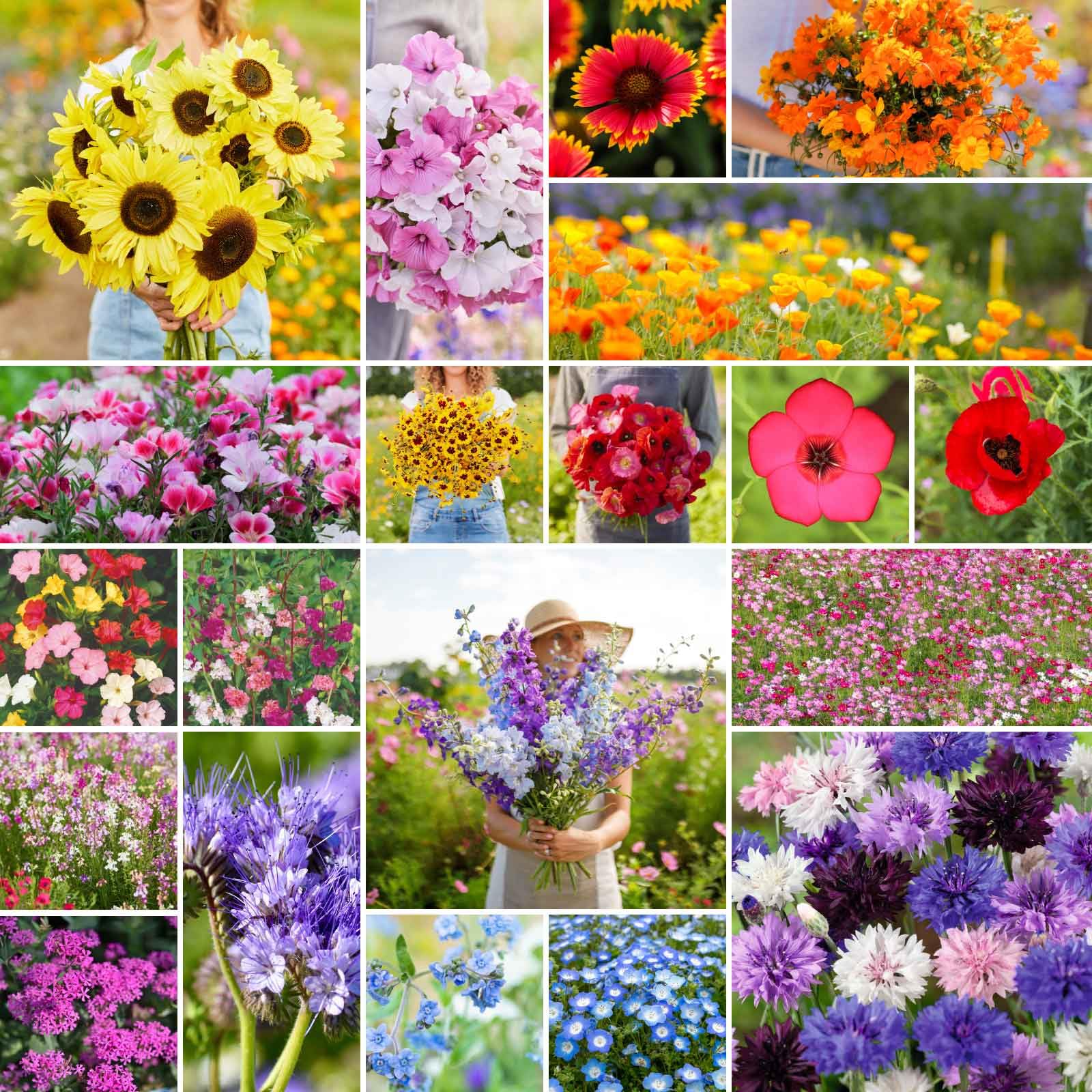
This 100% pure, non-GMO mix delivers 20 carefully selected annual species including Cornflower, Cosmos, Scarlet Flax, and Sunflower — all chosen to bloom in succession from spring through early fall. The 1/4 lb bag covers 250-500 square feet, making it a generous option for a medium to large patch. Eden Brothers packs seeds that consistently exceed industry germination standards, and the all-annual formulation means you get flowers in the very first season without waiting for perennial establishment.
Customer reports confirm fast germination within days and vigorous growth. Many gardeners noted that the mix attracts a steady stream of bees and butterflies once the blooms open, with Sunflowers and Cosmos standing out as the tallest anchors. The blend is suitable for USDA zones 3 through 10, which covers nearly the entire continental US, and it thrives in full sun with moderate watering.
One thing to note: the mix includes some species that reseed themselves if allowed to go to seed, so you may see volunteers the following spring. For a first-year pollinator garden that delivers immediate abundance without complicated planning, this is the most reliable all-in-one selection on the market.
Why it’s great
- 20 species guarantee a long bloom season
- High germination rates backed by lab testing
- 100% annuals provide flowers in year one
Good to know
- Some species may reseed aggressively in mild climates
- Requires full sun for best results
2. Gardeners Basics 35-Variety Flower Seed Packets

This collection takes a different approach: instead of one giant mix, you get 35 individual seed packets, each containing a different non-GMO heirloom variety. The lineup includes Marigolds, Hollyhocks, Daisies, Zinnias, Cosmos, and Phlox, among others. Every packet includes complete growing and harvesting instructions, which is a huge help for beginners who want to learn each species’ specific needs. No duplicates here — each packet is a genuinely distinct flower.
Gardeners in zones 3-11 report excellent germination rates with direct sowing, especially when they use coco coir pods to give the seeds a warm, moist start. The packets come organized in a gift-ready bag, which also doubles as storage. Many buyers noted that the value is exceptional, calculating that buying these 35 packets individually would cost several times more.
Because you control planting timing for each species, you can stagger your sowings to ensure continuous blooms from spring through late fall. This makes it especially powerful for pollinators that need overlapping food sources. If you want a curated collection that lets you learn and experiment with a wide variety of flowers, this is the most structured option available.
Why it’s great
- 35 unique species in individual packets
- Complete growing instructions for each variety
- Great value compared to buying packets separately
Good to know
- Packet does not list mature plant heights
- Some flowers may need more space than expected
3. Outsidepride Buckwheat Seeds – 1lb
Buckwheat is an unsung hero in the pollinator garden. This fast-growing annual shoots up quickly, producing dense white flower clusters that bees absolutely swarm. The 1lb bag covers roughly 1,000 square feet at the recommended rate, making it one of the most economical options for large areas. Outsidepride’s seed is GMO-free and thrives in almost any soil type with minimal watering.
Beyond its pollinator value, buckwheat is a classic green manure — it suppresses weeds, improves soil structure, and adds organic matter when tilled in before it goes to seed. Many gardeners use it as a summer cover crop between vegetable plantings, then mow it down and let the soil reap the benefits. Customers report visible germination within days and a solid bee presence throughout the bloom phase.
The main trade-off is that buckwheat is a single species with a relatively short bloom window of about three weeks. It also dies with the first frost. For maximum pollinator impact, plant it in succession every two to three weeks so there’s always a fresh patch flowering. If your goal is to feed bees while enriching your soil simultaneously, this is the most efficient choice.
Why it’s great
- Extremely fast germination and growth
- Intensely attractive to honeybees
- Improves soil when used as green manure
Good to know
- Single species with a short bloom window
- Frost-sensitive — plant after last frost date
4. PLANTMEW 200,000+ Wildflower Seeds Mix
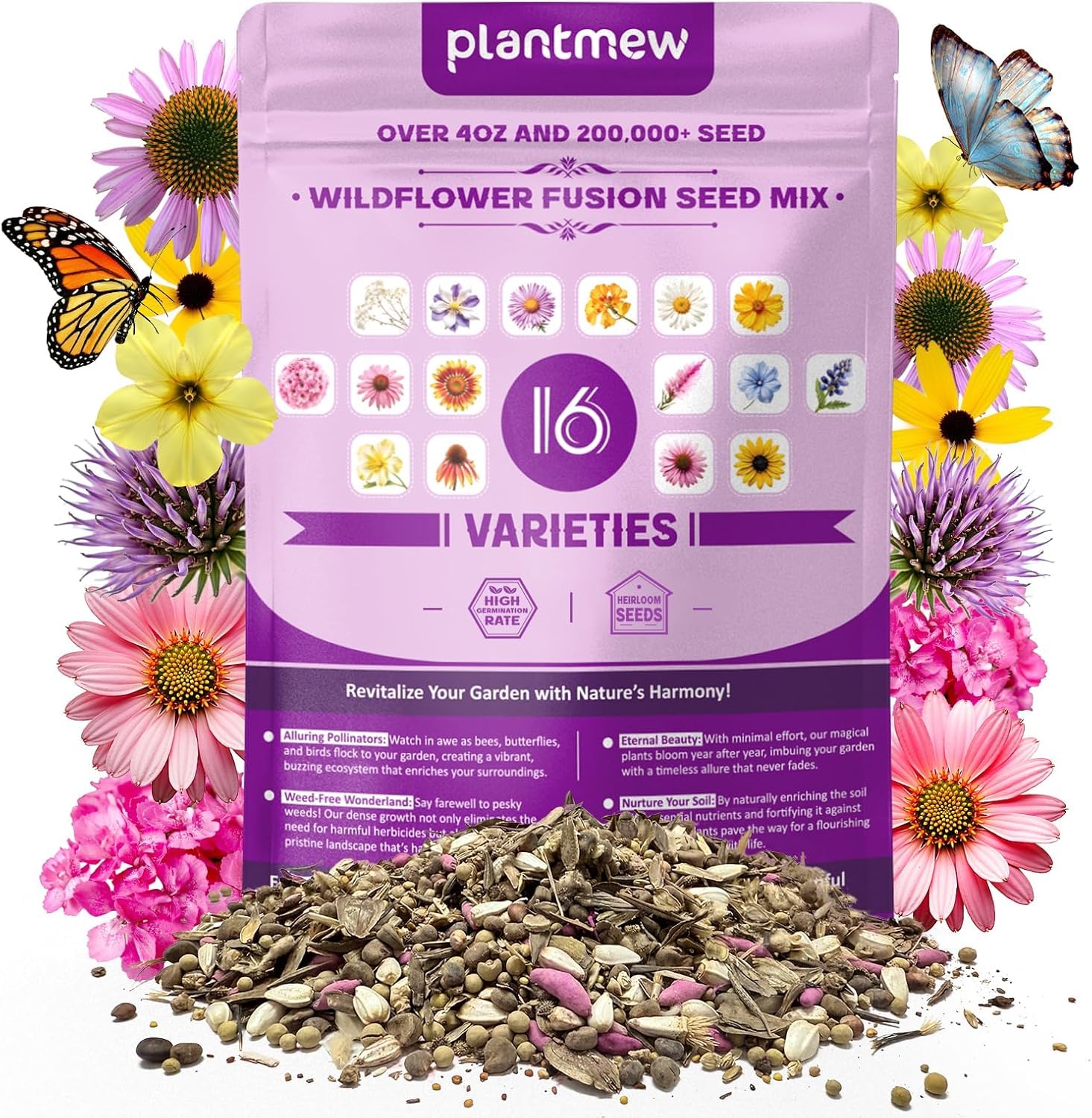
For the lowest cost per seed in this roundup, PLANTMEW delivers a 4oz pouch containing 200,000+ seeds from 16 heirloom perennial varieties — including Purple Coneflower, Black-Eyed Susan, and Shasta Daisy. The resealable, moisture-proof pouch keeps seeds viable for up to three years, which is helpful if you want to stagger planting over multiple seasons. The mix is hand-packed and lab-tested for germination.
Customer photos show rapid sprouting in under a week when kept consistently moist, with thousands of tiny green shoots emerging from regular garden soil. Several buyers noted the seeds attracted birds that dug them up, which suggests the mix is genuinely appealing to local wildlife. The packaging includes a QR code linking to an online growing guide, though a paper guide is not included in the pouch.
The main caveat is that this mix is heavy on perennial species, which may not flower heavily in year one. For the budget-conscious gardener who wants to sow a large area and is willing to wait for the perennials to establish, this is an excellent starting point. Pair it with a few fast-blooming annuals for first-season color while the perennials develop.
Why it’s great
- High seed count for a very low investment
- Moisture-proof pouch preserves viability
- Includes well-loved perennial species
Good to know
- No printed growing guide included in the package
- Perennial-dominant mix may take a season to bloom
5. Willard & May Butterfly Weed Bare Root

Butterfly Weed (Asclepias tuberosa) is a keystone plant for monarch butterflies — it is the only host plant their caterpillars can eat. This bare root from Willard & May is a premium No. 1 grade, meaning it is a large, healthy root ready to establish quickly. Mature plants reach 18 to 36 inches tall and produce vivid orange flower clusters from spring through fall in full sun.
Because it is a perennial, this root will come back year after year once established. Customers who soaked the bare root before planting reported vigorous sprouting within days. The plant is organic, thrives in zones 3-9, and requires only moderate watering. For serious pollinator conservation, adding Butterfly Weed to your garden is one of the highest-impact moves you can make.
The risk with bare roots is inconsistency — some buyers received roots that simply never sprouted, and the seller’s customer service did not always respond promptly. Because each unit is a single root, the germination gamble is steeper than with a seed mix. If you want to ensure monarch habitat and are willing to monitor your root closely, this is the most specialized product on the list.
Why it’s great
- Critical host plant for monarch caterpillars
- Large premium root for quick establishment
- Perennial — returns each season
Good to know
- Individual root may fail to sprout
- Response time from seller can be slow
FAQ
How many seed varieties should an annuals mix include for good pollinator support?
Will perennial wildflower seeds bloom in the first year like annuals do?
What is the best way to prepare soil for a pollinator seed mix?
Final Thoughts: The Verdict
For most gardeners, the best annuals for pollinators winner is the Eden Brothers All Annual Wildflower Mix because it delivers 20 species for continuous bloom in the first season, with proven germination rates and broad zone compatibility. If you want a curated selection of individual packets you can stagger yourself, grab the Gardeners Basics 35-Variety Pack. And for building a monarch habitat that returns each year, nothing beats the Willard & May Butterfly Weed Root.

Mo Maruf
I created WellFizz to bridge the gap between vague wellness advice and actionable solutions. My mission is simple: to decode the research and give you practical tools you can actually use.
Beyond the data, I am a passionate traveler. I believe that stepping away from the screen to explore new environments is essential for mental clarity and physical vitality.