Our readers keep the lights on and my smoothie glass nicely filled. As an Amazon Associate, I earn from qualifying purchases.
A sudden sidestep, a quick lunge for a wide forehand, and your ankle rolls — it’s the fastest way off the court and into weeks of rehab. The lateral cuts and sudden stops in tennis place extraordinary torque on the ankle joint, making reliable brace selection a cornerstone of injury prevention, not an afterthought.
I’m Mohammad Maruf — the founder and writer behind WellFizz. I’ve spent years analyzing orthopedic and sports-medicine hardware, cross-referencing clinical specs with athlete retention data to identify the braces that actually hold up under real match conditions.
Whether you’re recovering from a sprain or protecting a chronically weak joint, finding the right gear matters. This guide breaks down the technical specs, clinical validation, and real-world durability of each option to help you identify the best ankle support for tennis.
How To Choose The Best Ankle Support For Tennis
Not every ankle brace translates from the gym floor to the clay court. Tennis demands a unique combination of lateral stability, low-profile fit, and moisture management. Here are the factors that separate a training-room brace from a match-day essential.
Lace-Up Systems and Speed Lacing
A full lace-up design delivers customizable compression across the entire ankle, mimicking the secure feel of athletic tape. Speed-lacing eyelets with Velcro pull-tabs let you achieve that compression in seconds between changeovers, making them a favorite for players who need quick application without sacrificing lockdown.
Figure-Eight Straps
The figure-eight configuration targets the medial and lateral ligaments directly. These straps wrap under the heel and cross over the instep, creating a basket-weave effect that resists inversion and eversion — the two most common ankle-roll directions during a baseline rally. Without this feature, you are essentially wearing a sleeve, not a stabilizer.
Removable Side Stabilizers
Rigid or semi-rigid stays on the medial and lateral sides provide proprioceptive feedback and mechanical resistance against rolling. Being able to remove them gives you a gradual weaning path from high-support recovery to agile game-day freedom, extending the life and utility of one brace across multiple phases of rehab.
Low-Profile Silhouette
Tennis shoes are built snug for lateral support. A bulky brace that forces you to buy a half-size-up shoe introduces heel slippage, which destabilizes your base. Look for open-heel designs and minimal forefoot material to keep your foot anchored inside your existing court shoes.
Quick Comparison
On smaller screens, swipe sideways to see the full table.
| Model | Category | Best For | Key Spec | Amazon |
|---|---|---|---|---|
| Fitomo Quick Lace Up | Premium | Game-day stability with removable stays | Removable plastic splints; Figure-8 strap | Amazon |
| DonJoy Speed Pro | Premium | Agile protection with speed lacing | 800D Ballistic nylon; quick-lace Velcro | Amazon |
| Vive Lace Up | Mid-Range | Cost-effective daily training support | Dual figure-eight straps; open heel | Amazon |
| Active Ankle AS1 Pro | Mid-Range | Tape-replacement for aggressive play | Non-slip silicone sole; speed eyelets | Amazon |
| DRwelland Side Stabilizer | Budget | Basic recovery and everyday wear | Neoprene sleeve; adjustable arch straps | Amazon |
In‑Depth Reviews
1. Fitomo Quick Lace Up Ankle Brace
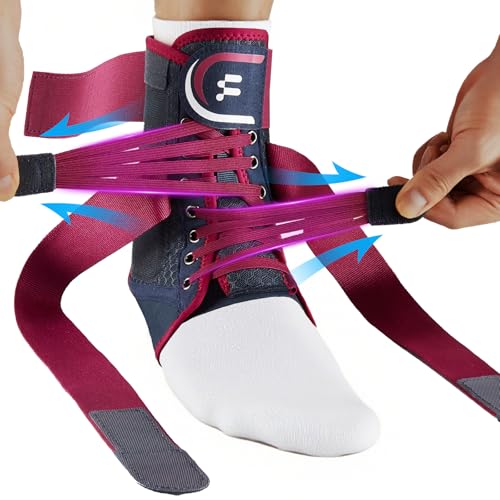
The Fitomo brace leads this list because of its genuinely modular approach to support. The Triple-Lock system integrates a top compression strap, dual removable side stabilizers, and crossing figure-eight webbing that locks the talus and calcaneus during aggressive lateral pushes. Users report the brace stays secure without constant readjustment, even through multi-set matches.
At just 0.19 kilograms with a low-profile polyester and nylon build, this brace slides inside standard court shoes without forcing a wider fit. The removable stabilizers are a standout — you can train with full rigidity during early recovery and remove them for a lighter feel once strength returns, effectively extending the product’s useful lifespan.
Clinical feedback from users recovering from post-ORIF surgery and stroke-related inversion confirms the brace provides confidence during walking and sport-specific movement. The Velcro remains adhesive after half a year of daily use, a durability point that often separates mid-range braces from premium ones.
Why it’s great
- Removable side splints offer two support modes in one brace
- Figure-eight design effectively prevents ankle rolling during side-to-side movement
- Velcro closure system stays durable beyond six months of daily wear
Good to know
- Priced as a single unit — no two-pack option available
- Material blend runs warm in hot-weather outdoor play
2. DonJoy Stabilizing Speed Pro Ankle Support Brace

The DonJoy Speed Pro is engineered for players who value application speed as much as structural integrity. The quick-lace system uses a single Velcro tab to pull four lace segments taut simultaneously — a feature that shaves roughly 90 seconds off your pre-game routine compared to traditional laces. The 800-denier ballistic nylon shell resists abrasion from court surfaces and repeated cinching.
Removable articulated medial and lateral stays provide proprioceptive feedback that helps you recover from near-rolls before they become full sprains. A full circumferential elastic strap wraps the upper opening to compress the tibia and fibula, adding an extra layer of stability that is rare in this weight class. Users with severe Achilles tendonitis have reported this brace as the only one that allowed continued sport participation.
The speed-lace design eliminates hot spots that traditional eyelets can create on the dorsal foot. However, the heel cup’s material can bunch for some users, and the brace does run warm during extended play. The lace stability strip may warp after 40 hours per week of heavy use, though most recreational players will not hit that threshold.
Why it’s great
- Speed-lace Velcro system delivers a secure fit in seconds
- Removable side stays enhance proprioceptive control during lateral movement
- Circumferential top strap compresses the lower leg for added support
Good to know
- Heel material can bunch uncomfortably for some foot shapes
- Warmth buildup is noticeable during extended outdoor matches
3. Vive Lace Up Ankle Brace

The Vive Lace Up bridges the gap between basic sleeve braces and high-cost clinical models. Its dual figure-eight straps wrap both the lateral and medial sides, providing a customizable compression profile that eliminates the need for traditional athletic taping. The lace-up front lets you fine-tune tension across the entire ankle, while the open-heel design keeps the brace compatible with standard tennis shoes.
Constructed from breathable nylon with a bilateral fit, this brace works on either foot and suits a wide range of activities beyond tennis — users have cited it for OA support, peroneal tendon stabilization, and post-boot transition. At half the cost of comparable clinical braces, it delivers near-identical support quality for moderate instability and routine training.
Sizing is a critical detail here: the size chart is only printed inside the box, so measure your ankle circumference before ordering. Some users found the medium too large and the small too snug, requiring a return exchange. The brace is also notably bulkier than speed-lace models, which limits its ability to fit into narrow court shoes without crowding the toe box.
Why it’s great
- Dual figure-eight straps provide medial and lateral stabilization
- Open-heel design improves shoe compatibility and reduces bulk
- Lace-up front offers fully customizable compression across the ankle
Good to know
- Sizing chart is only accessible inside the packaging, not online
- Bulky build may require a half-size-up shoe for a comfortable fit
4. Active Ankle AS1 Pro Lace Up Ankle Brace
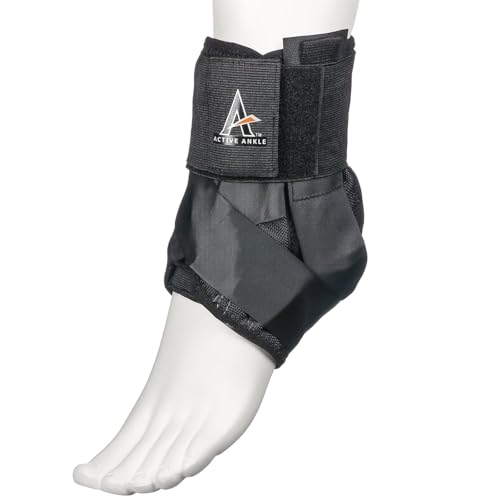
The Active Ankle AS1 Pro is designed specifically to replicate the mechanics of a professional athletic tape job. Non-stretch vertical straps simulate the basket-weave and heel-lock techniques that trainers use, while the non-slip silicone printing on the sole keeps every strap locked in place during explosive starts and stops. The pro-fit design removes excess forefoot material, reducing bulk exactly where tennis shoes are most restrictive.
Speed-lacing eyelets cut down on application time and reduce pressure hot spots across the top of the foot. Reinforced laces resist fraying from repeated cinching, addressing a common failure point in lower-tier braces. Users with chronic loose ankles and those recovering from sprains consistently report that this brace provides the closest sensation to being taped by an athletic trainer without the daily expense of athletic tape.
The criss-cross straps can loosen slightly over a long match session, requiring a quick re-tightening between games. Sizing is also worth double-checking — the brace runs snug, so athletes with wider feet may need to size up. Despite these notes, durability is exceptional: multiple users report the same brace lasting over five years of regular volleyball and basketball play.
Why it’s great
- Non-stretch vertical straps mimic athletic tape basket-weave technique
- Pro-fit design removes forefoot bulk for better shoe compatibility
- Reinforced laces resist fraying from repeated tightening
Good to know
- Criss-cross straps may loosen slightly during extended play
- Snug fit may be tight for athletes with wide feet
5. DRwelland Ankle Brace with Side Stabilizers
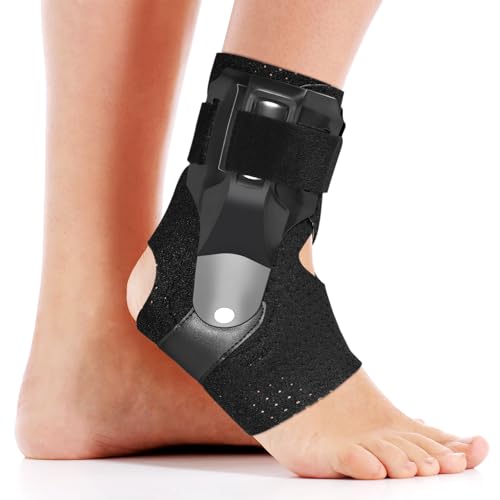
The DRwelland brace prioritizes day-long comfort through its neoprene construction, which offers breathability and moisture-wicking properties that help keep the joint cool during extended wear. Adjustable straps at both the arch and ankle positions allow you to dial in compression levels, making this a strong candidate for players who need support between sessions or during light practice rather than high-intensity match play.
Designed in collaboration with orthopedic surgeons, the brace provides targeted compression aimed at reducing swelling and supporting the joint during recovery from minor sprains, plantar fasciitis, or Achilles tendinitis. The fit is notably seam-free around the heel, which minimizes irritation during prolonged wear — a detail that users with sensory sensitivities or children with special needs have highlighted as a major plus.
The plastic buckle is the primary durability concern. Several users reported breakage after a few weeks of daily tightening, necessitating a replacement purchase. Additionally, the neoprene material, while comfortable, does not offer the same rigid lateral resistance as the lace-up and stay-equipped models above. For players returning from a Grade 1 sprain or managing chronic weakness without acute instability, this brace provides sufficient support without feeling like medical hardware.
Why it’s great
- Seam-free heel wrap eliminates irritation during extended wear
- Breathable neoprene wicks moisture and keeps the joint cool
- Adjustable arch and ankle straps provide customizable compression
Good to know
- Plastic buckle is a reported failure point under frequent tightening
- Neoprene sleeve offers less lateral rigidity than lace-up designs
FAQ
Can I wear an ankle brace with my existing tennis shoes?
How tight should a tennis ankle brace feel during play?
Final Thoughts: The Verdict
For most players, the clear winner for the ankle support for tennis category is the Fitomo Quick Lace Up because its removable stabilizers and figure-eight design deliver modular support that adapts as your recovery progresses. If you value blistering-fast application and ballistic-grade durability, grab the DonJoy Speed Pro. And for a value-focused option that provides solid stabilization without breaking the bank, nothing beats the Vive Lace Up.

Mo Maruf
I created WellFizz to bridge the gap between vague wellness advice and actionable solutions. My mission is simple: to decode the research and give you practical tools you can actually use.
Beyond the data, I am a passionate traveler. I believe that stepping away from the screen to explore new environments is essential for mental clarity and physical vitality.