Our readers keep the lights on and my smoothie glass nicely filled. As an Amazon Associate, I earn from qualifying purchases.
When the peroneal tendon or posterior tibial tendon flares, every step feels like a gamble — one wrong move can send a spike of pain through your ankle. A solid brace has to do more than just squeeze; it must actively resist inversion and eversion without turning your shoe into a clown car.
I’m Mohammad Maruf — the founder and writer behind WellFizz. My research focuses on biomechanical support structures, comparing stabilizer geometry, compression gradients, and real-world durability across dozens of mid-range and premium ankle supports to separate the braces that actually immobilize from those that just feel tight.
That’s why I put together this guide to finding the best ankle brace for tendonitis for anyone who needs reliable, comfortable support that fits inside a normal shoe and won’t quit after a month of daily use.
How To Choose The Best Ankle Brace For Tendonitis
Tendonitis in the ankle means the tendon sheath is inflamed, and the wrong brace can either aggravate that inflammation or fail to prevent the micro‑motions that keep it irritated. You need to look at three things: how the brace controls unwanted motion, how it fits inside your shoe, and how easily you can adjust the compression.
Figure‑8 Straps vs. Compression Sleeves
A simple tubular compression sleeve can reduce swelling, but it does almost nothing to stop the ankle from rolling inward or outward. For tendonitis — especially peroneal or posterior tibial tendonitis — you need a brace with figure‑8 or X‑strap geometry that actively tensions the medial and lateral sides. That’s what prevents the repetitive stretching that keeps the tendon inflamed.
Removable Stabilizers: When to Use Them
If you’re in the acute phase and every step hurts, rigid side splints are your friend — they lock the ankle into a neutral position. But once the inflammation drops, those same splints become a crutch that weakens the surrounding muscles. A brace with removable aluminum or plastic stabilizers lets you taper support as you heal, transitioning from full immobilization to active protection.
Low‑Profile Build for Shoe Fit
An overbuilt brace forces you to size up your footwear or simply go without. The best tendonitis braces use thin neoprene, air‑knit nylon, or low‑profile lace‑up designs that stay under the shoe tongue. If the brace adds more than a quarter‑inch of bulk around the malleoli, you’ll stop wearing it — and that defeats the purpose.
Quick Comparison
On smaller screens, swipe sideways to see the full table.
| Model | Category | Best For | Key Spec | Amazon |
|---|---|---|---|---|
| Fitomo Triple‑Lock | Lace+Strap | Active recovery & sports | Fig‑8 strap + removable stabilizers | Amazon |
| Vive Lace‑Up | Lace‑Up | Daily wear & moderate support | Dual figure‑8 velcro straps | Amazon |
| DRwelland Side Stabilizer | Neoprene Wrap | Compression & comfort | Neoprene with adjustable arch strap | Amazon |
| ZOELION Fishnet Strap | Compression Sleeve | Mild tendonitis & daily relief | 3D knit + removable X‑strap | Amazon |
| AGPTEK Lace‑Up Splint | Lace‑Up Splint | Post‑surgery / immobilization | Removable aluminum side splints | Amazon |
In‑Depth Reviews
1. Fitomo Triple‑Lock Ankle Brace
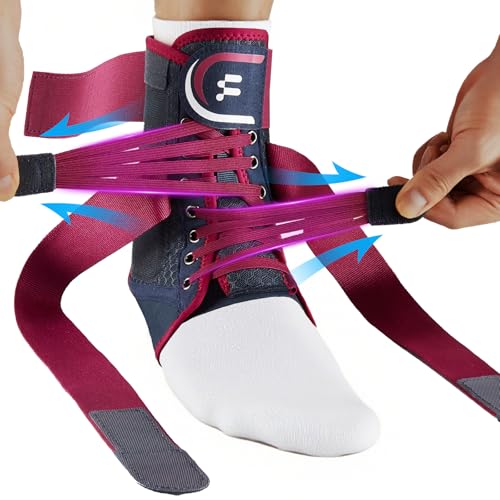
The Fitomo Triple‑Lock system uses a top compression strap, dual removable side stabilizers, and cross straps to create three contact points that resist both inversion and eversion. The figure‑8 tensioning lets you dial in support for different activities — tighter for basketball, looser for walking — without the brace shifting. Made from a polyester‑nylon blend (69/17 plus plastic stiffeners), it stays breathable during extended wear.
Users report it holds up after six months of daily use, with the Velcro still grabbing cleanly. The low‑profile build fits inside most sneakers without sizing up, a critical advantage over bulkier lace‑up models. It’s also FSA/HSA eligible, which matters if you’re paying out of pocket.
The only notable shortfall is that it ships in a single size range rather than separate S/M/L options, so thinner ankles may find the fit slightly loose. But for the combination of rigidity, adjustability, and compact footprint, this is the most versatile tendonitis brace on the list.
Why it’s great
- Triple‑lock geometry stops rolling without bulk
- Removable stabilizers allow step‑down support
- Breathable material with minimal shoe conflict
Good to know
- No individual size increments — fit depends on single adjustable range
- Hook‑loop closure may require periodic strap retensioning
2. Vive Lace‑Up Ankle Brace

Vive’s lace‑up brace delivers medium‑grade support via a traditional kidney‑style lacing system combined with two figure‑8 stabilizing straps. The laces let you dial in forefoot snugness, while the medial and lateral straps provide the tendon‑protecting torque control that tendonitis demands. An elastic top cuff locks everything in place so the laces don’t loosen mid‑activity.
The open‑heel design reduces bulk behind the Achilles, making it easier to fit into sneakers or even casual shoes. It’s a bilateral brace — works on either foot — and the nylon construction is durable enough for daily athletic use. Several buyer reviews mention it being cheaper than comparable models from Coreflex while offering better stability for osteoarthritic ankles.
Where it falls short is the volume. Even in the right size, the layered straps and lace mechanism add noticeable width, so you may need a roomier shoe. Sizing can also be inconsistent — some users found the small too tight and the medium too large, so careful measurement is essential.
Why it’s great
- Lace‑up precision with dual figure‑8 straps
- Open‑heel design relieves Achilles pressure
- Bilateral — one brace for either foot
Good to know
- Bulky profile may not fit narrow shoes
- Sizing runs inconsistent — measure carefully before ordering
3. DRwelland Side Stabilizer Brace
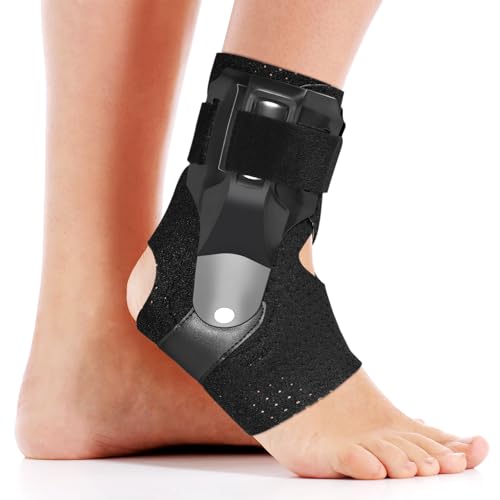
The DRwelland brace focuses on compression and warmth — two factors that can directly soothe an inflamed tendon sheath. The neoprene body provides even pressure that improves circulation and reduces swelling, while the adjustable arch strap lets you customize the snugness around the midfoot. Designed by orthopedic surgeons, the brace includes side stabilizers that prevent ankle collapse during walking.
Users consistently praise the comfort: the soft fabric wrap doesn’t aggravate plantar fasciitis, and the low profile fits inside Hoka and other wide‑toe shoes without rubbing. One reviewer noted it minimized ankle torque for a tibial nerve injury, and another said an individual with Down syndrome tolerated wearing it without complaint — a testament to the non‑irritating material.
The weak point is the plastic buckle. Several buyers reported it breaking under tension, requiring a replacement. Additionally, the neoprene retains heat, which can be uncomfortable during summer or high‑intensity activity. It’s best suited for low‑impact daily wear and chronic inflammation management, not competitive sports.
Why it’s great
- Neoprene warmth improves circulation and reduces swelling
- Adjustable arch strap for personalized compression
- Soft fabric heel wrap — won’t irritate plantar fasciitis
Good to know
- Plastic buckle prone to breaking under tension
- Neoprene traps heat — less ideal for warm weather
4. ZOELION Fishnet Strap Brace
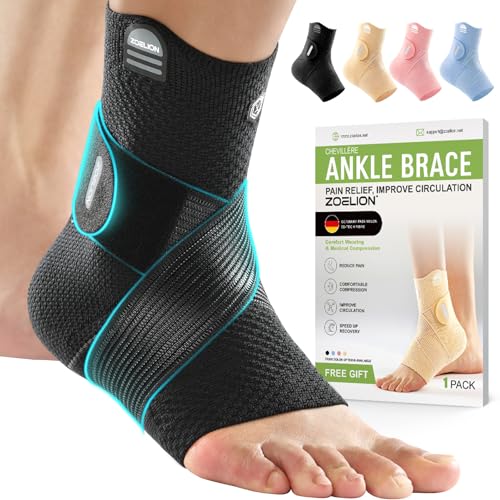
The ZOELION uses a 3D‑knit construction with graduated compression zones — a gentle Comfort Zone over the instep, a supportive Pressure Zone around the arch and heel, and flexible Pressure‑Free edges that prevent digging. The removable fishnet X‑strap adds targeted Achilles and arch tension without the bulk of traditional stabilizers. German‑imported PA66 high‑elastic fabric gives it a durable, snag‑resistant feel.
Buyers recovering from fractures and mild sprains found the seamless top comfortable enough for all‑day wear, with the strap staying in place without readjustment. The breathable knit wicks moisture effectively, and the slim profile fits into regular shoes without sizing up — a major plus for people who need to wear it under work footwear.
However, the compression is relatively light. For acute tendonitis with significant instability, the lack of rigid side splints means it won’t prevent inversion as aggressively as a lace‑up or splinted brace. Sizing can also be tricky — some users reported the Large running bigger than expected, so consulting the size chart is non‑negotiable.
Why it’s great
- 3D knit with graduated compression — no pressure points
- Removable fishnet strap adds tendon‑specific tension
- Breathable, low‑profile design fits in regular shoes
Good to know
- No rigid stabilizers — insufficient for severe instability
- Sizing runs large — measure foot circumference before ordering
5. AGPTEK Lace‑Up Splint Brace
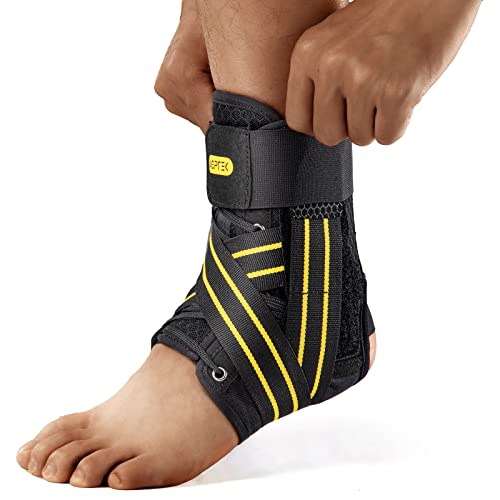
The AGPTEK brace abandons traditional straps in favor of a cross‑lace design paired with lightweight aluminum splints on both sides. The splints provide 360‑degree all‑round immobilization, which is ideal for the acute phase of tendonitis when any movement aggravates the tendon. The splints are fully detachable, so you can use the brace as a simple lace‑up stabilizer once the inflammation subsides.
User reviews consistently say it’s better than the brace provided by their orthopedic surgeon — more supportive, more comfortable, and easier to put on. One user with a sore Achilles tendon wore it playing pickleball and reported no worsening of the injury, then healed completely within weeks. The polyester‑nylon blend is breathable and durable enough for intense sports like basketball and volleyball.
The downside is fit. The Large runs small, and the overall cut isn’t forgiving for wider ankles. You’ll likely need stretchable shoes or a half‑size up. Also, the lace‑up system, while supportive, takes longer to adjust than hook‑loop closures, which can be frustrating if you’re frequently taking the brace on and off.
Why it’s great
- Removable aluminum splints offer true immobilization
- Surpasses doctor‑provided braces in comfort and support
- Breathable material suitable for high‑impact sports
Good to know
- Runs small — size up for accurate fit
- Lace‑up closure is slower to adjust than Velcro straps
FAQ
Can I wear an ankle brace for tendonitis inside my regular shoes without sizing up?
Should I sleep with an ankle brace on for tendonitis?
How long does it take for an ankle brace to reduce tendonitis pain?
Final Thoughts: The Verdict
For most users, the best ankle brace for tendonitis winner is the Fitomo Triple‑Lock because its removable stabilizers, figure‑8 tensioning, and low‑profile build strike the best balance between immobilization and everyday comfort. If you want a lace‑up with proven doctor‑grade support at a lower entry point, grab the Vive Lace‑Up. And for the acute phase where you need maximum rigidity to protect a damaged tendon, nothing beats the AGPTEK Lace‑Up Splint.

Mo Maruf
I created WellFizz to bridge the gap between vague wellness advice and actionable solutions. My mission is simple: to decode the research and give you practical tools you can actually use.
Beyond the data, I am a passionate traveler. I believe that stepping away from the screen to explore new environments is essential for mental clarity and physical vitality.