Our readers keep the lights on and my smoothie glass nicely filled. As an Amazon Associate, I earn from qualifying purchases.
That sudden, sickening twist of the ankle — whether on a trail run, a basketball court, or just an uneven sidewalk — instantly shifts your day from active to sidelined. The core demand for anyone recovering from a sprain or dealing with chronic instability isn’t just any support; it’s the confidence to push off, cut, and land without the joint giving way. You need a brace engineered to lock down the talus and calcaneus, not just a sleeve that offers a vague sense of warmth.
I’m Mohammad Maruf — the founder and writer behind WellFizz. I’ve spent years analyzing orthopedic support gear, breaking down material data like ballistic nylon denier and articulating stay geometry to determine what actually prevents pathological inversion and eversion.
Whether you are returning to sport after an acute injury or managing chronic laxity, finding the best ankle brace for stability comes down to understanding the rigid and dynamic support systems that truly resist rolling under load.
How To Choose The Best Ankle Brace For Stability
Choosing a stability brace involves prioritizing rigid support components over simple compression. A sleeve alone cannot stop a roll. Look for key structural elements that physically resist ankle motion beyond its safe range.
Side Stabilizers: The Backbone of Support
The most critical feature for stability is a pair of rigid or semi-rigid inserts running along the medial and lateral sides of the brace. These stays mimic the function of the ligaments, providing a hard stop against inversion (ankle rolling outward) and eversion (rolling inward). Removable stabilizers offer the best versatility, allowing you to use full rigidity during sport and a softer feel for daily walking.
Strapping System and Closure Design
Not all straps are equal. A figure-8 configuration wraps around the heel and crosses over the instep, cinching the talus joint securely. Combined with a traditional lace-up or a speed-lace system, this creates a multi-directional lockdown. Hook-and-loop closures must be high-density to survive sweat, grit, and hundreds of cycles without losing grip.
Material Durability and Profile
Demanding sports and daily use require tough fabrics. Ballistic nylon (800 denier or similar) resists abrasion and tearing. The brace’s profile must be low enough to fit inside your primary footwear — a bulky brace that requires shoes two sizes too large creates its own instability. Check material composition for breathability to manage heat buildup during extended wear.
Quick Comparison
On smaller screens, swipe sideways to see the full table.
| Model | Category | Best For | Key Spec | Amazon |
|---|---|---|---|---|
| DonJoy Stabilizing Speed Pro | Premium | High-impact sports & ligament protection | 800D Ballistic Nylon Shell | Amazon |
| McDavid Phantom Ankle Brace | Mid-Range | Low-profile support for cleats | Flex-Support Stays & Straps | Amazon |
| Fitomo Quick Lace Up | Mid-Range | Versatile activity with removable rigidity | Triple-Lock with Figure 8 | Amazon |
| Shock Doctor Ankle Stabilizer | Mid-Range | Quick on/off for team sports | Speed-Lace with Flexible Stays | Amazon |
| DRwelland Side Stabilizer Brace | Budget | Affordable daily wear & recovery | Adjustable Arch Strap | Amazon |
In‑Depth Reviews
1. DonJoy Stabilizing Speed Pro Ankle Support Brace

The DonJoy Speed Pro is built with 800 denier ballistic nylon, the same fabric used in tactical gear, which makes this brace exceptionally resistant to tearing under high-stress cutting and pivoting motions. The full circumferential elastic strap wraps the tibia and fibula, providing compression that works in concert with the medial and lateral articulating stays to stabilize the entire ankle complex, not just the joint itself.
The speed-lace system is a standout feature for athletes who need to get in and out of gear quickly. Instead of threading traditional laces, a single pull gathers four lace points and secures them with a Velcro tab. The figure-8 heel lock and top Velcro cuff further cinch the brace, creating a locked-in feel that physical therapists and surgeons frequently recommend for post-fracture and chronic instability patients.
Some users report that the D-rings can create pressure points on the Achilles area during initial break-in, and after heavy use (over 40 hours per week), the lacing stability strip may warp. However, for those needing the highest tier of protection for demanding activities, the DonJoy Speed Pro consistently reduces daily pain levels from severe to manageable.
Why it’s great
- 800D ballistic nylon shell offers unmatched durability for rough sports
- Speed-lace design with Velcro tabs allows 10-second application
- Removable medial/lateral stays improve joint proprioception
Good to know
- Bulkier profile may not fit narrow or low-cut shoes
- Heel material can bunch and generate heat during long wear
2. McDavid Phantom Ankle Brace with Flex-Support Stays
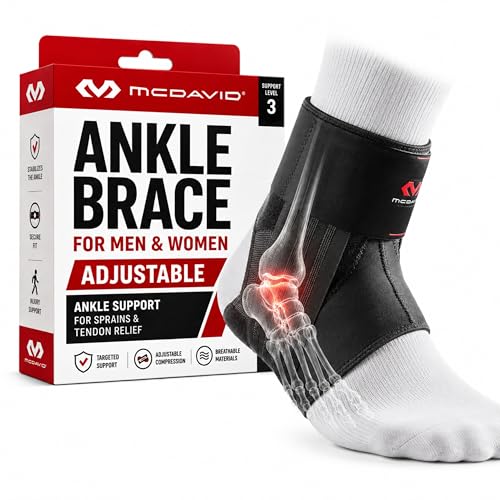
McDavid’s Phantom brace targets athletes who hate the bulk of traditional lace-ups but still need rigid support. The lace-free, rear-entry design uses internal flex-support stays and external non-slip straps to deliver stability without the pressure points associated with laces. This makes it a prime candidate for soccer and football cleats, where space inside the shoe is tight.
The brace provides excellent arch support that prevents the foot from collapsing inward, a common issue for those with posterior tibial tendon dysfunction. Users returning from plantar fasciitis and tendon tears report that the Phantom allows them to run and cut without re-injury, and the lightweight polyester-nylon blend keeps the brace breathable during intense activity.
A known limitation is longevity: the inner plastic stabilizers are less robust than metal or thick nylon stays and can crack after roughly two months of daily use in high-level sports. The brace also takes a few minutes to fit correctly inside tight cleats. For athletes prioritizing a barely-there feel over ultra-heavy-duty construction, however, this is often the default pick.
Why it’s great
- Lace-free rear entry makes it easy to put on and remove
- Low-profile design fits inside most cleats and running shoes
- Non-slip straps provide secure arch support and prevent collapse
Good to know
- Internal plastic stays may crack after heavy use
- Bulky fitting process can take several minutes for tight shoes
3. Fitomo Quick Lace Up Ankle Brace
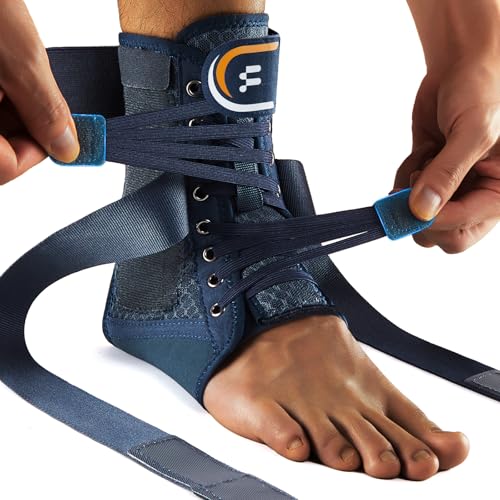
The Fitomo stands at the sweet spot of the market, delivering a high-end feature set — removable side stabilizers, a figure-8 strap, and a quick lace-up system — at a more accessible price point. The triple-lock approach uses top strap compression, side stabilizers, and cross straps to create a multi-directional hold that prevents ankle rolling during basketball, volleyball, and everyday walking.
The dual removable stabilizers are a critical flexibility feature. You can wear the brace with full rigidity for high-risk activity, then pop the stays out for a more comfortable fit during rest or low-impact errands. The polyester and nylon blend construction breathes well, and FSA/HSA eligibility makes it an easy buy for those with a flexible spending account.
Long-term users note that the Velcro hooks maintain their grip even after six months of daily use, which is rare at this tier. The only recurrent complaint is that the brace is sold singly rather than as a pair, and some users expected two units for the price. For those needing one high-functioning brace that scales from recovery to sport, the Fitomo is a well-considered choice.
Why it’s great
- Triple-lock strapping system with figure-8 design locks the heel securely
- Removable side stabilizers allow one brace to serve multiple activity levels
- Durable Velcro survives daily use without losing stick
Good to know
- Sold in a single pack only
- Needs careful sizing; check chart before ordering
4. Shock Doctor Ankle Stabilizer with Flexible Support Stays

Shock Doctor brings its extensive sports protection experience to this stabilizer, which uses a speed-lace closure and flexible internal stays to provide moderate-to-high support. The low-profile design fits comfortably inside work boots and standard athletic shoes, making it a versatile option for both court sports and labor-intensive jobs where ankle security is needed all day.
The breathable construction and highly adjustable lacing allow for fine-tuned compression, although some users find the sizing runs small and may need to order up. The support level is ideal for preventing mild-to-moderate ankle rolls, but those with severe chronic instability or post-surgical needs may find the flexible stays insufficient compared to more rigid options.
The brace’s primary drawbacks are its bottom Velcro section, which can snag and wear socks over time, and its tendency to attract pet hair and lint due to the fabric hook material. For athletes who need a quick on-and-off solution that doesn’t require assistance, the Shock Doctor delivers reliable, if not maximum, stabilization.
Why it’s great
- Speed-lace system enables fast application without help
- Low-profile design fits inside most shoe types including boots
- Breathable materials reduce heat buildup during long wear
Good to know
- Sizing tends to run small; consider a larger size
- Bottom Velcro can snag socks and attract pet hair
5. DRwelland Ankle Brace with Side Stabilizers
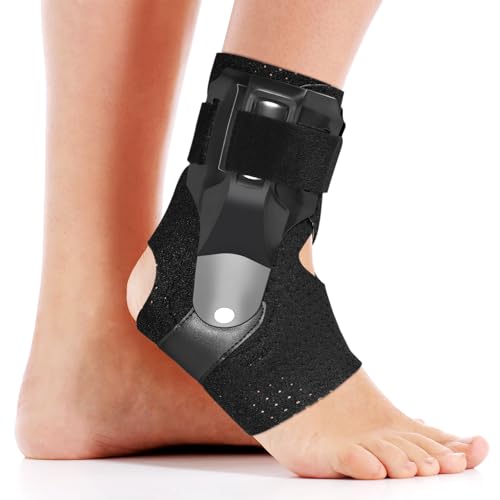
The DRwelland brace is designed with neoprene, a material known for its excellent moisture-wicking and compression properties that also help improve circulation and reduce swelling. The brace includes integrated side stabilizers and an adjustable arch strap that allows you to tune the level of lift and support for the plantar fascia, making it a strong choice for managing both ankle sprains and plantar fasciitis simultaneously.
Its low-profile, soft fabric wraps the heel without irritating sensitive areas, and users report it fits comfortably inside Hoka and other cushioned shoes. The brace is suitable for both left and right feet and is available in multiple sizes. Customer feedback highlights its effectiveness in minimizing ankle torque and allowing return to work within a week of an acute sprain.
Durability is the main concern here. The plastic buckle has been reported to break under tension, and for those who need heavy-duty, long-term support for aggressive sports, the neoprene construction may wear faster than ballistic nylon alternatives. For affordable daily recovery, general weakness, or sensitive skin, this is a comfortable and capable entry-level option.
Why it’s great
- Comfortable neoprene is gentle on skin and fits well in shoes
- Adjustable arch strap supports both ankle and plantar fascia
- Effective for post-injury recovery and reducing swelling
Good to know
- Plastic buckle may break under high tension
- Neoprene durability is lower than nylon-based braces
FAQ
Can I wear a stability ankle brace inside my regular athletic shoes?
How long do the removable side stabilizers last with daily use?
Is a lace-up brace always better than a slip-on for stability?
Final Thoughts: The Verdict
For most users, the best ankle brace for stability winner is the DonJoy Stabilizing Speed Pro because its 800D ballistic nylon and articulating stays deliver the highest level of inversion protection tested for high-impact sports. If you want a barely-there profile that fits in cleats, grab the McDavid Phantom. And for the best balance of features and cost, nothing beats the Fitomo Quick Lace Up.

Mo Maruf
I created WellFizz to bridge the gap between vague wellness advice and actionable solutions. My mission is simple: to decode the research and give you practical tools you can actually use.
Beyond the data, I am a passionate traveler. I believe that stepping away from the screen to explore new environments is essential for mental clarity and physical vitality.