Our readers keep the lights on and my smoothie glass nicely filled. As an Amazon Associate, I earn from qualifying purchases.
That inward rolling of your ankle during a run or a long walk isn’t just a quirk of your gait—it’s a biomechanical pattern that stresses ligaments, strains the arch, and often leads to chronic instability or recurring sprains. The right brace doesn’t just wrap the joint; it actively counter-positions the foot, limits excessive eversion, and restores a neutral alignment so you can move without the fear of a roll.
I’m Mohammad Maruf — the founder and writer behind WellFizz. I’ve spent months analyzing brace construction, strap geometry, and lateral stiffness across dozens of models to identify the designs that actually deliver mechanical correction for overpronation, not just a compression sleeve.
This guide breaks down the best-engineered solutions currently available so you can stop shopping on guesswork and pick the ankle brace for overpronation that matches your foot mechanics, activity level, and shoe fit.
How To Choose The Best Ankle Brace For Overpronation
Overpronation requires a brace that actively resists the ankle’s inward collapse. A simple neoprene sleeve won’t cut it. You need a system of straps, stays, or wraps that apply targeted tension to the medial arch and lateral side of the ankle. Here are the three defining features to evaluate.
Figure-8 Straps and Stirrup Wraps
The most effective braces use a figure-8 configuration that crosses over the instep and wraps under the heel. This creates a dynamic hammock that lifts the arch and pulls the ankle into a neutral position. Look for designs where these straps anchor to a rigid heel cup or medial/lateral stays—that’s what prevents the strap from just sliding around on the skin instead of actually resisting the roll.
Arch-Lift and FootLok Systems
Overpronation starts at the arch. Braces that incorporate an arch-lift strap or a FootLok system (a strap that wraps under the midfoot and attaches to the lateral side) provide direct biomechanical correction. These features actively support the navicular bone and prevent the foot from flattening on weight-bearing. Without this, even a well-laced brace is just stabilizing the wrong segment of the kinetic chain.
Material Density and Splint Integration
Rigid or semi-rigid splints on the medial and lateral sides of the brace add a hard stop against inversion/eversion. For moderate to severe overpronation, look for removable aluminum or memory-foam-lined plastic splints. These add bulk, but they create a mechanical barrier that no strap-based system can match. If you need the brace to fit inside a standard sneaker, opt for low-profile, articulated splints rather than thick molded plastic.
Quick Comparison
On smaller screens, swipe sideways to see the full table.
| Model | Category | Best For | Key Spec | Amazon |
|---|---|---|---|---|
| Med Spec ASO Ankle Stabilizer | Lace-Up | Sports & Daily Recovery | CoolFlex padding, 2 figure-8 straps | Amazon |
| DonJoy Speed Pro | Lace-Up | Reinjury Prevention & PT | 800D ballistic nylon, removable stays | Amazon |
| BioSkin TriLok | Figure-8 Wrap | Arch Lift & Pronation Control | FootLok strap, hypoallergenic Lycra | Amazon |
| McDavid Bio-Logix | Hinge | Competitive Court Sports | Flex-link hinge, memory foam padding | Amazon |
| AGPTEK Lace-Up | Lace-Up + Splints | Post-Surgery & General Support | Removable aluminum splints, 360° wrap | Amazon |
| Fitomo 1.5mm | Sleeve + Strap | Low-Profile Daily Wear | 1.5mm microfiber, figure-8 strap | Amazon |
| Tuli’s X Brace | Arch Strap | Plantar Fasciitis & Heel Pain | Patented X-design, APMA accepted | Amazon |
In‑Depth Reviews
1. Med Spec ASO Ankle Stabilizer
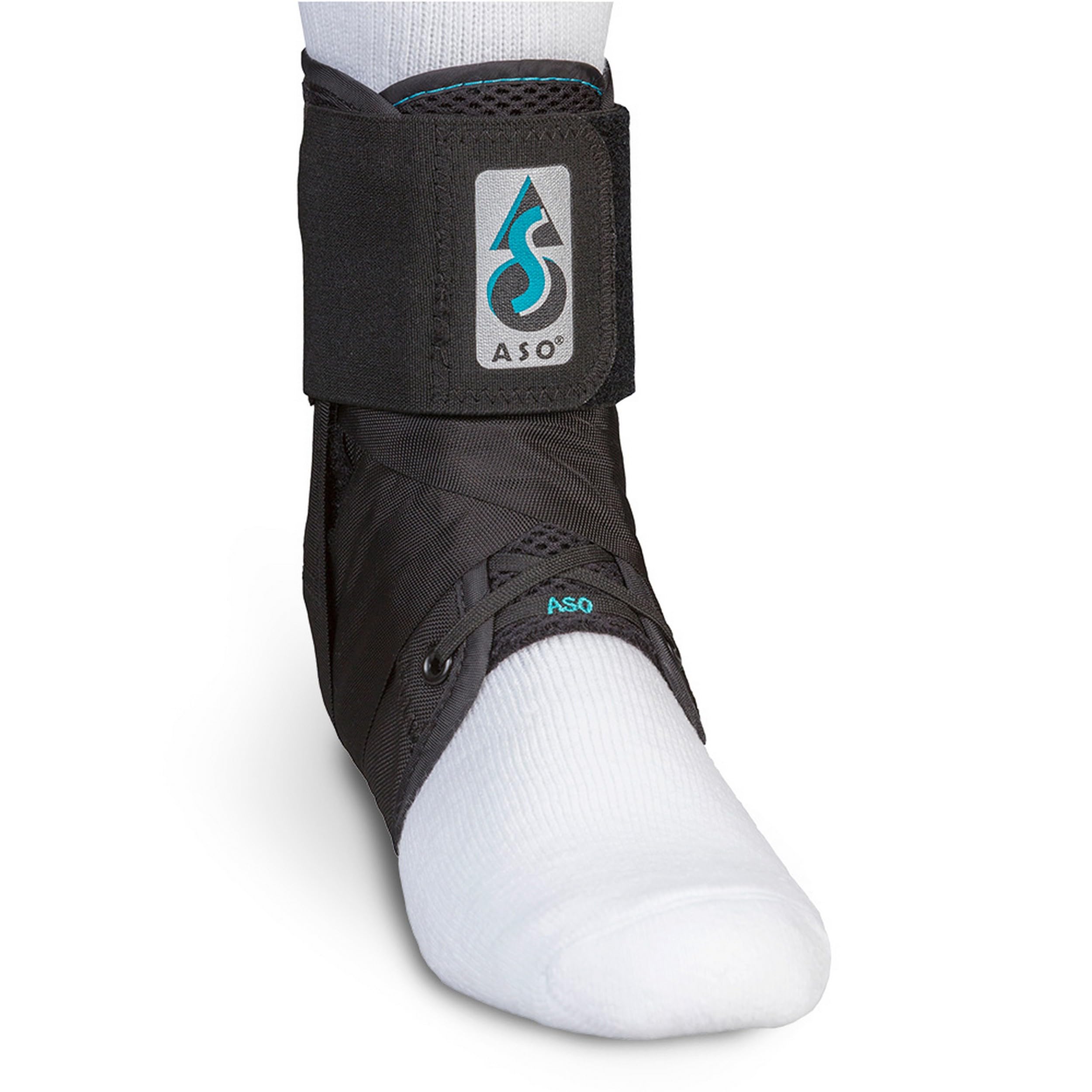
The Med Spec ASO is the gold standard for a reason: its dual figure-8 straps cross over the instep and anchor under the heel to create a mechanical hammock that directly counteracts the inward roll of overpronation. The CoolFlex tongue and durable nylon construction keep the brace breathable even during high-intensity court sports, and the customizable lace-up closure lets you fine-tune compression across the midfoot and ankle joint.
Widely recommended by athletic trainers and physical therapists, the ASO uses a bilateral design that fits either foot. The extended lace-up design prevents over-flexion of the ankle while the top strap secures the tibia/fibula complex. Users report that it stabilizes chronic instability without restricting the range of motion needed for walking, hiking, and gym work.
One of the most common competitive advantages of the ASO is its ability to fit inside most sneakers without excessive bulk. The lacing system also features an even-knot mechanism that prevents pressure points across the top of the foot. For anyone needing a do-everything brace that truly resists pronation, this is the benchmark.
Why it’s great
- Dual figure-8 straps deliver targeted pronation control
- Breathable CoolFlex padding prevents heat buildup
- Fits in most athletic shoes without bulking
Good to know
- May require a sock aide for easier donning
- Not designed for severe post-operative immobilization
2. DonJoy Stabilizing Speed Pro

The DonJoy Speed Pro uses a speed-lace system that eliminates the hassle of threading traditional laces—just pull the Velcro tabs and you’re locked in. This alone makes it a favorite among athletes who need to adjust tension quickly between warm-ups and play. The 800D ballistic nylon construction is noticeably tougher than standard textile braces, resisting abrasion from cleats and court shoes over many seasons.
Removable articulated medial and lateral stays enhance proprioception, helping your brain sense where your ankle is in space—critical for retraining gait after a sprain. The full circumferential elastic strap adds compression around the tibia and fibula, which helps manage swelling and gives a second layer of stability against eversion.
Multiple users report that the D-rings on the strap system can create pressure points when cranked down tight, and the heel material can bunch during extended wear. That said, for anyone transitioning from a walking boot to full activity, the Speed Pro’s quick-on design and pro-level stability make it a strong mid-range contender.
Why it’s great
- Speed-lace system for rapid application and adjustment
- Removable stays let you customize rigidity
- 800D nylon exterior is extremely durable
Good to know
- D-rings can dig into the skin under heavy tension
- Bulky fit with low-profile sneakers
3. BioSkin TriLok Ankle Brace

The BioSkin TriLok is engineered specifically for overpronation correction with its integrated FootLok arch-lift strap. This strap runs under the midfoot and fastens laterally, actively lifting the navicular bone and preventing the arch from collapsing during weight-bearing. The figure-8 wrap and stirrup strap work in tandem to control both inversion and eversion, making it one of the most comprehensive pronation-control braces on the market.
Made from lightweight, hypoallergenic Lycra and polyester, the TriLok is exceptionally breathable and thin enough to fit inside cleats, trainers, and even steel-toed boots. Podiatrists frequently recommend it for patients with severe supination or pronation issues because the multi-strap system allows you to dial in the exact tension needed for your specific biomechanics.
The learning curve for application is real—the strap path requires a few tries to get right—and sizing can be tricky, with many users advising to order a half-size up. Once properly fitted, however, users report dramatic pain reduction in the arch and lateral ankle within 24 hours. It’s the most targeted pronation solution here, even if it demands a bit more patience upfront.
Why it’s great
- FootLok strap provides direct arch-lift for pronation correction
- Hypoallergenic Lycra is breathable and low-profile
- Figure-8 and stirrup straps control both inversion and eversion
Good to know
- Complex strap setup requires practice to apply correctly
- Sizing chart is inconsistent—measure carefully
4. McDavid Bio-Logix Ankle Brace
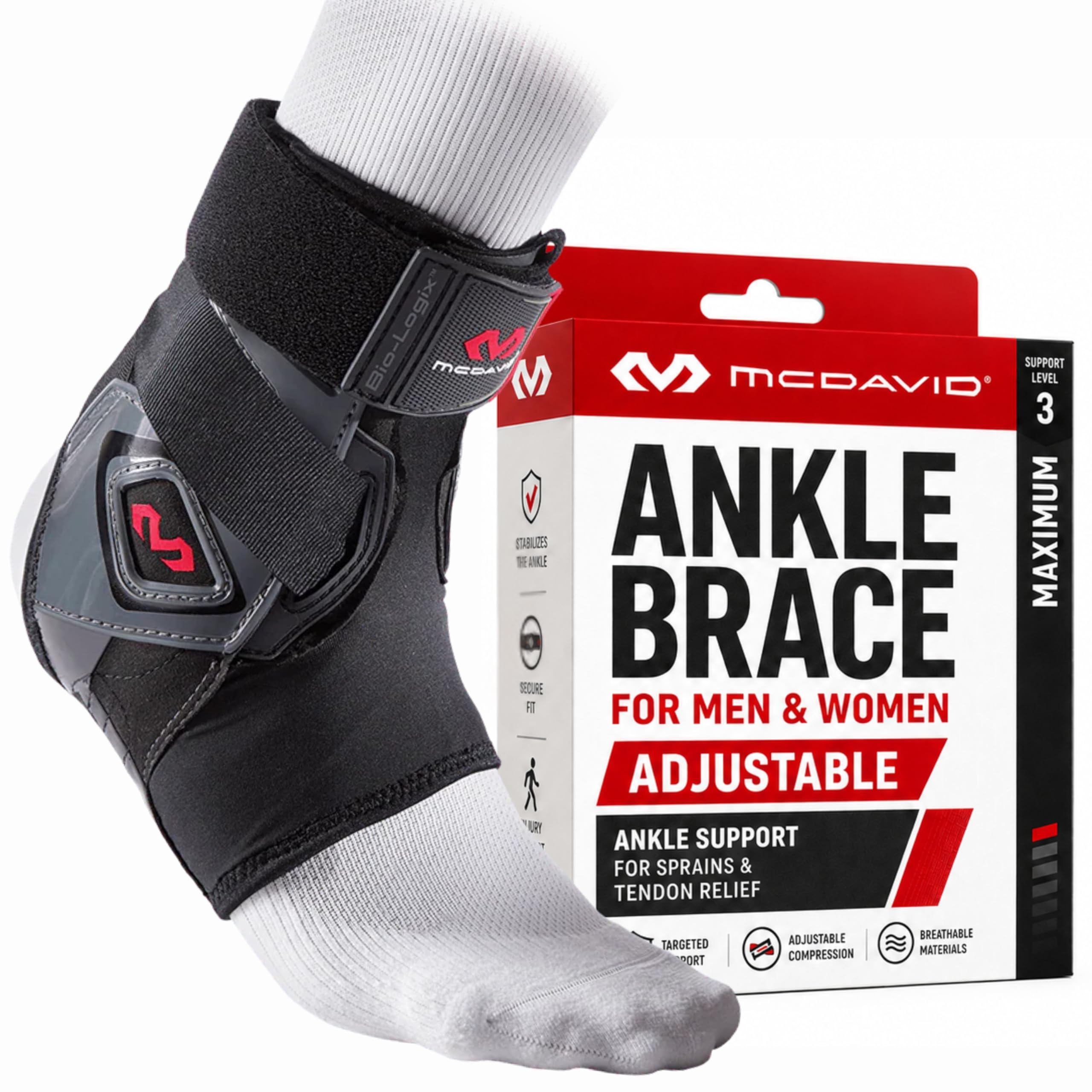
The McDavid Bio-Logix breaks from the strap-and-lace crowd with a flex-link hinge design that provides mechanical resistance against inversion while allowing natural dorsiflexion. This hinge system is ideal for court sports where quick lateral cuts (basketball, soccer, tennis) demand both protection and agility. The contoured side splints are lined with memory foam padding, reducing chafing and distributing load across the ankle complex.
The brace is anatomically specific to the right or left foot, which improves fit precision over universal bilateral designs. Multiple anchor straps let you tension the brace differently for the arch, the heel, and the shin, though several users note that the straps primarily tension the sleeve rather than the splints, limiting true pronation control in some cases.
Construction workers and active daily users praise its durability and the way it reduces end-of-day ankle ache, but competitive athletes report that it lacks the fine lateral adjustability of lace-up braces. For someone who needs a hinged brace that won’t slip during high-intensity movement and prefers a sleeve-like feel, the Bio-Logix is a solid premium choice.
Why it’s great
- Flex-link hinge resists inversion while allowing natural motion
- Memory foam padding and contoured splints reduce chafing
- Anatomically specific left/right fit for better alignment
Good to know
- Straps tension the sleeve more than the splints
- Sizing can be tricky—medium/large may feel like a loose tube
5. AGPTEK Lace-Up Ankle Brace
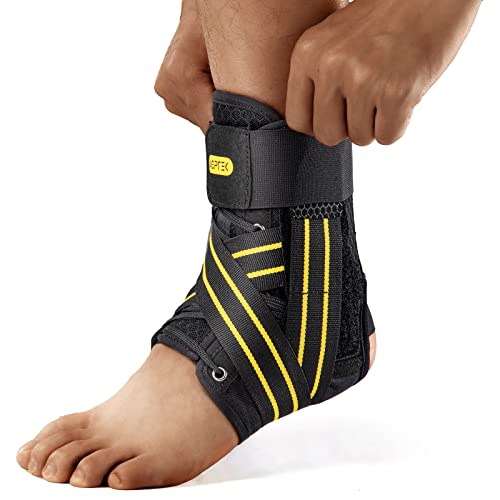
The AGPTEK brace brings a unique cross-lace design that replaces traditional straps with a shoelace system for a more even, customizable fit across the ankle and midfoot. Its standout feature is the pair of removable lightweight aluminum splints on both sides, which provide 360-degree protection that can be dialed up for post-surgery immobility or removed for lighter sports protection.
The polyester and nylon construction is breathable and durable, but the splints add noticeable bulk—this brace won’t disappear under slim sneakers. Users recovering from fractures and Achilles tendonitis frequently report that it outperforms the brace provided by their orthopedic surgeon in terms of comfort and support.
Where the AGPTEK really shines is in its adjustability for different stages of recovery. You can wear it with both splints in for maximum stability post-sprain, remove one for moderate activity, or take both out for general proprioceptive support. The Velcro side straps make it faster to on/off than a full lace-up, though the size runs slightly small for larger ankles.
Why it’s great
- Removable aluminum splints for customizable rigidity
- Cross-lace system distributes tension evenly
- Often preferred over doctor-provided braces for comfort
Good to know
- Bulky design limits shoe choices
- Sizing runs small—measure precisely before ordering
6. Fitomo 1.5mm Ultra Thin Ankle Brace
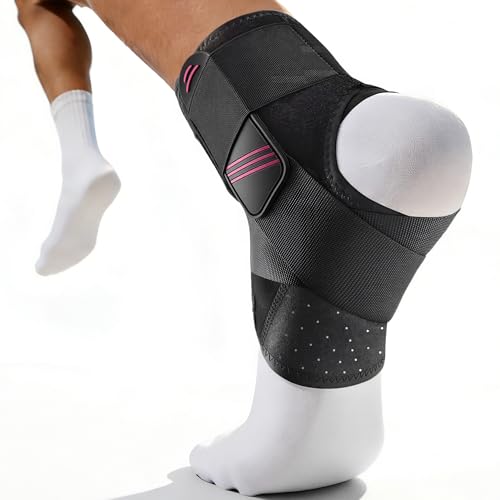
The Fitomo’s 1.5mm microfiber construction is the thinnest option in this list, designed for people who need pronation support but refuse to compromise on shoe fit. The three-layer system features an inner silicone grip to prevent slipping, a figure-8 stabilizing strap, and a flexible support panel that works together to limit excessive eversion without creating bulk.
Visible air vents run across the sleeve, making this one of the most breathable braces for hot climates or long workdays. The figure-8 strap is not as aggressive as the Med Spec or BioSkin designs, so it works best for mild to moderate overpronation rather than severe, post-surgical cases. Users with post-tarsal tunnel syndrome and general ankle instability report it fits inside sneakers, casual shoes, and even work boots without feeling cramped.
The trade-off for the low profile is a less rigid stabilization system. The figure-8 strap is effective at reminding your ankle to stay neutral, but it won’t physically stop a forceful inversion event the way a lace-up with splints will. For daily wear, light running, and gym sessions where you want barely-there support, the Fitomo is a smart mid-range option.
Why it’s great
- Ultra-thin 1.5mm fabric fits in all shoe types
- Visible ventilation grid prevents heat and moisture buildup
- Inner silicone grip keeps the brace from sliding
Good to know
- Not rigid enough for severe pronation or post-surgery recovery
- Strap system is less intuitive to apply correctly
7. Tuli’s X Brace

The Tuli’s X Brace takes a different approach from full ankle wraps, focusing exclusively on arch and plantar fascia support. Its patented X-design wraps under the arch and crosses over the top of the foot, applying targeted tension to prevent the plantar fascia from overstretching—a root cause of overpronation-related heel pain. The elastic heel strap secures the sleeve in place and provides cushioning at the rearfoot.
Accepted by the American Podiatric Medical Association, the X Brace is designed to mimic the low-dye taping technique without the hassle of tape. It can be worn with any shoe style, including sandals and high heels, because it doesn’t extend above the ankle. Users with plantar fasciitis and flat feet report significant pain relief, with some calling it the only device that finally resolved years of chronic heel pain after failing insoles, custom orthotics, and other braces.
Its limitation for overpronation is that it does not stabilize the ankle joint itself—it only addresses the arch. If your pronation is primarily arch-driven without ankle instability, this is a lightweight, budget-friendly solution. If you need both arch lift and ankle roll protection, you should pair it with a lace-up brace or look at the BioSkin TriLok instead.
Why it’s great
- APMA-accepted design specifically targets arch-driven pronation
- Can be worn with any footwear, including sandals
- Works as a lightweight alternative to low-dye taping
Good to know
- Does not provide any ankle joint stabilization
- Heel loop may slip off during high-impact activity if sized incorrectly
FAQ
How tight should an overpronation brace be?
Can I wear an ankle brace for overpronation with orthotic insoles?
Why does my ankle brace slip down during activity?
Final Thoughts: The Verdict
For most users, the ankle brace for overpronation winner is the Med Spec ASO Ankle Stabilizer because its dual figure-8 straps provide the most reliable mechanical correction in a package that fits inside athletic shoes and holds up to daily use. If you want targeted arch-lift support and are willing to learn a more complex strap system, grab the BioSkin TriLok. And for lightweight, barely-there support that fits in any footwear, nothing beats the Fitomo 1.5mm Ultra Thin.

Mo Maruf
I created WellFizz to bridge the gap between vague wellness advice and actionable solutions. My mission is simple: to decode the research and give you practical tools you can actually use.
Beyond the data, I am a passionate traveler. I believe that stepping away from the screen to explore new environments is essential for mental clarity and physical vitality.