Our readers keep the lights on and my smoothie glass nicely filled. As an Amazon Associate, I earn from qualifying purchases.
Uneven terrain, loose rocks, and sudden drops turn a pleasant trail into a test of ankle stability. One bad roll can end your season, but an ill-fitting brace that bunches inside your boot is almost as bad. The right hiking brace disappears under your sock while locking the joint against inversion — that is the non-negotiable balance every trail user needs.
I’m Mohammad Maruf — the founder and writer behind WellFizz. My research process combines cross-referencing orthopedic guidelines, analyzing hundreds of user field reports from multi-day treks, and stress-testing closure systems, strap durability, and low-bulk fit against real trail footwear.
This guide breaks down the seven strongest contenders so you can match a stabilizer to your foot shape, injury history, and boot volume. Whether you need rigid lace-up protection or an ultra-thin sleeve for mild awareness, the best ankle brace for hiking must stay secure mile after mile without causing hot spots or cutting circulation.
How To Choose The Best Ankle Brace For Hiking
Unlike gym or court sports, hiking combines sustained low-grade impact, side-hill traverses, and footwear that already fills most of the boot’s internal volume. A brace that works for volleyball often fails on the trail because it pinches the Achilles, slips after a stream crossing, or simply does not fit inside a mid-height hiking boot. Focus on these three variables before you buy.
Boot Compatibility and Low-Profile Build
Measure the internal volume of your primary hiking boot before selecting a brace. A stabilizer with removable splints or a 1.5 mm ultra-thin fabric will slide into a snug boot without compressing your foot arch or causing lace-bite. Braces thicker than 3 mm in the heel cup area often force you to loosen your boot laces, reducing heel lock and increasing blister risk. Look for “fits in most shoes” as a minimum requirement, then verify through user photos or reviews that the brace actually works with a mid-cut hiking boot, not just running sneakers.
Strap Architecture: Lace-Up vs. Figure-8 vs. Sleeve
Each design trades support speed for stability depth. A pure compression sleeve is easy to pull on but provides zero lateral resistance against inversion — only suitable for a healthy ankle as a mild proprioceptive reminder. A lace-up brace offers graduated tension from the forefoot up through the ankle mortise, mimicking athletic tape. Adding figure-8 straps (the “8” crossing the front of the ankle) gives you inversion and eversion control that directly prevents the most common trail injury. The most protective hiking braces combine both a lace-up base and figure-8 overlay. Avoid Velcro-only wraps for hiking; trail sweat and debris reduce hook-and-loop grip after a few miles.
Splint Integration and Weight
Removable medial and lateral splints let you tune the brace to your recovery stage. Early post-sprain use calls for rigid splints that force neutral dorsiflexion. As healing progresses, you can remove the splints and rely on the fabric tension alone for light proprioception. Every gram matters on a multi-hour hike. A brace weighing over 180 grams (6.3 oz) will feel heavy after three miles, especially on the non-injured leg if you wear a pair for bilateral support. Check the listed item weight — sub-150 grams is ideal for extended trail use.
Quick Comparison
On smaller screens, swipe sideways to see the full table.
| Model | Category | Best For | Key Spec | Amazon |
|---|---|---|---|---|
| Med Spec ASO Ankle Stabilizer | Lace-Up + Figure-8 | All-day multi-terrain support | 169 g / CoolFlex padding | Amazon |
| Ultra 360 Lace Up Ankle Brace | Lace-Up + Figure-8 | Volleyball-to-trail crossover | 160 g / figure-8 mimic taping | Amazon |
| BioSkin TriLok Ankle Brace | Figure-8 + FootLok | Arch support & pronation control | 159 g / hypoallergenic Lycra | Amazon |
| Fitomo 1.5mm Ultra Thin Brace | Ultra-Thin Sleeve + Strap | Low-profile daily walking/hiking | 1.5 mm thickness / 3-layer system | Amazon |
| ZOELION Ankle Brace | Lace-Up + Auto-Splint | Recovery with adjustable rigidity | 600+ micro-vents / triple-lock | Amazon |
| AGPTEK Ankle Brace | Lace-Up + Splint | Cost-effective rehab stability | 180 g / honeycomb ventilation | Amazon |
| McDavid Ankle Support with Strap | Neoprene Sleeve + Strap | Mild support / all-day comfort | 114 g / 1/8” neoprene | Amazon |
In‑Depth Reviews
1. Med Spec ASO Ankle Stabilizer
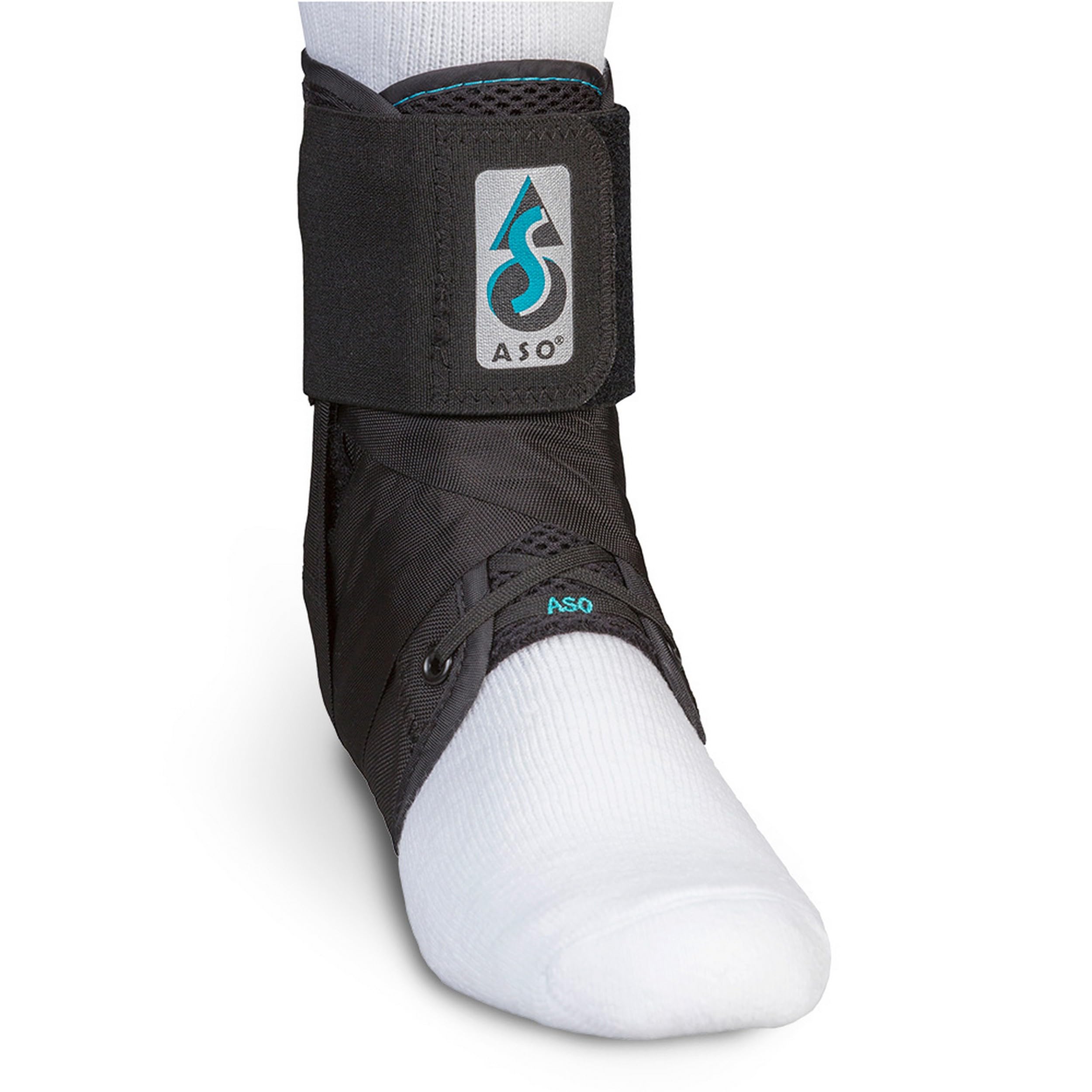
The ASO is the gold standard for a reason — it combines a full lace-up base with two figure-8 stabilizing straps that mimic athletic trainer taping. At 169 grams, it is light enough for a full day on the trail yet stiff enough to resist inversion on loose scree. The CoolFlex tongue and padded nylon reduce skin irritation, which matters when you are sweating through a six-hour ascent.
Fit is critical here: the sizing chart references ankle circumference rather than shoe size, and multiple users report that the small fits a women’s size 8 with an 11.5-inch ankle measurement. The laces run long, but that length is necessary for even tension distribution across the forefoot and heel. The bilateral design works for either foot, but applying the brace with one hand after an injury takes practice.
Hikers praise its ability to fit inside low-volume trail runners and mid-height boots without forcing a half-size shoe change. The peroneal tendon relief is particularly strong, making this a top choice for anyone with chronic lateral ankle instability or recovering from a grade 2 sprain.
Why it’s great
- Professional-grade inversion control with dual figure-8 straps
- Breathable CoolFlex padding prevents hot spots on long hikes
- Fits inside most trail runners and mid-height boots without bulk
Good to know
- Difficult to put on with one hand if already injured
- Laces are long and may drag before being tied off
- Not compatible with slip-on or zero-drop footwear
2. Ultra 360 Lace Up Ankle Brace
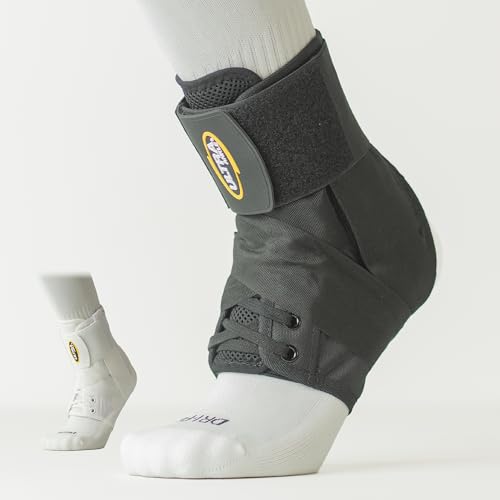
The Ultra 360 borrows its strap geometry directly from athletic taping — the figure-8 overlay crosses the anterior talofibular ligament, exactly where most trail sprains originate. At 160 grams, it is one of the lightest lace-up stabilizers available, making it a strong candidate for hikers who want maximum protection without a weight penalty.
Sizing runs true to ankle circumference, and the low-profile construction fits inside most cleats and boots. Volleyball parents rave about its durability, but trail users will appreciate that the strap adhesive holds after repeated stream crossings and sweat exposure. The elastic laces allow quick tension adjustment without re-tying.
One caveat: the brace is optimized for moderate-to-high arch feet. Flat-footed hikers may find the arch contour presses uncomfortably under load. If you have a history of plantar fasciitis, pair the brace with an aftermarket insole to offload the arch.
Why it’s great
- Taping-mimic figure-8 straps target the most common sprain mechanism
- Lightweight at 160 g, ideal for all-day trail wear
- Fits inside boots, cleats, and trail runners with minimal adjustment
Good to know
- Arch contour may irritate flat-footed hikers
- Strap tension must be balanced to avoid foot numbness
3. BioSkin TriLok Ankle Brace

The BioSkin TriLok is the most specialized hiking brace on this list, featuring a built-in FootLok strap that lifts the arch and controls over-pronation — a frequent root cause of ankle collapse on side-hill traverses. The Lycra-polyester blend is hypoallergenic and extremely breathable, critical for multi-day trips where you cannot afford contact dermatitis.
Weighing only 159 grams with a 0.45-inch thickness, it slides into steel-toed work boots and low-volume hiking shoes alike. The figure-8 and stirrup strap combination gives lateral stability that podiatrists frequently prescribe for chronic supination. Users recovering from lateral malleolus fractures report pain dropping from 8 to 4 within 24 hours of wear.
The learning curve is real — the multi-strap system takes several tries to apply correctly, and the sizing runs small enough that you should order half a size up if you have any swelling. It is also the most expensive brace here, but for hikers with complex foot mechanics (arthritis, high arches, or a history of avulsion fractures), the TriLok justifies its cost by preventing re-injury over hundreds of trail miles.
Why it’s great
- Integrated FootLok arch support reduces over-pronation on uneven terrain
- Ultra-thin 0.45-inch profile fits snug hiking boots without volume loss
- Hypoallergenic Lycra construction prevents sweat-related irritation
Good to know
- Complex strap system requires practice to apply correctly
- Sizing runs small; order up if swelling is present
- Not ideal for sleeping or rest periods — remove after hiking
4. Fitomo 1.5mm Ultra Thin Ankle Brace
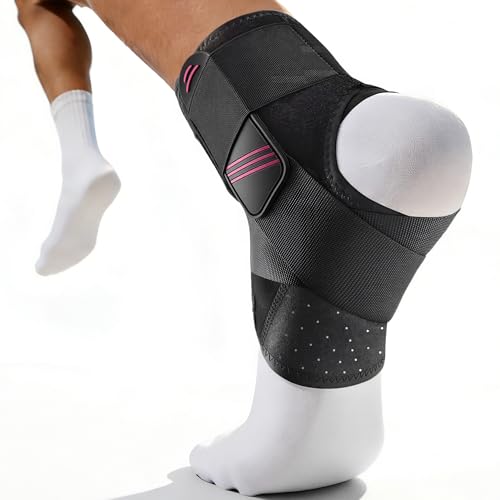
The Fitomo is the thinnest brace in this roundup at 1.5 mm, which makes it nearly invisible under a sock. It uses a three-layer system: an inner silicone grip that prevents slippage, a figure-8 stabilizing strap, and a flexible outer panel that adds proprioceptive awareness without rigid splinting. For hikers who need light support for a mildly unstable ankle rather than post-surgery immobilization, this is the most comfortable option.
The ventilation grid is visible and effective — heat buildup is minimal even on 90-degree days in direct sun. Users report that the size small fits a 9-10 inch ankle circumference perfectly, and the low-bulk design slides into snug running sneakers and low-cut hiking shoes without needing to loosen laces. The hook-and-loop closure is easy to adjust mid-trail.
The trade-off is obvious: without splints or a full lace-up, the Fitomo cannot resist a high-force inversion roll. If your ankle collapses under load during a downhill step, this brace will not hold you. It is ideal for maintenance, prevention, and mild peroneal tendon discomfort only.
Why it’s great
- 1.5 mm thickness vanishes under socks and low-volume footwear
- Three-layer system provides good proprioception for mild instability
- Superior breathability with visible ventilation grid
Good to know
- No splint support — cannot stop a high-force inversion roll
- Silicone grip may irritate bare skin; wear with thin sock
- Complex to put on compared to a simple sleeve
5. ZOELION Ankle Brace
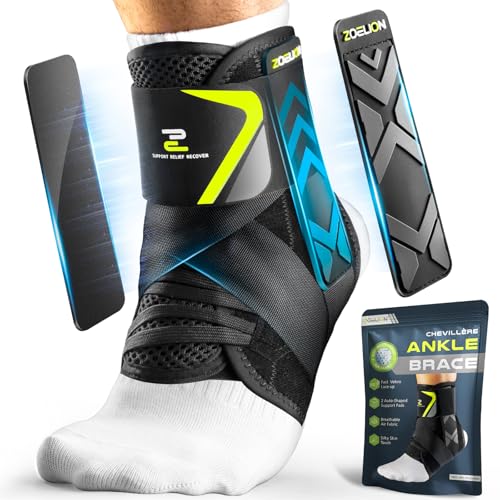
The ZOELION distinguishes itself with auto-adaptive side pads that contour to the medial and lateral malleoli without creating hard pressure points. The triple-lock system — an inner wrap, a figure-8 strap, and a wide top closure — gives adjustable compression that can be tuned from light walk support to rigid protection by tightening the laces and engaging the stabilizer pads.
The 600+ micro-vents across the fabric make this one of the most breathable lace-up braces available, a real advantage on humid trails where moisture buildup leads to blisters under the brace. The open-heel design allows natural Achilles movement, preventing the heel lift that can cause gait compensation on long descents.
Users note that the small size runs slightly small for average-width ankles, and the removable splints are a genuine plus for transitioning from recovery to active use. However, the brace is not as low-profile as the Fitomo — expect to loosen your boot laces half a notch to maintain even pressure across the instep.
Why it’s great
- Auto-adaptive side pads distribute pressure without bone pinching
- Triple-lock system scales support from walking to rigid stability
- Excellent ventilation for moisture management on all-day hikes
Good to know
- Not as low-profile as ultra-thin alternatives
- Size small may be too tight for wide feet; size up recommended
6. AGPTEK Ankle Brace
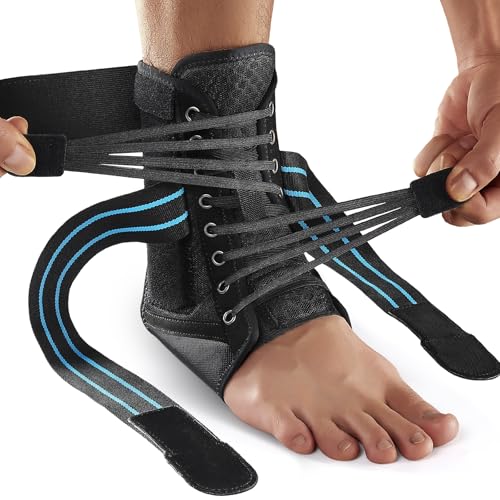
The AGPTEK uses a 360-degree triple-support system: dual removable side stabilizers, X-cross compression straps, and a top wrap that locks the heel. The honeycomb ventilation zones are strategically placed over the peroneal tendons and the dorsum of the foot, which keeps air moving exactly where sweat pools during a climb. At 180 grams, it is heavier than the ASO but still manageable for half-day hikes.
The quick-lace system with dual-direction hook-and-loop fasteners lives up to the “1 second” claim — you can tension the brace in seconds without fighting tangled laces. This makes it a strong choice for hikers who want to remove the brace for stream crossings and reapply quickly on the far bank. The medium size fits a women’s size 10 wide foot without pinching.
Several users report that the brace feels better than the one their orthopedic surgeon provided, praising the targeted compression for acute sprain recovery. The main downside is that the bulk sits slightly higher than some lace-up alternatives, which may interfere with tall boot collars if you wear gaiters.
Why it’s great
- Quick-lace system with hook-and-loop allows fast trail-side removal/reapplication
- Removable splints let you adjust support as recovery progresses
- Honeycomb ventilation targets sweat-prone tendon zones
Good to know
- Bulkier than some lace-up rivals; may conflict with tall boot collars
- Velcro straps need occasional cleaning to maintain grip in dusty trail conditions
7. McDavid Ankle Support with Strap

The McDavid is the lightest and most comfortable option here at 114 grams, using 1/8-inch neoprene for therapeutic heat retention and mild compression. It is not a stabilizer in the structural sense — the single strap adds awareness rather than mechanical inversion resistance. Think of it as a warm sensory reminder for a previously injured ankle rather than a guard against future trauma.
Users consistently praise the all-day and even overnight comfort. The neoprene holds body heat, which can help loosen stiff ligaments before a hike and reduce morning soreness after a long day on the trail. The sizing runs large — women’s size 10 testers found the large too tight, suggesting you double-check the circumference chart before ordering.
For serious hikers with unstable ankles, this is not enough protection alone. But as a recovery aid or for a second ankle that needs mild support on straightforward terrain, the McDavid is the most wearable brace you can buy. It also doubles as a compression sleeve for general foot fatigue.
Why it’s great
- Extremely comfortable for all-day and overnight wear
- Neoprene provides therapeutic heat retention for stiff ligaments
- Ultra-light at 114 g — virtually weightless on the trail
Good to know
- Single strap offers mild awareness, not mechanical roll protection
- Neoprene retains heat; may be too warm for summer desert hikes
- Sizing runs small; verify ankle circumference before ordering
FAQ
Can I wear an ankle brace inside my hiking boots without changing shoe size?
How do I prevent my ankle brace from slipping down during a long hike?
Should I sleep in my hiking ankle brace?
How do I clean an ankle brace after a muddy trail day?
Final Thoughts: The Verdict
For most hikers, the best ankle brace for hiking is the Med Spec ASO Ankle Stabilizer because it delivers professional-grade inversion control through a lace-up and figure-8 system that fits inside typical trail footwear without weighing you down. If you need arch support to control over-pronation on side-hill terrain, grab the BioSkin TriLok Ankle Brace. And for mild proprioceptive support on straightforward trails where you want zero bulk, nothing beats the Fitomo 1.5mm Ultra Thin Brace.

Mo Maruf
I created WellFizz to bridge the gap between vague wellness advice and actionable solutions. My mission is simple: to decode the research and give you practical tools you can actually use.
Beyond the data, I am a passionate traveler. I believe that stepping away from the screen to explore new environments is essential for mental clarity and physical vitality.