Our readers keep the lights on and my smoothie glass nicely filled. As an Amazon Associate, I earn from qualifying purchases.
Stepping out of a walking boot is a milestone, but it also marks the most vulnerable phase of ankle recovery. The boot provided rigid, 24/7 immobilization; without it, your healing ligaments and tendons are suddenly exposed to lateral forces, uneven ground, and the natural instability that follows weeks of disuse. A poorly chosen brace at this stage can undo weeks of healing and lead to chronic instability or re-injury.
I’m Mohammad Maruf — the founder and writer behind WellFizz. I’ve spent years analyzing recovery hardware, from post-op braces to transitional supports, focusing on how design affects rehab outcomes and daily comfort.
This guide breaks down the specific engineering and fit factors that determine whether an ankle brace truly supports your transition from boot to normal activity, helping you identify the best ankle brace after walking boot for a safe, confident return to movement.
How To Choose The Best Ankle Brace After Walking Boot
Transitioning from a rigid boot to a flexible brace is not a step-down — it is a strategic shift from immobilization to controlled stabilization. The wrong brace can restrict healing or leave your joint vulnerable. Focus on these four factors to make the right call.
Stabilizer Rigidity & Material
After weeks in a boot, your ankle needs external support to resist inversion and eversion — the rolling motions that cause sprains. Look for braces with semi-rigid plastic or carbon-fiber side stabilizers. These should be stiff enough to resist a twist but not so hard that they dig into the medial and lateral malleoli. Some premium braces use bi-injection molding, where the rigid shell is over-molded with a softer gel or foam that cushions the bone while maintaining structural integrity.
Fit Profile: Bulk vs. Low-Profile Design
The most common mistake after a boot is buying a brace that is too bulky to fit inside your regular shoes. A brace with a thick heel cup or oversized side struts will force you to wear loose or wide footwear, which itself reduces ankle stability. The ideal post-boot brace has a slim, low-profile build — often under 2mm thick at the heel — that slides into standard sneakers or lace-up boots without altering your shoe’s internal volume. If you still have slight swelling, an adjustable lacing system with generous range is essential.
Strap Configuration & Lockdown
A basic sleeve-style brace will not cut it after a boot. You need a multi-point lockdown system. The most proven design combines a lace-up inner layer for core compression, followed by figure-8 straps that cross over the talus and calcaneus to prevent dangerous roll, and a top-securing strap that locks the entire system in place. This triple-lock engineering mimics the support of athletic tape but remains adjustable and reusable for the weeks-long transition phase.
Breathability & All-Day Wear Comfort
Post-boot recovery is not a sprint — you will wear this brace for hours daily while walking, working, and sleeping. Look for materials like CoolFlex padding, honeycomb-mesh nylon, or microfiber with visible ventilation grids. Heat and moisture buildup cause skin maceration and irritation, especially around the achilles tendon. If the brace uses neoprene, ensure it has air-mesh panels. If it uses nylon or polyester, look for vented zones that allow airflow without sacrificing structural stretch resistance.
Quick Comparison
On smaller screens, swipe sideways to see the full table.
| Model | Category | Best For | Key Spec | Amazon |
|---|---|---|---|---|
| Med Spec ASO | Premium Lace-Up | Gold-standard rehab | Figure-8 stabilizing straps | Amazon |
| OPED VACOtalus | Medical Grade | Achilles & complex injuries | VACO12 cushion & talus strap | Amazon |
| Z ATHLETICS | Sports Recovery | Return to sport | Slim-profile figure-8 lacing | Amazon |
| Fitomo Ultra-Thin | Low Profile | Fits in all shoes | 1.5mm microfiber & vents | Amazon |
| ZOELION | Auto-Adaptive | Flex support & ankle stability | Auto-adaptive side pads | Amazon |
| AGPTEK | Value Stabilizer | Daily wear & mild sprains | 360° triple-support system | Amazon |
| Velpeau Stirrup | Stirrup Design | Grade 1-2 ligament injury | Bi-Injection plastic splints | Amazon |
In‑Depth Reviews
1. Med Spec ASO Ankle Stabilizer
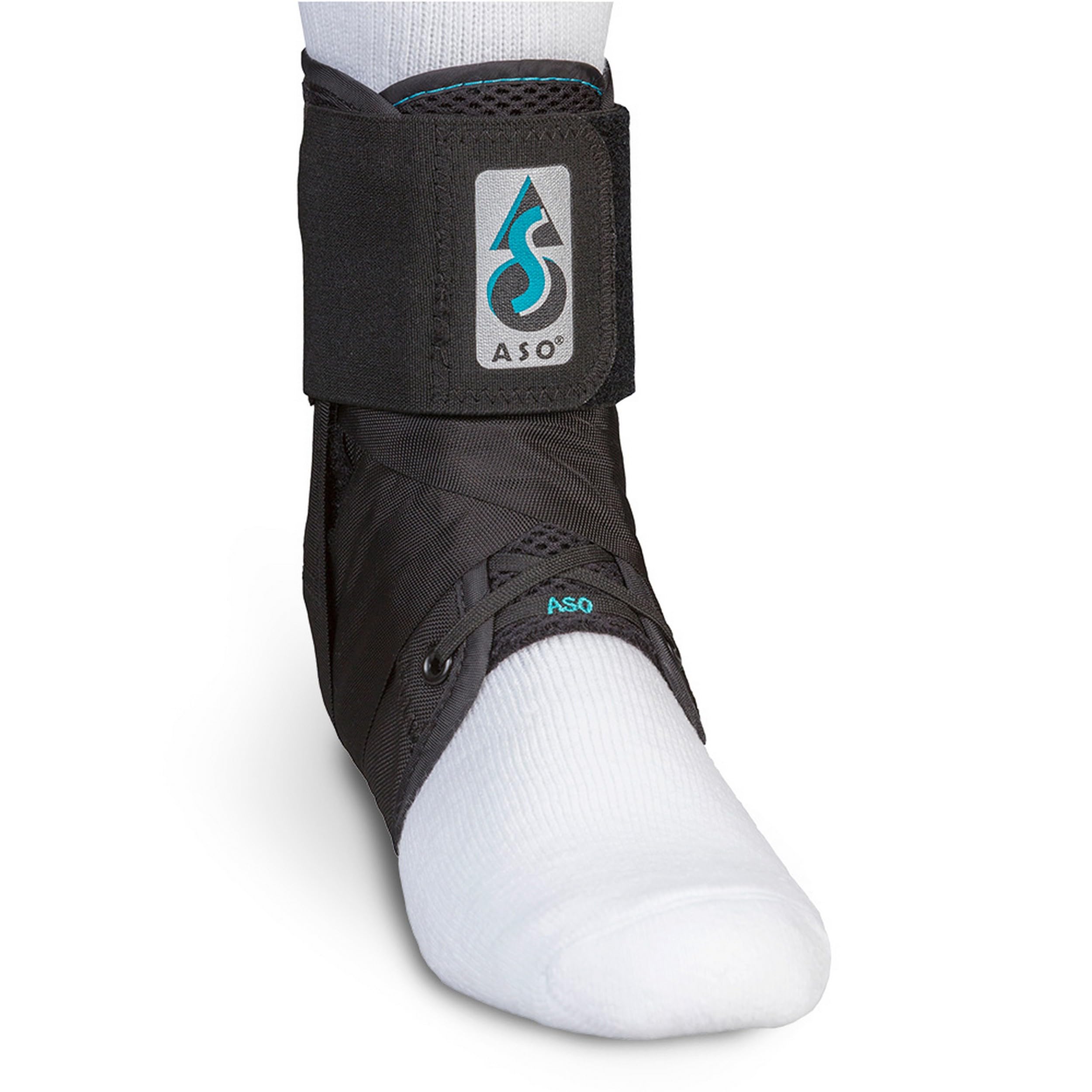
The Med Spec ASO is the lace-up brace that athletic trainers and orthopedic surgeons have leaned on for years, and it remains the gold standard for post-boot transition. Its foundation is a durable nylon and CoolFlex tongue that resists stretch over long wear, paired with a deep heel cup that cradles the calcaneus and prevents the brace from riding up during walking. The defining engineering is the dual figure-8 stabilizing straps — these cross directly over the talus and peroneal tendons to lock out inversion and eversion without restricting plantarflexion or dorsiflexion.
In practical terms, the ASO offers more adjustable support than any compression sleeve while remaining slim enough to fit inside most gym shoes and running sneakers. The lace-up system allows micro-adjustments across the midfoot and ankle, which is critical when swelling fluctuates during early recovery. Its bilateral design works for both left and right feet, and the breathable padding minimizes chafe during all-day wear. The black color resists scuffing far better than white variants, a small but important detail for daily use.
No brace is perfect for every foot shape. Some users with high insteps report the front opening feels tight during initial application, requiring a shoehorn or sock aide. The lace-up process takes a few seconds longer than a hook-and-loop brace, but the payoff in customizable compression and foolproof lockdown is substantial. For anyone stepping out of a boot and wanting a brace with proven clinical backing, the ASO is the safest bet.
Why it’s great
- Figure-8 straps provide targeted stabilization against ankle roll
- Lace-up system allows micro-adjustments for swelling changes
- Slim profile fits inside most running and gym shoes
- Breathable CoolFlex padding resists odor and chafing
Good to know
- Lace-up takes slightly longer than hook-and-loop braces
- Front opening can feel tight for high-instep feet
- Best worn with a thin cushioning sock for comfort
2. OPED VACOtalus Ankle Brace

The OPED VACOtalus sits at the intersection of medical orthopedics and sports recovery, designed specifically for patients transitioning from more rigid immobilization devices. Its standout feature is the VACO12 cushion — a multi-chamber air and foam system that wraps the malleoli and achilles tendon, providing customizable compression without pressure points. The brace also includes a dedicated talus strap that locks the talus bone in a neutral position, which is critical for preventing anterior translation after achilles or syndesmotic injuries.
Despite its advanced engineering, the VACOtalus maintains a surprisingly slim profile for a medical-grade brace. It fits inside loosely-laced walking shoes and many wide-width sneakers, allowing near-normal gait patterns from day one. The plantar and dorsal movement is preserved, so you can still push off and flex naturally — something many stirrup braces restrict. This design makes it particularly effective for achilles tendonitis, post-surgical recovery, and chronic instability where simple lace-ups are insufficient.
The premium comes with a learning curve. The multiple straps and cushion adjusters require careful reading of the included instructions to achieve proper fit. Sizing is based on shoe size, not ankle circumference, so measuring your foot length accurately is essential. The neon teal and yellow color scheme is clinical in appearance, and some users find it less discreet under formal wear. For a patient with a complex injury history or one who needs more than basic stabilization, however, the VACOtalus delivers a level of anatomical support that standard braces cannot match.
Why it’s great
- VACO12 cushion system delivers customizable, pressure-free support
- Talus strap provides targeted control for complex injuries
- Slim enough for daily wear inside regular shoes
- Preserves natural plantar and dorsal flexion
Good to know
- Fitting requires careful reading of setup instructions
- Higher price reflects medical-grade engineering
- Neon color scheme may not suit all wardrobes
3. Z ATHLETICS Ankle Brace

With over 11,000 verified reviews since 2017, the Z ATHLETICS brace has earned its reputation as a go-to for athletes returning from ankle injuries. Its design centers on a figure-8 lacing system that differs from typical hook-and-loop braces — you thread the laces through eyelets and pull to achieve precise tension across the midfoot and talus, then lock it down with Velcro side straps. This hybrid approach gives you the compressive adjustability of a lace-up brace with the quick-release convenience of Velcro.
The brace uses medical-grade materials with semi-rigid side stabilizers that limit dangerous roll without adding excessive bulk. The air-mesh panels on the tongue and sides actively vent heat, making it suitable for basketball, volleyball, and running sessions where sweat buildup is a problem. It fits both left and right ankles, and the slim design works inside most court shoes and sneakers without requiring a half-size up. For post-boot users who want to return to sport gradually, this brace provides a reliable middle ground between daily walking support and athletic-level protection.
Durability is a strong point — users report the laces and Velcro holding up through months of daily practice and games. The sizing runs slightly smaller than expected, so checking the sizing guide against your foot circumference is important before ordering. Some athletes with very wide feet find the front opening a bit snug during initial application despite the lacing, though the lace system does allow some expansion. For the price, this brace offers an excellent balance of adjustability, breathability, and stabilization for active recovery.
Why it’s great
- Figure-8 lacing provides customizable, micro-adjusted compression
- Air-mesh panels keep feet cool during high-intensity sports
- Low-profile design fits inside court and gym shoes
- Proven durability over thousands of verified reviews
Good to know
- Sizing runs slightly small; check the fit guide carefully
- Front opening can feel tight for very wide feet
- Lace-up system takes a moment longer than pure Velcro braces
4. Fitomo 1.5mm Ultra Thin Ankle Brace
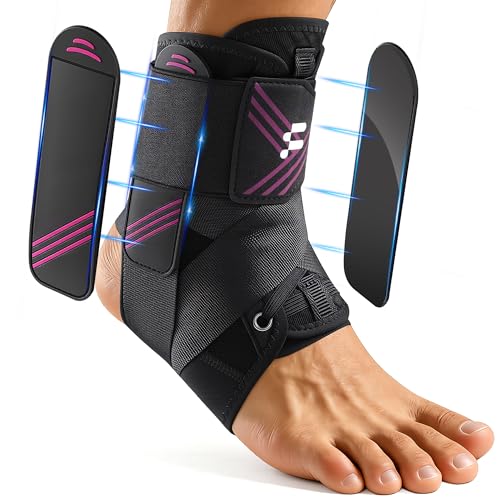
The Fitomo Ultra-Thin brace solves the single biggest complaint of post-boot users: bulk. At just 1.5mm thick, the microfiber fabric is engineered to be virtually invisible under socks and footwear, sliding into snug running shoes, work boots, and even casual dress shoes without feeling cramped. The visible ventilation grid on the material actively dissipates heat and moisture, making it one of the most breathable options for all-day wear during the long, low-intensity hours of early recovery.
Its support system uses a three-layer approach: an inner silicone grip that prevents slipping, a figure-8 stabilizing strap that targets the talus, and a flexible support panel that wraps the entire ankle. This is not as rigid as the Med Spec ASO or the VACOtalus, but it provides more than enough stabilization for Grade 1 sprains, mild instability, and daily walking after the boot phase. The closure is hook-and-loop with an adjustable strap, making it easy to put on and take off — a real advantage for mornings when swelling is at its peak.
The trade-off for the ultra-low profile is that this brace is not designed for high-impact sports or heavy lateral loading. Users returning to basketball, soccer, or intense hiking may need a more robust lace-up brace. The sizing is based on ankle circumference, and some users report the figure-8 strap can feel complicated to route correctly the first time. For a patient whose primary need is comfortable, discreet support for walking, work, and light daily activity, the Fitomo is an excellent choice.
Why it’s great
- 1.5mm thickness fits invisibly under all types of footwear
- Three-layer support system balances stability with flexibility
- FSA and HSA approved, reducing out-of-pocket cost
- Ventilation grid prevents heat and moisture buildup
Good to know
- Not rigid enough for heavy sports or Grade 3 injuries
- Figure-8 strap routing can be tricky on first use
- Sizing requires precise ankle circumference measurement
5. ZOELION Ankle Brace
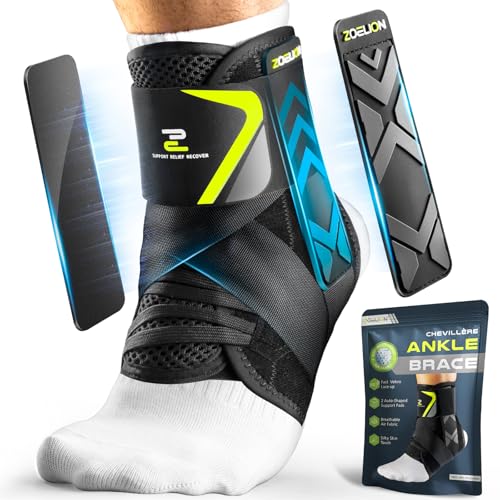
The ZOELION brace introduces a clever feature rarely seen at its price point: auto-adaptive side pads that mold to the medial and lateral malleoli without compressing the bone. These Nu-Form stabilizer pads are softer than typical semi-rigid splints, reducing the risk of pressure sores during extended wear — a real concern for post-boot patients whose skin has been sensitized by weeks in a plastic shell. The brace uses a triple-lock system: an inner wrap that envelops the foot, figure-8 straps that balance tension, and a wide top closure that locks everything in place.
The quick hook-and-loop lace system eliminates the frustration of traditional laces, allowing one-second fastening with dual-direction fasteners. The elastic laces accommodate both swollen and normal foot volumes, which is critical during the transition phase where ankle size fluctuates day to day. The open-heel design promotes natural movement and prevents the bra from riding up, while 600+ micro-vents maintain airflow. The overall fit is described by most users as snug but not restrictive, and the low-bulk construction fits inside standard sneakers and hiking shoes.
Some users note that the support is good but not great for severe instability — the softer side pads provide comfort at the cost of absolute rigidity. For Grade 1 or mild Grade 2 sprains, this is a reasonable trade-off. The sizing guide is straightforward, but users with wide feet or ongoing swelling are advised to size up. The brand backs the product with a 180-day after-sales service, which adds peace of mind for a brace worn during the unpredictable early weeks of recovery.
Why it’s great
- Auto-adaptive side pads prevent bone pressure and sores
- Triple-lock system provides 360-degree adjustable support
- Quick hook-and-loop lace system ideal for fluctuating swelling
- Breathable with 600+ micro-vents for all-day comfort
Good to know
- Side pads are softer than rigid splints for severe instability
- Size up if you have wide feet or ongoing swelling
- Support is adequate for light activity, not heavy sport
6. AGPTEK Ankle Brace
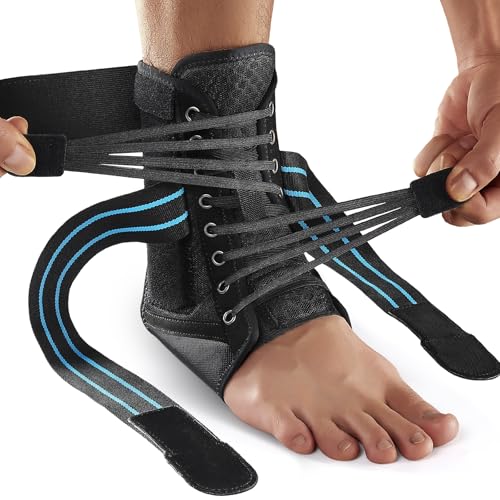
The AGPTEK brace delivers a surprising amount of engineering for a very accessible price point. It uses a 360° triple-support system with reinforced dual side stabilizers, X-cross compression straps, and a top wrapping strap that distributes pressure evenly around the ankle. The removable lateral splints let you dial in the level of rigidity — keep them inserted for full stabilization during early post-boot walking, or remove them for more flexible movement as your strength returns. This adaptability is rare at this tier and makes it a versatile tool for the gradual weaning phase.
The quick-lace system with dual-direction hook-and-loop fasteners is genuinely fast, securing the brace in about one second. The elastic laces adjust to accommodate swelling changes throughout the day, while the premium abrasion-resistant nylon Oxford fabric with honeycomb ventilation zones keeps the foot dry during extended wear. Many users report that this brace feels more comfortable and supportive than the plastic brace provided by their orthopedic surgeon, which is a strong endorsement for post-boot use.
Durability is decent but unproven beyond a few months. Some users note that the removable splints can shift slightly during high-intensity activity, so this brace is best reserved for daily walking, light work, and early rehab rather than competitive sports. The sizing runs small for labeled sizes, particularly for larger ankles — measuring carefully is essential. For the price, the AGPTEK offers outstanding value for someone looking to step down from a boot without spending premium money.
Why it’s great
- Removable splints allow adjustable rigidity for recovery phases
- 1-second fastening with dual-direction Velcro system
- Breathable honeycomb nylon prevents heat buildup
- Excellent value for transitional post-boot support
Good to know
- Sizing runs small; measure carefully before ordering
- Splints may shift under heavy lateral loads
- Durability is adequate but not tested for years of use
7. Velpeau Ankle Stabilizer Brace
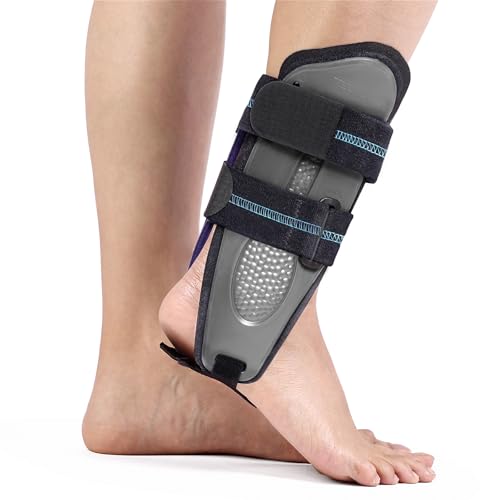
The Velpeau Stabilizer uses a stirrup-inspired design with bi-injection plastic splints that are over-molded with a soft gel layer at the edges, preventing the hard plastic from digging into the malleoli during extended wear. The splints have dedicated holes for the medial and lateral malleolus, which allows some bony relief while still maintaining structural rigidity against inversion. The brace works for both left and right feet, making it a practical choice for households where only one brace is needed for multiple users.
The brace comes in two pad options: foam pads made of breathable Modal fabric and high-density sponge for dry, comfortable contact, and gel pads that can be refrigerated or heated for hot/cold therapy. This dual-use ability is unique among the braces reviewed here and can be genuinely useful during the acute pain phase that sometimes reappears when you first start walking without the boot. The large lateral straps with a buckle system distribute pressure evenly and stay secure even during activity, and the heel counter prevents slippage.
Versatility has a cost: the brace is noticeably bulkier than slim-fit options like the Fitomo or ZOELION. Many users report that it significantly tightens the fit of their existing shoes, often requiring wider footwear or looser lacing. The one-size-fits-most approach works well for average ankle sizes but fails for people with larger calves — the top strap has a permanent pin that does not allow expansion, which can prevent the brace from securing the heel properly. For users with average builds who want a brace with hot/cold therapy capability, the Velpeau is a solid choice, but measure your calf circumference before ordering.
Why it’s great
- Bi-injection splints with gel edges prevent bone pressure
- Gel pads support hot/cold therapy for pain management
- Reversible design fits both left and right feet
- Sturdy lateral straps distribute pressure evenly
Good to know
- Bulky design may require wider shoes for fit
- Top strap has a fixed pin that limits calf accommodation
- One-size approach fails for larger or smaller ankles
FAQ
How long should I wear an ankle brace after the walking boot comes off?
Can I wear an ankle brace inside the same shoes I used with the walking boot?
What is the difference between a stirrup brace and a lace-up brace for post-boot recovery?
Final Thoughts: The Verdict
For most users stepping out of a walking boot, the ankle brace after walking boot winner is the Med Spec ASO Ankle Stabilizer because its figure-8 straps provide proven, clinically-tested stabilization while the lace-up system lets you adjust fit as swelling changes. If you need a brace that fits invisibly in tight shoes for office wear or light daily walking, grab the Fitomo 1.5mm Ultra Thin Brace. And for complex injuries involving the achilles or syndesmosis where basic bracing is insufficient, nothing beats the OPED VACOtalus and its anatomical cushion and talus strap.

Mo Maruf
I created WellFizz to bridge the gap between vague wellness advice and actionable solutions. My mission is simple: to decode the research and give you practical tools you can actually use.
Beyond the data, I am a passionate traveler. I believe that stepping away from the screen to explore new environments is essential for mental clarity and physical vitality.