Our readers keep the lights on and my smoothie glass nicely filled. As an Amazon Associate, I earn from qualifying purchases.
The moment you step out of a walking boot or cast after a broken ankle, your joint is weak, unstable, and vulnerable to re-injury. The transition to unassisted walking is where many people suffer setbacks, often because they rely on hardware that shifts, bunches up, or provides insufficient lateral resistance to prevent the ankle from rolling. A purpose-built brace must lock down inversion and eversion while still allowing a natural heel-to-toe gait inside your everyday shoes.
I’m Mohammad Maruf — the founder and writer behind WellFizz. I’ve spent years analyzing post-fracture recovery products, focusing on the specific mechanical metrics that separate a temporary wrap from a true rehabilitative tool: stirrup design, removable splint rigidity, and graduated compression zones.
This guide cuts through the noise to help you identify the best ankle brace after broken ankle for your particular stage of healing, activity level, and foot anatomy.
How To Choose The Best Ankle Brace After Broken Ankle
Selecting a brace for a previously fractured ankle is different from choosing one for a simple sprain. A healed bone is brittle, the surrounding ligaments are often stretched, and proprioception — your brain’s ability to sense where your ankle is in space — is diminished. The wrong brace can delay recovery or even cause a re-fracture. Focus on these three factors.
Stirrup Design vs. Sleeve vs. Lace-Up
A basic neoprene sleeve provides warmth and mild compression, but it offers almost no resistance against the ankle rolling inward (inversion) — the most common mechanism of re-injury post-fracture. A lace-up brace with removable side stabilizers offers customizable rigidity: leave the splints in for the early weight-bearing phase and remove them later for lighter daily support. A stirrup-style brace with semi-rigid plastic shells on both sides (like the classic boot design but ankle-only) is the most structurally robust option for grade 1 and 2 ligament instability, though it is bulkier inside shoes.
Stabilizer Rigidity and Removability
Look for braces with removable lateral and medial splints made of semi-rigid plastic or reinforced nylon. In the first weeks out of a cast or boot, you want maximum rigidity — the splints should prevent your ankle from moving more than a few degrees side-to-side. As you regain strength, you can remove the splints and use the brace as a lighter stabilizer. Fixed, non-removable stabilizers are suitable only if you plan to stay at a single support level and do not intend to wean off the brace over time.
Fit Compatibility with Your Current Footwear
Post-fracture swelling fluctuates daily, and your brace must accommodate this without becoming too loose to function. A brace that forces you to size up your shoes by one full size is impractical for daily use. The ideal design is low-profile enough to slide inside a standard tennis shoe or walking shoe while still providing rigid lateral wall support. Open-heel designs help maintain natural ankle range of motion and prevent the back of the brace from digging into your Achilles or heel bone during push-off.
Quick Comparison
On smaller screens, swipe sideways to see the full table.
| Model | Category | Best For | Key Spec | Amazon |
|---|---|---|---|---|
| Fitomo Quick Lace Up | Removable Splint | Post-ORIF recovery & stroke-related foot drop | Triple-Lock support with Figure 8 strap | Amazon |
| AGPTEK Lace-Up Brace | Quick-Lace System | High-intensity sports & post-fracture rehab | 360° support with dual side stabilizers | Amazon |
| Velpeau Stirrup Brace | Semi-Rigid Stirrup | Grade 1–2 ligament instability & chronic weakness | Bi-Injection plastic splints with gel padding | Amazon |
| DRwelland Side Stabilizer | Adjustable Neoprene | Early return to work post-sprain or mild fracture | Customizable arch and ankle straps | Amazon |
| ZOELION Compression Sleeve | Graduated Knit | Light daily wear & inflammation management | 3-zone graduated compression with fishnet strap | Amazon |
In‑Depth Reviews
1. Fitomo Quick Lace Up Ankle Brace
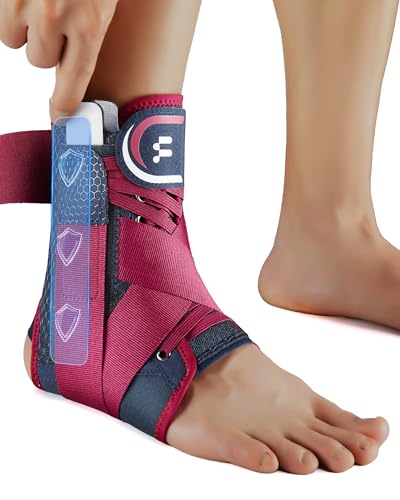
The Fitomo brace is purpose-built for the specific transition period after a broken ankle — when the cast or boot comes off but the joint is still too weak for full weight-bearing without support. Its Triple-Lock system combines a top compression strap, dual removable side stabilizers, and cross straps that together limit the two most dangerous movements post-fracture: inversion roll and forward shear. Verified buyers who had ORIF (open reduction internal fixation) surgery report that this brace provided the perfect support level after they transitioned out of a CAM boot, and it fits inside standard sneakers without forcing a shoe size up.
What sets the Fitomo apart is the Figure 8 adjustable strap design, which allows you to fine-tune compression across the instep and around the Achilles without relying solely on Velcro tension. The stabilizers are removable, so you can begin with full rigid support and later reduce the brace to a lighter stabilizer as your ankle strengthens — a feature critical for a graduated recovery plan. The hook-and-loop closure has been tested to retain grip after over six months of daily use, meaning you will not be replacing this unit during your rehab window.
One detail that matters for post-fracture users: the brace stays in place without constant readjustment, even during walking or light jogging. The low-profile polyester-nylon blend fabric does not bunch behind the heel, which prevents the irritation that often occurs when a bulky brace rubs against surgical scars or healing bone. If you are looking for a single brace to carry you from early weight-bearing through return to sport, this is the most versatile option.
Why it’s great
- Removable side stabilizers allow graduated support reduction as healing progresses.
- Figure 8 strap provides fine-grained compression control around the instep and heel.
- Velcro stays secure for six-plus months of daily use without losing grip.
Good to know
- Only one brace per package — users wanting a pair must buy two.
- Size small is recommended for narrow or smaller ankles; medium may slip on thinner frames.
2. AGPTEK Ankle Brace Lace-Up
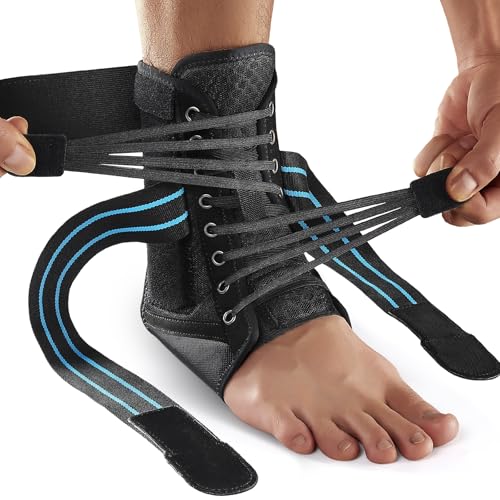
The AGPTEK uses a quick-lace system that eliminates the struggle of traditional laces — a real benefit for anyone who has reduced hand dexterity or is recovering from surgery that makes bending down painful. The brace integrates two reinforced side stabilizers with an X-cross compression strap and a top wrap that delivers 360-degree containment. Multiple users who fractured their ankle report that this brace offered noticeably better support than the unit provided by their orthopedic surgeon, a strong signal that the hardware is stiff enough for early-stage post-fracture wear.
The material is abrasion-resistant nylon Oxford fabric with honeycomb ventilation zones, which prevents the moisture buildup that often plagues neoprene braces during prolonged wear. The open-heel design enhances natural push-off mechanics — important for maintaining a normal gait pattern after a period of immobilization. Unlike some braces that force your foot into a rigid neutral position, the AGPTEK allows controlled dorsiflexion while blocking excessive inversion, which is the exact trade-off needed during the transition to normal walking.
Sizing is critical here: the large size fits a US size 9 shoe but runs slightly small, meaning users with thicker ankles or significant post-fracture swelling may need to size up. The elastic laces do adapt to some swelling variation, but if you are between sizes, go up. The brace has held up well under daily use for two months without loss of structural integrity, making it a durable choice for active rehabilitation.
Why it’s great
- Quick-lace system allows one-second fastening with no laces to tie.
- Triple-support design (stabilizers, X-strap, top wrap) prevents ankle rolling.
- Open heel promotes natural walking motion without Achilles chafing.
Good to know
- Size runs slightly small — measure carefully and consider sizing up if swollen.
- Works best with stretchable or adjustable footwear due to moderate bulk.
3. Velpeau Stirrup Ankle Stabilizer Brace
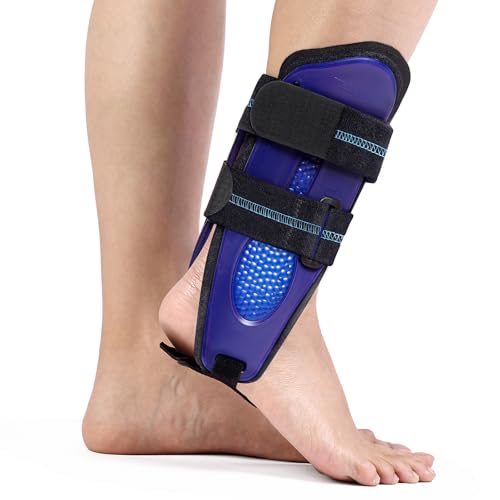
The Velpeau is the only product in this lineup that uses a true stirrup design with semi-rigid plastic shells on both the medial and lateral sides — the same structural principle as a CAM boot, but truncated to ankle height. This makes it the most effective brace for preventing inversion and eversion, which are the primary causes of re-injury in a previously broken ankle. The shells are manufactured with Bi-Injection technology, meaning the hard plastic is overmolded with a soft gel layer that cushions the malleoli (the bony bumps on each side of your ankle) rather than pressing into them.
There are two pad options: the foam pads are made from breathable Modal fabric and high-density sponge that wick moisture and sit comfortably against the skin, while the gel pads can be refrigerated as a cold compress for acute swelling or heated as a hot compress — a dual thermal therapy feature absent from any other brace here. The large lateral straps with a buckle system distribute pressure evenly across the front of the shin, preventing the brace from sliding down during walking. One buyer with a five-year-old shattered ankle reported that this was the most comfortable brace they had ever worn, even during flare-ups.
The trade-off is bulk. This is not a low-profile brace — it is noticeably thicker than the lace-up options and will not fit inside low-top sneakers or dress shoes. Users report wearing it comfortably with Crocs, high-top sneakers, or loose-fitting walking shoes. The fit is also finicky: the one-size design works best for average foot lengths between 8.5 and 11.5 inches, but users with very narrow or very thick calves may find the top strap either hangs loose or cannot close at all due to a permanent rivet that prevents the strap from sliding further out.
Why it’s great
- Stirrup-style semi-rigid shells provide maximum inversion/eversion resistance.
- Gel pads double as hot or cold compresses for pain and swelling management.
- Reversible for left or right foot — one brace covers both.
Good to know
- Bulky construction does not fit inside low-profile or narrow shoes.
- One-size design may not accommodate very narrow or very thick ankles.
4. DRwelland Ankle Brace with Side Stabilizers
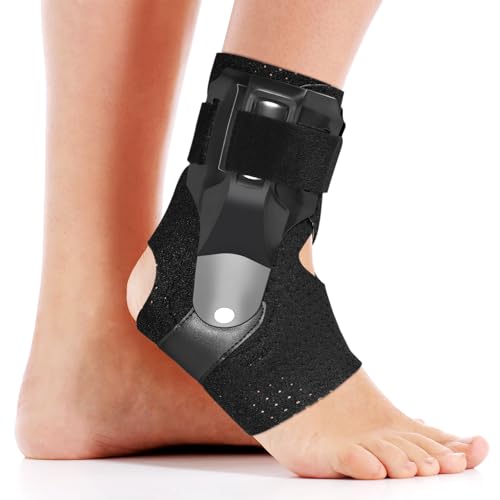
The DRwelland brace is designed by orthopedic surgeons and physical therapists, bringing clinical input to a budget-friendly form factor. It is built from high-quality neoprene — a material that provides compression and mild heat retention to stimulate blood circulation and reduce swelling, but does not offer the same rigid lateral blocking as a stirrup or integrated splint. The side stabilizers here are sewn into the fabric rather than being removable, which means you get consistent support but cannot taper it down as you heal.
What makes this brace effective for post-fracture use is the adjustable strap system: two separate straps allow you to independently set compression over the arch and around the ankle joint. This is valuable when your swelling fluctuates day-to-day, as you can loosen the lower strap in the morning and tighten it by evening. The fabric wraps the heel smoothly without putting pressure on the plantar fascia, a common complaint with one-piece sleeves that bunch behind the heel. Verified buyers report being able to return to work eight days after a sprain while wearing this brace, indicating that the stabilization is sufficient for light ambulation.
The main downside is the plastic buckle closure. Multiple users report that the buckle breaks after a few weeks of daily wear, requiring a replacement. If you choose this brace, consider the buckle a consumable component and keep the packaging for warranty exchange. For a user who needs moderate support for daily walking and desk work, and who is willing to manage a minor hardware fragility, this is a well-considered entry-level option.
Why it’s great
- Separate arch and ankle straps allow customized compression for fluctuating swelling.
- Neoprene material retains heat to promote blood circulation and reduce stiffness.
- Works on either foot and fits well inside most walking shoes.
Good to know
- Plastic buckle can break under daily tension — consider it a wear item.
- Side stabilizers are non-removable, so you cannot reduce support level over time.
5. ZOELION Ankle Brace Compression Support
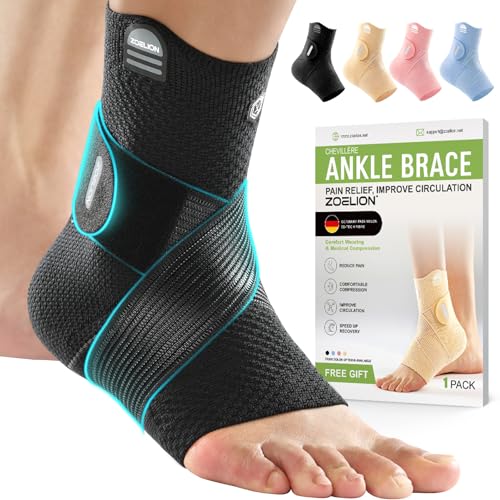
The ZOELION is not a brace in the traditional stirrup or splint sense — it is a compression sleeve with a removable fishnet strap, making it best suited for the later stages of post-fracture recovery when your primary need is proprioceptive feedback and mild swelling control rather than rigid anti-roll protection. The 3D-knit fabric uses German-imported PA66 high-elastic yarn and graduated compression zones: a gentle Comfort Zone on the instep, a supportive Pressure Zone around the arch and heel, and Pressure-Free Edges at the top and bottom to prevent the sleeve from digging in or sliding down.
The removable X-shaped fishnet strap provides additional targeted support to the Achilles and arch without adding significant bulk. This allows you to wear the sleeve inside your regular shoes without sizing up, which is a major convenience advantage over the bulkier stirrup and lace-up braces. The fabric is actively breathable and moisture-wicking, so your ankle stays dry even during all-day wear. One athlete who is also a physical therapist reported that this sleeve was the most comfortable option they found for a fractured ankle, specifically praising the seamless top edge that avoids the tight, constricting feeling common with knit sleeves.
However, this is not a brace for early weight-bearing or for anyone with significant lateral instability. The sleeve does not prevent your ankle from rolling — it provides compression and positional awareness, not structural blocking. If you are still in the phase where you can feel your ankle giving way, you need a lace-up or stirrup brace first. Use the ZOELION as a transition sleeve once you have graduated from rigid support, or as a daily wear option for managing mild post-activity soreness and swelling.
Why it’s great
- 3D graduated compression reduces swelling and improves blood circulation without bunching.
- Removable fishnet strap adds adjustable arch and Achilles support without bulk.
- Seamless top edge prevents tightness at the calf — comfortable for all-day wear.
Good to know
- Not suitable for early post-fracture phase — provides compression, not lateral stability.
- Sizing is critical and runs large — measure carefully and consider ordering one size down.
FAQ
How soon after a broken ankle can I start wearing a brace?
Can I sleep with an ankle brace on after a fracture?
Will an ankle brace prevent my ankle from rolling after it was broken?
Final Thoughts: The Verdict
For most users recovering from a broken ankle, the best ankle brace after broken ankle winner is the Fitomo Quick Lace Up because its Triple-Lock system with removable side stabilizers perfectly matches the graduated nature of post-fracture rehab — maximum rigidity early, reduced support later. If you need a brace specifically for returning to high-intensity sports like basketball or volleyball during your rehab, grab the AGPTEK Lace-Up Brace. And for maximum structural stability during the early weight-bearing phase when inversion risk is highest, the Velpeau Stirrup Stabilizer provides the closest thing to a CAM boot in an ankle-only form factor.

Mo Maruf
I created WellFizz to bridge the gap between vague wellness advice and actionable solutions. My mission is simple: to decode the research and give you practical tools you can actually use.
Beyond the data, I am a passionate traveler. I believe that stepping away from the screen to explore new environments is essential for mental clarity and physical vitality.