Our readers keep the lights on and my smoothie glass nicely filled. As an Amazon Associate, I earn from qualifying purchases.
Specs are compiled from manufacturer listings and verified buyer reviews and can change over time — please confirm the key details on the product page before buying.
You want an animation tablet that feels like a natural extension of your hand, not a technical obstacle. The wrong one introduces a tiny lag that breaks your timing, or hides your line weight, or ties you to a desk when you want to work from a café. The right one feels invisible, letting you focus on the frame, not the tool.
I’m Mohammad Maruf — the founder and writer behind WellFizz. This guide is built by comparing the manufacturers’ published specifications and the patterns across verified customer reviews, so you get each pick’s real strengths and trade-offs instead of marketing spin.
Whether you are composing your first bouncing ball test or rendering a full short film, the best animation tablet for you is the one that matches your screen-size needs, pressure-sensitivity demands, and if you want a standalone device or a desktop-connected pen display (a screen you draw on directly).
Our Picks at a Glance


How To Choose The Best Animation Tablet
An animation tablet is a specialized tool where the screen size, pen feel, and processing power (if it is standalone) directly affect your workflow speed. You want a device that doesn’t add friction between your brain and the canvas.
Pen Feel and Pressure Sensitivity
This is everything for animation. A high pressure sensitivity level (measured in levels, like 8192 or 16384) means the tablet can detect very fine differences in how hard you press. This gives you smoother line tapering, better control over brush size in real-time, and more expressive keyframes. A low initial activation force (I.A.F.), the tiny amount of pressure needed before the tablet registers a mark, is crucial for light, quick sketching so your faintest strokes show up.
Screen Size and Resolution
For a pen display (a screen you draw on directly), the size determines your canvas real estate. A larger screen allows for more tool panels without crowding your drawing area, but reduces portability. Resolution matters for clarity — a 2.5K or 4K screen keeps your lines crisp when you zoom in to clean up a rough animation. A smaller screen with a high resolution can feel sharper than a larger one with a standard HD (1920×1080) display.
Standalone vs. Connected to a Computer
This is the biggest fork in the road. A standalone animation tablet works like a smartphone — it has its own processor, operating system, and pre-installed drawing apps. You can draw anywhere, but its power is limited by its built-in chip. A connected pen display plugs into a laptop or desktop, giving you full access to powerful animation software like Blender or Toon Boom Harmony, but it tethers you to that computer.
Quick Comparison
| Model | Best For | Screen Size | Pressure Levels | Connection Type | Amazon |
|---|---|---|---|---|---|
| HUION Kamvas 13 (Gen 3)★ Best Overall | Best Overall Value | 13.3″ | 16384 | USB-C / 3-in-1 | Amazon |
| XP-PEN Artist 13.3 Pro V2Top Performer | 16K Precision | 13.3″ | 16384 | USB-C / 3-in-1 | Amazon |
| HUION KAMVAS 16 (Gen 3)Display Champion | 2.5K Clarity | 15.8″ | 16384 | USB-C / 3-in-1 | Amazon |
| RubensTab T11 Pro | Travel & Standalone | 10.1″ | 1024 | Standalone (Android) | Amazon |
| Wacom Intuos Pro Medium | Bluetooth Pen Tablet | No Screen | 8192 | Bluetooth / USB-C | Amazon |
| XP-PEN Artist 22 2nd | Large Canvas | 21.5″ | 8192 | HDMI / USB-C | Amazon |
| Wacom Cintiq 16 | Premium Trusted Brand | 16″ | 8192 | USB-C (DP Alt Mode) | Amazon |
| XPPen Artist Ultra 16 4K OLED | 4K & Touch Control | 15.6″ | 16384 | USB-C / HDMI | Amazon |
In‑Depth Reviews
1. HUION Kamvas 13 (Gen 3)
Our pick — 4.5★ from 750+ verified ratings; the strongest balance of quality and price.
The 13-inch balance delivers next-gen pen tech without the premium price tag.
This is the tablet that makes the jump to a screen so worth it. The fully laminated 13.3-inch display uses new Canvas Glass 2.0 — a nano-etched surface that kills glare and gives a paper-like texture you can feel as you draw. The crowd loves the PenTech 4.0 stylus, which packs 16384 pressure sensitivity levels and a 2g initial activation force (the force needed to start a mark), so even the lightest feather-touch for a delicate line in a character sketch registers instantly.
The screen size sits 13.3 inches versus the RubensTab’s 10.1 inches, giving you far more room for timeline panels and toolbars without feeling cramped. Owners praise the dual dial controllers and five programmable shortcut keys for speeding up their workflow in Clip Studio Paint and Photoshop. The honest trade-off — and it is a fair one — is that the screen peaks at 200 nits brightness and the port side can get warm after a few hours of use. It needs a computer to run, so it is not a grab-and-go device, but for a dedicated desktop or laptop setup, it is tough to top.
Why It Wins
- Buttery-smooth PenTech 4.0 with 16384 levels tracks every nuance of your stroke
- Fully laminated anti-glare glass eliminates the gap between your pen tip and the cursor
- Customizable dual dials and five shortcut keys keep your hand off the keyboard during long sessions
What to Consider
- 200-nit screen (measure of brightness) feels dim compared to brighter premium displays — works best in a controlled-light room
- Port-side warmth after three hours of continuous use is a recurring note from owners
- Requires a computer or compatible Android device; not a standalone tablet
The smart starting point: This is the pick for animators who want a modern pen display with high pressure sensitivity and a portable 13-inch canvas, but do not need standalone portability.
Think twice if: You need a bright screen for a sunlit studio or plan to draw for 5+ hours straight without a break — the heat and brightness might nudge you toward a larger model.
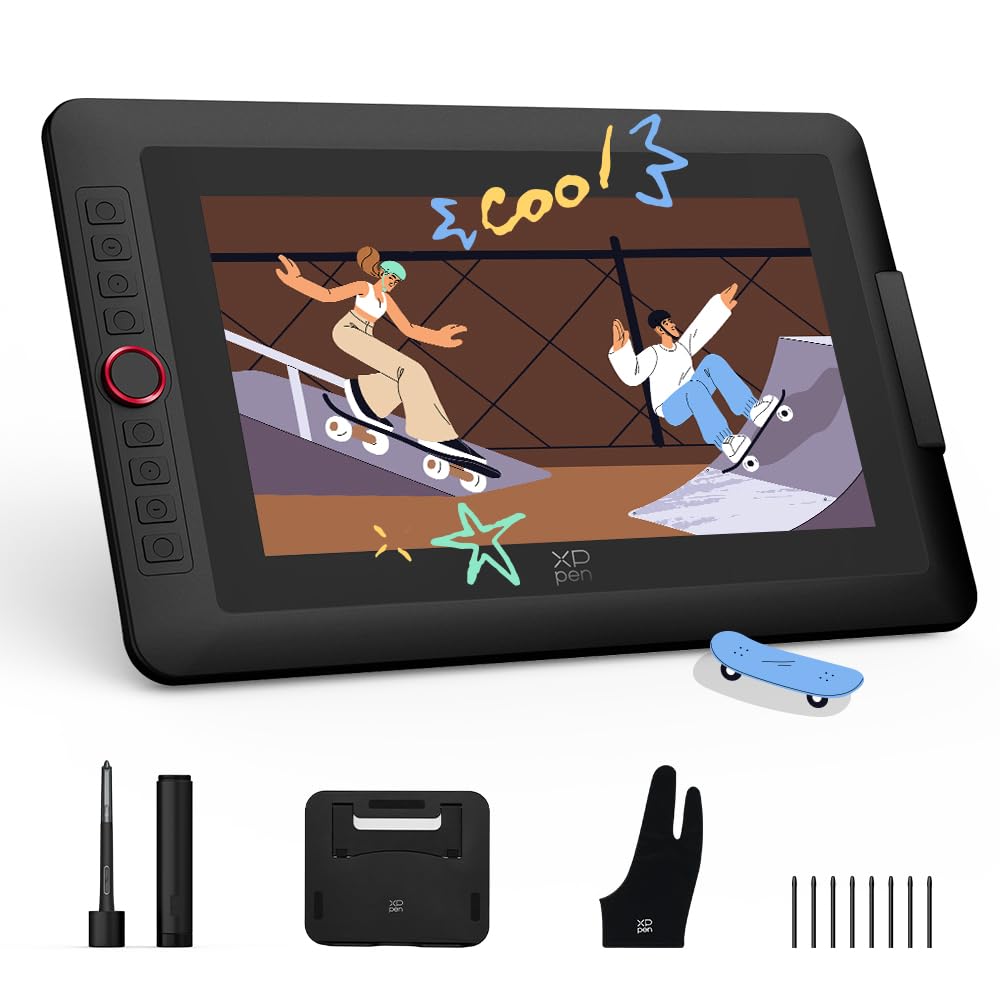
2. XP-PEN Artist 13.3 Pro V2
The industry-first 16K pressure chip makes this the precision king of the 13-inch class.
XP-Pen jumps ahead of the pack with the X3 Pro Smart Chip Stylus, delivering 16384 levels of pressure sensitivity — double the standard 8192 levels. This means your line weight on a bounce cycle or a slow-in/slow-out movement has exponentially more gradation than a pen with 8192 levels. The fully laminated 13.3-inch FHD display has a wide 95% P3 cinema-grade gamut, so colors for a character palette stay true across monitors. Owners note the pen feels natural, with clean lines and no diagonal jitter (wobble in angled strokes) — essential for smooth, unbroken strokes in Manga line art.
Unlike the Huion, the XP-Pen adds a physical red dial roller and eight customizable express keys on a metal back panel that helps dissipate heat. It also offers a clever dual-mode feature: use it as a pen display, or turn the screen off to use it as a standard pen tablet, which saves laptop battery. The trade-off is that at 3.08 kg it is heavier than the Huion Kamvas 13 Gen 3, which weighs about 0.9 kg (2 pounds), making it less ideal for tossing in a backpack daily.
The Precision Edge
- World-first 16384 pressure levels with X3 Pro Smart Chip for ultra-fine stroke control
- Dual-mode function lets you draw on screen or use it as a standard pen tablet
- Red dial roller and eight customizable keys keep your workflow moving
The Trade-Off
- Significantly heavier than the Huion Kamvas 13 Gen 3 at 3.08 kg
- Some creative software may require a specific driver setup for the dial functions
Precision-first choice: Pick this if you animate with very fine line art and want the highest possible pressure sensitivity in a 13-inch form factor.
Better suited for a desk: Its weight makes it less of a travel companion than the lighter Huion — it is a stay-at-home studio tool.
3. HUION KAMVAS 16 (Gen 3)
A crisp 2.5K canvas in a 15.8-inch frame that makes every line look razor-sharp.
Stepping up from the 13-inch class, the Kamvas 16 Gen 3 brings a 2.5K QHD (Quad High Definition — 2560×1440) resolution with 186 PPI (pixels per inch) — a noticeable jump in clarity over the standard 1080p panels. For animation, this means clean anti-aliasing on your vector lines and more screen space for your timeline and toolbars without scaling down. It uses the same PenTech 4.0 with 16384 pressure levels and a 2g activation force, so the feel matches the smaller Kamvas 13 Gen 3, but the drawing surface is significantly larger (349.6 x 196.7mm active area).
Owners consistently praise the build quality and the vivid 99% sRGB (standard Red Green Blue) color accuracy. The dual dials and six silent press keys give you plenty of shortcut options. The honest downsides, based on owner experience: the included stand is described as “ugly and hard to adjust,” and some users found the driver tricky to configure for canvas rotation. At 2.7 pounds it is still portable enough for a laptop bag, but it is 2.7 pounds versus the 13-inch sibling’s 2 pounds.
Screen-first verdict: This is the pick for animators who want a mid-size canvas with genuine 2.5K resolution for sharp, detailed work. The PenTech 4.0 feel is identical to the top-rated Kamvas 13 Gen 3, so you get a larger workspace without losing any pen precision.
A note on the stand: The included stand is functional but not elegant — plan to buy a separate adjustable monitor arm if ergonomics are a priority for long storyboard sessions.
A solid mid-range upgrade: Go for this if you are ready to move beyond 1080p and want a bigger canvas than the 13-inch options. The 16384 pressure levels and 90% Adobe RGB coverage make it suitable for professional print work.
Who might pass: If you value ultra-portability or dislike dealing with driver quirks, the more mature driver platform of a Wacom might feel smoother.
4. Wacom Cintiq 16
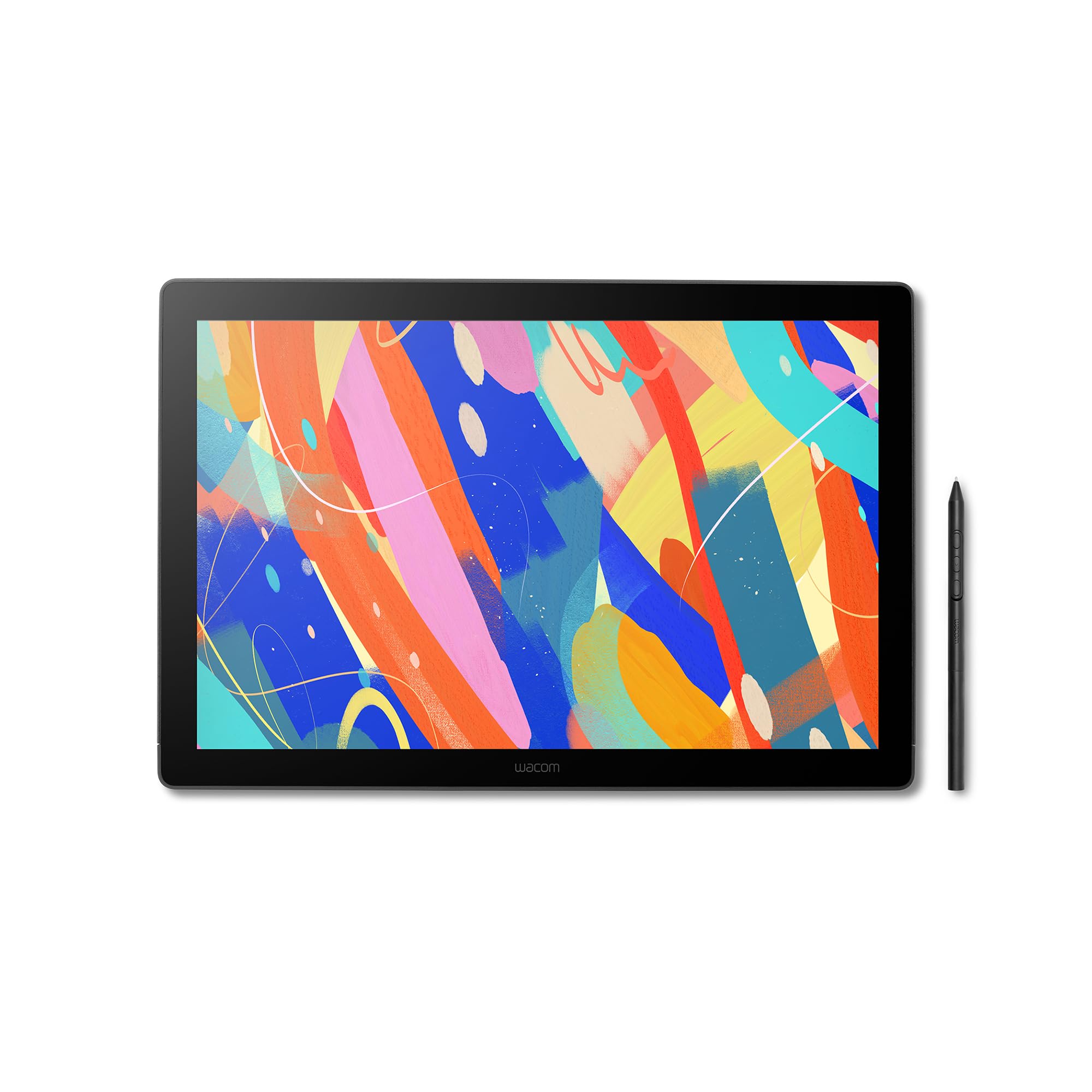
Wacom’s most accessible pro-grade display brings the trusted Cintiq experience to a 2.5K screen.
The Cintiq 16 is the entry point into Wacom’s professional display line, and it delivers exactly what you expect: a rock-solid build, an anti-glare glass surface with zero sparkle, and the Pro Pen 3 with 8192 pressure levels. The 16-inch IPS (In-Plane Switching) panel runs at a crisp 2560×1600 resolution with 99% DCI-P3 color coverage, making it ideal for animators who work in industry-standard color spaces. Owners consistently say the pen input is flawless — no lag, no skipping, and the anti-glare surface feels natural under the stylus.
The landscape here is a bit different from the competition. Unlike the Huion Kamvas 16 Gen 3, which offers 16384 pressure levels and dual dials, the Cintiq 16 has no customizable shortcut buttons on the tablet itself — it relies on your keyboard and the pen’s three buttons. The Pro Pen 3 is also stripped down compared to Wacom’s own high-end pens; some owners found it too slim and uncomfortable for long sessions, choosing to swap it for a Pro Pen 2. It connects via USB-C with DisplayPort Alt Mode, making it easy to plug into a modern laptop, but it does not include a stand in the box — only built-in fold-out legs that provide a 20-degree angle.
The brand trust factor: This is the tablet for animators who want a no-compromise drawing experience from the industry standard. The display is crisp, the color is accurate, and the build quality feels like it will last through years of daily keyframe work. The fold-out legs are clever for a clean desk, but you will likely want a proper adjustable stand eventually.
Where it gets price-sensitive: The lack of shortcut buttons and the simplified pen mean you are paying a premium for the Wacom brand and driver stability. If you need more hardware features for the same price, the XP-Pen Artist Ultra 16 or the Huion Kamvas 16 Gen 3 offer more raw specs.
For the pro who values stability: Choose the Cintiq 16 if you rely on Wacom’s driver ecosystem, need a 2.5K display with excellent color accuracy, and prefer a clean, button-free work surface.
Budget-conscious animators: If you want more hardware features for your money — like dual dials, more shortcut keys, and higher pressure sensitivity — the Huion Kamvas 16 Gen 3 is a strong alternative that costs less.
5. XPPen Artist Ultra 16 4K OLED

A 4K OLED panel in a drawing tablet — the colors and contrast are in a different league.
This is the most technologically advanced pick on the list. The 15.6-inch AMOLED screen delivers a true 4K UHD (Ultra High Definition — 3840×2160) resolution with a 100,000:1 contrast ratio and a sub-1ms response time. For animation, this means deep blacks for nighttime scenes and absolutely no motion blur when you scrub through a timeline. The touchscreen functionality lets you pinch-zoom and rotate the canvas with your fingers — a workflow boost that owners say is hard to go back from. It includes two styluses (an X3 Smart Chip Pro and an X3 Pro Slim), both with 16384 pressure levels and 60-degree tilt support.
The color accuracy is near-flawless, with 99% Adobe RGB and Delta E<1.1 (a measure of color difference, where under 2 is considered excellent), making this a dream for color-critical frame-by-frame work. The ACK05 shortcut remote gives you 40 customizable keys on a separate puck. The honest catch is that at this price point, it competes directly with the Wacom Cintiq 16. While the XPPen offers a superior OLED display and touch control, some owners found the aluminum stand attachment a bit fragile, and the touch functionality only works on Windows 10 or later and macOS 12 or later.
What Makes It Special
- True 4K OLED with 100,000:1 contrast for class-leading black levels and color vibrancy
- Multi-touch screen with customizable gesture control for intuitive canvas navigation
- Dual 16384-pressure styli included, one with an eraser and felt nib compatibility
What Holds It Back
- Stand attaches with adhesive foam — some owners found it popped loose
- Not VESA compatible, limiting mounting options to a laptop tray
The display you will see your work on: This is for the animation professional who demands the highest visual fidelity — the 4K OLED panel makes every frame look vibrant and sharp. The touch screen and dual styli offer a level of control no other tablet on this list can match.
Budget reality check: It is the most expensive pick here, and the premium is justified by the screen technology. If you work mostly in 2D line art and do not need 4K or touch, a 1440p panel like the Wacom Cintiq 16 or the Huion Kamvas 16 Gen 3 may be a smarter buy.
6. XP-PEN Artist 22 2nd

A roomy 21.5-inch canvas that gives your animation timeline all the space it needs.
When your animation work involves complex timelines with layers, effects, and a full toolbar, a larger screen is a genuine productivity upgrade. The XP-PEN Artist 22 2nd offers a massive 21.5-inch display with a 1920×1080 resolution and an active area of 476 x 267mm. The color gamut covers 122% sRGB and 90% Adobe RGB, delivering vibrant colors right from the start. The battery-free stylus supports 8192 levels of pressure sensitivity and 60 degrees of tilt, allowing for expressive brush strokes that react to your pen angle.
Owners praise the adjustable stand, which allows you to tilt the screen from 16 to 90 degrees, and the cable management slot keeps your desk tidy. It has no shortcut buttons on the tablet itself, which keeps the surface clean but means you rely on a keyboard or a separate remote. At 21.5 inches, it is not portable — this is a dedicated desktop tool. It also requires a power adapter, unlike the USB-C powered Huion models, adding one more cable to your setup.
Real estate for serious sessions: This is the pick for the animator who works at a fixed desk and wants a display that rivals a monitor in size. The 122% sRGB gamut is generous for color grading, and the tilt stand covers every ergonomic angle.
Not for tablet mode: Unlike the XP-Pen Artist 13.3 Pro V2, this model does not have a dual-mode feature — it is a pen display only. And at this size, carrying it to a coffee shop is not realistic.
Best for a permanent studio desk: Pick this if you want a large-format canvas that acts as your primary monitor and drawing surface, and you do not need to travel with it.
Consider a smaller model if: You have limited desk space or you need to move between workstations — the 15-inch class (like the Huion Kamvas 16 Gen 3) gives you a good balance of size and portability.
7. Wacom Intuos Pro Medium

A pen tablet that puts your hand at the center, with Bluetooth 5.3 and a compact footprint.
Not every animator wants to draw on a screen. The Wacom Intuos Pro Medium is a pen tablet — you draw on a textured surface while looking at a separate monitor. This is the preferred setup for many professionals because it keeps your hand from blocking your work, and it never strains your neck looking down. The Pro Pen 3 offers 8192 pressure levels with tilt support and a customizable grip. The tablet itself has 10 ExpressKeys and two mechanical dials on top, giving you ample shortcut control without reaching for a keyboard.
The active area is large for its footprint — 11.4 x 8.1 inches — despite the tablet measuring just 11.5 x 8.1 inches. It connects via USB-C or Bluetooth 5.3, which owners on Mac report works flawlessly. The magnesium build feels premium and durable, and it is only 14.56 ounces, making it highly portable. The trade-off is that it has no touch sensitivity, and some Windows 11 owners note occasional Bluetooth dropouts.
The Wireless Advantage
- Bluetooth 5.3 gives you cable-free freedom with stable performance (on Mac)
- 10 ExpressKeys and two dials offer deep customization for shortcuts
- Ultra-slim magnesium body (4mm at its thinnest) that weighs only 14.56 ounces
The Limits
- No touch sensitivity — multitouch gestures are not supported
- Bluetooth connectivity on Windows 11 has reports of intermittent disconnections
The ergonomic choice: Pick this if you prefer looking up at a large monitor while drawing, want a clutter-free desk with Bluetooth, and need a compact, portable pen tablet.
Skip it for a screen: If you have never used a pen tablet before and want to see your brush directly under your hand, a pen display like the HUION Kamvas 13 (Gen 3) will feel more intuitive.
8. RubensTab T11 Pro Standalone Drawing Tablet
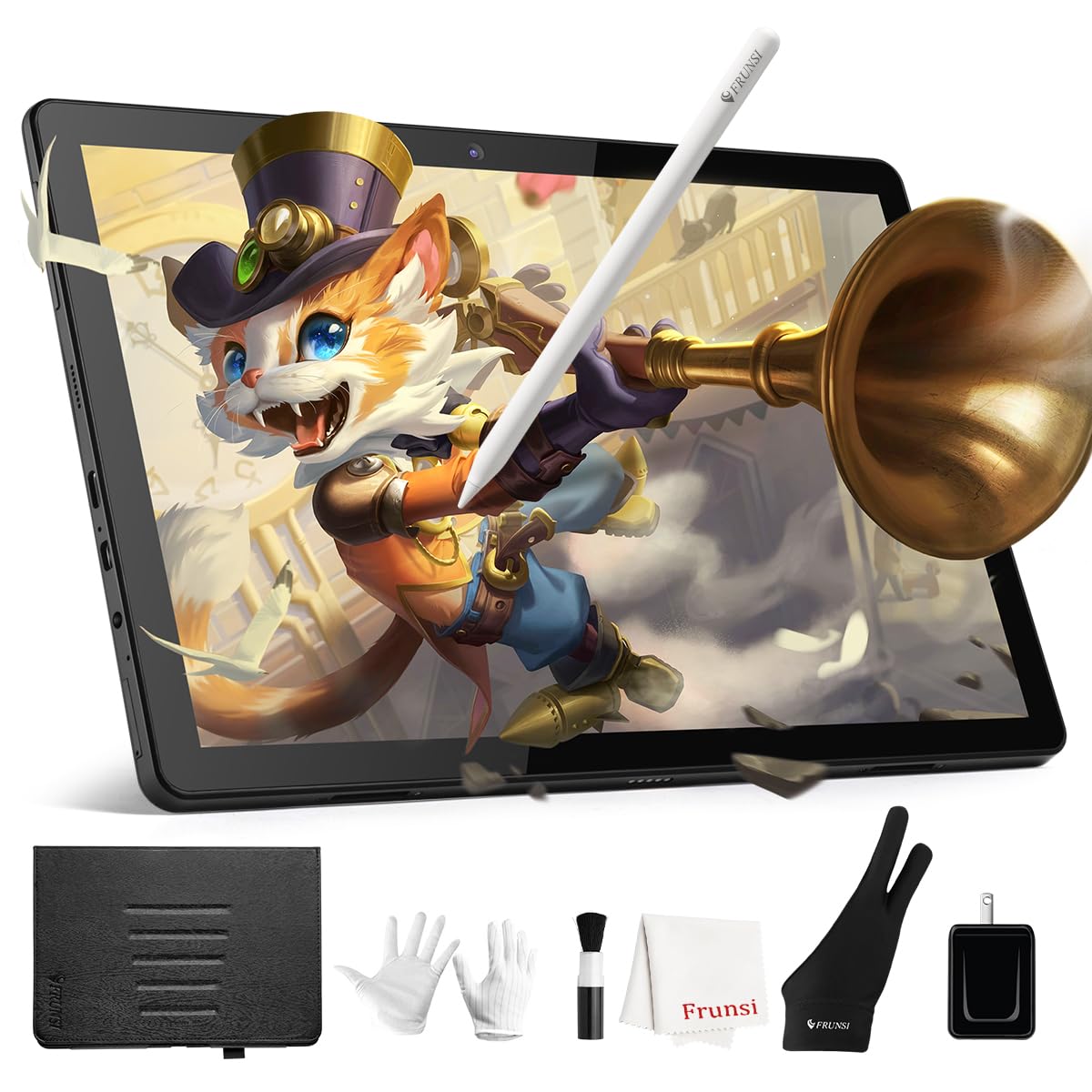
A full Android tablet built for drawing, ready to sketch the moment you power it on.
This is the only standalone device on the list — it does not need a computer, a laptop, or an Android phone. The RubensTab T11 Pro runs its own operating system and comes pre-loaded with Krita and Adobe Sketchbook, so you can start animating right from the start. The 10.1-inch FHD IPS screen (1920×1200 resolution) is bright and sharp, and the battery-free stylus is responsive with 1024 pressure levels and tilt support — a respectable spec for this price point.
Owners highlight the ease of use, the long battery life (a 5800mAh cell), and the company’s responsive customer service. The tablet is lightweight and includes a durable case and glove, making it a true grab-and-go kit. The critical thing to understand here is that 1024 pressure levels is a significant step down from the 8192 or 16384 levels found on the professional pen displays above. The stylus is responsive, but the line gradation is not as fine. It is an entry-level tool, and the Android-based software ecosystem means you are limited to mobile apps, not full desktop suites like Toon Boom Harmony.
The best standalone starter: This is the tablet you throw in a bag for sketching sessions on the train, in a park, or on a lunch break. The pre-installed apps get you drawing immediately. Quality is the most-discussed aspect among owners, with 104 positive mentions.
Not for professional animation: The 1024 pressure levels and mobile app limitations mean it is best suited for beginners, students, or as a secondary on-the-go sketchbook. If you are building a professional animation career, you will quickly outgrow the pressure resolution and software limitations.
Perfect for the young artist or the casual sketcher: Its standalone nature and low price make it a fantastic entry point for someone who just wants to draw without any technical setup.
A stepping stone, not a final destination: If you already know you will need advanced software and fine pressure control, invest in a connected pen display like the HUION Kamvas 13 (Gen 3) instead.
Understanding the Specs
Pressure Sensitivity Levels
This spec tells you how many different gradations of force the stylus can recognize. A higher number — like 8192 or 16384 — means the tablet can detect much subtler changes in how hard you press. For animation, this directly affects your line weight. A light, quick sketch for a rough keyframe will look different from a heavy, inked final line.
Laminated vs. Non-Laminated Display
A fully laminated screen means there is no air gap between the glass and the LCD panel. This eliminates the parallax effect (the optical illusion where your pen tip looks like it is touching the cursor but is actually hovering a tiny bit away). Laminated screens make your strokes feel more direct and accurate, which is crucial for precise line art in animation.
FAQ
Can I use an animation tablet with my Android phone or tablet?
What is the difference between a pen display and a pen tablet?
How many pressure sensitivity levels do I really need for animation?
Do I need a computer to use a drawing tablet?
Will a drawing tablet work with my animation software?
What is screen parallax and why does it matter?
Is a larger tablet screen always better?
How important is color accuracy (like sRGB or Adobe RGB) for animation?
Final Thoughts: The Verdict
The smartest choice for most animators is the HUION Kamvas 13 (Gen 3) because it delivers the latest PenTech 4.0 with 16384 pressure levels, a fully laminated anti-glare screen, and dual dial controls — all at a price that undercuts the competition. If you want the highest possible pressure precision and a red dial control wheel, grab the XP-PEN Artist 13.3 Pro V2. And for the animator who wants a large, dedicated desktop canvas while staying affordable, the XP-PEN Artist 22 2nd is the one to reach for.
How We Picked
We do not accept paid placement. Every pick is matched to a real buyer and a real use-case; we do not hands-on test units.
Sources & Methodology
Specifications: manufacturer listings and product documentation. Review insights: verified customer reviews, as of July 2026. Pricing: not shown on this page (it changes often); check the current price via the retailer link.
As an Amazon Associate, WellFizz earns from qualifying purchases. This does not affect which products we feature.
Related Guides

Mo Maruf
I created WellFizz to bridge the gap between vague wellness advice and actionable solutions. My mission is simple: to decode the research and give you practical tools you can actually use.
Beyond the data, I am a passionate traveler. I believe that stepping away from the screen to explore new environments is essential for mental clarity and physical vitality.