Our readers keep the lights on and my smoothie glass nicely filled. As an Amazon Associate, I earn from qualifying purchases.
The line between a general smartwatch and a dedicated fitness tool has never been sharper, yet most Android-compatible watches still fail the first test of real athletes: accurate, reliable GPS during a long run without draining the battery before you finish. You need a watch that stands up to sweat, tracks your heart rate through intervals, and delivers actionable metrics without forcing you to carry your phone.
I’m Mohammad Maruf — the founder and writer behind WellFizz. I specialise in analysing wearable hardware specifications, from multi-band GPS frequency bands to battery chemistry and sensor fusion accuracy, to separate genuine training tools from lifestyle trackers with workout modes bolted on.
After evaluating nine leading contenders across price tiers, the best android workout watch delivers the precise balance of advanced performance metrics, long battery autonomy, and seamless ecosystem integration that serious fitness users demand.
How To Choose The Best Android Workout Watch
Workout watches for Android are not a monolith; the chipset, antenna design, and software stack differ enough to decide whether you end up with a data-rich training partner or a glorified step counter. Three factors will shape your decision more than any other.
GPS Accuracy: The Non‑Negotiable Foundation
Single-band GPS is acceptable for casual walks, but runners, cyclists, and triathletes need multi-band (L1+L5) chips like those found in premium Garmin and Galaxy Watch Ultra models. Multi-band reception reduces signal drift in tree cover and urban canyons, producing route maps you can trust. If your training includes trail running, open-water swimming, or any distance over 10 km, look for “dual-frequency” or “multi-band” in the spec sheet.
Battery Autonomy vs. Display Technology
The tension between a bright AMOLED screen and multi-day battery life is the central engineering compromise in this category. AMOLED delivers vivid colour and great sunlight readability but draws more power; Memory-in-Pixel (MIP) displays like the Garmin Instinct line stay legible in direct sun and sip so little energy that solar charging can extend battery life indefinitely. Decide whether you prioritise a rich touchscreen interface (AMOLED) or absolute endurance with a crisp monochrome readout (MIP).
Training Load Metrics and Recovery Insights
A workout watch earns its keep not by how many exercise modes it lists, but by how it synthesises heart rate variability (HRV), sleep quality, and recent training load into a meaningful readiness score. The best options, like the Garmin Forerunner 970 and Galaxy Watch Ultra, provide a training readiness or energy score that tells you when to push hard and when to back off. Without this feedback loop, you are wearing a data collector, not a coach.
Quick Comparison
On smaller screens, swipe sideways to see the full table.
| Model | Category | Best For | Key Spec | Amazon |
|---|---|---|---|---|
| Garmin Forerunner 970 | Premium | Serious runners & triathletes | AMOLED, 26h GPS battery | Amazon |
| Google Pixel Watch 4 (45mm) | Premium | Deep Google ecosystem users | 40h battery, dual-freq GPS | Amazon |
| Samsung Galaxy Watch Ultra | Premium | Rugged multi-sport training | 590mAh, titanium case | Amazon |
| Garmin Instinct 3 Solar | Rugged | Ultra-endurance & expeditions | Unlimited solar battery | Amazon |
| Amazfit T-Rex Ultra 2 | Premium | Adventure & scuba diving | Sapphire AMOLED, 30d | Amazon |
| Withings Scanwatch Nova | Hybrid | Classic style + health data | 30d battery, TempTech24/7 | Amazon |
| Google Pixel Watch 2 | Mid-range | Everyday fitness & stress tracking | 24h battery, ECG app | Amazon |
| Amazfit Active Max | Mid-range | Budget-conscious multi-sport users | 25d battery, 3,000-nit | Amazon |
| Fitbit Versa 4 | Entry-level | Guided fitness with Premium | 6d battery, readiness score | Amazon |
In‑Depth Reviews
1. Garmin Forerunner 970

The Forerunner 970 is Garmin’s most refined training watch for Android users, pairing a bright AMOLED touchscreen with physical buttons that work in rain, gloves, or after a swim. The 560mAh battery delivers up to 26 hours of continuous GPS tracking, which is enough for a full-distance Ironman or an ultra-marathon without touching a charger.
Multi-band GPS with SatIQ auto-selects the best positioning mode, so your pace and distance data stay accurate even on tree-canopied trails. The running dynamics metrics — cadence, stride length, ground contact time, and vertical oscillation — come straight from the wrist without needing an external pod.
The built-in LED flashlight is a small but game-changing addition for pre-dawn runs, and the sapphire lens with DLC titanium bezel shrugs off scrapes. Garmin Coach plans adapt to your recovery, and the Triathlon auto-transition feature makes race-day logistics seamless.
Why it’s great
- Professional-grade running power and economy metrics on-wrist
- Fast charging reaches full in roughly one hour
- Full-colour offline maps with round-trip routing
Good to know
- Steeper learning curve than lifestyle smartwatches
- Premium price bracket limits casual buyers
2. Google Pixel Watch 4 (45mm)

The Pixel Watch 4 marks Google’s most serious attempt at a fitness-first wearable, with a 455mAh battery that pushes beyond the 24-hour wall to deliver up to 40 hours in smartwatch mode and 72 hours in Battery Saver. The side charging dock gives 15 hours of runtime from a 15-minute plug-in, solving the chronic issue of daily charging anxiety.
Dual-frequency GPS provides reliable route tracking, and Gemini AI assistant brings hands-free workout control and contextual replies to notifications. The Fitbit integration is deeper than ever, offering a Daily Readiness Score, Sleep Profile, and Stress Management tools without requiring a separate subscription for the core metrics.
The 45mm case fits larger wrists well, and the Actua 360 display is crisp under direct sunlight. LTE models include two years of data, making it a true phone-free companion for runs.
Why it’s great
- Exceptional fast charging for a full day in minutes
- Seamless Google ecosystem with LTE data included
- Advanced Fitbit health metrics without subscription lock-in
Good to know
- Proprietary band lug limits third-party strap options
- Interface lacks physical buttons for interval workouts
3. Samsung Galaxy Watch Ultra (2024, 47mm)
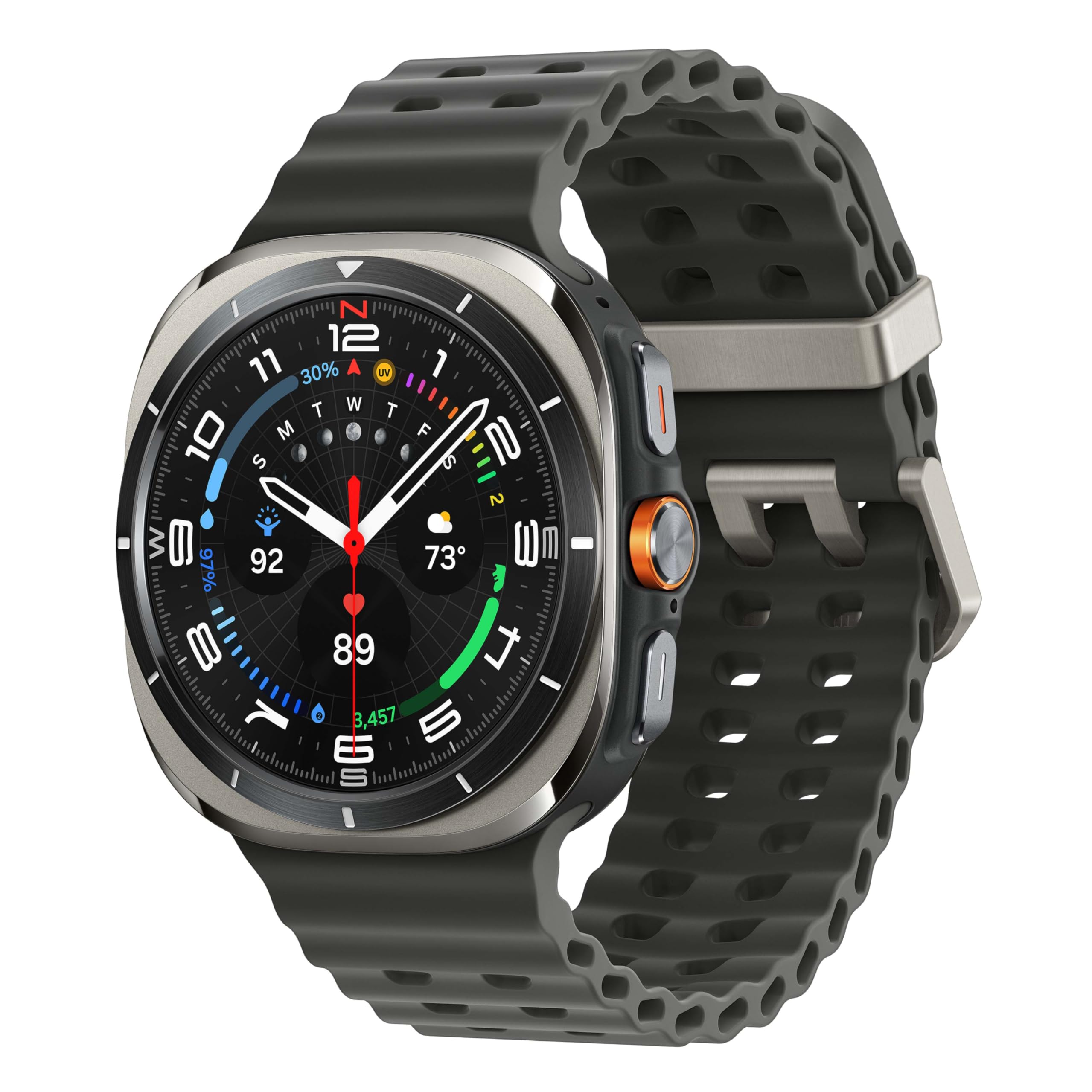
The Galaxy Watch Ultra is Samsung’s answer to the adventure-watch segment, built with a Grade 4 titanium case and a 590mAh battery that comfortably lasts three and a half days with typical use. The large 47mm AMOLED display is readable outdoors, and the programmable Quick Button can launch a workout or flashlight instantly.
Galaxy AI powers an Energy Score that combines sleep, heart rate, and activity data to tell you whether to train or rest. Heart rate tracking uses AI to filter out motion noise during intense efforts, producing cleaner data than the standard Samsung Health algorithm. LTE connectivity means you can leave your phone at home on trail runs and still stream music or take calls.
The rugged build includes 10 ATM water resistance and MIL-STD-810 certification, so it survives ocean swimming, desert heat, and mountain dust. Wireless charging works with any Qi pad, though the proprietary band system limits aftermarket options.
Why it’s great
- Titanium construction with sapphire crystal for extreme durability
- AI-driven readiness score tailors daily training advice
- LTE with standalone calling and music streaming
Good to know
- Samsung Health lacks the deep training load analysis of Garmin
- Bulkier profile may catch on tight jacket sleeves
4. Garmin Instinct 3 Solar (50mm)

The Instinct 3 Solar redefines battery longevity for the Android workout watch segment by combining a solar charging lens with a Memory-in-Pixel display that consumes negligible power. In smartwatch mode with three hours of daily sun exposure, battery life becomes effectively unlimited — a feature no AMOLED watch can match.
The 50mm fiber-reinforced polymer case with a metal-reinforced bezel is built to MIL-STD-810 standards and rated to 10 ATM, making it suitable for diving, climbing, and any extreme environment. Multi-band GPS with SatIQ ensures accurate positioning even in deep canyons, while the 3-axis compass and barometric altimeter support serious navigation.
The built-in flashlight with variable intensity and strobe modes is unexpectedly useful for night hikes and camp setup. Health monitoring includes wrist-based heart rate, Pulse Ox, advanced sleep stages, and HRV status, though the monochrome display lacks the visual polish of AMOLED rivals.
Why it’s great
- Unlimited battery life with regular solar exposure
- MIL-STD-810 and 10 ATM make it nearly indestructible
- Buttons are usable with gloves in any weather
Good to know
- MIP display lacks colour and touchscreen convenience
- No onboard music storage or Bluetooth calls
5. Amazfit T-Rex Ultra 2 (51mm)
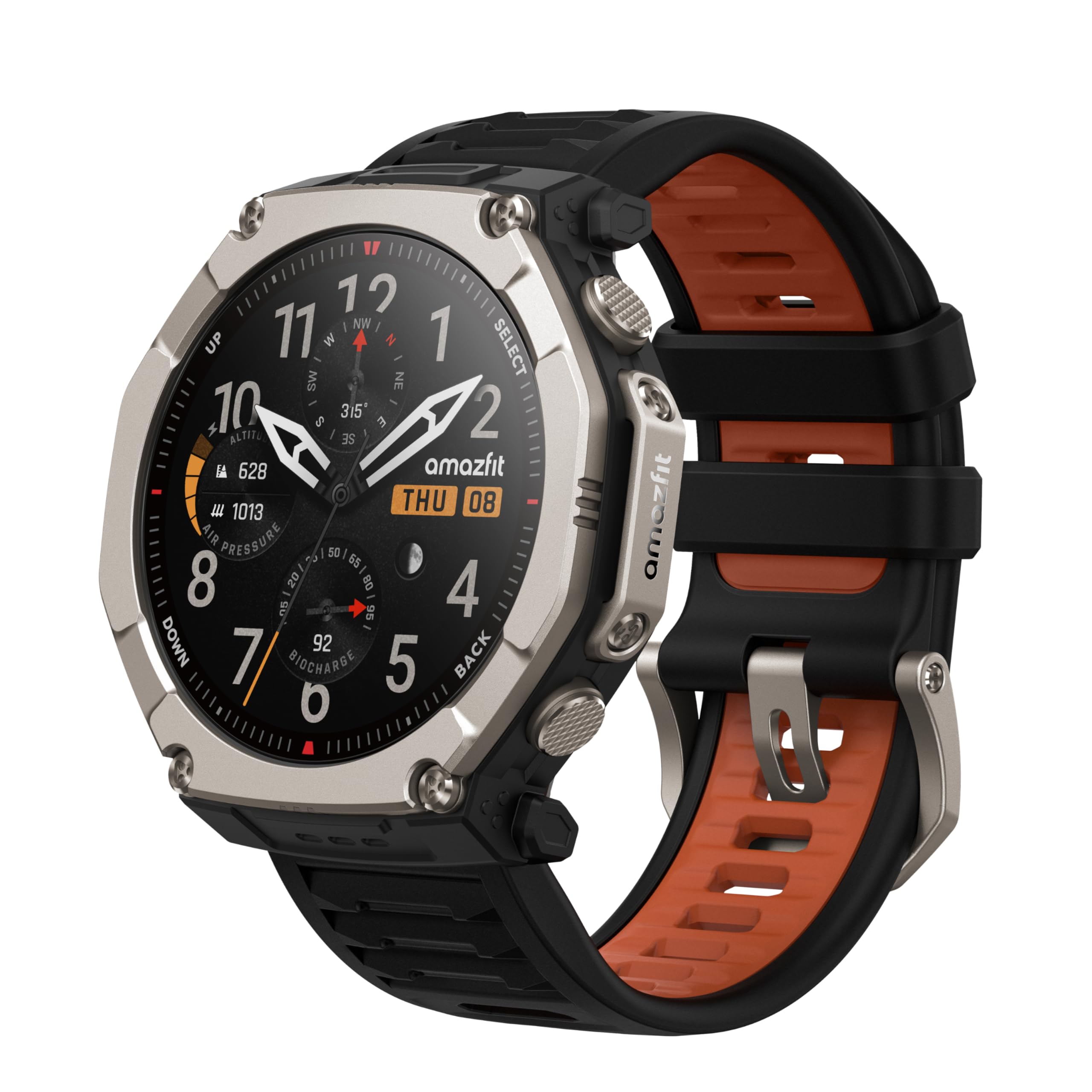
The T-Rex Ultra 2 brings a sapphire AMOLED display and Grade 5 titanium build to the adventure watch category at a price well below dedicated Garmin models. The 51mm case is large, but the 1.5-inch AMOLED screen is stunningly bright at peak output, making data readable even in direct midday sun.
Offline base maps with turn-by-turn navigation and automatic rerouting make it a serious tool for hikers and trail runners who wander beyond cell coverage. The dual diving certification (10 ATM water resistance, ISO 6425) means you can take it recreational scuba diving to 45 metres without worry.
Battery life hits 30 days in typical usage, and the built-in two-colour flashlight has a Boost mode for emergencies. Zepp Coach provides AI-driven training plans for distances from 5K to full marathon, adapting load based on your performance and recovery.
Why it’s great
- Sapphire glass and titanium case offer premium scratch resistance
- Full offline maps with automatic rerouting
- 30-day battery life with AMOLED quality
Good to know
- 51mm case is too large for smaller wrists
- Sleep tracking can be inconsistent across nap detection
6. Withings Scanwatch Nova Brilliant
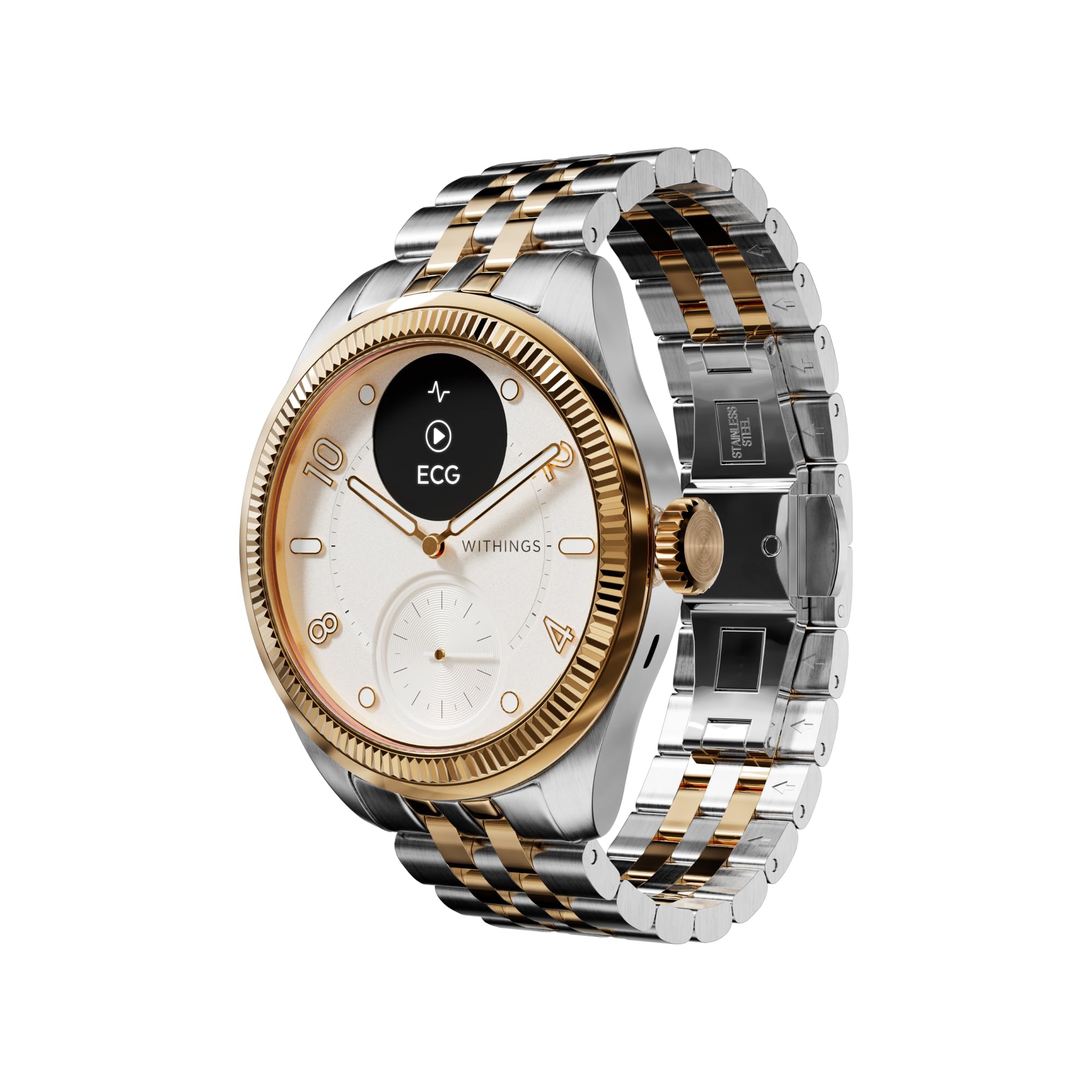
The Scanwatch Nova Brilliant takes a fundamentally different approach: it hides advanced medical-grade sensors inside a traditional Swiss-style watch case with physical hands and a small auxiliary digital screen. The TempTech24/7 module tracks skin temperature fluctuations around the clock, useful for spotting early signs of illness or monitoring heat stress during workouts.
ECG and SpO2 measurements are FDA-cleared, and the 30-day battery life is exceptional for a device with continuous heart rate and temperature monitoring. Connected GPS provides pace and distance maps when your phone is nearby, though there is no standalone GPS for phone-free tracking.
The hybrid design is ideal for professionals who want health data without the look of a sports watch. However, the small digital display makes on-wrist interactions cumbersome, and the app is required for most data review.
Why it’s great
- Medical-grade ECG and temperature sensing in an elegant package
- 30-day battery eliminates weekly charging routines
- Lighter and thinner than most smartwatches
Good to know
- No standalone GPS for phone-free running
- Sleep tracking accuracy lags behind dedicated fitness bands
7. Google Pixel Watch 2

The Pixel Watch 2 delivers the most polished Fitbit experience on a Wear OS device, with a multi-path heart rate sensor that significantly improves accuracy during high-intensity intervals compared to the original. The body-response feature detects physiological stress signals using electrodermal activity (EDA) and prompts you to log your state, which is useful for managing training load.
Safety features like Fall Detection and Emergency SOS set a high bar for peace of mind during solo runs. The 24-hour battery is adequate for daily use and charges to full in about 75 minutes, but heavy GPS use will drain it faster. The compact 41mm case is comfortable for all-night sleep tracking and fits easily under dress cuffs.
Wear OS integration means Google Assistant, Google Maps, and contactless payments work seamlessly. The trade-off is a smaller display that can feel cramped for viewing workout metrics mid-stride.
Why it’s great
- Best-in-class Fitbit stress and health tracking
- Lightweight, comfortable design for 24/7 wear
- Fast, responsive Wear OS with full Google app suite
Good to know
- Daily charging required with always-on display enabled
- Proprietary band lug limits aftermarket strap compatibility
8. Amazfit Active Max
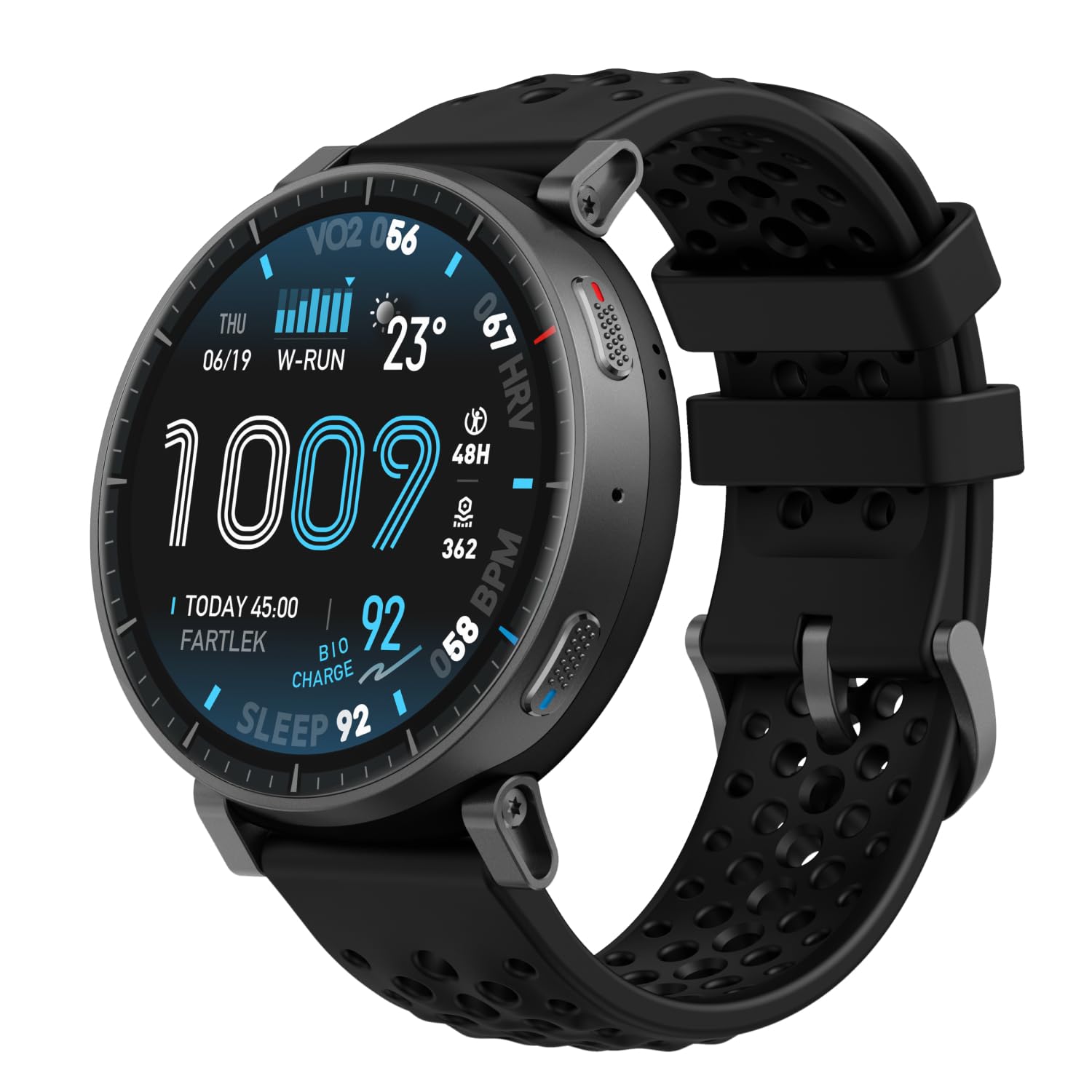
The Active Max punches far above its price tier with a 3,000-nit AMOLED display that remains readable under direct sunlight — a spec typically reserved for watches costing twice as much. The 1.5-inch panel is large enough to show detailed workout metrics, and the 200mAh battery delivers up to 25 days of typical use.
Built-in GPS with five satellite systems provides reliable tracking, and 4GB of onboard storage lets you load music and offline maps for phone-free runs. The BioCharge energy monitoring score helps gauge daily recovery, and Zepp Coach offers adaptive training plans for distances up to a full marathon.
Bluetooth calling and Zepp Flow voice command integration make it a capable everyday companion. However, the app ecosystem lacks the depth of Garmin Connect or Fitbit Premium, and some users report occasional syncing delays.
Why it’s great
- 3,000-nit AMOLED panel is best-in-class for outdoor visibility
- 25-day battery life with 4GB music storage
- Offline maps and route planning at a accessible price
Good to know
- Zepp app is less polished than Garmin or Fitbit ecosystems
- No LTE option for fully independent use
9. Fitbit Versa 4

The Versa 4 is Fitbit’s most complete workout watch for Android, combining a Daily Readiness Score with 40+ exercise modes and built-in GPS. The readiness algorithm considers recent sleep, heart rate variability, and activity load to tell you whether to train or rest — a feature that helps beginners avoid overtraining.
The 6-day battery life is solid for a colour AMOLED watch, and the on-wrist Bluetooth calling, Fitbit Pay, and Google Wallet make it functional beyond the gym. The included 6-month Premium trial unlocks guided programs, advanced sleep analytics, and stress management tools, though the subscription becomes a recurring cost afterward.
GPS accuracy has been a pain point for some runners, with reports of route mapping diverging from actual paths on longer efforts. The silicone band is comfortable but attracts dust, and after nearly three years of daily use, some units develop screen issues.
Why it’s great
- Excellent Daily Readiness Score for recovery-aware training
- Long 6-day battery for an AMOLED smartwatch
- Lightweight and comfortable for round-the-clock wear
Good to know
- GPS performance can be inconsistent on runs over 10 km
- Fitbit Premium subscription required for advanced metrics
FAQ
Can any Android workout watch store music offline for phone-free runs?
Is a ceramic or titanium case worth the premium over aluminium?
How often should I calibrate the wrist-based heart rate sensor?
Do all the watches on this list support third-party chest strap pairing?
Final Thoughts: The Verdict
For most users, the best android workout watch winner is the Garmin Forerunner 970 because it combines professional-grade running metrics, a bright AMOLED display with physical buttons, and enough battery to finish any race without charging. If you prefer deep Google ecosystem integration with fast charging, grab the Google Pixel Watch 4. And for extreme endurance where solar charging means never stopping, nothing beats the Garmin Instinct 3 Solar.

Mo Maruf
I created WellFizz to bridge the gap between vague wellness advice and actionable solutions. My mission is simple: to decode the research and give you practical tools you can actually use.
Beyond the data, I am a passionate traveler. I believe that stepping away from the screen to explore new environments is essential for mental clarity and physical vitality.