Our readers keep the lights on and my smoothie glass nicely filled. As an Amazon Associate, I earn from qualifying purchases.
The market is flooded with imported alternatives that cut corners on stitching and midsole construction, leaving workers with sore feet and failed seams before the first year is up. Knowing which domestic factories still use Goodyear storm welts and Poron insoles is the edge that separates a boot that lasts from one that gets tossed.
I’m Mohammad Maruf — the founder and writer behind WellFizz. I’ve spent countless hours analyzing leather thickness, outsole density, and ASTM safety certifications across the most respected American work boot brands to bring clarity to this crowded market.
Whether you are framing houses in the Pacific Northwest or managing a warehouse floor in the Midwest, finding a durable pair that fits correctly and offers real slip resistance is the single most important purchase you’ll make for your feet. This guide covers the best american made work boots that actually earn their keep on the job.
How To Choose The Best American Made Work Boots
Buying a pair of domestic work boots is an investment that should last years, not months. The right choice depends on matching your specific work environment—concrete floors, uneven dirt, wet conditions, or electrical hazards—to the construction methods and materials that dominate the USA-made segment.
Construction: Welt vs. Cement
The defining feature of premium American-made boots is the Goodyear storm welt. This method stitches the upper leather to a leather or synthetic midsole, allowing a cobbler to replace the outsole when it wears down. Cement-constructed boots (common in imported options) cannot be resoled and are discarded once the tread is gone. If you want a boot that lasts a decade in rotation, a welted construction is non-negotiable.
Leather Grade and Thickness
Full-grain leather is the entire hide, un-sanded and strongest. Top-grain leather has the outer layer sanded off, losing some toughness. Budget-tier domestic boots sometimes use a corrected-grain or split-leather lower panel. Look specifically for “oil-tanned full-grain” descriptions, which indicate a thicker hide that resists chemicals and water better over time.
Outsole Profile: Wedge vs. Lug
Wedge outsoles, like the MAXWear Wedge from Thorogood, offer maximum surface contact and shock absorption on flat concrete floors, but they wear faster on gravel or dirt. Lug soles, like those on the Danner Bull Run, have deeper tread channels that shed mud and provide grip on uneven terrain but transmit more impact on hard surfaces. Choose based on your primary ground condition.
Quick Comparison
On smaller screens, swipe sideways to see the full table.
| Model | Category | Best For | Key Spec | Amazon |
|---|---|---|---|---|
| Thorogood American Heritage 8″ | Premium | All-day concrete, mechanics, electricians | Goodyear storm welt, Poron insole | Amazon |
| Red Wing Heritage 8146 | Premium | Long-term investment, resoling | 6″ moc lug, full-grain leather | Amazon |
| Irish Setter Two Harbors 11″ | Premium | Oil rig, waterproofing, wide feet | 11″ height, steel toe, waterproof | Amazon |
| Ariat Workhog 11″ | Premium | Construction, waterproof steel toe | 11″ height, square toe, ATS Max | Amazon |
| Justin Conductor 10″ | Premium | Electricians, EH-rated durability | Full-grain leather, 10″ shaft | Amazon |
| Danner Bull Run 6″ | Premium | Lightweight, recraftable wedge | 6″ height, stitch-down construction | Amazon |
| Ariat Sierra Shock Shield | Mid-Range | Entry-level value, composite toe | Composite toe, Patriot styling | Amazon |
| Ariat Groundbreaker | Mid-Range | Cost-conscious, western style | Steel toe, wide square toe | Amazon |
| Wolverine Rancher Claw | Budget | Basic yard work, entry-level budget | Wellington pull-on, vented shaft | Amazon |
In‑Depth Reviews
1. Thorogood American Heritage 8” Soft Toe

The Thorogood American Heritage 8” is the benchmark for USA-made work boots in the mid-to-premium tier. It uses oil-tanned full-grain leather from domestic sources and is assembled in a US plant with a Goodyear storm welt, which means a cobbler can replace the MAXWear wedge outsole once it wears flat. The removable Poron comfort cushion footbed absorbs shock measurably better than standard EVA foam, which matters when you spend 10-hour days on concrete floors.
Aircraft mechanics, carpenters, and electricians consistently report that this boot requires about a week of break-in before the leather fully conforms to the foot. The 8-inch shaft provides flexible ankle support without restricting movement, and the fiberglass shank maintains arch support under heavy loads. The wedge outsole offers excellent slip resistance on smooth, dry surfaces, though it becomes slick on snow or ice compared to a lug sole.
The tobacco oil-tanned leather develops a natural patina over time and resists minor chemical splashes typical on job sites. Owners note that the sole does show wear around the heel after about a year of daily use, which is expected for a wedge profile, but the Goodyear welt makes that replacement straightforward. For the price point, the combination of domestic assembly and serviceable construction is unmatched.
Why it’s great
- Goodyear storm welt allows easy resoling
- Poron footbed is more shock-absorbent than standard foam
- Slip-resistant MAXWear wedge outsole grips concrete well
Good to know
- Not waterproof; leather absorbs water without treatment
- Size down one full size from athletic shoe size
- Wedge outsole has poor traction on snow or ice
2. Red Wing Heritage 8146 6″ Moc Lug
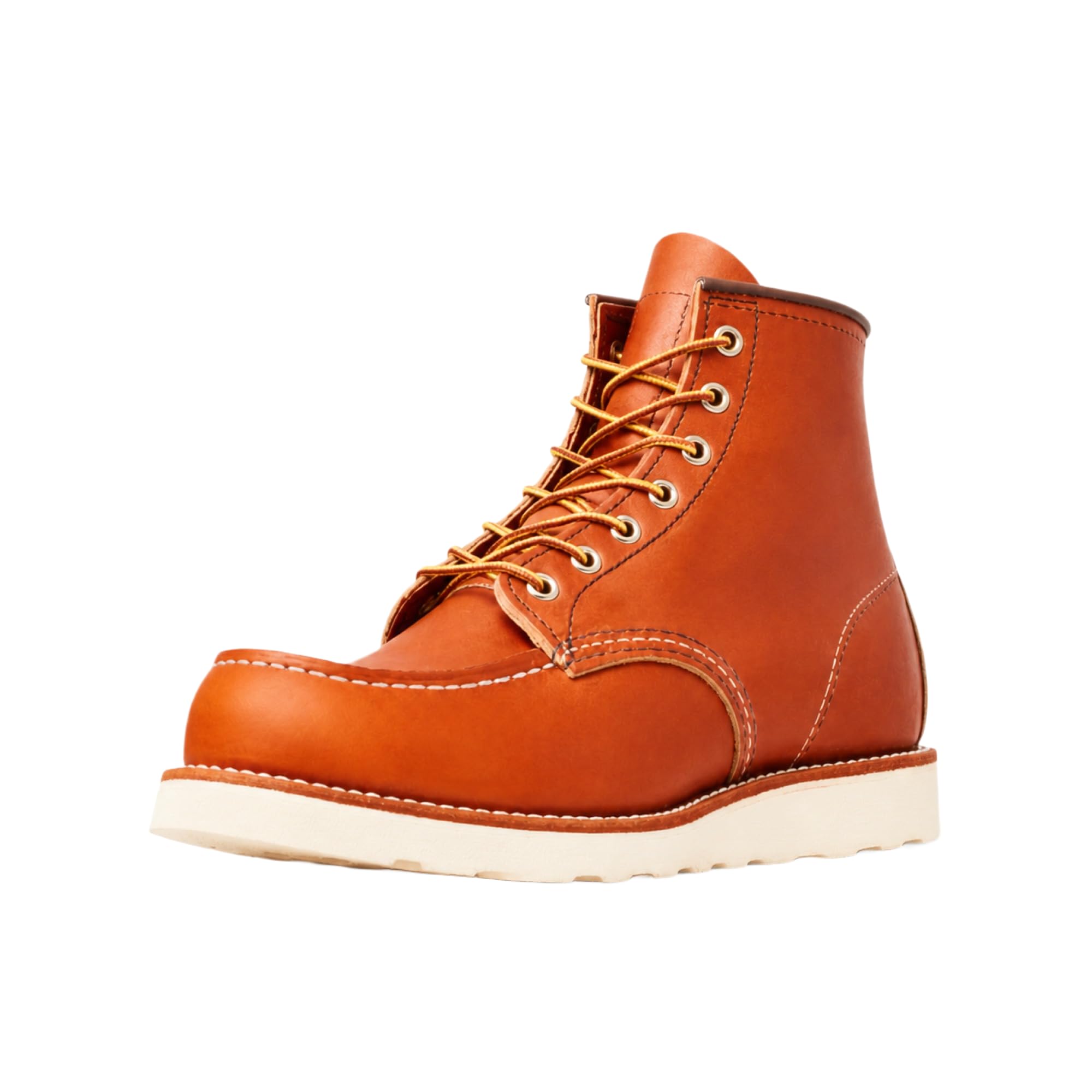
Red Wing’s Heritage 8146 represents the gold standard for American bootmaking that is built to be passed down or resoled for decades. The boot is constructed with a full-grain leather upper that is noticeably thicker and stiffer than most competitors, requiring a break-in period of two to three weeks of regular wear. The 6-inch moc toe profile stays low-profile enough for casual wear while still providing the structural integrity needed for trade work.
The lug outsole offers deeper tread channels than the Thorogood wedge, making it a better pick for uneven terrain or gravel sites. Owners report that sizing down by half to one full size from a typical running shoe is essential because the last runs generous. The included leather insole can be replaced over time, and the welted construction allows for resoling without damaging the leather upper.
One consistent feedback point is that the break-in can be genuinely uncomfortable, with the stiff tongue and ankle collar creating pressure points. Using a thick conditioner or boot stretcher during the first weeks helps significantly. Once broken in, the leather molds to the foot and provides support that most cement-constructed boots cannot match after years of wear.
Why it’s great
- Full-grain leather is extremely thick and durable
- Lug outsole handles dirt and gravel better than wedge
- Resoleable construction allows decades of use
Good to know
- Break-in period can be painful without treatment
- Runs large; must size down at least half size
- No steel toe or electrical hazard rating
3. Irish Setter Two Harbors 11″ Waterproof Steel Toe

The Irish Setter Two Harbors 11” is built for punishing environments where water, mud, and extreme temperatures are daily realities. The 11-inch shaft provides significantly more coverage than standard 6- or 8-inch boots, keeping mud and water out when you are in standing water or working on an oil rig platform. The steel toe meets ASTM safety standards, and the outsole is designed to resist melting on hot surfaces like rig decks.
Users in the oil fields of Wyoming report that this boot stays comfortable from the first wear with no break-in required, which is rare for a tall steel-toe boot. The wide toe box is accommodating for workers with wide feet or those who wear thicker socks in cold weather.
The trade-off for the tall shaft and built-in waterproofing is that the boot is heavier than shorter, non-waterproof options. Some owners note that the grip on smooth, wet concrete is adequate but not as confident as a dedicated wedge sole. The boot’s lifespan ranges from 15 to 24 months under heavy daily use, which is competitive for the waterproof category.
Why it’s great
- Waterproof membrane holds up to rain and snow for over a year
- No break-in period required, comfortable from first wear
- Heat-resistant outsole suitable for oil rig conditions
Good to know
- Heavier than non-waterproof boots of similar height
- Grip on smooth wet concrete is mediocre
- Tall shaft can feel restrictive for some workers
4. Ariat Workhog 11″ Square Steel Toe

The Ariat Workhog 11” is the brand’s most durable offering for heavy construction and industrial work. The square toe design provides more room for toes to splay compared to round or tapered toe boxes, which reduces fatigue during long shifts. The ATS Max technology integrates a gel-cushioned heel and a moisture-wicking liner that keeps feet dry in warm environments.
Users who wear steel-toe boots often report that the Workhog is one of the few models where the steel cap does not dig into the toes even after months of wear. The outsole tread is aggressive enough for loose dirt and gravel, and the waterproofing holds up well in wet conditions. The 11-inch height provides ample ankle protection when carrying heavy materials.
On the downside, the boot is noticeably bulky, and some users find the square toe looks too casual for sites with a strict uniform policy. The leather quality is good but not at the same thickness as Red Wing or Thorogood options, which may affect long-term durability if the boots are exposed to heavy abrasion daily.
Why it’s great
- Square toe box provides excellent room for toes
- ATS Max cushioning reduces heel strike fatigue
- Waterproof membrane effective in rain and mud
Good to know
- Bulky profile may not suit all job sites
- Leather thickness is less than premium welted boots
- Square toe style looks less formal
5. Justin Conductor 10″ EH-Rated Round Toe

The Justin Conductor 10” round toe boot is the most affordable domestic option that still uses full-grain leather and carries an electrical hazard (EH) rating. The 10-inch shaft is lower than the Workhog or Irish Setter but still provides solid ankle coverage. The Double Comfort system uses a cushioned insole that users describe as comfortable from the first wear with minimal break-in.
The non-slip traction outsole provides adequate grip on dry surfaces, though it is less effective on wet or icy conditions compared to modern wedge designs.
The main drawback is that the boot runs a full half-size large, so ordering down is essential to avoid heel slip. After about a year of daily use, the leather upper may show creasing near the toe cap, but the structural stitching around the welt holds up well. It is not resolable in the same way as a Goodyear-welted Thorogood, which limits its total lifespan.
Why it’s great
- Affordable domestic boot with full-grain leather
- Electrical hazard rated for safety
- Comfortable out of the box for most users
Good to know
- Runs half size large; must size down
- Not resoleable like Goodyear-welted boots
- Traction on wet surfaces is below average
6. Danner Bull Run 6″ Wedge Outsole
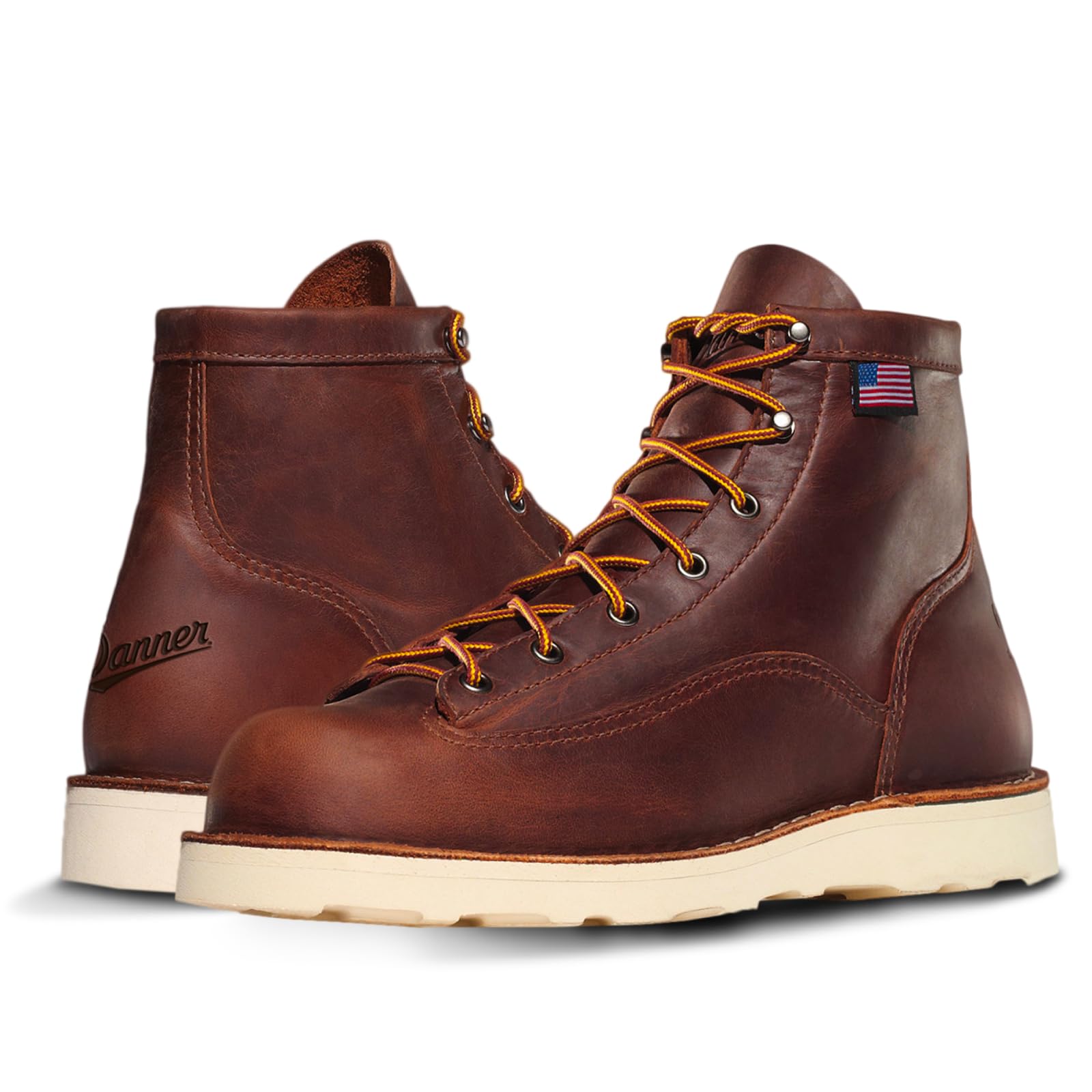
The Danner Bull Run 6” uses a stitch-down construction method that wraps the upper leather around the midsole and stitches it from the inside, creating a wider platform that feels more stable than many welted boots. The 6-inch height is lower than most work boots, but the full-grain leather is thick enough to provide abrasion resistance. The non-marking wedge outsole is replaceable, and the entire boot is recraftable through Danner’s factory service.
Users who work in warehouses or trades that require walking on finished floors appreciate the non-marking sole that leaves no scuffs. The 3-density cushion footbed is firmer than the Poron in Thorogood but still reduces fatigue over long shifts. The break-in period is longer than average—some users report a month or more before the stiff leather fully relaxes at the ankle and tongue.
The tongue has a tendency to shift sideways during wear, and the speed hooks on the upper eyelets are smaller than those on competing boots, which can make lacing slower. Ordering a half-size down from your sneaker size is necessary for a correct fit. Despite these quirks, the Bull Run remains one of the lightest fully recraftable options available.
Why it’s great
- Stitch-down construction provides a stable platform
- Non-marking wedge sole ideal for finished floors
- Fully recraftable through Danner factory
Good to know
- Break-in period can exceed one month
- Tongue tends to shift sideways during wear
- Size down half for correct fit
7. Ariat Sierra Shock Shield Patriot Composite Toe

The Ariat Sierra Shock Shield Patriot is a composite-toe boot that targets workers who need toe protection without the weight of steel. The composite cap is non-metallic, meaning it does not conduct cold or trigger metal detectors, making it a practical choice for warehouse and airport environments. The Shock Shield technology uses a gel heel insert that reduces impact from heel strikes on hard floors.
Users report that this boot lasts about 18 months under moderate warehouse or construction use, with the composite toe holding up well against impacts. The leather is full-grain but not as thick as the premium-tier options, which keeps the weight down but reduces puncture resistance. The boot is water-resistant for light rain but not fully waterproof, so standing water will soak through over time.
The fit runs slightly narrow compared to other Ariat models, so ordering a wide width for a standard D-width foot might be necessary. The outsole provides good traction on concrete and smooth surfaces but struggles in loose gravel or mud. For the price point, it offers a solid introduction to USA-made work boot features without a premium investment.
Why it’s great
- Composite toe is lighter and non-conductive
- Gel heel insert reduces impact on hard floors
- Good entry point for domestic work boots
Good to know
- Leather thickness is less than premium options
- Not fully waterproof; avoid standing water
- Runs narrow; consider ordering wide width
8. Ariat Groundbreaker Wide Square Steel Toe
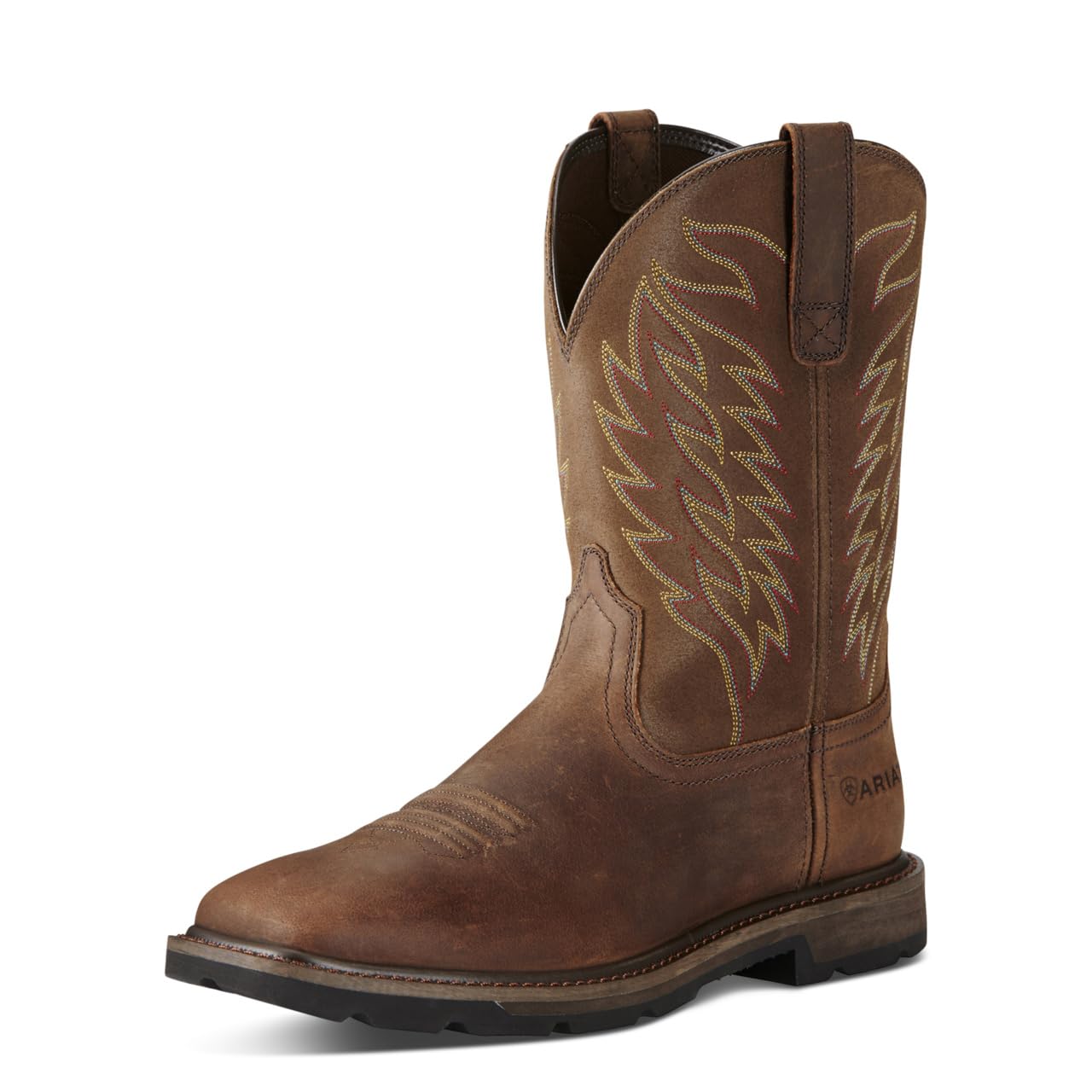
The Ariat Groundbreaker men’s wide square toe steel toe boot is a western-style work boot aimed at the value-conscious buyer who still wants domestic craftsmanship. The wide square toe provides more space than traditional tapered toes, which is beneficial for workers who need to kneel frequently without discomfort from the toe cap. The Duratread outsole is oil- and slip-resistant, making it suitable for warehouse and light construction environments.
Owners who work in rope access or maintenance report that the boot holds up for about 14 months before the sole padding starts to shift, which is a known weak point on this model. The water resistance is sufficient for occasional splashes but not reliable for full immersion. The steel toe cap does not pinch the toes as severely as some other western styles, but the heel can feel slightly loose if not laced tightly.
The break-in period is relatively short compared to stiff leather options, and the boot remains comfortable for all-day wear once the leather softens. The western pull-on design is convenient for quick changes, but it offers less ankle support than lace-up boots of similar height. For workers who prioritize a traditional aesthetic and a low price point, the Groundbreaker delivers solid value.
Why it’s great
- Affordable domestic boot with steel toe protection
- Duratread outsole is oil- and slip-resistant
- Wide square toe provides good toe room
Good to know
- Sole padding can shift after about a year of use
- Heel may feel loose for some foot shapes
- Not fully waterproof; water resistant only
9. Wolverine Rancher Claw Steel-Toe Wellington
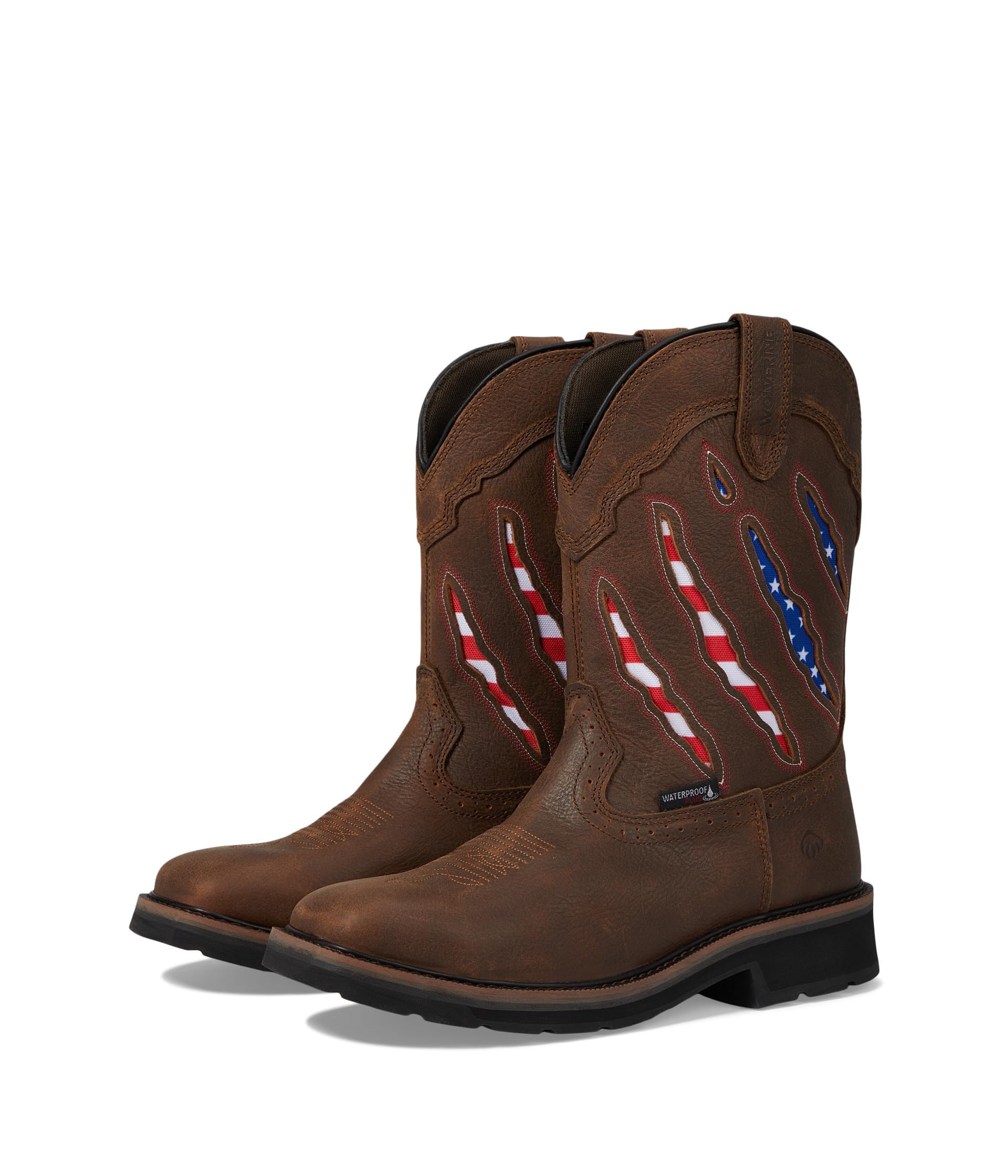
The Wolverine Rancher Claw steel-toe Wellington is the most affordable option on this list and serves as an entry point for workers who need basic protection without investing in high-end construction. The pull-on design makes it easy to slip on and off, and the vented shaft is a unique feature that allows air circulation inside the boot—a significant benefit in hot, humid climates like Florida where heat buildup is a common issue.
Users report that the boot is comfortable from the first wear, with insoles that are softer than typical work boot offerings. The steel toe provides adequate protection for yard work, light construction, and truck driving. The waterproofing holds up in light rain and wet grass, but the vents mean the boot is not suitable for deep water crossings. The leather scratches easily, and the dark color shows scuffs prominently, though the structure remains sound.
The long-term durability is the main trade-off at this tier. Owners who have gone through multiple pairs note that the boot wears out faster than premium options, but the lower initial cost makes replacement less painful. The Wellington style lacks ankle support for heavy lifting or uneven terrain, so it is best suited for flat, low-risk environments where convenience and breathability are priorities.
Why it’s great
- Vented shaft provides airflow in hot climates
- Comfortable insoles from first wear
- Easy pull-on design for quick changes
Good to know
- Leather scratches and scuffs easily
- Not suitable for deep water due to vents
- Wellington style offers less ankle support
FAQ
How long do American made work boots typically last under daily use?
Should I size down when buying Thorogood or Red Wing boots?
Can I resole any American made work boot?
Final Thoughts: The Verdict
For most users, the best american made work boots winner is the Thorogood American Heritage 8″ because it combines a Goodyear storm welt, a Poron shock-absorbing footbed, and a slip-resistant MAXWear wedge at a price that undercuts premium options. If you want the thickest full-grain leather and a boot that can be passed down after resoling, grab the Red Wing Heritage 8146. And for waterproof protection in extreme environments or for wide feet, nothing beats the Irish Setter Two Harbors 11″.

Mo Maruf
I created WellFizz to bridge the gap between vague wellness advice and actionable solutions. My mission is simple: to decode the research and give you practical tools you can actually use.
Beyond the data, I am a passionate traveler. I believe that stepping away from the screen to explore new environments is essential for mental clarity and physical vitality.