Our readers keep the lights on and my smoothie glass nicely filled. As an Amazon Associate, I earn from qualifying purchases.
Managing your cardiovascular health effectively starts with accurate, consistent data you can trust—not just a single reading in a clinical setting. The right at-home monitor becomes your silent partner, revealing the true story of your blood pressure throughout the day and empowering informed conversations with your doctor.
I’m Mohammad Maruf — the founder and writer behind WellFizz. Over years of analyzing market trends and deep-diving into clinical validation data, I’ve developed a method for cutting through marketing claims to identify which specs and features truly translate to reliable, actionable health tracking at home.
This guide is the result of meticulous research into dozens of models, comparing core technologies and real-world user feedback to help you find a monitor that fits your lifestyle and provides peace of mind. The goal is to equip you with the knowledge to select a dependable best ambulatory blood pressure monitor that delivers clinical-grade accuracy in the comfort of your home.
How To Choose The Best Ambulatory Blood Pressure Monitor
Selecting a monitor is more than picking the first well-rated option. It’s about matching the device’s capabilities to your specific health monitoring goals, physical needs, and tech preferences. Focus on these core pillars to make a confident choice.
Cuff Type and Placement: Arm vs. Wrist
This is the most significant decision. Upper arm monitors, with the cuff placed on the bicep, are considered the gold standard for at-home use. They measure pressure closer to the heart and are generally more accurate and consistent, especially across different body positions. Wrist monitors offer portability and can be easier for those with mobility limitations or very large arms, but they are highly sensitive to positioning; holding your wrist even slightly below heart level can skew readings dramatically.
Validation and Accuracy
Look for monitors that mention clinical validation or adherence to standards from organizations like the ESH (European Society of Hypertension) or AAMI (Association for the Advancement of Medical Instrumentation). While not all affordable models are formally validated, brands with a long history in medical devices often invest in this rigorous testing. User reviews comparing readings to doctor’s office results are a valuable secondary indicator.
Data Tracking and Connectivity
Consider how you’ll track trends. Basic models with 60-120 memory slots are sufficient for manual logging. If you prefer digital tracking, seek Bluetooth/Wi-Fi models that sync with a smartphone app, automatically creating charts and reports you can share with your doctor. This seamless data flow reduces manual entry errors and provides a clearer long-term picture.
Ease of Use and Accessibility
A good monitor should empower you, not frustrate you. Features like a backlit display, voice-guided instructions or results, one-button operation, and a self-explanatory cuff (often with a D-ring or clear alignment guide) are crucial for consistent, independent use. For shared use in a household, dual-user memory is a essential feature.
Quick Comparison
On smaller screens, swipe sideways to see the full table.
| Model | Type | Best For | Key Feature | Amazon |
|---|---|---|---|---|
| Greater Goods Upper Arm Monitor | Upper Arm | Reliable daily tracking | Backlit display, Wirecutter recommended | Amazon |
| Omron 5 Series | Upper Arm | Clinical-grade accuracy | #1 Doctor Recommended brand | Amazon |
| iHealth Track Smart | Upper Arm | Tech-savvy users | Bluetooth sync, color-coded display | Amazon |
| Withings BPM Connect | Upper Arm | Seamless health integration | Wi-Fi/Bluetooth, 6-month battery | Amazon |
| Konquest KBP-2704A | Upper Arm | Family households | 4-user memory, WHO indicator | Amazon |
| Paramed Upper Arm Monitor | Upper Arm | Easy-to-read displays | Voice broadcast, complete kit | Amazon |
| Oklar Rechargeable Wrist | Wrist | Portability & charging | Rechargeable battery, voice guide | Amazon |
| Alcedo Blood Pressure Monitor | Upper Arm | Users preferring voice feedback | Talking function, FSA/HSA eligible | Amazon |
| MMIZOO Wrist Monitor | Wrist | Audible alerts & guidance | Voice broadcast, high-pressure alert | Amazon |
| PARAMED Wrist Monitor | Wrist | Compact travel use | Carrying case included, 90 memory | Amazon |
| AILE Upper Arm Monitor | Upper Arm | Budget-conscious value | Large cuff range, 198 total memory | Amazon |
In‑Depth Reviews
1. Greater Goods Upper Arm Blood Pressure Monitor
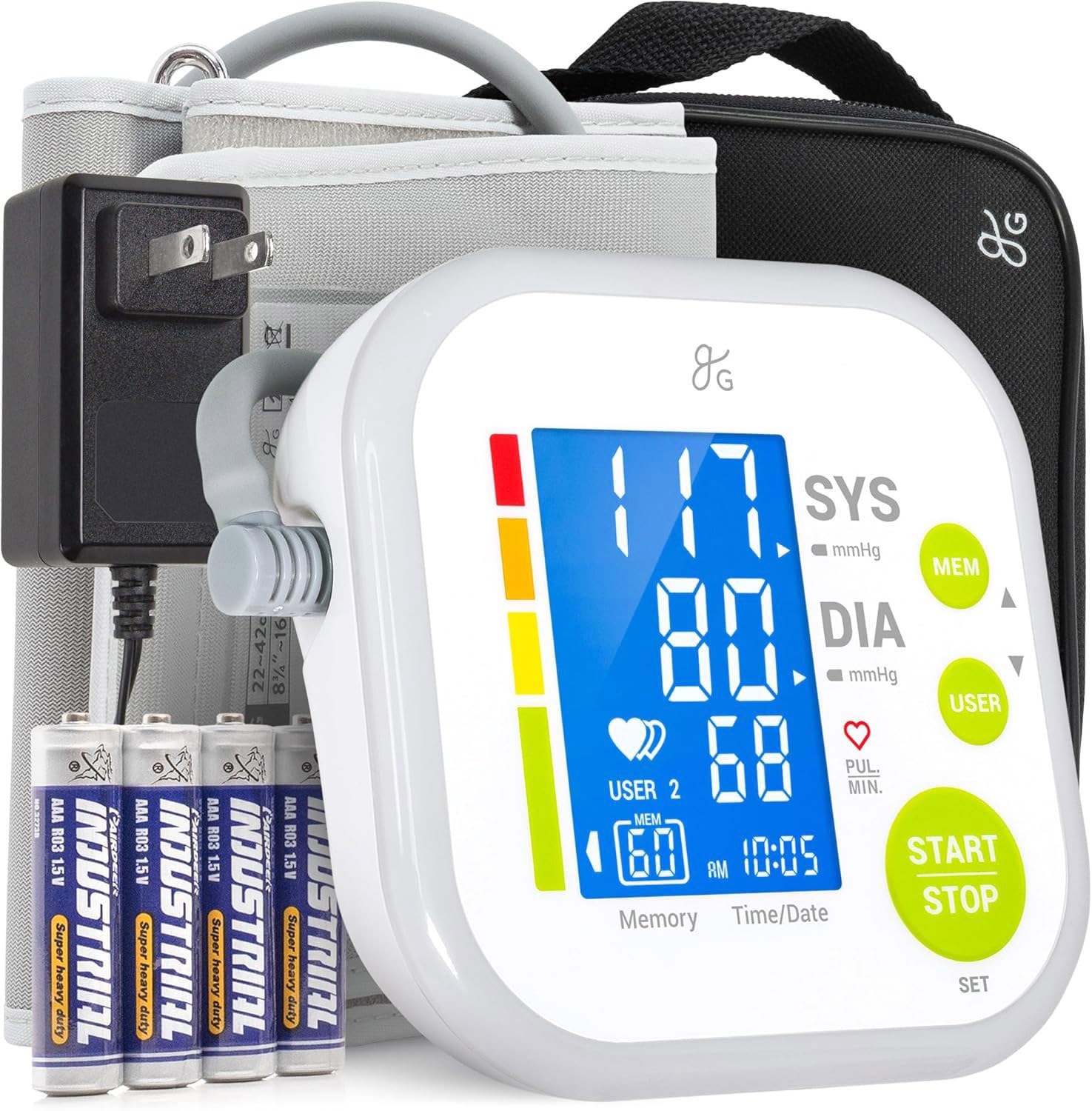
The Greater Goods monitor stands out for delivering exceptional reliability and user-friendly design at a mid-range point. It’s a five-time selection by The New York Times Wirecutter, a testament to its consistent accuracy and ease of use, which is exactly what you need for trustworthy daily tracking. The one-button operation removes all guesswork, making the process straightforward for users of all ages.
Its bright backlit display is a standout feature, providing clear readability in any lighting condition. The adjustable cuff includes a helpful alignment guide to ensure proper placement, which is critical for accuracy. With storage for 60 readings per user (120 total), two people can easily track their trends without any complex setup or app dependency.
The complete kit includes both a wall adapter and batteries, offering flexibility for use at home or on the go. For those seeking a no-nonsense, highly accurate upper arm monitor that has been vetted by independent experts, this model represents an outstanding balance of performance and value.
Why it’s great
- Independently recommended for accuracy and consistency.
- Extremely simple one-button operation with a clear backlit screen.
- Comes with both plug-in power and battery options for versatility.
Good to know
- The included cuff is quite long, which can be slightly cumbersome for those with smaller arms.
- Memory navigation scrolls in one direction only, which some users find less intuitive.
2. Omron 5 Series Upper Arm Blood Pressure Monitor

When your primary concern is uncompromising clinical accuracy, the Omron 5 Series is the benchmark. Omron is the #1 doctor and pharmacist recommended brand, with over 40 years of expertise in the field. This model is engineered for precision, offering reliable readings that healthcare professionals trust for home monitoring.
The TrueRead technology displays the average of your last three readings taken within 10 minutes, helping to account for natural variability and provide a more stable result. The contoured ComFit cuff is a highlight, designed to comfortably and securely fit standard and large arms (9″ to 17″) without needing to be fiddled with excessively. The ability to store 50 readings for each of two users provides ample tracking capacity.
This is a premium monitor that focuses on doing the fundamentals perfectly. It lacks smart features like Bluetooth, by design, to provide a straightforward, medically-focused experience. For anyone managing hypertension under a doctor’s guidance, this monitor delivers the dependable data required for effective treatment decisions.
Why it’s great
- Industry-leading reputation for clinical accuracy and reliability.
- Comfortable, wide-range D-ring cuff that’s easy to self-apply.
- Advanced averaging feature for a more representative single reading.
Good to know
- A premium investment focused on core accuracy over smart features.
- Does not include an AC adapter, relying on batteries (included) for power.
3. iHealth Track Smart Upper Arm Monitor
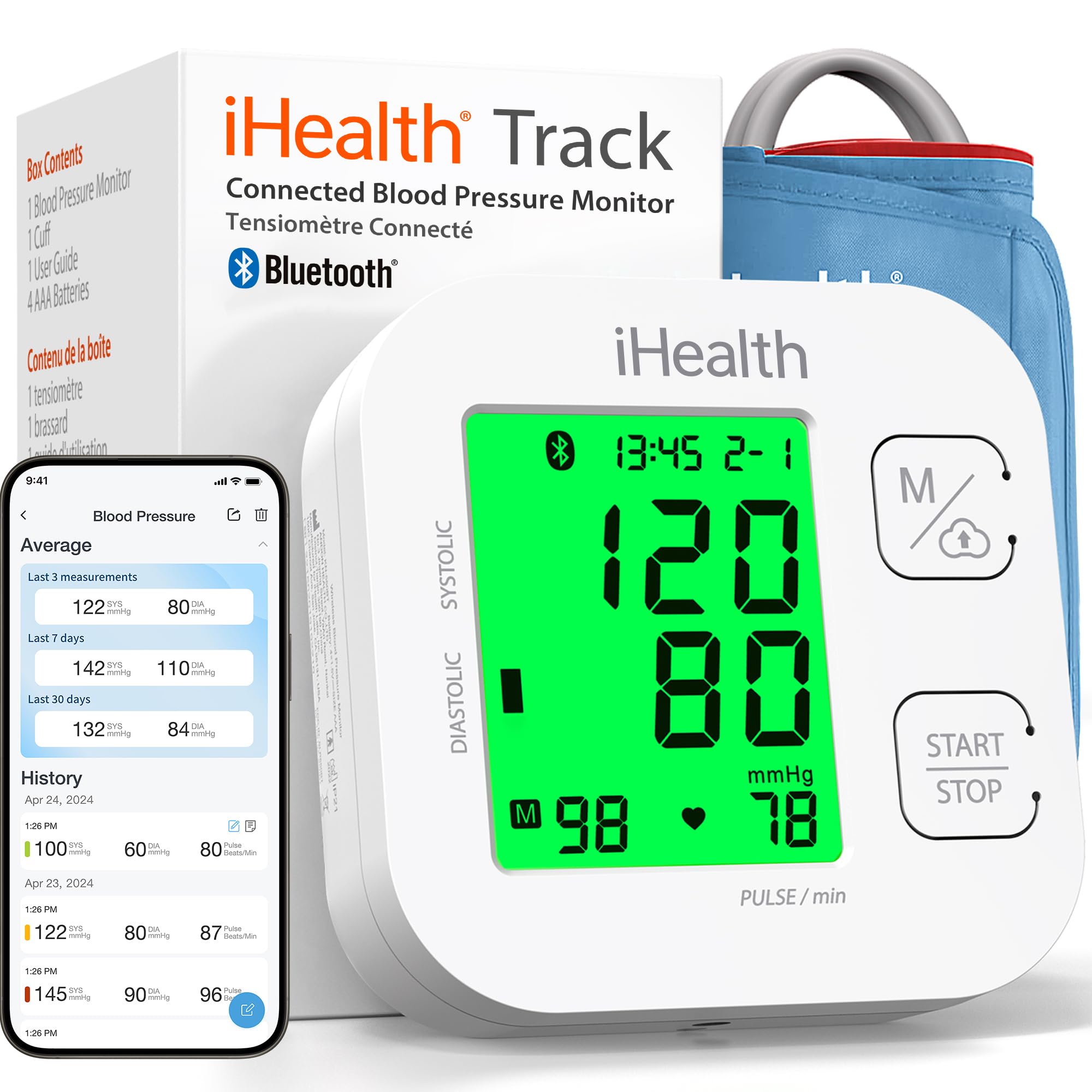
For those who want their health data seamlessly integrated into their digital life, the iHealth Track Smart is a compelling option. It pairs robust hardware with a comprehensive app, automatically syncing each reading via Bluetooth to your smartphone. This creates effortless long-term tracking, with unlimited storage and easy-to-read graphs within the iHealth app.
The monitor itself features a large, multi-color backlit display that instantly indicates your reading status with green (optimal), yellow (elevated), or red (high) zones. It meets ESH 2010 performance standards and includes irregular heartbeat detection. The wide-range cuff fits most adults comfortably, and the two-button operation keeps things simple.
While the app provides powerful tracking, it’s worth noting that the monitor functions perfectly well as a standalone device if you prefer not to use it. This flexibility, combined with proven accuracy and smart features, makes it an excellent choice for tech-savvy users or anyone wanting to simplify data sharing with their doctor.
Why it’s great
- Automatic Bluetooth sync to a full-featured health app for trend analysis.
- Instant visual feedback via a color-coded, backlit display.
- Clinically validated accuracy with irregular heartbeat detection.
Good to know
- The companion app includes advertisements, which some users find intrusive.
- Runs on AAA batteries (included) without a rechargeable or plug-in option.
4. Withings BPM Connect

The Withings BPM Connect represents the pinnacle of connected health design. This FDA-cleared monitor syncs data automatically via both Wi-Fi and Bluetooth to the excellent Health Mate app, meaning readings appear on your phone even if you’re not in the same room. Its sleek, compact design houses a long-lasting rechargeable battery that can last up to six months on a single charge.
Simplicity is key: a single button starts the measurement, and results are shown on a small, color-coded LED display on the monitor itself. The app is where it shines, offering deep insights, easy sharing of PDF reports with healthcare providers, and integration with Apple Health and Google Fit. The cuff is comfortable and stores neatly by wrapping around the monitor body.
This is a premium choice for users fully invested in a digital health ecosystem who value minimalist design and the utmost convenience in data management. It removes all friction from the logging process, providing a polished and modern monitoring experience.
Why it’s great
- Seamless dual Wi-Fi/Bluetooth sync; data uploads automatically.
- Excellent rechargeable battery life, eliminating battery purchases.
- Superb app with comprehensive tracking and easy doctor sharing.
Good to know
- A high-end investment reflecting its advanced connectivity and design.
- The small onboard display can be difficult for some to read clearly.
5. Konquest KBP-2704A Automatic Monitor

The Konquest KBP-2704A is an excellent solution for households where multiple family members need to track their blood pressure. Its standout feature is the ability to store readings for up to four separate users, a capacity that exceeds most competitors. The bright backlit screen clearly displays all vital information at once, including a helpful World Health Organization (WHO) blood pressure classification indicator.
It includes irregular heartbeat detection and comes with a complete kit: batteries, a storage case, and a wide-range cuff. Users report that the cuff is comfortable and the device is durable, with some professional users noting it withstands frequent daily use over years. The one-touch operation makes it accessible for everyone.
If you need a workhorse monitor that can manage the data of several adults without connecting to an app, this model offers exceptional utility and readability. Its balance of features, capacity, and mid-range positioning makes it a practical and reliable choice for family health management.
Why it’s great
- Extensive 4-user memory, ideal for multi-person households.
- Clear backlit display with a useful WHO blood pressure scale.
- Noted for durability and consistent performance in real-world use.
Good to know
- The display can show a lot of data at once, which may feel busy to some.
- Inflation can feel firm, which is typical but worth noting for sensitivity.
6. Paramed Upper Arm Monitor
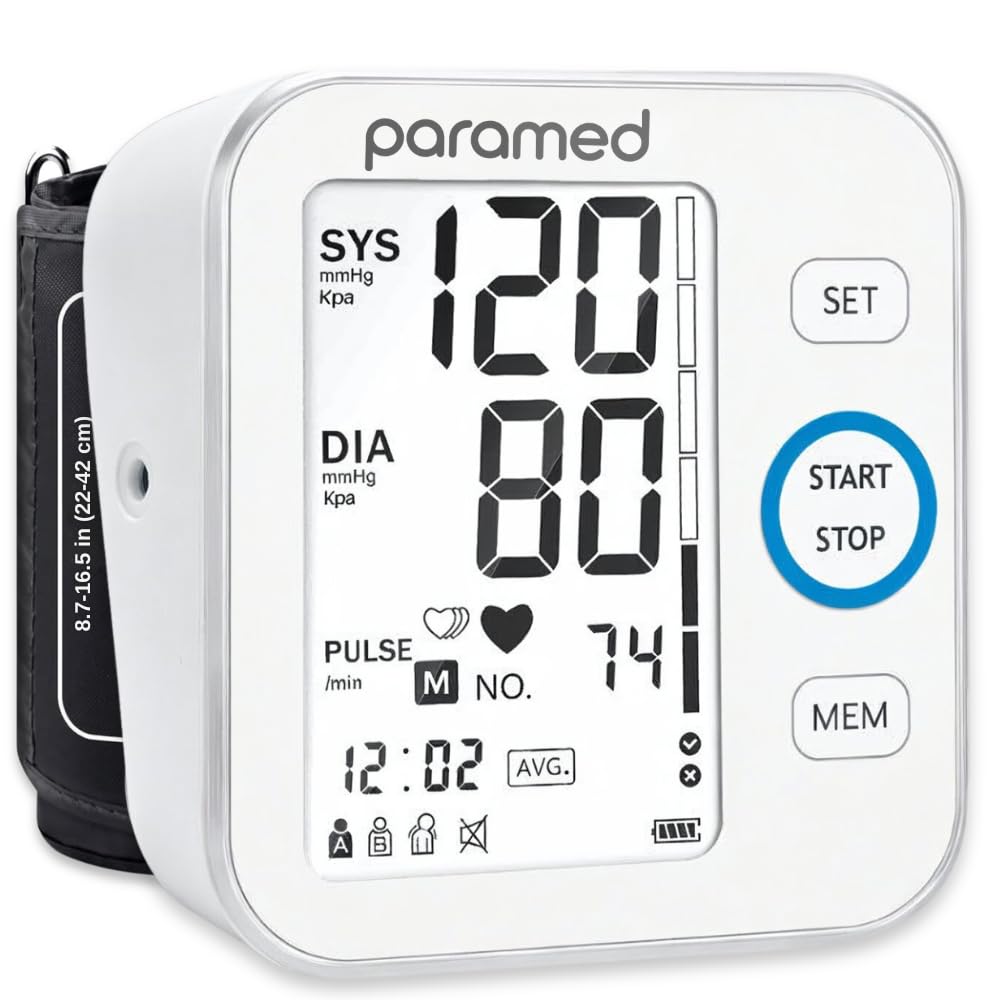
The Paramed upper arm monitor focuses on accessibility and ease of use, particularly through its voice guidance feature. It provides spoken instructions and announces your results, which is invaluable for users with visual impairments or anyone who prefers auditory confirmation. The voice can be turned off for a silent mode, offering flexibility.
It boasts a large, easy-to-read LCD screen with oversized numbers and big buttons. The self-checking universal cuff helps ensure correct placement, and the device stores up to 120 readings across two user profiles. The package is notably complete, including four AA batteries and a dedicated carrying bag right in the box.
This monitor is a strong mid-range contender that doesn’t skimp on included accessories. Its combination of a clear visual display and optional voice feedback makes it a very approachable and user-friendly device for daily monitoring, especially for those who appreciate extra guidance.
Why it’s great
- Helpful voice broadcast feature that can be turned on or off.
- Exceptionally clear, large-numbered display and simple controls.
- Truly complete kit with batteries and storage bag included.
Good to know
- The soothing music played during measurement can’t be changed, only muted.
- Some users note the display isn’t as bright as a backlit screen.
7. Oklar Rechargeable Wrist Monitor

For those who need or prefer a wrist monitor, the Oklar model adds significant convenience with its built-in rechargeable battery and USB-C charging. This eliminates the ongoing cost and hassle of replacing batteries. It also features a clear voice broadcast function and a large LED backlit display, making it usable in various conditions.
It stores an impressive 240 readings for two users, providing ample memory for tracking. The adjustable wrist cuff fits a wide range, and the carrying case makes it highly portable. Users find it much easier to put on independently than some upper arm cuffs, which is a major advantage for those with limited mobility or dexterity.
As with all wrist monitors, proper positioning at heart level is absolutely critical for accuracy. If you are disciplined about your posture during measurement and value portability and rechargeability, this Oklar monitor offers a strong set of features in the wrist category.
Why it’s great
- Convenient USB-C rechargeable battery, no disposable batteries needed.
- High memory capacity and clear backlit display with voice guidance.
- Very portable and easy to put on without assistance.
Good to know
- Wrist monitors are inherently more sensitive to arm position than upper arm models.
- Accuracy is highly dependent on holding the wrist precisely at heart level.
8. Alcedo Blood Pressure Monitor

The Alcedo monitor is designed with clear auditory feedback in mind. Its live-voice broadcast announces your blood pressure levels, and the volume can be adjusted to suit your needs. This feature, combined with a large LCD screen, makes it highly accessible. It’s also FSA/HSA eligible, allowing you to use pre-tax healthcare funds for the purchase.
It includes useful accuracy-enhancing features like self-checking cuff positioning, movement detection, and the ability to automatically average three consecutive readings for a more precise result. The cuff is comfortable and fits a standard range of arm sizes, and it stores 120 readings for each of two users.
This is a solid upper arm choice for users who rely on or prefer spoken results. Its eligibility for medical spending accounts adds to its value, making it a practical option for those looking to utilize their healthcare benefits for a reliable home monitoring tool.
Why it’s great
- Clear talking function with adjustable volume for accessibility.
- FSA/HSA eligible purchase, offering potential cost savings.
- Includes averaging and positioning guides for better accuracy.
Good to know
- Some users have reported inconsistencies in readings, emphasizing the need for perfect cuff placement.
- The cuff may run slightly small for those at the top end of its stated range.
9. MMIZOO Wrist Blood Pressure Monitor
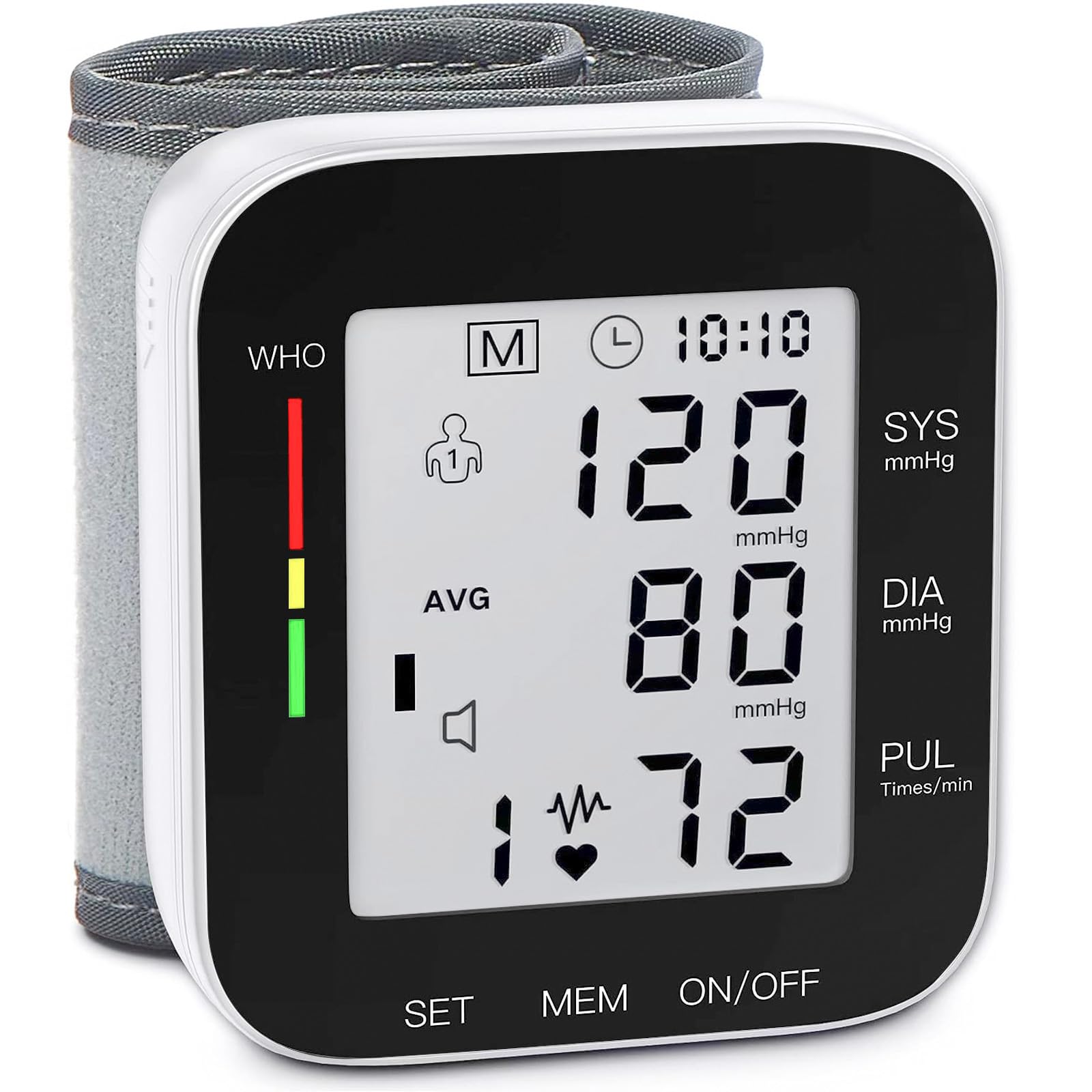
The MMIZOO wrist monitor provides a full-featured experience in a compact form. It guides you through the measurement process with voice instructions and broadcasts your final results. A particularly useful feature is its high blood pressure alert, which displays a warning symbol on the screen if your reading is beyond the normal level.
It supports two users with 99 memory slots each and comes with its own carrying case, enhancing its portability. The large LCD display is easy to read, and the cuff is adjustable to fit most wrists. For individuals with very slender arms who find standard upper arm cuffs too loose, a wrist monitor like this can sometimes provide a more secure fit.
As a dedicated wrist device, it performs well within the limitations of the form factor. The added voice guidance and alert system make it a thoughtful choice for users who want an extra layer of feedback from their portable monitor.
Why it’s great
- Comprehensive voice guidance and high-pressure visual alerts.
- Compact and portable with an included protective case.
- Can be a good fit for those with very small upper arms.
Good to know
- The voice cannot be turned off, which some users find annoying.
- Wrist positioning is critical, and accuracy may vary compared to arm cuffs.
10. PARAMED Automatic Wrist Monitor

This PARAMED wrist monitor is built for simplicity and portability. It’s a straightforward device with a large LCD display, 90-reading memory, and irregular heartbeat detection. The package includes a carrying case and batteries, so it’s ready to use straight out of the box, making it a potential candidate for a travel monitor or a secondary quick-check device.
Its universal-sized cuff and compact design mean it takes up minimal space. For users who have struggled with the bulk or complexity of upper arm cuffs, this offers an alternative that is undeniably easier to slip on and start. Many users report it’s fast and convenient for periodic checks.
The primary trade-off, common to all wrist monitors, is the potential for variable accuracy based on positioning. It serves well as a compact tool for tracking general trends on the go, but for diagnostic-level accuracy at home, an upper arm model is generally recommended.
Why it’s great
- Extremely compact and portable with everything included to start.
- Simple operation with a clear display and basic memory function.
- Easy to put on quickly without assistance.
Good to know
- Readings can be inconsistent and sensitive to wrist height and posture.
- More suitable for trend spotting than for highly precise clinical monitoring.
11. AILE Upper Arm Monitor
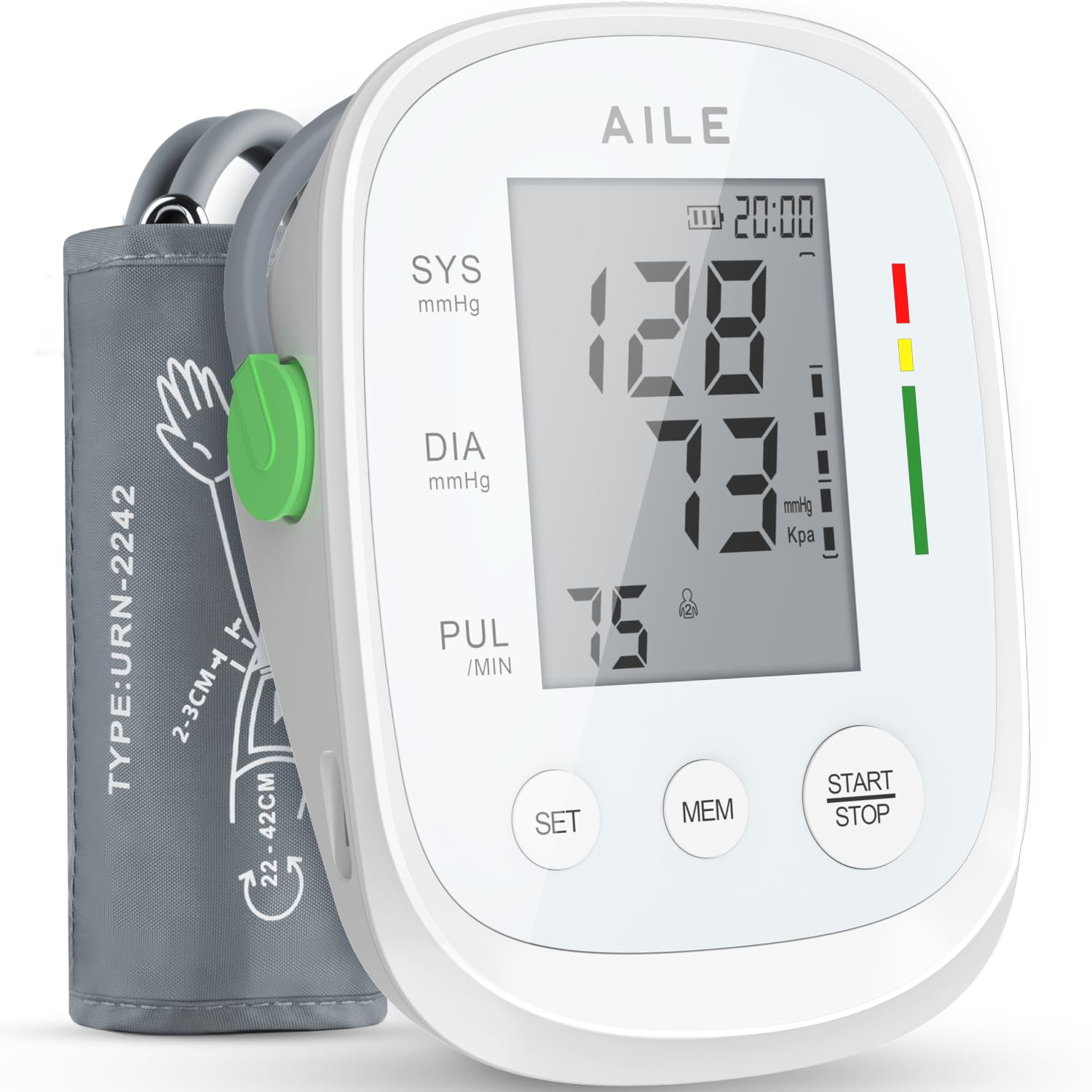
The AILE monitor represents a compelling entry-level option, offering a surprisingly robust feature set for a budget-friendly device. It includes a large, adjustable cuff that accommodates a wide range of arm sizes and boasts an extensive memory capacity—storing 99 readings for each of two users, for a total of 198 measurements.
It uses a Dutch chipset and claims a high degree of accuracy, which is supported by many user reviews comparing it favorably to readings taken in clinical settings. The large LED screen is designed for easy reading, and the one-button automatic operation keeps the process simple. For a household needing basic, reliable tracking without any advanced features, it covers the essentials effectively.
While it may lack some of the refinements of higher-end models, such as a backlit display or advanced connectivity, its core performance and substantial memory make it a standout value. It’s a solid proof-of-concept that effective home monitoring doesn’t necessarily require a significant investment.
Why it’s great
- Exceptional value with a very large memory capacity for two users.
- Wide-range cuff and simple one-button operation.
- Many users report strong accuracy compared to clinical readings.
Good to know
- An entry-level model without extras like a backlight or voice guidance.
- Build quality and long-term durability may not match premium brands.
Understanding the Specs
Cuff Placement & Accuracy
Upper arm cuffs measure pressure at the brachial artery, closer to the heart, which is the standard for clinical accuracy. Wrist cuffs measure at the radial artery; while convenient, they are highly sensitive to positioning—holding your wrist even an inch above or below heart level can skew results by 10 mmHg or more. For consistent, reliable data, an upper arm monitor is strongly recommended.
Memory & Data Tracking
Memory capacity dictates how much history you can review on the device itself. Basic models offer 60-120 total readings, while advanced ones store hundreds. For digital tracking, Bluetooth/Wi-Fi sync automates logging into an app, creating trends and shareable reports. Consider whether you prefer manual logging in a notebook or the seamless, graph-based insight of a connected app.
FAQ
Are wrist blood pressure monitors accurate?
How often should I calibrate my home monitor?
What is irregular heartbeat detection?
Can one monitor be used by two people?
Final Thoughts: The Verdict
For most people, the best ambulatory blood pressure monitor winner is the Greater Goods Upper Arm Monitor because it delivers Wirecutter-recommended accuracy, a superb backlit display, and hassle-free operation at a mid-range point. If you want unmatched clinical trust and a doctor-recommended brand, grab the Omron 5 Series. And for seamless digital integration and app-based tracking, nothing beats the connected convenience of the Withings BPM Connect.

Mo Maruf
I created WellFizz to bridge the gap between vague wellness advice and actionable solutions. My mission is simple: to decode the research and give you practical tools you can actually use.
Beyond the data, I am a passionate traveler. I believe that stepping away from the screen to explore new environments is essential for mental clarity and physical vitality.