Our readers keep the lights on and my smoothie glass nicely filled. As an Amazon Associate, I earn from qualifying purchases.
Choosing the right book on alternative medicine can feel overwhelming, with shelves packed full of vague promises and overly complex guides. The right resource doesn’t just list herbs—it empowers you with the confidence to use them safely and effectively, bridging ancient wisdom with practical, modern application.
I’m Mohammad Maruf — the founder and writer behind WellFizz. My process involves deep market research, analyzing thousands of data points from clinical sources, reader feedback, and technical specifications to separate truly actionable guides from the rest. I focus on how the information is structured for real-world use, not just theory.
This guide distills that research, evaluating books on their instructional clarity, safety protocols, and the practical utility of their remedies, so you can find a trusted companion for your wellness journey. Our goal is to help you find a reliable guide for navigating the expansive world of best alternative medicine books.
How To Choose The Best Alternative Medicine Books
Not all herbals are created equal. The best book for you depends entirely on your goals, knowledge level, and how you plan to use it. A gorgeous encyclopedia is useless if you need step-by-step instructions for a simple tea, while a basic recipe book might frustrate someone seeking deep, scientific understanding.
Identify Your Skill Level & Goals
Are you completely new and want to make a simple salve? Look for a “beginner’s guide” with clear photos and foundational techniques. If you’re a seasoned enthusiast or a prepper building a robust natural pharmacy, you’ll need a detailed dispensatory or clinical guide covering advanced preparations and specific protocols for resistant infections. For those interested in wild food and medicine, a dedicated foraging book with impeccable plant identification is non-negotiable.
Evaluate the Book’s Structure and Authority
Check how the information is organized. Is it an A-Z of herbs, a guide sorted by body systems (digestive, nervous), or a list of common ailments? System-based books help you understand root causes, while ailment-based ones are quicker for reference. Always consider the author’s background. Books from established, respected herbalists with decades of practice or clinical experience generally offer more reliable, nuanced, and safety-conscious advice.
Prioritize Safety and Practicality
A trustworthy guide will clearly warn about contraindications, herb-drug interactions, and proper dosing. It should emphasize consulting with a healthcare provider, especially for serious conditions. Look for books that don’t just describe herbs but teach you *how* to transform them—with detailed instructions for teas, tinctures, oils, and salves. The inclusion of sourcing tips, seasonal harvest guides, and ethical foraging principles also marks a thoughtful, practical resource.
Quick Comparison
On smaller screens, swipe sideways to see the full table.
| Model | Type | Best For | Key Feature | Amazon |
|---|---|---|---|---|
| Wild Remedies | Foraging Guide | Hands-on learners & foragers | Seasonal structure with ID tips & recipes | Amazon |
| The Modern Herbal Dispensatory | Medicine-Making Guide | Advanced home apothecary | Detailed extraction techniques & dosing | Amazon |
| Herbal Antibiotics, 2nd Ed. | Clinical Reference | Addressing drug-resistant bacteria | Science-backed protocols for serious infection | Amazon |
| Encyclopedia of Herbal Medicine | Comprehensive Reference | Broad visual reference & study | 550+ herbs with stunning photography | Amazon |
| Body into Balance | Holistic Guide | Root-cause, system-based healing | Focus on adaptogens & holistic self-care | Amazon |
| Prescription for Nutritional Healing | A-Z Reference | Drug-free remedies for ailments | Integrates vitamins, minerals, herbs & supplements | Amazon |
| The Herbal Apothecary | Herb Profile Guide | Quick-reference for 100 key herbs | Concise profiles with preparation methods | Amazon |
| Rosemary Gladstar’s Medicinal Herbs | Beginner’s Guide | First-time herbalists | 33 herbs with clear, foundational techniques | Amazon |
| DK Encyclopedia of Herbal Medicine | Visual Encyclopedia | Visual learners & home reference | DK’s signature visual layout with 550 herbs | Amazon |
| Herbal Antibiotics by Mary Jones | Introductory Guide | Understanding herbal alternatives | Focus on 45 common herbal antibiotics | Amazon |
| The Practical Herbal Medicine Handbook | Recipe Handbook | Entry-level home remedies | Large collection of straightforward recipes | Amazon |
In‑Depth Reviews
1. Wild Remedies: How to Forage Healing Foods and Craft Your Own Herbal Medicine

Rosalee de la Forêt and Emily Han have created something special with Wild Remedies. This isn’t just another herbal; it’s an immersive, seasonal journey that reconnects you with the landscape. The book is masterfully organized by spring, summer, autumn, and winter, guiding you to what’s growing around you right now and how to use it. This structure makes the vast world of plant medicine feel immediate, accessible, and deeply relevant.
Each featured plant—like dandelion, plantain, and chickweed—receives a generous section with beautiful photographs, detailed identification tips (including crucial look-alikes), and both medicinal and culinary uses. The recipes are the highlight, ranging from a stunning violet vinegar to a practical chickweed pesto, framed within the context of holistic self-care and ecosystem respect. The authors emphasize ethical harvesting and building a relationship with your local environment.
What sets this book apart is its engaging, workshop-like quality. It includes journaling prompts and reflective exercises that encourage you to observe and connect, transforming you from a passive reader into an active participant. It’s the perfect bridge between appreciating nature and practically applying its gifts, making it an ideal choice for anyone wanting to start foraging or deepen their existing practice in a thoughtful, safe, and delicious way.
Why it’s great
- Exceptional seasonal format makes learning and foraging intuitive.
- Stunning photography and clear ID tips prioritize safety and confidence.
- Beautifully blends medicinal recipes with tasty, approachable culinary uses.
- Fosters a deep, ethical connection to the local environment.
Good to know
- Geared toward common North American plants; regional applicability may vary.
- Focused on a curated list of plants rather than being an exhaustive encyclopedia.
2. The Modern Herbal Dispensatory: A Medicine-Making Guide
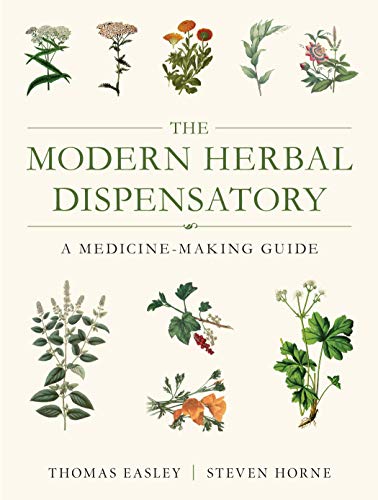
For the serious student or the home herbalist ready to graduate from simple teas, The Modern Herbal Dispensatory is the definitive textbook. Thomas Easley and Steven Horne have compiled a remarkably thorough guide focused on the how of herbal medicine. This book assumes you have or are acquiring herbs and want to transform them into effective, reliable medicines with precision.
The first half is a masterclass in preparation methods, covering everything from basic infusions and decoctions to sophisticated fluid extracts, glycerites, and even advanced techniques like percolation tincturing. The instructions are clear, detailed, and grounded in both tradition and modern understanding. The second half is a robust materia medica with practical information on each herb’s uses, dosage ranges, and contraindications, which is invaluable for formulating your own remedies.
This is not a book for casual browsing or plant identification—there are few pictures. Its strength is in its depth and authority as a technical manual. If your goal is to build a sophisticated home apothecary, understand extraction principles, and create potent, tailored medicines, this is an indispensable resource that you will reference for years.
Why it’s great
- Unmatched depth on medicine-making techniques and extraction science.
- Provides crucial dosage information for clinical-level precision.
- Spiral binding allows the book to lay flat for easy use in the kitchen or workshop.
- Respected as a core text for many herbalism students and practitioners.
Good to know
- Very text-heavy with minimal imagery, not ideal for visual learners or beginners.
- The advanced protocols can be complex and intimidating for newcomers.
3. Herbal Antibiotics, 2nd Edition: Natural Alternatives for Treating Drug-resistant Bacteria

Stephen Harrod Buhner’s work stands in a category of its own. This is not a general home remedy book; it’s a meticulously researched, urgent manifesto and protocol guide for the age of antibiotic resistance. Buhner first explains the frightening science of how bacteria outsmart pharmaceuticals, then presents herbal alternatives like cryptolepis, sida, and juniper with robust evidence for their efficacy.
The book provides specific, detailed protocols for using these herbs to address serious conditions like MRSA, Lyme disease, and resistant UTIs. Buhner approaches herbs as sophisticated, synergistic medicines, detailing not just which herb to use, but how to combine them for systemic support and how to dose them effectively. The tone is both alarming and empowering, giving you a tangible plan where conventional medicine may be failing.
This is an essential reference for preppers, those facing chronic resistant infections, or anyone who wants a deep, scientific understanding of how plants combat pathogens. It emphasizes that herbal antibiotics are powerful medicine and must be treated with the same respect and caution as pharmaceutical ones.
Why it’s great
- Addresses the critical, growing issue of antibiotic resistance with herbal solutions.
- Extensively researched with scientific references supporting the protocols.
- Provides specific, multi-herb protocols for serious bacterial infections.
- Empowers readers with knowledge for scenarios where conventional options are limited.
Good to know
- Subject matter is specific and serious, not for general wellness or beginners.
- Protocols are complex and require sourcing potent, sometimes rare, herbs.
- The tone can be intense and alarming for some readers.
4. Encyclopedia of Herbal Medicine New Edition: 560 Herbs and Remedies for Common Ailments

This hardcover encyclopedia by Andrew Chevallier is a beautiful and authoritative cornerstone for any wellness library. Its greatest strength is its breathtaking visual presentation—each page features crisp, detailed photographs of plants, their parts, and prepared remedies, making identification and understanding a pleasure. It covers a staggering 560 herbs from traditions around the world, offering a truly global perspective on plant medicine.
The content is well-organized, with sections on key medicinal plants, herbs for common ailments, and a helpful guide to making your own remedies. It successfully bridges traditional use and modern science, noting active constituents and research. For the curious mind, it provides a fantastic overview of the scope and history of herbalism, showing how different cultures have utilized similar plants.
While it includes practical recipes, its primary function is as a reference tome. It’s the book you pull off the shelf to look up a new herb you’ve heard about, to see a high-quality picture, and to get a reliable summary of its uses and safety profile. It’s inspiring, comprehensive, and built to last.
Why it’s great
- Stunning, high-quality photography on every page aids immensely in plant identification.
- Exceptionally broad scope covering herbs from multiple global traditions.
- Durable hardcover and thoughtful layout make it a lasting reference book.
- Effectively combines historical context with modern applications.
Good to know
- Due to its global focus, some featured herbs may be difficult to source locally.
- More of a reference than a hands-on, project-based guide.
5. Body into Balance: An Herbal Guide to Holistic Self-Care

Maria Noel Groves’s Body into Balance takes a fundamentally different and deeply insightful approach. Instead of listing ailments and matching herbs, it educates you on how your body systems work—digestive, nervous, immune, etc.—and how herbs bring them back into harmony. This root-cause perspective is empowering, helping you understand why you might choose nervines for stress or bitters for digestion.
The book shines in its coverage of adaptogenic herbs like ashwagandha and rhodiola, explaining how they help the body resist stress and build resilience. Groves writes with a warm, practical voice, offering lifestyle and dietary advice alongside her herbal recommendations. The recipes are tailored to support specific systems, making your herbal practice more intentional and effective.
This is the book for the thoughtful individual who wants to move beyond symptom management and use herbs as part of a comprehensive, proactive wellness strategy. It fosters a deeper literacy of your own body and how plants interact with it, making you a more confident and informed steward of your health.
Why it’s great
- Teaches a root-cause, body-systems approach to herbalism.
- Excellent, in-depth section on adaptogens and nervous system support.
- Combines herbal wisdom with practical lifestyle and dietary tips.
- Author’s tone is supportive, knowledgeable, and accessible.
Good to know
- Less of a quick-lookup “fix this ailment” guide.
- Requires a bit more engagement to learn the conceptual framework.
6. Prescription for Nutritional Healing, Sixth Edition: A Practical A-to-Z Reference to Drug-Free Remedies
This legendary tome is a different kind of alternative medicine book. Now in its sixth edition, it’s less about herbalism specifically and more about a full-spectrum, integrative approach to wellness. It’s organized as a massive A-to-Z reference of health conditions, from acne to zoonoses, with detailed recommendations that include vitamins, minerals, herbs, supplements, and dietary advice.
Its sheer comprehensiveness is its superpower. When you or a family member faces a health issue, this is often the first book people reach for to research natural supportive strategies. It provides a structured starting point, suggesting specific nutrients and herbs to discuss with a healthcare provider. The book is dense, textbook-like, and packed with information that has been updated through multiple editions.
If you want a single, all-encompassing reference that covers more than just herbs—integrating whole food nutrition, supplementation, and holistic protocols—this is a classic for a reason. It’s a workhorse of a book designed for serious research.
Why it’s great
- Unmatched breadth as an A-Z reference for countless health conditions.
- Integrates herbs with vitamins, minerals, and dietary advice for a holistic plan.
- Regularly updated editions reflect current research and understanding.
- A trusted, go-to first resource for researching natural support options.
Good to know
- Massive and heavy, more of a desk reference than a casual read.
- Not focused on teaching herbal preparation or foraging skills.
- The volume of information can be overwhelming without prior knowledge.
7. The Herbal Apothecary: 100 Medicinal Herbs and How to Use Them

JJ Pursell’s The Herbal Apothecary offers a clean, modern, and highly accessible take on the traditional herb profile guide. It focuses on 100 foundational medicinal herbs, providing a concise, one-to-two-page overview of each that includes a photo, key actions, uses, preparation methods, and a simple recipe. This format is perfect when you need a quick, reliable snapshot of an herb without wading through an encyclopedia.
The book is visually appealing and well-organized, making it easy to browse and learn. It also includes introductory sections on medicine-making and recipes formulated for common ailments, giving it practical utility beyond mere reference. It strikes a nice balance between being informative enough for continued learning and simple enough for a beginner to grasp quickly.
If you appreciate clear, distilled information and a beautiful book on your coffee table or shelf, this is a fantastic choice. It’s a wonderful “first herb profile book” that can serve as a springboard to deeper study with more advanced texts.
Why it’s great
- Clean, modern design with easy-to-digest profiles for 100 important herbs.
- Includes practical preparation guides and ailment-specific recipes.
- Perfect balance of being informative yet not overwhelming for newcomers.
- High-quality production with beautiful photography.
Good to know
- Limited to 100 herbs, so it’s not a comprehensive reference.
- Some experienced herbalists may find the information too basic.
8. Rosemary Gladstar’s Medicinal Herbs: A Beginner’s Guide

You’d be hard-pressed to find a more beloved and trusted guide for taking your first steps into herbalism. Rosemary Gladstar, a legend in the community, has crafted the perfect introductory book. It begins with brilliantly clear, illustrated instructions for all the basic preparations—teas, tinctures, salves, syrups—demystifying the process so anyone can start making medicine immediately.
The book then delves into 33 common, safe, and useful herbs. Each profile includes growing tips, medicinal uses, and a couple of simple recipes. Gladstar’s voice is like a wise, encouraging mentor, making the subject feel approachable and joyful rather than academic or intimidating. The book is full-color, beautifully laid out, and physically a comfortable size to hold and use.
If you’ve ever felt overwhelmed by where to start, this book eliminates the friction. It gives you the core skills and a manageable set of herbs to begin your practice with confidence and enthusiasm.
Why it’s great
- Unrivaled clarity in teaching foundational medicine-making techniques.
- Focus on a curated list of 33 safe, common, and versatile herbs.
- Author’s warm, mentoring tone builds confidence in beginners.
- Full-color, visually appealing, and perfectly sized for practical use.
Good to know
- Purposefully limited in scope to avoid overwhelming new students.
- Those seeking in-depth information on hundreds of herbs will need additional books.
9. DK Encyclopedia of Herbal Medicine: 550 Herbs and Remedies for Common Ailments
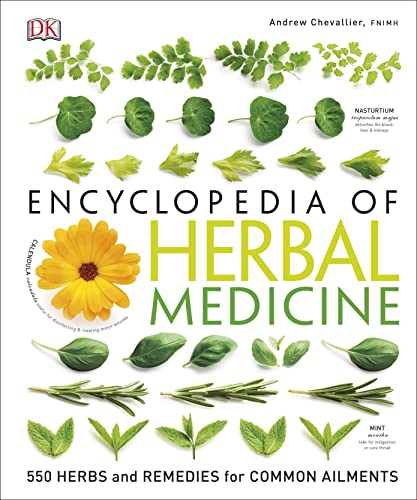
DK Publishing is renowned for its visually rich, authoritative reference books, and this encyclopedia is a prime example. Similar in scope to Andrew Chevallier’s work, this DK edition brings the publisher’s signature style to the topic: clean layouts, infographic-like diagrams, and stunning photography that dominates every page. Information is broken into bite-sized, easily scannable chunks.
It covers over 550 herbs, with detailed profiles that include habitat, key constituents, traditional & modern uses, and practical self-help recommendations. The visual guides to making remedies are particularly helpful for beginners. The book also includes a helpful ailments section that cross-references the herbs discussed.
For visual learners who absorb information best through images, diagrams, and color-coded sections, this DK encyclopedia is arguably the most accessible and engaging format available. It makes a complex subject feel organized and inviting.
Why it’s great
- DK’s iconic visual format makes complex information easy to grasp.
- Excellent diagrams and photography aid in understanding plant parts and preparations.
- Well-organized with clear sections for herb profiles and common ailments.
- Makes an excellent gift or coffee table book that’s actually useful.
<
Good to know
- Very similar to other comprehensive encyclopedias; choose based on preferred visual style.
- Like other global guides, not all herbs will be locally foragable or available.
10. Herbal Antibiotics: What BIG Pharma Doesn’t Want You to Know

This entry-level guide by Mary Jones serves as a gentle introduction to the concept of herbal alternatives to pharmaceuticals. It focuses on 45 common herbs with antibiotic properties, explaining their uses in a straightforward, easy-to-digest manner. The book includes helpful charts, background history, and simple recipes, making the topic approachable for those completely new to the idea.
It responsibly includes cautions about consulting doctors and potential herb-drug interactions, which is crucial for this subject matter. The Q&A section at the end addresses common beginner questions directly. For someone who has only used conventional antibiotics and is curious about what natural options exist, this book provides a broad, reassuring overview without overwhelming scientific detail.
It’s important to distinguish this from Stephen Buhner’s work of a similar name. This is a foundational primer, while Buhner’s is a clinical protocol guide. This book is for building initial understanding and awareness, not for treating serious, resistant infections.
Why it’s great
- Perfect for absolute beginners curious about herbal antibiotics.
- Clear, simple language with helpful visual charts and lists.
- Includes important safety reminders about consulting healthcare providers.
- Provides a wide overview of many common herbs in one place.
Good to know
- Much more basic than other books with “antibiotic” in the title.
- Lacks the depth, specific protocols, and scientific rigor needed for serious application.
11. The Practical Herbal Medicine Handbook

This handbook functions as a substantial collection of herbal remedy recipes for common ailments. Its primary strength is its volume—it packs a large number of preparations for everything from coughs and acid reflux to skin care and stress into one accessible package. The instructions are straightforward, often using herbs you might already have in your kitchen cupboard.
It serves well as a “recipe box” for someone who wants to try making simple home remedies without a significant upfront investment in learning herbal theory. The book includes safety warnings and basic preparation guides, making it a functional starting point for DIY health projects.
While it provides utility through its many recipes, it lacks the depth of teaching, beautiful photography, and nuanced approach found in other guides on this list. It’s a purely functional, entry-level option best for those who want to dip a toe in the water with minimal commitment.
Why it’s great
- Extremely budget-friendly entry point into making herbal remedies.
- Contains a very large number of simple recipes for common issues.
- Useful as a supplemental “recipe idea” book to more instructional guides.
Good to know
- Lacks the teaching foundation, author authority, and visual appeal of other books.
- Can feel more like a compiled list of recipes rather than a cohesive guide.
- Best used alongside a more robust resource for safety and deeper understanding.
Understanding the Specs
Book Structure & Organization
This is how the information is presented and it dictates how you’ll use the book. Ailment-based books (like Prescription for Nutritional Healing) are great for quick reference when a specific issue arises. Herb-based books (encyclopedias, profiles) help you learn about individual plants. System-based books (like Body into Balance) teach you how body systems work and which herbs support them, fostering a deeper, root-cause understanding of health.
Skill Level & Depth
Books range from beginner (focusing on safe, common herbs and basic teas/salves) to advanced clinical (covering complex protocols, extraction math, and dosing for serious conditions). A true beginner’s guide should build confidence with clear pictures and foundational skills. An advanced text assumes prior knowledge and delves into formulation science, pharmacokinetics, and treatment strategies for complex diagnoses.
FAQ
Are herbal medicine books a substitute for seeing a doctor?
What’s the difference between a foraging guide and a general herbal?
I’m a complete beginner. Which book should I get first?
Why are some books much more expensive than others?
Final Thoughts: The Verdict
For most people beginning a meaningful journey with plant medicine, the best alternative medicine books winner is the Wild Remedies because it uniquely combines practical foraging, beautiful seasonal guidance, and accessible recipes that foster a real connection to the natural world. If you want the most trusted, clear foundation in how to make herbal medicine from scratch, grab the Rosemary Gladstar’s Medicinal Herbs. And for building a sophisticated, advanced home apothecary with clinical-grade precision, nothing beats the The Modern Herbal Dispensatory.

Mo Maruf
I created WellFizz to bridge the gap between vague wellness advice and actionable solutions. My mission is simple: to decode the research and give you practical tools you can actually use.
Beyond the data, I am a passionate traveler. I believe that stepping away from the screen to explore new environments is essential for mental clarity and physical vitality.