Our readers keep the lights on and my smoothie glass nicely filled. As an Amazon Associate, I earn from qualifying purchases.
When prolonged bed rest is unavoidable, the pressure on bony prominences like the hips, sacrum, and heels can lead to tissue damage within hours. Unlike static foam or basic inflatable overlays, an alternating air pressure mattress pad mechanically shifts the point of contact every few minutes, actively preventing the sustained compression that causes pressure injuries. The quiet hum of a reliable pump and the rhythmic deflation of air cells become the foundation of both clinical care and restorative sleep.
I’m Mohammad Maruf — the founder and writer behind WellFizz. I’ve spent years analyzing medical-grade support systems, from pump decibel ratings to cell count and material durability, to separate effective pressure redistribution from marketing noise.
After evaluating dozens of models against measurable performance criteria, we’ve identified the most reliable options currently available for anyone searching for a genuine best alternating air pressure mattress pad that delivers consistent clinical-grade pressure relief without disrupting sleep.
How To Choose The Best Alternating Air Pressure Mattress Pad
Choosing the right alternating pressure pad is not about picking the cheapest inflatable surface. The difference between effective pressure redistribution and a disappointing, noisy overlay comes down to three technical factors that directly influence healing outcomes and daily usability.
Pump Noise and Decibel Rating
A pump that runs 24/7 must be quiet enough to not disturb sleep. Look for pumps rated at or below 28 dBA — quieter than a whisper. Models operating around 22 to 23 dBA, like the Vive and Lunderg units, make a tangible difference in shared caregiving spaces where both patient and partner need uninterrupted rest.
Cell Design and Alternating Cycle Timing
Not all air cells are equal. A higher cell count — 130 cells versus fewer — means more precise pressure distribution across the body’s contours. The cycle time (how often the pressure alternates) matters too: six-minute cycles provide faster relief, while ten to twelve-minute cycles are gentler for sensitive skin. Some pads use wider tube chambers for smoother transitions rather than individual bubble cells.
Material Quality and Static Mode
Medical-grade PVC and high-density vinyl offer durability and waterproof protection for easier cleaning. A static mode is a valuable feature that allows all cells to remain inflated, providing a stable surface when a patient needs to sit up or take a break from the alternating motion without leaving the bed entirely.
Quick Comparison
On smaller screens, swipe sideways to see the full table.
| Model | Category | Best For | Key Spec | Amazon |
|---|---|---|---|---|
| Lunderg PressuRelief | Premium | Maximum comfort with snap-on layer | 23 dBA pump, static mode, comfort layer | Amazon |
| Drive Medical Med Aire | Premium | Institutional reliability with end flaps | 4 LPM pump, 130 cells, 5-min cycle | Amazon |
| Lunderg (Standard) | Mid-Range | Static mode and quick connector ease | 23 dBA pump, static mode, 300 lb capacity | Amazon |
| Vive | Mid-Range | Ultra-quiet 22 dBA operation | 22 dBA pump, 130 cells, 6-min cycle | Amazon |
| Kekoy (Low Air Loss) | Mid-Range | Low air loss for cooler skin | 28 dBA pump, 130 cells, low air loss | Amazon |
| Kekoy (130 Cells) | Budget | Reliable 130-cell pressure redistribution | 28 dBA pump, 130 cells, 300 lb capacity | Amazon |
| Alcedo | Budget | Entry-level value for basic needs | 5 pressure settings, 300 lb capacity | Amazon |
In‑Depth Reviews
1. Lunderg PressuRelief Alternating Air Pressure Mattress Pad

The Lunderg PressuRelief solves the most common complaint about alternating pressure pads — that patients find them uncomfortable. Lunderg’s flagship system includes a removable Snap-2-Pad comfort layer that adds a soft, familiar feel on top of the alternating therapy cells, making patient acceptance much easier from day one. The pump is whisper-quiet at 23 dBA, and the static mode allows all cells to remain fully inflated when a break from alternation is needed, such as during sitting or reading in bed.
Doctor and therapist approved, this pad uses gentle wave-like alternating therapy to relieve pressure on the sacrum, hips, and heels while boosting circulation. The cell design uses individual air cells rather than solid tubes, which provides a more gradual pressure transition with each six-minute cycle. Supporting up to 300 pounds, it works on both standard home mattresses and hospital bed frames, making it versatile for long-term care settings.
The included quick connector makes setup intuitive — just unroll, connect hoses, plug in, and adjust pressure from soft to firm. Caregivers will appreciate that the wide air chambers create smoother pressure transitions than bubble-style pads, and the waterproof surface simplifies cleaning. For users who found previous medical-grade pads too harsh, this system’s combination of a comfort layer and static mode represents a genuine breakthrough in usability.
Why it’s great
- Removable comfort layer dramatically improves patient comfort and acceptance
- Static mode provides a stable, non-alternating surface for sitting or rest breaks
- Ultra-quiet 23 dBA pump ensures minimal sleep disruption for patient and caregiver
Good to know
- Queen size inflatable area is 52×72 inches, smaller than a standard queen mattress
- Comfort layer adds slight bulk and must be removed for cleaning of the pad
2. Drive Medical Med Aire Alternating Pressure Pump and Pad System

Drive Medical has been a trusted name in durable medical equipment for years, and the Med Aire system reflects that institutional heritage. The pad features 130 individual bubble air cells that alternately inflate and deflate every five minutes — a faster cycle than many competitors — helping shift pressure more frequently on vulnerable bony areas. The heavy-gauge premium vinyl construction is built for long-term use, and the dual end flaps secure the pad firmly to the mattress, preventing slippage during adjustments.
The 4 LPM (liters per minute) quiet pump delivers consistent airflow with both fixed and variable pressure settings, allowing caregivers to adjust firmness based on patient weight and sensitivity. At 123 inches in length, the pad is longer than standard models, which helps accommodate taller users and ensures full coverage of the bed surface without gaps. The pump includes built-in brackets for secure mounting and offers a five-minute alternating cycle for consistent pressure redistribution throughout the night.
Weighing in at only 8 ounces for the pump unit, the Med Aire system is lightweight and easy to move between beds if needed. The pad supports up to 300 pounds and has been on the market since 2009, with a long track record of reliability in nursing homes and home care environments. Users with sacral pressure sores report significant improvement within weeks, and the end flap design eliminates the need for corner straps that can slip off during use.
Why it’s great
- Fast 5-minute alternating cycle provides frequent pressure redistribution for high-risk patients
- End flaps secure pad to mattress better than corner straps, reducing slippage
- Proven track record with over a decade of use in institutional settings
Good to know
- Pump can be noisier than newer competitors, especially in quiet rooms
- Pad length of 123 inches may require tucking excess on standard twin beds
3. Lunderg Alternating Air Pressure Mattress Pad
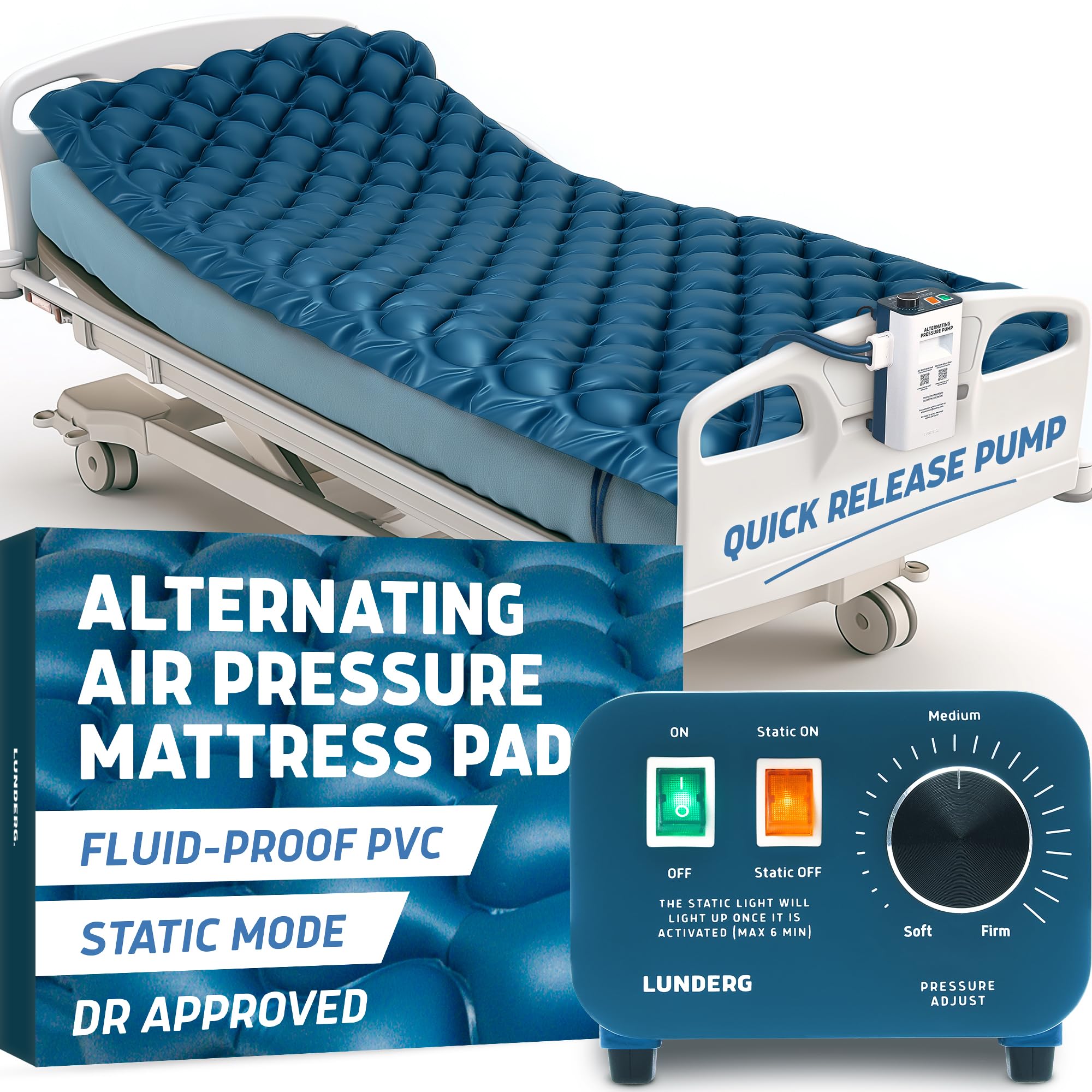
Lunderg’s standard model brings the same whisper-quiet 23 dBA pump and static mode as its flagship PressuRelief system, but without the snap-on comfort layer. This makes it a more budget-conscious choice for caregivers who want the core clinical benefits of alternating therapy — pressure redistribution, increased circulation, and reduced need for manual turning — without the added cost of the comfort topper. The pad itself is made from durable PVC with a waterproof surface that handles incontinence and spills without absorbing moisture or odors.
The quick connector setup is identical to the higher-end model, unrolling flat and inflating fully in about 20 minutes across three alternating cycles. The pressure knob offers precise control from soft to firm, accommodating users from lighter weights up to the 300-pound maximum. Static mode is a genuine differentiator at this price point, allowing caregivers to stabilize the surface when a patient sits up without deflating the entire pad.
Customers consistently note that the individual cell design feels more comfortable than the solid tube rows found on cheaper alternatives. The six-minute alternating cycle provides gentle, wave-like motion that many users find soothing rather than disruptive. The pump is nearly silent in operation — caregivers report being able to sleep in the same room without disturbance — and the 67-inch power cord offers flexible pump placement on either side of the bed.
Why it’s great
- Static mode provides non-alternating support for sitting, a rare feature at this price
- 23 dBA pump is genuinely quiet, suitable for shared caregiving rooms
- Individual cell design offers more gradual pressure transitions than tube-style pads
Good to know
- Queen size inflatable portion is 52×72 inches, not full queen coverage
- No comfort layer means the PVC surface is directly under the sheet
4. Vive Alternating Air Pressure Mattress Pad
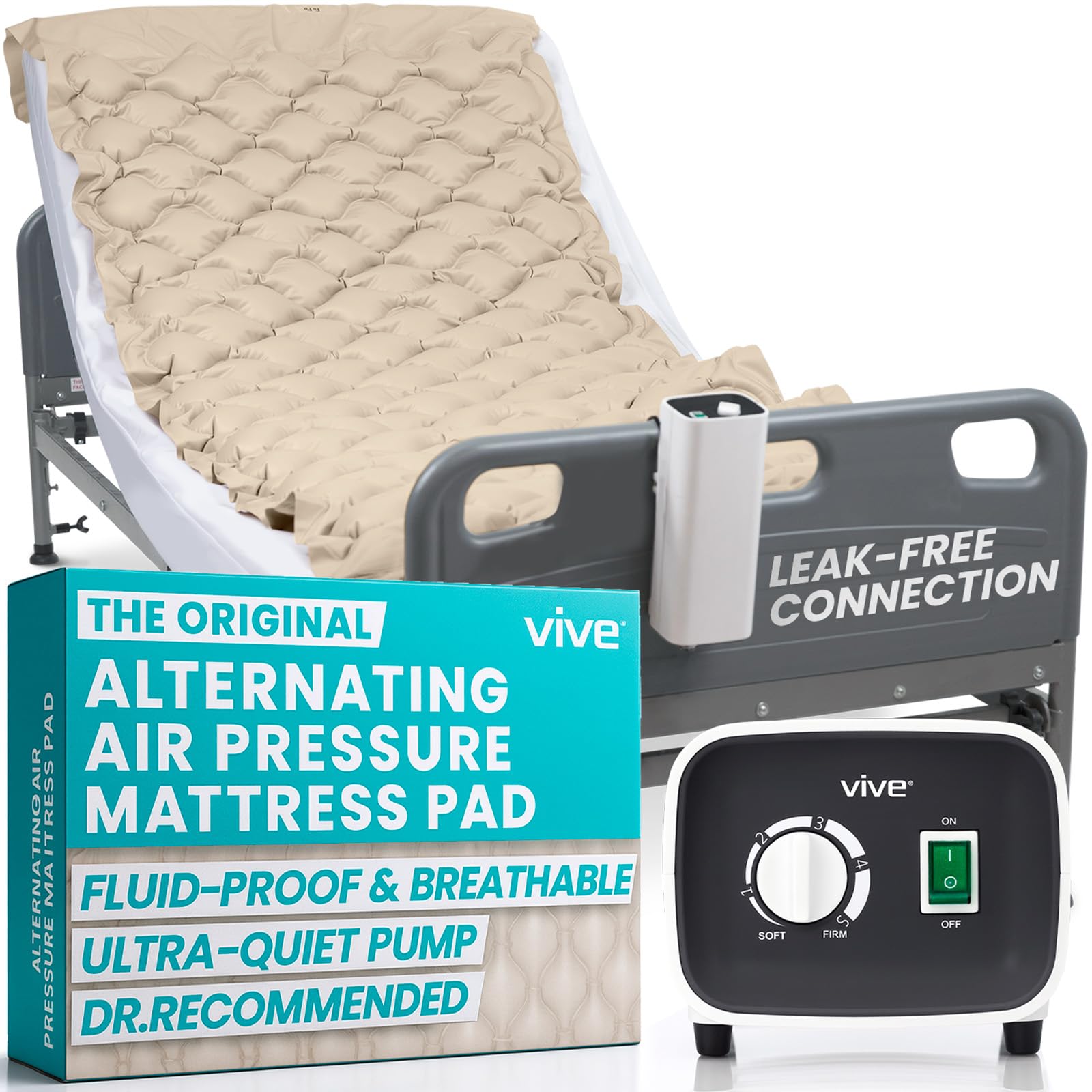
The Vive alternating pressure pad has become a fixture in home care for one simple reason: its pump operates at just 22 dBA, the quietest rating of any model we evaluated. For caregivers and patients sharing a room, that difference of a few decibels translates to genuine nighttime silence — the soft hiss of air cycling through the cells is often the only audible clue the pump is running. The pad itself contains 130 heat-sealed air cells that alternately inflate and deflate on a six-minute cycle, providing rapid pressure redistribution without the leak risks of glued seams.
Doctor-recommended for bed sore prevention, the Vive pad uses a proprietary alternating algorithm that creates a gentle wave-like surface to distribute weight and relieve pressure on the sacrum, hips, and heels. The premium vinyl construction is both waterproof and hypoallergenic, and the pad comes with its own repair patch kit for minor punctures — a practical inclusion that extends the product’s lifespan. At 77 inches long with top and bottom flaps, the pad tucks securely under a standard mattress to prevent sliding, even during repositioning.
Users report visible improvement in pressure sores within days of use, and the pump’s variable pressure controller allows customization based on body weight and sensitivity. The pad fits standard twin, full, and queen beds, and the flexible air hoses simplify installation without kinking. Vive backs this unit with a full one-year guarantee, giving caregivers confidence that this is a long-term investment in patient comfort and skin health rather than a disposable overlay.
Why it’s great
- 22 dBA pump is the quietest available, ideal for shared sleeping spaces
- Heat-sealed cells reduce leak risk compared to glued alternatives
- One-year guarantee provides peace of mind for long-term care investment
Good to know
- Mild vinyl odor reported upon unboxing, requires airing before use
- Pump pressure adjustment is continuous, not stepped, requiring careful dialing
5. Kekoy Alternating Air Pressure Mattress Pad (Low Air Loss)
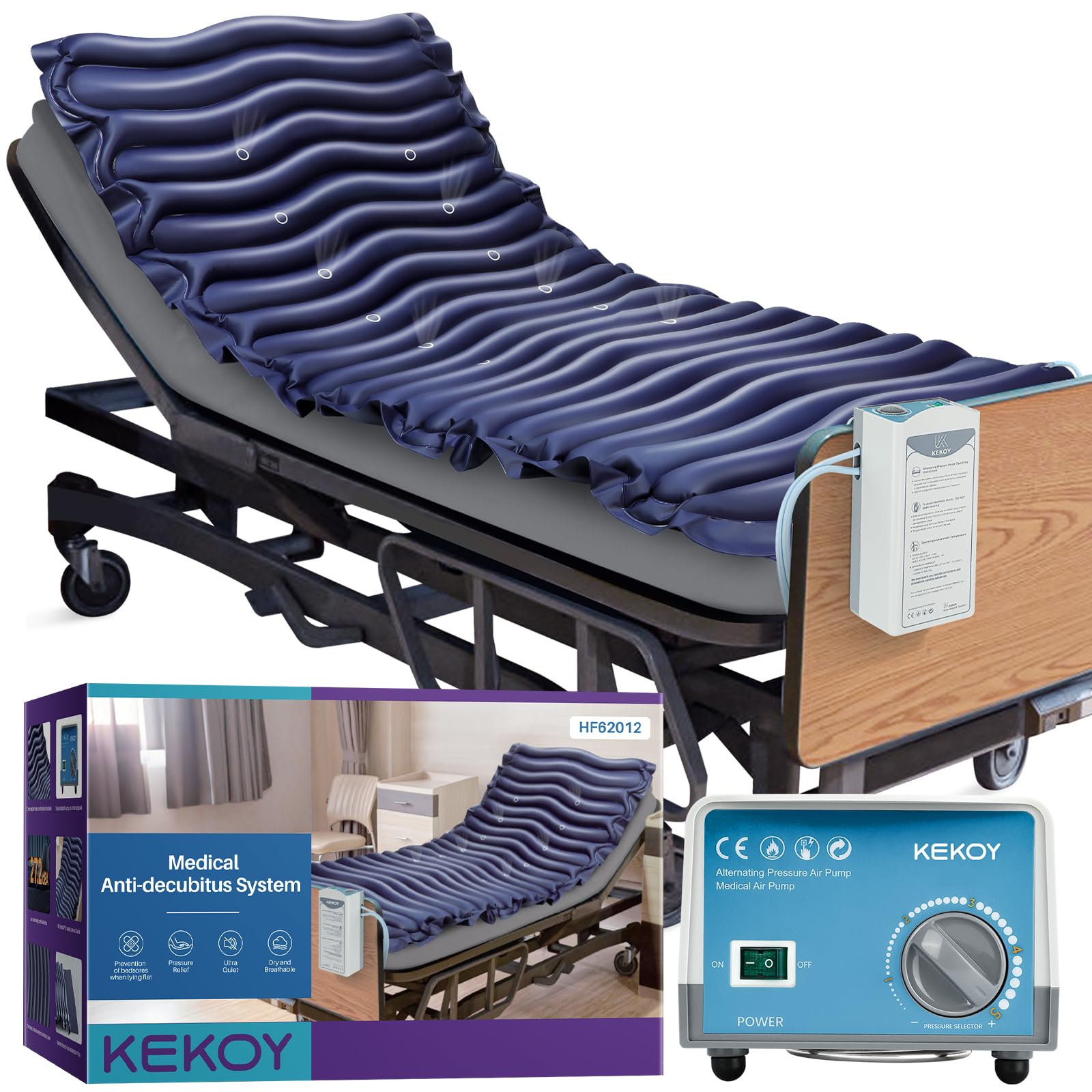
The Kekoy low air loss pad addresses a common complaint about pressure prevention pads — that the non-breathable PVC surface traps heat and moisture, creating an environment that can worsen skin breakdown. This model combines alternating pressure therapy with low air loss technology, where micro air vents release a gentle flow of air across the surface to help keep skin cooler and drier. For patients in warm climates or those prone to night sweating, this dual-function approach offers a meaningful advantage over standard alternating pads.
The pad uses wider tube air chambers rather than individual bubble cells, creating smoother pressure transitions that some users find more comfortable during long-term use. The alternating cycle runs every 10 to 12 minutes — slower than the six-minute cycles of Vive or Lunderg, but deliberately gentle for patients with highly sensitive skin. The pump operates below 28 dBA and includes five pressure adjustment levels for customizing firmness based on body weight and preference.
Medical-grade PVC with high-frequency heat-sealed construction provides durability and waterproof protection, and the surface is easy to wipe down after accidents or spills. The pad measures 75 by 36 inches after full inflation, fitting most standard hospital and home care beds. Customers using this pad for extended bed rest report that the micro air vents genuinely help reduce moisture buildup, making a noticeable difference during day-long use in warm rooms.
Why it’s great
- Low air loss vents actively cool the skin, reducing moisture and heat buildup
- Wider tube chambers provide smoother pressure transitions than bubble cells
- Slow 10-12 minute cycle is gentle for patients with highly sensitive skin
Good to know
- Requires continuous power; deflates immediately when unplugged
- No elastic straps included; recommend using a mattress cover to keep pad in place
6. Kekoy Alternating Air Pressure Mattress Pad

The standard Kekoy pad delivers the full 130-cell alternating pressure experience at a notably accessible price point, making it a solid entry-level choice for families managing home care without a large equipment budget. The 130 bubble air cells continuously inflate and deflate to redistribute body weight across the hips, lower back, shoulders, and heels, reducing the need for frequent manual repositioning. The upgraded aluminum pump operates below 28 dBA, which is quieter than a typical whisper and suitable for overnight use without waking the patient.
Five adjustable pressure levels allow customization from softer support at level one to firmer support at level five, accommodating users from lighter body types up to the 300-pound maximum. The alternating cycle runs approximately every 10 to 12 minutes, providing consistent pressure redistribution without abrupt changes. The waterproof PVC surface protects against spills, sweat, and incontinence, making clean-up simple for caregivers during extended bed rest.
FSA and HSA eligible, the Kekoy pad includes the pump, air hoses, a repair patch kit, and a user manual for quick setup. The pad measures 75 by 35 inches after full inflation and fits standard hospital and home care beds. Customers report that bed sores began healing after the first night of use, and the pump’s quiet operation earns consistent praise from caregivers who share the room. For budget-conscious buyers who still want true 130-cell alternating therapy, this model represents a compelling value proposition.
Why it’s great
- 130-cell alternating therapy at a genuinely accessible price point for home care
- 28 dBA pump is quiet enough for overnight use in shared caregiving rooms
- FSA/HSA eligible and includes repair patch kit for long-term durability
Good to know
- PVC material can feel warm against the skin and does not breathe well
- Requires 48 hours of airing after unboxing to dissipate initial plastic odor
7. Alcedo Alternating Air Pressure Mattress Pad
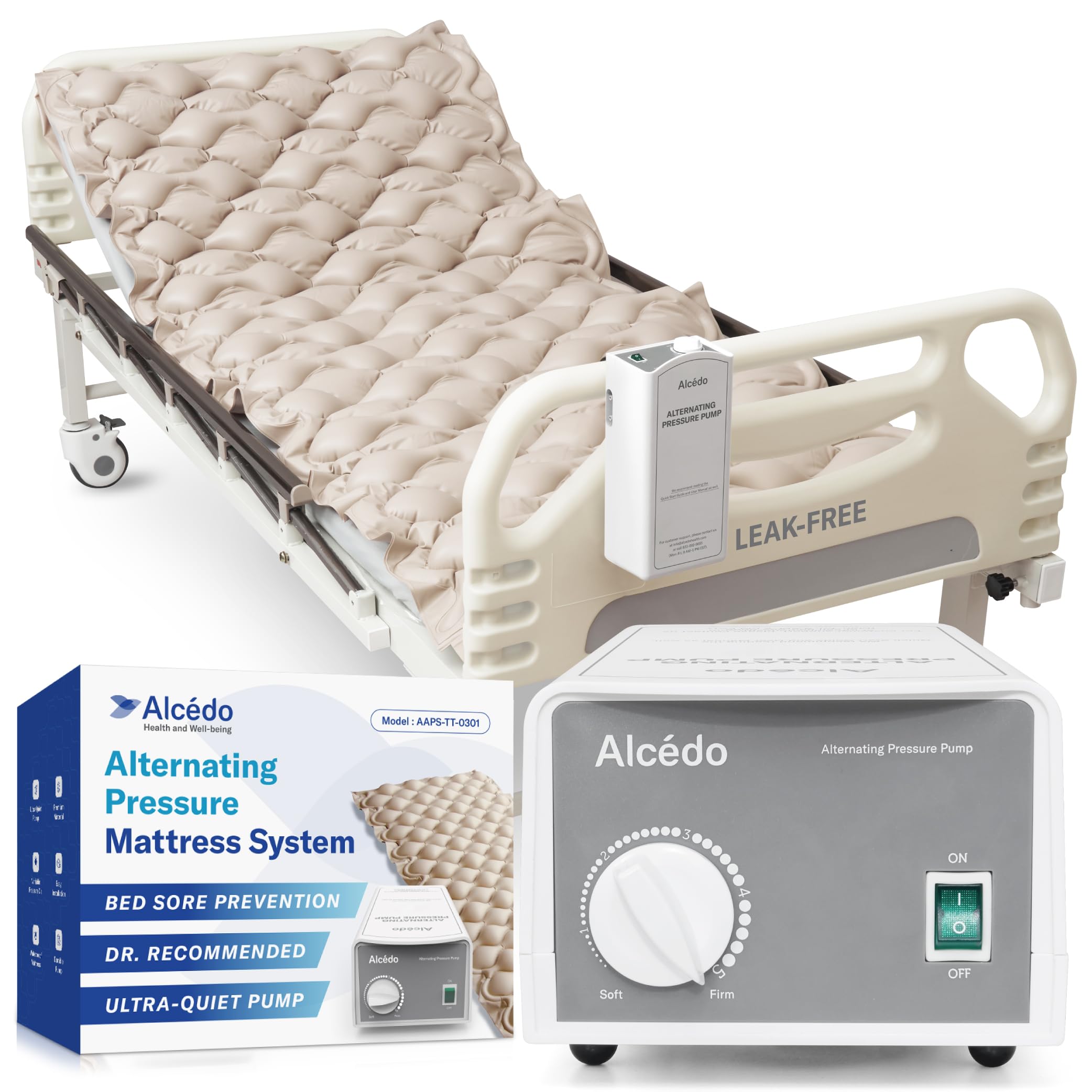
The Alcedo pad serves as a genuine entry point for families who need alternating pressure therapy but are working within a minimal equipment budget. It uses the same fundamental alternating pressure technology — inflating and deflating air chambers to prevent bedsores and improve circulation — as more expensive models, albeit with a simpler pump design and fewer premium features. The pad is made from high-density vinyl with reinforced seams for shape retention, and the waterproof surface supports easy cleaning after incontinence or spills.
The pump includes five adjustable pressure settings for customizing firmness, and the built-in metal hooks make attachment to the bed frame straightforward. The inflated bubble area measures 75 by 35 inches, fitting standard hospital and home care beds without overhang issues. With a weight capacity of 300 pounds, the Alcedo pad accommodates most adult users, and the pump is reported to be quieter than many hospital-grade units customers have encountered in facility settings.
FSA and HSA eligibility adds financial flexibility for families managing care costs. The included 60-day manufacturer warranty is shorter than competitors’ one-year guarantees, reflecting the entry-level positioning. Customers confirm that the pad is comfortable for bedridden use, prevents bedsores effectively, and stays in place on the mattress without sliding. For short-term recovery situations or backup use in multi-caregiver homes, the Alcedo offers functional relief without overinvesting in features that may not be needed.
Why it’s great
- Genuine alternating pressure therapy at the lowest entry cost for budget-constrained homes
- FSA/HSA eligible, helping families manage out-of-pocket care expenses
- Quieter pump than typical institutional hospital units, per customer feedback
Good to know
- 60-day warranty is significantly shorter than competitors’ one-year coverage
- Simpler pump design lacks static mode or advanced cycle timing features
FAQ
Can I use an alternating air pressure mattress pad on a standard home mattress without a hospital bed frame?
How do I clean the pad after incontinence accidents without damaging the air cells?
Final Thoughts: The Verdict
For most users, the best alternating air pressure mattress pad winner is the Lunderg PressuRelief because its snap-on comfort layer solves the biggest barrier to patient acceptance while delivering whisper-quiet operation and both static and alternating modes. If you want the quietest possible pump and don’t need a comfort layer, grab the Vive. And for institutional-grade reliability with fast five-minute cycles and a decade-long track record, nothing beats the Drive Medical Med Aire.

Mo Maruf
I created WellFizz to bridge the gap between vague wellness advice and actionable solutions. My mission is simple: to decode the research and give you practical tools you can actually use.
Beyond the data, I am a passionate traveler. I believe that stepping away from the screen to explore new environments is essential for mental clarity and physical vitality.