Our readers keep the lights on and my smoothie glass nicely filled. As an Amazon Associate, I earn from qualifying purchases.
That relentless, gritty itch behind your eyelids—triggered by pollen one hour, pet dander the next—can derail your entire day faster than any other allergy symptom. Reaching for a general lubricating drop only masks the surface; what you actually need is a targeted antihistamine that neutralizes the histamine release at the source.
I’m Mohammad Maruf — the founder and writer behind WellFizz. I’ve spent several years analyzing ocular pharmaceutical specs, comparing active ingredient concentrations, and dissecting how drop delivery systems (preserved versus preservative-free) affect both comfort and compliance for seasonal allergy sufferers.
This guide compares five top-tier formulations so you can choose the right allergy eye drops for itchy eyes without guessing which active ingredient or dosing schedule fits your lifestyle.
How To Choose The Best Allergy Eye Drops For Itchy Eyes
The over-the-counter eye drop aisle is crowded, but only a few products contain the antihistamine concentrations proven to stop ocular itch at the cellular level. Here’s what separates an effective drop from a temporary soother.
Active Ingredient and Concentration
The two powerhouse antihistamines for itchy eyes are ketotifen fumarate (typically 0.025%) and olopatadine hydrochloride (available in 0.1% or 0.2% concentrations). Ketotifen usually requires two doses per day (every 8–12 hours), while olopatadine 0.2% offers the convenience of once-daily application because it blocks histamine longer at the receptor site. If you forget midday drops or need all-day coverage during high-pollen seasons, the once-daily 0.2% olopatadine options provide a meaningful compliance advantage.
Preservative-Free vs. Preserved Formulations
Preservatives like benzalkonium chloride can sting or exacerbate dryness for people who use drops more than four times a day or wear contact lenses. Preservative-free bottles—like the OPTASE Allegro multidose system—use a sterile valve mechanism that keeps the liquid clean without chemical preservatives. If you have sensitive eyes, dry eye syndrome, or wear contacts daily, investing in a preservative-free formula avoids the cumulative irritation that preserved drops can cause over weeks of use.
Dosing Schedule and Bottle Volume
Smaller 0.12–0.17 fl oz bottles (typical for 0.2% olopatadine products) are designed for once-daily use and contain roughly a 30-day supply. Larger 0.33 fl oz bottles (like the OPTASE Allegro) hold about 300 drops, but if they are a lubricant rather than an antihistamine, they won’t stop itch caused by histamine. Check the volume alongside the dosing frequency: a once-daily 0.2% olopatadine bottle that lasts a month is often a better value than a twice-daily ketotifen bottle that runs out in two weeks, even if the upfront sticker price feels lower.
Quick Comparison
On smaller screens, swipe sideways to see the full table.
| Model | Category | Best For | Key Spec | Amazon |
|---|---|---|---|---|
| Bausch + Lomb Advanced Eye Relief | Antihistamine | Once-daily 16-hour coverage | Olopatadine 0.2% | Amazon |
| Glenmark Olopatadine (Twin-Pack) | Antihistamine | Value twin-pack for seasonal use | Olopatadine 0.2% | Amazon |
| Retaine Allergy | Antihistamine + Lubricant | Doctor-recommended brand trust | Once-daily antihistamine | Amazon |
| Rugby Eye Itch Relief | Antihistamine | Budget-friendly twice-daily itch control | Ketotifen 0.025% | Amazon |
| OPTASE Allegro | Lubricant (Preservative-Free) | Dry eye with mild environmental irritation | Preservative-free / 300 doses | Amazon |
In‑Depth Reviews
1. Bausch + Lomb Advanced Eye Relief (Olopatadine 0.2%)
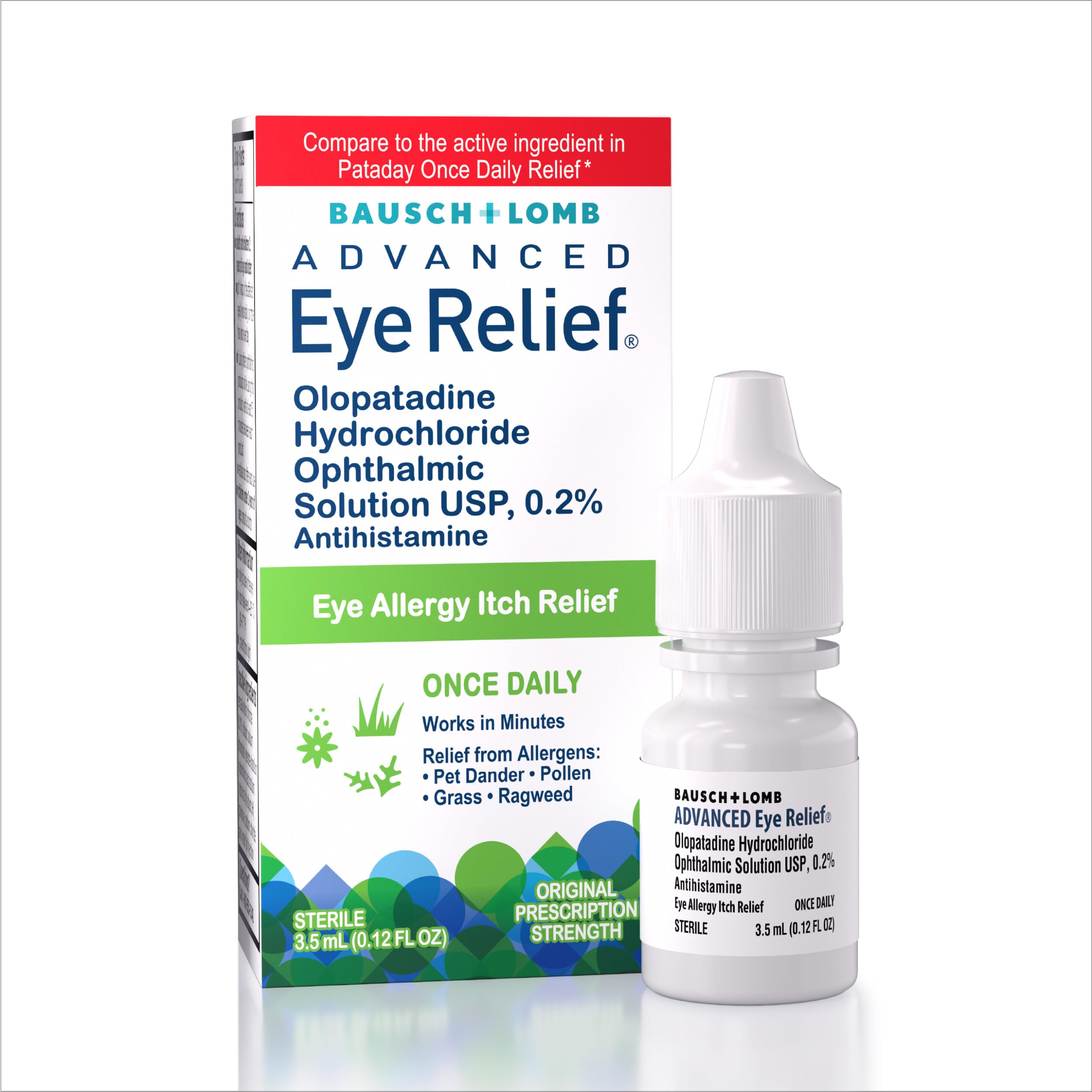
Bausch + Lomb leverages their 150-year expertise in ocular care by packing 0.2% olopatadine—the identical active ingredient concentration as the original prescription-strength Pataday—into a tiny 0.12 fl oz bottle that fits in any pocket. The once-daily dosing schedule means you apply one drop each morning and get up to 16 hours of histamine blockade, which covers the entire workday plus the commute home. Users report the formula starts working in minutes, making it one of the fastest-acting OTC antihistamine drops on the market.
The preserved formula contains benzalkonium chloride, which is standard for single-user bottles that last a month, but you want to avoid touching the dropper tip directly to your eye to prevent contamination. Despite the small bottle volume, the once-daily protocol means each bottle delivers roughly a 30-day supply—similar to larger ketotifen bottles that need twice the number of drops per day. Long-term users switching from twice-daily drops consistently note that the convenience of a single morning dose eliminates the “mid-afternoon itch spike” that ketotifen users sometimes experience near the 10-hour mark.
Customer sentiment strongly favors this over every other brand they’ve tried: multiple verified buyers call it “far more effective than other well-known brands” and state they keep a backup bottle on hand. The only recurring caveat is the bottle size—new users sometimes assume the 0.12 oz volume is a mistake—but once they realize it’s dosed once daily, the value proposition becomes clear.
Why it’s great
- 16-hour relief from a single drop—covers almost a full waking day
- 0.2% olopatadine matches original prescription-strength efficacy
- Bausch + Lomb is a trusted heritage brand in ophthalmology
Good to know
- Contains benzalkonium chloride preservative—not ideal for very frequent use
- Small 0.12 fl oz bottle may appear expensive per ounce, but once-daily dosing offsets this
2. Glenmark Olopatadine 0.2% (Twin-Pack)
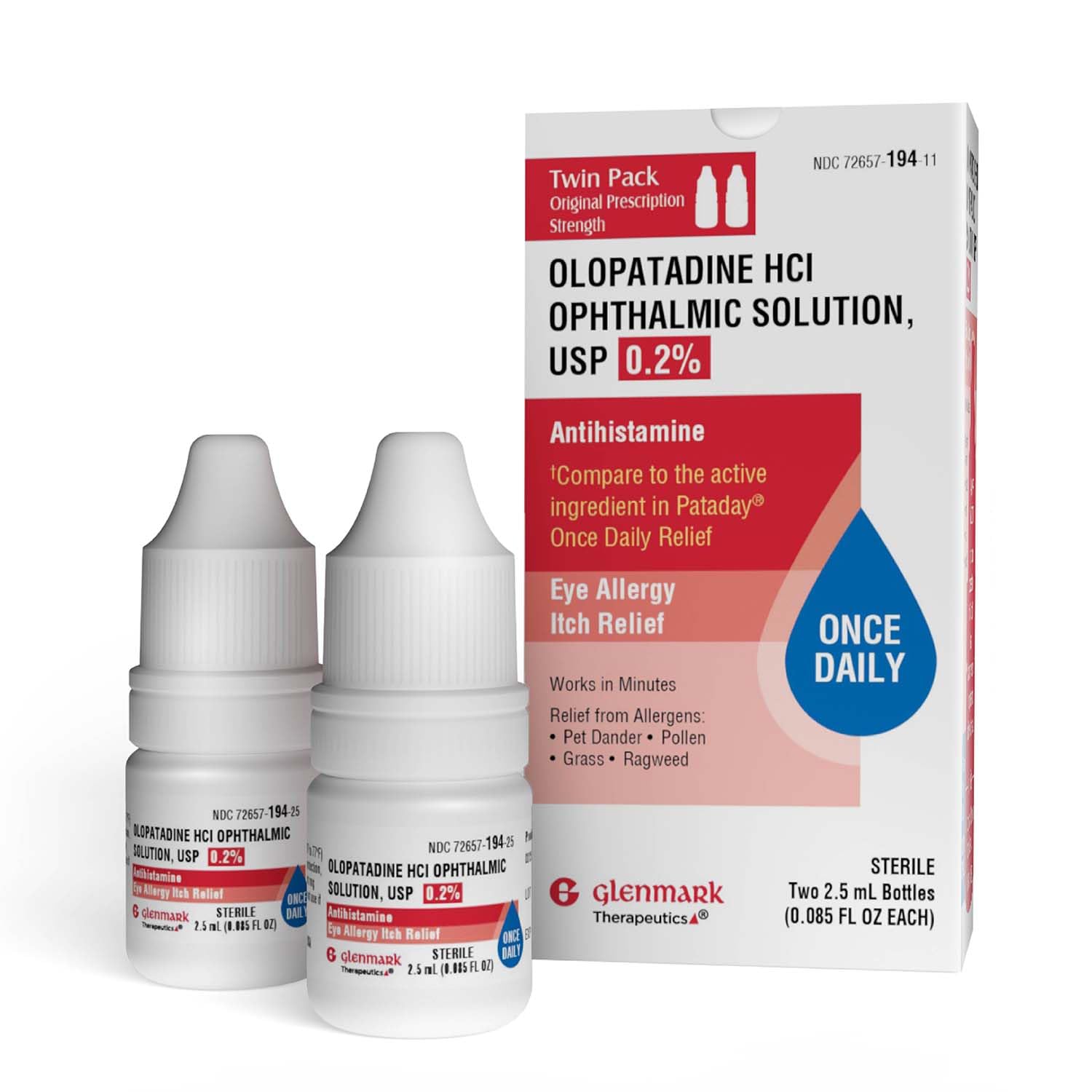
Glenmark’s twin-pack delivers two 2.5 ml bottles (0.084 fl oz each) of 0.2% olopatadine, the same active ingredient strength as the Bausch + Lomb option, but packaged as a two-month supply. For seasonal allergy sufferers who need coverage from early spring through late fall, having a second bottle means you don’t scramble for a refill when peak pollen counts hit. The once-daily dosing is identical—one drop in each eye per day—and users confirm relief begins within minutes of application.
The practical trade-off is the bottle design: both bottles are small and some users find the grip slightly slippery when wet, making precise drop placement tricky. The formula is preserved, which is typical for multi-day use bottles, but like any preserved drop, you should avoid prolonged tip-to-eye contact. Glenmark Therapeutics positions this as a direct alternative to name-brand Pataday, and customer feedback strongly supports that claim—reviewers consistently say it “does the same thing as the name brand but at a better cost.”
A notable demographic advantage: Glenmark labels this safe for children aged 2 years and older, making it one of the few once-daily olopatadine options with a labeled pediatric age floor lower than the usual 3-year threshold. If you are managing eye allergies for a toddler or preschooler, the twin-pack format lets you keep one bottle in the nursery and one in the diaper bag without cross-contamination worry.
Why it’s great
- Twin-pack gives you a full two-month supply for same price as a single brand-name bottle
- Once-daily 0.2% olopatadine matches prescription-grade efficacy
- Suitable for children 2 years and older—lowest pediatric age in this comparison
Good to know
- Small bottles can be hard to grip and dispense precisely
- Preserved formula may cause stinging if used more than once daily
3. Retaine Allergy Eye Drops (OCuSOFT)
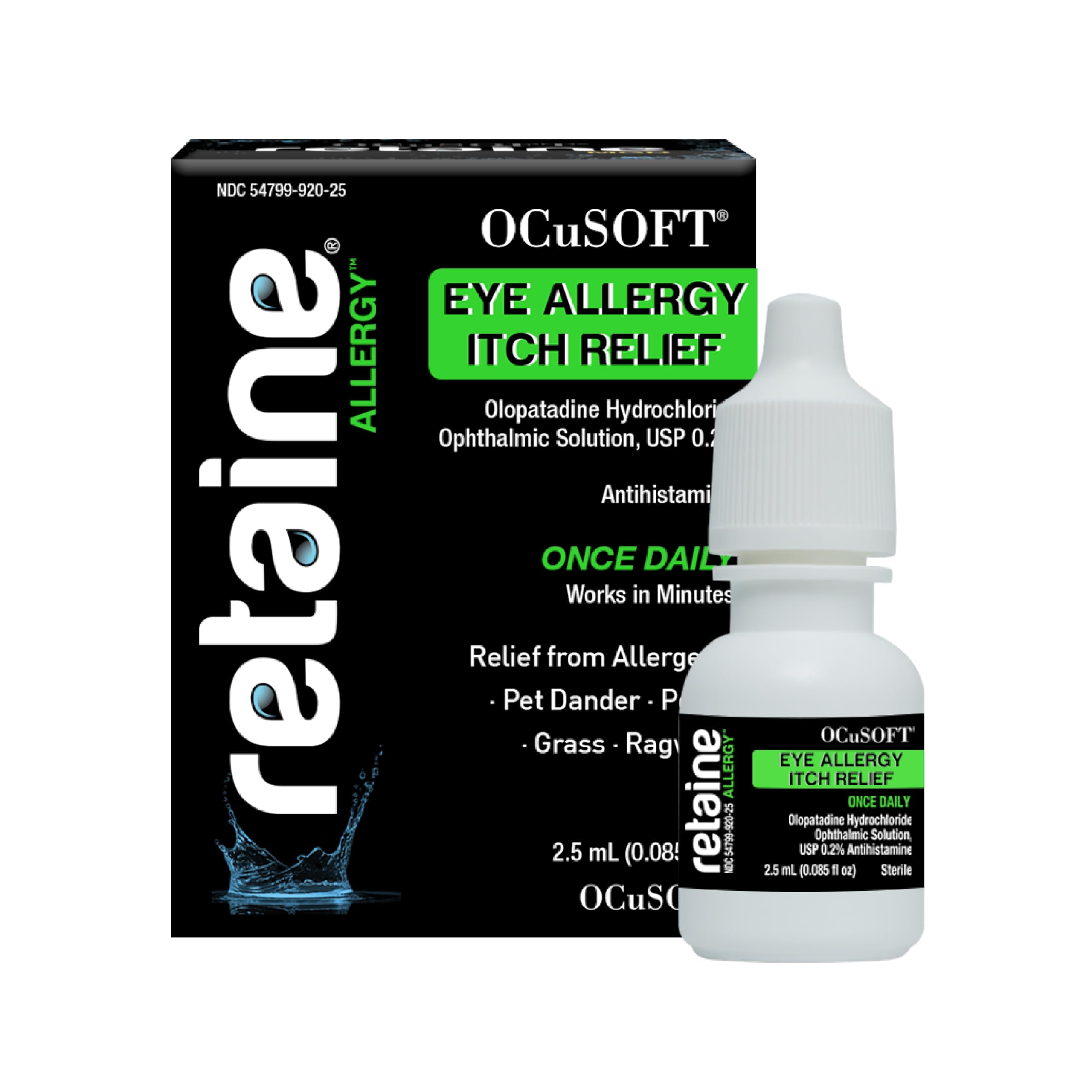
OCuSOFT’s Retaine Allergy drops occupy a unique position: they combine an antihistamine with a lubricant base that includes a lipid component, meaning they not only block histamine but also stabilize the tear film. This matters because chronic allergy sufferers often develop concomitant dry eye from constant rubbing or from histamine-induced inflammation of the meibomian glands. The “bit of oil” that customers reference maintains moisture after the itch subsides, preventing the rebound dry sensation common with straight antihistamine drops.
The 2.5 ml bottle (0.084 fl oz) is dosed once daily, and the formula starts working within minutes—identical to the other olopatadine-based products. OCuSOFT markets Retaine as a “#1 Doctor Recommended brand,” and multiple verified buyers mention receiving a sample directly from their optometrist, which adds a layer of clinical validation you don’t always get with OTC pharmacy brands. Users who previously relied on Pataday note that Retaine’s added lubricity makes the drop feel more soothing upon instillation, with less initial sting.
The primary drawback is the per-bottle cost relative to volume: the 2.5 ml container is small, and a single bottle will last roughly 30 days with once-daily use. If you need coverage beyond a single season, you may be better served by the Glenmark twin-pack on a cost-per-day basis. However, if your optometrist specifically recommended Retaine or you have mixed allergic and dry eye symptoms, the lubricant-antihistamine hybrid may outperform a straight antihistamine in comfort.
Why it’s great
- Lipid-based lubricant + antihistamine in one drop—good for mixed dry/itchy eyes
- Doctor-recommended brand with strong optometrist sampling program
- Once-daily convenience with fast symptom relief
Good to know
- Small 2.5 ml bottle yields about 30 days of use
- Higher per-day cost than some alternatives in this comparison
4. Rugby Eye Itch Relief (Ketotifen 0.025%)
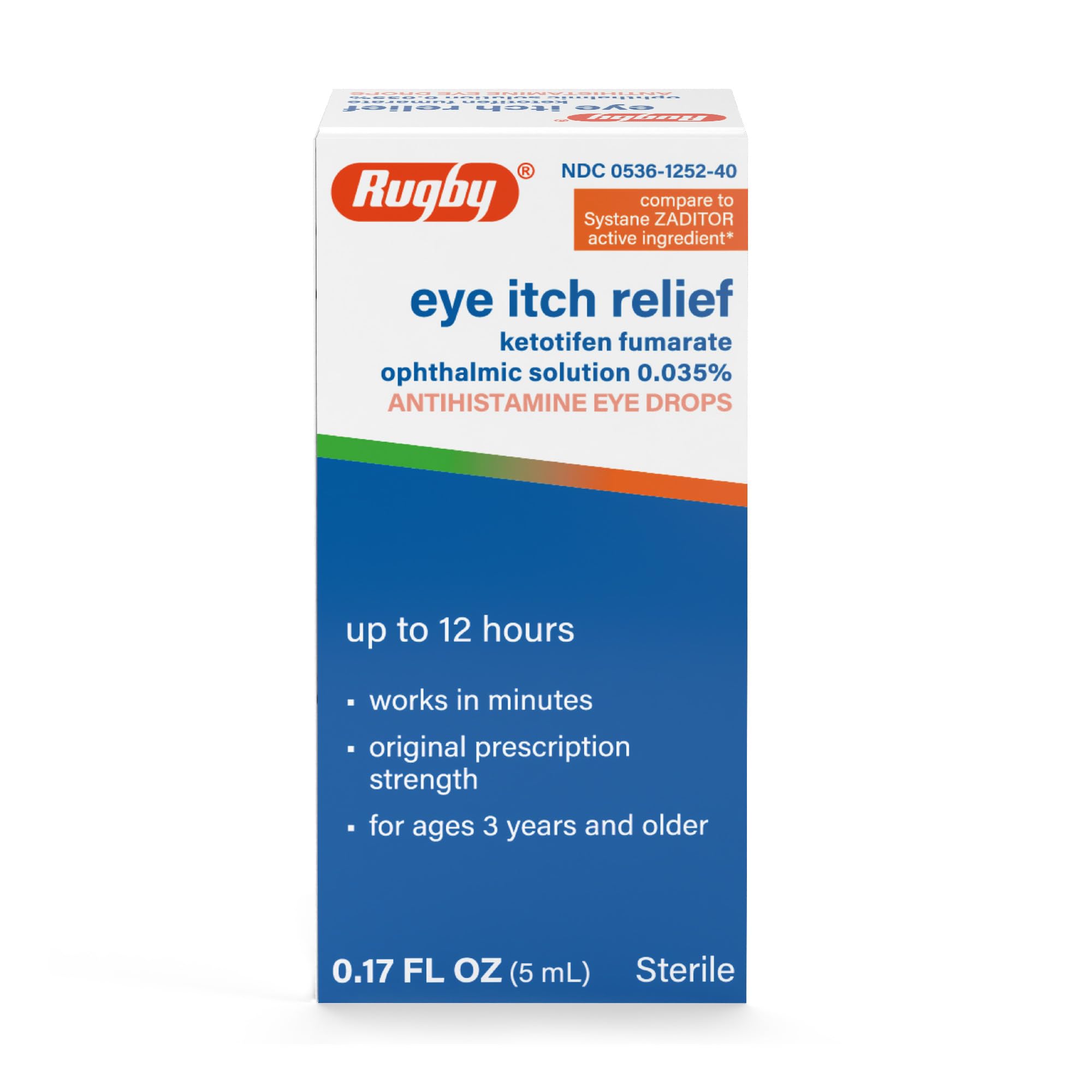
Rugby enters the field with an old-reliable active ingredient—ketotifen fumarate 0.025%—at a price point that makes it accessible for anyone who just needs the itch to stop without the bells and whistles of newer patent-protected molecules. The dosing schedule is one drop every 8–12 hours, no more than twice daily, which means you’ll need to remember a midday or evening second dose for full 24-hour coverage. For mild seasonal allergies where the itch is most intense in the morning and evening, the twice-daily rhythm works perfectly well, and users confirm relief starts within minutes.
The 0.17 fl oz bottle is larger than the olopatadine 0.2% bottles, but because you use two drops per day instead of one, the bottle life is roughly similar—about 30 days. Rugby Laboratories has a long-standing reputation in the OTC pharmaceutical space, operating across 50+ therapeutic categories, and this product is manufactured under strict regulatory compliance standards. Verified customer reviews highlight its effectiveness for allergy-induced itch from pet dander specifically, with one user calling it the only product that worked after trying multiple other brands.
The main limitation is the twice-daily schedule: if you are prone to forgetting doses or work in an environment where re-applying drops midday is inconvenient, you may experience breakthrough itching around the 10-hour mark. Additionally, the ketotifen formulation lacks the lipid lubricant layer found in Retaine, so users who also battle dry eye may need a separate lubricating drop for comfort between doses.
Why it’s great
- Proven ketotifen antihistamine at a very accessible price point
- Relief within minutes—effective for pet dander and seasonal triggers
- Larger 0.17 fl oz bottle provides good value per drop
Good to know
- Requires two doses per day for full 24-hour coverage
- Not ideal for users who forget midday applications
5. OPTASE Allegro Lubricant Eye Drops

OPTASE Allegro takes a fundamentally different approach: it is not an antihistamine but a preservative-free lubricant that uses a hydroxyethyl cellulose (HEC) formula to create a gentle protective barrier against environmental irritants. If your itchy eyes are primarily driven by dry air, wind, or dust rather than a full histamine response, this drop can provide relief without introducing any drug active you don’t need. The multidose bottle is thoughtfully engineered to deliver up to 300 precise drops while maintaining sterility for up to three months after opening—a major advantage if you only use drops occasionally.
For contact lens wearers, this is the safest option in the lineup: the preservative-free HEC formula leaves no residue, won’t cloud lenses, and won’t cause the stinging that benzalkonium chloride triggers in sensitive eyes. Users with meibomian gland dysfunction (MGD) have reported significant comfort improvement, noting that the HEC polymer mimics natural mucin better than standard carboxymethylcellulose artificial tears. However, because Allegro contains no antihistamine, it will not stop itch caused by pollen, ragweed, or pet dander—it only lubricates the surface so the eye feels less irritated.
The dispensing mechanism is the most common point of user feedback: some find the bottle requires a firm squeeze to release a drop, and the learning curve can lead to wasted drops during the first few uses. It is also the highest-priced item in this comparison by upfront cost, though the 300-dose capacity makes it economical on a per-drop basis if you finish the bottle. Recommended as a standalone product for dry eye or as a companion to an antihistamine drop for those who need both itch relief and sustained moisture throughout the day.
Why it’s great
- Preservative-free—ideal for sensitive eyes and daily contact lens wearers
- 300 doses per bottle offers long-term value if used regularly
- HEC formula supports natural tear barrier without drug interactions
Good to know
- Contains no antihistamine—won’t treat histamine-driven allergy itch
- Dispensing mechanism can be finicky; some users struggle to release a drop
FAQ
Can I use 0.2% olopatadine drops while wearing contact lenses?
Is it safe to use antihistamine eye drops daily for several months?
Why do some antihistamine drops burn when I put them in?
Final Thoughts: The Verdict
For most users, the allergy eye drops for itchy eyes winner is the Bausch + Lomb Advanced Eye Relief because its 0.2% olopatadine delivers 16 hours of prescription-strength relief from a single morning drop, covering the entire workday without a midday re-dose. If you want a twin-pack that stretches over two months, grab the Glenmark Olopatadine Twin-Pack. And for those with mixed dry eye and allergy symptoms who need a lubricant-antihistamine hybrid recommended by optometrists, nothing beats the Retaine Allergy.

Mo Maruf
I created WellFizz to bridge the gap between vague wellness advice and actionable solutions. My mission is simple: to decode the research and give you practical tools you can actually use.
Beyond the data, I am a passionate traveler. I believe that stepping away from the screen to explore new environments is essential for mental clarity and physical vitality.