Our readers keep the lights on and my smoothie glass nicely filled. As an Amazon Associate, I earn from qualifying purchases.
Algaecides work on a different chemical pathway, attacking the cell structure of algae directly so your sanitizer can focus on bacteria and organics instead of fighting a losing battle.
I’m Mohammad Maruf — the founder and writer behind WellFizz. I’ve analyzed hundreds of product formulations and customer experiences in the pool chemistry space to isolate which algaecides actually deliver on their claims versus those that just foam or stain.
Whether you’re opening for the season or fighting a stubborn mustard bloom, choosing the right chemistry matters. This guide breaks down the five top-performing options to help you find the absolute best algaecide for pools based on real-world results and formulation science.
How To Choose The Best Algaecide For Pools
Not all algaecides work the same way. The right choice depends on your pool type, your sanitizer system, the specific algae strain you’re fighting, and how much maintenance effort you want to invest. Understanding a few key variables will help you avoid wasted bottles and recurring blooms.
Copper vs. Bromide vs. Quaternary Ammonium
Copper-based algaecides are the most common and effective against a broad spectrum of algae strains. Chelated copper reduces the staining risk that plagued older formulas. Bromide-based options like sodium bromide convert chlorine into a more aggressive killing agent without adding metals. Quaternary ammonium compounds work well for prevention but can foam in saltwater pools. Match the chemistry to your primary problem — copper for heavy blooms, bromide for low-staining prevention, quat for routine maintenance.
Concentration and Dosage Precision
The active ingredient percentage matters more than the bottle size. A 7.1 percent copper solution requires far less volume per treatment than a 1 percent solution. Look at the ounces per 10,000 gallons and calculate how many doses you get from one bottle. Premium products often cost more upfront but deliver more treatments per ounce, making them cheaper per dose over a full season.
Compatibility and Safety
Some algaecides are pH-dependent and lose effectiveness if your pool’s pH drifts above 7.8. Others, like bromide-based formulas, work across a wide pH range. Check whether the product is safe for your pool surface — vinyl, fiberglass, plaster, or tile — and whether it contains any metal that could stain. Non-foaming and non-clouding formulations preserve water clarity and won’t interfere with your filter or skimmer.
Quick Comparison
On smaller screens, swipe sideways to see the full table.
| Model | Category | Best For | Key Spec | Amazon |
|---|---|---|---|---|
| United Chemical No Mor Problems | Bromide | Stain-free maintenance | Sodium bromide, zero metals | Amazon |
| AquaDoc Double Whammy | Copper | 90-day bloom prevention | Copper, non-foaming | Amazon |
| Doheny’s Super Algaecide Plus | Chelated Copper | Mustard algae in hot climates | 7.1% chelated copper | Amazon |
| Eeziblue Monthly Algaecide | Zn-Cu Mineral | Chlorine reduction goal | Patented zinc-copper powder | Amazon |
| GLB Strike Out Algaecide | Copper | Immediate green-to-blue fix | 32 oz liquid copper | Amazon |
In‑Depth Reviews
1. United Chemical No Mor Problems Pool Algaecide & Clarifier
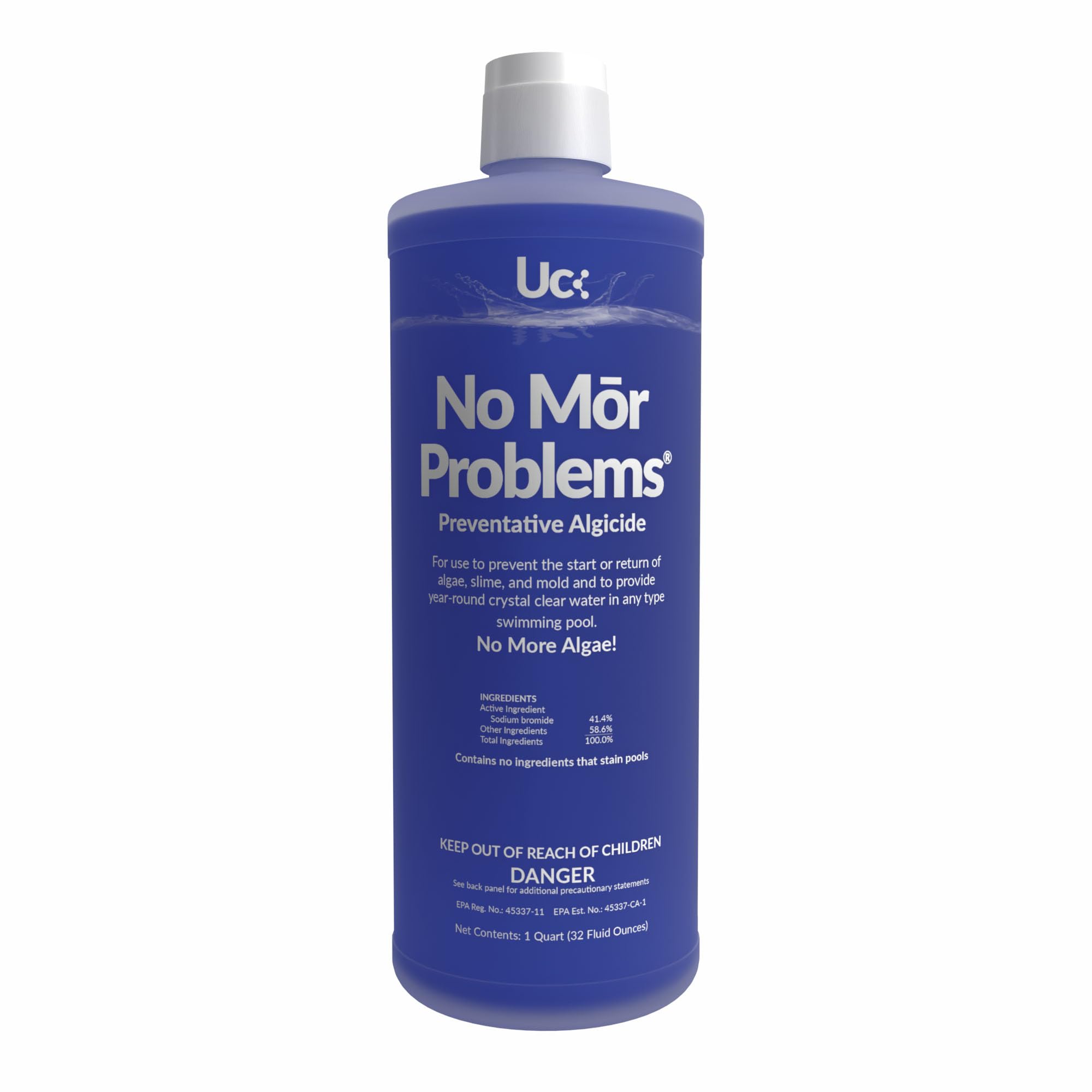
This bromide-based formula converts standard chlorine into a far more potent killing agent without introducing any metals that could stain plaster, fiberglass, or vinyl. Because it works independently of pH, you don’t have to stress about drift above 7.8 — a common failure point for many algaecides. The recommended weekly dose is only 5 ounces per 10,000 gallons, which means a single quart bottle can last most of a season.
Users consistently report that existing algae problems vanish within days and that maintenance chlorine demand drops noticeably. The formula also acts as a water polisher, capturing fine organic debris and leaving the pool sparkling without foam or cloudiness. It is safe for attached spas and fountains, which adds versatility for complex water features.
The main tradeoff is that this is a preventative and treatment product rather than a heavy-shock replacement. If you already have a severe green pool, you will still need to balance your water and shock first, then use No Mor Problems to keep it clear. It does not add cyanuric acid, which is a major advantage if you use chlorine tablets that already raise CYA levels.
Why it’s great
- pH-independent — works even above 7.8
- Zero staining risk (no copper or metals)
- Reduces chlorine and shock consumption significantly
Good to know
- Best as a maintenance product, not a shock substitute
- Requires weekly dosing for optimal results
2. AquaDoc Double Whammy Pool Algaecide

AquaDoc’s claim of 90-day algae prevention is backed by a copper formulation designed to attack algae at the cellular level while minimizing the staining risk that plagued older copper products. It works on green, mustard, blue, and black algae, making it one of the broadest-spectrum options in this price tier. The double-whammy name refers to its dual action of killing existing growth and preventing regrowth for three months.
User reports show that a single aggressive dose of 4 ounces in a 1,300-gallon pool cleared green algae overnight, and that monthly prevention doses keep water crystal clear even after winter neglect. The non-foaming property is critical for saltwater pools where quat-based algaecides can create a bubble bath effect. It also reduces overall chemical demand by making your sanitizer more efficient.
A small number of users noted that black algae required physical scraping before the product could fully penetrate the spore layer. This is typical of all copper algaecides — no liquid product can penetrate a thick black algae crust without manual disruption. If black algae is your primary problem, budget time for brushing before application.
Why it’s great
- 90-day prevention from a single treatment
- Works on all algae types including black and mustard
- Non-foaming — safe for saltwater systems
Good to know
- Black algae may need manual scraping first
- Some users experienced slower-than-expected results on heavy blooms
3. Doheny’s Super Algaecide Plus
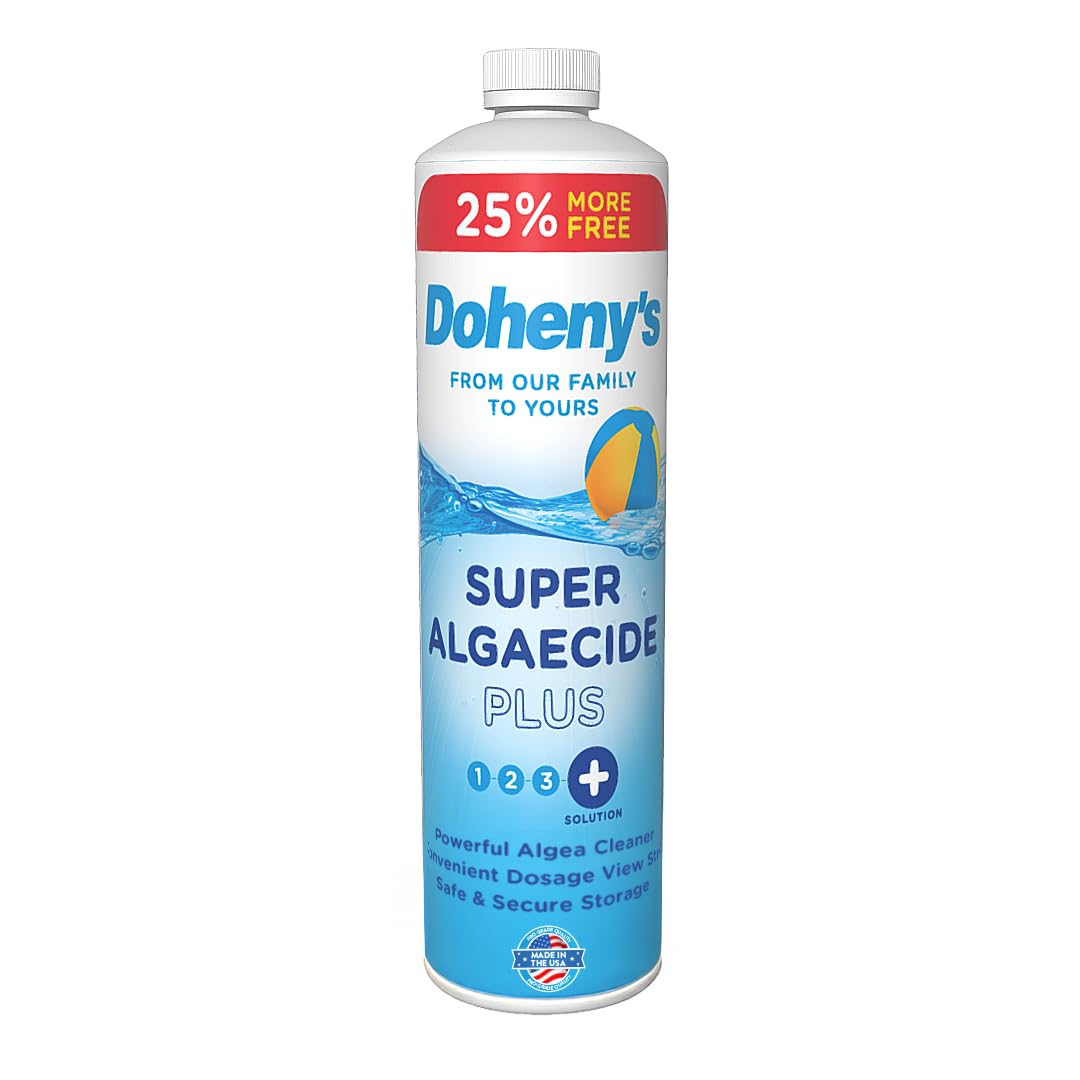
Doheny’s uses 7.1 percent chelated copper, which means the copper ions are chemically bound to a chelating agent that prevents them from precipitating onto pool surfaces as dark stains. This concentration is higher than many competitors, allowing for smaller dosages — 4 ounces per 10,000 gallons for initial treatment and 2 ounces for weekly maintenance. The brand has over 50 years of history in the pool supply space, which shows in the formulation quality.
Florida pool owners in particular report that mustard algae, which typically appears during the hottest months, stopped entirely after switching to Doheny’s. The chelation chemistry is especially important in areas with hard water or high metal content, where unchelated copper can react and create unsightly streaks on plaster finishes. Users also note that the water stays clear without foaming or cloudiness.
The only real limitation is the bottle size — 32 ounces per container means larger pools may need multiple bottles for the season. At the recommended maintenance dose of 2 ounces per 10,000 gallons weekly, a 20,000-gallon pool will use one bottle every 8 weeks. Bulk buying saves money if you have the storage space.
Why it’s great
- High 7.1% copper concentration reduces per-dose volume
- Chelated formulation minimizes staining risk
- Proven effective against mustard algae in hot climates
Good to know
- 32 oz bottle may require multiple purchases for large pools
- Requires weekly maintenance dosing
4. Eeziblue Monthly Algaecide
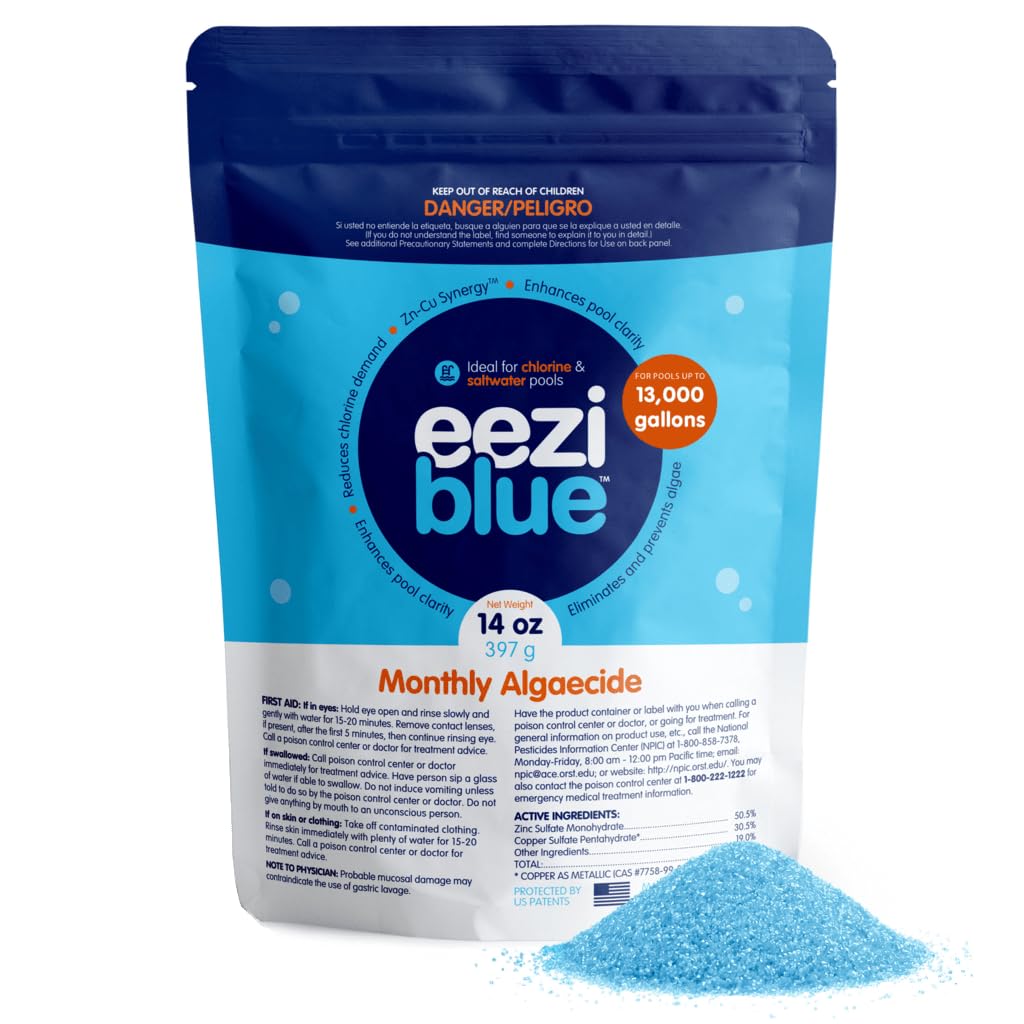
Eeziblue stands out with its patented zinc-copper synergy formula that functions as both an algaecide and a phosphate remover. The powder format eliminates the mess of measuring sticky liquids — each packet is pre-measured for a monthly treatment. The brand claims it can reduce chlorine use by up to 75 percent, which makes it particularly attractive for pool owners who want to minimize sanitizer costs and chemical handling.
Users report that small algae patches that appeared between cleanings stopped forming entirely after switching to this product. The 24-hour green-to-blue recovery claim holds up in most cases, though heavy blooms may need a follow-up dose. The mineral formula works in both chlorine and saltwater pools without foaming, and it does not require any mixing or dilution — just pour the powder directly into the skimmer or spread it across the water surface.
The powder format means you cannot spot-treat specific areas as precisely as with a liquid. If you only have algae on one wall, you’re treating the entire pool volume. This is fine for consistent prevention but less efficient for localized outbreaks. Moisture exposure in storage can also clump the powder, so keep the packet sealed in a dry location.
Why it’s great
- Pre-measured monthly doses — no measuring cups needed
- Zinc-copper synergy reduces chlorine demand significantly
- Powder format avoids liquid spill mess
Good to know
- Not ideal for spot-treating specific problem areas
- Powder may clump if exposed to humidity
5. GLB Pool & Spa Products Strike Out Algaecide

GLB Strike Out is a straightforward copper-based algaecide designed for fast knockdown of visible green algae. Users with 32,000-gallon pools report clearing green water in 24 hours after other brands failed, using the whole bottle over four consecutive days. It works with chlorine, bromine, ozone, and saltwater systems, and the water is safe for swimming immediately after application — no waiting period.
The recommended application method is dilution with at least nine parts water, then sprinkling the solution around the pool edge under sunny conditions for best results. Weekly maintenance doses of 0.5 to 1 ounce keep algae from returning, and doubling the dose handles persistent wall and step algae. Several reviewers noted that this was the only product that finally turned their pool from light green to blue after weeks of frustration with other treatments.
The tradeoff is that this is a basic copper algaecide without chelation enhancements. If your water chemistry is not well balanced or if you have a plaster pool with existing metal staining, the unchelated copper could contribute to surface discoloration over time. It also works better as a treatment than as a long-term prevention — expect to use it more frequently than premium options if you skip weekly dosing.
Why it’s great
- Fast 24-hour green-to-blue conversion
- Safe to swim immediately after application
- Works with all sanitizer types including saltwater
Good to know
- Basic copper formulation — staining risk without chelation
- Requires frequent reapplication for prevention
FAQ
Can I use a copper algaecide in a vinyl liner pool without staining?
How long after adding algaecide can I swim in the pool?
Final Thoughts: The Verdict
For most users, the best algaecide for pools winner is the United Chemical No Mor Problems because it kills algae effectively without introducing metals, works at any pH level, and reduces overall chlorine consumption significantly. If you want a 90-day prevention interval with a single monthly dose, grab the AquaDoc Double Whammy. And for a budget-friendly immediate green-to-blue recovery, nothing beats the GLB Strike Out.

Mo Maruf
I created WellFizz to bridge the gap between vague wellness advice and actionable solutions. My mission is simple: to decode the research and give you practical tools you can actually use.
Beyond the data, I am a passionate traveler. I believe that stepping away from the screen to explore new environments is essential for mental clarity and physical vitality.