Our readers keep the lights on and my smoothie glass nicely filled. As an Amazon Associate, I earn from qualifying purchases.
Choosing a home security system means balancing sensor count, cellular backup, app reliability, and the total cost of ownership across a multi-year lifespan. The wrong pick leaves you vulnerable to false alarms, confusing interfaces, or unexpected monthly fees that quickly eclipse the hardware price.
I’m Mohammad Maruf — the founder and writer behind WellFizz. For this guide, I analyzed dozens of sensor kits, cross-referenced 4G and WiFi connectivity specs, and examined real owner feedback on arming delays, false alarm rates, and mobile app reliability.
After comparing seven of the most popular entry-level and mid-range kits, I’ve built a clear ranking of the best alarm system picks for DIY homeowners ready to cut the cord on expensive monitoring contracts.
How To Choose The Best Alarm System
Modern alarm systems fall into two camps: self-monitored kits with no ongoing fees and professionally monitored systems that charge monthly for cellular backup and emergency dispatch. Your choice depends on how much hands-on control you want versus how urgently you need police or fire response when you’re away or asleep.
Connectivity: WiFi vs. 4G vs. Dual-Path
WiFi-only kits are cheapest but fail instantly if your router goes down or the power cuts. Systems with 4G GSM cellular backup (like the A108F or OSI Gen 2) keep sending alerts even during an internet outage. Dual-path models (WiFi + cellular) give the best reliability without a monthly plan if you use SMS notifications only.
Sensor Ecosystem and Expandability
Look at the total number of zones a base station supports: budget units cap out around 40 zones, while mid-range panels like the OSI Gen 2 accept up to 160 sensors. If you plan to add window sensors, motion detectors, smoke alarms, or water leak detectors later, avoid any system that hard‑limits expansions.
App Experience and Voice Assistant Integration
The app determines daily usability — check whether it supports zone‑specific arming (perimeter‑only vs. full), push notification latency, and multi‑user access for family members. Alexa and Google Assistant integration is common, but compatibility varies: some units only work with Alexa, while others support both voice platforms.
Quick Comparison
On smaller screens, swipe sideways to see the full table.
| Model | Category | Best For | Key Spec | Amazon |
|---|---|---|---|---|
| OSI Alarm System Gen 2 | Mid-Range | Expandability & App Control | 7‑inch HD touchscreen | Amazon |
| Ring Alarm 8‑Piece (New) | Premium | Professional Monitoring | Cellular + WiFi backup | Amazon |
| SimpliSafe 11‑Piece Gen 3 | Premium | All‑In‑One Kit | 24‑hour battery backup | Amazon |
| LWOHSI PG108 (A108F) | Mid-Range | 4G GSM Backup | 4G + WiFi dual‑network | Amazon |
| Tolviviov 15‑Piece Kit | Mid-Range | Maximum Sensor Count | 10 door sensors included | Amazon |
| Ring Alarm 8‑Piece (Refurb) | Mid-Range | Budget Entry to Ring | Certified like‑new condition | Amazon |
| LWOHSI Wireless (A107F) | Entry-Level | Smallest Budget | 4.3‑inch IPS touchscreen | Amazon |
In‑Depth Reviews
1. OSI Alarm System Gen 2 (4G)
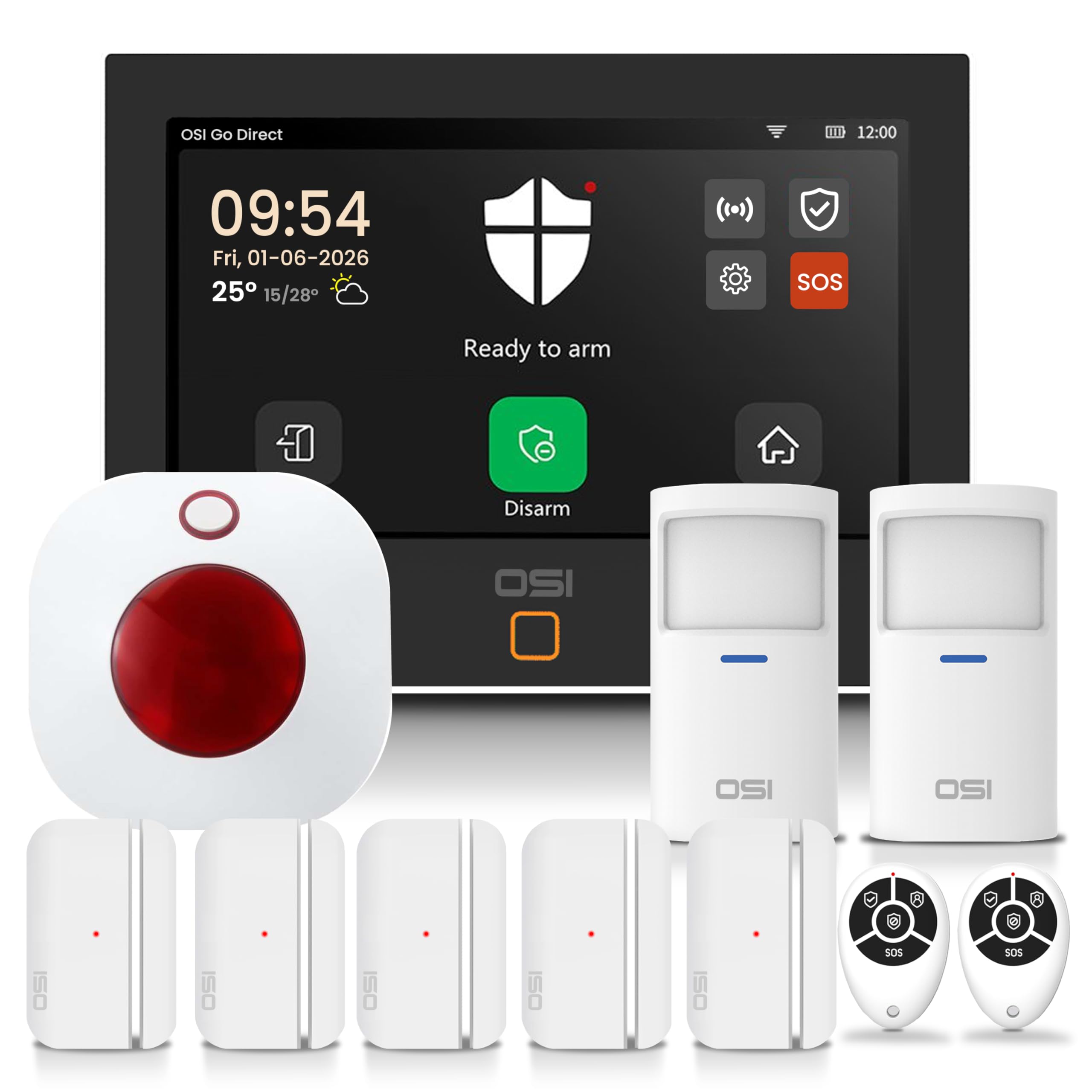
The OSI Gen 2 sits at the sweet spot of DIY alarm systems: it offers a 7‑inch 1024×600 anti‑fingerprint touchscreen, a guided setup wizard that walks you through configuration, and room for up to 160 wireless sensors, 6 controllers, and 6 keypads. That level of headroom easily outpaces any other kit in this roundup for future expansion.
Connectivity is dual‑path: WiFi for app control and optional 4G cellular (SIM not included) for SMS alerts without a monitoring contract. The 24‑hour backup battery keeps the panel alive during outages. Real owners praise the 433MHz sensor range through concrete and rebar, and former installers call it the best DIY system they’ve tested.
An optional 24/7 professional monitoring plan starts at a modest monthly fee with no contract lock‑in, giving you flexibility to stay self‑monitored or upgrade later. The Smart Life app handles scene modes (disarm/arm/home) and works with Amazon Alexa, though the app lacks a history delete function and doesn’t display well on tablets.
Why it’s great
- Huge 160‑sensor capacity for whole‑home coverage
- Excellent 433MHz wireless penetration through thick walls
- No‑contract professional monitoring optional
Good to know
- Plug‑in siren occupies two AC outlets
- Smart Life app lacks history deletion and tablet optimization
2. Ring Alarm 8‑Piece Kit (Newest Model)
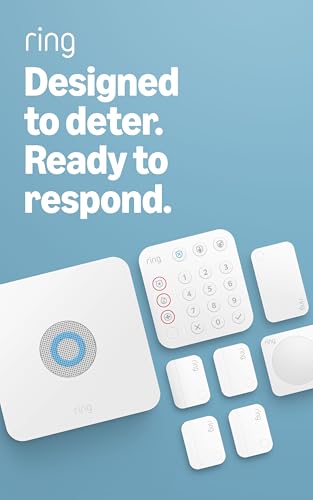
Ring’s newest 8‑piece kit is built around the base station that handles WiFi, ethernet, cellular backup (AT&T), and a rechargeable backup battery in one compact unit. The kit covers a 1‑2 bedroom home with one keypad, four contact sensors, one motion detector, and one range extender — enough to protect perimeter doors and a main living area.
Setup is app‑guided and takes about 45 minutes. The motion detector is pet‑friendly (avoids false triggers under a certain weight threshold), and the keypad includes dedicated emergency buttons for police, fire, and medical. Owners consistently note that the thin contact sensors use standard CR2032 batteries and that the adhesive mounting leaves no wall damage.
A Ring Protect subscription (sold separately) enables cellular backup, Alexa voice arming, and optional 24/7 professional monitoring. Without the subscription, the system still works as a local alarm with push notifications — a rare flexibility that lets you start without monthly fees and add monitoring later. The ecosystem also integrates with Ring cameras, doorbells, Schlage smart locks, and Kwikset deadbolts.
Why it’s great
- Base station includes cellular + WiFi + ethernet + battery backup
- Vast accessory ecosystem: cameras, locks, smoke detectors
- Works without any subscription for local alerts
Good to know
- Professional monitoring requires monthly Protect plan
- Base station cord could be longer for high ceilings
3. SimpliSafe 11‑Piece Wireless Home Security System Gen 3
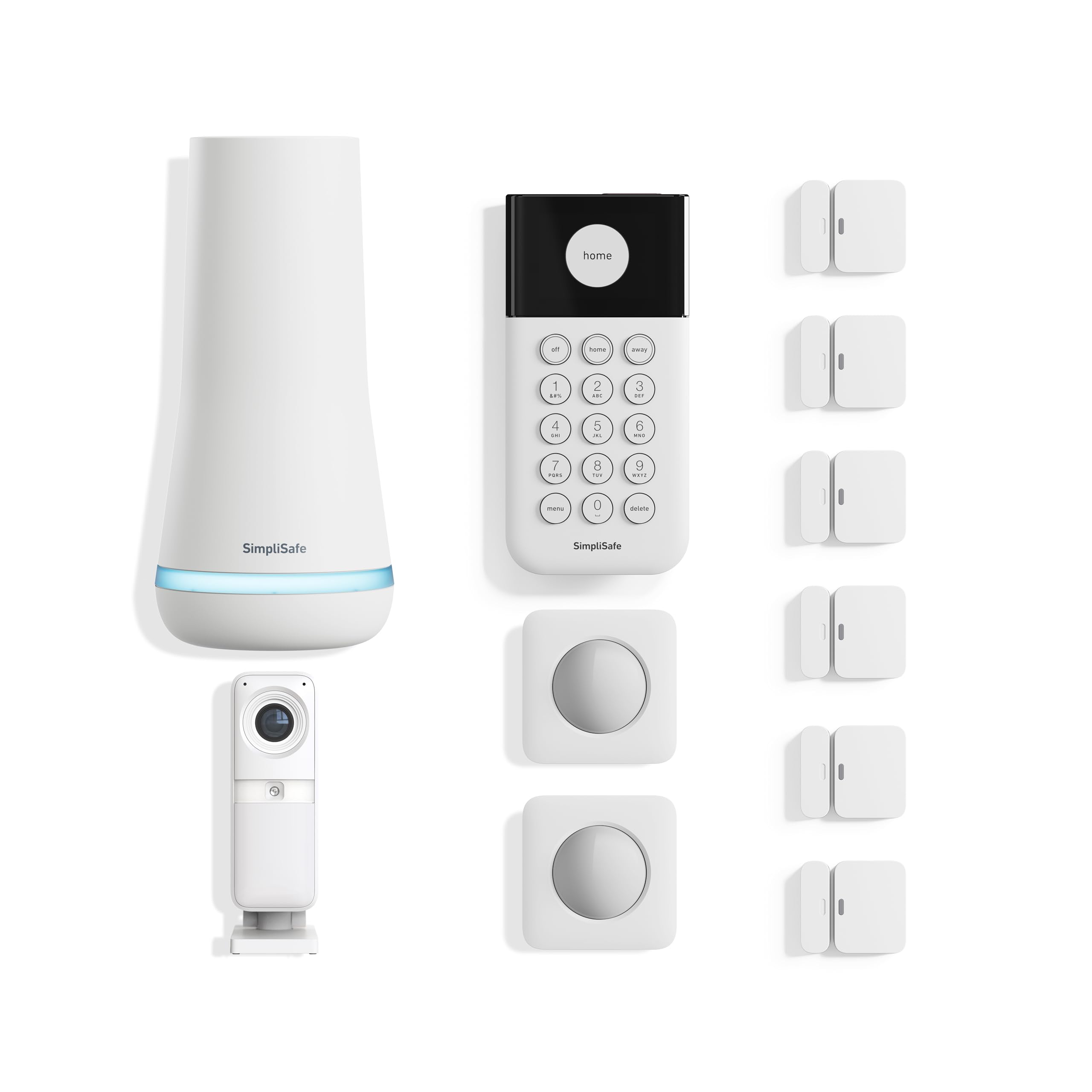
SimpliSafe’s Gen 3 kit is the most complete out‑of‑box package in this comparison: one base station, one wireless indoor HD camera with two‑way audio, a smash‑safe keypad, two motion sensors, and six entry sensors. That level of sensor density is ideal for homes with multiple ground‑floor entries and large open rooms.
The base station runs on a 24‑hour backup battery and cellular backup (requires a monitoring plan) so the system stays active through power and internet outages. Motion sensors cover a 35‑foot, 90‑degree field of view and ignore pets under 60 pounds. Owners consistently praise the easy DIY install and the lack of false alarms even with weak WiFi.
SimpliSafe’s Core Monitoring plan includes live guard intervention: agents can see and speak through the camera during an alarm, and video verification can speed up police dispatch. The system works with Alexa and Google Assistant, but voice alerts use generic zone names rather than custom sensor labels — a minor annoyance for multi‑room setups.
Why it’s great
- 11 pieces cover most homes right out of the box
- Live guard verification via indoor camera for faster dispatch
- Pet‑immune motion detection up to 60 pounds
Good to know
- No open/close history logs without monitoring subscription
- Single account per system — no multi‑user app login
4. LWOHSI PG108 Alarm System (A108F)
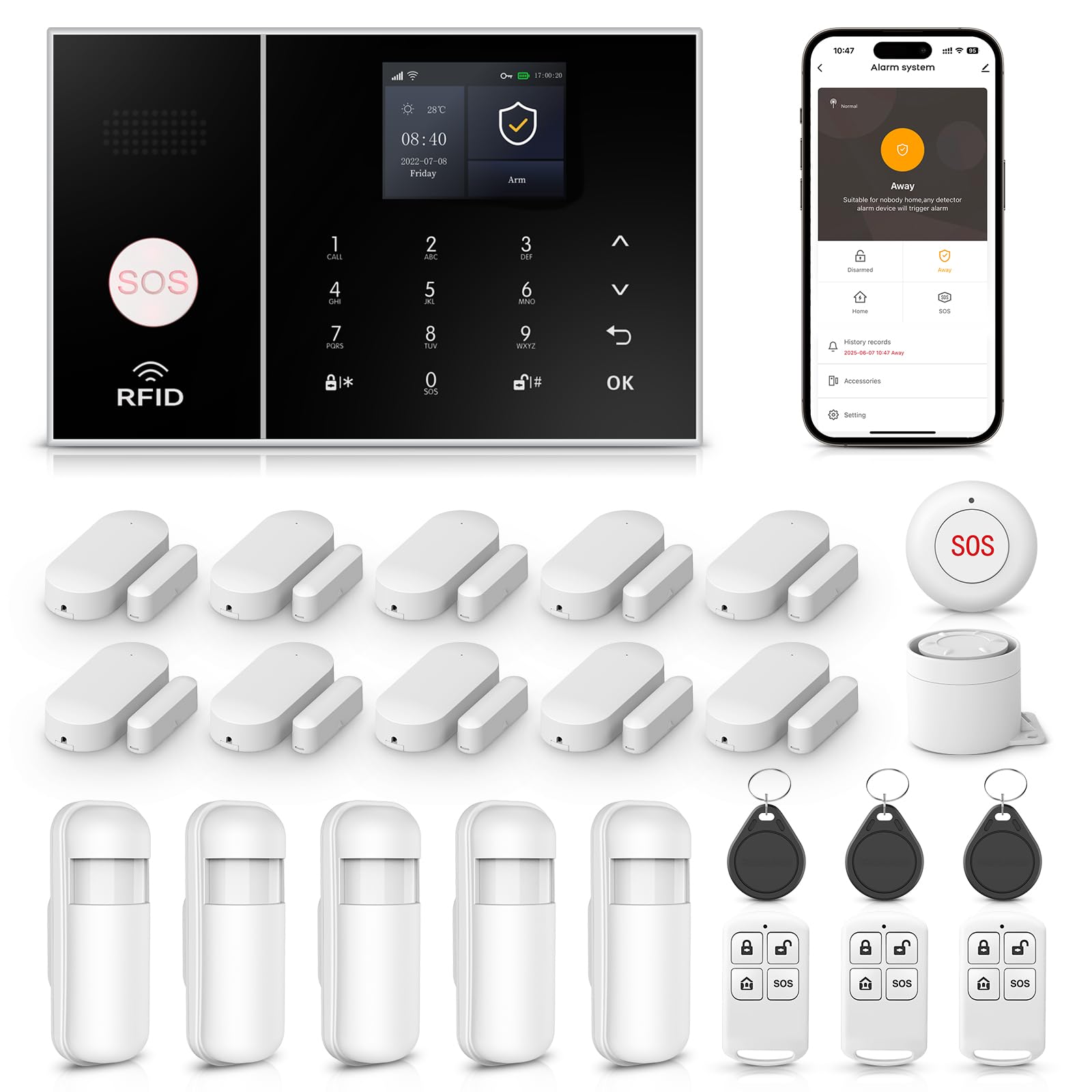
The LWOHSI PG108 (model A108F) brings true dual‑network reliability with both WiFi app push and a built‑in 4G GSM module for SMS and voice call alerts. You can program up to five phone numbers and two SMS numbers — useful for reaching multiple family members simultaneously during an intrusion.
The panel runs on a 32‑bit Cortex‑M3 CPU and supports up to 100 wireless detectors, RFID tags, and remote controls. It integrates with the Tuya/Smart Life app and works with both Alexa and Google Assistant for voice arming and disarming. Owners with rural properties or solar‑powered setups report reliable operation on battery backup alone.
A frequent pain point is the setup complexity: the Smart Life app configuration isn’t intuitive for non‑tech users, and the menu navigation requires guessing sensor numbers. The alert sound also lacks differentiation between door chime and full alarm. Still, for homes that need cellular backup without a monthly subscription, this is a solid mid‑range contender.
Why it’s great
- Built‑in 4G GSM for SMS and voice alerts without monthly fees
- Up to 100 wireless devices supported
- Works with Alexa and Google Assistant
Good to know
- Smart Life app setup is not beginner‑friendly
- No zone‑specific arming — all‑or‑nothing only
5. Tolviviov Alarm System 15‑Piece Kit

The tolviviov kit stands out for its sheer sensor count: ten door/window contact sensors, one motion detector, one keypad, and two remote controls — all packed into a single box. That makes it the most cost‑efficient way to sensor up every entry point in a house or apartment right away.
The WiFi base station connects only to 2.4GHz networks (standard for most smart‑home gear) and pushes real‑time alerts through the app. The 120dB siren is loud enough to be heard throughout a multi‑story home. Owners confirm that the sensors are pre‑linked and can be re‑paired easily, and the system works with Alexa for voice control.
Expansion is limited to 20 sensors and 5 remotes, so larger homes will hit the cap quickly. The app notifications can pile up if you have many zones, and some users report duplicate alerts from the base station and app simultaneously. For a medium‑sized home where you want every window and door covered immediately, this kit delivers the most hardware per dollar.
Why it’s great
- 15 pieces — most sensors of any kit at this tier
- 120dB siren deters intruders effectively
- Self‑adhesive mounting, no tools required
Good to know
- Max 20 sensors limits expansion for larger homes
- Only 2.4GHz WiFi; 5GHz networks need a bridge
6. Like‑New Ring Alarm 8‑Piece Kit (Newest Model)
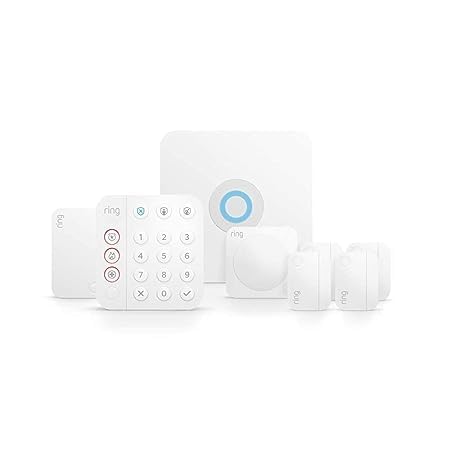
This certified refurbished version of Ring’s newest 8‑piece kit offers the same hardware as the brand‑new unit at a noticeable discount. Amazon tests and certifies each unit to look and work like new with the same limited warranty — owners consistently report receiving pristine, factory‑sealed components.
The contents are identical: base station, keypad, four contact sensors, one motion detector, and one range extender. Setup follows the same app‑guided process and takes about 45 minutes. The pet‑friendly motion sensor and Alexa voice arming work exactly as they do on the full‑price version, and the cellular backup option via Ring Protect is still available.
The main trade‑off is that refurbished units may ship in generic Amazon boxes rather than retail packaging, and the manufacturer warranty is limited rather than full. For buyers who want Ring’s ecosystem (cameras, doorbells, smart locks) and monitoring flexibility at a lower entry price, this refurbished option is a smart way in without sacrificing performance.
Why it’s great
- Substantial savings vs. brand‑new Ring kit
- Same hardware, same app, same accessory ecosystem
- Pet‑immune motion sensor avoids false alarms
Good to know
- Refurbished unit warranty may be limited
- Generic box; no retail packaging
7. LWOHSI Wireless Home Alarm System (A107F)
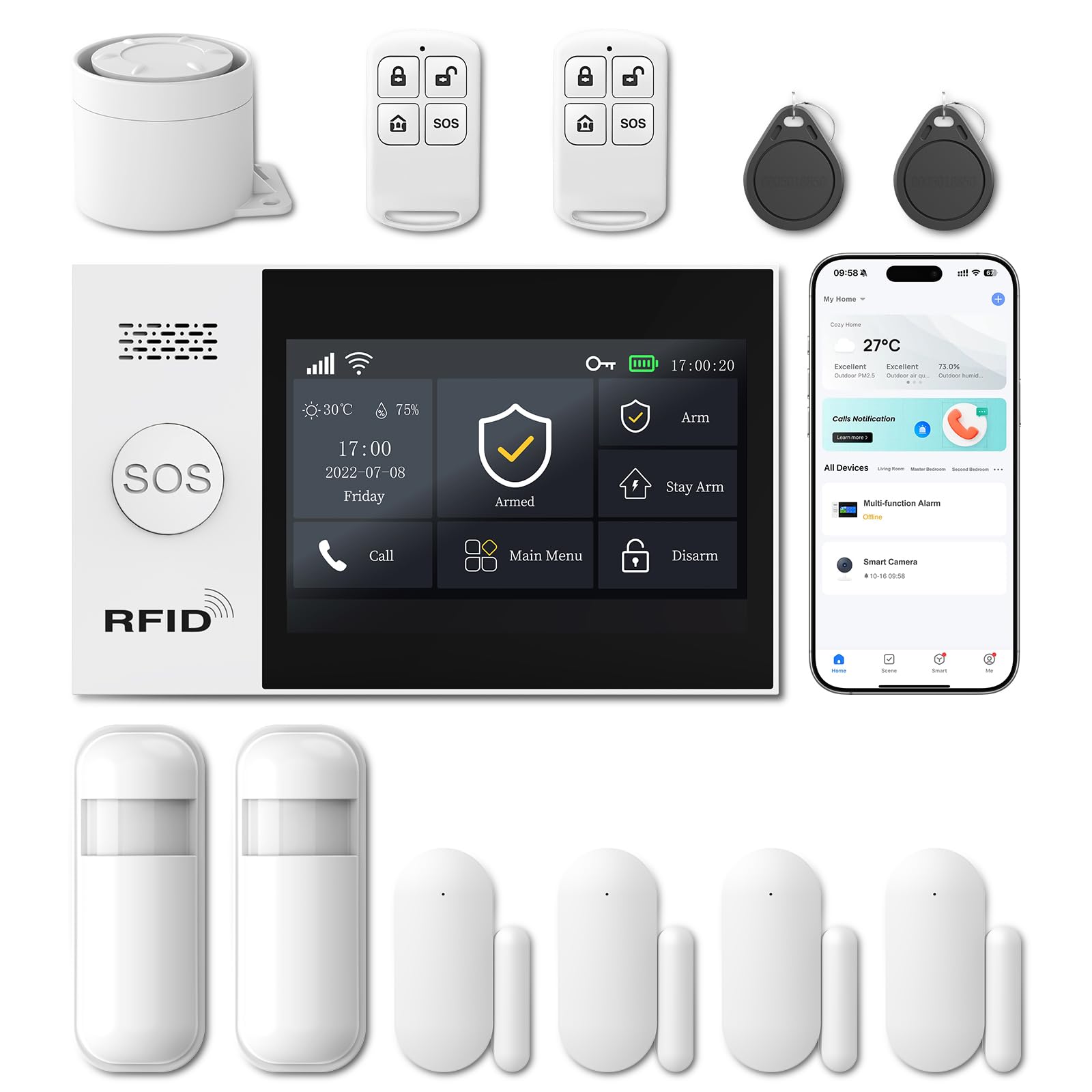
The LWOHSI A107F is the most affordable entry point into dual‑network security, pairing WiFi app alerts with 4G GSM cellular backup in a compact 4.3‑inch color IPS touchscreen panel. The kit includes door/motion sensors, an RFID tag, a remote control, an SOS button, and a 120dB siren — enough to secure a small apartment or a single room.
It supports up to 100 wireless detectors and RFID cards, making it surprisingly expandable for its size. The panel records 20‑second voice messages and can send SMS alerts to pre‑programmed phone numbers. Owners using solar‑powered setups report very low energy consumption, and the USB‑C power connection makes it easy to run from a portable battery bank.
Reliability is the main concern here: multiple customers report glitchy remotes, false alarms from closed doors, and frequent low‑battery warnings even with fresh batteries. The Smart Life app integration can cause duplicate notifications, and the manual is vague. For a guest house, shed, or low‑risk space where budget is the top constraint, this kit works — but it’s not suitable for primary home security without extra patience.
Why it’s great
- Lowest cost dual‑network (WiFi + 4G) system available
- USB‑C powered, ideal for solar or battery setups
- Very low power consumption for off‑grid use
Good to know
- Frequent false alarms and glitchy sensor pairing reported
- Vague manual and unhelpful support videos
FAQ
Can I use an alarm system without a monthly subscription?
What does 4G GSM backup actually do for my alarm?
How many door sensors do I really need for a typical home?
Final Thoughts: The Verdict
For most users, the best alarm system winner is the OSI Alarm System Gen 2 because it combines a large 7‑inch touchscreen, 160‑sensor expandability, and optional no‑contract professional monitoring in a single kit. If you want seamless smart‑home integration with Alexa and a huge accessory ecosystem, grab the Ring Alarm 8‑Piece Kit. And for maximum sensor coverage straight out of the box with no monthly fees, nothing beats the tolviviov 15‑Piece Kit.

Mo Maruf
I created WellFizz to bridge the gap between vague wellness advice and actionable solutions. My mission is simple: to decode the research and give you practical tools you can actually use.
Beyond the data, I am a passionate traveler. I believe that stepping away from the screen to explore new environments is essential for mental clarity and physical vitality.