Our readers keep the lights on and my smoothie glass nicely filled. As an Amazon Associate, I earn from qualifying purchases.
Cutting the cord on your home security doesn’t mean cutting corners. The false choice between a punishing multi-year contract and leaving your home exposed is over. Modern wireless alarm systems pair cellular and Wi-Fi backhaul with app-based control, delivering professional-grade deterrence—120 dB sirens, instant push alerts, and multi-zone coverage—without a single signature locking you in for 36 months.
I’m Mohammad Maruf — the founder and writer behind WellFizz. I spend my days dissecting home automation hardware, comparing sensor ranges, decibel ratings, and app ecosystems to separate systems that actually protect your perimeter from those that just sit on a shelf.
After evaluating dozens of kits across real-world sensor counts, connectivity redundancy, and ease of DIY setup, these are the picks that define the best alarm system without contract for every home size and budget.
How To Choose The Best Alarm System Without Contract
Buying a contract-free alarm system shifts the research burden from “which provider has the best penalty clause” to “which hardware suite actually covers my home.” You need to evaluate sensor range, connectivity redundancy, siren loudness, and app quality. Ignore marketing fluff about “smart home integration” and focus on the core security loop: detect, alert, deter.
Connectivity Path: Wi-Fi vs. Cellular
Most budget kits rely solely on 2.4 GHz Wi-Fi. That works fine for daytime monitoring, but a savvy intruder can jam your router or cut your internet line. Systems with a built-in cellular modem (using a standard SIM card) provide a backup path that keeps the alarm system alive even when your home network is compromised. If your property is remote or has spotty broadband, prioritize a dual-path kit with 4G fallback.
Sensor Quantity and Zone Capacity
A “15-piece kit” sounds impressive, but count how many of those pieces are contact sensors versus remote controls or stickers. Entry sensors on ground-floor doors and windows are non-negotiable. Motion sensors with pet immunity (usually up to 50 or 60 lbs) cover open interior zones. The alarm panel itself should support expansion to at least 20 zones—ideally 100 or more—so you can add garage sensors, water leak detectors, or shock sensors later without buying a new hub.
App Usability and Alert Reliability
Your phone is now your arming station, alarm pad, and notification center. A glitchy app with delayed push alerts defeats the entire purpose of real-time security. Look for apps that allow zone naming, per-sensor arm/disarm scheduling, and geofencing. The best systems push alerts within two seconds of a sensor trigger and let you check camera feeds or sensor history with a single tap.
Siren Loudness and Deterrence
Contract-free systems often rely on a built-in siren rather than a monitored call center. The siren’s job is to make an intruder leave immediately. A siren rated at 120 dB or higher is ideal—it’s physically painful to be in the same room with it. Placement matters: a siren in a central hallway is more intimidating than one hidden in a closet.
Quick Comparison
On smaller screens, swipe sideways to see the full table.
| Model | Category | Best For | Key Spec | Amazon |
|---|---|---|---|---|
| SimpliSafe Gen 3 11-Piece | Premium Kit | Whole-home + camera integration | 95 dB base siren, 24h battery backup | Amazon |
| Arlo SS1501 | Premium | 8-in-1 sensors, SecureLink hub | 8 sensing functions per sensor | Amazon |
| Ring Alarm 8-Piece | Mid-Range | Ecosystem expandability | Base station, keypad, 4 contact sensors | Amazon |
| OSI Alarm Gen 2 4G | Premium | 4G backup + 7-inch touch panel | 7″ 1024×600 touchscreen, up to 160 sensors | Amazon |
| aosu WirelessCam Pro 2-Cam | Mid-Range | Outdoor video monitoring, no sub | 2K HD, 240-day battery, 32GB local storage | Amazon |
| SimpliSafe Smart Alarm Indoor Camera | Mid-Range | Indoor camera with AI vision | 1536p HD, 80 dB siren, vision AI | Amazon |
| RenseCum A107F Touchscreen Kit | Mid-Range | Touchscreen + GSM/Wi-Fi dual path | 4.3″ touchscreen, 4G + Wi-Fi | Amazon |
| tolviviov 15-Piece Kit | Budget | High sensor count on a tight budget | 120 dB siren, 10 door sensors included | Amazon |
| PGST PG108-4GUS-C | Budget | GSM auto-dial alerts | 4G + Wi-Fi, 99+ sensor support | Amazon |
In‑Depth Reviews
1. SimpliSafe 11 Piece Wireless Home Security System Gen 3
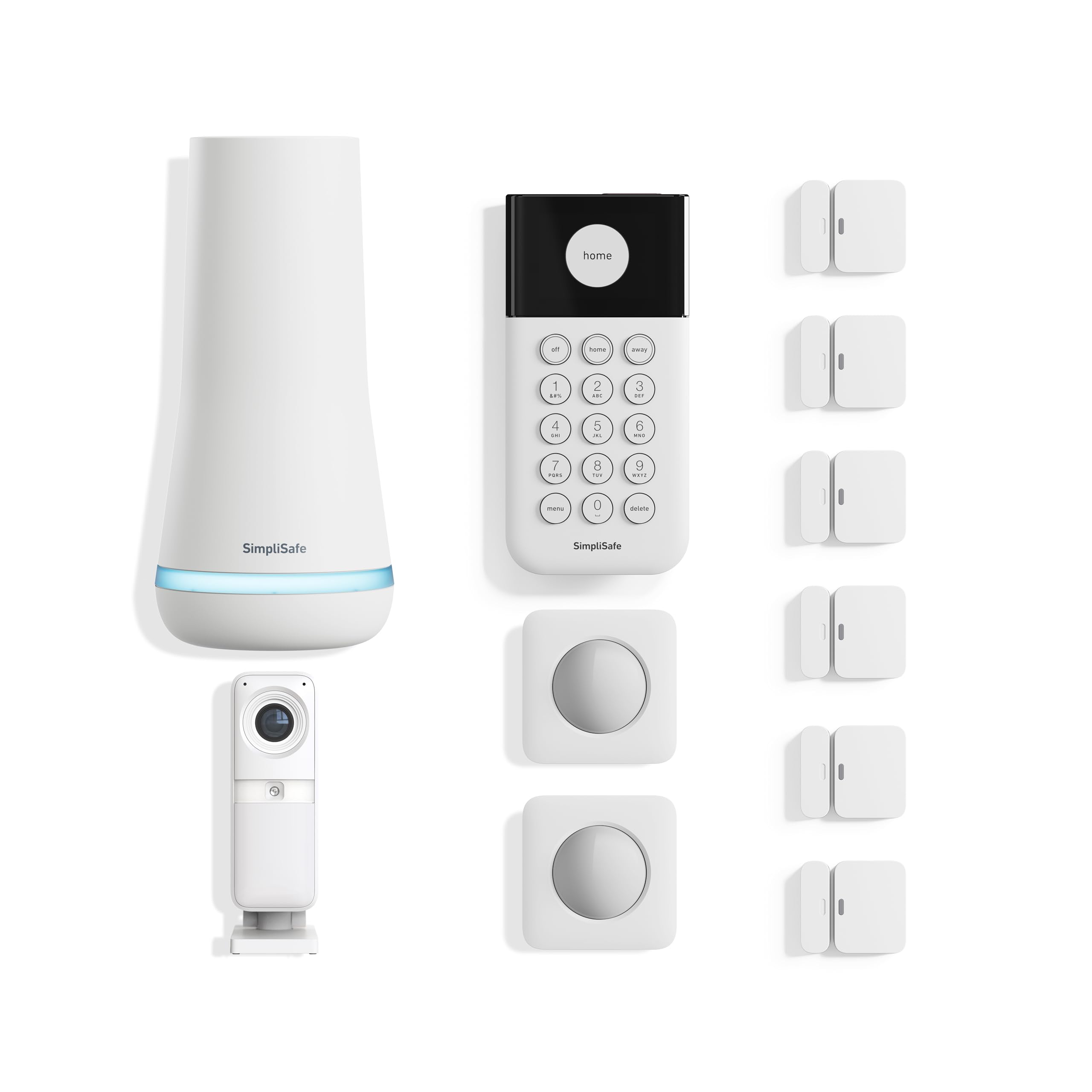
The Gen 3 11-piece kit is the gold standard for contract-free security because it packs a full Detection-Response loop: six entry sensors, two motion sensors with pet immunity up to 60 lbs, a 95 dB siren, and a 1536p indoor camera into a single box. The base station holds a 24-hour battery and supports cellular backup (activated with a professional monitoring plan), so an internet cut doesn’t leave you blind. Setup is genuinely plug-and-play—adhesive backing on every component lets you install without a single drill hole.
The Smart Alarm Indoor Camera’s vision AI distinguishes humans from pets under 50 lbs, reducing false alarms from a roaming cat or shifting curtain. The 5-second agent response time (with the optional monitoring plan) is industry-leading for a DIY system. The keypad has a smash-safe design: if an intruder tries to destroy it, the alarm still triggers.
At this price point, you’re paying for the tightest software integration in the category—the app lets you assign custom sensor names, create secret alerts for sensitive cabinets, and arm/disarm via Alexa or Google Assistant. The trade-off is that the camera’s video quality, while crisp at 1536p, doesn’t match dedicated outdoor 2K units, and the base station lacks a built-in 4G modem out of the box (SIM slot requires the monitoring tier).
Why it’s great
- Complete 11-piece kit with indoor camera and pet-immune motion sensors
- 24-hour battery backup keeps the alarm active during outages
- Smash-safe keypad and 5-second agent response with optional monitoring
Good to know
- Camera resolution is 1536p, not 4K
- Cellular backup requires a paid monitoring plan to activate
2. OSI Alarm System Gen 2 (4G)
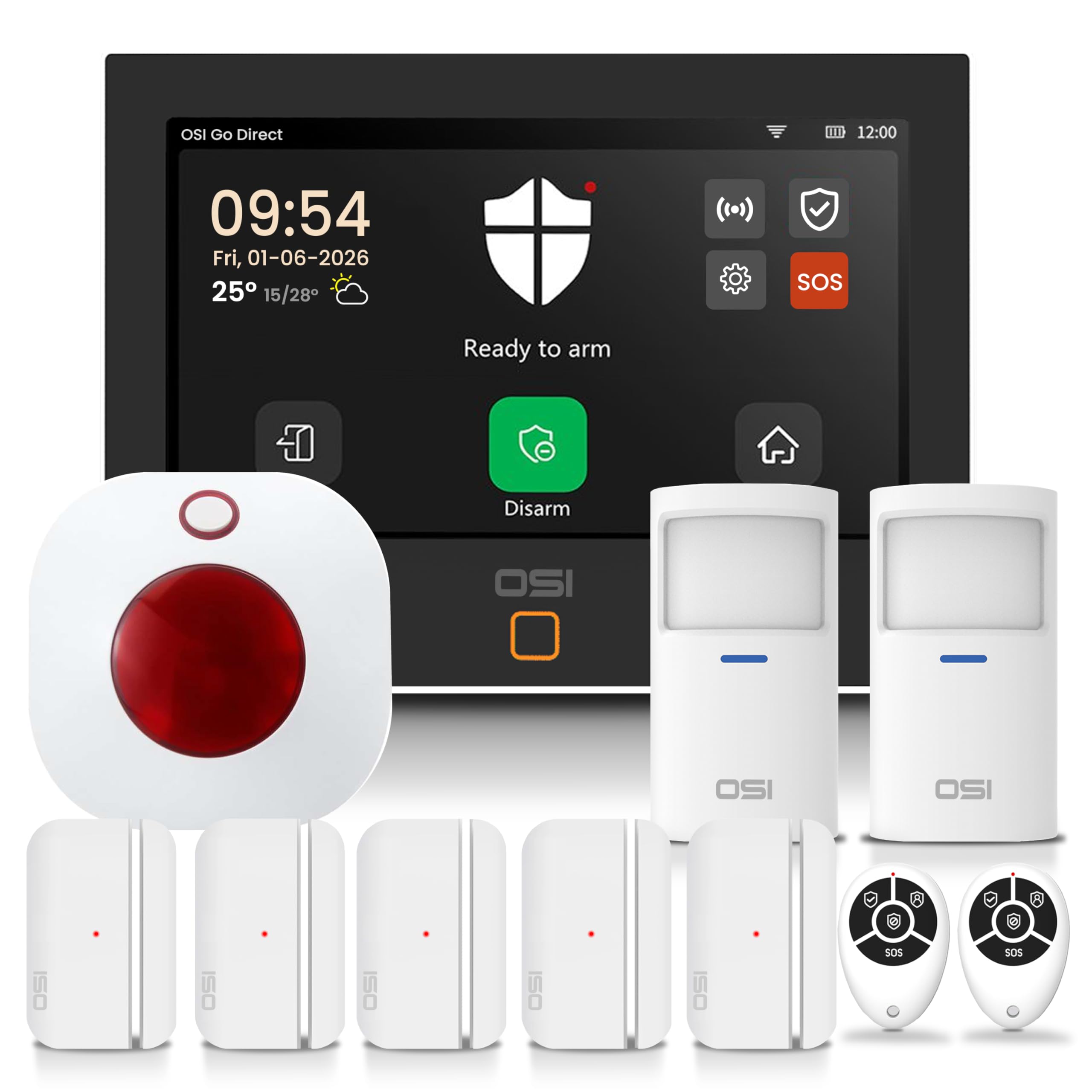
The OSI Gen 2 stands out for its 7-inch 1024×600 anti-fingerprint touchscreen—by far the largest and most responsive panel in this roundup. It runs a setup wizard that walks you through zone naming, sensor pairing, and user permissions in under 15 minutes. The kit ships with 2 motion sensors, 5 contact sensors, a 433 MHz wireless strobe siren, and 2 key fobs, all linking to a hub that supports up to 160 sensors total. The 24-hour backup battery keeps the system armed through extended power failures.
What separates the OSI from lower-tier kits is its true dual-path connectivity. The panel accepts a standard SIM card for 4G fallback, ensuring SMS alerts and app notifications arrive even when your Wi-Fi is down. The 433 MHz sensor protocol penetrates cement and rebar better than 2.4 GHz-only systems—one reviewer noted instant response through a concrete wall that would normally block Bluetooth. The SOS button on the panel, remote, and app triggers instant siren and push alerts to all shared users.
The self-monitoring tier is genuinely free—no monthly fee at all—but the optional 24/7 alarm monitoring (Canada only) starts at a reasonable rate. The only downsides are that the wireless siren is a separate AC-powered unit that takes up a double outlet space, and the app’s event history lacks a bulk-delete function. For property owners who want a dedicated console rather than a phone-only experience, this is the strongest hardware package available.
Why it’s great
- Large 7-inch HD touchscreen with anti-fingerprint coating
- True 4G cellular backup via standard SIM card
- Scalable to 160 sensors, 6 keypads, and multiple controllers
Good to know
- Wired siren base station takes up two AC outlets
- Professional monitoring is currently only offered in Canada
3. Arlo Home Security System SS1501
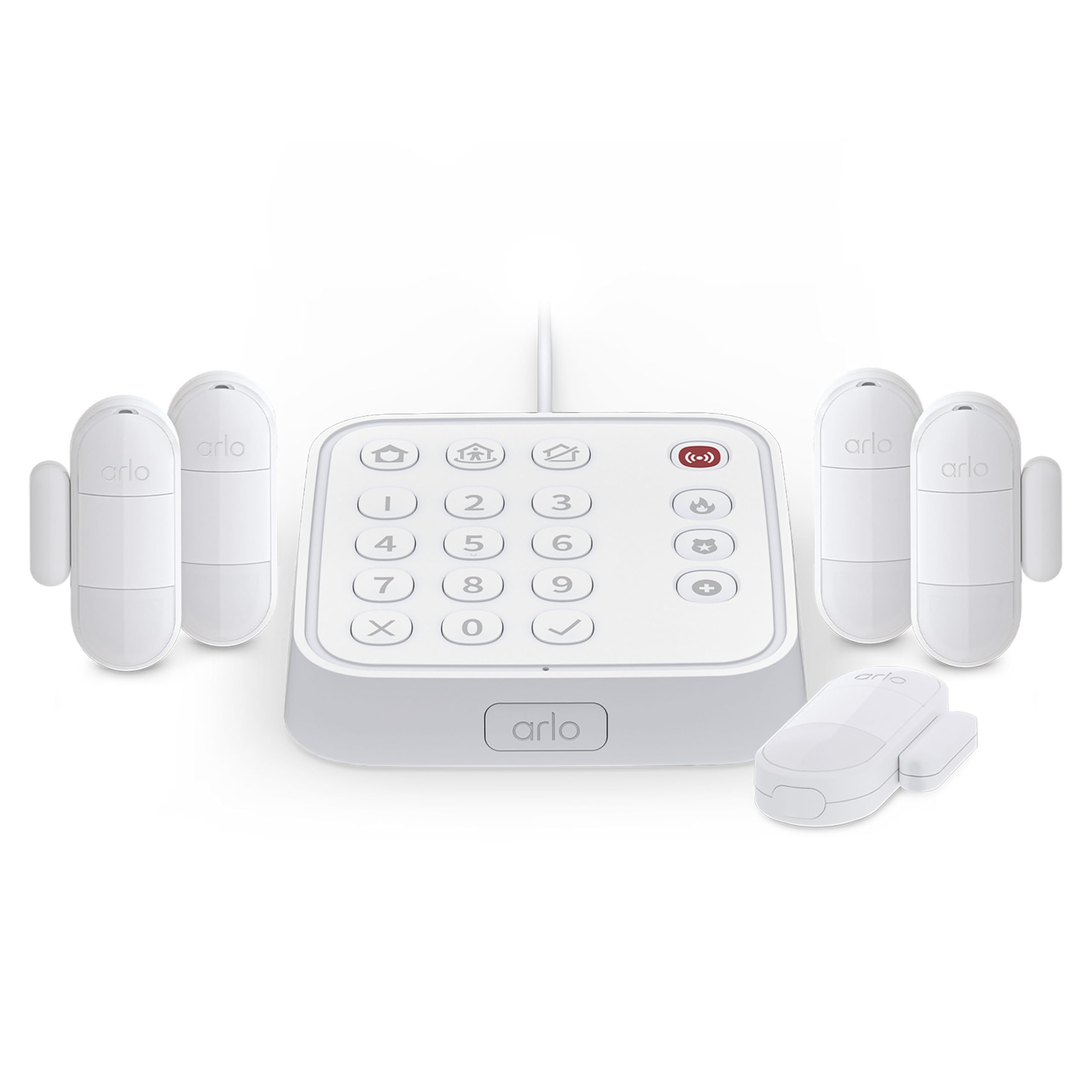
Arlo’s SS1501 reimagines the entry sensor as an 8-function device packed into a single compact puck. Each all-in-one sensor detects door/window open/close, motion, temperature change, water leaks, and tilt, and can listen for existing smoke alarm and CO alarm sounds. That means one sensor does the job of eight separate devices, drastically reducing clutter and installation time. The kit includes five such sensors and a keypad hub that integrates a motion sensor, siren, and smoke/CO audio listener.
The keypad hub uses Arlo’s SecureLink technology for extended wireless range and encrypted communication. The hub connects to your router via Ethernet, creating a dedicated low-frequency mesh that doesn’t compete with your Wi-Fi channels for bandwidth. The app setup is guided—scan a QR code on each sensor and assign it to a room—but the learning curve is slightly steeper than SimpliSafe’s, especially for older users who find the app-centric configuration unintuitive.
The system works without any subscription for basic arming, disarming, and push alerts. Unlocking the 30-day video cloud storage, object detection, and professional monitoring requires a paid Arlo Secure plan after the trial. The trade-off is clear: unmatched sensor density per device, but a stronger push toward a subscription for full functionality. Battery life on the sensors is excellent—many users report a full year of operation before swapping the CR123 cells.
Why it’s great
- One sensor handles motion, entry, temperature, leak, smoke, and CO listening
- SecureLink hub provides dedicated encrypted mesh, not shared Wi-Fi
- One-tap emergency buttons for fire, police, and medical direct from the keypad
Good to know
- Full video cloud storage and professional monitoring require a subscription
- App-centric setup may not be intuitive for non-tech users
4. Ring Alarm 8-Piece Kit
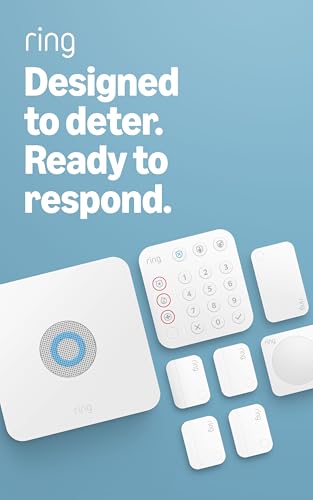
The Ring Alarm 8-Piece Kit is the entry point into the largest DIY security ecosystem on the market. The base station, keypad, four contact sensors, one motion detector, and one range extender cover a 1-2 bedroom home out of the box. The motion sensor has a 35-foot detection range with a 90-degree field of view, and the contact sensors are slimmer than previous generations, making them flush against modern door frames. The range extender bridges the hub to rooms that sit at the edge of your Wi-Fi signal.
What makes the Ring system unique is its Z-Wave Plus wireless protocol, which allows third-party smart locks, lights, and sirens to integrate directly into the alarm arming/disarming sequence. For example, you can set a Schlage smart deadbolt to disarm the alarm when you enter your PIN. The new keypad includes dedicated panic buttons for police, fire, and medical, and the base station supports cellular backup via AT&T with a Ring Protect subscription. Without the subscription, you get local arming and push notifications when the alarm is triggered.
The drawback is that the 8-piece kit is leaner than comparably priced competitors—you get only four contact sensors and no included glass break or smoke detector. Expanding the system quickly adds cost. But for users already in the Ring ecosystem (video doorbells, floodlight cams), the seamless single-app control and Alexa voice arming make it the most cohesive smart home security experience available without a contract.
Why it’s great
- Part of the largest DIY security ecosystem with deep smart lock and light integration
- Z-Wave Plus protocol enables third-party device compatibility
- Alexa Guard backup automatically listens for glass break sounds
Good to know
- Only 4 contact sensors included—expansion sensors add cost
- Cellular backup and remote arming require a Ring Protect subscription
5. aosu WirelessCam Pro System 2-Cam Kit

The aosu WirelessCam Pro system solves the two biggest pain points of contract-free outdoor cameras: battery life and local storage. Each camera packs a 18.72 Wh rechargeable battery that one reviewer confirmed runs two months under heavy daily triggering and up to 240 days under average conditions. The base station stores recordings locally on 32 GB of built-in memory, holding 240–360 days of clips without any cloud subscription. Video captures in True 2K (3 MP) resolution with a 166-degree ultra-wide lens that corrects fisheye distortion through a seven-element optical assembly.
Smart alerts use on-device AI to differentiate people from vehicles and animals, sending push notifications with a preview image so you can assess threats instantly. The two-way talk feature includes a voice-changing mode for an extra layer of personal security. The cameras support camera-to-camera track and sync, linking timestamps across multiple units for faster event review. The outdoor rating is robust—weather-sealed housings handle direct rain and sun exposure.
The system supports 2.4 GHz and 5 GHz Wi-Fi, solving the compatibility issues that plague many budget outdoor cameras that only connect to 2.4 GHz networks. The trade-off is that the base station’s Ethernet cable is short (about 3 feet), so placement near your router is mandatory. The included mount uses a bracket design that requires unscrewing the camera body for battery recharging rather than sliding it off—a minor inconvenience for the extended battery life you get in return.
Why it’s great
- True 2K resolution with 166-degree ultra-wide field of view
- 32 GB local storage eliminates any need for cloud subscriptions
- 240-day battery life under normal conditions, with optional solar panel
Good to know
- Base station Ethernet cable is short, limiting router placement
- Camera must be unscrewed from bracket for recharging
6. SimpliSafe Smart Alarm Wireless Indoor Security Camera

This is an add-on camera designed to work within the SimpliSafe Gen 3 ecosystem, but it doubles as a standalone smart sensor thanks to its vision AI and built-in 80 dB siren. The camera captures at 1536p resolution with 10x digital zoom and infrared night vision, providing enough detail to identify faces and read package labels. The AI motion detection distinguishes humans from pets under 50 lbs, which dramatically reduces false alerts compared to basic motion-only cameras.
The standout feature is Fast Protect Technology: when paired with a SimpliSafe base station and optional professional monitoring, agents can see the camera feed, speak through the two-way audio, and trigger the siren—all within seconds of the alarm being tripped. The battery backup worked efficiently during power outages, with one reviewer noting only 50% drain after two months of continuous use.
The camera requires a Gen 3 SimpliSafe system and Wi-Fi to function—it won’t operate as a completely standalone unit. The privacy shutter takes 8-10 seconds to open when switching from privacy mode to active monitoring, which is slow enough to miss the first few seconds of an event. For users who already own a SimpliSafe base station, this is the most cost-effective way to add indoor video verification without a contract.
Why it’s great
- Vision AI accurately distinguishes humans from pets under 50 lbs
- Built-in 80 dB siren and two-way audio for live intruder intervention
- Battery backup works during power outages with charged Wi-Fi
Good to know
- Requires a SimpliSafe Gen 3 base station to function
- Privacy shutter opens slowly, potentially missing event start
7. RenseCum A107F Touchscreen Home Security System
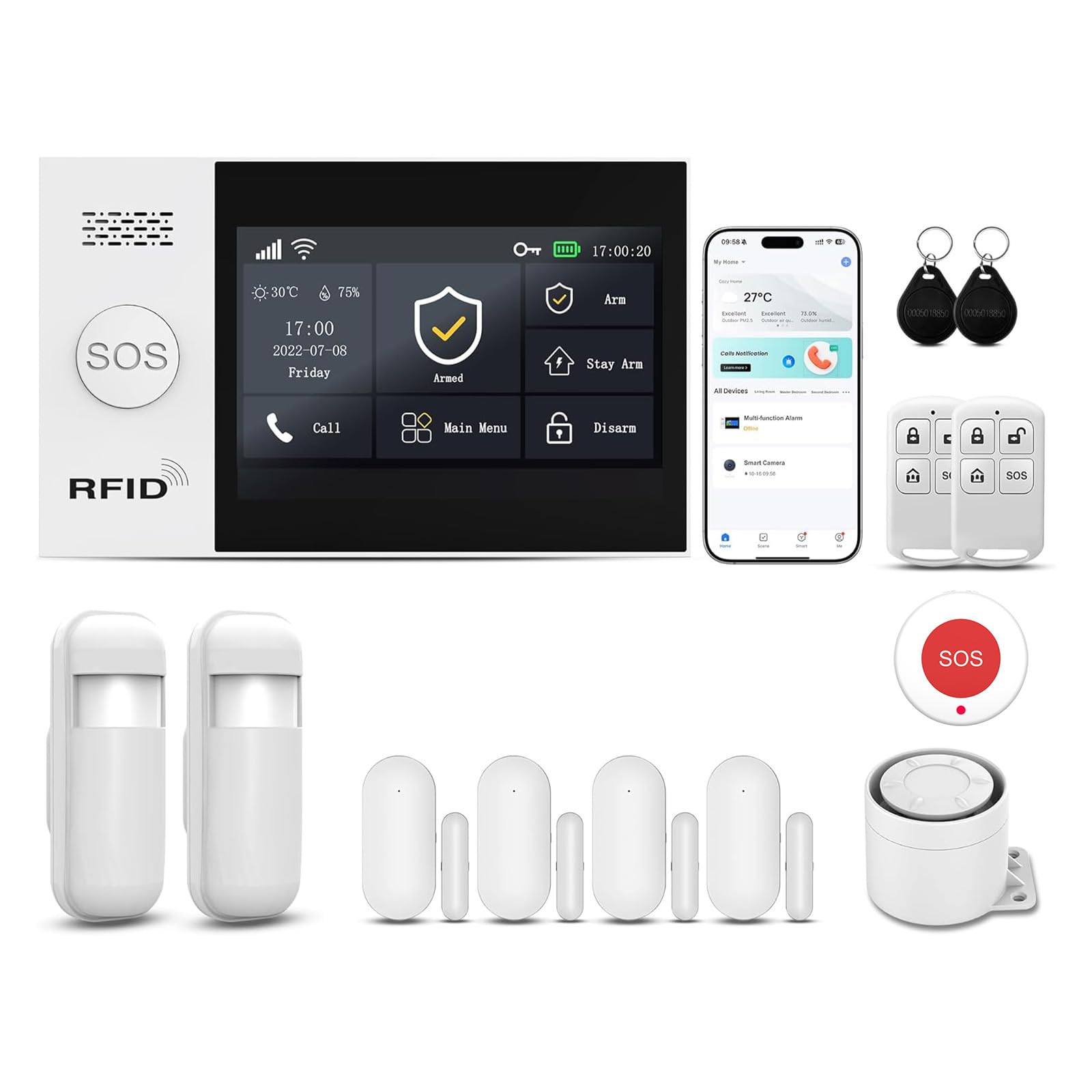
The RenseCum A107F is a rare mid-range system that pairs a color touchscreen interface with dual-path connectivity (2.4 GHz Wi-Fi and 4G GSM) at a sub-premium price point. The panel itself is a 4.3-inch color touchscreen that displays system status, time, and zone alerts, making it accessible for elderly family members who prefer a physical display over a phone app. The built-in SOS button on the base station and included remote triggers instant siren and push alerts, a critical feature for medical emergencies or home invasion scenarios.
All sensors are factory-paired to the panel, which the manufacturer calls a “3-step tuning” process: tap the menu, tap Parts, tap the “+” button. This eliminates the frustration of manually pairing each door and motion sensor. The kit typically ships with a combination of door/window sensors, PIR motion detectors, RFID tags, and a 120 dB siren. The panel supports the Smart Life and Tuya apps, which are mature platforms with reliable push notification delivery and voice control via Alexa and Google Assistant.
The main drawback is that some buyers received a limited kit version (one motion sensor instead of four, fewer contact sensors than listed) due to inconsistent packaging. The adhesive mounting strips on the sensors are functional but not robust for long-term stickiness on textured walls—users may need to supplement with screws or heavy-duty double-sided tape. The app supports up to 200 sensors, making this one of the most expandable mid-range systems available without a subscription.
Why it’s great
- Color touchscreen eliminates the learning curve for non-smartphone users
- Factory-paired sensors reduce installation time to minutes
- Dual Wi-Fi and 4G connectivity ensures alerts during internet outages
Good to know
- Kit contents can vary by shipment—verify sensor count on arrival
- Adhesive strips may not hold on textured or painted walls long-term
8. tolviviov 15-Piece Alarm System

The tolviviov 15-piece kit delivers the highest raw sensor count per dollar in this roundup: one base station, 10 door/window contact sensors, one motion sensor, a keypad, and two remote controls. The 120 dB siren is loud enough to be heard through a 1,500-square-foot single-story home from any room, and the motion sensor covers a 35-foot range with a 90-degree detection field. The system supports expansion up to 20 sensors and 5 remote controls, making it suitable for a 3-4 bedroom home despite not reaching the 100-sensor capacity of higher-end competitors.
Setup is genuinely DIY-friendly—the base station connects to 2.4 GHz Wi-Fi, and each sensor syncs to the hub with a simple pairing sequence. The app provides real-time push alerts for each zone and allows you to name sensors individually (“Front Door,” “Garage Window”) for immediate context. The system is compatible with Alexa and Google Assistant for voice arming and disarming. The keypad with numeric entry adds a layer of convenience for disabling the alarm without reaching for your phone.
The limitations reflect its budget-tier positioning. The system only supports 2.4 GHz Wi-Fi, so homes with only a 5 GHz mesh network will need a router setting change or an extender. The motion sensor lacks pet immunity, so a large dog roaming at night could trip false alarms. The app interface, while functional, lacks the polished design of Ring or SimpliSafe—some users found the zone naming interface confusing. For the price, however, you get enough sensors to cover every ground-floor entry point plus a secondary interior motion zone.
Why it’s great
- 10 contact sensors cover all ground-floor entry points immediately
- 120 dB siren is physically deterrent at close range
- Alexa and Google Assistant compatible for voice control
Good to know
- Only supports 2.4 GHz Wi-Fi—5 GHz networks require configuration changes
- Motion sensor is not pet-immune; may trigger with large pets
9. PGST PG108-4GUS-C Alarm System

The PGST PG108-4GUS-C is the most cost-effective entry-level system that still supports dual connectivity—2.4 GHz Wi-Fi for app control and a slot for a standard GSM SIM card (2G/3G/4G) for SMS and voice call alerts. The 120 dB siren deters intruders immediately, and the system can support up to 99 wireless sensors and 3 wired zones, making it one of the most expandable budget platforms available. The included door sensors have a built-in long antenna that extends the range to 100 meters (328 feet) in open air, which is stronger than typical budget contact sensors.
The Smart Life / Tuya app integration is free and provides real-time push alerts, remote arming/disarming, and zone naming. Unlike many budget systems that require the app for all setup, the PGST panel also functions as a standalone alarm with a keypad and siren, so you can use it without a smartphone entirely—the app is optional. One reviewer confirmed the system works perfectly without Wi-Fi, relying solely on the GSM path for call and text alerts. The kit includes the main panel, PIR motion detector, door/window sensors, and remote controls.
The SIM card is not included, and you’ll need an active talk/text plan from a mobile carrier to enable SMS and voice call alerts. The 2.4 GHz-only Wi-Fi limitation applies, and the initial pairing process requires reading the manual—the system ships with default arming schedules that need clearing during first setup. The panel’s form factor is bulkier than modern slim-keypad designs, but for sheer feature-per-dollar ratio (including real 4G autodial capability), the PGST is the most functional entry point into contract-free security.
Why it’s great
- Dual Wi-Fi and 4G GSM connectivity for under at time of research
- Supports up to 99 wireless sensors for massive expansion
- 100-meter open-air sensor range covers large properties
Good to know
- SIM card must be purchased separately for SMS/voice alerts
- 2.4 GHz-only Wi-Fi; will not connect to 5 GHz networks
FAQ
Can I use a contract-free alarm system in a rental apartment?
What happens to my alarm if my home Wi-Fi goes down?
Are there any hidden fees with “no contract” alarm systems?
Can I integrate these systems with my existing smart home devices?
How long do the batteries typically last in wireless sensors?
Final Thoughts: The Verdict
For most users, the best alarm system without contract winner is the SimpliSafe Gen 3 11-Piece Kit because it combines the most refined DIY installation process with a pet-immune motion sensor, a 95 dB siren, and optional professional monitoring that costs nothing upfront and can be canceled at any time. If you want a dedicated 7-inch touchscreen console with 4G cellular backup and expandability up to 160 sensors, grab the OSI Alarm Gen 2. And for the tightest budget without sacrificing dual-path connectivity, nothing beats the PGST PG108-4GUS-C as a functional entry point into contract-free home security.

Mo Maruf
I created WellFizz to bridge the gap between vague wellness advice and actionable solutions. My mission is simple: to decode the research and give you practical tools you can actually use.
Beyond the data, I am a passionate traveler. I believe that stepping away from the screen to explore new environments is essential for mental clarity and physical vitality.