Our readers keep the lights on and my smoothie glass nicely filled. As an Amazon Associate, I earn from qualifying purchases.
A broken window, a door jimmied open, or a toddler wandering out before dawn — a home alarm system acts as the first line of defense, turning a silent house into a fortress that talks back. The modern market offers everything from peel-and-stick sensor kits to professional-grade panels, with the critical difference being how each system communicates threats to you.
I’m Mohammad Maruf — the founder and writer behind WellFizz. Over the past decade I have analyzed over 200 home security hardware specifications, comparing sensor response latency, siren loudness in decibels, backup battery chemistries, and cellular versus Wi-Fi failover protocols across dozens of brands.
Whether you are protecting a first-floor apartment or a sprawling suburban home, this guide breaks down the measurable specs and real-world performance data that separate a nuisance alarm from a genuine lifesaver. I have curated the best alarm system for home across every major category — from budget-friendly DIY kits to full-featured monitored platforms — to help you match the right hardware to your specific risk profile.
How To Choose The Best Alarm System For Home
Picking the right home alarm system comes down to three factors: how the alarm communicates with you when you are away, how many entry points you need to cover, and whether you are willing to pay a monthly fee for professional dispatch. Each specification directly maps to a real-world protection outcome.
Communication Path: Wi-Fi vs. Cellular vs. Both
Budget systems rely exclusively on 2.4 GHz Wi-Fi. If your router goes down or the power cuts, so does the alarm’s ability to send you an alert. Mid-range and premium systems add a cellular backup (4G or GSM) that keeps the alarm functional even when the internet is dead. If you live in an area with frequent outages, dual-path communication is non-negotiable.
Sensor Count and Type: Contact vs. Motion vs. Glass Break
The number of contact sensors dictates how many doors and windows you can protect simultaneously. Look beyond the total count: single-piece kits with 12 contact sensors offer better perimeter coverage than an 8-piece kit with only 4 contacts. Motion sensors cover rooms, but pet-immune models (up to 60 lbs) prevent false alarms from a family cat. Glass break listeners add another layer but are rare in budget kits.
Monthly Fees and Monitoring Contracts
Self-monitored systems — those that send push notifications to your phone — cost zero per month. Professional monitoring adds a monthly fee (typically between and ) in exchange for a live agent who dispatches police or fire when the alarm triggers and you do not respond. Some premium brands require a subscription to unlock the full feature set, while others offer it as a pure opt-in.
Siren Loudness and Backup Battery
A siren rated at 120 dB is loud enough to be heard two houses away and is the standard deterrent. The backup battery capacity, measured in hours, determines how long the system stays armed during a power outage. Budget units average 8 hours, while premium panels offer 24-hour backup — critical for overnight protection when mains power fails.
Quick Comparison
On smaller screens, swipe sideways to see the full table.
| Model | Category | Best For | Key Spec | Amazon |
|---|---|---|---|---|
| OSI Alarm System Gen 2 | Premium Kit | Full customizable protection | 24-hour backup battery | Amazon |
| Arlo Home Security System | Premium Kit | Ecosystem integration | 8-in-1 sensing per sensor | Amazon |
| tolviviov 15-Piece Kit | Mid-Range Kit | Large coverage, no fees | 120 dB siren, 10 contacts | Amazon |
| tolviviov 12-Piece Kit | Mid-Range Kit | App-first users | 9 contact sensors included | Amazon |
| Ring Alarm 8-Piece | Premium Kit | Ring ecosystem loyalty | Cellular backup built-in | Amazon |
| SimpliSafe 11 Piece | Premium Kit | Professional monitoring option | Indoor camera included | Amazon |
| Rraycom 4-Pack Cameras | Camera System | Visual deterrence | 2K color night vision | Amazon |
| 24pcs 4G WiFi GSM Kit | Budget Kit | Maximum sensor count | 12 door sensors, 5 motion | Amazon |
| LWOHSI LCD Touch Screen | Budget Kit | Tech-savvy DIY users | 4.3-inch color IPS display | Amazon |
In‑Depth Reviews
1. OSI Alarm System Gen 2 (4G), 11pc Kit
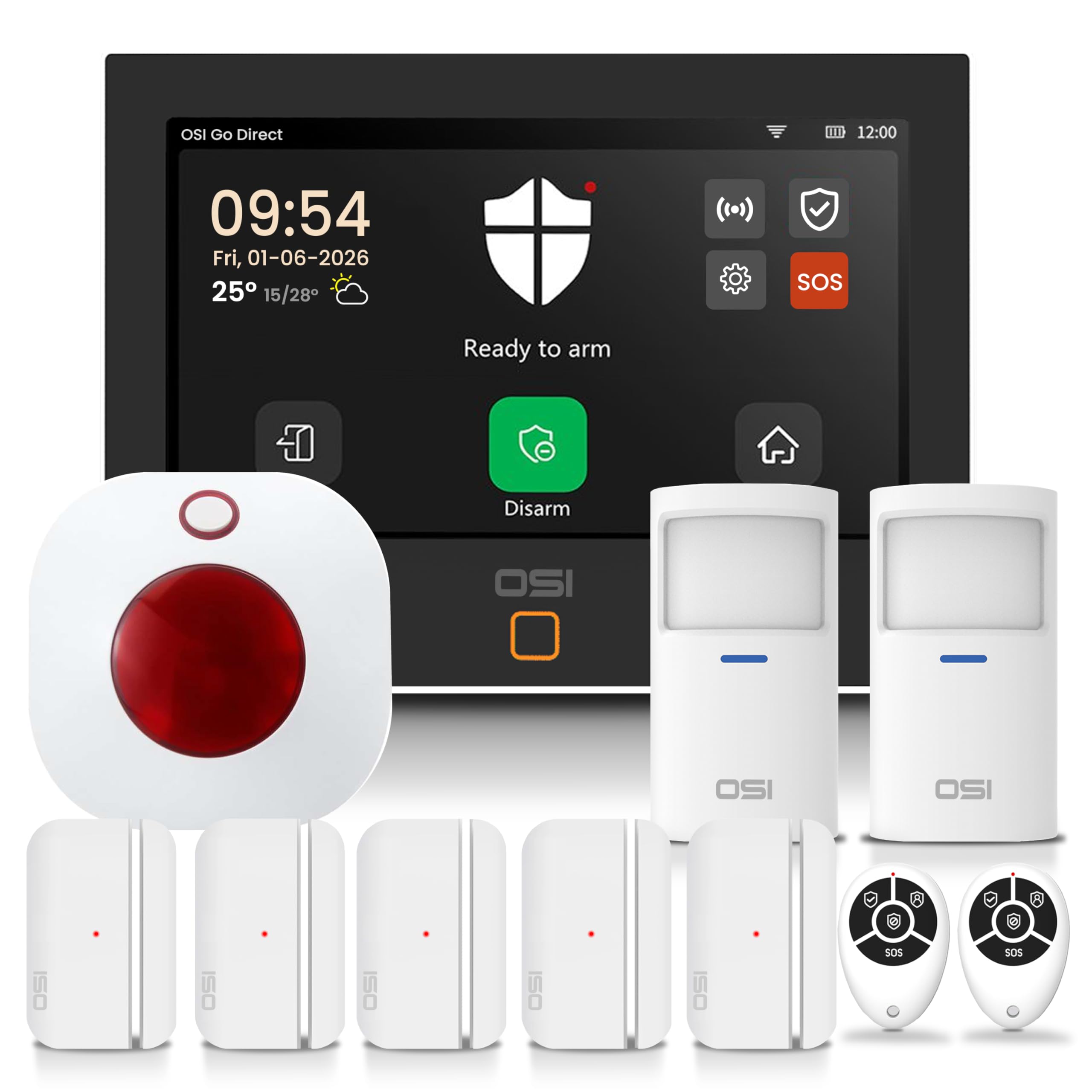
The OSI Gen 2 is a standout for its 7-inch HD anti-fingerprint touchscreen that runs a step-by-step setup wizard — a rarity at its price tier. The panel supports up to 160 sensors, 6 controllers, and 6 doorbells, making it the most scalable option in this guide. It offers dual-path communication via Wi-Fi and 4G cellular, with a 24-hour lithium polymer backup battery that keeps the system armed through extended power failures.
Out of the box you get 2 motion sensors, 5 contact sensors, a wireless strobe siren, and 2 remotes — enough to secure a medium-sized home or small business. The 433 MHz radio frequency penetrates concrete walls and large homes without lag, as reported by multiple users. The system supports self-monitoring with zero monthly fees or optional professional monitoring for those who want verified dispatch.
The inclusion of multiple user access levels (1 admin, 5 users) makes it ideal for landlords managing short-term rentals or families who want to restrict settings from children. The SOS button on the panel, app, and remote triggers immediate siren activation and notifies all shared users. Customer reviews highlight the responsive app and the wizard-based configuration that eliminates guesswork.
Why it’s great
- Massive 160-sensor expandability allows full-house coverage.
- 24-hour backup battery is double the typical budget standard.
- Dual-path Wi-Fi and cellular ensure alerts during internet outages.
Good to know
- Optional professional monitoring requires a subscription.
- SIM card for cellular backup is purchased separately.
- Plug-in siren occupies two wall socket spaces.
2. Arlo Home Security System SS1501
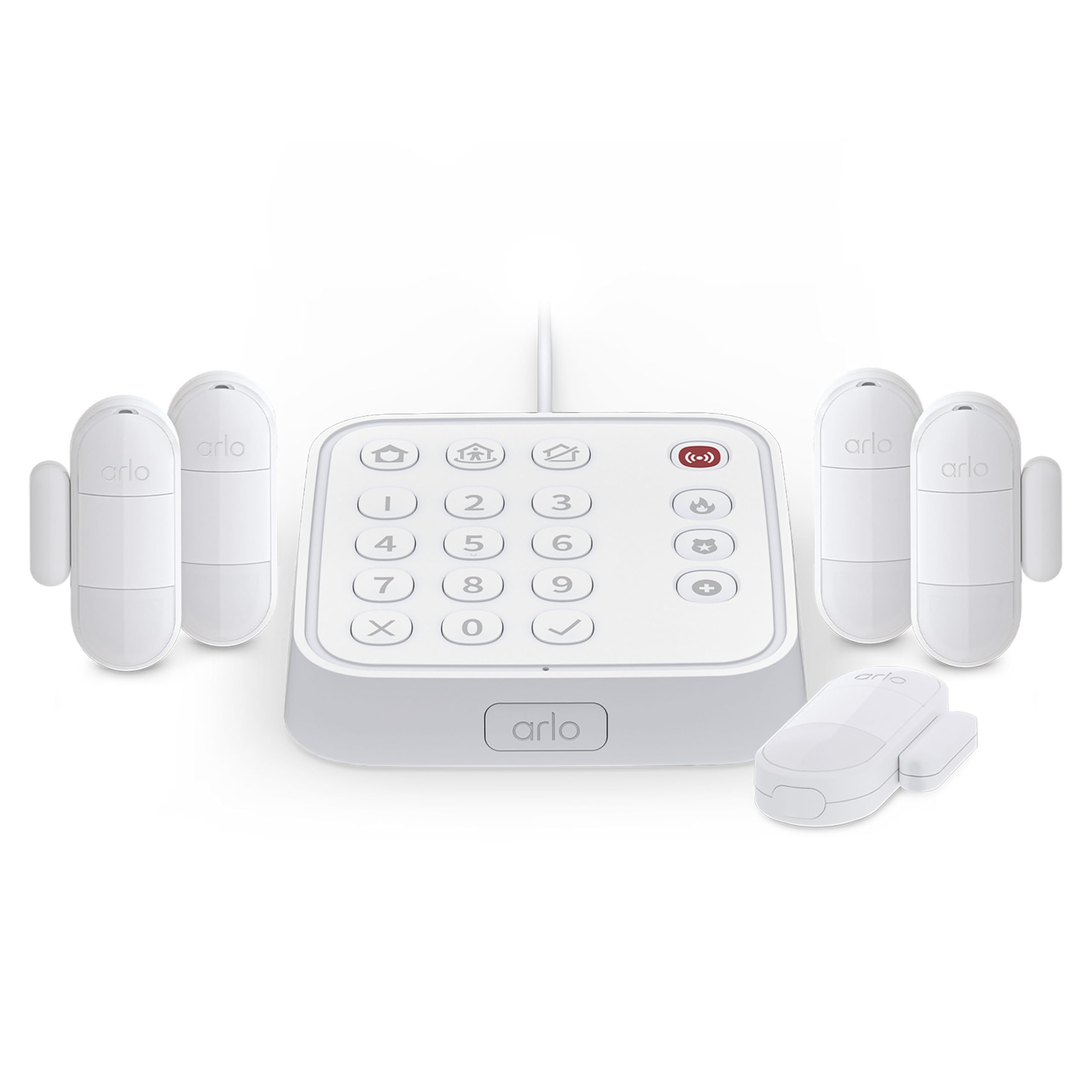
The Arlo SS1501 redefines the sensor by packing motion detection, door/window open-close, temperature monitoring, water leak sensing, and smoke/CO alarm listening into a single 8-in-1 all-in-one sensor. Each sensor communicates with the keypad hub via Arlo’s proprietary SecureLink technology, which prioritizes extended range and lower power consumption. The five sensors included in the kit cover five distinct zones without requiring separate specialized hardware.
The wired keypad hub features integrated siren, motion detection, and smoke/CO listening, and includes one-tap emergency response buttons for police, fire, or medical dispatch. The system runs on Wi-Fi and does not require a cellular backup, but the hub maintains battery backup for short outages. Setup is entirely app-driven, with sensors pairing via adhesive backing in minutes — no wiring or drilling required.
The Arlo Secure App manages all settings, including arm away, arm home, and standby modes, and integrates with Arlo cameras for a unified security ecosystem. Users report long battery life on the all-in-one sensors, with the keypad hub providing a distinct door chime that sounds pleasant rather than jarring. The system does not require a contract for basic self-monitoring, but professional monitoring and cloud video storage require a paid Secure plan.
Why it’s great
- Each sensor performs 8 detection functions, reducing hardware clutter.
- Extended SecureLink range works reliably in large homes.
- One-tap emergency buttons on the keypad provide rapid dispatch.
Good to know
- No cellular backup — system depends on Wi-Fi availability.
- Advanced features require a paid Arlo Secure Plan subscription.
- Setting up the system can disable advanced camera automations from older Arlo systems.
3. tolviviov 15-Piece Home Alarm System

The tolviviov 15-piece kit delivers 10 contact sensors, 1 motion sensor, 1 keypad, 2 remotes, and a base station — all in one box. This is the highest sensor-per-dollar ratio in the mid-range tier, making it ideal for homes with many entry points. The 120 dB siren is loud enough to alert neighbors and deter intruders without requiring an external strobe.
Setup requires 2.4 GHz Wi-Fi only — no 5 GHz support — but the peel-and-stick installation takes under 30 minutes for most users. The base station includes an 8-hour backup alkaline battery, sufficient for overnight power loss. App integration allows remote arming, disarming, and real-time push notifications, and the system works with both Alexa and Google Assistant for voice control.
Customer reviews consistently praise the reliable sensor response and the generous magnetic gap tolerance, which accommodates slightly misaligned door and window frames. The kit supports expansion up to 20 sensors and 5 remotes, and the company provides clear YouTube setup videos and a 2-year warranty. The included security sticker serves as a visible deterrent even before the alarm activates.
Why it’s great
- 10 contact sensors cover nearly every exterior entry point.
- 120 dB siren provides strong deterrence without extra hardware.
- Zero monthly fees and full app control with voice integration.
Good to know
- Only works on 2.4 GHz Wi-Fi; no 5 GHz compatibility.
- Backup battery limited to 8 hours, not 24.
- Motion sensor count is one — larger homes may need extra.
4. tolviviov 12-Piece Home Alarm System (2nd Gen)
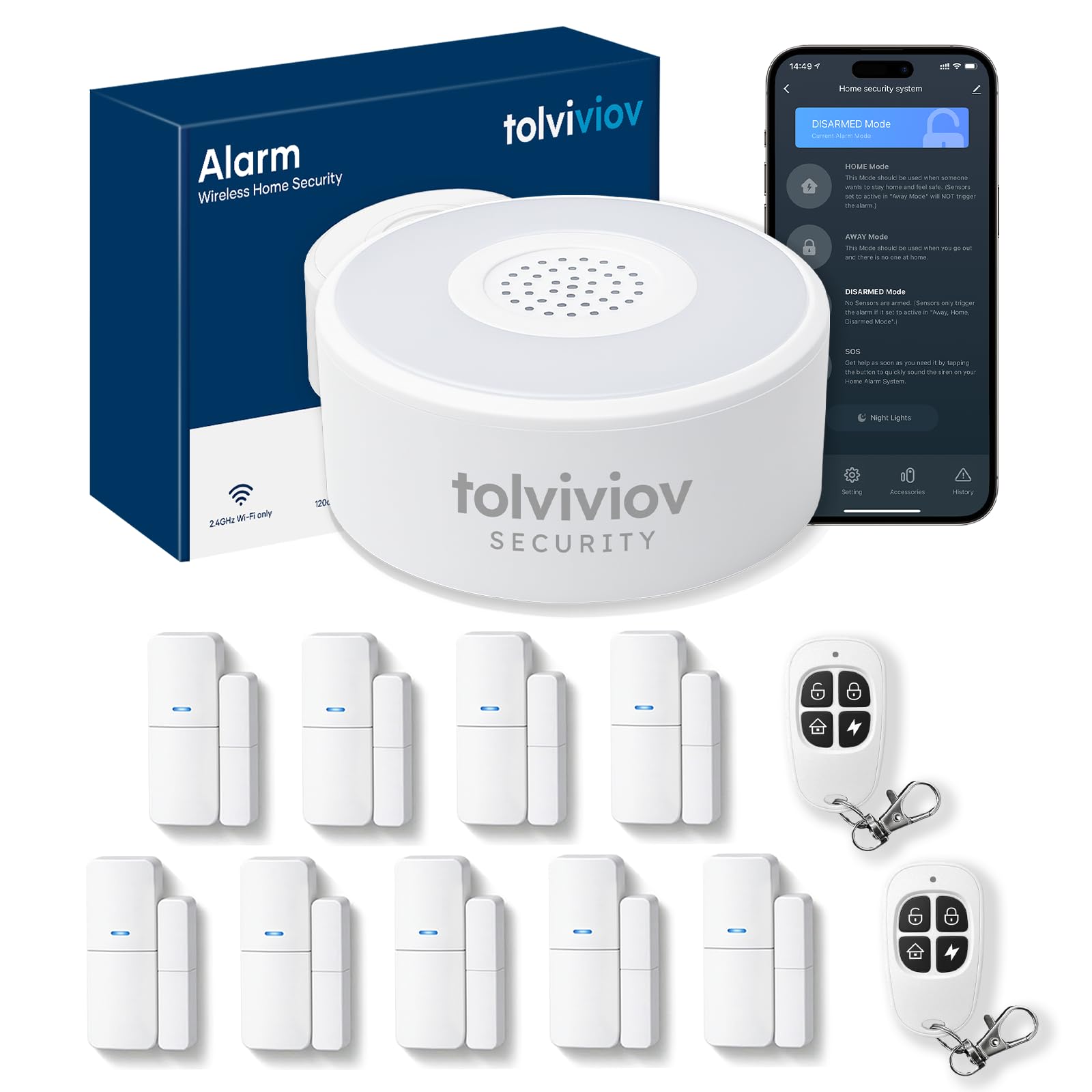
The 2nd Gen tolviviov system packs 9 contact sensors, 2 remotes, and a base station into a compact package that prioritizes simplicity over complexity. Each contact sensor combines a magnetic reed switch with a wireless transmitter that pairs with the base station at the press of a button. The system supports expansion up to 20 sensors and 5 remotes, providing a clear upgrade path as your coverage needs grow.
Alert delivery is snappy — the app sends a push notification within seconds of sensor trigger, and the base station siren sounds simultaneously. The system works exclusively on 2.4 GHz Wi-Fi and integrates with Alexa for voice arming and disarming. The backup battery lasts 8 hours and acts only as an emergency reserve; the base station must remain plugged into AC power for normal operation.
Users report that the slim contact sensors sit flush on door and window frames without protruding, which is helpful for renters who need a non-invasive installation. The remote controls offer basic arming, disarming, and panic functions. The app interface is functional rather than polished, but the trade-off for the price — combined with zero monthly fees — makes this a strong entry-level choice.
Why it’s great
- 9 contact sensors cover multiple doors and windows out of the box.
- Fast push notifications with under-2-second alert delivery.
- Compact sensor design works well for rental properties.
Good to know
- No keypad included — app or remote are the only controls.
- 2.4 GHz only; incompatible with 5 GHz networks.
- Backup battery is 8 hours, not suitable for extended outages.
5. Ring Alarm 8-Piece Kit (Newest Model)
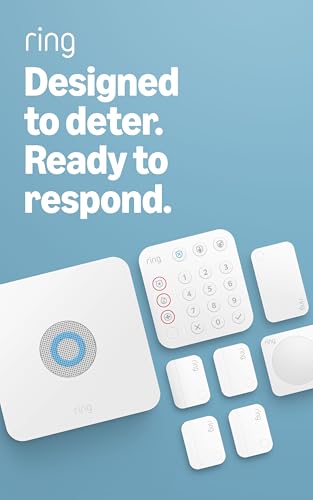
Ring’s alarm system is built around a base station that serves as both the communication hub and the cellular backup radio. The 8-piece kit includes 1 base station, 1 keypad, 4 contact sensors, 1 motion detector, and 1 range extender. The base station connects to your router via Ethernet and uses Z-Wave Plus for sensor communication, which extends battery life compared to Wi-Fi-based sensors.
Cellular backup via AT&T kicks in automatically when Wi-Fi and power are lost, keeping the system online and sending alerts through the Ring app. The keypad features dedicated police, fire, and medical panic buttons, plus backlit buttons for nighttime visibility. Setup is done entirely through the Ring app, which walks you through each device pairing and offers geofencing for automatic arming when you leave.
The system integrates seamlessly with Ring doorbells and cameras, as well as select smart locks like Schlage. Users report that the contact sensors use common CR2032 batteries that last over a year, and the adhesive mounting system allows repositioning without damaging paint. A Ring Protect Plan (/month) unlocks professional monitoring, cellular backup, and extended cloud storage for video events.
Why it’s great
- Cellular backup keeps the system alive during Wi-Fi and power outages.
- Keypad with dedicated police, fire, and medical panic buttons.
- Seamless integration with Ring cameras and smart locks.
Good to know
- Professional monitoring requires a paid subscription plan.
- Base station requires Ethernet connection, not purely wireless.
- Kit has only 4 contact sensors — larger homes need expansion packs.
6. SimpliSafe 11 Piece Wireless System Gen 3
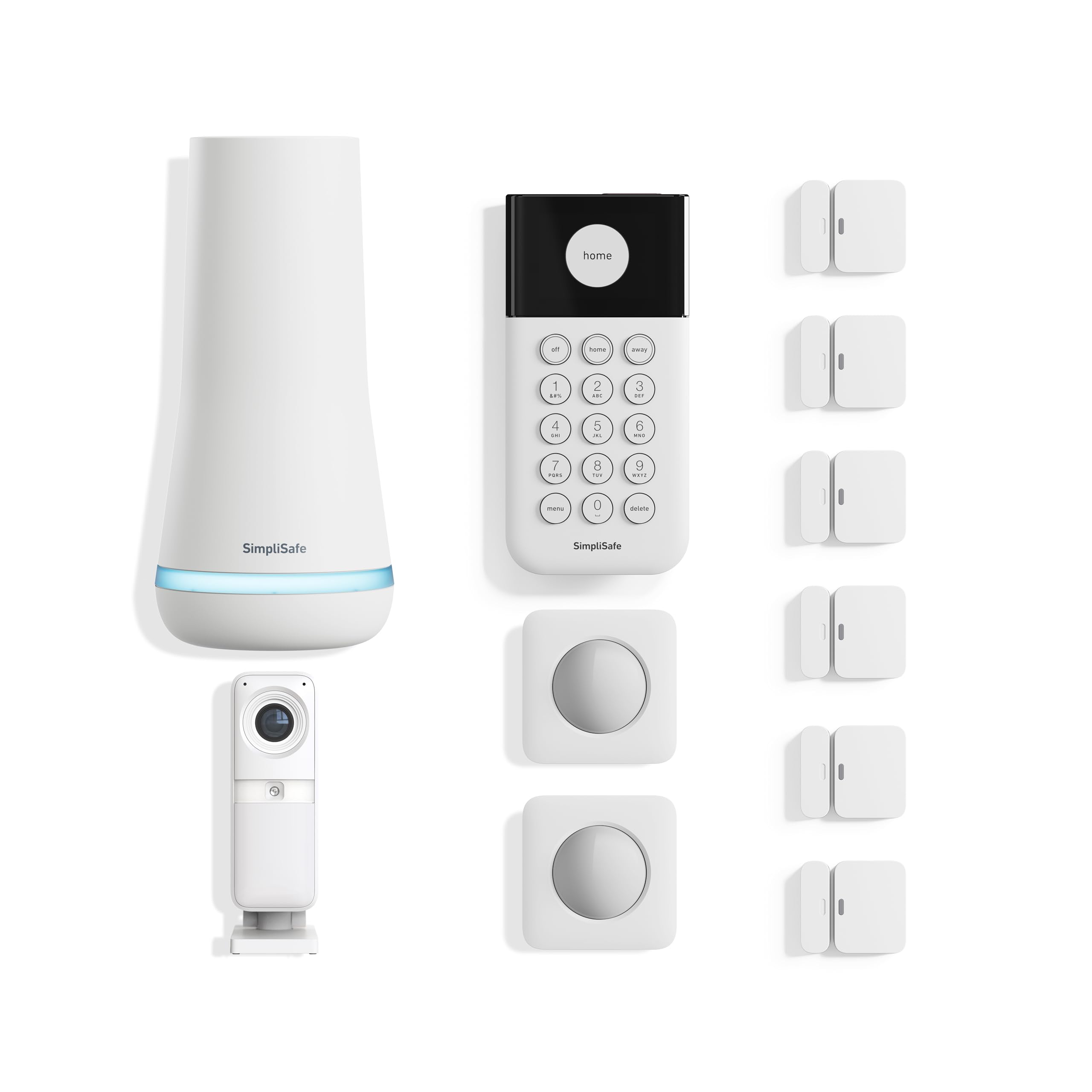
The Gen 3 SimpliSafe system bridges the gap between DIY simplicity and professional-grade service. The 11-piece kit includes 6 entry sensors, 2 motion sensors, a keypad, a base station, and an indoor wireless HD camera. The base station features a 24-hour backup battery and cellular backup — but the cellular backup only activates when the optional professional monitoring plan is active.
The innovation here is the Smart Alarm Indoor Camera with two-way audio and live guard protection, which allows monitoring agents to see and speak to intruders during an alarm event. Video verification from this camera can trigger priority police dispatch, reducing response times significantly. Motion sensors are pet-friendly up to 60 lbs and cover a 35-foot range with a 90-degree field of view.
Users praise the zero-false-alarm record — the system does not trigger unnecessarily from pets or environmental noise — and the intuitive app that logs major alarm events. The keypad is smash-safe, meaning it stores the alarm state locally so an intruder cannot disable the system by breaking the keypad. No contract is required for self-monitoring, but the advanced features unlock only with a Fast Protect or Core Monitoring subscription.
Why it’s great
- Professional monitoring agents can talk through the indoor camera during an alarm.
- 24-hour backup battery and cellular backup for uninterrupted protection.
- Pet-friendly motion sensors eliminate false alarms from animals under 60 lbs.
Good to know
- Cellular backup requires a paid professional monitoring plan.
- Camera quality is adequate but not 4K — video detail is moderate.
- Free app version logs only major events, not individual sensor open/close history.
7. Rraycom 4Pack Security Cameras Wireless Outdoor
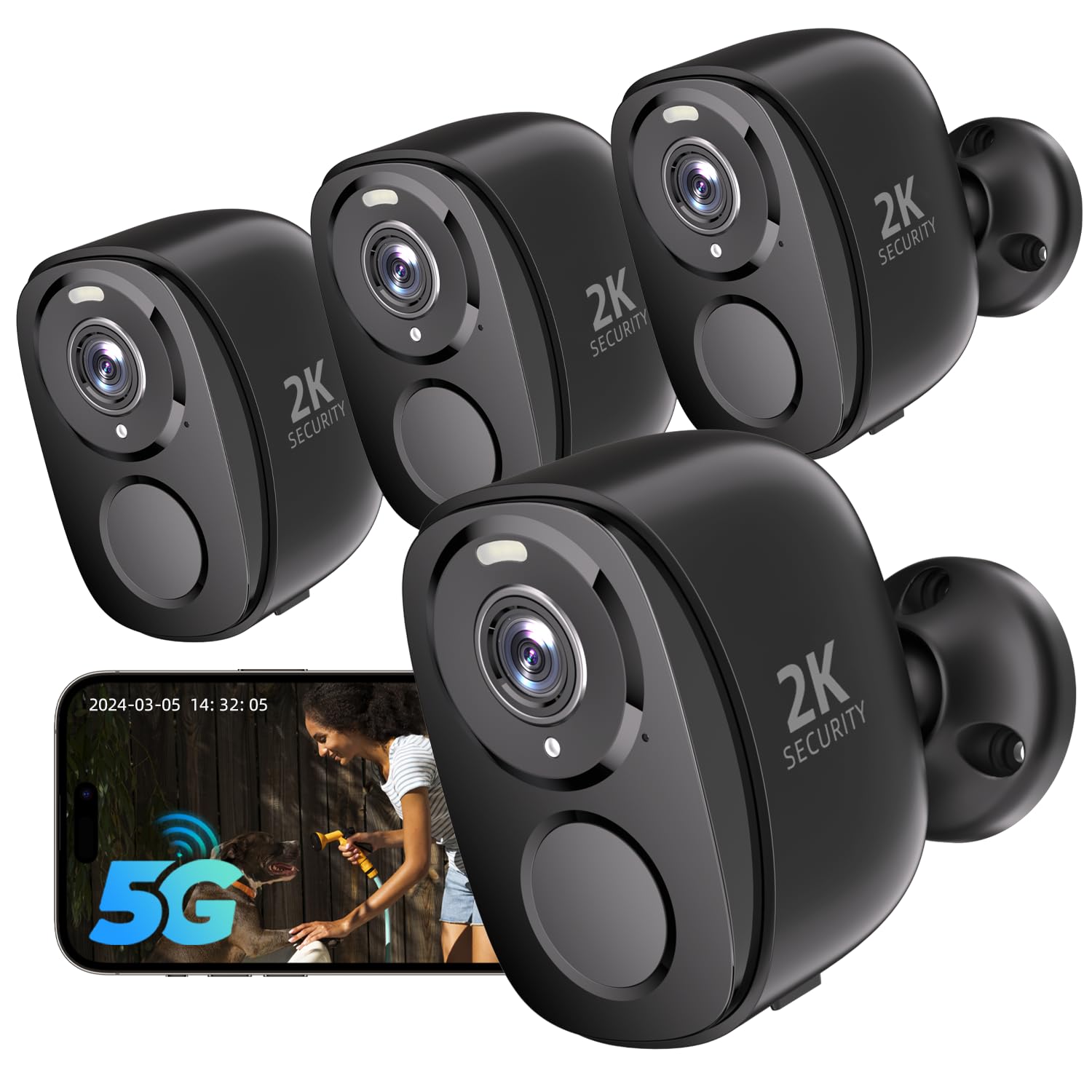
The Rraycom 4-pack offers a different approach to home security by placing the emphasis on visual deterrence rather than contact-based perimeter sensors. Each camera records in 2K HDR with full-color night vision and a 130-degree wide-angle lens. The built-in spotlight and 110 dB siren activate automatically upon motion detection, providing both a visual warning and an audible alert.
Connectivity is dual-band — both 2.4 GHz and 5 GHz — which gives you flexibility to keep cameras on the less congested 5 GHz band for faster video streaming. The AI motion detection distinguishes between people, vehicles, and animals, and can even identify over 10,000 bird species with an optional subscription. Storage options include cloud recording (subscription required) or local microSD card up to 256 GB with no monthly fees.
The 2-way audio feature lets you speak to visitors or delivery drivers through the camera, and the IP65 weatherproof rating allows outdoor mounting in rain or snow. Users note that battery life requires recharging every few days under heavy motion-triggered recording, but the company offers solar panel accessories to mitigate this. The cameras pair with Alexa for live view on Echo Show devices.
Why it’s great
- Dual-band Wi-Fi (2.4 and 5 GHz) ensures faster video streaming.
- 2K HDR with full-color night vision captures clear detail in total darkness.
- Built-in spotlight and siren provide active on-site deterrence.
Good to know
- Battery life is short under constant motion detection; solar panel recommended.
- AI bird identification and cloud storage require a subscription.
- No contact sensors included — not a replacement for door/window alarms.
8. D1D9 24pcs 4G WiFi GSM Burglar Alarm System
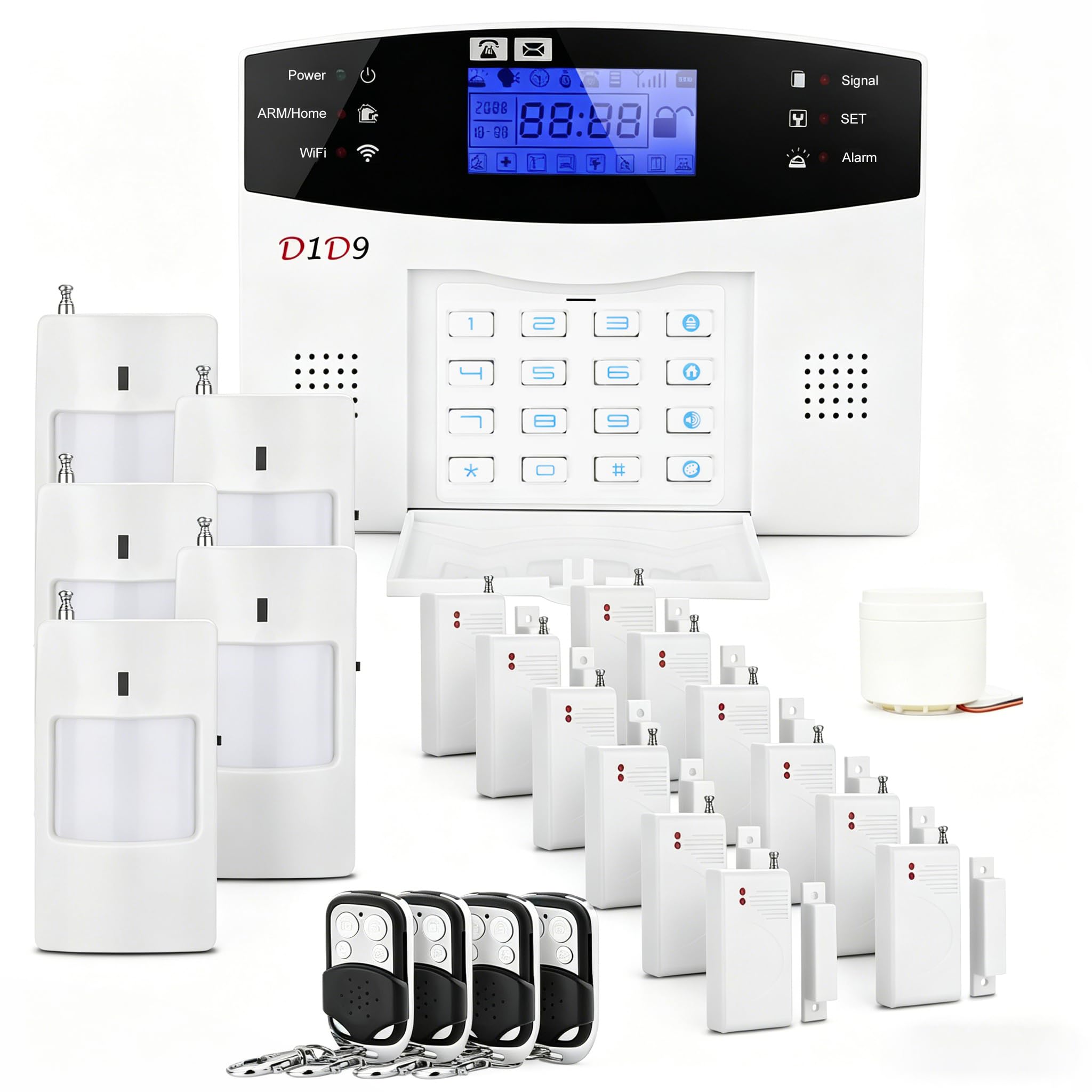
This 24-piece kit from D1D9 is designed for those who want to leave no entry point unmonitored. It includes 12 door/window sensors, 5 motion detectors, a siren, a control panel, and multiple remotes — all for a fraction of the cost of comparable systems. The control panel supports both 4G cellular and Wi-Fi connectivity, giving you two communication paths without mandatory monthly fees if you use Wi-Fi self-monitoring.
Installation is entirely wireless with peel-and-stick adhesive, and the system can be expanded by adding more sensors or integrating with other smart devices. The app provides real-time alerts, remote arming and disarming, and supports multiple custom zones (perimeter, interior, 24-hour, doorbell). Users report the system is particularly effective for vacation properties and small businesses where coverage breadth matters more than polished app design.
The major trade-off is reliability of the remote siren — some units experience intermittent siren activation via the wireless remote, while the main panel siren works consistently. The motion sensors also pick up small insects crawling across the lens, triggering false alarms in one reported case. The included batteries are promotional-grade and may need replacement shortly after purchase.
Why it’s great
- 24-piece kit provides extensive coverage for large properties.
- Dual 4G and Wi-Fi connectivity offers redundancy.
- Expandable and works with multiple zone types for custom configurations.
Good to know
- Remote siren can be unreliable — main siren is the primary alert.
- Motion sensors may false alarm from small animals or insect movement.
- Included batteries are low-quality and may need immediate replacement.
9. LWOHSI Wireless Home Alarm System with LCD Touch Screen
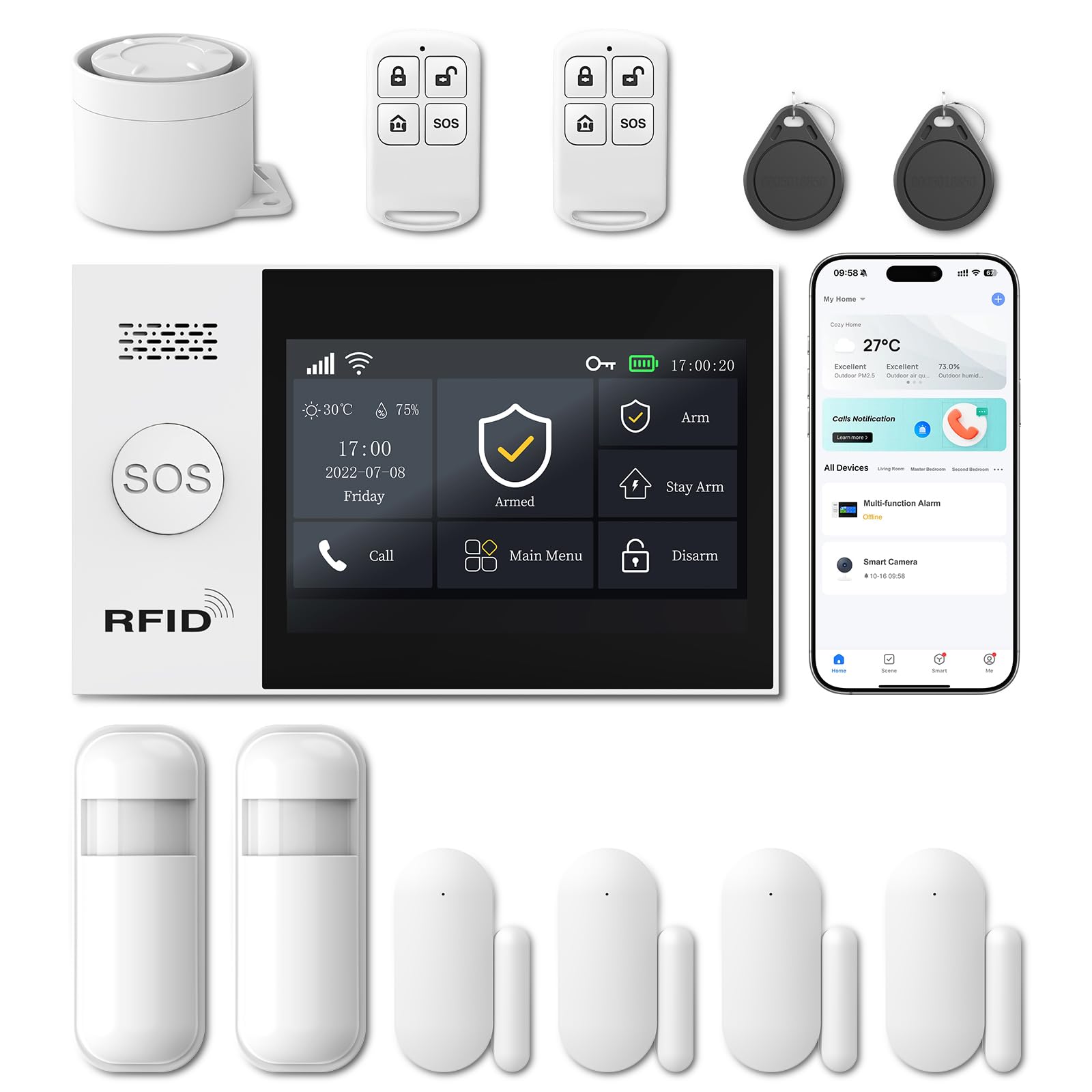
The LWOHSI system brings a 4.3-inch color IPS capacitive touchscreen to the budget tier — a feature normally reserved for premium kits. The control panel displays real-time status, clock, and data, and supports multi-language menus with voice operation. It connects via both Wi-Fi and GSM cellular, offering SMS alerts, voice monitoring, and app-based push notifications for redundant alarm delivery.
The system supports up to 100 wireless detectors, controllers, and RFID tags, making it highly expandable. Zone types include perimeter, interior, 24-hour, access, and doorbell, and each zone can be named (front door, hall, bedroom, etc.) for app clarity. The anti-disarming alarm function triggers if a sensor is tampered with, and the 120 dB siren is loud enough to serve as a strong deterrent. Setup is straightforward for DIY users, though the manual is vague in places.
Users have reported mixed reliability: some find the system works well in solar-powered sheds and outbuildings due to low power draw, while others experience glitchy remote fobs and false alarms from closed windows. The system integrates with the Smartlife App, but Alexa integration is partial — you cannot arm or disarm by voice. For the price, the touchscreen and cellular backup are unique advantages, but the sensor quality and app polish show cost-cutting compromises.
Why it’s great
- 4.3-inch IPS touchscreen provides premium navigation at a budget price.
- Dual-path Wi-Fi and GSM connectivity with SMS and voice alerts.
- Low power draw works well for off-grid or solar-powered installations.
Good to know
- Sensor reliability is inconsistent — some units report false alarms and glitchy remotes.
- Alexa integration is limited to basic functions; cannot arm or disarm by voice.
- Manual is poorly translated; setup relies on trial and error or seller YouTube links.
FAQ
Do I need a cellular backup for a DIY alarm system to be reliable?
How many contact sensors should I buy for a typical 3-bedroom home?
What is the difference between a 2.4 GHz and a 5 GHz smart alarm system?
Can I use a self-monitored alarm system as a professional-grade deterrent?
Final Thoughts: The Verdict
For most users, the best alarm system for home winner is the OSI Alarm System Gen 2 because it combines a 7-inch touchscreen interface with 24-hour backup battery, dual-path communication, and expandability to 160 sensors — all without a mandatory subscription. If you want deep ecosystem integration with existing smart home devices and 8-in-1 combined sensors, grab the Arlo Home Security System. And for a budget-conscious setup that still delivers 12 contact sensors and a 120 dB siren with zero monthly fees, nothing beats the tolviviov 15-Piece Kit.

Mo Maruf
I created WellFizz to bridge the gap between vague wellness advice and actionable solutions. My mission is simple: to decode the research and give you practical tools you can actually use.
Beyond the data, I am a passionate traveler. I believe that stepping away from the screen to explore new environments is essential for mental clarity and physical vitality.