Our readers keep the lights on and my smoothie glass nicely filled. As an Amazon Associate, I earn from qualifying purchases.
That first hour on a plane is fine. By hour four, the thin layer of foam in the seat fabric has flattened into a concrete slab, and your tailbone is sending distress signals. An airline seat cushion is the one piece of carry-on gear that directly changes how you feel when you land — not how your bag looks, but whether your hips, lower back, and sciatic nerve can handle the descent.
I’m Mohammad Maruf — the founder and writer behind WellFizz. For this guide, I analyzed the gel density, foam thickness, fold geometry, and carry weight of seven top-rated cushions, cross-referencing hundreds of verified buyer reports to find which models actually survive an overseas economy seat without sliding around or flattening out.
Whether you are shopping for a ten-hour red-eye or a weekend of stadium bleachers, this guide separates the truly supportive travel pads from the ones that look good on a shelf but compress to nothing after thirty minutes. Read on for the complete breakdown of each contender and discover the best airline seat cushion for your specific travel needs and body type.
How To Choose The Best Airline Seat Cushion
Choosing a travel cushion used to be simple — you bought whichever foam pad folded small. But the current market offers gel grids, memory foam blends, self-inflating cores, and even split designs for sharing. Each material and construction method delivers a different feel under your sitting bones.
Fill Material: Gel vs. Memory Foam vs. Air
Gel cushions — especially honeycomb or grid designs — excel at dissipating heat and spreading weight across a broad surface without bottoming out. Memory foam contours precisely to your body but can trap heat over time. Self-inflating foam cores offer the smallest packed size but require careful valve management and can feel less stable during turbulence. For long-haul flights, gel or gel-foam hybrids provide the best balance of cooling and sustained support.
Thickness and Density
A cushion that measures less than 1.5 inches when uncompressed will likely compress to nothing under a 180-pound adult within the first hour. Look for at least 1.8 to 2.5 inches of uncompressed thickness. Density matters more than raw thickness — a high-density gel layer that is 1.2 inches thick can outperform a thick low-density foam that collapses after repeated use. Pay attention to the fill material description and customer comments about how long the cushion stays supportive.
Portability: Folded Size and Carry Features
Economy seats leave almost zero extra room for a bulky pad. A good airline cushion should fold or roll to under 10 by 8 by 4 inches to fit inside a standard backpack or under the seat pocket. Built-in carrying handles, elastic wraps for attaching to a carry-on handle, and lightweight construction (under 1.5 pounds) matter if you are moving through terminals. Avoid cushions that are heavy enough to add noticeable weight to your personal item.
Non-Slip Base and Seat Fit
Sliding is the number one complaint among travel cushion users. A silicone-dot bottom, rubberized coating, or elastic strap that wraps around the seat back keeps the cushion in place during takeoff, landing, and meal service. The cushion width should also match the typical economy seat width of roughly 16 to 18 inches — anything wider will overhang and create uncomfortable pressure on the armrests.
Quick Comparison
On smaller screens, swipe sideways to see the full table.
| Model | Category | Best For | Key Spec | Amazon |
|---|---|---|---|---|
| IHEALTHCOMFORT Small Travel Seat Cushion | Premium | Long-haul flights with cooling needs | 2-in-1 split design, 1.6 lb | Amazon |
| ComfiLife Ergo-Gel Airplane Seat Cushion | Premium | Economy seat space management | 1.2 in thick, 1.6 lb | Amazon |
| A-Pce Foldable Travel Seat Cushion | Mid-Range | Sciatica and tailbone pain relief | High-density memory foam, 1.5 lb | Amazon |
| Esme L&H Portable Seat Cushion | Mid-Range | Bleacher and stadium seating | 2 in thick, 1.4 lb | Amazon |
| Demine Gel Travel Seat Cushion | Mid-Range | Light packers needing gel support | ErgoGel grid, 1.4 lb | Amazon |
| Whispering Winds Inflatable Seat Cushion | Budget | Ultra-light packing | Self-inflating, 0.84 lb | Amazon |
| Wllead New Upgraded Portable Seat Cushion | Budget | Short flights and bus rides | Honeycomb gel, 1.81 lb | Amazon |
In‑Depth Reviews
1. IHEALTHCOMFORT Small Travel Seat Cushion
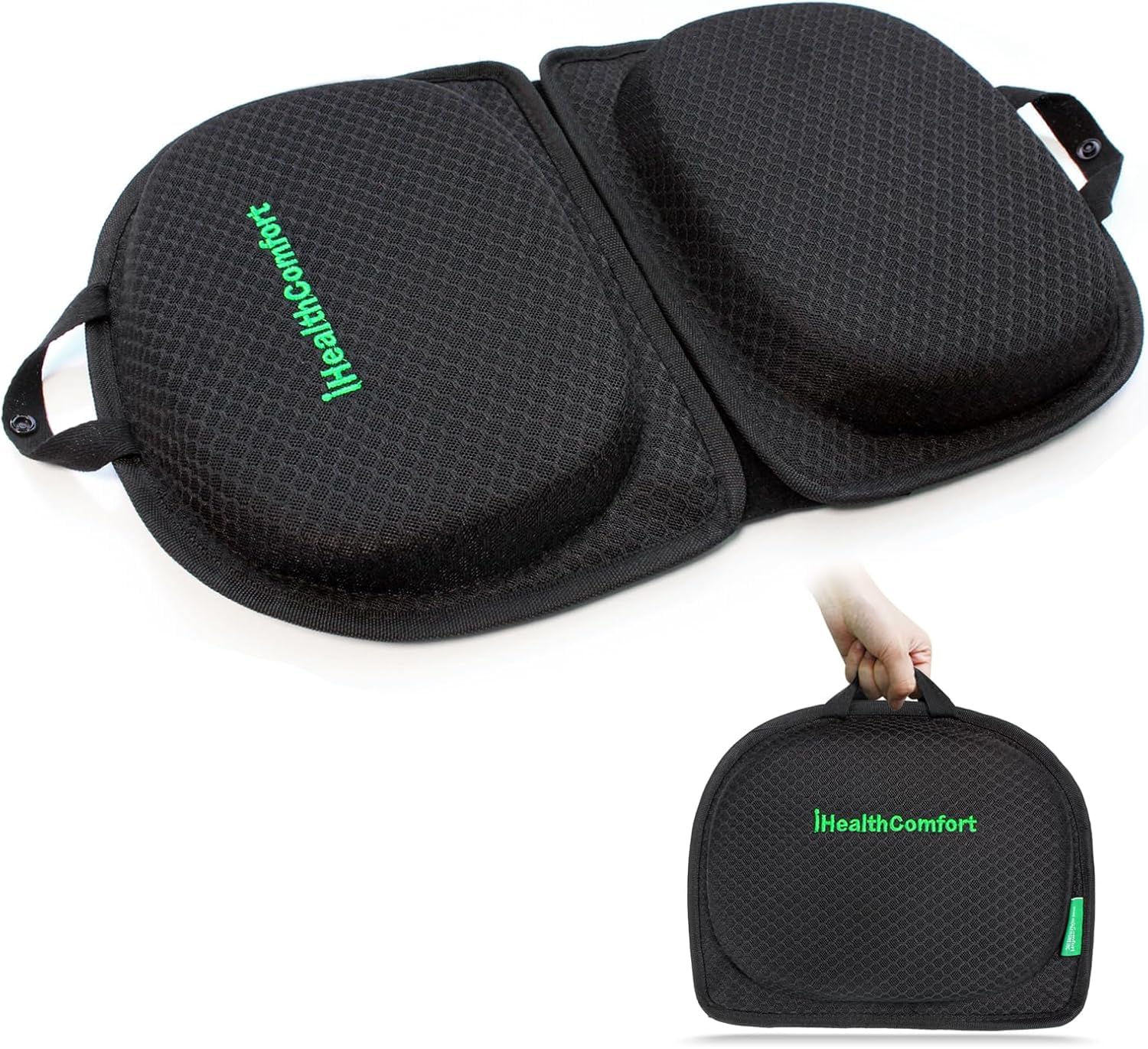
The IHEALTHCOMFORT cushion packs two breakthroughs into a single pad: a cooling gel layer bonded to high-density memory foam and a unique split design that detaches into two independent cushions. That means you can share with a child or seatmate, or keep both halves stacked for double the thickness under your own weight. At 1.6 pounds and folding neatly with a built-in handle, it fits inside a standard carry-on without hogging space.
Buyer reports for flights to Europe and Asia consistently describe this cushion as a game changer for people with back surgery history or chronic sciatica. The 20-by-12-inch unfolded surface covers the full economy seat pan, and the breathable mesh cover prevents the overheating that pure memory foam pads often cause on long flights. Users over six feet tall specifically mention that it fits standard economy seats without overhang and provides welcome relief for the legs and lower back.
One caveat: the firmness is on the harder side, which small-framed users sometimes find too rigid for their preference. The split design also means that if you detach the halves, each piece is thinner, reducing overall pressure distribution. For most travelers, however, the cooling gel layer and the ability to customize the cushion for two seats make this the most versatile airline-friendly option available.
Why it’s great
- Cooling gel layer prevents hot spots during long sits
- Split design lets two people share one cushion
- High-density foam retains shape through multi-hour flights
Good to know
- Firm feel may be too stiff for lightweight users
- Split halves are thinner and less supportive individually
2. ComfiLife Ergo-Gel Airplane Seat Cushion

ComfiLife deliberately sized this cushion for the narrow real estate of an economy airplane seat. At 15.4 by 11.4 inches, it fits squarely within the seat pan without spilling over the armrests — a small but critical detail that many travel cushions get wrong. The ErgoGel grid distributes weight evenly and stays noticeably cool to the touch, even after hours of continuous use.
Frequent long-haul flyers praise the non-slip base and the elastic wrap that secures the cushion to the seat back or a carry-on handle. The folded size of 11.4 by 7.7 by 2.4 inches slides easily into a backpack laptop compartment or a personal item. At 1.6 pounds it is not the lightest option, but the gel structure does not compress the way foam pads do, so the support remains consistent from boarding through descent.
ComfiLife explicitly states that this cushion is not designed for tailbone pain relief — it has no U-shaped cutout. Users with coccyx sensitivity should look at the brand’s dedicated tailbone cushion instead. Several buyers also noted that the cushion is effective for about four to five hours before hip nerve pain may return for those with existing damage, suggesting it is better suited for sub-10-hour flights or occasional breaks.
Why it’s great
- Perfect dimensions for standard economy seats with no overhang
- Non-slip base and elastic strap keep it anchored
- Gel grid stays cool and maintains shape through long sits
Good to know
- No tailbone cutout for coccyx pain
- Support plateau may fade around hour five for some users
3. A-Pce Foldable Travel Seat Cushion
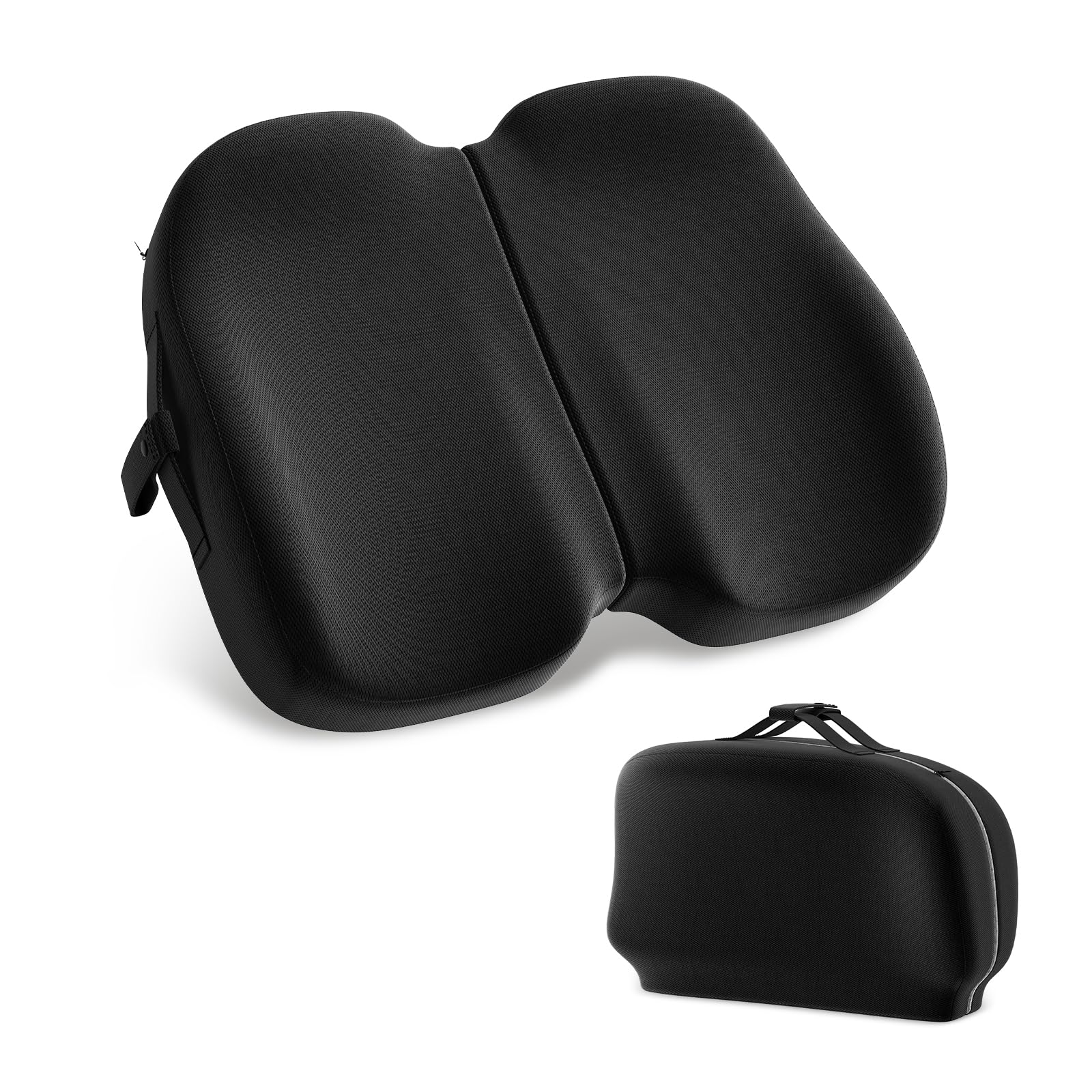
The A-Pce cushion uses contoured high-density memory foam to target the hips and coccyx, making it a strong contender for anyone who deals with sciatica or lower back pain during travel. The foam contours to your body shape without the sinking feeling that low-density pads produce, and the ergonomic shape encourages better posture by keeping your pelvis aligned. A built-in handle makes it easy to carry through the terminal.
Buyers have used this cushion on a 17.5-hour flight to China and reported no sciatic flare-up on landing — a result that speaks directly to the foam’s density and rebound properties. The non-slip bottom keeps the pad from migrating during turbulence, and the removable cover unzips for machine washing, which is a practical advantage over cushions that trap sweat and odors in a non-removable fabric. The folded size fits comfortably into a backpack or tote.
One limitation is the lift this cushion creates. At roughly 3 inches thick unfolded, it raises your seated height enough that taller passengers — over 5-foot-8 — may find their head cresting above the headrest, making sleep difficult. Several reviews mention this on Lufthansa and Boeing 777 seats specifically. If you are six feet or taller and plan to sleep, consider a thinner gel pad instead.
Why it’s great
- High-density memory foam supports sciatica and tailbone
- Ergonomic contour promotes proper pelvic alignment
- Removable cover is machine-washable for hygiene
Good to know
- Thick profile raises seated height too much for tall sleepers
- Less cooling airflow compared to gel-grid cushions
4. Esme L&H Portable Seat Cushion
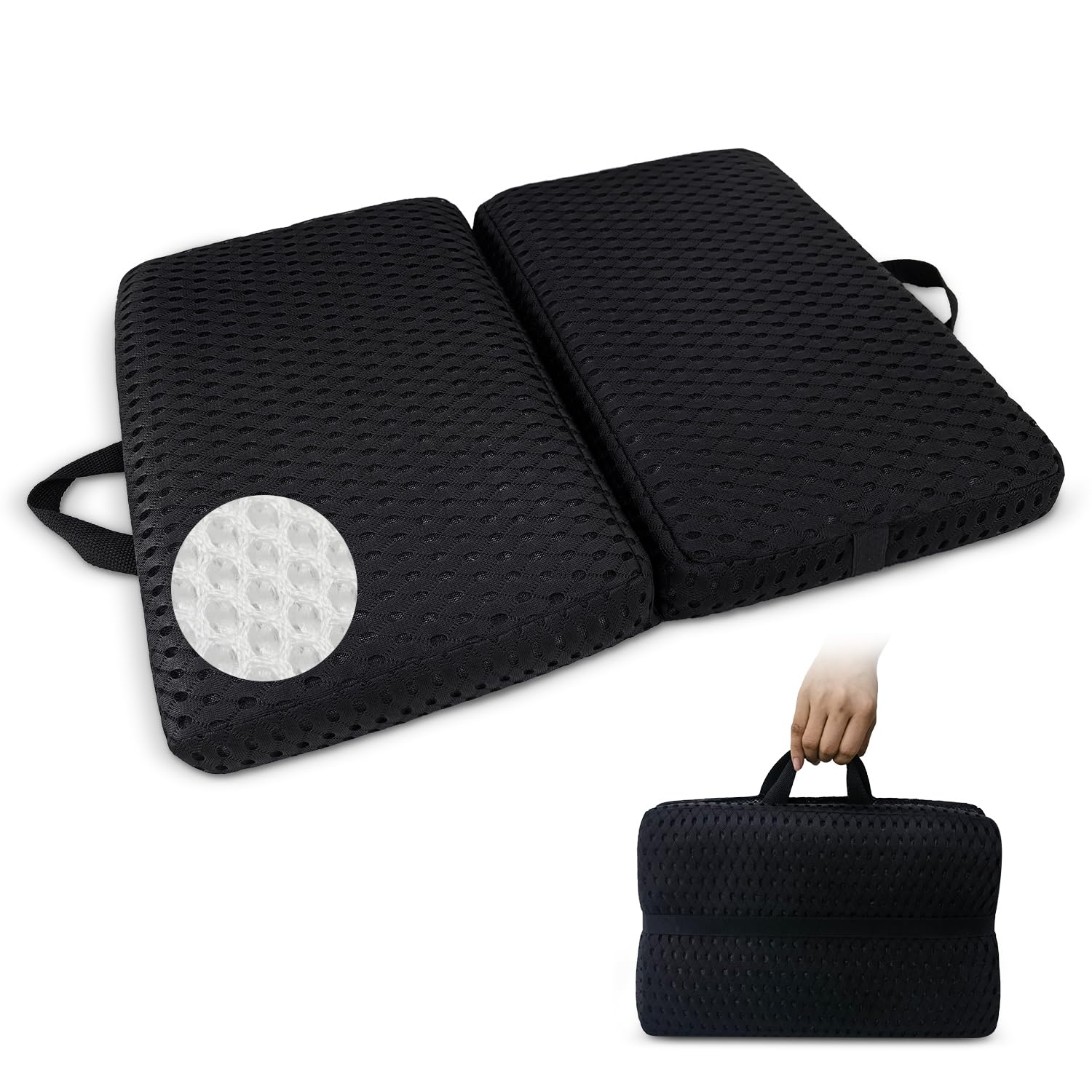
Esme L&H uses a 100-percent 3D air mesh fabric that is unlike any other cushion on this list. The entire pad is made from breathable mesh rather than a foam or gel core wrapped in fabric, which means air moves freely through the cushion from all sides. This design eliminates heat buildup entirely — there is no foam layer to trap body heat — while still providing 2 inches of soft support that adapts to your body shape.
The one-piece construction with no removable cover simplifies cleaning: just toss the whole cushion into a machine wash bag and air dry. An elastic band on the back side fits over chair or seat backs, and the rubberized bottom layer prevents slipping even on slick airplane seat vinyl. Buyers consistently praise the fold-and-carry ease: it folds to 9 by 13.8 by 4 inches and weighs only 1.4 pounds, making it one of the lightest non-inflatable options available.
The trade-off is that this cushion is soft — owners describe it as plush rather than supportive. For long-haul flights over six hours, some users report that the mesh compresses more than they would like, especially under body weights over 200 pounds. It also lacks the distinct pressure-relief zoning that gel or contoured foam pads offer for tailbone and sciatic pain. Best suited for stadium seating, shorter regional flights, and users who prioritize cooling over firm support.
Why it’s great
- Full 3D mesh construction provides unmatched breathability
- One-piece design is fully machine-washable
- Elastic band and rubber backing prevent slipping
Good to know
- Soft feel compresses under heavier users over time
- No targeted pressure zones for tailbone or sciatica relief
5. Demine Gel Travel Seat Cushion
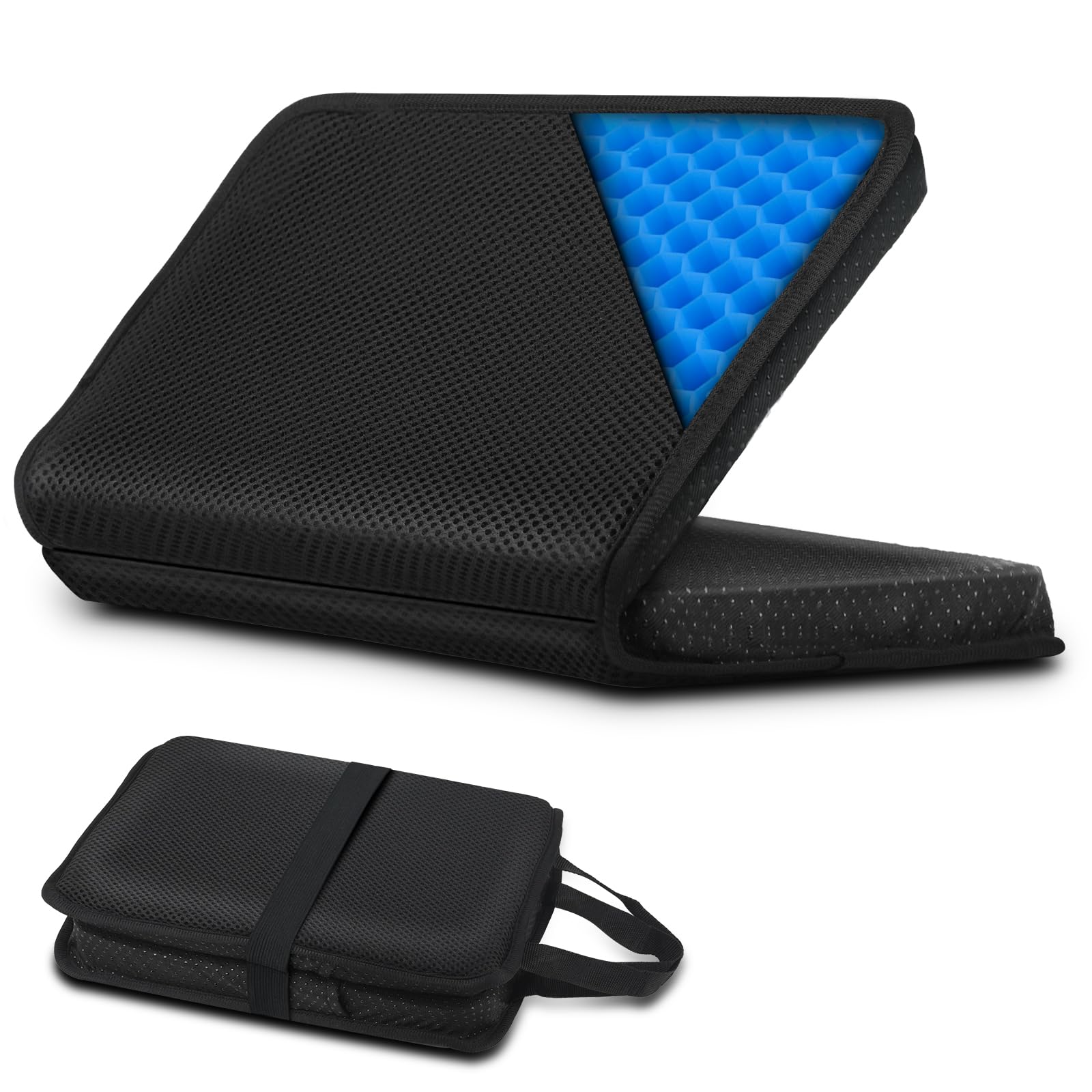
The Demine cushion uses a proprietary ErgoGel grid layer over a memory foam core, combining the cooling properties of gel with the contouring feel of foam. At 0.63 kilograms (roughly 1.4 pounds), it is noticeably lighter than the premium gel-foam hybrids while still offering a honeycomb texture that prevents the hot spots common to solid foam pads. The rectangular shape measures a comfortable size for airplane and stadium seats alike.
Verified buyers flying overseas describe this cushion as transformative for what they call “numb legs and rear” — the gel grid distributes pressure in a way that keeps circulation flowing during multi-hour sittings. The elastic wrap allows you to attach it to a carry-on handle, and the folded profile fits into a daypack without crowding other essentials. Several users also report using it at concerts and on bleachers with good results, citing the easy portability as the main reason they keep it in their daily bag.
The main complaint is that the cushion slides around more than expected on slick airplane seat fabric. The bottom material lacks the aggressive silicone grip dots that some competitors use, so you may need to reposition it during the flight. Also, the gel layer, while cool, compresses visibly under sustained pressure — one reviewer described it as feeling like “a purple mattress texture” rather than solid gel. Not a dealbreaker for flights under six hours, but worth noting for all-day travel.
Why it’s great
- Cooling gel grid prevents heat accumulation on long sits
- Lightweight at 1.4 pounds with easy carry strap
- Hypoallergenic fill suitable for sensitive skin
Good to know
- Slides on smooth airplane seat vinyl
- Gel layer compresses noticeably under sustained weight
6. Whispering Winds Inflatable Seat Cushion
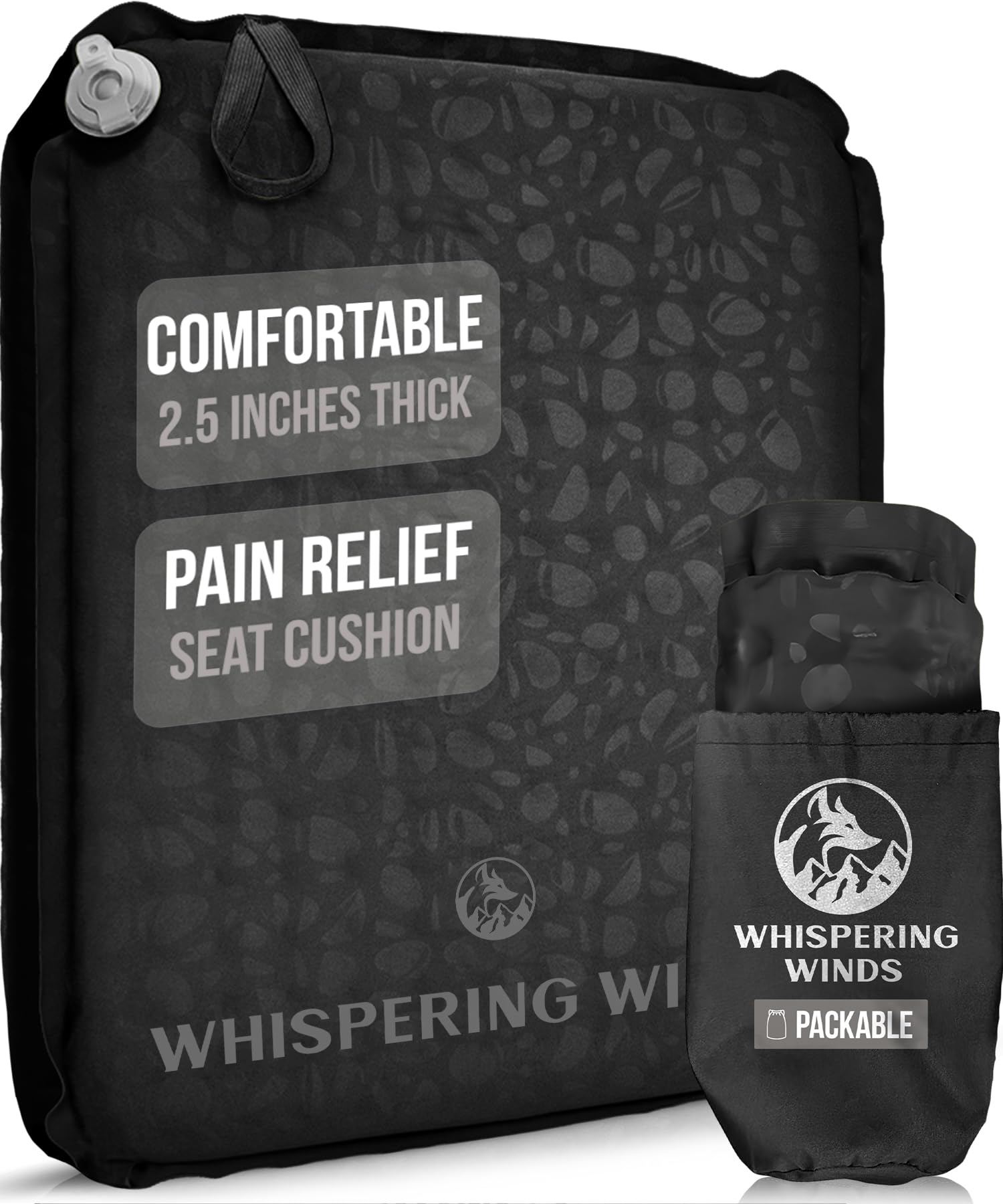
Self-inflating cushions have long been the domain of backpackers, but Whispering Winds brings the concept to airline travel with a well-executed design. The foam core self-inflates when you open the valve, and you can add a few breaths to dial in your preferred firmness. Deflated, it rolls down to 9 by 4.5 inches and weighs under 11 ounces — the smallest packed size on this list by a wide margin.
Buyers who used this on transatlantic flights say the cushion made sitting tolerable for hours on end, and the leakproof valve held air throughout the flight without needing to reinflate. The water- and slip-proof bottom layer provides solid grip on airplane seats, and the carrying bag is compact enough to stow in a jacket pocket. Multiple reviewers note that the textured polyester cover feels durable and resists the clammy sensation that inflatable pads sometimes develop.
Two drawbacks limit its appeal. First, the inflated dimensions of 18.5 by 15 inches can feel slightly small for broader users — some describe it as “nice but small” and wish for a wider surface. Second, at least one airline (Discover Airlines) does not allow passengers to use inflatable cushions, so check your carrier’s policy before relying on this for a specific flight. The deflation process also takes a few minutes of careful rolling, which is less convenient than simply folding a gel pad when rushing off the plane.
Why it’s great
- Packs smaller than any gel or foam cushion — ideal for minimalist travelers
- Adjustable firmness via manual inflation
- Leakproof valve holds air reliably through long flights
Good to know
- Inflated surface feels small for larger body frames
- Some airlines prohibit inflatable cushions — check before flying
7. Wllead New Upgraded Portable Seat Cushion
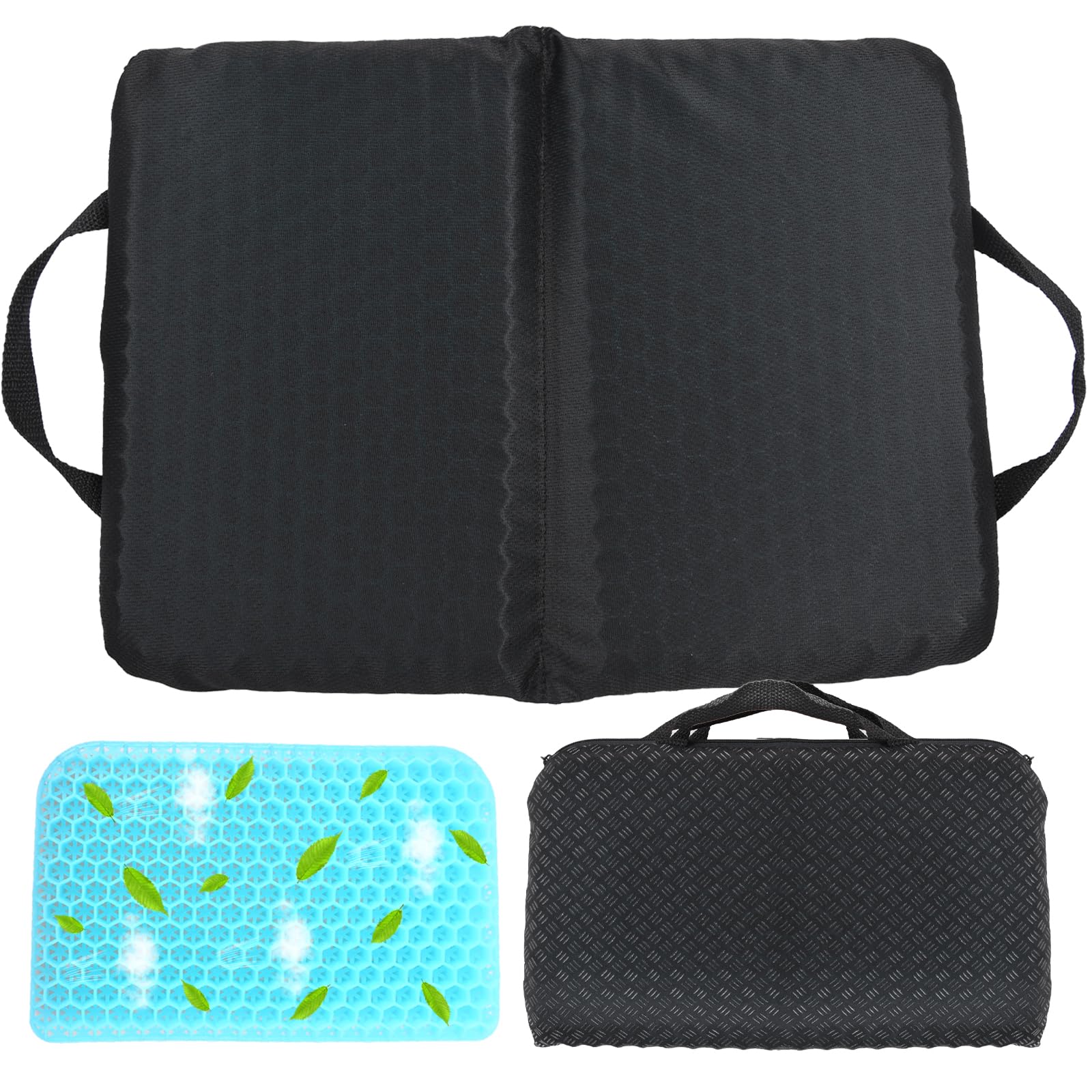
The Wllead cushion is the most affordable gel-based option here, and it delivers exactly what the price suggests: functional pressure relief without premium extras. The honeycomb gel core enhances air circulation to reduce sweat buildup, and the removable zippered cover with silicone non-slip particles keeps the pad in place on most surfaces. At 15.7 by 11.8 inches, it covers the full seat pan of most economy seats without overhang.
Buyers consistently mention that this cushion makes long flights — including an 11-hour San Francisco-to-Europe route — much more comfortable than bare airline seats. The foldable design with a handle makes it easy to carry, and the 1.81-pound weight is manageable for a gel pad of this size. Several users also use it at football games and on garden benches, appreciating the versatility for the price.
The clear limitation is thickness. At only 1.18 inches uncompressed, the gel layer is thin enough that heavier users or those needing significant pressure relief may feel the hard seat underneath after a couple of hours. One reviewer described it as providing “minimal support” and wished for a thicker gel core. If your travel is primarily short-haul or inter-city buses and you want an inexpensive entry point, this is a solid choice. For deep pressure relief on 10-hour flights, consider stepping up to a thicker premium option.
Why it’s great
- Honeycomb gel design promotes airflow and reduces sweat
- Removable cover is hand- and machine-washable
- Non-slip silicone dots keep it stable on hard surfaces
Good to know
- Only 1.18 inches thick — limited support for heavier users
- Gel layer compresses significantly during extended sits
FAQ
Can I use an airline seat cushion in every carrier’s economy seat?
How thick should an airline seat cushion be for a 10-hour flight?
Will a seat cushion make me sit too high in an economy seat?
How do I clean a travel seat cushion between flights?
Is a gel cushion better than memory foam for hot climates?
Final Thoughts: The Verdict
For most users, the best airline seat cushion winner is the IHEALTHCOMFORT Small Travel Seat Cushion because its cooling gel top layer and split design deliver the most versatile pressure relief and shareability for long-haul flights. If you want maximum portability with adjustable firmness, grab the Whispering Winds Inflatable Seat Cushion. And for targeted sciatica and tailbone support on economy seats, nothing beats the A-Pce Foldable Travel Seat Cushion with its high-density memory foam contour.

Mo Maruf
I created WellFizz to bridge the gap between vague wellness advice and actionable solutions. My mission is simple: to decode the research and give you practical tools you can actually use.
Beyond the data, I am a passionate traveler. I believe that stepping away from the screen to explore new environments is essential for mental clarity and physical vitality.