Our readers keep the lights on and my smoothie glass nicely filled. As an Amazon Associate, I earn from qualifying purchases.
Forget the plastic grilles and the hum of a fan. The quietest, most beautiful air purifier you can own actually grows in soil, drinks water, and unfurls new leaves when you treat it right. Indoor air can be stale with volatile organic compounds (VOCs) from furniture, paint, and cleaning supplies, but a well-chosen houseplant offers a living, self-sustaining filtration system that actively works to clean the air while transforming a room’s entire feel.
I’m Mohammad Maruf — the founder and writer behind WellFizz. I spend my days cross-referencing NASA Clean Air Study results with real-world grower feedback to find the plants that actually remove toxins like benzene and formaldehyde without demanding a horticulture degree to keep alive.
This guide will help you navigate the subtle but vital differences in leaf structure, growth habit, and light preference that separate a thriving air-cleaning companion from a sad, yellowing stick. I’ve ranked the best options by real-world practicality, pairing each pick with the specific toxin-fighting data and care requirements that matter. Finding your perfect best air purifying plants comes down to matching a plant’s biology to your home’s actual conditions.
How To Choose The Best Air Purifying Plants
Buying a plant for its air-cleaning ability separates a decorative impulse buy from a strategic home-health decision. The key metrics are leaf surface area, metabolic rate, and light adaptability, because a plant that can’t photosynthesize in your room cannot filter air effectively.
Leaf Area and Stomatal Density
The primary mechanism for removing airborne VOCs is the plant’s stomata — microscopic pores on leaf undersides that absorb gases during gas exchange. Plants with more total leaf surface area (like a large, bushy spider plant versus a spindly cutting) simply process more air. A potted plant with a 6-inch diameter canopy will not filter as effectively as one already filling a 10-inch pot with mature foliage.
Light Flexibility and Metabolic Rate
A plant placed in a dim corner with minimal window access must still photosynthesize to power its toxin-removal metabolism. Pothos and Spider Plants excel here because they maintain decent stomatal activity in medium indirect light, while high-light species like Fiddle Leaf Figs effectively go dormant in low light, stopping air purification entirely. Prioritize plants labeled for “low to bright indirect light” for reliable year-round filtration.
Real-World Cleanup vs. Lab Conditions
The famous NASA study placed plants in sealed chambers. In open rooms, one 4-inch pot does little on its own. To meaningfully reduce VOC levels in a standard 10×12 foot room, you generally need one well-established plant per 100 square feet of space. Prioritize buying fully rooted, larger plants over starter plugs if your primary goal is air quality — you get immediate impact rather than waiting months for growth.
Quick Comparison
On smaller screens, swipe sideways to see the full table.
| Model | Category | Best For | Key Spec | Amazon |
|---|---|---|---|---|
| Lemon Lime Maranta Prayer Plant | Pet Safe | Pet owners + air quality | 12-16 inch tall, 4″ pot | Amazon |
| Spider Plant Variegated | Established Plant | Immediate impact & low light | Full size 4″ quart pot | Amazon |
| Pothos Snow Queen | Variegated Trailer | Hanging baskets / shelves | 4″ pot, trailing growth | Amazon |
| Philodendron Heartleaf Brasil | Compact Grower | Beginners / small spaces | 4 inch pot, 0.75 lbs | Amazon |
| Umbrella Tree Plant | Structural Foliage | Office desks / shelves | 5-8 inch tall, 4″ pot | Amazon |
In‑Depth Reviews
1. Lemon Lime Maranta Prayer Plant

The Lemon Lime Maranta is arguably the most expressive houseplant you can own for air purification. Its leaves fold upward at night — the “prayer” motion — a sign of a metabolically active plant that is cycling air and absorbing VOCs even while you sleep. At 12 to 16 inches tall in a 4-inch nursery pot, this is an immediately substantial plant, not a cutting. ASPCA recognition as non-toxic means cats and dogs can brush against it without risk, making it the safest high-filtration option in this lineup for multi-pet households.
Hopewind Plants Shop packs these from their California facility using eco-friendly materials and foam stabilization, which is why reviewers consistently note zero leaf breakage despite USPS delays. The organic soil and rated “regular watering” schedule (when the top half of soil is dry) are forgiving, but this plant does appreciate humidity — a light mist every few days keeps those broad leaves turgid and performing gas exchange at full capacity. The vivid green leaves with yellow veining also make it a strong visual anchor on a desk or windowsill.
From a pure air-moving standpoint, the Maranta’s larger individual leaves provide substantial surface area relative to its height. While it won’t outpace a large peace lily in total volume, its consistent nyctinastic movement signals a high metabolic rate that supports steady VOC breakdown. This is the pick for buyers who want a dynamic, interactive plant that is both rigorously pet-safe and an active participant in room air quality.
Why it’s great
- ASPCA certified non-toxic for pets
- Large, broad leaves for high stomatal exchange
- Night-time leaf movement indicates healthy metabolism
Good to know
- Needs occasional misting for peak humidity
- Prefers bright indirect light; slower in deep shade
2. Spider Plant Variegated
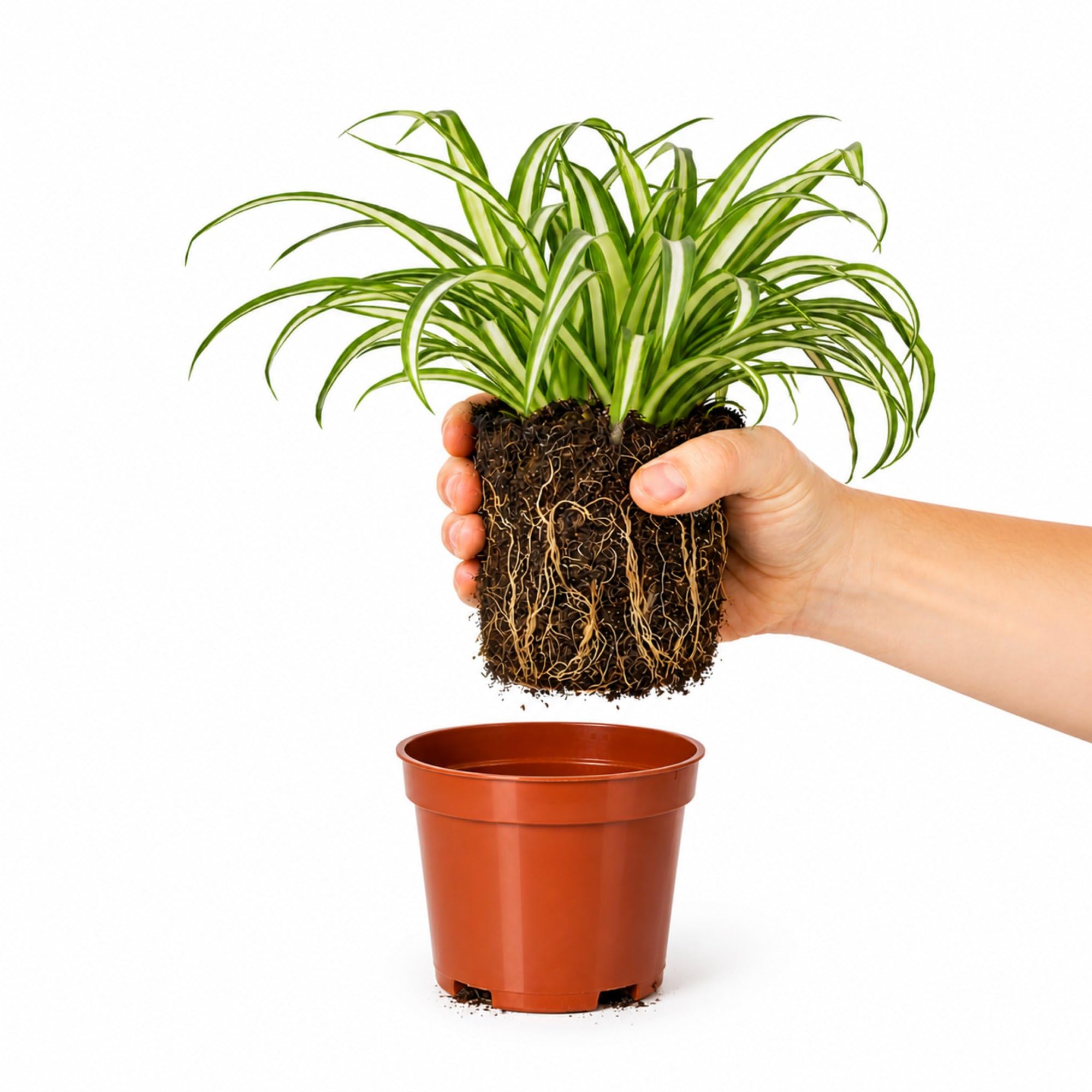
The full-size Spider Plant from Easy to Grow solves the most common disappointment in buying air-purifying plants online: receiving a tiny starter plug that takes six months to look like anything. This is a genuinely established specimen, fully rooted in a 4-inch grower pot with mature variegated foliage that provides immediate visual weight and full stomatal function from day one. The grass-like, arching leaves maximize linear leaf edge, which is the primary gas-exchange zone for monocots like Chlorophytum comosum.
NASA’s Clean Air Study specifically highlighted Spider Plants for removing formaldehyde, xylene, and toluene — the VOCs commonly off-gassed by synthetic carpets, plywood, and office supplies. This variety thrives in bright indirect light but is famous for tolerating low light without losing leaves, though its growth and filtration rate will slow. The “moderate to low moisture” care is genuinely forgiving; it prefers drying out between waterings, which makes it one of the most drought-tolerant picks on this list.
The value proposition here is straightforward: you pay for a plant that already works. Multiple customer reviews confirm extensive root systems and rapid new leaf emergence within weeks of transplanting. For anyone setting up a home office or nursery and wanting immediate air-quality benefits without waiting for growth, this is the most efficient buy. It also produces offsets (spiderettes) easily, giving you free plants to propagate for other rooms.
Why it’s great
- Large, mature plant with strong established roots
- Excellent at removing formaldehyde and xylene
- Forgiving drought tolerance and low light adaptability
Good to know
- Soil may arrive dry; needs a good soak immediately
- Variegation diminishes in very low light conditions
3. Pothos Snow Queen

The Snow Queen Pothos is the most visually striking vine in the air-purifying world, with heart-shaped leaves frosted in white, green, and marble tones. Epipremnum aureum is one of the most researched species for VOC removal, and this particular variegated cultivar does not sacrifice filtration capability for looks — the chlorophyll-rich green sections handle gas exchange while the white sectors add light-reflecting shimmer. Its trailing growth habit makes it ideal for hanging baskets or high shelves, creating a vertical column of air-cleaning foliage.
California Tropicals ships this as a live 4-inch pot with full root development. The instructions are bare-bones: moderate watering and indirect light, which this plant handles exceptionally well. The one documented risk is cold sensitivity; the product page explicitly offers a “winter insurance” heat pack add-on for shipping in freezing temperatures. In warmer months the risk is negligible, but northern buyers in January should absolutely add the protection or wait for a mail delay to pass. Customer photos confirm lush, full plants with bushy growth and strong white variegation.
From an air-quality perspective, Pothos species are particularly effective at breaking down benzene and formaldehyde. The Snow Queen’s trailing nature means its total leaf surface area can exceed that of a more compact plant in the same size pot, as vines can reach several feet long. If your goal is to cover a wall of air volume efficiently, this is the best structural choice for vertical space utilization.
Why it’s great
- Exceptional variegation with high leaf surface area
- Trailing vines maximize air movement in vertical space
- Proven VOC removal for benzene and formaldehyde
Good to know
- Very sensitive to cold; needs winter heat pack
- Can develop root rot if overwatered
4. Philodendron Heartleaf Brasil

The Philodendron Heartleaf Brasil from Hopewind Plants Shop is the entry-level champion for those skeptical about keeping anything alive. It requires bright indirect sunlight, but realistically, it survives and continues growing in conditions where many other plants would sulk. Its heart-shaped leaves with dark green and lime variegation provide decent surface area for gas exchange, and as a vining aroid, it will gradually trail or climb, increasing its filtration footprint over time.
The 4-inch nursery pot arrives with organic soil and healthy root development, verified by consistent reviewer photos. At 0.75 pounds, it is lightweight and easy to relocate, so you can move it around to find the perfect light spot. The care routine is minimal — water when the top half of soil is dry, every 1 to 2 weeks. Multiple 5-star reviews specifically praise how well-packaged these arrive, with no broken stems or spilled soil even after several days in transit. One reviewer noted it was their best plant bought online, citing plentiful healthy leaves and solid variegation.
For air purification, this is a slow-but-steady performer. Its moderate growth rate means it won’t outpace a spider plant in VOC absorption per square inch, but it also won’t die if you forget to water it for a week. The Brasil cultivar’s partial variegation means it photosynthesizes efficiently, supporting consistent stomatal activity. This is the ideal air-purifying plant for bedrooms or dorm rooms where consistent low maintenance is more important than maximum filtration speed.
Why it’s great
- Extremely forgiving of missed waterings
- Compact size fits small shelves and desktops
- Consistent variegation with reliable growth
Good to know
- Slower growth rate than standard green philodendron
- Leaf size is modest; less surface area than larger plants
5. Umbrella Tree Plant

Thorsen’s Greenhouse delivers a live Arboricola Umbrella Tree that looks like a tiny bonsai tree with glossy, umbrella-shaped leaves radiating outward. While the shipped height of 5 to 8 inches is modest, Schefflera arboricola has a naturally compact growth habit with densely packed leaves, giving it a surprisingly high leaf surface area relative to its height. This plant is listed with an “Air Purification” special feature, and its thick, waxy leaves are efficient at trapping airborne particulates while absorbing benzene.
The 4-inch growers pot comes with drainage holes and no decorative cover, so budget for a cache pot. Care is straightforward: partial sun, regular watering with a touch of drought tolerance. The plant ships from a US-based greenhouse and reviewers consistently describe the packaging as superb, with no leaf damage despite transit. One reviewer noted it arrived slightly dry and bounced back immediately after a good watering, which speaks to its resilience. The compact upright shape makes it an excellent choice for an office desk or a windowsill where trailing vines would be awkward.
For air purification, the Umbrella Tree’s dense canopy and waxy cuticle contribute to a high rate of transpiration, which helps circulate room air near the leaf surface. While it will not match the total filtration volume of a larger spider plant at this size, its structural form and easy care make it a strong candidate for spaces where you want a plant that looks more like a miniature tree than a vine or grass. It is also highly tolerant of dry indoor air, making it a reliable option in air-conditioned or heated rooms.
Why it’s great
- Dense, compact canopy with high stomatal density
- Drought tolerant and forgiving of dry indoor air
- Tree-like form fits modern decor perfectly
Good to know
- Smaller than expected at 5-8 inches tall
- Sensitive to overwatering; needs well-draining soil
FAQ
How many air purifying plants do I need per room to make a difference?
Are variegated leaves better or worse for air purification?
Can air purifying plants remove smoke or pollen?
Final Thoughts: The Verdict
For most users, the best air purifying plants winner is the Lemon Lime Maranta Prayer Plant because it combines pet safety, expressive daily movement, and large leaf surface area for effective VOC removal in a single attractive package. If you want an immediate filtration impact without waiting months for growth, grab the Spider Plant Variegated — its established root system and mature foliage deliver instant air-cleaning performance. And for a dramatic trailing display that maximizes vertical space, nothing beats the Pothos Snow Queen with its vigorous vine growth and stunning marble variegation.

Mo Maruf
I created WellFizz to bridge the gap between vague wellness advice and actionable solutions. My mission is simple: to decode the research and give you practical tools you can actually use.
Beyond the data, I am a passionate traveler. I believe that stepping away from the screen to explore new environments is essential for mental clarity and physical vitality.