Our readers keep the lights on and my smoothie glass nicely filled. As an Amazon Associate, I earn from qualifying purchases.
That musty, enclosed smell that settles into an RV after a weekend of damp weather isn’t just unpleasant — it clings to upholstery and can trigger allergies in confined quarters. Whether you’re boondocking off-grid or hooked up at a full-service campground, the limited ventilation of a moving home demands an air cleaning strategy built for tight spaces and variable power.
I’m Mohammad Maruf — the founder and writer behind WellFizz. I’ve spent the last five years analyzing the mechanical and filtration specs of compact air treatment devices, focusing on how well they perform under the vibration, temperature swings, and space constraints found inside recreational vehicles.
After examining over a dozen models on key metrics like filter type, coverage volume, power draw, and noise at sleep level, the best air purifier for rv offers a clear winner for most rigs based on install ease and odor neutralization speed.
How To Choose The Best Air Purifier For RV
An RV is not a static home. It vibrates, it tilts, it runs on 12V or limited inverter power, and every cubic inch of space has a job. Choosing an air purifier for this environment means weighing coverage, filter maintenance, noise, and power consumption differently than you would for a living room.
Filter Type: HEPA vs. Ionic vs. Bipolar Ionization
True HEPA filters physically trap particles down to 0.3 microns and are the gold standard for allergy relief, but they require a fan and replacement media every six months. Ionic and bipolar ionization units produce zero ozone (in certified models) and need no filters or fans — they are maintenance-free and silent, making them ideal for RVs where you can’t afford the bulk or filter-change schedule. The trade-off is that ionizers neutralize odors and some particles without physically capturing them, so they are best paired with good ventilation.
Coverage Area and Air Changes Per Hour
Measure your RV’s combined living and sleeping area. A 200 sq. ft. rig needs a unit rated for at least that coverage at one air change per hour. For strong odor control in a small space like a campervan, look for a model that achieves 4+ air changes per hour in the zone you occupy most, such as the bedroom or main cabin.
Power Draw and Noise at Sleep Level
Off-grid RVs depend on battery reserves. A purifier drawing 6W is negligible; one pulling 50W can drain a house battery overnight. Noise is equally critical — a unit running at 24 dB is whisper-quiet and won’t disturb sleep, while a fan-based HEPA on high speed may hit 45 dB and sound intrusive in a compact space. Prioritize models with a dedicated sleep mode.
Quick Comparison
On smaller screens, swipe sideways to see the full table.
| Model | Category | Best For | Key Spec | Amazon |
|---|---|---|---|---|
| AIRLOCK One | Ionization | Odor-free RV cabins | Silent, 5-year lifespan | Amazon |
| Honeywell HPA125V | HEPA | Allergy & smoke control | 20.81 dBA sleep mode | Amazon |
| BLUEAIR Blue Pure 511 | HEPA | Quiet all-night use | 24 dB at low speed | Amazon |
| PuroAir 100i | Smart HEPA | App-controlled clean air | 550 sq ft coverage | Amazon |
| Plug In Air Purifier 3 Pack | Ionic | Multi-room freshening | Plug-and-play ionizer | Amazon |
| Vedawind Ionic Purifier | Portable Ionic | Car & travel use | USB rechargeable | Amazon |
| Air Ionizers 4 Pack | Ionic | Budget whole-rig coverage | Fanless, filterless | Amazon |
In-Depth Reviews
1. AIRLOCK One

The AIRLOCK One is engineered specifically for boats and RVs, not repurposed from a home unit. It uses bipolar ionization to release positive and negative ions that break down odor molecules at the molecular level — no fan, no filter, no moving parts. The unit installs in under 15 minutes, mounts inline with your existing AC system, and works completely silently in the background.
With a 5-year operational lifespan and UL 867 certification for zero harmful ozone, this is the set-and-forget solution for RV owners who want permanent odor elimination without filter subscriptions. Owners report a noticeable difference in cabin air quality within hours of installation, especially in boats and RVs with persistent mildew or diesel fumes.
It draws very low power and stays completely out of sight once mounted. The trade-off is that it does not physically capture dust or pollen particles — it neutralizes odors and some airborne contaminants. For allergy sufferers who also need particle removal, pairing it with a small HEPA unit may be ideal.
Why it’s great
- Silent operation with zero fan noise
- No filter replacements or maintenance costs
- Designed and certified for marine/RV environments
- UL 867 certified — safe ozone levels
- 5-year expected lifespan under normal use
Good to know
- Does not capture dust or pollen particles
- Requires a permanent mount near AC system
- Higher upfront investment than plug-in ionizers
2. Honeywell Allergen Plus HPA125V
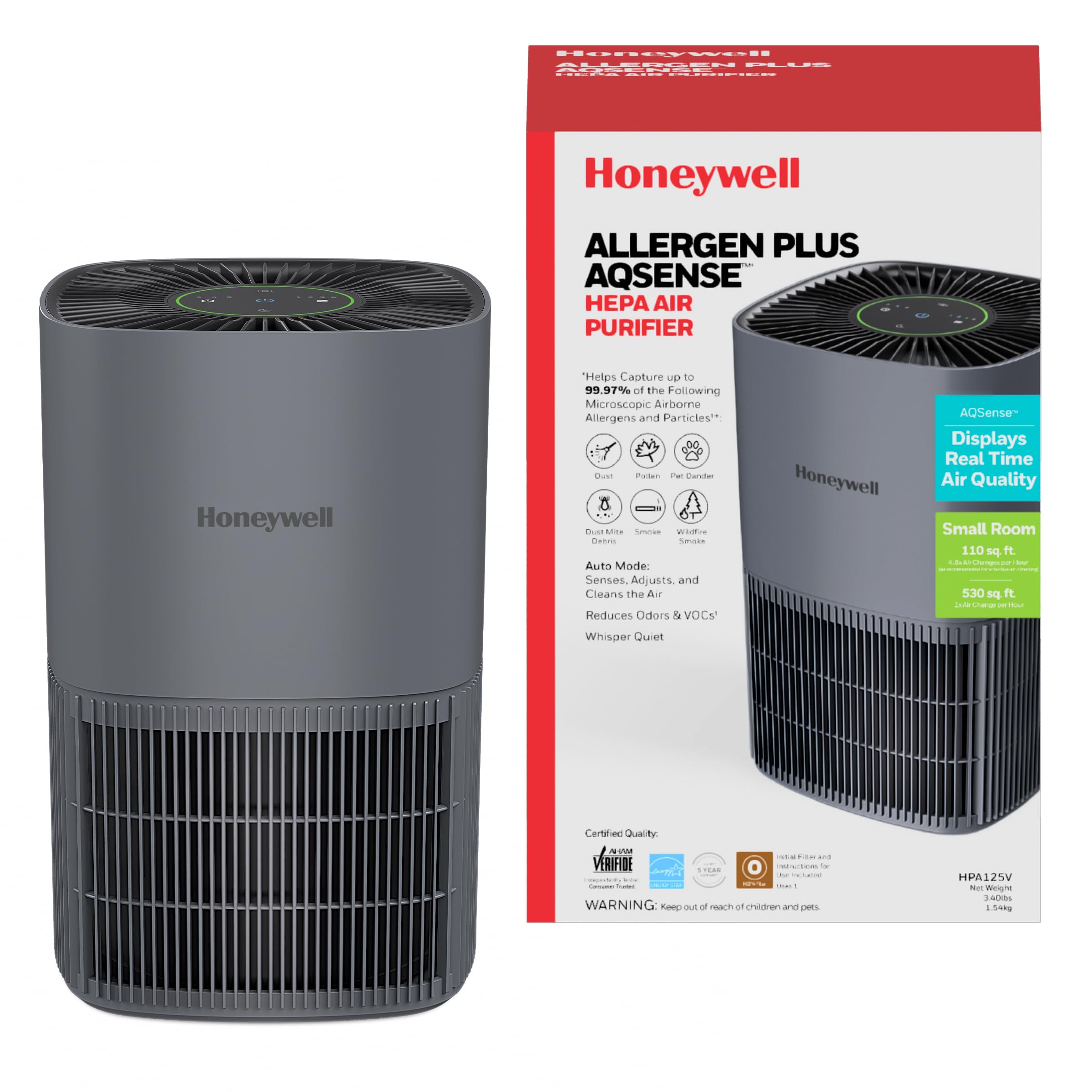
The Honeywell HPA125V brings a 3-in-1 HEPA filtration system to the compact tabletop category, covering up to 530 square feet at one air change per hour. Its standout feature is the AQSense Auto Mode, which uses a real-time air quality sensor to adjust fan speed automatically — the indicator glows green, yellow, or red so you know exactly when the air gets dirty.
Sleep Mode drops noise to an incredibly low 20.81 dBA with dimmable lights, making it one of the quietest HEPA purifiers available for an RV bedroom. The 360-degree intake pulls air from all sides, and the top exhaust distributes cleaned air evenly without blasting a direct stream. Owners consistently report that it eliminates dog smells and smoke odor within hours.
At just 2.08 pounds and 7 inches wide, it fits easily on a nightstand or counter. The filter needs replacement every 6-12 months depending on use, and the filter change indicator takes the guesswork out. For RV owners who want proven HEPA particle capture with smart automation, this is a top contender.
Why it’s great
- Ultra-quiet 20.81 dBA sleep mode
- Real-time air quality sensor with auto fan speed
- Compact 7-inch footprint fits any counter
- Captures 99.97% of airborne particles
Good to know
- Filter replacement adds recurring cost
- Coverage rating drops at higher air changes
- Not designed for 12V DC power natively
3. BLUEAIR Blue Pure 511

The Blue Pure 511 from BLUEAIR uses HEPASilent technology, which combines electrostatic charging with mechanical filtration to capture 99.97% of particles down to 0.1 microns while keeping airflow high and noise low. At 24 dB on the lowest setting, it is barely audible — quieter than a whisper — and uses less energy than a standard light bulb.
With a 432 sq. ft. maximum coverage and 4.8 air changes per hour in a 180 sq. ft. room, this unit cycles RV cabin air quickly. The washable fabric pre-filter slides on and off easily for cleaning, extending the life of the main filter. Owners report noticeable improvements in pet dander and cooking smells within the first day of use.
Its cylindrical design with 360-degree intake is space-efficient, and the Scandinavian-inspired pre-filter colors let you match your interior. The main filter replacement interval is roughly 6 months, and the unit is Energy Star Most Efficient certified — a strong choice for RVers who want HEPA performance without sacrificing quiet operation.
Why it’s great
- Whisper-quiet 24 dB on low speed
- Washable pre-filter reduces maintenance cost
- Energy Star Most Efficient certified
- Compact cylindrical footprint
Good to know
- Filter reset notification can be tricky
- Touch controls have a slight delay
- Requires 110-120V AC power
4. PuroAir 100i
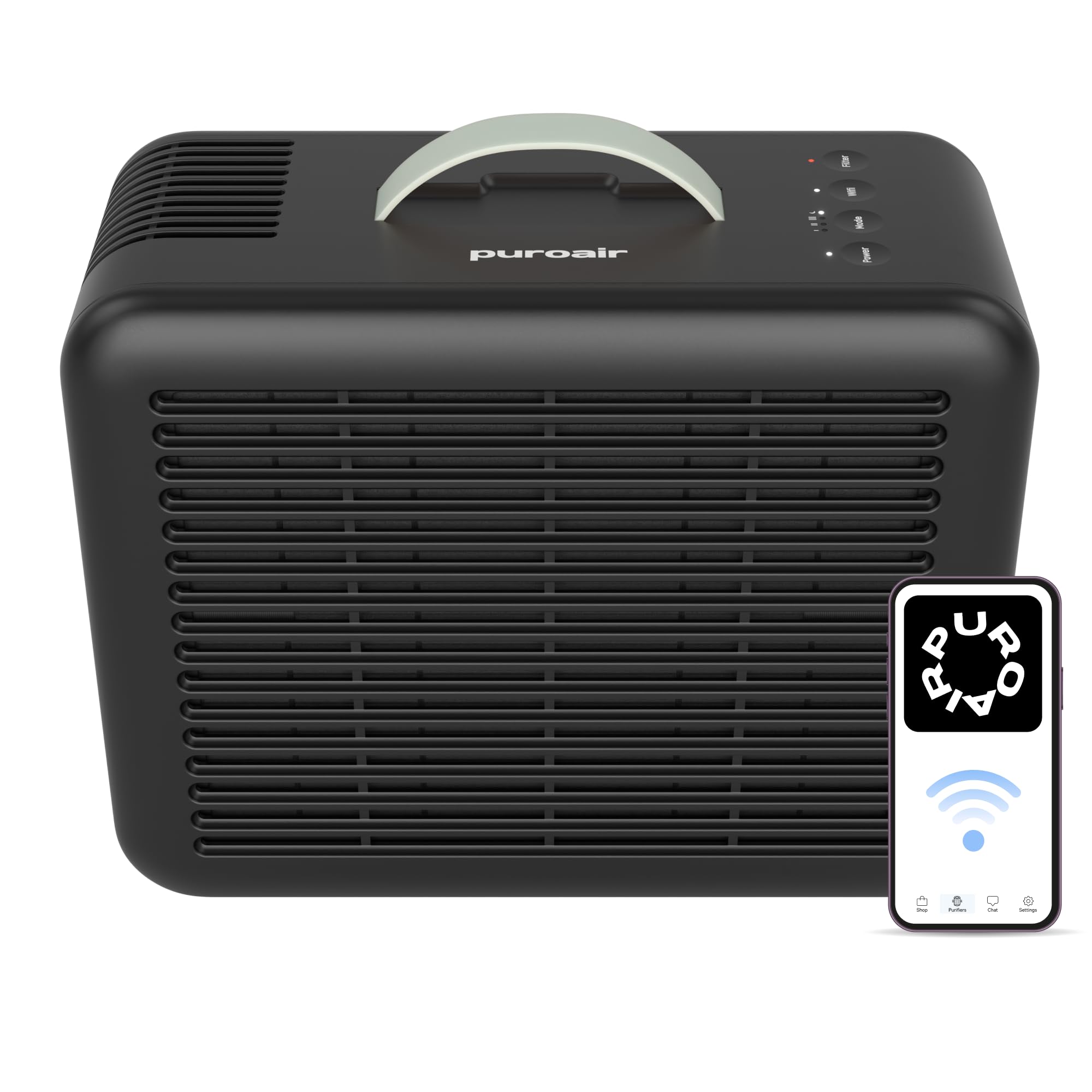
The PuroAir 100i is a Wi-Fi-enabled smart purifier with a 3-layer filtration system that includes a pre-filter, True HEPA filter, and activated carbon layer. It covers rooms up to 550 square feet in one hour, making it overkill for most RV interiors but excellent for larger Class A motorhomes or toy haulers with open floor plans.
Through the PuroAir app, you can adjust fan speed, set schedules, and toggle sleep mode from anywhere. The unit is lightweight at 4.63 pounds and has a convenient carrying handle, so you can move it between the living area and bedroom as needed. Owners report significant reductions in pet dander, dust, and cigarette smoke within hours of first use.
It features a magnetic filter access door for tool-free replacements, and the 2-year warranty (registered via QR code) adds peace of mind. The sleep mode is genuinely quiet — owners describe it as “whisper-quiet” and “not disruptive overnight.” For RV owners who want app control and verified HEPA performance, the 100i delivers.
Why it’s great
- App control for remote fan speed and scheduling
- 550 sq ft coverage handles large motorhomes
- Magnetic filter access for easy changes
- 2-year warranty included
Good to know
- Larger footprint than pure ionizers
- Requires Wi-Fi for smart features
- Filter replacement adds ongoing cost
5. Plug In Air Purifier 3 Pack
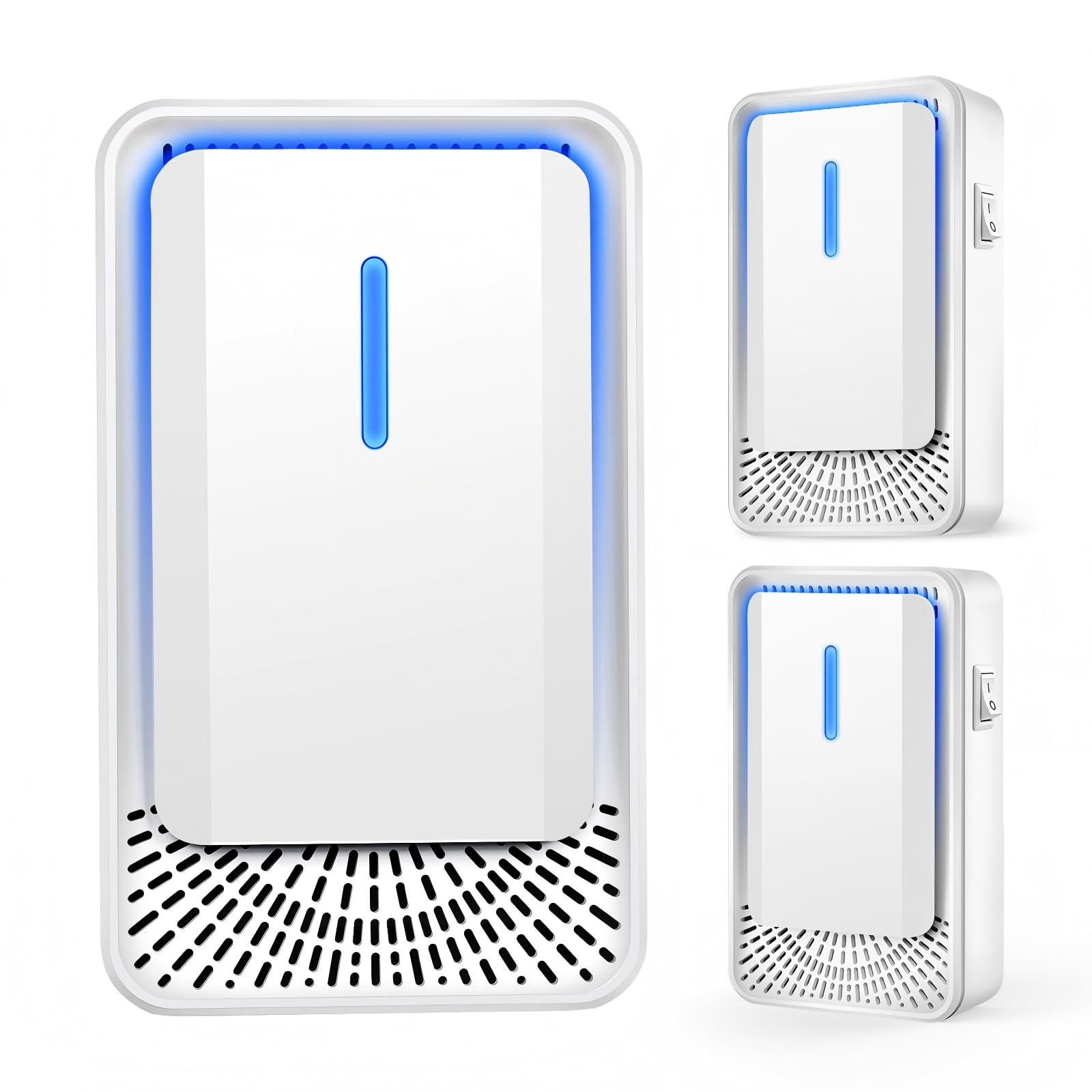
This 3-pack of plug-in ionic air purifiers is the simplest way to cover multiple zones inside an RV. Each unit measures just 3.94 x 2.56 x 2.36 inches and plugs directly into a standard wall outlet — no setup, no filters, no fans. They release negative ions to help reduce pet odors, smoke, dust, and pollen in the immediate vicinity.
Owners consistently praise the whisper-quiet operation and ability to freshen air in small spaces like bathrooms, kitchen counters, and bedroom nightstands. The compact size means you can place them in awkward RV nooks where a larger purifier would never fit. Multiple verified reviews note that they noticed fresher air within a couple of days, especially targeting cooking smells and pet odors.
The main limitation is that ionizers are most effective on odors and small particles in the immediate area — they don’t pull air through a filter. For RVers who want a dead-simple, zero-maintenance solution for freshening the cabin, this 3-pack offers excellent coverage at a low entry point.
Why it’s great
- Three units cover multiple RV zones
- Truly plug-and-play with zero setup
- Silent fanless operation
- Ultra-compact for tight spaces
Good to know
- Does not physically trap dust or pollen
- Best for small rooms, not open cabins
- Units are smaller than expected based on photos
6. Vedawind Small Ionic Air Purifier
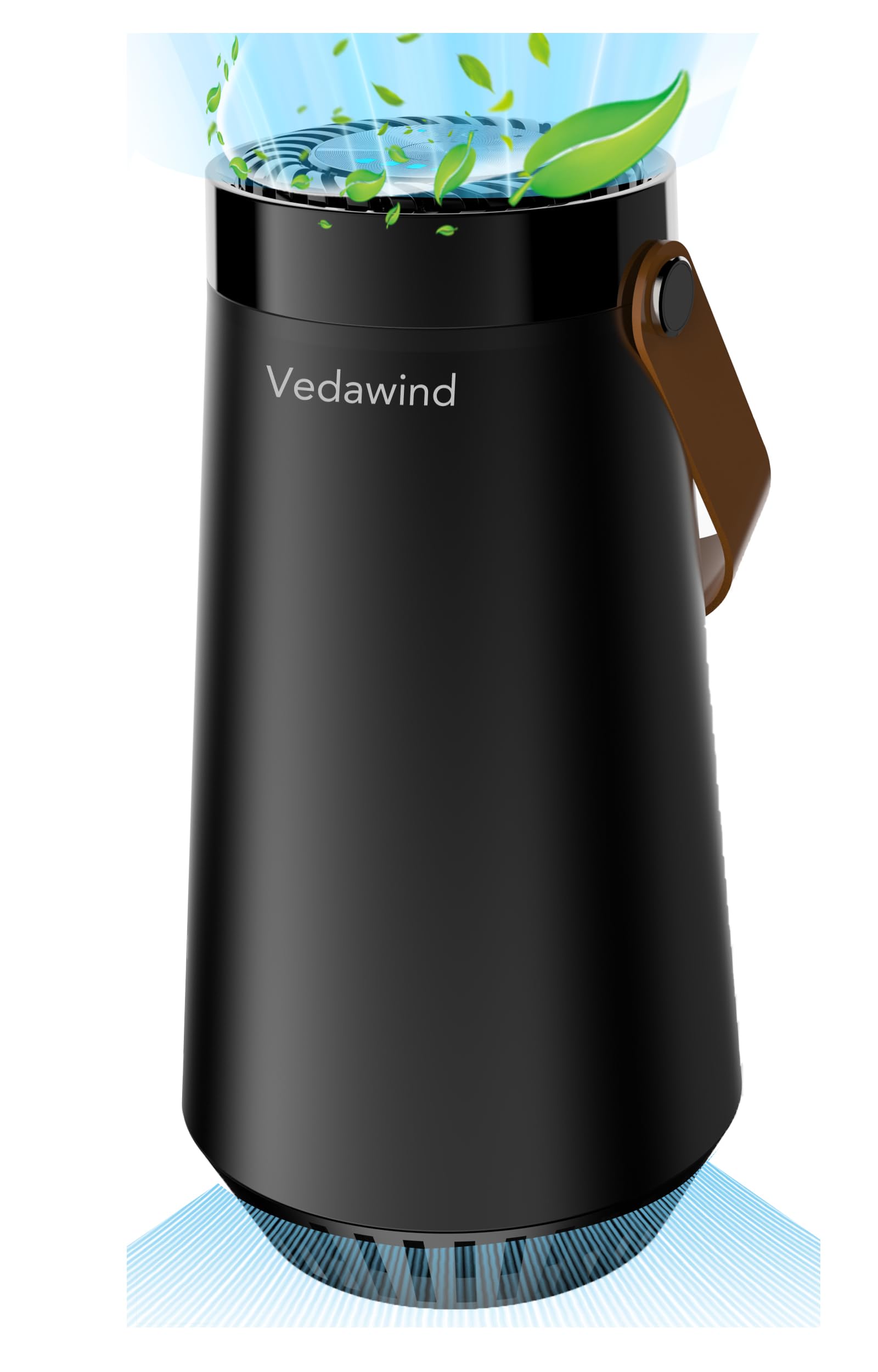
The Vedawind ionic purifier is a battery-powered, cordless unit that covers up to 260 square feet and runs on a USB rechargeable battery. With four adjustable speed settings and a whisper-quiet fanless design, it can be placed anywhere in the RV or even taken into the tow vehicle, boat, or tent. At 11.2 ounces, it is designed for true portability.
Owners have successfully used it to reduce cooking spice smells in bedrooms, lower pollen levels in delivery vans, and improve air quality in small cabins. The filterless design means zero maintenance beyond keeping the unit charged, and the 6W power draw is negligible for RV battery banks. The ozone-free certification ensures safety in enclosed spaces.
One caution from verified users: a few experienced dizziness when running the highest setting in a very small car cabin for extended periods, which resolved when they stopped use. This may be related to the ion concentration in extremely tight spaces, so using lower settings in a closed RV is recommended. For travelers who want one purifier that moves between the RV and the car, this is the most flexible option.
Why it’s great
- USB rechargeable and fully cordless
- Compact 3-inch wide body is truly portable
- Four adjustable speed settings
- Zero filter replacement cost
Good to know
- Highest setting may be strong for tiny cabins
- Battery life depends on speed setting
- Not a particle-capture solution
7. Air Ionizers 4 Pack
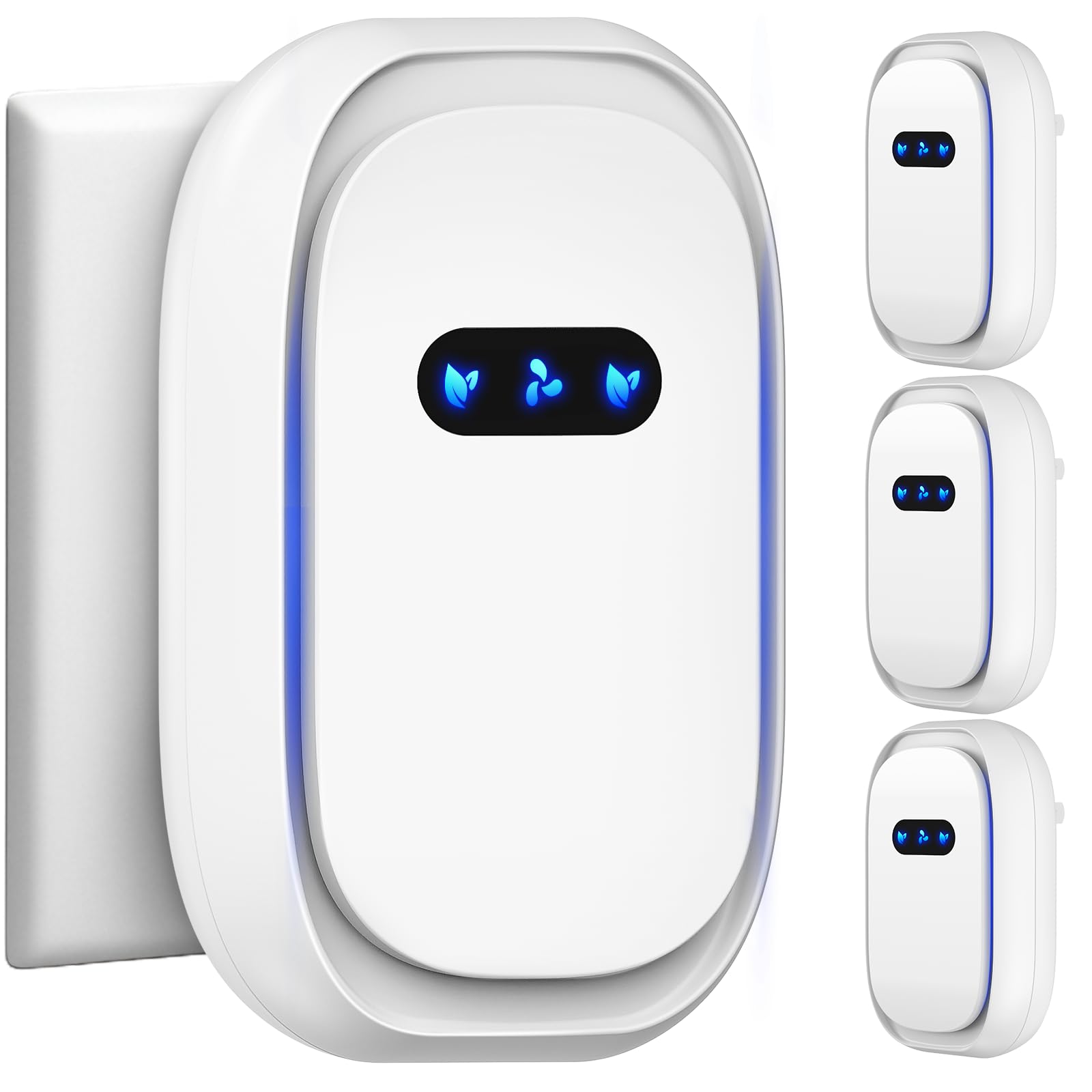
This 4-pack of plug-in negative ion air purifiers is the most cost-effective way to cover every zone of an RV — bedroom, bathroom, kitchen, and living area — without occupying counter space. Each unit is 2.4 x 4 inches and plugs directly into any standard outlet, operating silently with no fan and no filters.
Owners report that the units effectively clear lingering cooking smells from kitchens, reduce pet dander in living areas, and freshen air in bathrooms. The blue glow provides a subtle nightlight effect, and the low-power design draws less than 6W per unit. For RVers who want to combat stale air across the whole rig without managing multiple filter types or charging schedules, this set offers the easiest deployment.
The trade-off with all ionizers is the same: they work best on odors and airborne particles in the immediate vicinity of the unit, and they do not physically trap dust or allergens. For RV owners with mild allergies who primarily want odor control and a fresher cabin, these perform well. For those who need HEPA-grade particle removal, they should be paired with a fan-based unit.
Why it’s great
- Four units for whole-rig coverage instantly
- Truly silent with no moving parts
- No setup or maintenance required
- Very low power consumption for off-grid use
Good to know
- Does not capture larger dust or pollen particles
- Effectiveness is localized to the outlet location
- Blue glow may be distracting in dark bedrooms
FAQ
Can I run a HEPA air purifier on 12V RV battery power?
Do ionic air purifiers produce ozone that is unsafe in an enclosed RV?
How often should I replace the filter in an RV air purifier?
Final Thoughts: The Verdict
For most users, the best air purifier for rv winner is the AIRLOCK One because it is purpose-built for the RV environment, operates silently with zero maintenance, and provides verified odor neutralization without filters or fans. If you want True HEPA particle capture with smart automation and quiet sleep mode, grab the Honeywell HPA125V. And for budget-conscious travelers who need whole-rig coverage without any installation, nothing beats the simplicity of the Air Ionizers 4 Pack.

Mo Maruf
I created WellFizz to bridge the gap between vague wellness advice and actionable solutions. My mission is simple: to decode the research and give you practical tools you can actually use.
Beyond the data, I am a passionate traveler. I believe that stepping away from the screen to explore new environments is essential for mental clarity and physical vitality.