Our readers keep the lights on and my smoothie glass nicely filled. As an Amazon Associate, I earn from qualifying purchases.
Waking up with a stuffy nose and itchy eyes isn’t just uncomfortable—it’s a signal that your indoor air is loaded with the very pollen particles you’re trying to escape. An air purifier rated for pollen capture doesn’t just mask the problem; it physically removes those microscopic triggers from your breathing zone, letting you reclaim your home as a sanctuary.
I’m Mohammad Maruf — the founder and writer behind WellFizz. For years I’ve analyzed air purifier CADR ratings, filter media densities, and real-world particle capture data to separate effective allergy machines from overpriced fans.
After evaluating nine of the top contenders on the market, I’ve built this definitive guide to help you confidently choose the best air purifier for pollen allergies based on room size, filtration power, and long-term value.
How To Choose The Best Air Purifier For Pollen Allergies
Pollen particles range from 10 to 100 microns in size, but the smaller fragments and aerosols that trigger allergic reactions can be as tiny as 0.3 microns. That means your purifier’s filtration grade, airflow rate, and room coverage all directly impact whether your symptoms improve. Here’s what to prioritize.
CADR for Pollen — The Real Measure of Speed
Clean Air Delivery Rate (CADR) tells you how many cubic feet of air per minute the unit cleans of a specific pollutant. For pollen allergies, look for a pollen CADR of at least 200 in larger rooms. A higher pollen CADR means the machine will cycle the room’s air more times per hour, reducing allergen concentration faster.
HEPA vs. UltraHEPA — Particle Size Matters
Standard True HEPA captures 99.97% of particles at 0.3 microns—the most penetrating particle size. UltraHEPA filters, like those in AirDoctor units, capture 99.99% at 0.003 microns. For pollen allergies specifically, standard HEPA is sufficient, but if you also deal with smoke, mold spores, or bacteria, the tighter filtration offers broader protection.
Room Size and Air Changes Per Hour
Don’t just look at maximum square footage. The key metric is how many air changes per hour (ACH) the unit delivers at that size. For allergy relief, you want at least 4 ACH—meaning the purifier cycles the entire room volume four times every hour. A unit rated for 1,000 sq. ft. may only achieve 1 ACH at that size, which is ineffective for pollen removal.
Quick Comparison
On smaller screens, swipe sideways to see the full table.
| Model | Category | Best For | Key Spec | Amazon |
|---|---|---|---|---|
| Coway Airmega AP-1512HH | Mid-Range | Best Overall Pollen Capture | Pollen CADR 240 CFM | Amazon |
| BLUEAIR Blue 3110 | Premium | Smart Large Room Cleaning | 705 sq ft in 12.5 min | Amazon |
| AirDoctor AD3500 | Premium | Hospital-Grade Filtration | UltraHEPA 0.003 microns | Amazon |
| CleanForce Rainbow | Mid-Range | Whole Home with Smart Control | 2,250 sq ft coverage | Amazon |
| COWAY Airmega 250 | Premium | Large Room Auto Mode | 1,860 sq ft / 60 min | Amazon |
| Honeywell HPA304 | Mid-Range | Extra-Large Room Allergy | 465 sq ft / 4.8 ACH | Amazon |
| Levoit Vital 100 | Mid-Range | Quiet Bedroom Use | 23 dB Sleep Mode | Amazon |
| LEVOIT Core 300-P | Budget | Entry-Level Value | Pollen CADR 167 CFM | Amazon |
| GermGuardian AC4825E | Budget | Compact Dorm/Office | 153 sq ft / 12.5 min | Amazon |
In‑Depth Reviews
1. Coway Airmega AP-1512HH
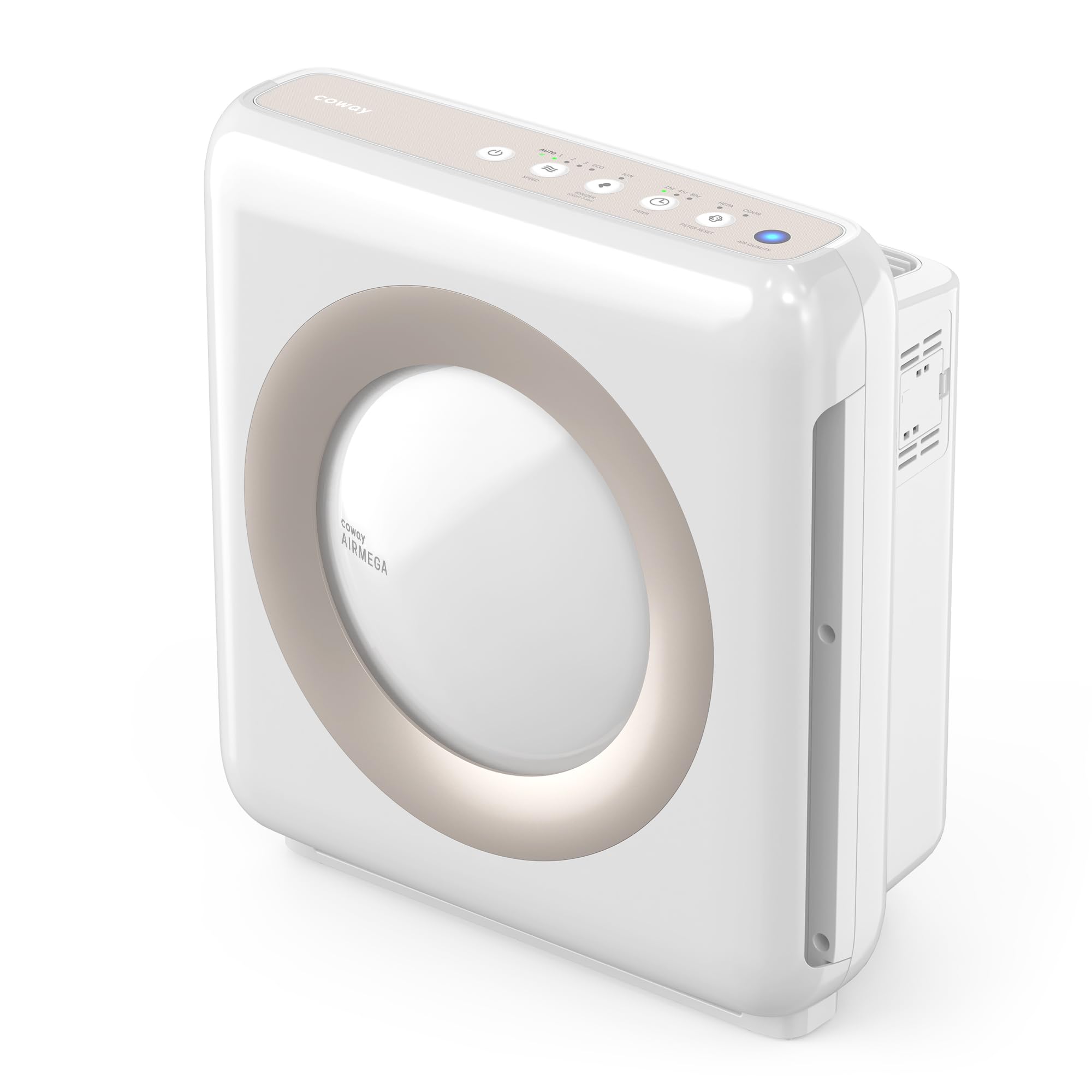
The Coway Airmega AP-1512HH is the air purifier that Wirecutter and TopTenReviews both crowned best in class, and for pollen allergy sufferers, the numbers back it up. With a pollen CADR of 240 CFM—the highest among mid-range units—it can cycle a 361 sq. ft. room over four times per hour. The four-stage filtration system includes a washable pre-filter, deodorization carbon filter, True HEPA, and Vital Ion, so it tackles pollen at the pre-filter stage before particles ever reach the HEPA media.
Its pollution sensor communicates real-time air quality via a brightly colored LED display, and the auto mode adjusts fan speed between levels 1, 2, and 3 based on detected particles. When no pollution registers for 30 minutes, Eco Mode shuts the fan off entirely to save energy. The timer allows 1, 4, or 8-hour run cycles, and the filter replacement indicator separately tracks pre-filter wash cycles and HEPA filter lifespan. Noise levels range from a whisper-quiet 24.4 dB on low to 53.8 dB on high, making it discreet enough for a bedroom.
Owners consistently report that the unit cleared heavy wildfire smoke in minutes, transforming the air quality indicator from red to blue, and that the upward airflow design avoids drafts common with front-blowing units. The 12.5-pound chassis is compact enough to tuck against a wall, and the washable pre-filter extends the main HEPA filter life to roughly one year. For a room up to 360 sq. ft., this is the most balanced pollen-fighting machine at its price point.
Why it’s great
- Highest pollen CADR (240 CFM) in its class for fast room cycling
- Real-time air quality display with auto and eco modes
- Washable pre-filter reduces long-term filter costs
Good to know
- Auto mode cannot be locked to a minimum medium speed—it may drop to low
- No app or WiFi connectivity for remote control
2. BLUEAIR Blue 3110
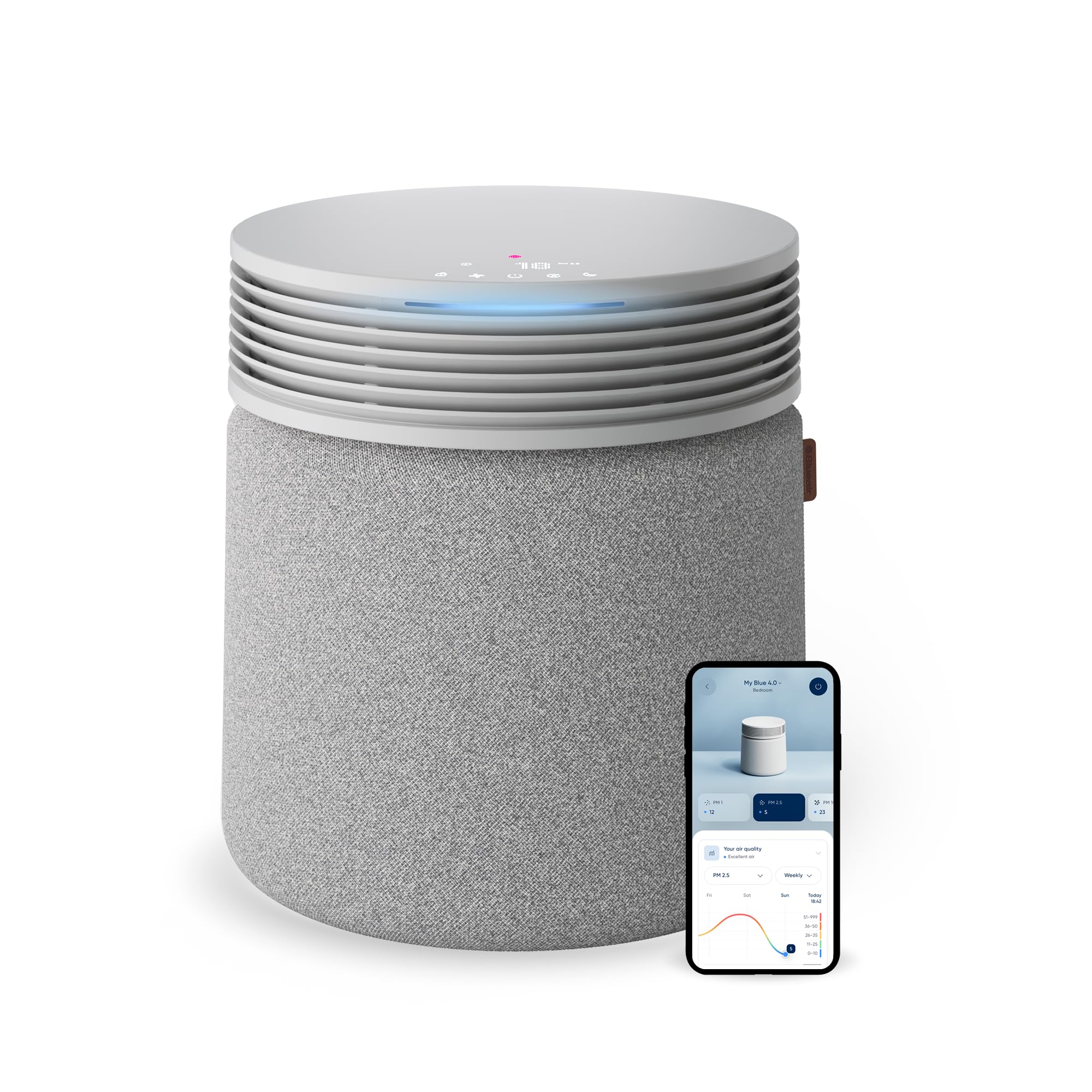
The BLUEAIR Blue 3110 combines Scandinavian design with HEPASilent filtration technology that captures 99.97% of airborne particles down to 0.1 microns—well within the range of pollen and its finer allergen-carrying fragments. Its claim of cleaning 705 sq. ft. in just 12.5 minutes is backed by a powerful motor that draws air through an electrostatic-charged filter media, achieving high CADR with lower resistance than traditional HEPA designs. This means quieter operation: as low as 23 dB, which is barely audible in a bedroom.
Smart features include WiFi connectivity via the Blueair app, letting you adjust fan speed, schedules, and settings remotely. Auto Mode uses an internal sensor to adjust purification based on real-time air quality changes. The built-in air quality indicator displays five color-coded levels from blue (excellent) to red (poor), and the unit’s furniture-inspired design doubles as a side table with interchangeable pre-filter colors. OdorFence technology targets VOCs and cooking smells that often co-occur with pollen season.
User feedback highlights how noticeably fresher the air feels after cooking, and how the quiet low setting doesn’t disturb sleep. The main trade-off is filter replacement cost—genuine Blueair filters are premium-priced. The 21-inch tower footprint is compact, but the 6-kilogram weight makes it easy to move between rooms. For those who want a silent, smart, design-forward pollen purifier for large open spaces, this is a top contender.
Why it’s great
- Near-silent 23 dB operation on low settings
- Smart app control and real-time air quality display
- Cleans 705 sq. ft. in 12.5 minutes—very fast cycling
Good to know
- Replacement filters are expensive
- App can be slow to respond at times
3. AirDoctor AD3500
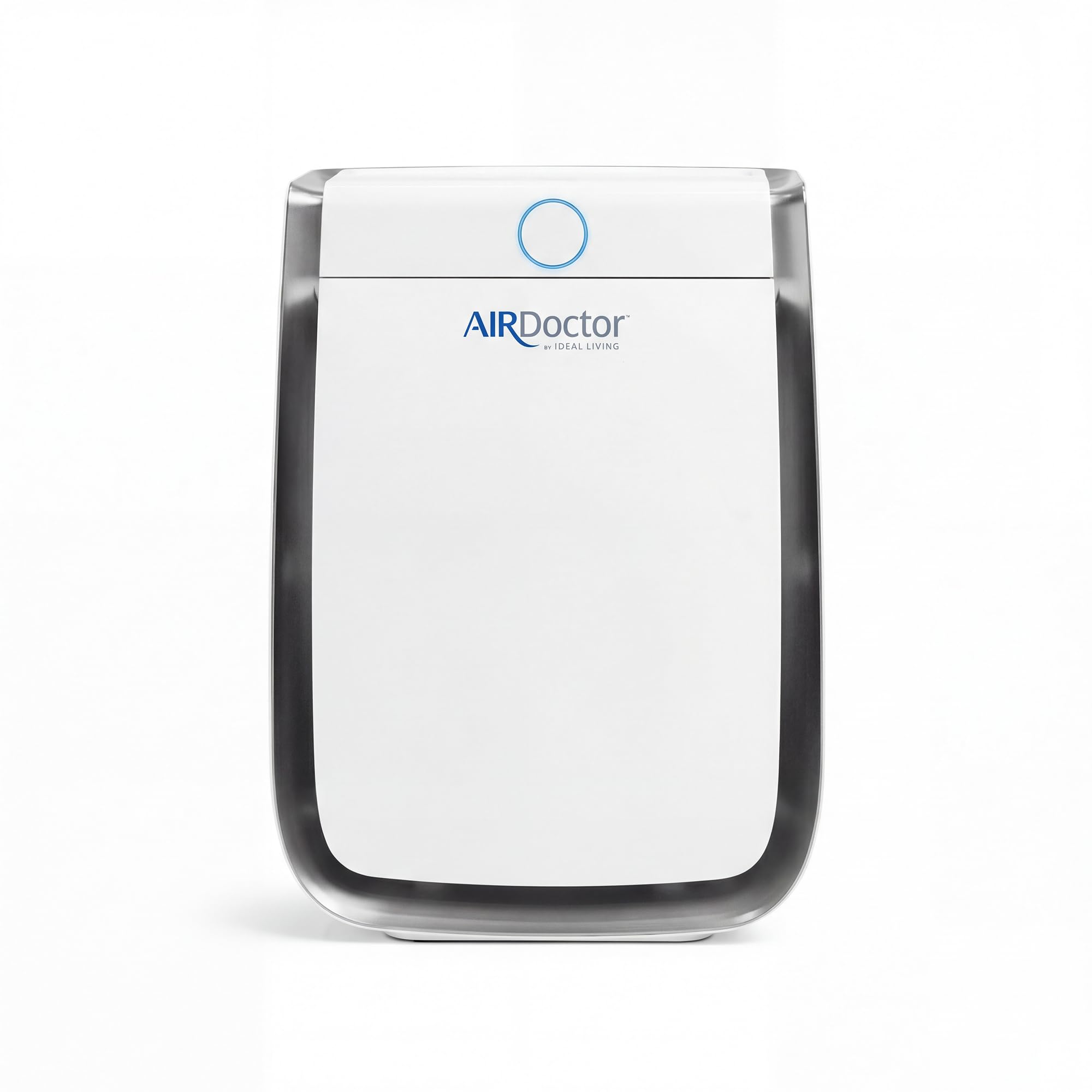
The AirDoctor AD3500 pushes filtration beyond standard HEPA with its UltraHEPA media that captures 99.99% of airborne particles at 0.003 microns—100 times smaller than the 0.3-micron HEPA standard. For pollen allergy sufferers, this means even the sub-micron fragments that trigger deep respiratory reactions are eliminated. The three-stage system includes a pre-filter, a premium activated carbon filter infused with potassium permanganate for gas and odor reduction, and the UltraHEPA filter. It covers 630 sq. ft. in 15 minutes and up to 2,520 sq. ft. in one hour.
The AD3500 features Auto Mode with the AirDoctor Halo, a PM2.5 sensor that displays real-time air quality via color-coded lighting. When pollution spikes, the unit automatically boosts fan speed to clean the air quickly. Four manual fan speeds, a timer, and a filter indicator give full control. The 24-pound chassis feels solid, and the carbon filter is designed for 6-month replacement while the UltraHEPA lasts 12 months. It is FSA and HSA eligible, making it a tax-advantaged purchase for documented allergies.
Owners consistently report dramatic reductions in morning stuffiness and cooking odors, with the auto mode responding to events like nebulizer use or dusting. The main drawbacks are the initial cost and the premium replacement filter expense—genuine AirDoctor filters are required for peak performance. If you want near-lab-grade filtration for a large home and are willing to pay for it, the AD3500 is the most thorough pollen defense available.
Why it’s great
- UltraHEPA captures 99.99% at 0.003 microns—beyond HEPA standard
- Large room coverage up to 2,520 sq. ft.
- FSA/HSA eligible for allergy sufferers
Good to know
- Premium initial and ongoing filter costs
- 24-pound weight makes it less portable
4. CleanForce Rainbow
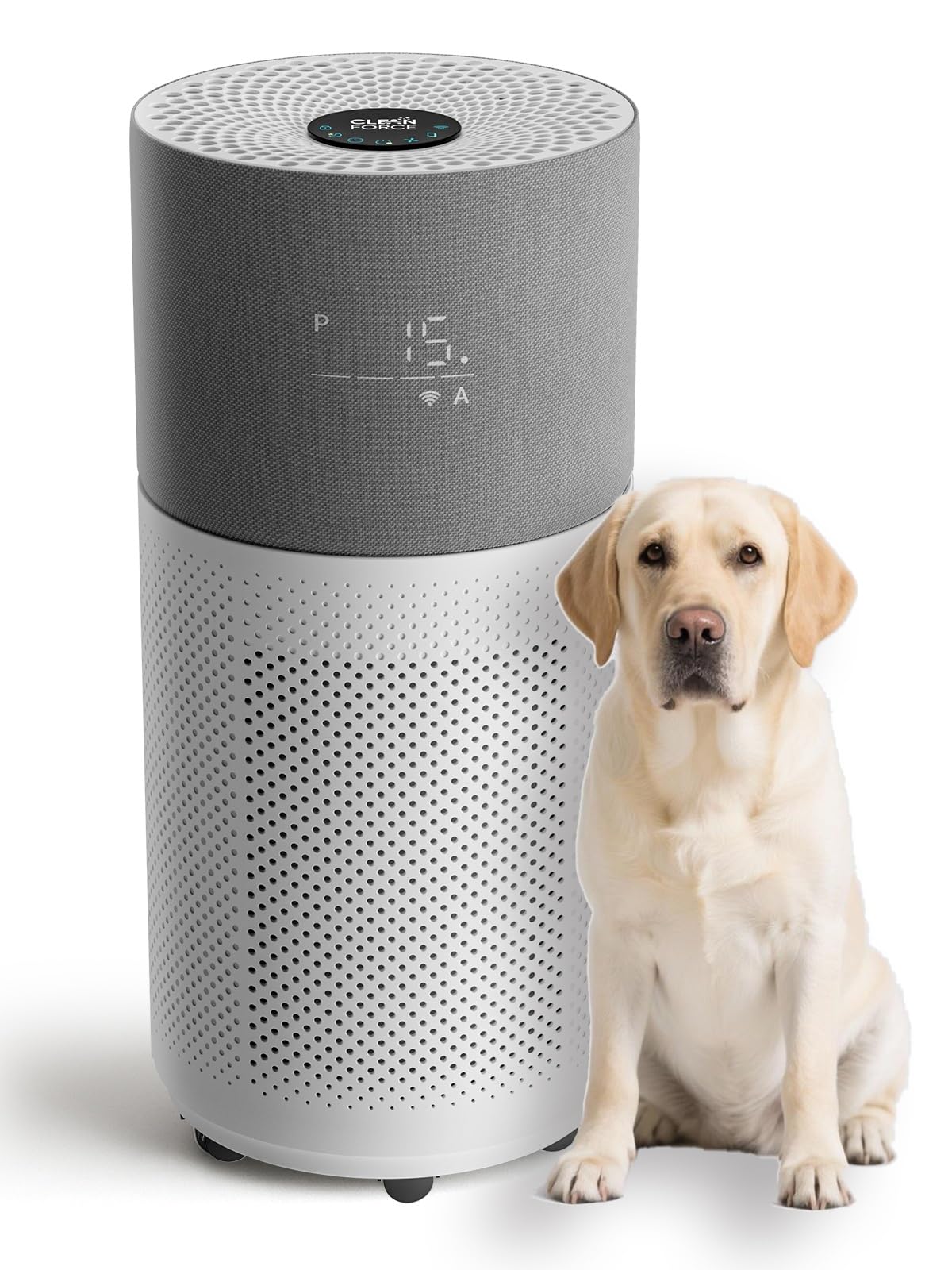
The CleanForce Rainbow is certified asthma and allergy friendly by the AAFA, meaning it meets strict standards for reducing airborne triggers like pollen. Its AllerSync multi-stage filter combines a pre-filter, HEPA media, and a high-capacity activated carbon layer to capture particles and odors. The unit is designed for spaces up to 2,250 sq. ft., with a quiet 29 dB sleep mode that won’t disturb rest. It is Energy Star certified and meets CARB ozone-free standards, so you get effective filtration without ozone concerns.
Voice and app control via Alexa or the CleanForce App allow you to set schedules, check filter status, and monitor PM2.5 readings from anywhere. The smart display uses color-coded sensors to automatically adjust fan speed, maintaining your desired air quality without manual intervention. The unit includes a remote, timer, and four fan speeds, and it comes on wheels for easy movement between rooms. The washable pre-filter helps extend the life of the main filter, though the replacement filter cost is notable.
Users report that it significantly reduces allergy symptoms like itchy eyes and sneezing, and that it handles cooking odors and pet smells effectively. The build feels premium with a touch screen and real-time PM2.5 display. Some note the white plastic may yellow in direct sunlight, and the fan is loud on speeds 3 and 4. For an allergy-certified, large-room purifier with smart home integration, the CleanForce Rainbow is a strong mid-range value.
Why it’s great
- AAFA certified asthma and allergy friendly
- Covers 2,250 sq. ft. with smart auto mode and app controls
- Quiet 29 dB sleep mode for bedroom use
Good to know
- Replacement filter pair costs around
- Highest fan speeds are loud
5. COWAY Airmega 250

The COWAY Airmega 250 is an upgraded version of the iconic Airmega line, designed for larger spaces up to 1,860 sq. ft. It uses the same HyperCaptive Filtration System—a washable pre-filter, activated carbon filter, and HEPA filter that captures 99.97% of 0.3-micron particles including pollen. The 24/7 pollution monitor displays real-time air quality and adjusts purification automatically via Smart Mode, which adapts fan speed based on sensor readings to save energy without sacrificing performance.
When air quality needs a quick boost, Rapid Mode kicks in at maximum power until the room meets your target clarity. The timer, filter replacement indicator, and three-year warranty (one of the longest in the category) add peace of mind. At 20.5 pounds, it’s heavier than the AP-1512HH, but the single large filter design means replacement costs are lower—around per year, according to user reports. The elegant warm gray finish and low-profile 8.3-inch depth make it one of the most design-friendly large purifiers.
Reviews praise its near-silent operation on low and its ability to scrub wildfire smoke and cooking fumes in large apartments. The auto mode is sensitive enough to detect cooking events and ramp up, then drop back to quiet. The absence of WiFi is a deliberate design choice that avoids connectivity issues. For those with a large open-plan home who want minimal filter maintenance and strong pollen control, the Airmega 250 is a premium workhorse.
Why it’s great
- Smart Mode adapts to real-time air quality for energy savings
- Low filter replacement cost (~/year)
- Three-year warranty and CARB certified
Good to know
- No WiFi or app connectivity
- At 20.5 pounds, it’s less portable than smaller units
6. Honeywell HPA304
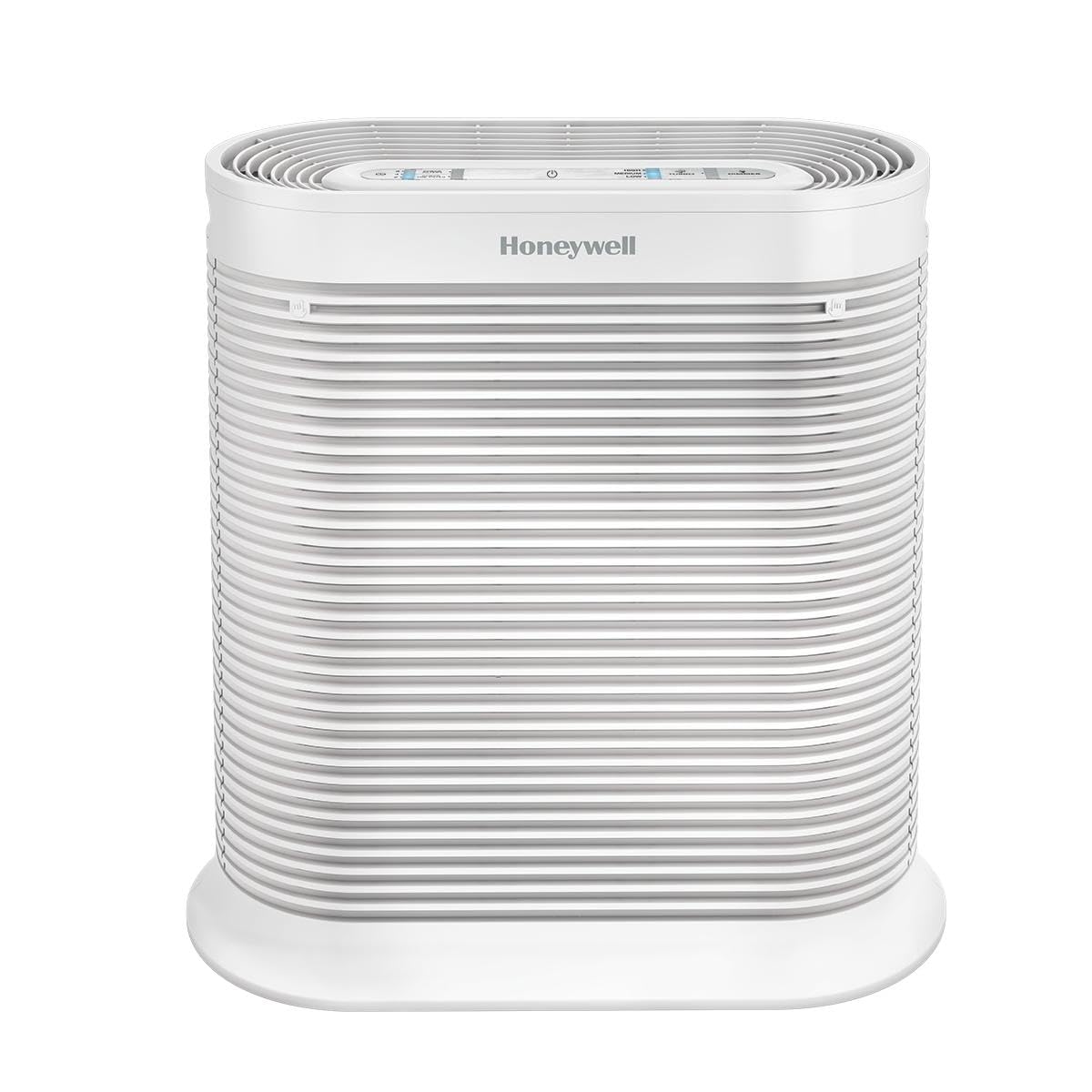
The Honeywell HPA304 is a no-nonsense extra-large room purifier from the Allergen Plus series, designed to filter and circulate air in 465 sq. ft. rooms up to 4.8 times per hour. Its True HEPA filter traps 99.97% of microscopic airborne allergens including pollen, dust mite debris, pet dander, and smoke. The unit uses three separate HEPA filters (included) for maximum surface area, and the washable pre-filter captures larger particles to extend the main filter life. It offers three cleaning levels plus a Turbo Clean setting for quick purification during high pollen days.
The 17-pound unit is one of the larger towers in this comparison, standing 22.3 inches tall with a 20-inch depth. It includes a timer, a filter replacement indicator, and blue light that can be turned off for sleep. The touch buttons are intuitive but non-mechanical, and the front grate can unlock when the unit is moved. For best performance, Honeywell recommends using genuine replacement filters, though some users report success with generic alternatives. The unit is quiet on low setting—similar to white noise—and becomes loud on turbo.
Long-term owners report units lasting 7-10 years with regular pre-filter cleaning every 3 months and yearly HEPA changes. The HPA304 is especially recommended for households with multiple pets or severe dust issues. Its size and three-filter design mean replacement costs add up, but the durability and proven allergen capture make it a strong choice for those committed to long-term allergy management in a large master bedroom or living area.
Why it’s great
- Proven 7-10 year lifespan with proper maintenance
- Washable pre-filter extends HEPA filter life
- Turbo Clean setting for fast pollen removal
Good to know
- Large footprint—not suitable for small spaces
- Uses three HEPA filters, increasing replacement cost
7. Levoit Vital 100

The Levoit Vital 100 is a mid-range air purifier that prioritizes quiet operation without sacrificing pollen capture. With a CADR of 130 CFM and 3-stage filtration (pre-filter, HEPA-grade filter, and activated carbon), it can cover a 300 sq. ft. room in just 18 minutes. The standout feature is its Sleep Mode, which drops noise to just 23 dB—barely louder than a whisper—making it an excellent choice for a bedroom used by pollen-sensitive sleepers.
User-friendly touches include a timer (2, 4, or 8 hours), a Check Filter Indicator, and a display light that can be turned off at night. The 9.3-pound unit is compact at 12.8 x 6.4 x 16.1 inches, fitting easily on a nightstand or dresser. The Vital 100 offers WiFi control via the Levoit app, allowing you to adjust settings without getting up. The brand notes that only products over 6 pounds can house the powerful motor necessary for this CADR level, so the weight is a sign of quality motors.
Owners report a noticeable reduction in airborne dust and easier breathing at night, with the sleep mode being genuinely silent. Some note a slight whine on the lowest setting, but most find it non-disruptive. The filter replacement cost is reasonable compared to premium brands. For allergy sufferers who need a dedicated bedroom unit that stays out of the way and out of earshot, the Vital 100 delivers focused pollen protection.
Why it’s great
- Quietest Sleep Mode at 23 dB—ideal for light sleepers
- Compact, lightweight design fits bedroom furniture easily
- WiFi app control for convenient remote adjustments
Good to know
- Does not restart automatically after a power outage
- CADR is lower than larger room units—best for small/medium rooms
8. LEVOIT Core 300-P

The LEVOIT Core 300-P is an AHAM Verifide air purifier with a pollen CADR of 167 CFM—strong for its compact 8.7 x 8.7 x 14.2-inch frame. Its 56W high-torque motor delivers 143 CFM CADR overall, refreshing a 222 sq. ft. room 4.8 times per hour and a 1,073 sq. ft. space once per hour. The 3-in-1 filter is HEPA-grade, capturing 99.97% of fine particles down to 0.3 microns, which covers pollen, dust, and pet dander allergens effectively.
QuietKEAP Technology reduces noise to a near-silent 24 dB in Sleep Mode, and the display lights can be fully turned off for undisturbed rest. A timer offers 2, 4, 6, or 8-hour settings, and the Check Filter Indicator reminds you when to replace. The unit is FCC Certified, ETL Listed, and CARB Compliant for California standards. An added versatility is the ability to choose specialized replacement filters—Toxin Absorber for VOCs, Smoke Remover for wildfire smoke, or Pet Allergy for dander and odors.
Users praise its affordable price point, quiet night-mode operation, and noticeable improvement in air quality for allergy sufferers. Some note that replacement filters are expensive relative to the unit cost, and that the fan is loud on speed 3. For a budget-friendly entry into pollen purification, the Core 300-P offers certified performance and a compact footprint that fits any desk or nightstand.
Why it’s great
- AHAM Verifide with pollen CADR of 167 CFM at a budget price
- Whisper-quiet 24 dB Sleep Mode
- Multiple specialized filter options for different air quality needs
Good to know
- Replacement filters are costly vs. unit price
- High fan speed is loud, and loud
9. GermGuardian AC4825E

The GermGuardian AC4825E is a long-standing budget-friendly option that has earned a loyal following since 2011. Its True HEPA filter captures 99.97% of allergens as small as 0.1 microns, and the optional UV-C light further helps reduce airborne bacteria and viruses. The unit circulates air in a 153 sq. ft. bedroom every 12.5 minutes, making it suitable for small to medium rooms like dorms, offices, or children’s bedrooms. The activated carbon filter reduces odors from cooking, pets, and pollen season staleness.
Three fan speeds include a quiet sleep mode, and the controls are straightforward—a simple dial for fan speed and a button for UV-C. The 22-inch tower design has a washable first filter that captures larger particles, extending the main HEPA filter’s life to about 6-8 months. The unit is CARB Certified, ETL Certified, and Zero Ozone Verified, ensuring safe operation. The UV-C light is bright but can be turned off independently.
Owners report significant reductions in asthma and allergy symptoms, with one user noting the unit prevented illness from a visitor with pneumonia. The noise level on low is inaudible, while medium is pleasant white noise and high is loud (similar to a box fan). The affordable price and easy filter availability make it a low-risk entry into pollen filtration. For a small room or first-time buyer, the AC4825E is a proven, reliable workhorse.
Why it’s great
- Proven effective for over a decade—trusted by allergy households
- Optional UV-C light adds extra germ reduction
- Washable pre-filter extends main filter life and reduces waste
Good to know
- Higher fan speeds are noticeably loud
- UV-C light is bright and must be manually turned off
FAQ
Do I need a purifier with a pollen-specific CADR rating?
Can an air purifier eliminate all pollen from my home?
How often should I replace the filter for pollen allergy relief?
Final Thoughts: The Verdict
For most users, the best air purifier for pollen allergies winner is the Coway Airmega AP-1512HH because it delivers the highest pollen CADR in its class, real-time air quality monitoring, and a washable pre-filter that keeps long-term costs low. If you want hospital-grade filtration for a large home, grab the AirDoctor AD3500. And for a silent, design-forward bedroom unit with smart controls, nothing beats the BLUEAIR Blue 3110.

Mo Maruf
I created WellFizz to bridge the gap between vague wellness advice and actionable solutions. My mission is simple: to decode the research and give you practical tools you can actually use.
Beyond the data, I am a passionate traveler. I believe that stepping away from the screen to explore new environments is essential for mental clarity and physical vitality.