Our readers keep the lights on and my smoothie glass nicely filled. As an Amazon Associate, I earn from qualifying purchases.
When a loved one spends most of their day in bed, every hour of pressure on the same bony areas silently breaks down skin tissue, leading to painful bedsores that can take months to heal. Standard home mattresses lack the engineered air cell sequencing or multi-layer foam zoning needed to redistribute that load across the body, and the wrong overlay can trap heat and moisture, worsening the problem instead of solving it.
I’m Mohammad Maruf — the founder and writer behind WellFizz. I have spent over a decade analyzing durable medical goods, from alternating pressure pumps to viscoelastic foam formulations, to understand what actually prevents tissue breakdown during long-term bed rest.
This guide breaks down the core engineering decisions—alternating air vs. static gel vs. multi-tiered foam—so you can confidently choose the air mattress for hospital bed that matches your recovery stage and care environment.
How To Choose The Best Air Mattress For Hospital Bed
Choosing an air mattress for a hospital bed is not like buying a guest bed topper. The clinical stakes are higher, and the technical features—alternating cycles, static pressure modes, pump decibel ratings, and surface friction coefficients—directly affect healing outcomes. Here are the three factors that separate a therapeutic surface from a generic pad.
Alternating Pressure vs Static Redistribution
This is the single most important decision point. Alternating pressure mattresses cycle air between cells every 6–12 minutes, shifting the contact point from one part of the body to another to maintain blood flow. They are the standard for bedridden patients at moderate to high risk of pressure ulcers. Static foam or gel mattresses redistribute weight evenly across a fixed surface — better for users who can move independently or who need a more stable sleeping platform. Some hybrid air pads now include a static mode, giving you both options in one unit.
Heat and Moisture Management
A vinyl air mattress that seals in heat turns recovery into a nightly sweat bath, which softens skin and increases friction. Look for flocked fabric surfaces (like the Lunderg flocking) or low air loss covers that wick moisture and allow airflow. For foam-based hospital mattresses, multi-layered viscoelastic foam with convoluted cuts promotes breathability far better than solid polyurethane slabs. If the patient is incontinent, a waterproof but breathable cover is non-negotiable — check for vapor permeability specs.
Pump Acoustics and CPR Readiness
Quiet operation is not a luxury in a shared caregiving space — it directly impacts sleep quality for both patient and caregiver. A pump rated at 23 dBA is barely audible; anything above 35 dBA can be disruptive in a quiet room. Also verify that the pump has a CPR quick-release valve that deflates the mattress instantly in an emergency. This feature is mandatory for any alternating pressure pad used in a medical setting, and it is often overlooked by first-time buyers.
Quick Comparison
On smaller screens, swipe sideways to see the full table.
| Model | Category | Best For | Key Spec | Amazon |
|---|---|---|---|---|
| Lunderg Alternating Pressure Pad | Mid-Range | Pressure sore prevention with quiet alternating cycles | Flock-Tech surface, 23 dBA pump | Amazon |
| Drive Medical Gel Overlay | Mid-Range | Static gel support for low-risk patients | 15 gel bladders, 3.5″ height | Amazon |
| Vive 5″ Alternating Pressure Mattress | Mid-Range | Ulcer treatment with variable pressure control | 16 sealed air chambers, 5″ depth | Amazon |
| Livaclean Health Gel Memory Foam Mattress | Mid-Range | Full mattress replacement for adjustable beds | 30mm gel memory foam, 6″ thick | Amazon |
| REM Air System Air Chamber | Mid-Range | Replacing Sleep Number / Select Comfort bladders | Vulcanized 6″ air suspension | Amazon |
| ProHeal Multi-Tiered Foam Mattress | Premium | Moderate to high pressure ulcer risk with sloped heel | Die-cut foam + memory foam, 28 ILD | Amazon |
| Medacure 3-Layer Visco Foam Mattress | Premium | Even weight distribution with convoluted foam cut | 3 high-density memory foam layers | Amazon |
| Invacare Softform Premier 80″ | Premium | Very high risk prevention with 3-zone support | U-core + contoured foam, 500 lb capacity | Amazon |
| Invacare Softform Premier 84″ | Premium | Extra-length mattress for tall patients | 84″ length, 4-way stretch PU cover | Amazon |
In‑Depth Reviews
1. Lunderg Alternating Air Pressure Mattress Pad
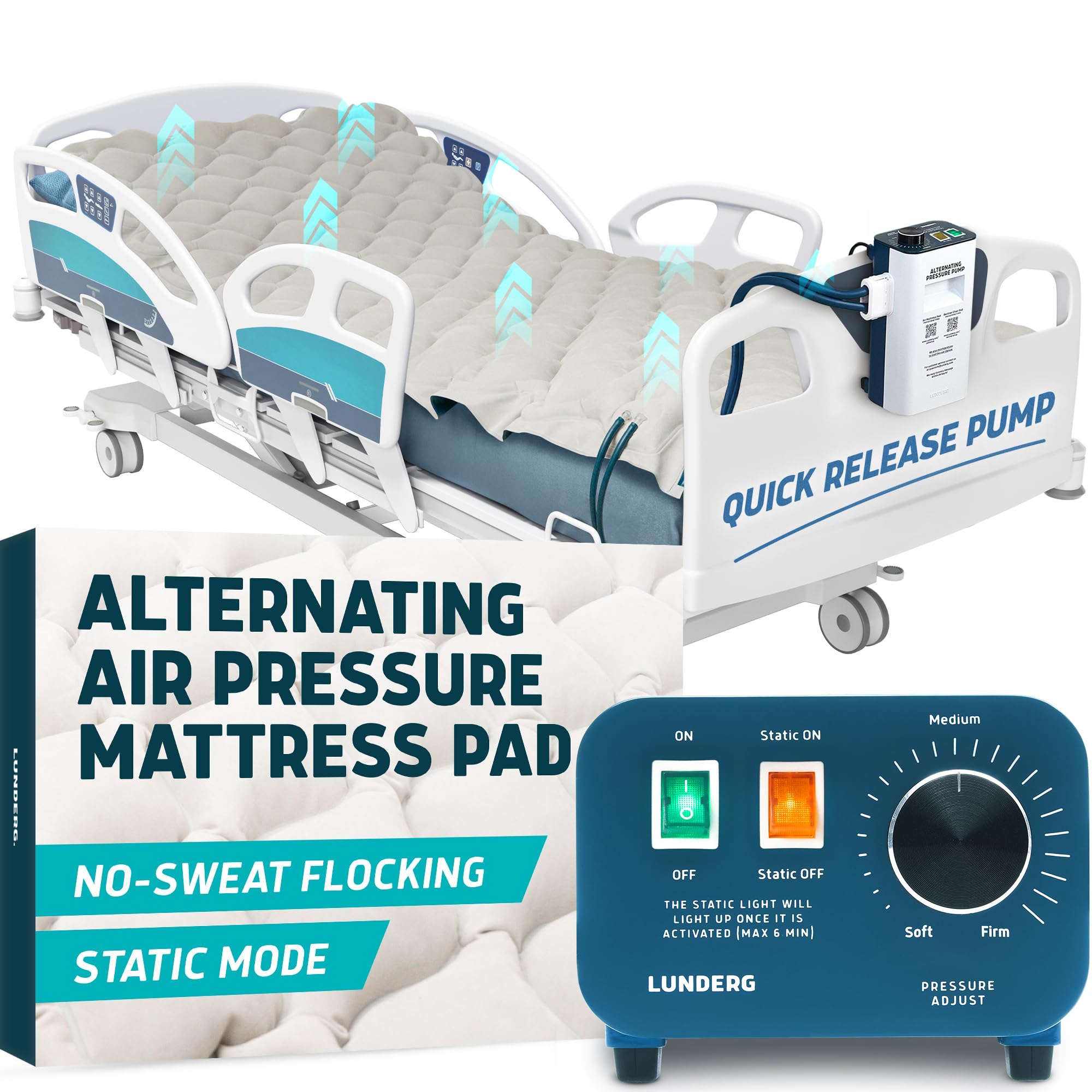
The Lunderg pad solves the biggest complaint against medical air overlays: the sweaty, sticky vinyl surface. Its patented flocking technology wraps each air cell in a soft, fabric-like layer that wicks moisture and breathes far better than standard PVC. Combined with a pump rated at just 23 dBA, this is one of the quietest alternating pressure systems on the market — suitable for a shared care space where sound disruption matters.
The alternating cycle shifts pressure between cells every 6 minutes, and the static mode locks all cells at full inflation when the patient needs a stable surface for sitting up or eating. The setup time is roughly 20 minutes for full inflation across three cycles, and the included patch kit adds practical longevity. Weight capacity tops out at 300 lbs, which covers most standard home care scenarios.
Customers report that the static button can be accidentally engaged, so double-check the mode after setup. A few users noted the hoses sit at the head of the mattress, which requires planning when positioning the pump near the bed rail. Overall, the flocking and near-silent operation make this the strongest all-around pick for alternating pressure therapy at home.
Why it’s great
- Flock-tech fabric eliminates the sticky vinyl feel
- 23 dBA pump is barely audible during sleep
- Static mode provides a stable platform when not cycling
Good to know
- Static button can be pressed inadvertently
- Air hoses exit at the head, limiting pump placement
2. Drive Medical Premium Guard Gel Mattress Overlay
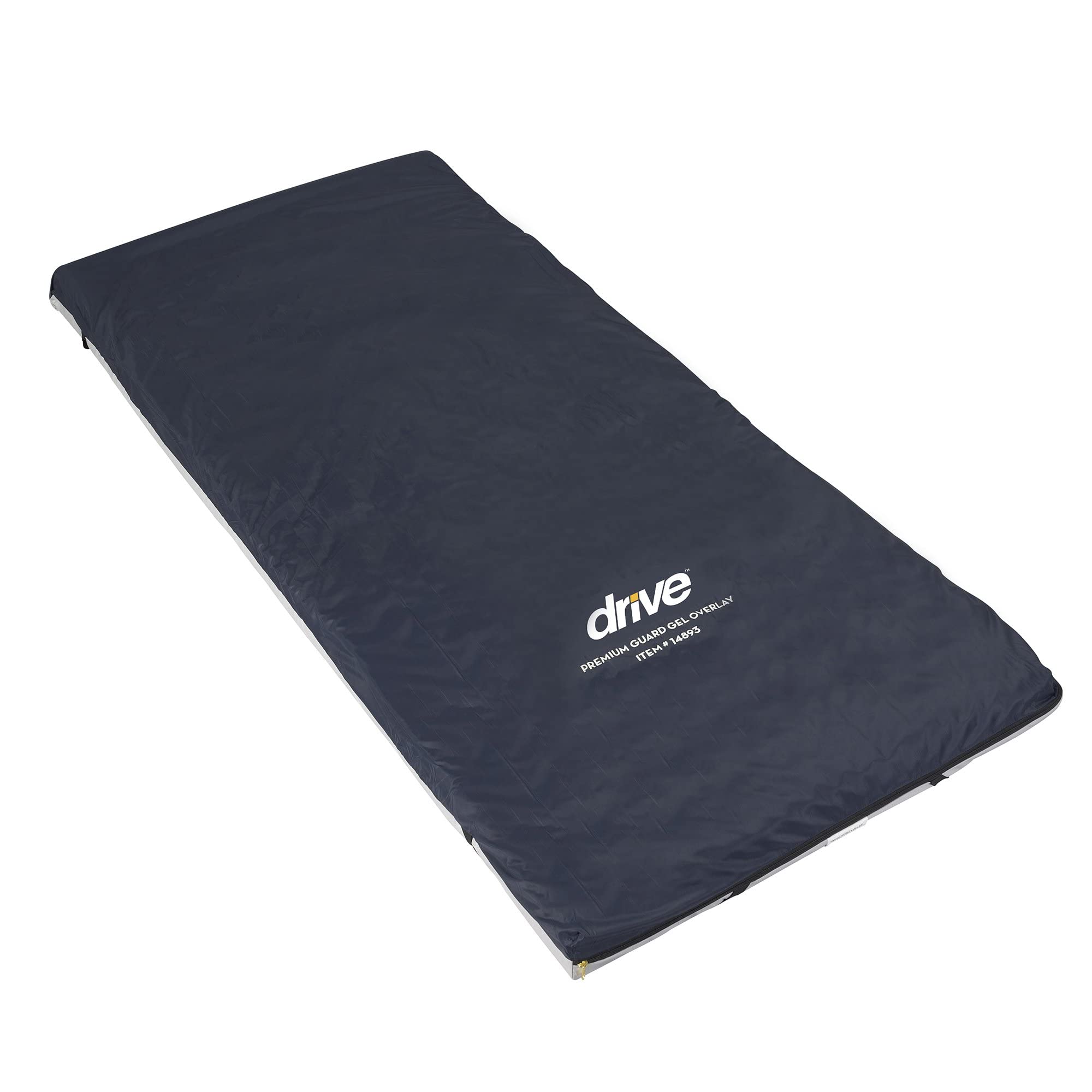
The Drive Medical overlay takes a completely different approach from alternating air pads — it relies on 15 sealed gel bladders that span the entire patient contact area to redistribute pressure statically. There is no pump, no electricity needed, and no mechanical noise. At 3.5 inches thick, it sits low enough that it does not raise the patient too high off the bed rails, which matters for fall prevention.
The nylon top is fluid-resistant and the vinyl bottom is fully waterproof, so it handles incontinence issues well. Each gel cell conforms independently, reducing peak pressure points on the sacrum, heels, and shoulders. The weight capacity stretches to 500 lbs, making this one of the stronger options for bariatric use. Users do need to wipe the surface down with a mild detergent — it cannot go in a washing machine.
Several reviews note that the gel layer can retain heat, causing sweating despite air conditioning. This is the trade-off for a silent, pump-free solution. The gel also adds significant weight — nearly 48 lbs — so rotating or moving the overlay for cleaning requires two people. Best suited for low-risk patients who need reliable, whisper-quiet pressure relief without mechanical complexity.
Why it’s great
- Completely silent operation with no moving parts
- 15 independent gel bladders for targeted pressure relief
- 500 lb weight capacity handles bariatric patients
Good to know
- Gel retains heat and can cause sweating
- Very heavy (47 lbs) and awkward to reposition
3. Vive 5″ Alternating Pressure Mattress
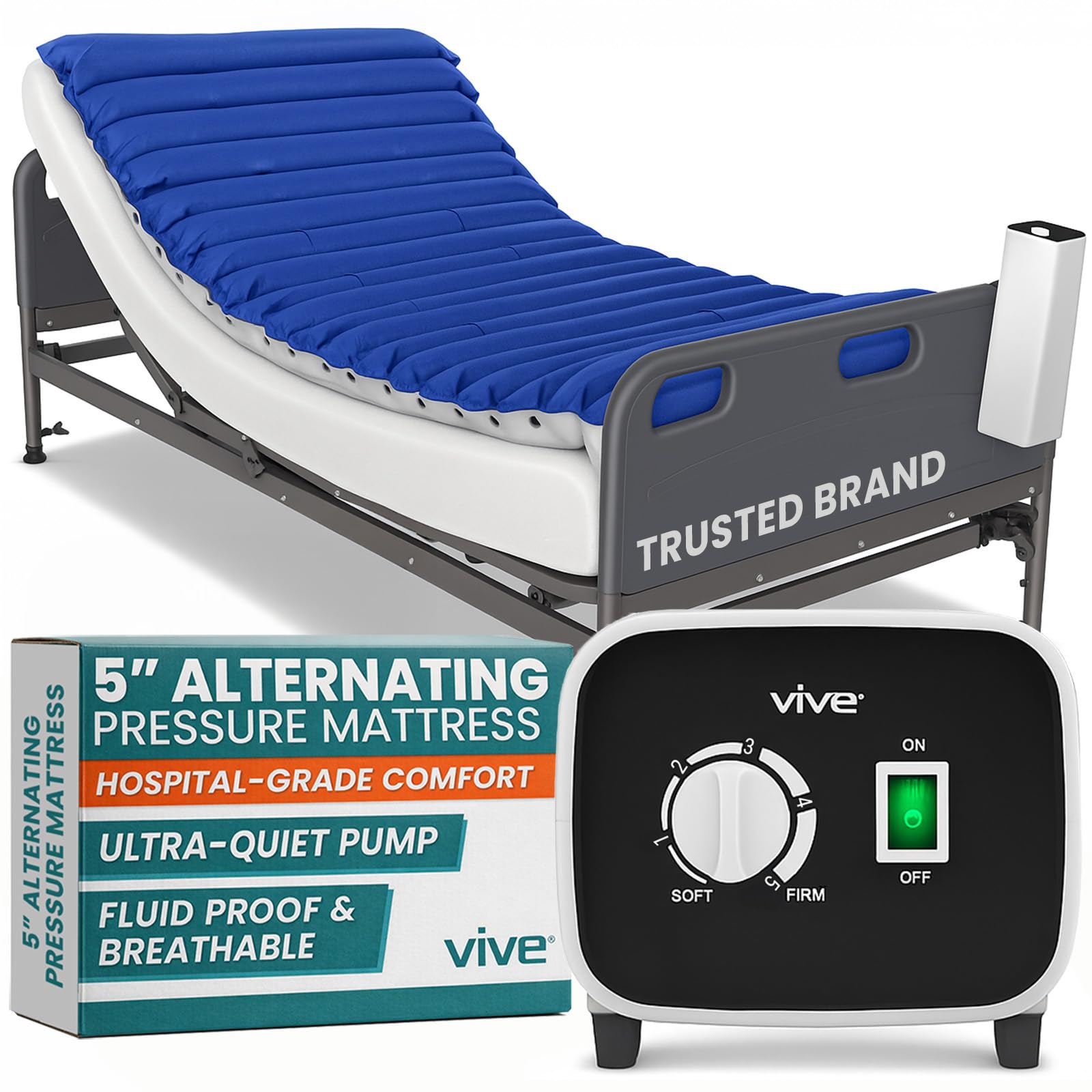
The Vive 5″ model packs 16 individually sealed air chambers into a 5-inch profile, delivering alternating pressure cycles that shift the body’s weight across the cells every few minutes. The pump offers a variable pressure dial from soft to firm, along with two non-marking hooks that attach directly to the foot rail of a hospital bed — a practical detail that keeps the pump off the floor.
The waterproof vinyl cover is latex-free and breathable, designed to allow heat dissipation. A CPR quick-release valve on the pump provides instant deflation in an emergency, which is required for any alternating pad used in a medical setting. The mattress supports up to 300 lbs and is eligible for FSA/HSA purchase. The pump’s low air alarm alerts you if the connection is loose — a known hiccup when the CPR plugs are not fully seated.
Some users report that the mattress does not hold in place well with the included straps — it can shift when the bed head is raised. A few customers also experienced units that inflated fully and stayed rigid rather than alternating, suggesting occasional pump defects. For the price, the pressure relief performance is strong, but verify pump function immediately upon setup.
Why it’s great
- 16-cell alternating design for comprehensive pressure cycling
- CPR quick-release valve meets medical safety standards
- FSA/HSA eligible for tax-advantaged purchase
Good to know
- Straps do not hold the mattress firmly in place
- Low air alarm can be confusing if CPR plugs are not fully seated
4. Livaclean Health Gel Memory Foam Hospital Bed Mattress

Unlike the overlays, the Livaclean mattress is a full replacement for the standard foam slab that ships with most hospital beds. Its construction pairs a 30mm gel memory foam comfort layer with a high-density support foam base, totaling 6 inches of depth. This hybrid design provides pressure redistribution through shape-adaptive foam rather than air cycling, which some patients find more stable and natural-feeling than alternating pumps.
The mattress is 80 inches long and 36 inches wide, fitting standard twin XL hospital bed frames. Four corner straps secure it to the bed deck, preventing the shifting that overlay users often complain about. The waterproof protector is removable and machine-washable, and the cover includes fire retardant treatment — though this can produce a mild chemical smell that dissipates after a few days. Setup requires a 48-hour expansion period after unrolling.
The weight capacity is listed at 242 lbs, which is lower than some overlays. This mattress is best suited for patients who do not require alternating pressure therapy but need a significant upgrade in comfort from the standard hospital foam slab. The medium firmness rating works well for adjustable bed positioning, though caregivers note it is on the firmer side.
Why it’s great
- Gel memory foam conforms to body shape without pump noise
- Corner straps keep the mattress secure during head elevation
- Waterproof cover is removable and machine-washable
Good to know
- Weight capacity capped at 242 lbs
- Requires 48 hours to fully expand after unboxing
5. REM Air System Compatible Air Chamber
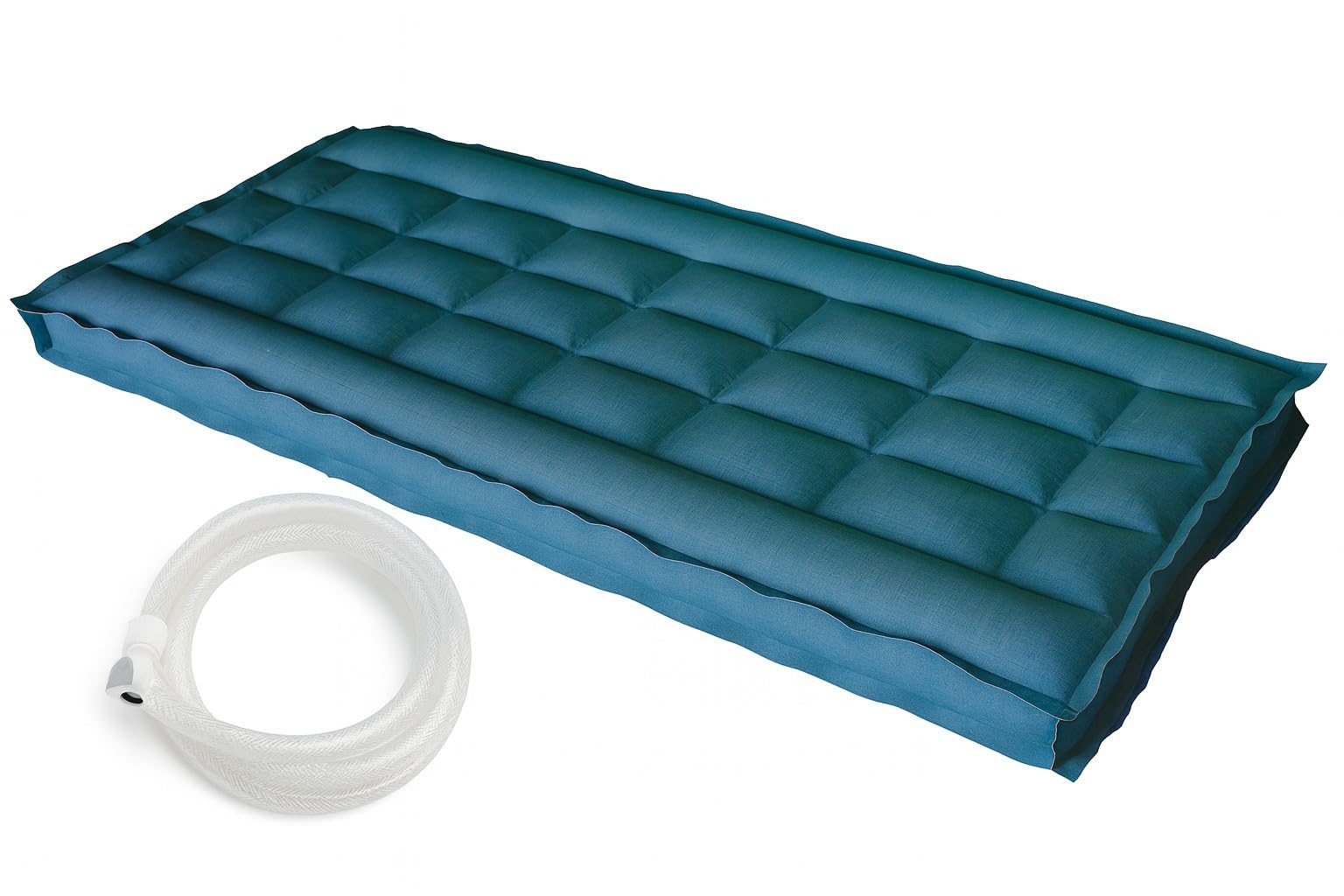
The REM Air System chamber is a niche but important entry: it is designed as a drop-in replacement for Sleep Number, Select Comfort, and REM brand adjustable air mattresses. If the hospital bed in use is actually an adjustable air bed with a failed bladder, this replacement chamber restores the pressure-adjustable support without buying a whole new system.
Vulcanized construction eliminates the seams that typically fail on OEM bladders, and the material is notably thicker than factory originals — roughly three times heavier according to user reports. The chamber measures 72 x 26 x 6 inches, fitting within standard 4-inch foam rail mattress encasements. The hose exits at the head of the bed, with included connectors for side-hose pump configurations.
Installation takes about 15 minutes, and the chamber holds air without any detectable deflation. It is not a standalone hospital mattress — it requires a compatible pump and mattress encasement to function. Best for caregivers who already own a Sleep Number or REM system and just need to replace a worn-out air cell. Not recommended as a first-time hospital bed purchase.
Why it’s great
- Vulcanized seam-free construction outlasts OEM bladders
- Three times heavier material thickness than original parts
- Quick 15-minute installation with no special tools
Good to know
- Only compatible with Sleep Number / Select Comfort / REM pumps
- Not a complete mattress system — needs encasement and pump
6. ProHeal Multi-Tiered Die-Cut and Memory Foam Mattress

The ProHeal mattress stands out for its multi-tiered zoning: the torso and head sections use high-density die-cut foam that allows air channels to move through the core, while the heel section switches to open-cell memory foam to cradle the calcaneus. A sloped heel transition redistributes load from the vulnerable heel to the lower leg, directly addressing one of the most common sites for pressure ulcers.
The cover is a nylon topper that is vapor permeable and low-shear, reducing friction during repositioning. The bottom is triple-laminate vinyl for fluid resistance and fire retardancy. A 360-degree zipper with a flap cover makes cover removal straightforward for cleaning or replacement. The foam is rated at 28 ILD — a medium-firm density that resists bottoming out while still conforming.
Customers rave about the comfort and firmness balance, reporting significant improvements in pain and sleep quality compared to standard hospital mattresses. The foam did require about three days to fully rebound from shipping compression. The side edges are not reinforced, so some users noted that the sides feel softer than the middle — something to consider for patients who need edge support for transfers.
Why it’s great
- Sloped heel section offloads the calcaneus specifically
- Die-cut foam core promotes airflow and heat dissipation
- 360-degree zipper with flap for easy cover removal
Good to know
- Side edges are softer than the center section
- Full foam rebound can take up to three days
7. Medacure Pressure Redistribution Foam Hospital Bed Mattress

The Medacure mattress builds its pressure redistribution system from three distinct layers of high-density memory foam, topped with a viscoelastic foam layer for surface conformity. The convoluted (egg-crate) cut in the internal layers is designed to promote micro-airflow, reducing heat and moisture accumulation compared to flat slab foam. This is a full replacement mattress at 6 inches thick, not an overlay.
The removable nylon cover is 70-denier with a non-skid bottom surface and a waterproof barrier. It zips off for cleaning, and the top fabric is low-friction to reduce shear during repositioning. The mattress is available in six sizes, including wider bariatric and longer dimensions, which is rare at this price tier. It decompresses quickly from shipping — ready for use within hours, not days.
Most users find it supportive out of the box, though some caregivers add a 2–3 inch topper for patients with spinal injuries who need extra cushioning. The firmness is on the medium-to-firm side of the spectrum. A few long-term users reported that the nylon cover can feel slightly warm compared to premium four-way stretch covers found on higher-end medical mattresses.
Why it’s great
- Triple-layer construction with viscoelastic top for pressure distribution
- Convoluted foam core promotes air circulation
- Available in six sizes including bariatric and extra-long
Good to know
- Nylon cover can feel warmer than stretch PU alternatives
- Some users add a topper for severe spinal sensitivity
8. Invacare Softform Premier Hospital Bed Mattress 80″

Invacare’s Softform Premier is a top-tier pressure redistribution mattress used in institutional care settings. Its core innovation is a single-piece U-core base with a contoured foam insert that creates three distinct zones: a softer head and foot section to cradle bony prominences, and a firmer mid-section that provides proper spinal support when the bed is flat. The individual foam cells within the top layer allow the surface to move independently, enhancing immersion and reducing peak interface pressure.
The cover is a four-way stretch polyurethane that is fluid-resistant and low-shear. The coated polyurethane base adds durability against bed rail friction. At 500 lbs weight capacity, this mattress supports bariatric patients comfortably. The warranty is industry-leading: 8 years on the foam core and 4 years on the cover, which reflects the expected longevity of the high-density materials.
Several caregivers report that the mattress significantly reduced bedsores within weeks for bedbound patients. The cover stays cool compared to standard nylon fabrics. One caveat: some units arrived with a strong out-of-box odor from the polyurethane cover, which needed a few days to ventilate. The 36″ x 80″ size is standard, but double-check bed compatibility — it works best with Invacare 5410IVC or 5310IVC frames.
Why it’s great
- Three-zone construction tailors support to head, mid, and foot
- Four-way stretch PU cover is low-shear and fluid-resistant
- 8-year foam warranty indicates exceptional durability
Good to know
- PU cover may have a strong initial chemical odor
- Best performance with Invacare bed frames
9. Invacare Softform Premier Hospital Bed Mattress 84″

The 84-inch version of the Invacare Softform Premier retains the same U-core and contoured foam insert as its 80-inch sibling but adds four extra inches of length — critical for taller patients whose feet or head would otherwise overhang a standard mattress. The three-zone pressure redistribution design and 500 lb weight capacity are identical, making this a direct length extension without any compromise in clinical performance.
The fluid-resistant four-way stretch polyurethane cover is the same medical-grade fabric as the 80-inch model, with a tough coated polyurethane base that resists tearing during bed articulation. The 8-year foam warranty is also carried over. For home care setups with a 6-foot-plus patient, this extra length eliminates the need to add a footboard extender or accept a shorter mattress.
Reviews from caregivers mirror the 80-inch version: significant bedsore reduction, easier sheet changes due to the stretch cover, and cool sleeping surface. The same out-of-box odor concern applies, and the foam can take up to three days to fully expand from the compressed shipping state. The mattress requires at least 48 hours to reach full loft — factor this into care transition planning.
Why it’s great
- 84-inch length accommodates patients over 6 feet tall
- Same clinical-grade U-core construction as the standard size
- 8-year foam warranty with 4-year cover warranty
Good to know
- Foam can take 48–72 hours to fully expand
- Initial chemical odor from new PU cover
FAQ
Can an alternating pressure mattress be used on a standard home bed frame?
What does the CPR quick-release function do on these pumps?
How long do alternating pressure air mattresses typically last before the pump fails?
What is the difference between die-cut foam and convoluted foam in pressure redistribution?
Final Thoughts: The Verdict
For most users, the air mattress for hospital bed winner is the Lunderg Alternating Pressure Pad because it combines a true alternating pressure cycle with a flocked surface that eliminates the sweaty vinyl problem common to cheaper pads, all at a pump volume barely audible at night. If you want a pump-free static gel overlay that handles bariatric weights silently, grab the Drive Medical Gel Overlay. And for a full replacement mattress that delivers clinical-grade multi-zone support with an 8-year warranty, nothing beats the Invacare Softform Premier 80″.

Mo Maruf
I created WellFizz to bridge the gap between vague wellness advice and actionable solutions. My mission is simple: to decode the research and give you practical tools you can actually use.
Beyond the data, I am a passionate traveler. I believe that stepping away from the screen to explore new environments is essential for mental clarity and physical vitality.