Our readers keep the lights on and my smoothie glass nicely filled. As an Amazon Associate, I earn from qualifying purchases.
Mold spores are invisible, airborne, and relentless. A single colony can release millions of spores into your living space, triggering allergies, asthma, and respiratory irritation long before you ever see visible growth. The right air filter doesn’t just mask the smell — it physically captures those microscopic particles before they settle into your lungs.
I’m Mohammad Maruf — the founder and writer behind WellFizz. I evaluate home air quality hardware by analyzing filter media efficiency, CADR ratings, and real-world particle capture data to separate serious purification from marketing claims.
After comparing seven models across different filtration technologies and room sizes, I’ve identified the ones that actually trap mold spores at the source. Here is my breakdown of the best air filter for mold on the market right now.
How To Choose The Best Air Filter For Mold
Not all air purifiers handle mold equally. A standard fan-and-filter unit may circulate air without actually trapping the sub-micron spores that trigger health issues. To effectively remove mold from your indoor air, you need to evaluate three core specifications: filter media grade, particle capture efficiency at the relevant size range, and the unit’s ability to handle your room’s volume.
HEPA Grade: The Non-Negotiable Baseline
Mold spores range from 1 to 30 microns in size, with the most problematic species (Aspergillus, Penicillium, Stachybotrys) releasing spores between 2 and 10 microns. A True HEPA filter certified to capture 99.97% of particles at 0.3 microns will stop virtually all mold spores. Avoid filters labeled “HEPA-type” or “HEPA-like” — these lack independent certification and may let spores pass through. Look for units explicitly stating True HEPA or H13/H14 HEPA classification.
CADR: How Fast the Room Gets Clean
Clean Air Delivery Rate (CADR) measures how many cubic feet of air per minute a purifier removes a specific pollutant (smoke, dust, pollen). For mold, the dust CADR is the most relevant metric because mold spore sizes overlap with dust particles. A CADR of 200+ means the unit can clear a 300-square-foot room roughly four times per hour. If your CADR is too low for the room size, the purifier cannot keep up with spore reproduction rates, and mold levels will stay elevated.
Carbon Layer and Pre-Filter: Odor vs. Spore Protection
Activated carbon filters handle the musty volatile organic compounds (VOCs) mold produces — the smell. But carbon does not capture spores. A quality mold-filtering unit stacks a pre-filter (catches large debris and dust), a True HEPA layer (traps spores), and a carbon or VOC-adsorbing layer (removes odor). Some units add UV-C light to neutralize captured biological particles, though this is secondary to mechanical filtration. Prioritize units where the pre-filter is washable — moldy pre-filters become breeding grounds if left uncleaned.
Quick Comparison
On smaller screens, swipe sideways to see the full table.
| Model | Category | Best For | Key Spec | Amazon |
|---|---|---|---|---|
| WINIX 5510 | Premium Mid | Smart large-room coverage | AHAM Verified at 392 sq ft | Amazon |
| COWAY Airmega Mighty2 | Premium | Precise sensor + Smart Mode | CADR 242 dust / 240 smoke | Amazon |
| AIRDOCTOR AD3500 | Premium | Hospital-grade spore capture | UltraHEPA 0.003 microns | Amazon |
| Clorox Turbo | Mid-Range | Medium-room odor control | 360° True HEPA + Carbon | Amazon |
| GermGuardian AC4825E | Mid-Range | Budget UV-C + HEPA combo | True HEPA 0.1 microns | Amazon |
| LEVOIT Core 300-P | Value | Quiet bedroom filtration | CADR 143 smoke / 153 dust | Amazon |
| VEWIOR KJ300 | Value | Budget aromatherapy + HEPA | H13 HEPA + PM2.5 display | Amazon |
In‑Depth Reviews
1. WINIX 5510 Air Purifier

The WINIX 5510 brings app-enabled convenience to mold filtration without sacrificing raw CADR. Its True HEPA layer captures 99.99% of particles as small as 0.01 microns — well below the size of Aspergillus and Penicillium spores. The four-stage filtration includes a washable pre-filter, an advanced odor-control carbon filter, the True HEPA, and a Plasmawave ionizer for additional biological particle reduction.
What sets this unit apart for mold-prone homes is the real-time air quality sensor and Auto Mode. When the sensor detects elevated particulate levels (common during mold spore release), the fan automatically ramps up. The smart app allows remote monitoring, so you can check air quality even when you are not home. At 23.5 dB on the lowest speed, it is near-silent during sleep.
The 5510 is AHAM verified for a 392-square-foot room but can cycle air in spaces up to 1,882 square feet once per hour. The carbon filter handles the musty VOC profile of active mold colonies, while the washable pre-filter ensures you can clean trapped debris without replacing media every month.
Why it’s great
- App control and Alexa/Google Assistant compatibility for remote management
- Light-activated Sleep Mode automatically dims and slows the fan
- Washable pre-filter extends HEPA life and reduces long-term costs
Good to know
- Side air intake openings may be less efficient if placed flush against a wall
- Replacement HEPA filters cost around , but availability can vary
2. COWAY Airmega Mighty2
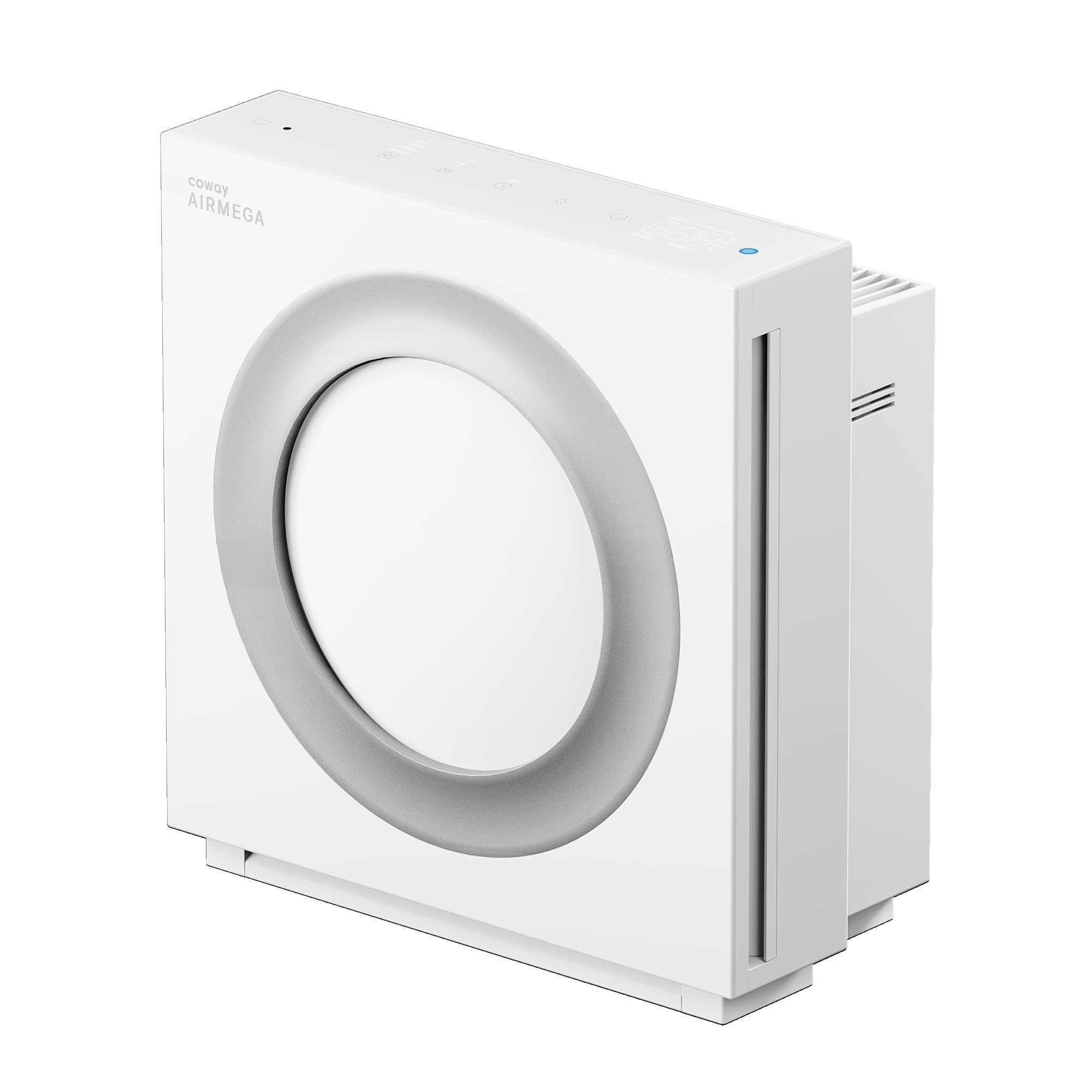
The Coway Airmega Mighty2 is the successor to the Wirecutter top pick AP-1512HH, and it delivers measurable improvements for mold filtration. Its IEST-RP-CC007 certified HEPA filter traps 99.97% of particles at 0.3 microns, while the active carbon layer reduces VOCs and musty odors. With a CADR of 242 for dust — the spec most relevant to mold spore sizes — it clears a 900-square-foot room in 30 minutes.
The defining feature for mold control is the Megascan laser sensor, which detects particles down to PM1.0. The real-time numerical display shows exact particulate levels, so you can see when mold spore counts spike (such as after vacuuming or during humid weather). Smart Mode automatically adjusts fan speed based on readings, and Eco-Mode cuts power consumption when air quality is clean. Sleep Mode runs as low as 19 dB — essentially silent.
The 3-stage filtration includes a washable pre-filter that slides out without opening the front cover, a Max2 filter combining HEPA and carbon, and a precise filter life indicator showing remaining percentage for both filters. The 3-year warranty gives long-term confidence for continuous operation in mold-sensitive environments.
Why it’s great
- Laser sensor provides PM1.0, PM2.5, and PM10 readings for ultra-fine particle detection
- Upward airflow design prevents floor-level dust recirculation
- 20% more energy-efficient than the previous generation
Good to know
- No app or Wi-Fi connectivity for remote monitoring
- Auto mode defaults to low speed; cannot set medium as the baseline
3. AIRDOCTOR AD3500
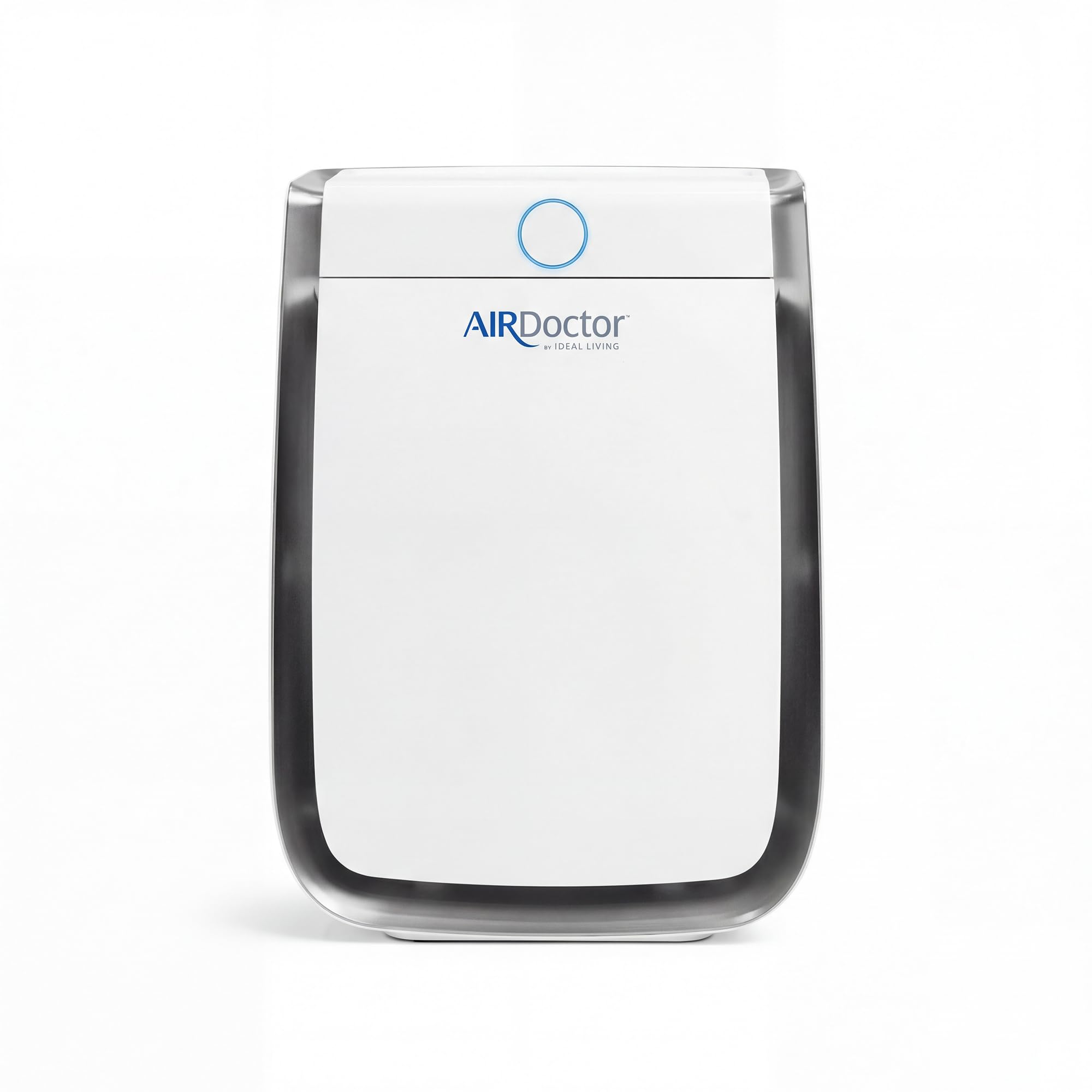
The AirDoctor AD3500 takes mold filtration to a clinical level. Its UltraHEPA media captures 99.99% of particles at 0.003 microns — 100 times smaller than the 0.3-micron True HEPA standard. This matters because mold spores fragment into ultrafine particles when disturbed, and those sub-micron fragments trigger the strongest allergic responses. The premium activated carbon filter is infused with potassium permanganate to chemically break down VOCs, not just adsorb them.
For large homes or open-concept spaces with mold issues in basements or attached garages, the AD3500 covers up to 2,520 square feet per hour. The Halo PM2.5 sensor displays real-time air quality on a color-coded LED ring, and Auto Mode ramps the fan to Boost when particulate levels rise. Users report that cooking odors and musty smells are reduced by roughly 90% within minutes of activation.
The build quality is substantial at 24 pounds, with a 4-speed fan system and separate filter change indicators. The UltraHEPA filters are manufactured in Japan and rated for 12-month replacement, while the carbon filters need swapping every 6 months. This unit is FSA and HSA eligible, reflecting its positioning as a medical-grade appliance for respiratory health.
Why it’s great
- UltraHEPA captures particles 100x smaller than standard True HEPA filters
- Potassium permanganate carbon layer actively breaks down mold VOCs
- Massive 2,520 sq ft coverage handles whole basements and large great rooms
Good to know
- Bulky footprint (19.87 x 27.16 inches) requires dedicated floor space
- Replacement filter costs are higher than mid-range competitors
4. Clorox Turbo Air Purifier
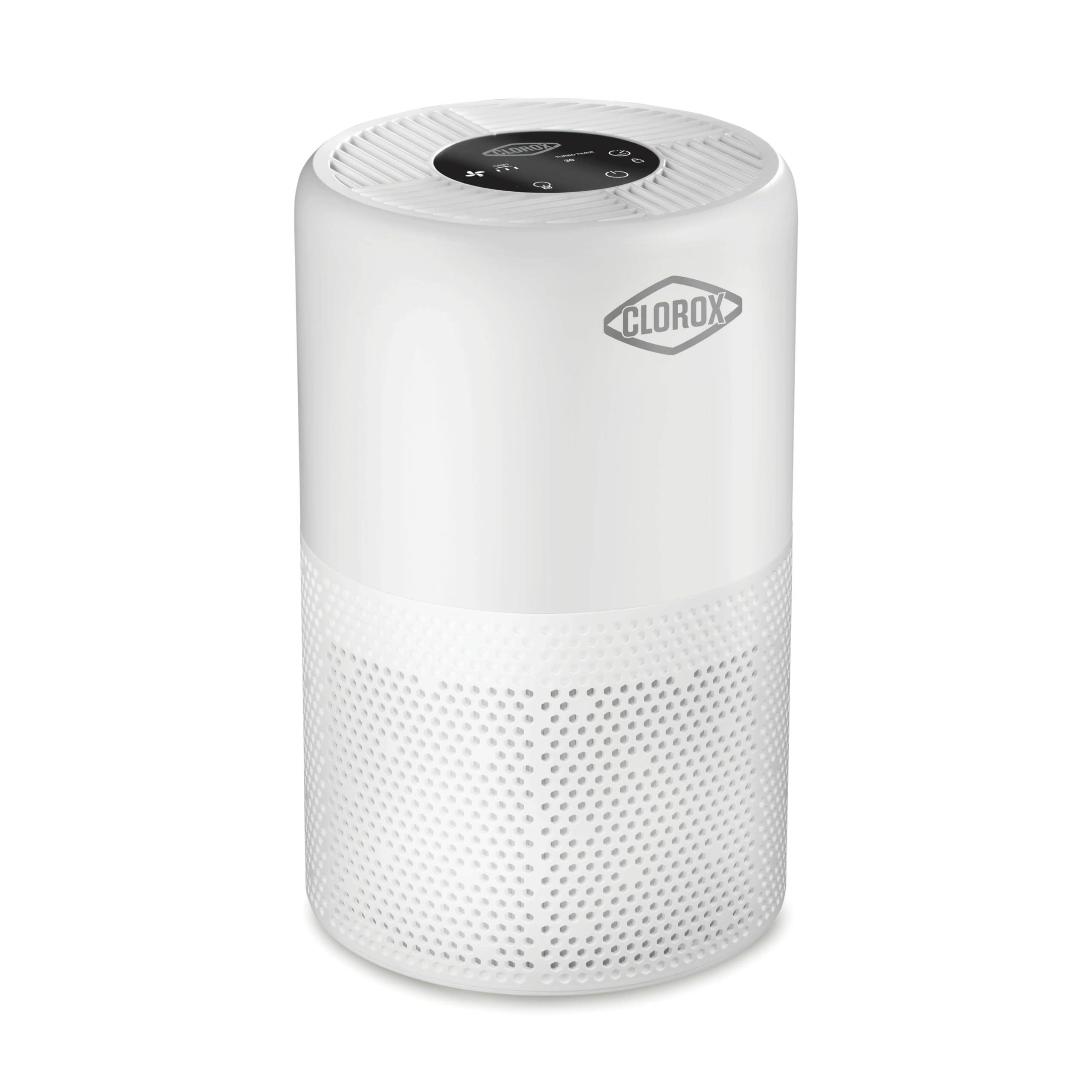
The Clorox Turbo is purpose-built for rapid mold spore removal in medium rooms up to 1,000 square feet. Its True HEPA filter captures 99.97% of particles, while the 360° airflow pulls air from all directions — a smart design for central placement in living rooms or finished basements where mold spores may accumulate near floor level. The active carbon layer reduces the musty VOC signature that often precedes visible mold growth.
The standout feature is the Turbo Timer, which runs the fan at maximum speed for 10, 20, or 30 minutes. This is useful after detecting a musty odor spike or after cleaning activities that stir up settled spores. The 4-speed manual control gives you flexibility, and the dark/off display option eliminates light pollution during sleep. At only 5.2 pounds, this is the lightest unit in the comparison, making it easy to move between rooms.
Quiet operation is consistently praised in user feedback, with owners noting reduced allergy symptoms and improved sleep quality after adding this unit. The 360° intake and compact cylindrical design fit well on end tables or countertops without dominating the room.
Why it’s great
- 360° intake pulls mold spores from all directions for faster room coverage
- Turbo Timer provides short bursts of high-speed cleaning when needed
- Very lightweight (5.2 lbs) for easy relocation between problem areas
Good to know
- No air quality indicator light or sensor display for visual feedback
- Only three filtering stages without UV-C for biological neutralization
5. GermGuardian 4-in-1 AC4825E

The GermGuardian AC4825E has been a staple in the air purification space since 2011, and its enduring popularity is rooted in reliable True HEPA filtration paired with a UV-C light for biological particle neutralization. The True HEPA layer captures 99.97% of particles as small as 0.1 microns — including mold spores. The optional UV-C light then exposes captured microorganisms to germicidal ultraviolet radiation, reducing their ability to reproduce on the filter surface.
This unit cleans a 153-square-foot room in 12.5 minutes and covers up to 743 square feet per hour. The 3-speed manual dial and separate UV-C button keep controls simple — no app, no sensors, no programming. The washable pre-filter catches larger debris and extends HEPA life, and users report replacement HEPA filters lasting a full year with regular maintenance. The tower design (22 inches tall) directs airflow at an upward angle, minimizing floor-level dust disturbance.
Customer feedback consistently highlights reduced asthma symptoms and less visible dust accumulation. The UV-C bulb is a differentiator for buyers specifically targeting mold, as it adds a sterilization step that purely mechanical filters lack. The unit is Zero Ozone certified, so the UV-C operates without producing harmful ozone.
Why it’s great
- UV-C light neutralizes captured mold spores and bacteria on the filter
- Washable pre-filter dramatically reduces annual replacement costs
- Proven long-term reliability with replacement parts widely available
Good to know
- High speed is noticeably loud — not ideal for open-concept living areas
- UV-C bulb (model LB4000) needs replacement every 10-12 months
6. LEVOIT Core 300-P

The LEVOIT Core 300-P punches well above its size for mold filtration in bedrooms and small offices. Its 56W high-torque motor delivers a CADR of 143 CFM for smoke and 153 CFM for dust — enough to cycle a 222-square-foot room 4.8 times per hour. The 3-in-1 filter includes a pre-filter, a HEPA-grade layer that captures 99.97% of particles at 0.3 microns, and an activated carbon layer for VOC and odor reduction.
The QuietKEAP Technology drops noise to just 24 dB in Sleep Mode, making it one of the quietest options for overnight use. The display can be fully dimmed, and the timer offers 2, 4, 6, or 8-hour settings. For mold-prone bedrooms, this unit runs all night without disrupting sleep while continuously trapping airborne spores. The AHAM VERIFIDE certification provides independent validation of its CADR claims.
One of the strongest advantages of the Core 300-P is the range of specialized replacement filters. The Toxin Absorber Filter targets smog and VOCs, the Smoke Remover filter handles wildfire smoke, and the Pet Allergy filter captures dander and odors. This modularity lets you tailor the filtration profile to your specific mold and odor concerns without buying a whole new unit.
Why it’s great
- Sleep Mode at 24 dB is genuinely silent — no fan whine or hum
- Multiple specialized replacement filters for targeted mold/VOC control
- Compact 8.7-inch diameter fits on nightstands and small desks
Good to know
- Higher speeds produce noticeable noise — better suited for lower speed overnight use
- Replacement filters are proprietary; off-brand filters may damage the unit
7. VEWIOR KJ300 Air Purifier
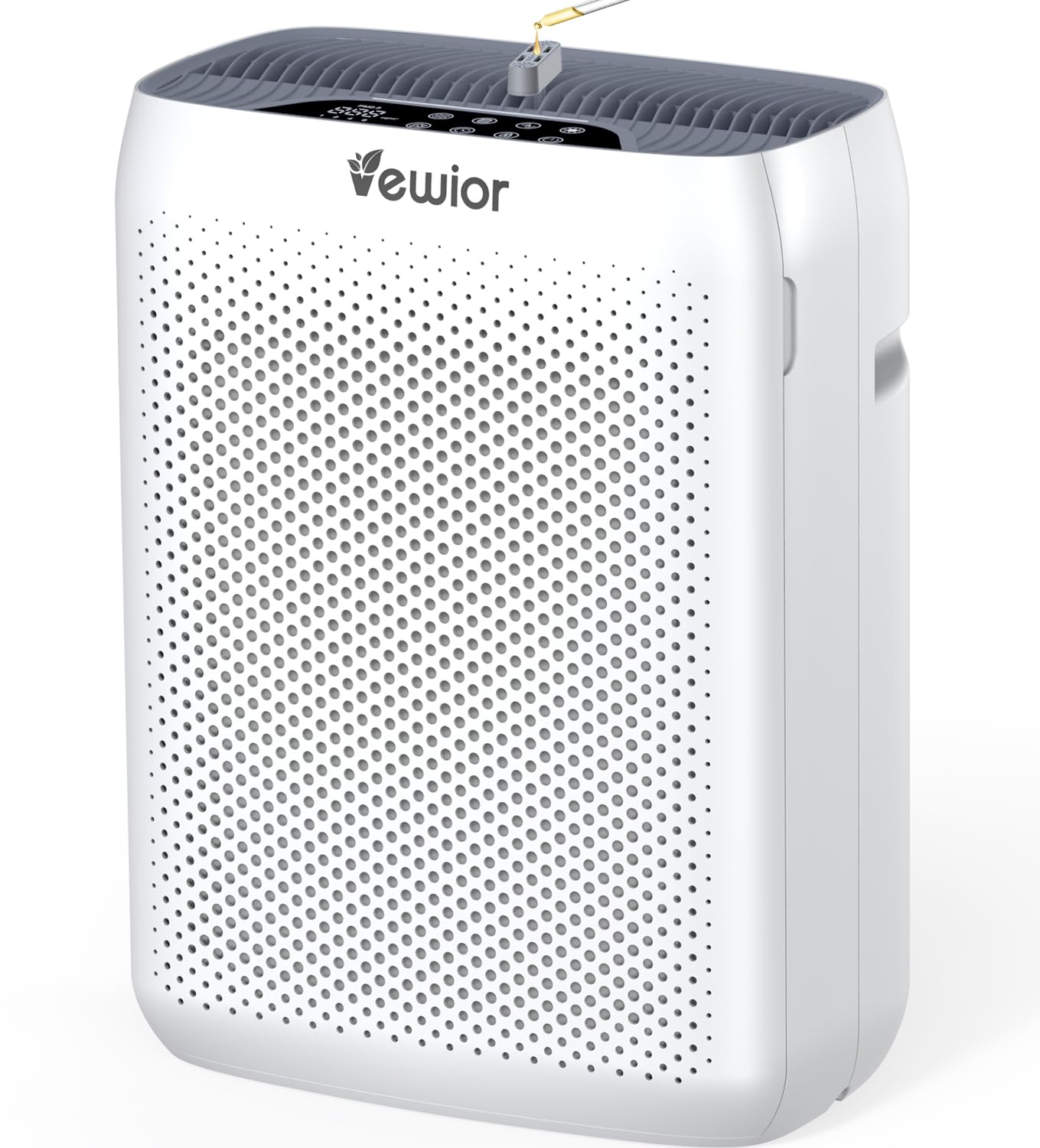
The VEWIOR KJ300 offers H13 True HEPA filtration at a budget-friendly entry point, making mold spore capture accessible without premium spending. The 3-stage system uses a washable pre-filter, H13 HEPA, and a high-density carbon filter with 40% more active material than standard carbon layers. The H13 grade (99.95% at 0.3 microns) is slightly below H14 medical standards but still effective for trapping the majority of common mold spores.
The integrated PM2.5 display gives real-time particulate feedback, showing you when mold spore counts rise during humid conditions or after cleaning. The 4 fan speeds and 1/2/4/8-hour timer provide flexibility, and the child lock prevents accidental setting changes. The aromatherapy function is a unique addition — you can add essential oils to the included pad for simultaneous purification and scent — though this is secondary to mold control.
At 15 dB on Sleep Mode, this is one of the quietest units tested. The auto mode automatically dims all lights after 10 seconds, making it suitable for nurseries and bedrooms. User feedback highlights effective allergen reduction and cooking odor removal. The filter change indicator flashes red when replacement is due, typically every 3 to 6 months depending on usage and air quality.
Why it’s great
- PM2.5 digital display provides visible proof of air quality changes
- Ultra-quiet 15 dB Sleep Mode for undisturbed overnight filtration
- Child lock and auto light-off features for safe bedroom placement
Good to know
- Short power cord may require an extension cord for convenient placement
- Relatively new on the market (2025) — long-term reliability data is limited
FAQ
Can an air filter alone solve a mold problem?
What CADR rating should I look for against mold spores?
Is UV-C light necessary for mold filtration?
Final Thoughts: The Verdict
For most users, the best air filter for mold winner is the Coway Airmega Mighty2 because it combines IEST-certified HEPA filtration, a laser sensor that detects particulate spikes down to PM1.0, and whisper-quiet Sleep Mode at 19 dB. If you want real-time numerical air quality feedback and the ability to monitor from your phone, grab the WINIX 5510 with its app and Auto Mode. And for hospital-grade spore capture in large spaces or basements, nothing beats the AIRDOCTOR AD3500 with UltraHEPA filtration at 0.003 microns.

Mo Maruf
I created WellFizz to bridge the gap between vague wellness advice and actionable solutions. My mission is simple: to decode the research and give you practical tools you can actually use.
Beyond the data, I am a passionate traveler. I believe that stepping away from the screen to explore new environments is essential for mental clarity and physical vitality.