Our readers keep the lights on and my smoothie glass nicely filled. As an Amazon Associate, I earn from qualifying purchases.
That cold jet of air hitting you square in the face from an overhead register isn’t a design flaw — it’s a physics problem that a simple piece of shaped plastic solves completely. Ceiling vents are often positioned right over seating areas, beds, or walkways, creating drafts that make a comfortable room feel like a wind tunnel. An air deflector snaps onto the register and bends the airflow sideways or downward, turning a focused blast into a gentle, room-filling current.
I’m Mohammad Maruf — the founder and writer behind WellFizz. I’ve spent years analyzing home comfort hardware, digging into the material science behind plastic grades, magnetic pull strength, and temperature tolerances that determine whether a deflector actually lasts or warps after a single heating season.
To make that choice simple, I’ve built this guide around the best air deflector for ceiling vents, focusing on magnetic hold, adjustable width, and heat resistance so you stop guessing and start breathing easier.
How To Choose The Best Air Deflector For Ceiling Vents
Picking a ceiling vent deflector isn’t complicated, but skipping one spec can leave you with a drooping piece of plastic that falls off the moment the heat kicks on. Here are the three factors that actually determine whether a deflector works.
Magnetic Strength — The Primary Grip Mechanism
Ceiling registers are usually steel, so magnets are the default attachment method. Look for neodymium magnets rather than standard ceramic ones — neodymium offers roughly ten times the pull force per unit size. A deflector with at least three magnets spaced across its length will resist gravity better on an overhead register. If the listing doesn’t specify the magnet type, assume it uses weak ferrite that may drop after a season.
Material Grade and Heat Tolerance
Ceiling vents push hot air upward and then downward through the register, so the plastic sits directly in that heated stream. Standard ABS or acrylic can soften at around 180°F, causing the deflector to bend or discolor. Polycarbonate — the same material in bullet-resistant glazing — withstands over 210°F without warping. If your home uses forced-air heating, choose a deflector rated to at least 200°F.
Adjustable Width and Curvature
Most ceiling registers measure between 8 and 15 inches long, but the width (the smaller dimension) varies. A good deflector expands telescopically to bridge that gap without leaving gaps on the sides. The curvature of the deflector also matters — a shallow curve spreads air gently across the room, while a sharper angle creates a focused jet. For ceiling use, a moderate curve prevents the air from just hitting the opposite wall.
Quick Comparison
On smaller screens, swipe sideways to see the full table.
| Model | Category | Best For | Key Spec | Amazon |
|---|---|---|---|---|
| Antimbee 2 Pack | Premium | All-day ceiling comfort | Neodymium magnets, 0.1″ thickness | Amazon |
| MODERN WAVE 2 Pack | Premium | Stable overhead installation | 3 magnets per deflector | Amazon |
| DGQ Unbreakable 2 Pack | Mid-Range | High-traffic floor and ceiling | Polycarbonate, 212°F rated | Amazon |
| EKOCSIO 2 Pack | Mid-Range | Budget-conscious ceiling users | Expands to 15″, strong magnets | Amazon |
| Aerospace-Grade 2 Pack | Mid-Range | Extreme temperature rooms | -35°F to 284°F rating | Amazon |
In‑Depth Reviews
1. Antimbee 2 Pack Adjustable Magnetic Heat & Air Vent Deflector

The Antimbee deflector stands apart because of its neodymium magnets — rare-earth magnets that deliver a pull force strong enough to hold this unit on a ceiling register without drooping at the edges. The 0.1-inch-thick heavy-duty plastic resists warping even when the furnace runs for hours. Extending from 8 to 15 inches, it fits the vast majority of standard ceiling registers without leaving air gaps on the sides.
The curved cover design is the real strength here. Instead of a flat surface that simply blocks the vent, the Antimbee’s curve redirects airflow downward in a smooth arc, turning a harsh draft into a more natural room-filling current. Users consistently report that the deflector stays attached despite robotic vacuum bumping into floor registers, and on ceiling vents, gravity is no match for the magnet strength.
This is a five-year service-life product according to the manufacturer, and the thick polycarbonate-like material backs that claim up. The transparent appearance is nearly invisible against most white ceiling registers, so the visual disruption is minimal. For anyone who wants a single purchase that solves overhead drafts permanently, this is the most engineered option available.
Why it’s great
- Neodymium magnets provide exceptional grip on steel registers
- Thick 0.1-inch wall prevents flexing or sagging overhead
- Curved profile distributes air gently rather than blasting
Good to know
- At the higher end of the price spectrum
- Some users find the magnets almost too strong, requiring two hands to reposition
2. MODERN WAVE Adjustable Magnetic Heat and Air Deflector 2 Pack

MODERN WAVE differentiates itself with three magnets per deflector rather than the standard two. That extra magnet in the center provides additional support on ceiling vents, where gravity is working against the plastic at its midpoint. The glossy clear finish blends into white ceiling registers better than matte options, which can appear hazy or cloudy when backlit.
At roughly 9 inches long in its collapsed state, the MODERN WAVE expands to fit most standard sizes. Users have noted that the three-magnet configuration prevents the “walloping” effect that sometimes happens when a two-magnet deflector loses adhesion at one end and flops down. The additional magnet also simplifies alignment — you don’t need to center the unit perfectly on the register for it to hold.
The plastic is durable enough for ceiling use, though it isn’t rated for the extreme temperatures of the aerospace-grade model. For homes where the furnace output stays below 200°F, this is a reliable mid-range option. Several buyers have purchased multiple packs to cover every ceiling vent in their home, which speaks to the consistency of the magnet placement across units.
Why it’s great
- Three magnets per unit improve overhead stability significantly
- Glossy finish stays invisible against white ceilings
- Tool-free installation in under 30 seconds
Good to know
- Not rated for extreme temperatures above 200°F
- May not fit registers with recessed screws that block the center magnet
3. DGQ Unbreakable Air Deflector 2 Sets
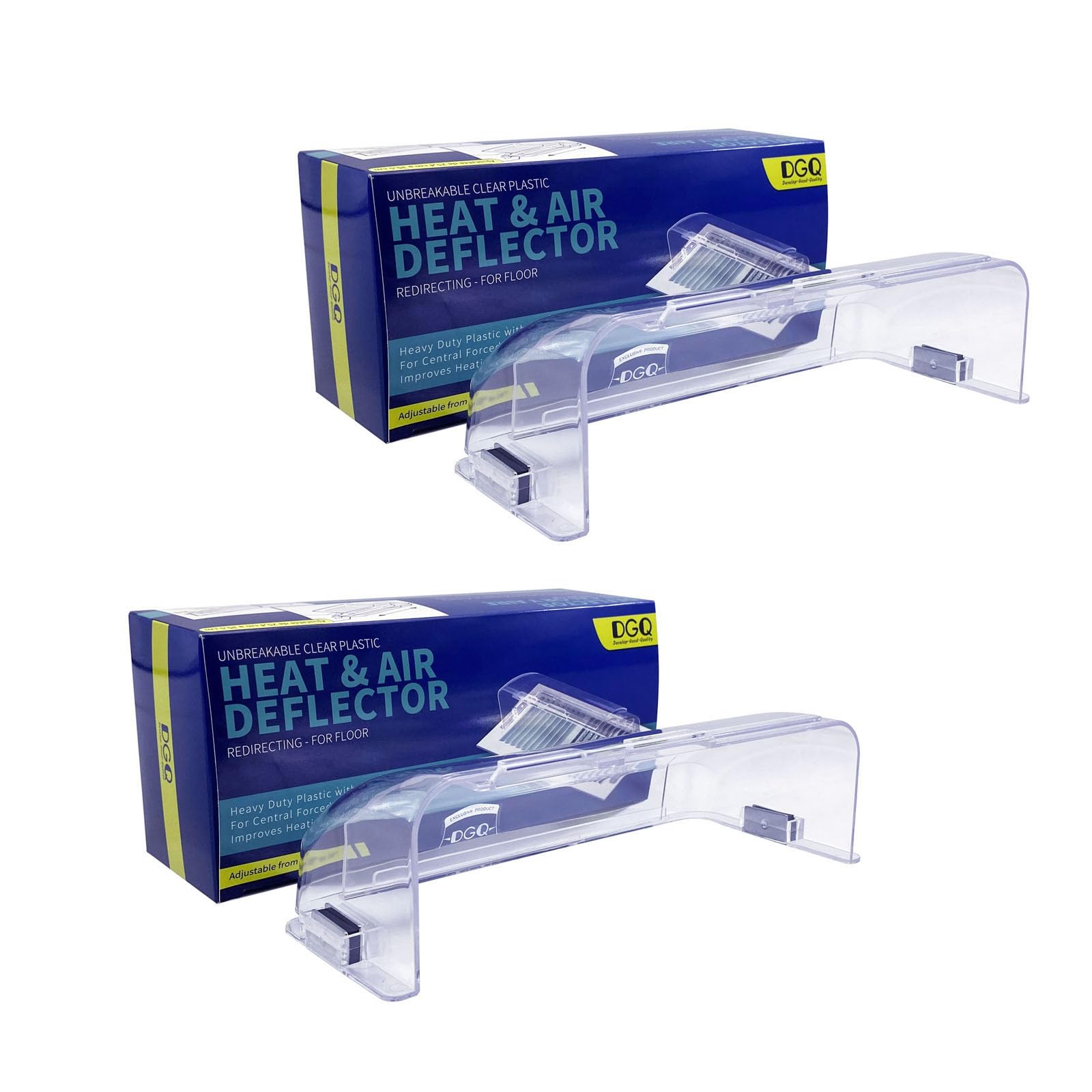
The DGQ Unbreakable is built from genuine polycarbonate — the same material used in safety glasses and electronics housings — which gives it a meaningful advantage over ABS or acrylic deflectors at a similar price point. Rated to 212°F, it handles forced-air heating without softening, making it a safe bet for homes where the furnace produces higher register temperatures.
The design is straightforward: a telescoping body that adjusts from 8 to 12 inches, with two strong magnets securing it to the register. Users consistently describe the plastic as “sturdy” and “reliable,” with several noting that accidental kicks or bumps from cleaning tools didn’t crack the material. On ceiling vents, the clear polycarbonate is virtually invisible, and the magnetic hold keeps it in place even when the air pressure is high.
One limitation is the narrower maximum width compared to other models. At 12 inches, it won’t cover longer registers that extend beyond standard dimensions. However, for the vast majority of residential ceiling vents, the DGQ fits perfectly and delivers a year-round solution for both heating and cooling seasons. The two-pack pricing is excellent for the material quality you’re getting.
Why it’s great
- True polycarbonate construction resists heat up to 212°F
- Transparent design blends into any ceiling register
- Excellent value for the material grade
Good to know
- Maximum expansion is 12 inches, not suitable for larger registers
- Two magnets may be less stable on ceiling than three-magnet designs
4. EKOCSIO 2 Pack Air & Heat Deflector

The EKOCSIO deflector covers a wide range of register sizes, expanding from 8.5 to 15 inches, and specifically lists compatibility with common dimensions like 4×10, 4×12, and 6×14 inches. That makes it a particularly good match for ceiling vents that don’t fit neatly into the standard 10-inch model. The two-part expandable design uses strong magnets that users consistently describe as “strong enough for ceiling use without slipping.”
The plastic is transparent and reasonably thick, though some users note that the edges feel slightly more flexible than the polycarbonate options. For ceiling vents where the deflector is not subject to impacts, this isn’t a concern — gravity and air pressure are the only forces acting on it, and the magnets handle those just fine. Several ceiling-vent users specifically reported that the deflector solved the problem of air blowing directly onto their faces while sitting or sleeping.
One smart design choice is the inclusion of screw slots for non-metal vents. If your ceiling register is aluminum or plastic, the magnets won’t work, but the screws (not included) give you a backup installation method. The included magnets are strong enough for steel registers, but the manual warns they won’t stick to aluminum or plastic vents, which is honest transparency.
Why it’s great
- Wide 8.5 to 15-inch expansion covers nearly all vent sizes
- Screw slots provided for non-metal registers
- Excellent for ceiling vents that blow directly on seating areas
Good to know
- Plastic is slightly more flexible than premium polycarbonate options
- Adhesive backing for non-metal vents may weaken over time
5. Aerospace-Grade 2 Pack Air Vent Deflector
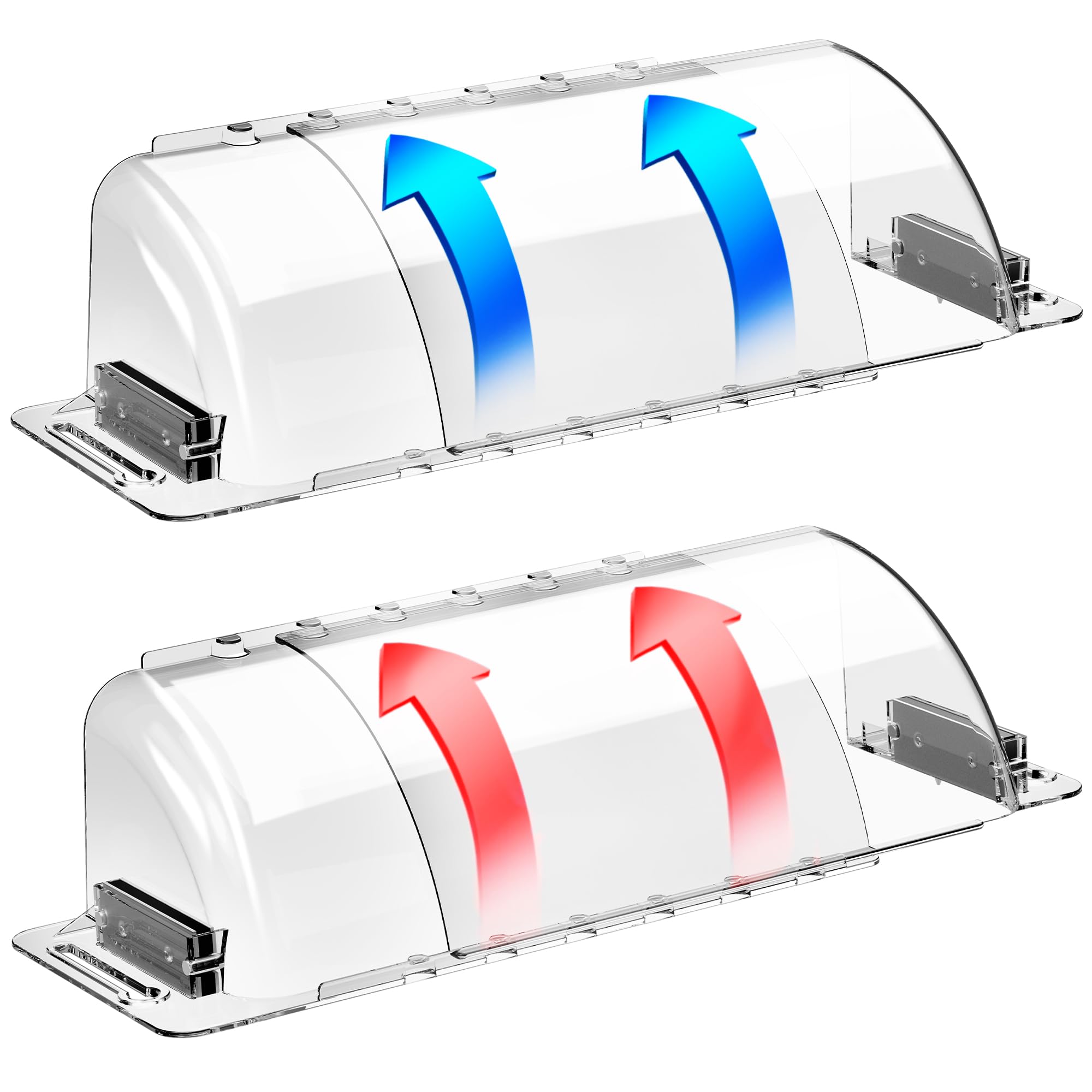
This deflector boasts the widest temperature tolerance in the lineup, rated from -35°F to 284°F. That extreme range comes from a specially formulated aerospace-grade plastic that resists cracking in freezing conditions and won’t soften even when a high-output furnace is blasting directly through the register. For homes in very cold climates or with high-efficiency heating systems that push unusually hot air, this is the safest material choice.
The design expands from 8.5 to 15.5 inches — the widest range in this guide — and includes upgraded magnet slots that prevent the magnets from falling out, a common failure point on cheaper deflectors. The 200% stronger magnetic hold claim is backed by user reports that the deflector stays in place even when robotic vacuums collide with floor registers. On ceiling vents, the grip is secure enough that you have to pull firmly to reposition the unit.
The lens-level transparency is another thoughtful detail. The plastic is nearly invisible against white ceilings, and the smooth surface wipes clean with a damp cloth, preventing dust buildup that can discolor other clear plastics over time. For buyers who want a set-it-and-forget-it solution that handles any temperature extreme without degrading, this is the most future-proof option.
Why it’s great
- Extreme temperature range covers any residential HVAC scenario
- Widest adjustable span from 8.5 to 15.5 inches
- Magnet slots prevent the common “dropped magnet” failure
Good to know
- Relatively new product with fewer long-term reviews
- Magnets can be so strong they risk snapping the plastic if removed incorrectly
FAQ
Will a magnetic deflector stay on a ceiling vent without falling?
Can I use a ceiling vent deflector with an aluminum or plastic register?
Does an air deflector reduce the total airflow from the vent?
Final Thoughts: The Verdict
For most users, the air deflector for ceiling vents winner is the Antimbee 2 Pack because its neodymium magnets and thick curved plastic deliver the most stable overhead installation and best airflow redirection. If you want the added stability of three magnets per unit, grab the MODERN WAVE 2 Pack. And for extreme temperature tolerance in a home with high-output heating, nothing beats the Aerospace-Grade 2 Pack.

Mo Maruf
I created WellFizz to bridge the gap between vague wellness advice and actionable solutions. My mission is simple: to decode the research and give you practical tools you can actually use.
Beyond the data, I am a passionate traveler. I believe that stepping away from the screen to explore new environments is essential for mental clarity and physical vitality.