Our readers keep the lights on and my smoothie glass nicely filled. As an Amazon Associate, I earn from qualifying purchases.
A sweltering tent after a long hike doesn’t have to ruin your night — the right portable cooling unit can turn a sticky, sweat-filled shelter into a comfortable refuge. But the camping air conditioner market is loaded with units that promise cold air yet demand impossible power setups or weigh more than your gear bag.
I’m Mohammad Maruf — the founder and writer behind WellFizz. I’ve spent months analyzing specifications, customer feedback, and real-world performance data across dozens of portable cooling units to separate the genuinely camp-ready designs from the ones that belong in a bedroom.
After digging through hundreds of verified reviews and technical specs, I’ve built the definitive guide to finding the best air conditioner for camping that actually performs off-grid without draining your budget or your battery bank.
How To Choose The Best Air Conditioner For Camping
Camping air conditioners live in a different world than home units. You need something that handles limited power, rough transport, and small spaces without flooding your tent. Here are the four factors that matter most when picking one for the outdoors.
Power Source and Wattage
This is the single most important spec. A unit that pulls 1,500 watts will drain a typical portable power station in under an hour. Look for models under 500 watts if you plan to run on batteries or solar. Units with inverter technology or variable-speed compressors use far less energy at idle and are worth the premium for off-grid camping.
Cooling Capacity and Space
BTU ratings tell you how much heat a unit can remove, but bigger isn’t always better for camping. A 5,000–6,000 BTU unit is plenty for a tent or small RV. Higher BTU models cool faster but consume more power and weigh more. Match the BTU to your actual space — overkill wastes energy and adds weight you have to carry.
Installation and Portability
Rooftop units require cutting a hole in your RV roof. Window sill models let you keep your window mostly closed. Freestanding portable units need an exhaust hose vented outside. For tent camping, a self-contained unit with dual hoses is the most practical. Weight matters too — anything over 40 pounds becomes a chore to move between campsites.
Noise and Drainage
Camping is about peace and quiet. Units that hit 50 decibels or less are comfortable for sleeping. Also consider how the unit handles condensation — models with auto-evaporation or drainage-free cooling in low humidity save you from waking up to a puddle on your tent floor.
Quick Comparison
On smaller screens, swipe sideways to see the full table.
| Model | Type | Best For | Key Feature | Amazon |
|---|---|---|---|---|
| EF ECOFLOW WAVE 3 | Portable | Battery-powered camping | 8H cordless runtime with add-on battery | Amazon |
| Outohome 5200BTU | Portable | Tent camping | 400W low power draw with dual hoses | Amazon |
| Countrymod 12V 10000 BTU | Rooftop | RV and van life | Inverter tech with 300–900W variable draw | Amazon |
| Outequip 12V 10000 BTU | Rooftop | Off-grid use | Low-profile 45 lb design with heater | Amazon |
| Ivation 6500 BTU | Window Sill | Camper and RV window mount | Split design keeps noise outside | Amazon |
| KoolSiln 16000 BTU Inverter | Portable | Large RV or room | Inverter compressor with 40 dB noise | Amazon |
| JAYGOVAN 12V Split 11000BTU | Split | Truck cab and van | 12V DC with 400–600W motor | Amazon |
| KoolSiln 14000 BTU | Portable | Mid-size campers | Auto-evaporation with 44 dB sleep mode | Amazon |
| Temprium 8000 BTU WiFi | Portable | Smart control camping | App and voice control with Alexa | Amazon |
| Feelfunn 8000 BTU (PAC003) | Portable | Budget-friendly camping | 48 dB quiet operation with sleep mode | Amazon |
| Feelfunn 8000 BTU (PAC002) | Portable | Entry-level value | Auto-evaporation with 48 dB noise | Amazon |
In‑Depth Reviews
1. EF ECOFLOW WAVE 3

The EF ECOFLOW WAVE 3 is the closest thing to a true cordless camping air conditioner on the market today. With 6,100 BTU of cooling power and an optional 1,024 Wh LFP battery pack, it delivers up to eight hours of runtime without needing shore power or a generator. That’s a game-changer for tent campers, overlanders, and van lifers who want real air conditioning without relying on campground hookups.
What sets this unit apart is its hyper-speed climate control — it drops the temperature by 15°F in just 15 minutes under extreme heat, and the automatic mode adjusts cooling and heating throughout the day as conditions shift. The compact 20-inch luggage-style design with an ergonomic handle makes it genuinely portable, and the R290 refrigerant reduces CO₂ emissions significantly compared to traditional units. Sleep mode keeps noise at 44 dB, quiet enough for a restful night.
The main trade-off is price — this is a premium investment. The battery pack adds weight and cost, and in very hot conditions the runtime drops. But for anyone who needs real, independent cooling away from power sources, the WAVE 3 is in a class of its own. The app control and pet-care auto-activation features are thoughtful extras that round out an impressive package.
Why it’s great
- Runs up to 8 hours on battery without shore power
- Cools 15°F in 15 minutes in extreme heat
- Compact luggage-style design with app control
Good to know
- Premium price point with battery sold separately
- Battery runtime drops in very hot conditions
- Heavier than basic fan-only portable units
2. Outohome 5200BTU
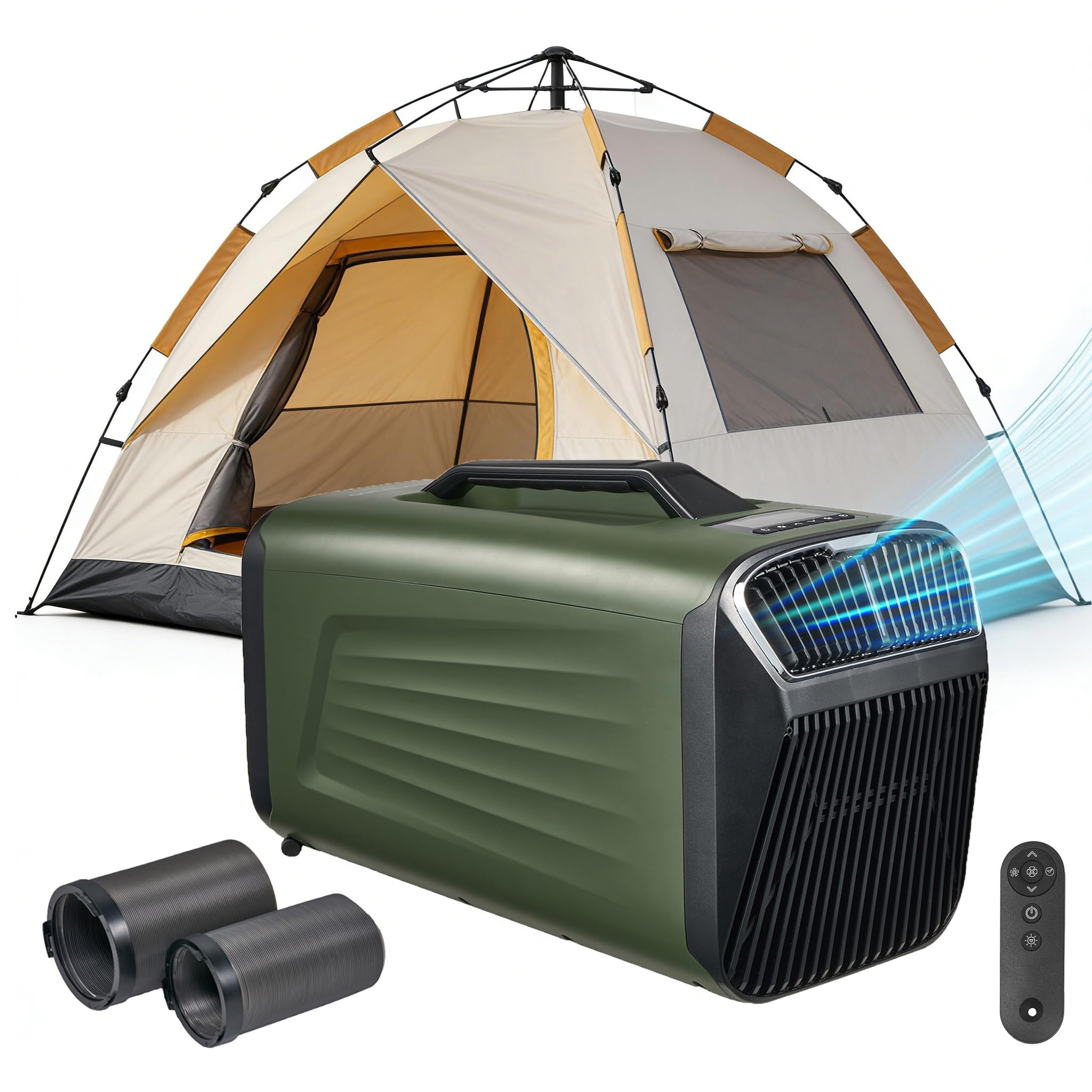
The Outohome 5200BTU is purpose-built for tent camping in a way few other portable ACs are. It draws only 400 watts at peak, which means it can run off a medium-sized generator or a beefy portable power station without draining your reserves in an hour. The dual-hose design pulls in outside air and exhausts heat separately, making it far more efficient in a tent environment than single-hose units.
With a compact footprint of 22.4 x 11.2 x 14.6 inches and a weight of just 31 pounds, it’s one of the most genuinely portable camping ACs available. The dark green finish with a metallic spray-paint effect looks rugged and outdoor-appropriate. It offers four modes — cool, dry, sleep, and fan — and the sleep mode drops noise to a whisper-quiet 46–50 dB. Users report that the compressor is virtually silent, with only the fan producing audible sound.
One important caveat: this unit is not self-contained. Itrequires external power and dual-hose venting, so it works best at campgrounds with electricity. The drainage-free cooling mode works well when humidity is below 70%, but you’ll need the included drain pipe in very humid conditions. Overall, it’s a top-tier option for campers who have power access and want fast, quiet cooling in a tent or small RV.
Why it’s great
- Low 400W power draw works with portable generators
- Dual-hose design improves tent cooling efficiency
- Very quiet at 46 dB in sleep mode
Good to know
- Requires external power and dual-hose setup
- May need drainage in high humidity
- Not self-contained like battery-powered units
3. Countrymod 12V 10000 BTU
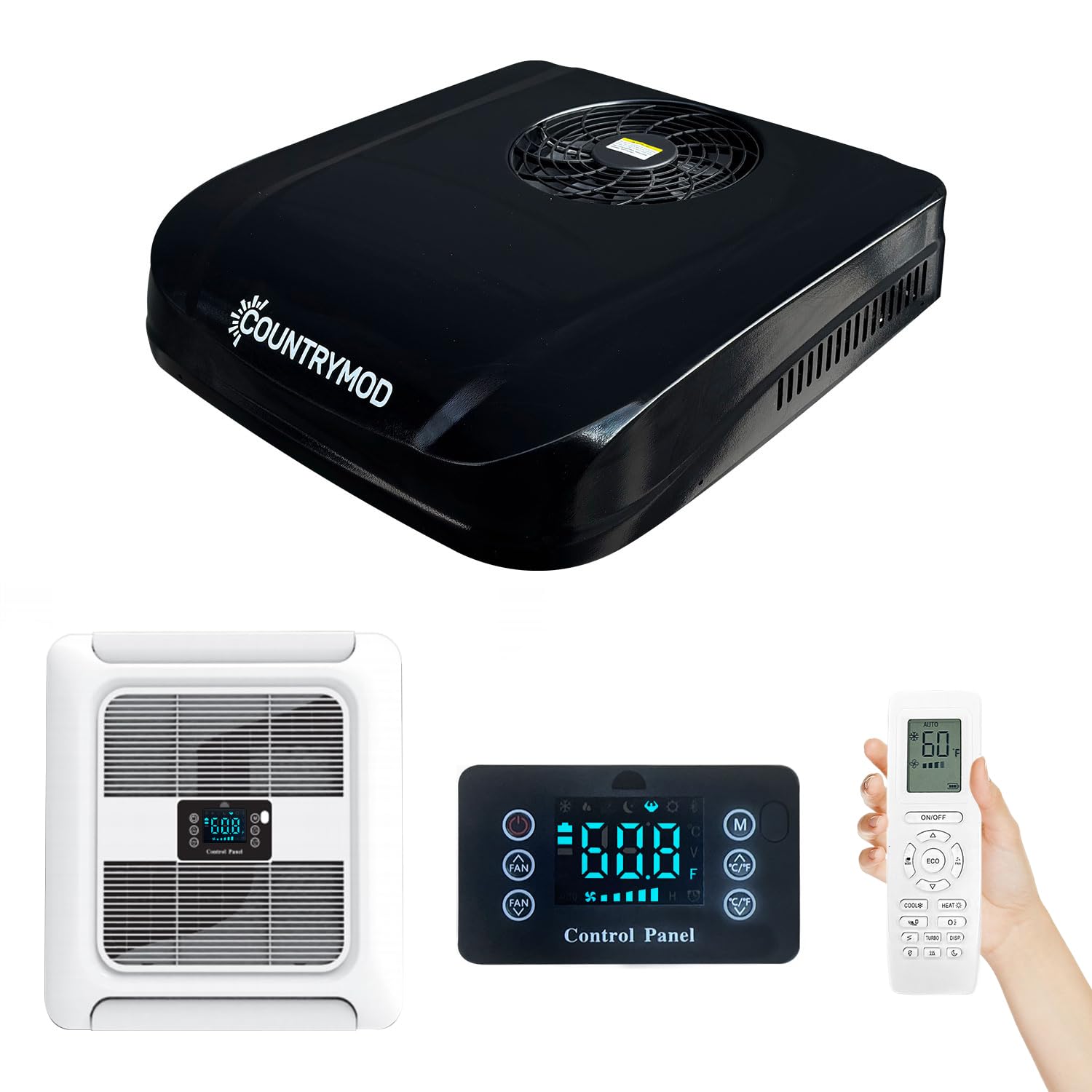
The Countrymod 12V rooftop air conditioner is a standout for RV owners who want efficient, quiet cooling without a massive power draw. Its inverter technology adjusts compressor speed dynamically, consuming as little as 300 watts in eco mode and up to 900 watts in turbo. That variable-frequency design makes it five times more efficient than a standard rooftop AC, and with a 300Ah lithium battery, users report up to 12 hours of runtime in eco mode.
Installation is straightforward — it fits a standard 14×14-inch roof vent and requires no ductwork. The unit weighs less than many traditional rooftop ACs, and its horizontal compressor design reduces vibration and lowers the center of gravity for better stability on the road. Noise levels hover around 45–55 dB, described by users as a light wind sound that won’t disturb sleep.
The downsides are minimal. Some users noted the instructions could be clearer, but online videos fill the gap. Customer support gets high marks, with one user reporting a replacement control panel shipped the next day after an issue. For RVers who want to camp off-grid without a generator running all night, this unit delivers impressive performance at a reasonable premium.
Why it’s great
- Variable inverter compressor for low power draw
- Fits standard 14×14 roof vent, easy install
- Quiet operation at 45–55 dB
Good to know
- Instructions could be more detailed
- Requires adequate battery bank for off-grid use
- Not suitable for ducted RV systems
4. Outequip 12V 10000 BTU
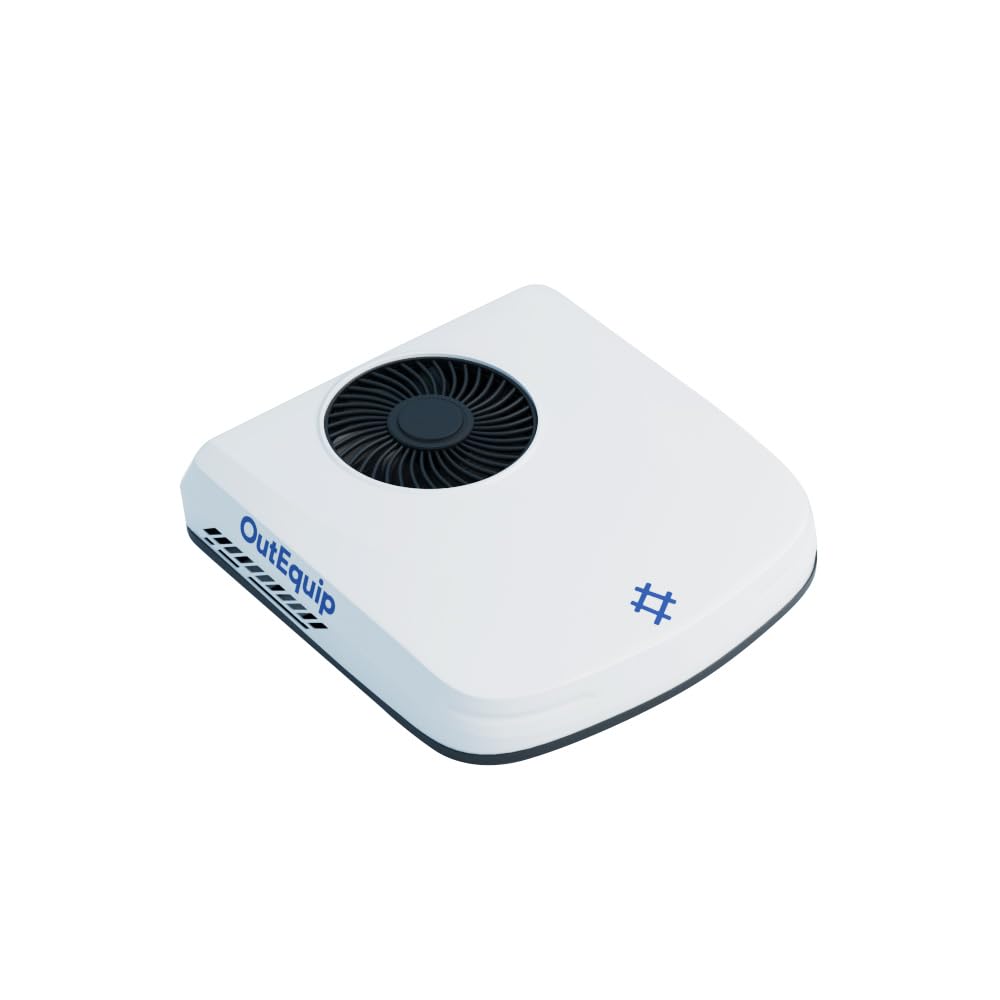
The Outequip 12V 10000 BTU rooftop AC hits a sweet spot for van lifers and RV owners who want a lightweight, low-profile unit without breaking the bank. At just 45 pounds, it’s significantly lighter than traditional rooftop ACs like the Coleman Mach 3, which can weigh nearly double. The low-profile design sits at 6.3 inches tall, reducing wind resistance and roof strain.
Cooling is quick — users report noticeable temperature drops within 15 minutes in hot weather. The eco mode draws around 200–300 watts at idle, making it feasible to run all night on a 560Ah lithium battery bank with solar. It also includes a 4,500 BTU PTC heater for mild temperature supplemental warmth, though it’s not designed for extreme cold. The brushless copper motor fans keep noise around 40 dB in sleep mode, which is genuinely quiet for a rooftop unit.
Installation is straightforward with three mounting options, and it fits both 14×14 and 14×9 roof openings. Customer support is responsive and knowledgeable. The main limitation is that the heater is only supplementary, not a primary heat source. For off-grid campers who need efficient, quiet cooling and a bit of warmth on cool nights, this is an excellent value.
Why it’s great
- Lightweight 45 lb design for easy installation
- Low power draw in eco mode for battery use
- Includes PTC heater for mild warmth
Good to know
- Heater not suitable for extreme cold
- Requires 14×14 or 14×9 roof opening
- Higher initial cost than basic portable units
5. Ivation 6500 BTU

The Ivation 6500 BTU camper air conditioner uses an innovative over-the-window-sill split design that keeps the noisy compressor outside while the main unit stays inside. This means you get the cooling power of a window AC without the drone of a compressor in your ear — perfect for light sleepers in campers and RVs. The split mounting also preserves your window view and provides greater stability than traditional window units.
Installation is quick and tool-free — the set includes brackets, hardware, and an integrated hose connecting both units. The digital display shows temperature and time, and you can adjust settings from 60°F to 86°F. It operates as a 3-in-1 unit with cooling, dehumidifying, and fan modes. At 52 dB, it’s not the quietest unit on this list, but the split design means the compressor noise stays outside, making the indoor experience much more peaceful.
User feedback is largely positive, especially for campervans where rooftop installation isn’t feasible. One reviewer noted it helped tremendously as a second AC in a hot Tennessee camper. However, a minority of users reported issues with water accumulation and insufficient cooling in very small spaces — it’s worth ensuring your window sill setup allows proper drainage. For RV owners who want to avoid roof modifications, this is a clever and effective solution.
Why it’s great
- Split design keeps compressor noise outside
- Preserves window view and stability
- Easy tool-free installation
Good to know
- 52 dB noise level, not the quietest
- Some units may have water drainage issues
- Best for vertical sliding windows
6. KoolSiln 16000 BTU Inverter
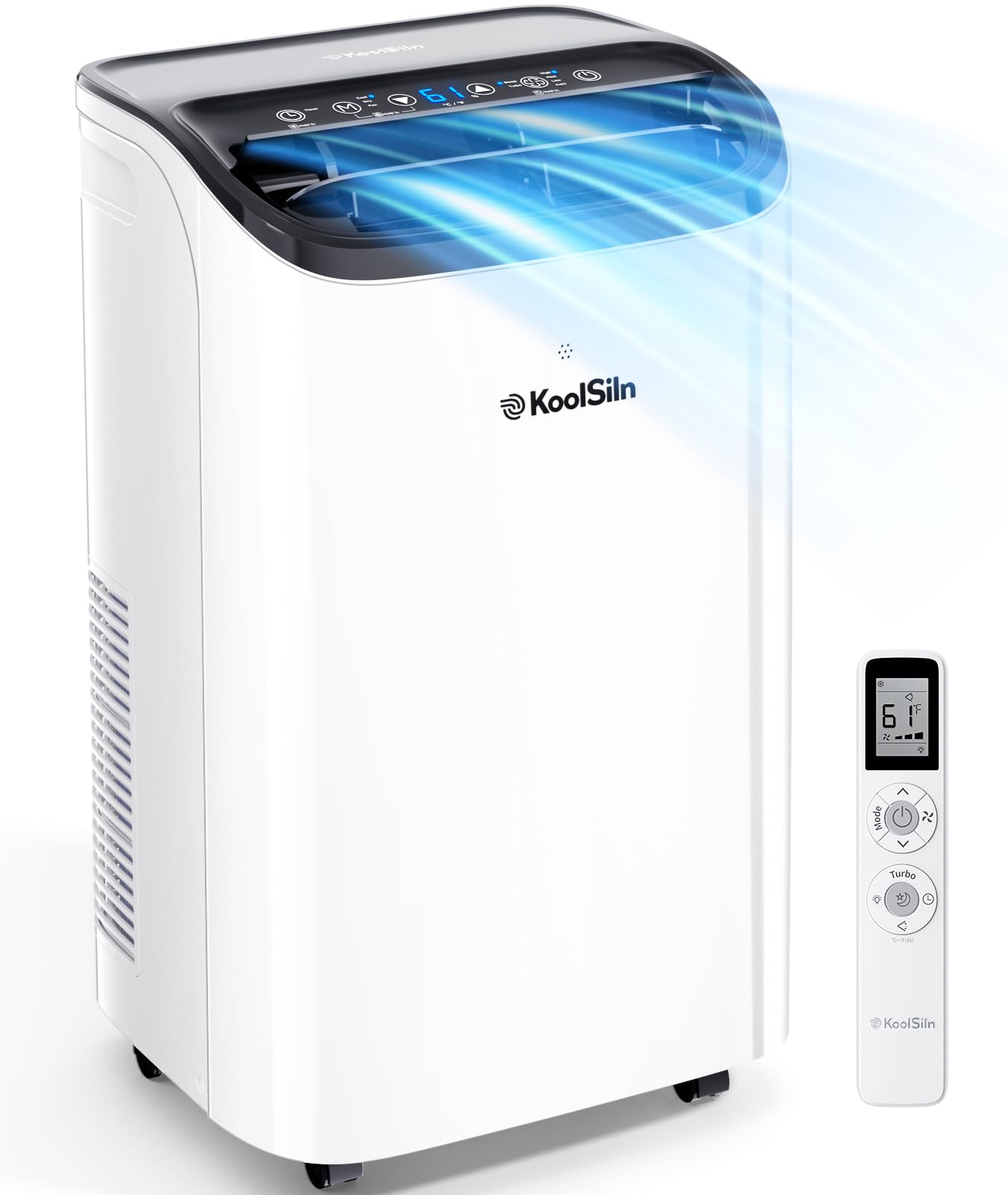
The KoolSiln 16000 BTU Inverter portable air conditioner is a powerhouse designed for large RVs, campers, or any sizable space that needs serious cooling. Its inverter compressor is the star feature — it adjusts power output based on demand, keeping noise below 40 dB in sleep mode and dramatically reducing energy consumption compared to non-inverter units. The 77° enlarged air outlet pushes cool air across rooms up to 800 square feet.
Auto-evaporation technology converts 80% of excess water into cool air, meaning you rarely need to drain the unit manually. The 3-in-1 design covers cooling, fan, and dehumidifier modes, and the included remote control works from 23 feet away. Setup is tool-free with an adjustable window bracket that fits openings from 20 to 50 inches. Users consistently praise its quiet operation and rapid cooling — one reviewer noted it dropped a sun-baked office to comfortable levels quickly.
The trade-off is size and weight — at 34.65 inches tall and over 50 pounds, it’s not something you’ll casually move between campsites. It’s best suited for a semi-permanent setup in a larger RV or camper. The price is mid-to-premium, but the inverter technology and low noise make it a compelling choice for those who prioritize quiet comfort in a large space.
Why it’s great
- Inverter compressor for ultra-quiet 40 dB operation
- Auto-evaporation reduces drainage needs
- Cools large spaces up to 800 sq ft
Good to know
- Heavy and bulky for frequent moving
- Requires window access for exhaust hose
- Higher power draw than smaller units
7. JAYGOVAN 12V Split 11000BTU
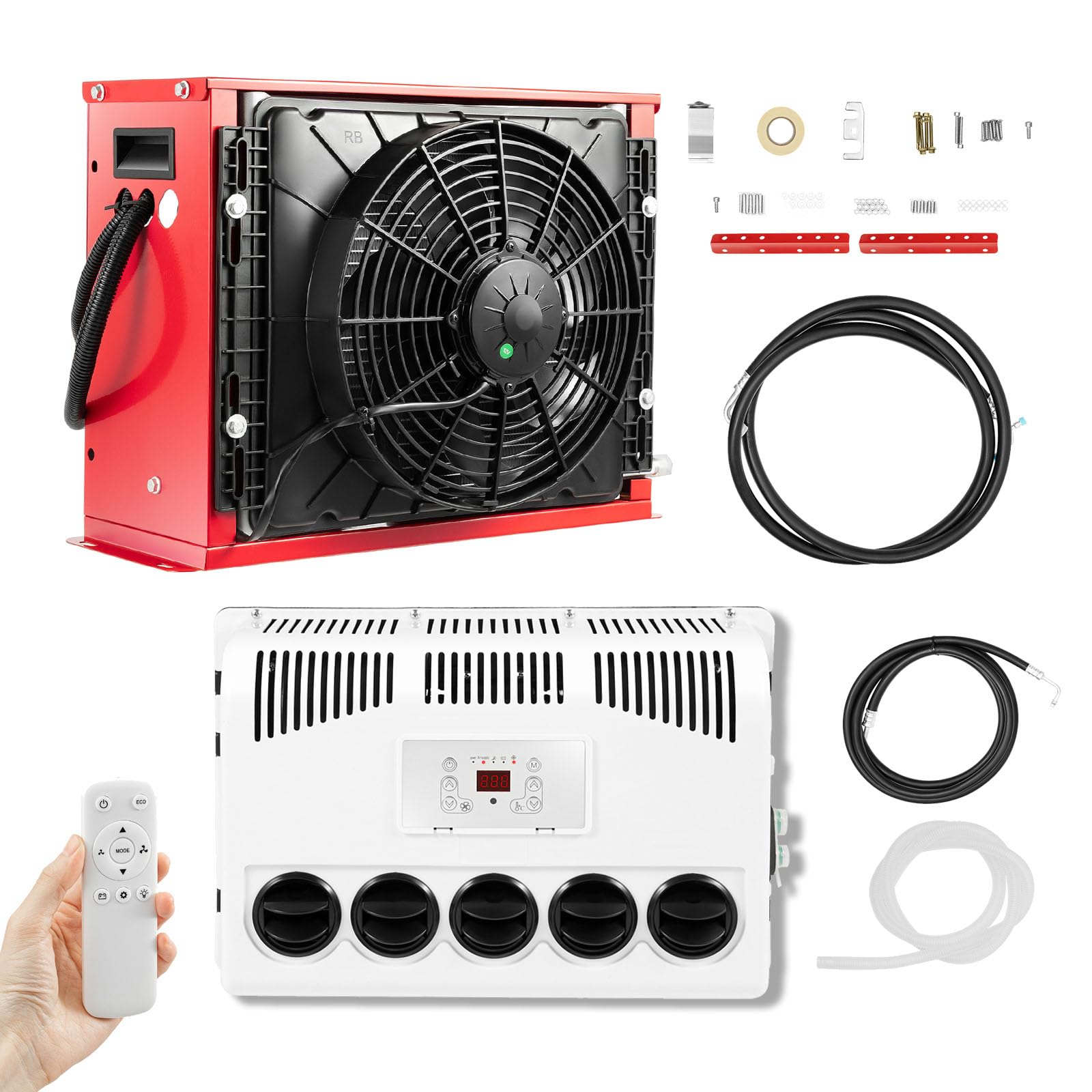
The JAYGOVAN 12V split air conditioner is built for the most demanding off-grid environments — truck cabs, vans, trailers, and even boats. Its split design places the compressor outside and the evaporator inside, keeping the noisy components away from your living space. The 11,000 BTU cooling capacity is impressive for a 12V system, with a high-quality aluminum condenser and pure copper wire motor delivering 400–600 watts of cooling power.
One of the standout features is its low voltage protection at 11V, which prevents your battery from being drained completely. The unit can run continuously for 1–3 hours on a fully charged battery, depending on capacity and settings. Five wind speeds, multiple modes, and a digital display give you fine control over the climate. Users report that with adequate battery banks (like 2x280Ah lithium), they can run the unit for up to 20 hours.
The installation is more involved than a portable unit — you’ll need to mount both the indoor and outdoor components and run wiring. Some users noted the instructions could be clearer, and the inline fuse may blow with larger setups. But the cooling performance is undeniable, with one reviewer reporting it kept their van at 60°F even in hot conditions. For serious off-grid adventurers with the technical know-how, this is a robust and effective solution.
Why it’s great
- Powerful 11,000 BTU cooling on 12V DC
- Split design keeps compressor noise outside
- Low voltage protection for battery safety
Good to know
- Complex installation requiring mounting and wiring
- Instructions could be more detailed
- May need upgraded fuses for higher current
8. KoolSiln 14000 BTU
The KoolSiln 14000 BTU portable air conditioner is a strong mid-range option for campers who need more cooling power than a small tent unit but don’t want to jump to a rooftop system. It cools spaces up to 700 square feet, making it suitable for larger RVs, camper vans, or even a home office when you’re not camping. The 77° enlarged air outlet and R32 refrigerant provide fast, eco-friendly cooling.
Noise reduction technology keeps sound levels as low as 44 dB in sleep mode — quieter than a library conversation. The auto-evaporation system converts 80% of condensation into cool air, so you rarely need to drain the tank manually. The 3-in-1 functionality covers cooling, fan, and dehumidifier modes, and the included remote works from 23 feet. Setup is tool-free with an adjustable window bracket that fits openings from 20 to 67 inches.
Users consistently praise its quiet operation and rapid cooling. One reviewer noted it was “so much quieter” than their previous unit and didn’t need a drain hose. The 8-hour sleep timer and child lock are thoughtful additions. The main consideration is size — at 34.65 inches tall and over 50 pounds, it’s not ultra-portable. But for those who want a powerful, quiet, and relatively affordable portable AC for camping or home use, this is a top contender.
Why it’s great
- Very quiet at 44 dB in sleep mode
- Auto-evaporation reduces manual drainage
- Powerful cooling for large spaces up to 700 sq ft
Good to know
- Heavy and large for frequent moving
- Requires window access for exhaust
- Higher power consumption than smaller units
9. Temprium 8000 BTU WiFi
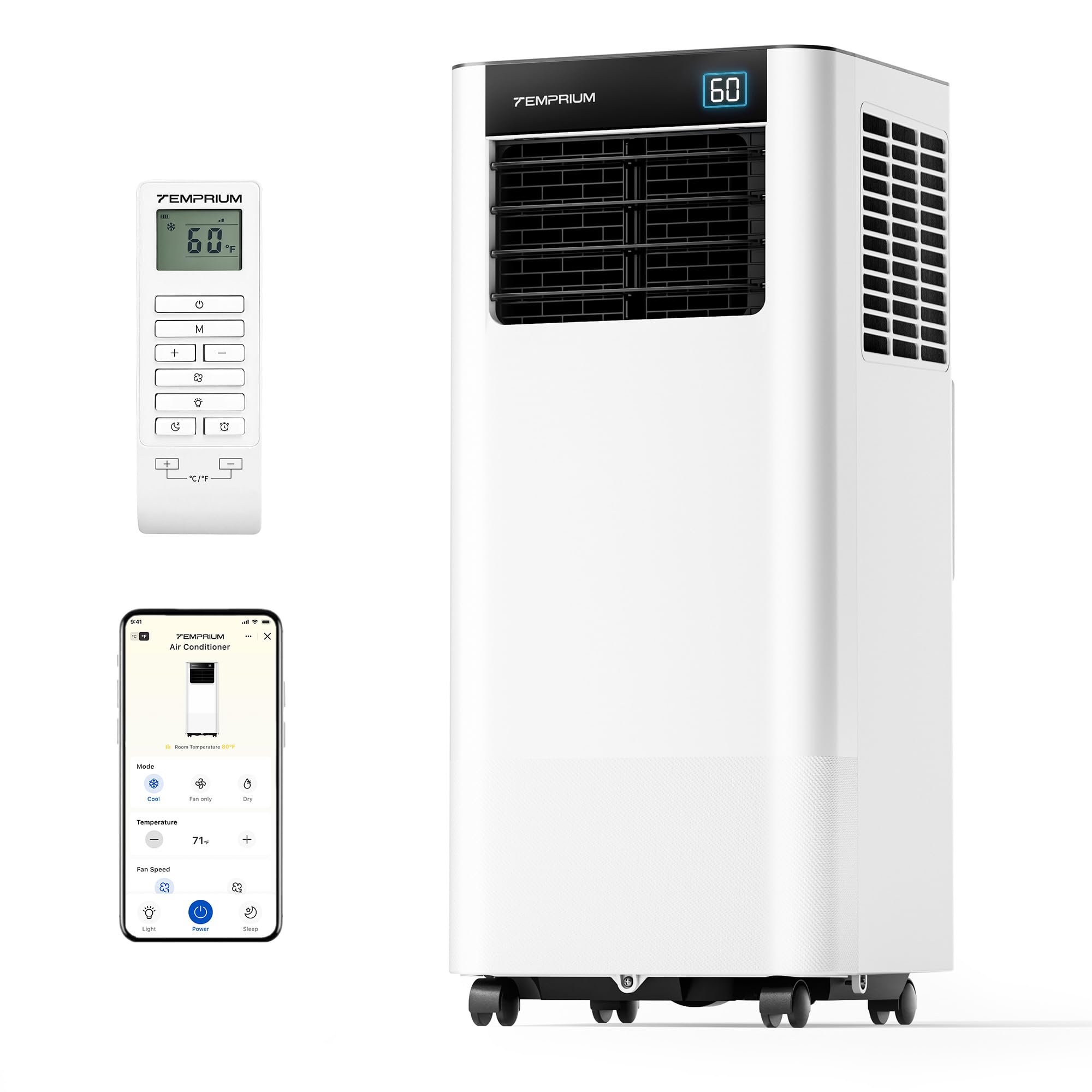
The Temprium 8000 BTU portable air conditioner brings smart home convenience to the campsite. With WiFi connectivity, you can control it via the Temprium app, or use voice commands with Alexa or Google Assistant. That means you can pre-cool your tent or RV on your way back from a hike, or adjust settings without leaving your sleeping bag. The app provides real-time power monitoring and scheduling, which is incredibly useful for managing battery usage.
Cooling performance is strong for its size — the upgraded compressor delivers 320 m³/h airflow and can drop room temperature to 60°F quickly. The sleep mode operates at just 50 dB with a closable soft atmosphere light, making it suitable for light sleepers. The 3-in-1 design includes dehumidifier and fan modes, and the auto-evaporative system reduces the frequency of water drainage. Setup is tool-free with universal window kits that fit 20–49 inch windows.
Users rave about the fast cooling and smart features. One reviewer noted it cooled their bedroom by about 20°F in roughly an hour. The single-hose design is less efficient in very humid climates compared to dual-hose units, but for most camping scenarios it works well. The price is reasonable for a smart-enabled portable AC, and the 1-year warranty provides peace of mind. For tech-savvy campers who want remote control, this is a great pick.
Why it’s great
- WiFi and voice control via app/Alexa/Google
- Fast cooling with 320 m³/h airflow
- Auto-evaporation reduces drainage needs
Good to know
- Single-hose design less efficient in high humidity
- 50 dB sleep mode, not the quietest
- Requires WiFi for smart features
10. Feelfunn 8000 BTU (PAC003)
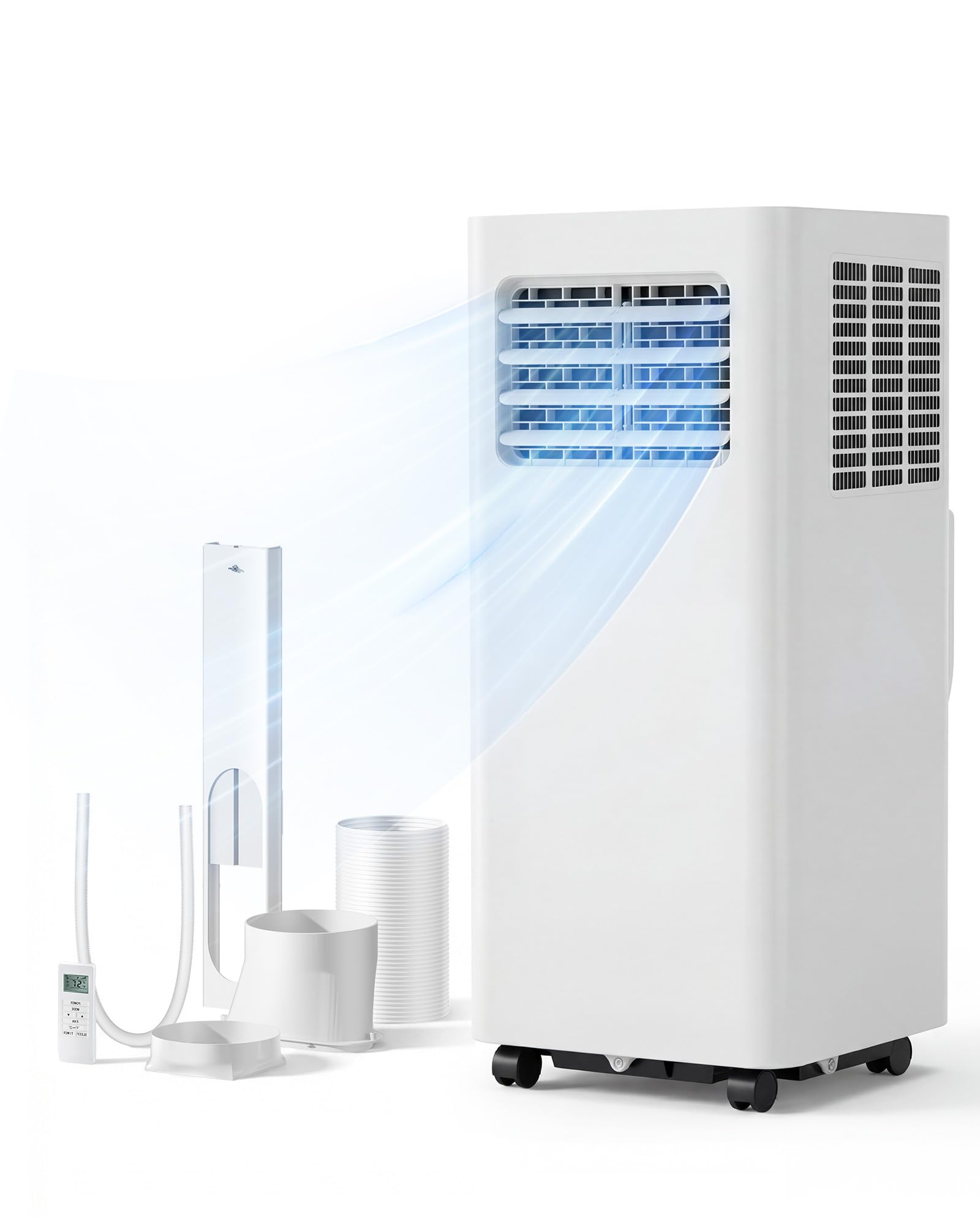
The Feelfunn 8000 BTU portable air conditioner (model PAC003) is a budget-friendly entry point for campers who need reliable cooling without spending a fortune. It cools spaces up to 350 square feet — enough for a small RV, large tent, or camper. The 3-in-1 design covers cooling, fan, and dehumidifier modes, with the dehumidifier removing up to 45 pints of moisture per day to keep things comfortable in humid conditions.
Noise levels are rated at 48 dB, which is moderate — fine for daytime use but some users found it too loud for overnight sleep on high fan. Sleep mode dims the display and adjusts temperature to save energy. The unit is portable with 360° casters and hidden handles, and the window kit fits most windows from 20 to 49 inches. Setup is straightforward and the 1-year warranty adds confidence.
User feedback is generally positive, with many praising its cooling power and value. One reviewer noted it cooled their living room during a 97°F heatwave. However, some mentioned the noise on high fan can be disruptive for sleep, and the unit is heavy to lift at 41.5 pounds. For budget-conscious campers who prioritize cooling power over whisper-quiet operation, this is a solid choice that won’t break the bank.
Why it’s great
- Affordable entry price for portable cooling
- Strong 8000 BTU cooling for spaces up to 350 sq ft
- Includes dehumidifier and fan modes
Good to know
- Noise on high fan may disturb light sleepers
- Heavy at 41.5 lbs for moving
- Not as quiet as premium inverter models
11. Feelfunn 8000 BTU (PAC002)
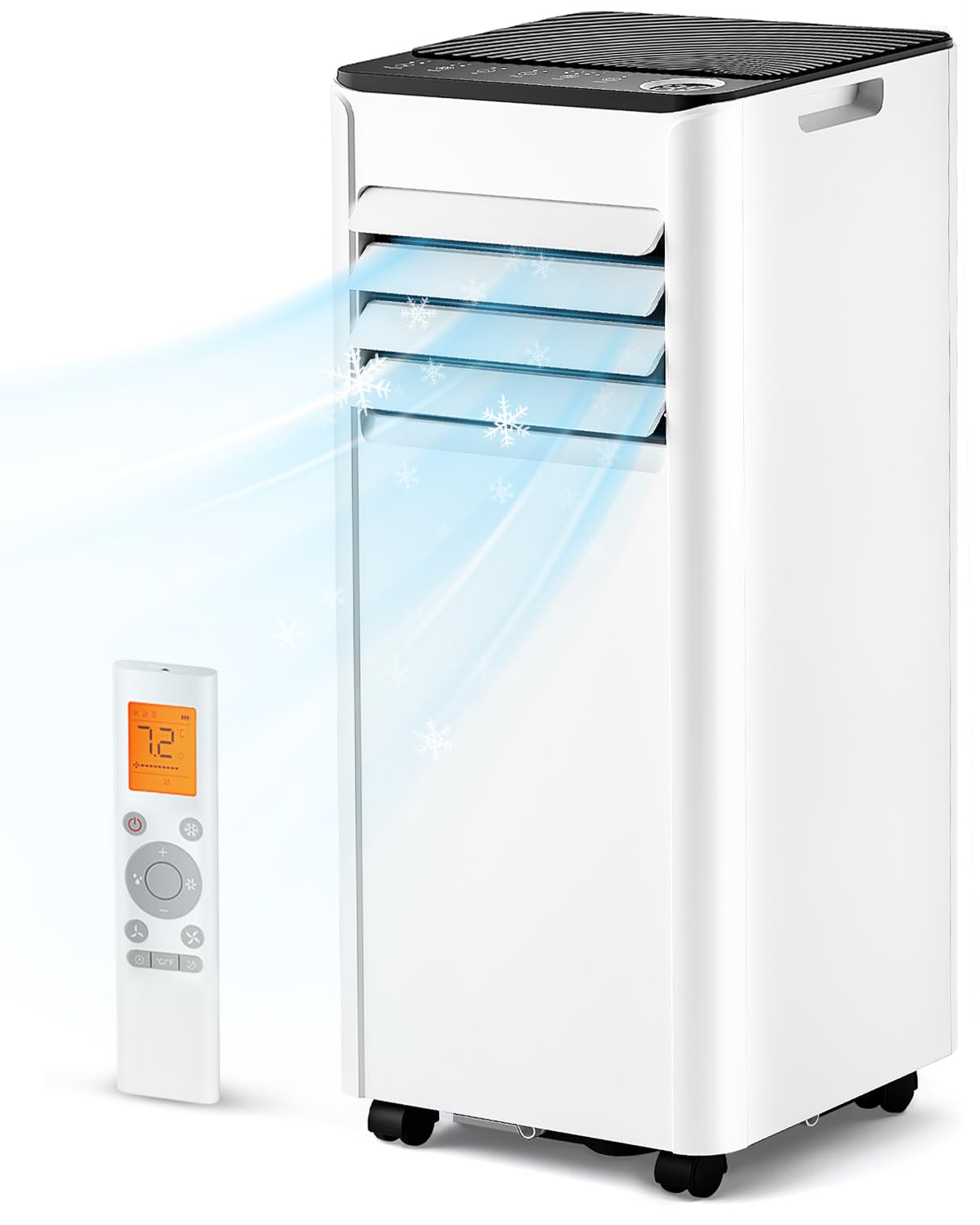
The Feelfunn 8000 BTU portable air conditioner (model PAC002) is a slightly refined version of the previous model, offering the same core cooling performance with a few upgrades. It still delivers 8,000 BTU ASHRAE (5,000 BTU SACC) cooling for spaces up to 350 square feet, but adds auto-evaporation technology and a slightly higher dehumidification rate of 52 pints per day. The temperature control range is wider at 61–90°F.
Noise is rated at 48 dB, similar to its sibling, and the sleep mode adjusts performance to reduce noise and power consumption. The unit claims an energy cost of approximately 7 per day, making it one of the more efficient budget options. The 23-foot remote control range is generous, and the 360° swivel casters make room-to-room movement easy. Setup is tool-free with an adjustable window kit that fits openings from 19.69 to 53.15 inches.
User reviews are positive, with many noting it cools large spaces effectively and is quieter than expected. One reviewer reported it cooled an upstairs ~800 square foot area better than their main floor. However, some users mentioned the exhaust tube can fall out during use, and the controls are accessible to kids/pets without a lock feature. For campers on a tight budget who want reliable cooling with a few extra features, this is a worthy consideration.
Why it’s great
- Good value with auto-evaporation feature
- Wide temperature control range 61–90°F
- Low energy consumption for budget operation
Good to know
- Exhaust tube may detach during use
- No child lock on controls
- Noise level moderate for overnight sleep
Understanding the Specs
BTU and Wattage
BTU (British Thermal Units) measures cooling capacity — higher numbers cool faster and handle larger spaces. For camping, 5,000–6,000 BTU is enough for a tent or small RV. But BTU alone doesn’t tell you power consumption. Wattage is what matters for battery or generator use. Look for units under 500 watts for off-grid camping. Inverter models adjust power draw dynamically, using far less energy at idle than fixed-speed compressors.
Noise Level and Sleep Mode
Decibel (dB) ratings tell you how loud a unit is. Under 45 dB is library-quiet and ideal for sleeping. 45–50 dB is moderate — fine for most campers but might bother light sleepers. Above 50 dB is noticeable and better for daytime use. Sleep mode typically dims the display, reduces fan speed, and may adjust temperature setpoints to save energy while keeping you comfortable through the night.
Drainage and Auto-Evaporation
Portable ACs remove humidity from the air, which collects as water in an internal tank. Units with auto-evaporation technology convert most of that moisture into cool exhaust air, reducing or eliminating the need to manually drain the tank. This is critical for camping — waking up to a full tank or a puddle on your tent floor is not fun. Some units work drainage-free in low humidity but require a drain pipe when humidity exceeds 70%.
Power Source Compatibility
Not all camping ACs run on the same power. 120V AC units plug into standard household outlets or campground pedestals. 12V DC units run directly off RV or vehicle batteries, often with inverter technology for efficiency. Battery-powered units like the EcoFlow WAVE 3 have built-in batteries for true cordless operation. Always check the power requirements — a 1,500W unit will drain a 100Ah battery in under an hour, while a 400W unit can run all night.
FAQ
Can I use a regular portable air conditioner for camping?
How many BTU do I need for a tent or small RV?
Can I run a camping air conditioner on solar power?
How do I vent a portable AC in a tent?
Are 12V rooftop ACs worth the higher price?
Final Thoughts: The Verdict
For most campers, the air conditioner for camping winner is the Outohome 5200BTU because it balances low power draw, quiet operation, and true portability at a reasonable price. If you want cordless freedom and have the budget, grab the EF ECOFLOW WAVE 3. And for off-grid RV use, nothing beats the efficiency of the Countrymod 12V 10000 BTU rooftop unit.

Mo Maruf
I created WellFizz to bridge the gap between vague wellness advice and actionable solutions. My mission is simple: to decode the research and give you practical tools you can actually use.
Beyond the data, I am a passionate traveler. I believe that stepping away from the screen to explore new environments is essential for mental clarity and physical vitality.