Our readers keep the lights on and my smoothie glass nicely filled. As an Amazon Associate, I earn from qualifying purchases.
Basements present a unique cooling challenge: they are often partially underground, naturally more humid, and lack the cross-ventilation that upper floors enjoy. A standard window unit or a weak portable AC often fails here, leaving the space feeling clammy and warm. The real battle is not just against temperature, but against the relentless moisture that makes a basement feel sticky and promotes musty odors.
I’m Mohammad Maruf — the founder and writer behind WellFizz. I’ve spent hundreds of hours dissecting portable and mini-split specifications, comparing compressor types, BTU ratings in real-world basements, and the specific dehumidification capacities required to keep below-grade spaces dry and comfortable.
The goal of this guide is to cut through the marketing noise and deliver a clear comparison of performance specs so you can confidently buy the best air conditioner for basement spaces that keeps both temperature and humidity under control.
How To Choose The Best Air Conditioner For Basement
Selecting an AC for a basement is different than picking one for a living room. You must prioritize dehumidification capacity, the type of compressor, and the exhaust system design. Below are the three most critical factors to evaluate.
Prioritize Dehumidification Over Raw BTU
A basement’s thermal load is smaller than an above-ground room, but its humidity load is much higher. Many portable ACs list dehumidification in pints per day. For a basement, you want a unit that pulls at least 80 pints per day. If the unit lacks a strong dehumidifier mode, you will end up feeling cold but still clammy, which is the worst of both worlds.
Choose Dual-Hose Over Single-Hose
Single-hose portable ACs create negative pressure, pulling warm, humid air from the rest of the house into the basement through cracks and gaps. A dual-hose system uses one hose for intake and one for exhaust, maintaining balanced air pressure. This results in faster cooling and significantly less moisture infiltration, which is crucial in a basement environment.
Look for Inverter Compressors and Self-Evaporation
Inverter compressors modulate power continuously rather than cycling on and off. This provides more stable temperatures, lower energy consumption, and quieter operation. Combined with a self-evaporating condensate system, an inverter unit can run for days without requiring manual draining, which is a game-changer for basements where you might not check the unit daily.
Quick Comparison
On smaller screens, swipe sideways to see the full table.
| Model | Category | Best For | Key Spec | Amazon |
|---|---|---|---|---|
| Whynter ARC-1230WN | Premium Dual-Hose Inverter | Reliable Brand & Large Basements | 12,000 BTU SACC / 87 Pints Dehumid. | Amazon |
| Midea Duo 14K | Premium Inverter + Heat | Year-Round Temp Control | 12,000 BTU SACC / Inverter / Heat Pump | Amazon |
| ZAFRO 16K Inverter | Mid-Range Inverter Dual-Hose | Energy Efficiency & Quiet Operation | 12,000 BTU SACC / 42dB Sleep / 72H Drain-Free | Amazon |
| Gasbye 14K Dual Hose | Premium Inverter Dual-Hose | Highest CEER & Low Noise | 10,500 BTU SACC / 13.6 CEER / 45dB Inverter | Amazon |
| YLEOOB 16K Smart | Mid-Range Smart Portable | Large Coverage & WiFi Convenience | 16,000 BTU ASHRAE / 42dB Sleep / WiFi App | Amazon |
| CKEARO 16K Smart | Mid-Range Smart Portable | Smart Controls & Savings | 16,000 BTU ASHRAE / 36dB Sleep / WiFi / 40% Less Energy | Amazon |
| Augsmile 16K Portable | Mid-Range Smart Portable | Leak-Proof Design & Coverage | 16,000 BTU ASHRAE / 40dB Sleep / WiFi / 850 Sq Ft | Amazon |
| KAMLAM 14K Portable | Mid-Range 3-in-1 | Budget-Friendly Basement Cooling | 10,000 BTU SACC / 48dB Sleep / 95 Pints Dehumid. | Amazon |
| YITAHOME 24K Mini Split | Premium Mini-Split System | Permanent Basement Climate Solution | 24,000 BTU / 20 SEER2 / 25dB Sleep / WiFi | Amazon |
In‑Depth Reviews
1. Whynter ARC-1230WN

The Whynter ARC-1230WN is a Forbes Vetted “Best Portable Air Conditioner Overall” for good reason. It pairs a dual-hose design with an inverter compressor, delivering 12,000 BTU SACC across up to 600 square feet. For a basement, the 87-pint-per-day dehumidification capacity is a standout feature, aggressively pulling moisture out of the air without requiring constant manual draining thanks to the patented auto-drain function.
Smart WiFi control through the NetHome Plus app works seamlessly with Alexa and Google Home, allowing you to pre-cool the basement before you head downstairs. The noise level remains impressively low, especially once the target temperature is reached, making it suitable for a basement home theater or workshop where quiet operation matters.
The “hose-in-hose” exhaust design prevents heat leakage better than separate hose setups, and the washable filter is easy to maintain. At 80 pounds, this unit is heavy, but that weight reflects the robust build quality. The only trade-off is the window kit requires some cutting for non-standard windows, but the performance consistency is unrivaled in this category.
Why it’s great
- Exceptional dehumidification at 87 pints per day
- Inverter compressor maintains stable temps silently
- Dual-hose design prevents negative pressure
Good to know
- Very heavy, requires two people to move
- Window kit extension needs cutting for fit
2. Midea Duo 14,000 BTU

The Midea Duo stands apart because it includes a heat pump, making it a true year-round climate solution for basements. Rated at 12,000 BTU SACC for cooling and 14,000 BTU for heating, it can both cool a humid summer basement and take the chill off a cold concrete floor in spring and fall. The inverter technology delivers more than 40% energy savings compared to federal standards.
The dual hose-in-hose design is borrowed from Whynter’s playbook, but Midea’s optimized air duct system provides cooling that is more than 2X faster than traditional single-hose units. Basement users will appreciate the SmartHome app and voice control via Alexa or Google Assistant, which makes adjusting the temperature effortless from upstairs.
One limitation is that the heat pump only operates effectively when outside temperatures are above 41°F, so it won’t serve as a primary heater in deep winter. Also, the included exhaust hose is relatively short, and the remote lacks a backlight. Nonetheless, for a basement that fluctuates between humid summers and cool evenings, this is the most versatile unit on the list.
Why it’s great
- Dual-function cooling and heating for multi-season use
- Inverter compressor provides 40% energy savings
- Very quiet operation at stable temps
Good to know
- Heat pump stops working below 41°F
- Short exhaust hose may limit placement
3. ZAFRO Smart Inverter 16,000 BTU
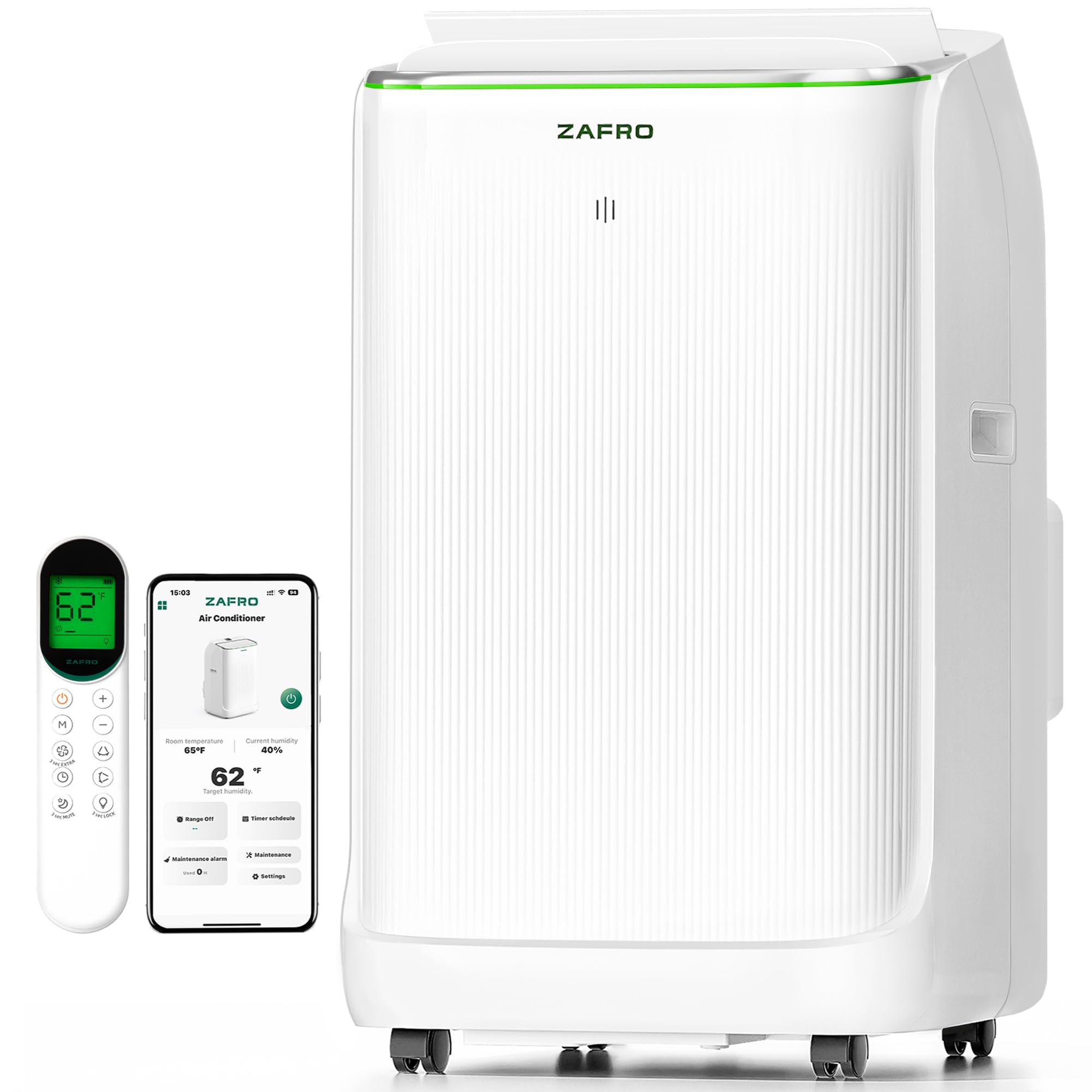
The ZAFRO Smart Inverter packs 16,000 BTU ASHRAE (12,000 BTU SACC) into a dual-hose design with a CEER rating of 12.8 — well above the average 7.83. For a basement, the 72-hour drainage-free system is a major advantage: the self-evaporating condensate system handles humidity up to 90%, meaning you can set it and forget it for days at a time.
Noise output drops to 42dB in sleep mode, which is genuinely quiet enough for a basement bedroom or home office. The six operating modes — Cool, Dry, Fan, Sleep, Extra, and Eco — give you precise control over how the unit handles different conditions. The Extra mode locks the temperature at 61°F for rapid cooling during a heatwave.
The smart app control is well-designed, allowing you to set schedules, monitor energy usage, and adjust oscillation. The four-way swing directs airflow both vertically and horizontally, which helps eliminate hot spots in irregularly shaped basements. The only downside is the window panel is somewhat thin, so careful sealing with the included foam is necessary to prevent air leaks.
Why it’s great
- 72-hour drainage-free operation in most humidity levels
- CEER 12.8 for excellent energy efficiency
- Four-way swing for even basement coverage
Good to know
- Window sealing panel can feel thin
- App setup may need troubleshooting
4. Gasbye Dual Hose 14,000 BTU
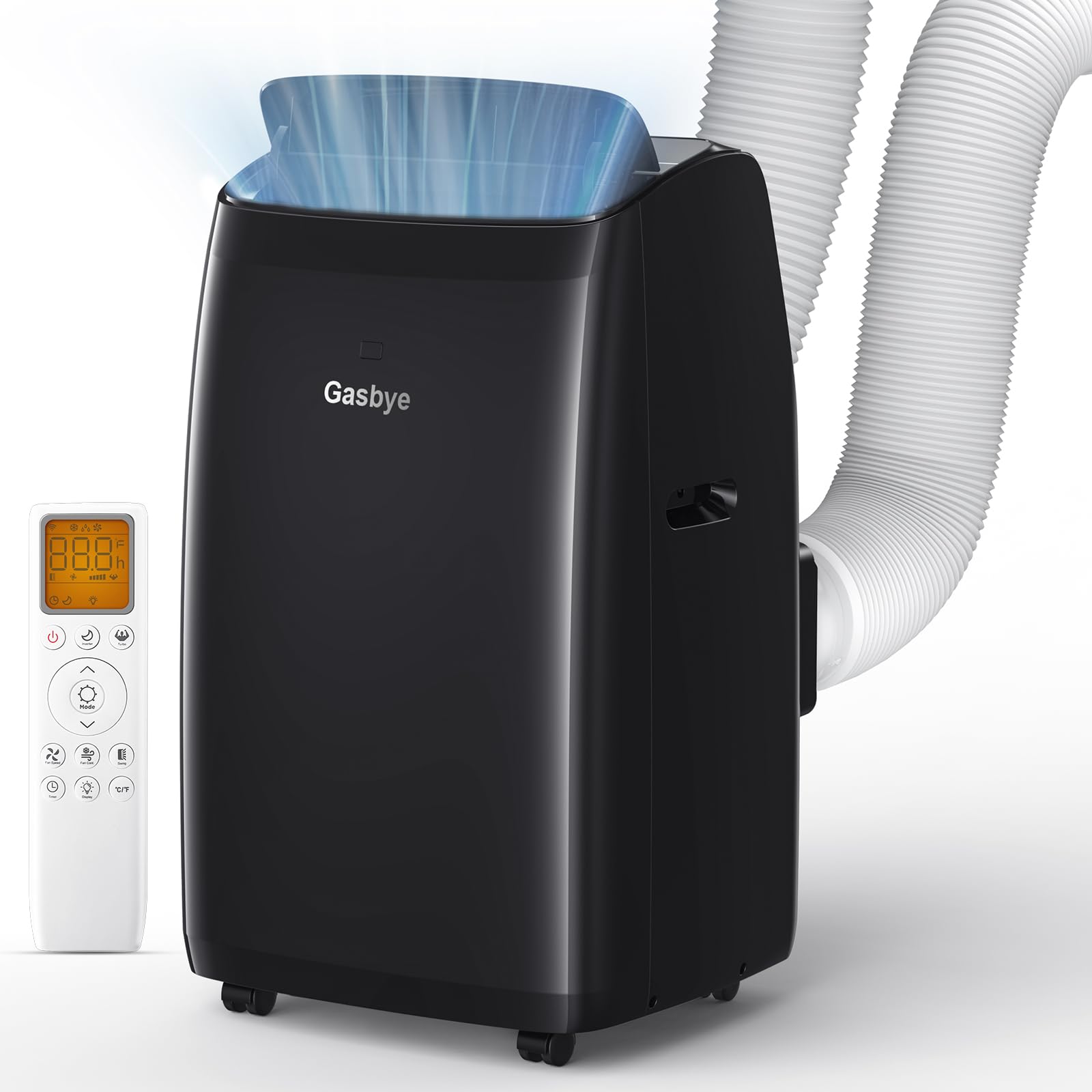
The Gasbye unit boasts the highest CEER rating on this list at 13.6, verified by the DOE. Its Full DC Inverter compressor adjusts power from 500-800 watts in inverter mode up to 1,300 watts in turbo, meaning it sips electricity when the basement is already cool and ramps up only when needed. This is a true 14,000 BTU ASHRAE unit with a 10,500 BTU SACC rating, designed to cool up to 500 square feet efficiently.
The dual-hose system prevents negative pressure, and the noise level drops to around 45dB in inverter mode. For basement use, the backlit remote control and display-off feature are thoughtful touches for dark environments. The three-year warranty with free replacement or refund is among the best in the industry, and customer reviews consistently praise the responsive support team.
One important quirk: the thermostat sensor is located near the hot compressor discharge line, which can cause the unit to overcool by a few degrees. Users report a simple fix using a small piece of foil to deflect the heat. Also, the window kit is somewhat flimsy, but the unit’s overall build quality and energy performance make it a top-tier choice for a basement that needs serious efficiency.
Why it’s great
- Highest CEER (13.6) for maximum energy savings
- Full DC inverter with turbo and eco modes
- Three-year warranty with responsive support
Good to know
- Thermostat can overcool by ~4°F
- Window panel kit feels less robust
5. YLEOOB 16,000 BTU Smart AC
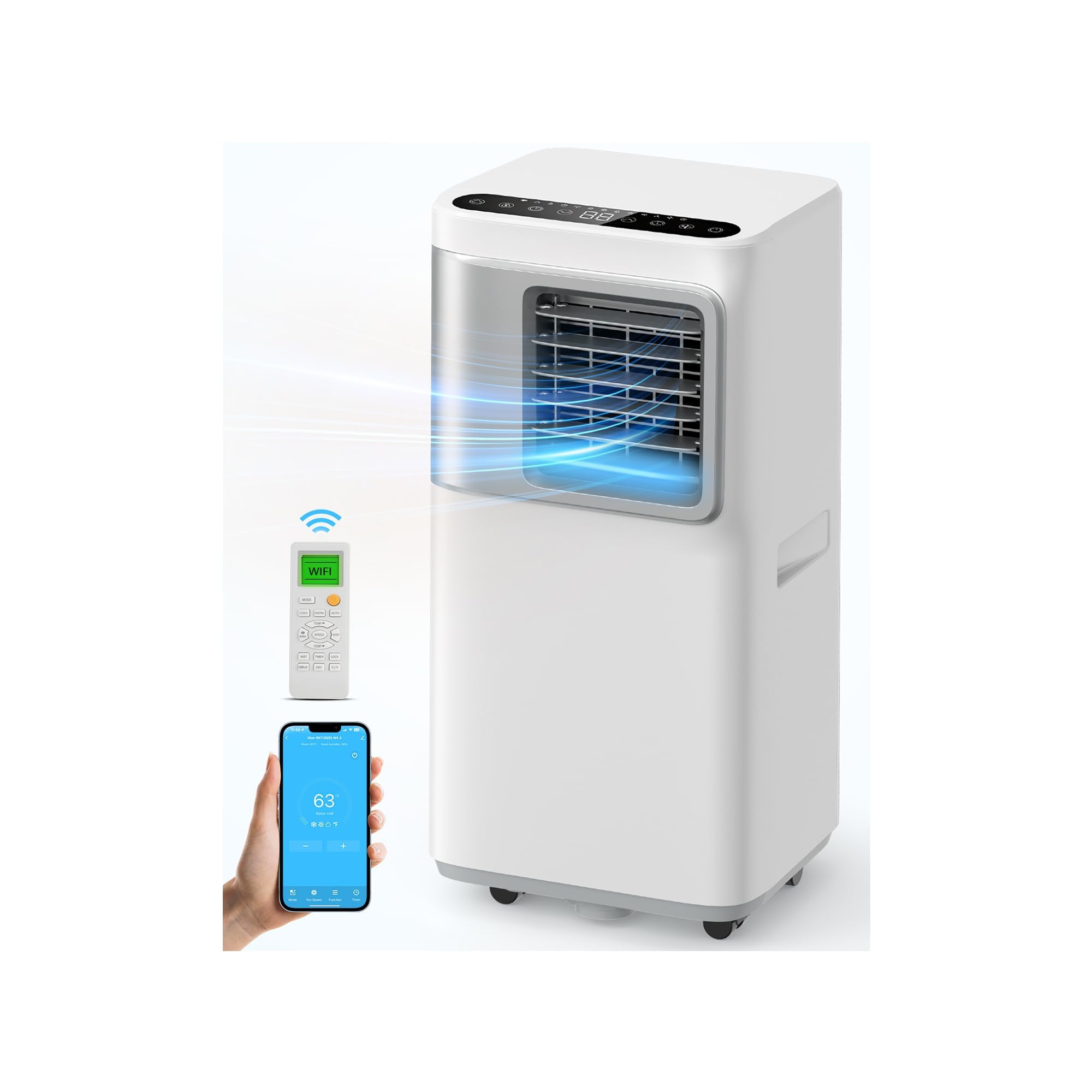
The YLEOOB offers a strong 16,000 BTU ASHRAE rating with a stated coverage of up to 750 square feet. In a basement, this single-hose unit will cool a generous area quickly, and the self-evaporation system eliminates the need for frequent draining in normal conditions. The noise level drops below 42dB in sleep mode, which is quiet enough for a basement guest room.
WiFi app control allows you to program 24/7 schedules and switch between cooling, fan, and sleep modes from your phone. The 5-in-1 design includes a dehumidifier, fan, and intelligent sleep mode that adjusts temperature automatically throughout the night. The large LED display is easy to read even from across the room.
The single-hose design is the main limitation here — it can create negative pressure in a sealed basement, drawing warm air in through cracks. However, for a partially finished basement that already has some air exchange, this unit provides excellent value. The included window kit is versatile and easy to install, making it a solid choice for renters who need a quick setup.
Why it’s great
- Strong 16,000 BTU for large basement coverage
- Quiet 42dB sleep mode
- Intuitive WiFi app with schedule programming
Good to know
- Single-hose creates negative pressure
- Self-evaporation may struggle in extreme humidity
6. CKEARO 16,000 BTU Smart AC
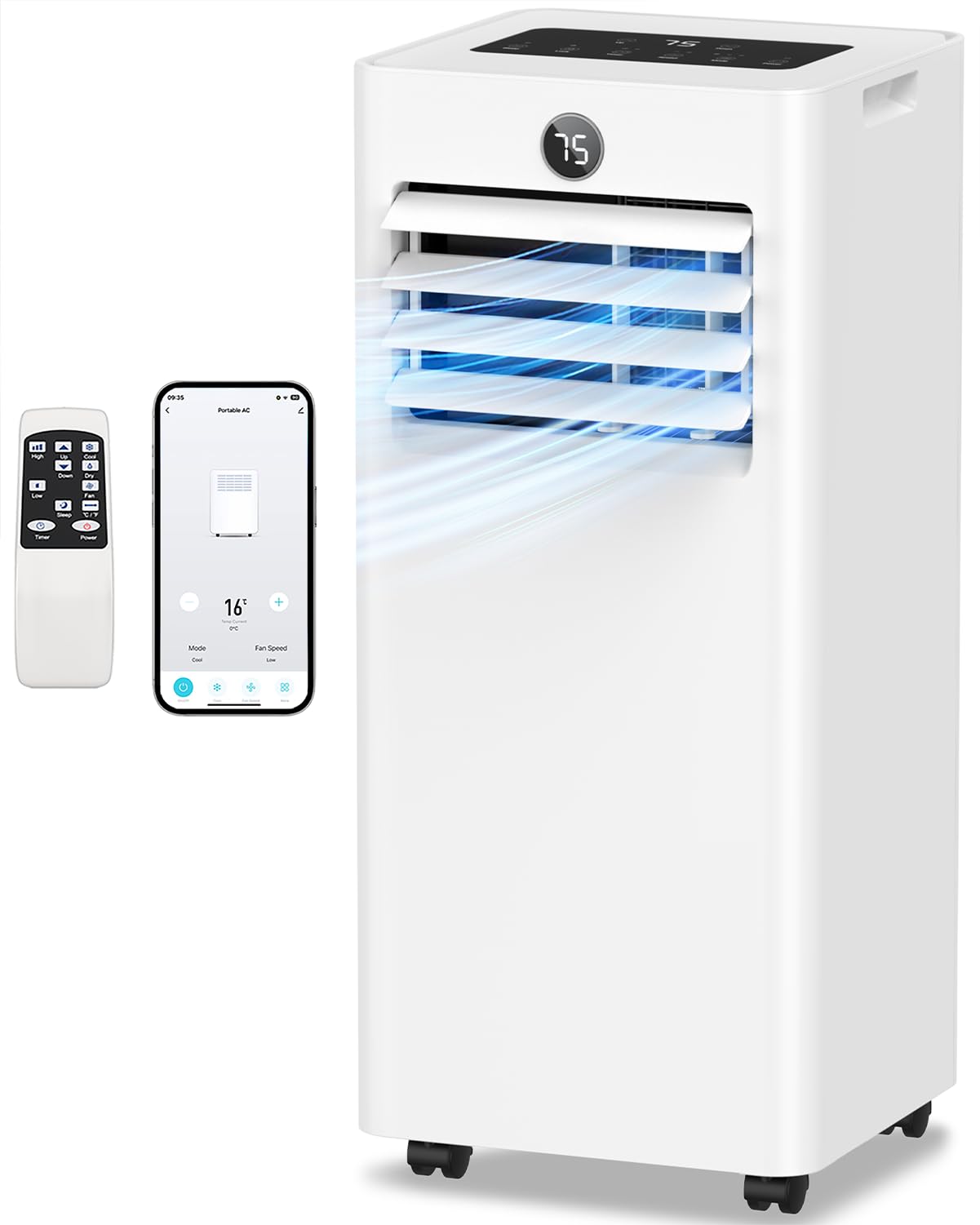
The CKEARO 16K Smart AC uses an electronic expansion valve and a high-efficiency compressor controlled by an intelligent algorithm to reduce energy consumption by 40% compared to traditional units. For a basement that runs the AC for long hours, this translates to noticeable savings on your electric bill. The unit cools up to 750 square feet and operates as low as 36dB in sleep mode — quieter than a library.
The 5-in-1 design covers cooling, dehumidification, fan, sleep, and a 24-hour timer. WiFi and app control are supported, as well as voice control through Alexa and Google Assistant. The unit features a built-in self-evaporation system, but you’ll need to connect a drain pipe in high-humidity basements (above 60% RH) for continuous operation.
Customers report that this unit is significantly quieter than well-known brand names, and the fast cooling performance is consistent. The seven color temperature LED display and child lock are nice extras. The main drawback is the single-hose exhaust, which, like the YLEOOB, can cause negative pressure. Still, for a mid-range price point, the CKEARO delivers strong performance and exceptional energy efficiency.
Why it’s great
- 40% energy reduction with electronic expansion valve
- Very quiet 36dB sleep mode
- Alexa and Google Assistant compatible
Good to know
- Single-hose design creates negative pressure
- Manual draining needed above 60% humidity
7. Augsmile 16,000 BTU Smart AC
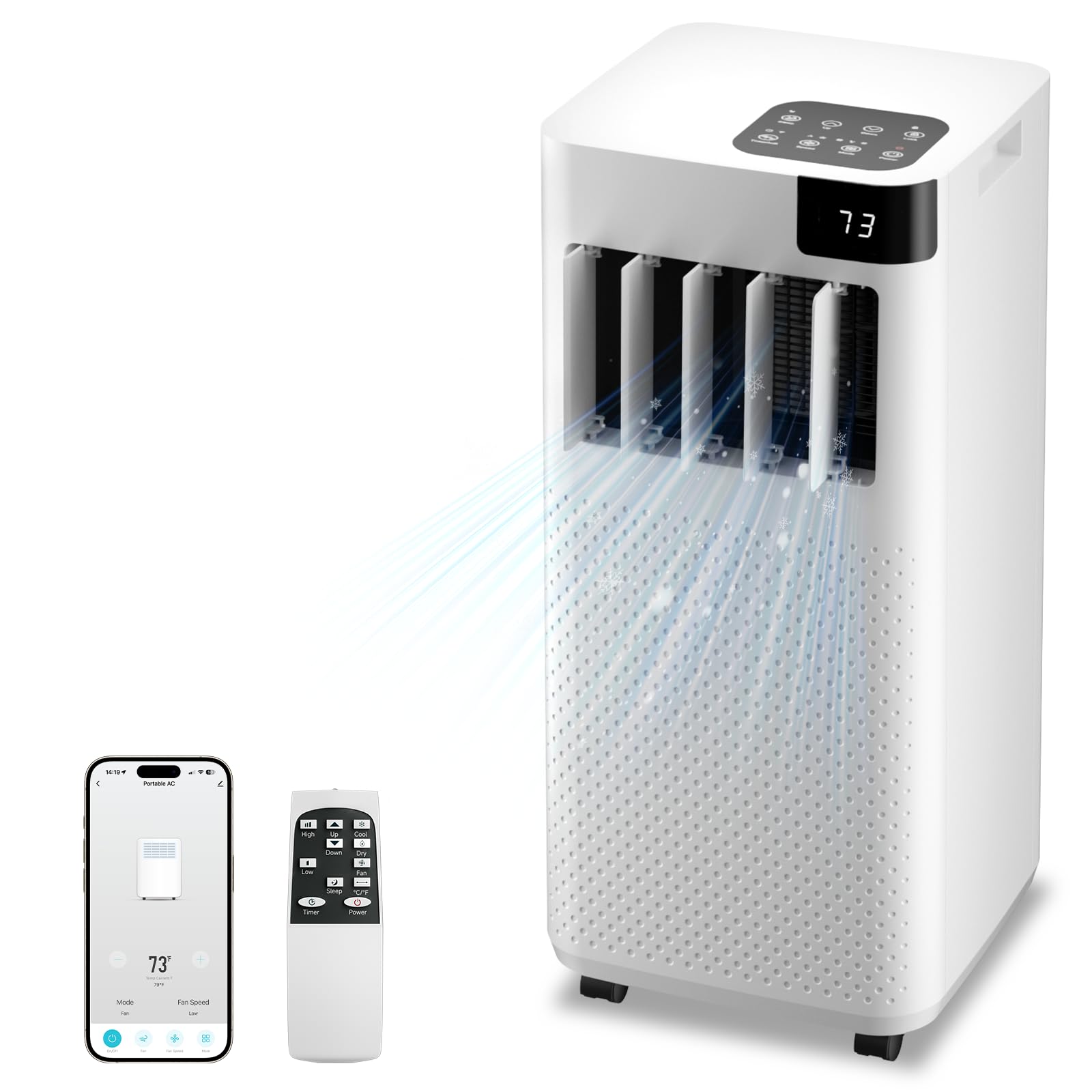
The Augsmile 16K unit stands out with its leak-proof construction, a feature that matters in a basement where water damage is a real concern. The stable structure is designed to prevent water leakage, and the included window kit supports a tool-free 10-minute setup. With 16,000 BTU ASHRAE and coverage up to 850 square feet, this is one of the highest-coverage units in this roundup.
The 5-in-1 modes include powerful cooling, effective dehumidifier, three-speed fan, sleep mode with automatic LED display shutoff, and a 24-hour timer. The noise-reduction compressor keeps operation at 40dB in sleep mode. Smart WiFi control through the mobile app lets you adjust temperature and fan speed remotely, and the remote control includes a full range of functions.
The single-hose design is the standard compromise, but the leak-proof engineering is a genuine differentiator for basement use. The unit moves easily on smooth-rolling casters with side handles. The primary downside is the annual energy consumption is listed at 1,158 kWh, which is higher than some competitors, so it may not be the most efficient choice for all-day operation.
Why it’s great
- Leak-proof structure ideal for basements
- Covers up to 850 sq ft — highest coverage
- Tool-free setup with versatile window kit
Good to know
- Higher annual energy consumption (1,158 kWh)
- Single-hose design can create negative pressure
8. KAMLAM 14,000 BTU Portable AC
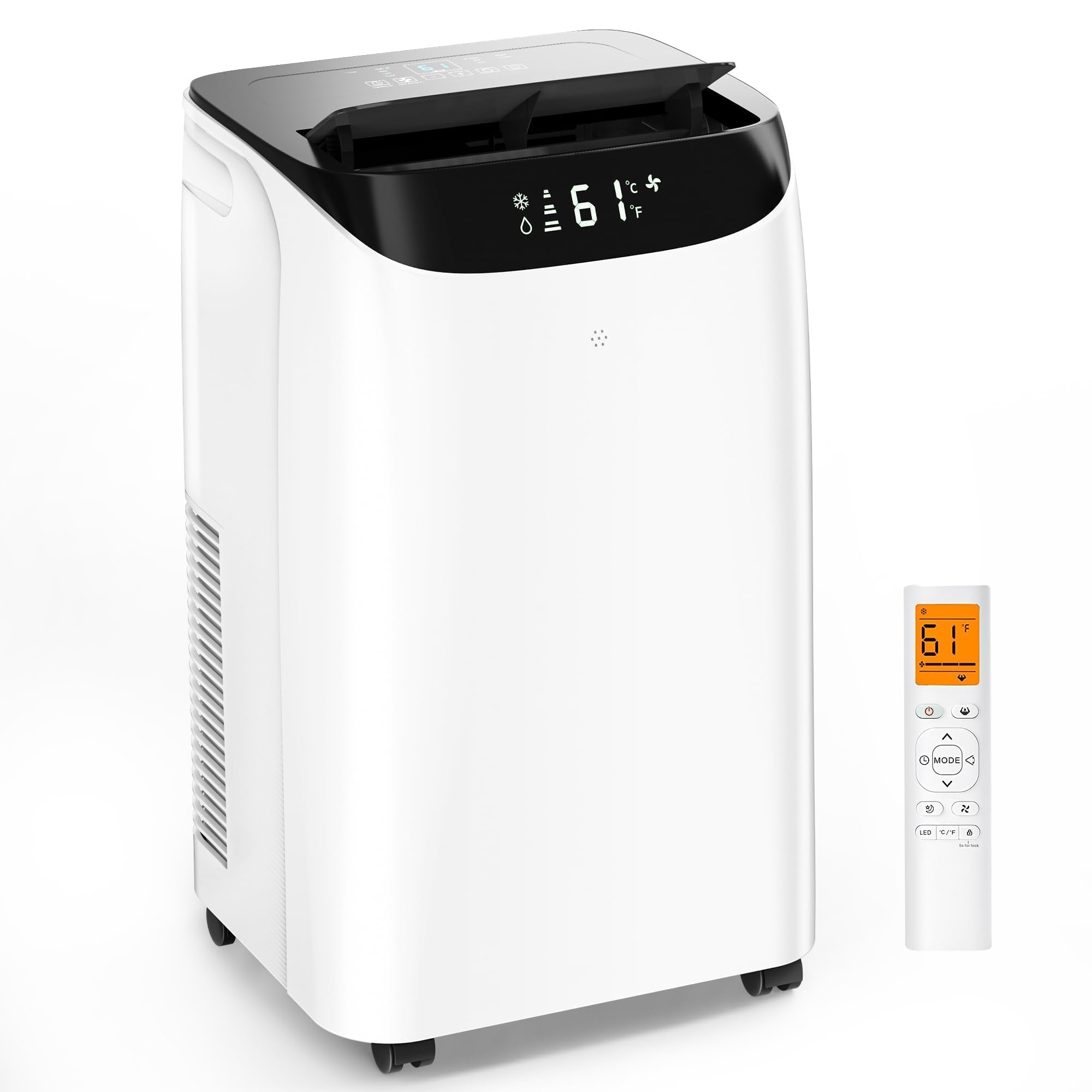
The KAMLAM 14K unit offers a 95-pint-per-day dehumidification capacity, the highest on this list, which makes it exceptionally effective at pulling moisture from a damp basement. The 14,000 BTU ASHRAE rating (10,000 BTU SACC) covers up to 700 square feet, and the 3-in-1 design includes cooling, fan, and dehumidifying modes with an auto mode for convenience.
Sleep mode drops the noise to 48dB, and the 24-hour timer with 0.5-hour increments allows fine-grained scheduling. The self-evaporation system handles most moisture, though in very humid basements you’ll need to attach a garden hose to the drain port every 8 hours. The LED display and remote control are straightforward and easy to use.
The main concern with this unit is reliability — a small number of reviews report compressor failure after a year of use. That said, for a budget-friendly entry point with high dehumidification, it is a strong contender. The window kit installs in about 10 minutes without tools, and the portable form factor makes it easy to move between rooms.
Why it’s great
- Highest dehumidification at 95 pints per day
- Quick 10-minute tool-free installation
- Affordable entry point for basement cooling
Good to know
- Some reports of compressor failure after one season
- Manual draining needed in very humid conditions
9. YITAHOME 24,000 BTU Mini Split
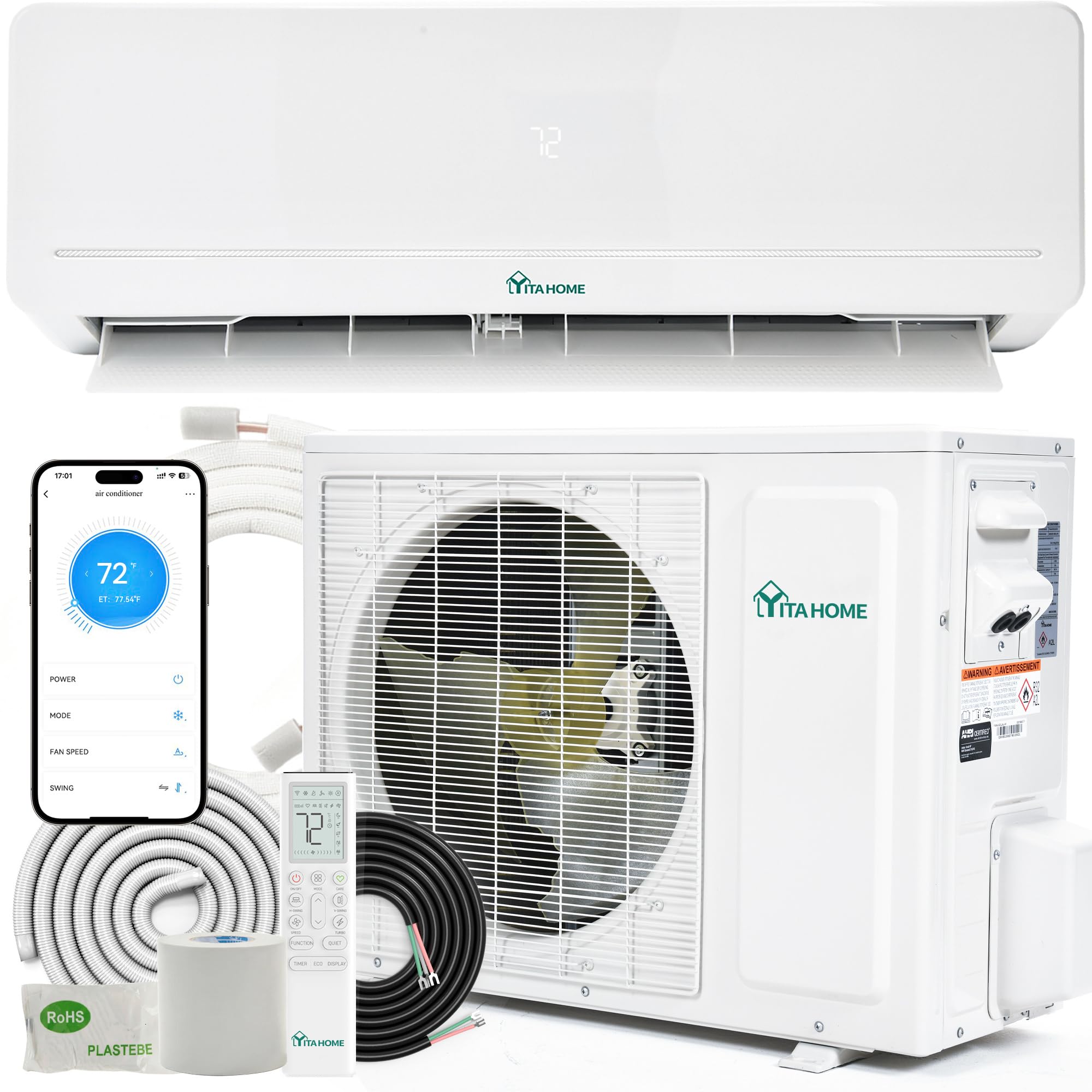
The YITAHOME 24K mini split is not a portable unit — it is a permanent ductless system that requires professional installation. For a basement that you plan to finish and use as a living space, this is the ultimate solution. With 24,000 BTU of cooling capacity and coverage up to 1,500 square feet, it will handle the largest basements with ease. The 20 SEER2 rating is exceptionally high, translating to massive energy savings over time.
The 7-in-1 system includes auto, cool, heat, dry, sleep, ECO, and fan modes, plus iFeel, negative ion air purification, PM2.5 removal, and 4D auto swing. Sleep mode drops to just 25dB — essentially silent — which is perfect for a basement bedroom. The WiFi connectivity allows full control via app and voice with Alexa and Google Home.
The downside is the complexity: installation requires a licensed HVAC technician, a vacuum pump, and manifold gauges. The refrigerant system is pre-charged and not user-serviceable. Some users report that the blower may not shut off at the set temperature, causing overcooling. But for a permanent, whole-basement climate system, the YITAHOME mini split offers the best performance-per-dollar of any option here.
Why it’s great
- Massive 24,000 BTU for whole-basement coverage
- 20 SEER2 rating for maximum energy efficiency
- Whisper-quiet 25dB sleep mode
Good to know
- Requires professional installation by an HVAC technician
- Blower may not shut off at set temperature
FAQ
Is a single-hose portable AC good enough for a basement?
How often do I need to drain a portable AC in a basement?
Can a mini split be a better choice than a portable AC for a basement?
What size air conditioner do I need for a 500 square foot basement?
Final Thoughts: The Verdict
For most users, the best air conditioner for basement conditions is the Whynter ARC-1230WN because it combines a robust dual-hose design, inverter compressor, and class-leading 87-pint dehumidification in a proven package. If you want year-round temperature control with a heat pump, grab the Midea Duo. And for a permanent, whole-basement climate solution with professional installation, nothing beats the YITAHOME 24K Mini Split.

Mo Maruf
I created WellFizz to bridge the gap between vague wellness advice and actionable solutions. My mission is simple: to decode the research and give you practical tools you can actually use.
Beyond the data, I am a passionate traveler. I believe that stepping away from the screen to explore new environments is essential for mental clarity and physical vitality.