Our readers keep the lights on and my smoothie glass nicely filled. As an Amazon Associate, I earn from qualifying purchases.
African violets have a reputation for being fussy, but the real problem is almost always the pot. Standard planters trap moisture around the crown and leaves, inviting rot and fungal issues that turn a thriving violet into a drooping mess. The right container changes everything.
I’m Mohammad Maruf — the founder and writer behind WellFizz. I’ve spent years analyzing market trends, reading thousands of user reports, and comparing the hardware specs of small-scale gardening accessories to separate genuine solutions from marketing fluff.
Whether you’re a seasoned hobbyist or buying your first violet, the best african violet pots share a common thread: they manage water delivery precisely, protecting sensitive crowns and roots from the two biggest killers—overwatering and poor aeration.
How To Choose The Best African Violet Pots
Picking the right pot for your African violet boils down to three things: how it delivers water, what it’s made of, and whether the size matches your plant’s growth habit. Ignore any of these and you’re gambling with root health.
Self-Watering vs. Wick vs. Ceramic Absorption
African violets need consistent moisture at the roots but absolutely hate wet leaves and soggy soil. Self-watering pots either use a wick to pull water upward or a porous ceramic wall that lets moisture seep through. Wick-based systems are cheaper and easier to refill, while ceramic absorption provides a more gradual, natural hydration curve. Both outperform top-watering in standard pots because they keep the crown dry.
Material: Plastic vs. Ceramic
Plastic pots are lightweight, stackable, and inexpensive, but they don’t breathe. Ceramic pots, especially unglazed terracotta or dolomite, allow air exchange through the walls, which helps prevent soil compaction and root suffocation. For African violets, ceramic is generally superior for long-term health, though plastic works fine if the drainage and wicking are well-designed.
Size and Crown Clearance
A common mistake is planting violets in pots that are too large. The root system of an African violet is shallow and compact. A pot that’s 4 to 6 inches in diameter is usually ideal, with the crown sitting slightly above the soil line. Oversized pots hold too much wet soil, which leads to root rot regardless of the watering method.
Quick Comparison
On smaller screens, swipe sideways to see the full table.
| Model | Category | Best For | Key Spec | Amazon |
|---|---|---|---|---|
| BUYMAX 6″ Ceramic | Ceramic | Low-maintenance beauty | Dolomite clay self-watering | Amazon |
| Dphagesy 6″ Blue Ceramic | Ceramic | Precision moisture control | Unglazed inner pot absorption | Amazon |
| zople 5″ 5-Pack White | Plastic | Multi-plant household use | 176-hole drainage system | Amazon |
| KvyusFlourish 5″ Rose Gold | Plastic | Budget wick-system starter | Transparent inner pot + wick | Amazon |
| T4U 4″ Translucent Green | Plastic | Compact cuttings and small violets | Cotton rope wick system | Amazon |
In‑Depth Reviews
1. BUYMAX 6 Inch Ceramic Self-Watering Pot

The BUYMAX pot flips the self-watering concept on its head. Instead of plastic reservoirs and wicks, it uses a dual-ceramic construction: a porous dolomite inner pot that wicks moisture directly through its walls and a glazed outer shell that holds the water. This design means the entire surface of the inner pot acts as a wick, delivering hydration evenly across the root ball without any cotton rope that can shift or degrade.
At 5.7 inches square, it’s a compact footprint that fits well on a windowsill or desk, yet the ceramic weight (1.9 pounds) gives it a sturdy, premium feel. The inner pot can be removed and used as a standalone planter, adding versatility. Users report that African violets thrive with bi-weekly refills and that the unglazed interior prevents the “damp top” issue that plagues plastic pots.
One minor concern reported by a few buyers is a possible hairline crack in the glaze after the first rinse, though no leaks have been confirmed in long-term use. Overall, this pot delivers the classiest look and the most natural hydration curve of any option here.
Why it’s great
- Porous ceramic provides even, gentle moisture to roots
- Elegant pumpkin-style design fits any decor
- Inner pot doubles as a standalone planter
Good to know
- Glaze may show minor cracks after first wash
- Heavier than plastic alternatives
2. Dphagesy 6 Inch Blue Ceramic Self-Watering Pot

This pot from Dphagesy takes a more traditional approach to ceramic self-watering: an unglazed inner pot (5.1-inch opening) sits inside a glazed outer reservoir (6-inch diameter). The inner pot’s raw clay surface absorbs water and passes it to the soil gradually, while the glazed outer pot prevents leakage onto furniture. The recommended fill is 400ml, with a hard limit of 500ml to avoid overflow.
Users consistently praise the way this pot stabilizes moisture for sensitive plants like Maiden Fern and African violets. The bi-weekly refill schedule works well for most climates, though owners in very dry areas (like Arizona) report needing weekly top-ups. The classic blue finish is attractive enough to double as a gift, and the packaging is secure.
The primary limitation is size availability — currently only sold in the 6-inch variant, which may be too large for starter violets or small leaf cuttings. Cleaning the outer pot every two months is recommended to prevent mineral buildup.
Why it’s great
- Unglazed clay provides slow, breathable moisture transfer
- Bi-weekly refill schedule fits a busy lifestyle
- Attractive colors make it gift-ready
Good to know
- Only available in 6-inch diameter
- Requires periodic outer pot cleaning
3. zople 5 Inch 5-Pack Self-Watering Pots
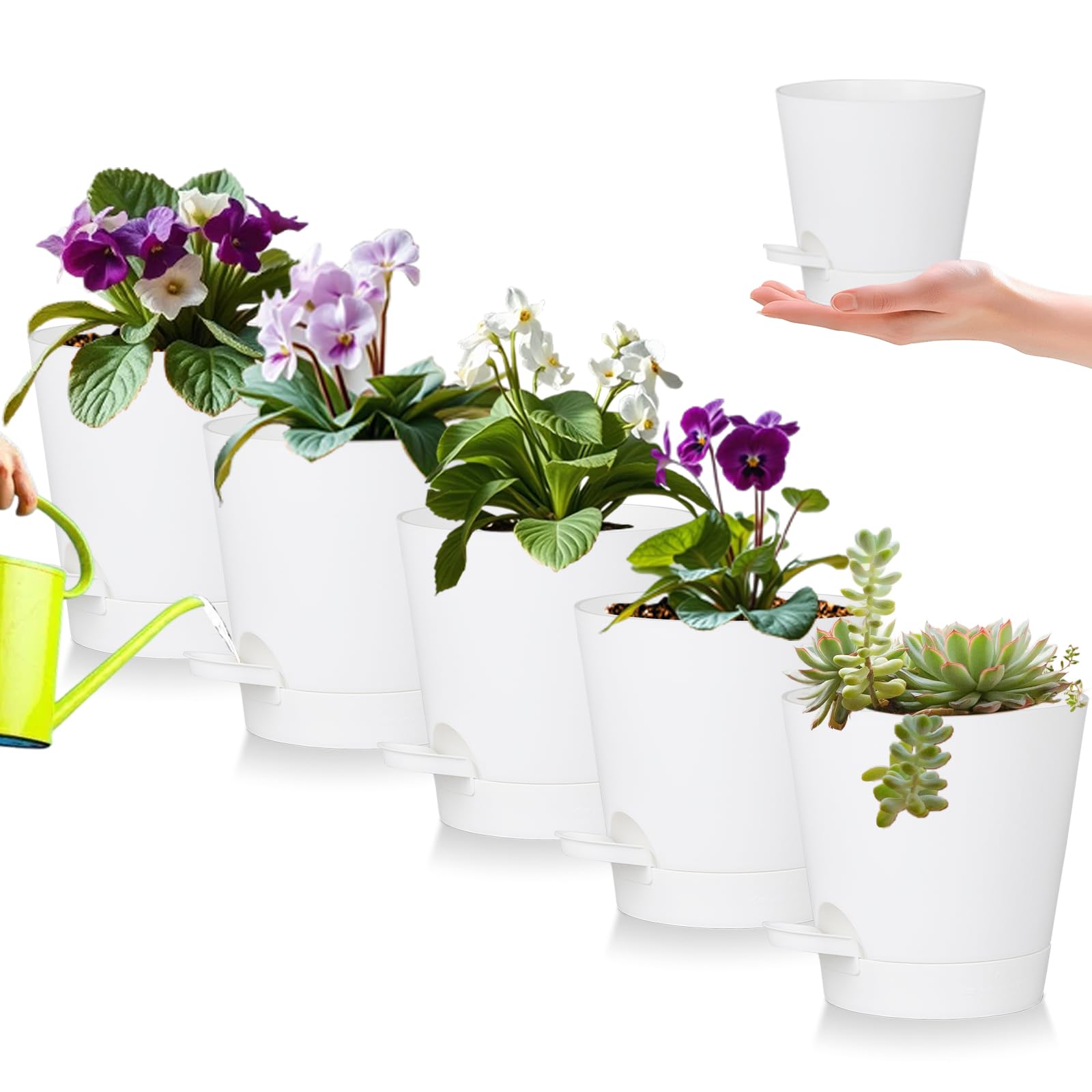
The zople 5-pack is a no-nonsense solution for anyone managing multiple African violets. Each pot is a 5-inch square planter made of high-quality polypropylene with 3mm-thick side walls — noticeably sturdier than the flimsy plastic many budget pots use. The standout feature is the bottom drainage system: a grid of 176 small holes that prevent water from pooling, paired with a reservoir tray that collects overflow for bottom watering.
This pot works well for both wick-style bottom watering and top watering, since the dense hole pattern lets excess water drain quickly while keeping soil in place. The matte white finish is clean and minimalistic. Several users noted that their African violets have “never looked better” after switching to these pots.
The only real trade-off is that the reservoir is relatively shallow — if the pot is tipped slightly during handling, water can spill out. For stationary desktop or shelf use, this is rarely an issue.
Why it’s great
- 176-hole bottom grid maximizes aeration and drainage
- Thick 3mm walls prevent cracking and warping
- Versatile for both top and bottom watering methods
Good to know
- Reservoir can spill if pot is tipped
- Plastic material does not breathe like ceramic
4. KvyusFlourish 5 Inch Self-Watering Pots (6-Pack)
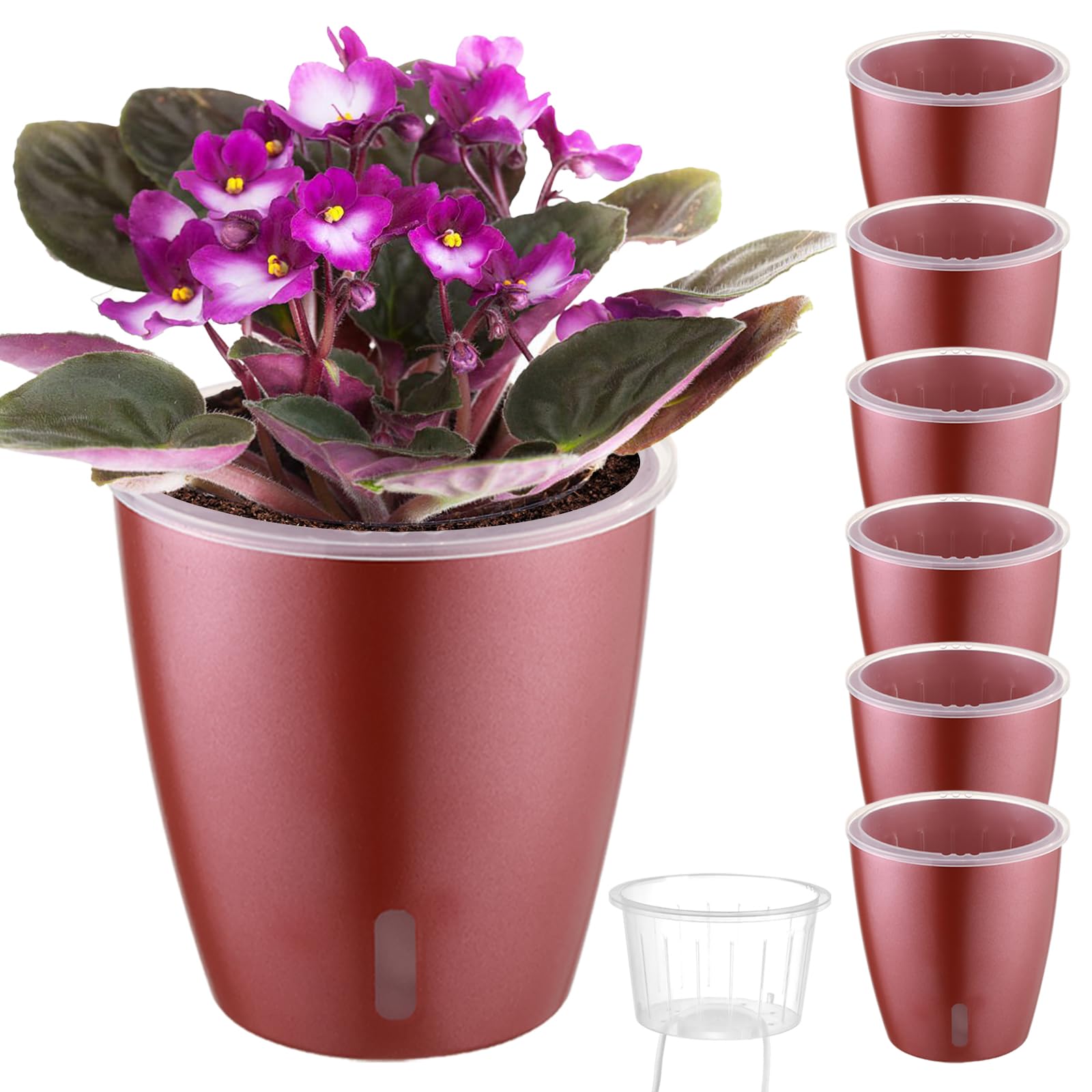
This 6-pack from KvyusFlourish is a classic wick-based plastic system. Each 5-inch pot comes with a transparent inner pot that has a slit-sided design to promote root aeration, a cotton wick that draws water from the reservoir below, and a clear water-level window on the outer pot. The clear inner pot is a thoughtful addition — you can check root health and soil moisture without disturbing the plant.
Users report that the wick keeps soil perfectly moist for African violets and Hoyas, and the water indicator takes the guesswork out of refills. The thin plastic construction is lightweight but feels less durable than the zople alternatives. A few customers noted that the wick can shift out of place during handling, requiring occasional repositioning.
Available in multiple colors including rose gold, black, white, and grey, these pots are a budget-friendly way to try self-watering without a major investment. They work best for violets that are already established rather than tiny leaf propagations.
Why it’s great
- Transparent inner pot lets you inspect root growth
- Clear water level window removes watering guesswork
- Slit-side walls improve air circulation around roots
Good to know
- Thin plastic feels less sturdy than thicker alternatives
- Wick may need occasional repositioning
5. T4U 4 Inch Self-Watering Pots (4-Pack)
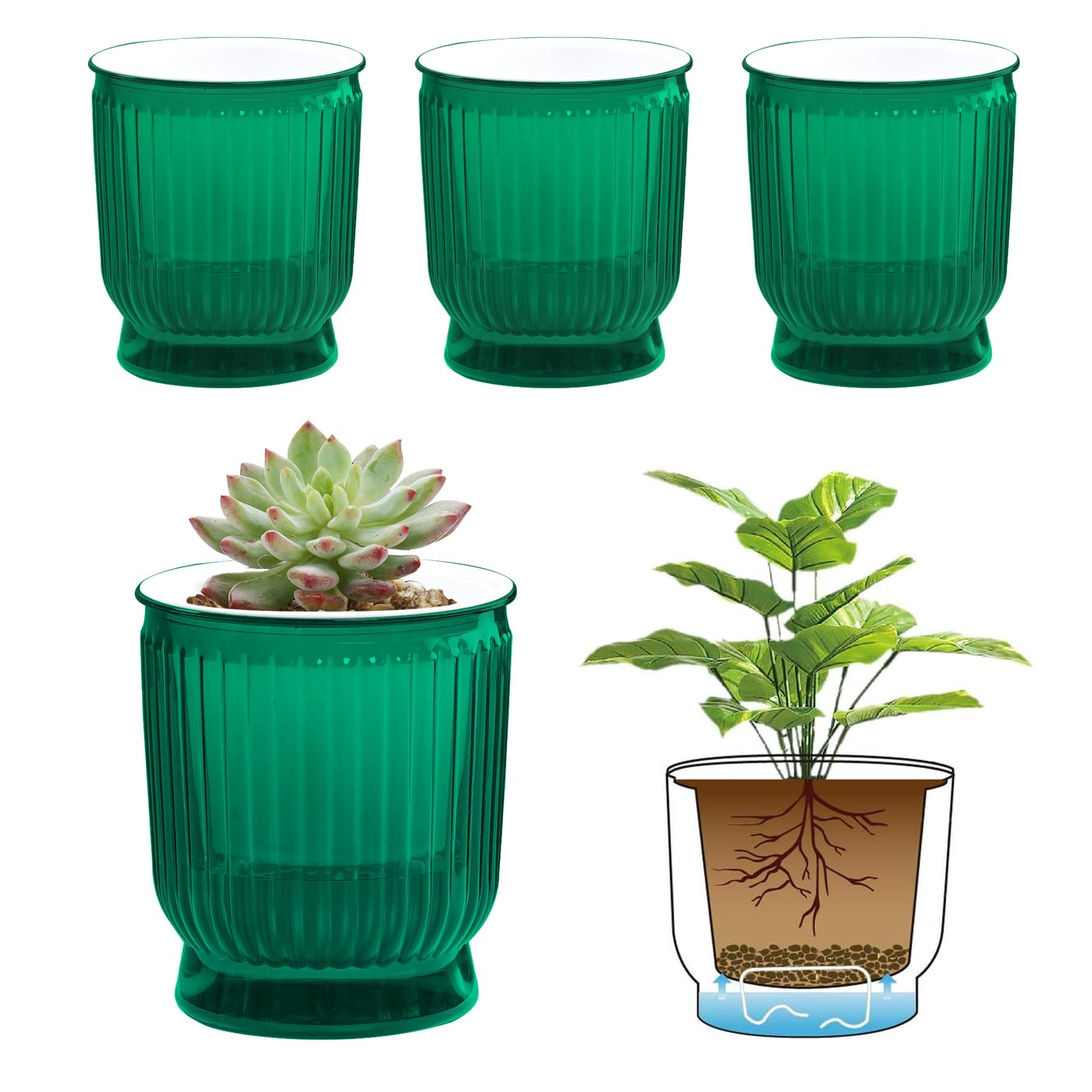
The T4U 4-inch pots are designed for smaller plants and leaf cuttings. Each pot uses a cotton rope wick system housed in a translucent green outer pot that acts as both reservoir and water-level indicator. The double-layer design stores excess water at the bottom, releasing it gradually through the wick. The manufacturer states it keeps plants hydrated for 7 to 10 days between refills.
Customers appreciate the compact size for starter violets and small succulents. The clear outer pot makes it easy to see when refills are needed, though some users wish the inner cup was opaque white to hide any accumulated sediment. The gray tint version is noted to be particularly effective at reducing algae growth in the reservoir.
At 4.25 inches square, these pots are ideal for windowsills with limited space or for building a collection of small violets. The lightweight plastic construction (0.4 kg per set) makes them easy to move around, but they are not designed for heavy or tall plants that could tip them over.
Why it’s great
- Compact size perfect for small violets and cuttings
- 7–10 day hydration cycle between refills
- Clear outer wall shows exact water level
Good to know
- Not stable enough for top-heavy plants
- Inner cup shows through slightly translucent outer pot
FAQ
How often should I refill a self-watering African violet pot?
Can I use African violet pots for other houseplants?
Do ceramic self-watering pots crack in winter?
Why does my African violet have brown spots on its leaves?
Final Thoughts: The Verdict
For most users, the best african violet pots winner is the BUYMAX 6 Inch Ceramic because it combines elegant design with a genuine ceramic absorption system that keeps roots perfectly moist without guesswork. If you want a multi-pack for your entire collection on a budget, grab the zople 5-Pack. And for precision moisture control with a beautiful unglazed clay inner pot, nothing beats the Dphagesy 6 Inch Blue Pot.

Mo Maruf
I created WellFizz to bridge the gap between vague wellness advice and actionable solutions. My mission is simple: to decode the research and give you practical tools you can actually use.
Beyond the data, I am a passionate traveler. I believe that stepping away from the screen to explore new environments is essential for mental clarity and physical vitality.