Our readers keep the lights on and my smoothie glass nicely filled. As an Amazon Associate, I earn from qualifying purchases.
Tracking an irregular heartbeat like atrial fibrillation (AFib) can feel daunting, but the right monitor can turn uncertainty into clear, actionable information. From fingertip devices to full electrocardiograms, today’s options offer clinical-grade insights right at your fingertips, helping you partner more effectively with your healthcare team.
I’m Mohammad Maruf — the founder and writer behind WellFizz. My work involves deep market research, analyzing thousands of data points and technical specifications to separate marketing hype from genuine value in the wellness tech space.
Our guide cuts through the clutter, comparing core functionality, accuracy, and ease of use to help you choose a tool that fits your life and health needs. We’ve sorted through the data to pinpoint the most reliable devices for managing heart rhythm concerns, helping you find the best afib monitor for your peace of mind.
How To Choose The Best Afib Monitor
Selecting a heart monitor isn’t one-size-fits-all. The right choice depends on whether you need basic heart rate alerts, detailed rhythm analysis, or something in between. Understanding these core distinctions will guide you to a tool you can trust.
Detection Method: Rhythm vs. Rate
This is the most important distinction. A pulse oximeter or fitness tracker measures your heart rate (beats per minute) and may flag an irregular pulse. An EKG device, like the KardiaMobile, records your heart’s electrical rhythm, providing a waveform graph a doctor can interpret. For confirming AFib, an EKG is the clinical gold standard.
Clinical Validation & FDA Clearance
Look for terms like “FDA-cleared” or “clinically validated.” This means the device has undergone rigorous testing to prove its accuracy for specific medical purposes, such as detecting AFib. Many blood pressure monitors and all personal EKGs on this list have this clearance. Fitness bands and smartwatches generally do not.
Data Usability and Connectivity
Consider how you’ll use the data. Basic devices show a reading on a screen. More advanced ones connect to smartphone apps to store trends, generate reports, and email results directly to your doctor. This longitudinal data is invaluable for managing a chronic condition like AFib.
Portability and Ease of Use
The best monitor is the one you’ll actually use. If you need to check symptoms on-the-go, a pocket-sized EKG or fingertip oximeter is ideal. For daily trend tracking at home, a blood pressure monitor with a comfortable cuff might be better. Choose a design that fits seamlessly into your routine.
Quick Comparison
On smaller screens, swipe sideways to see the full table.
| Model | Type | Best For | Key Feature | Amazon |
|---|---|---|---|---|
| KardiaMobile 6L | 6-Lead EKG | Clinical-grade rhythm analysis | Six heart views, FDA-cleared | Amazon |
| KardiaMobile 1-Lead | 1-Lead EKG | Basic AFib detection on a budget | Pocket-size, 30-second results | Amazon |
| OMRON Silver BP Monitor | Blood Pressure | Combined BP & irregular heartbeat tracking | Irregular heartbeat detection, app sync | Amazon |
| Innovo iP900BP-B Oximeter | Pulse Oximeter | Tracking SpO2 & pulse with data logging | Bluetooth app, perfusion index | Amazon |
| Polar Verity Sense | Optical HR Band | Accurate heart rate during exercise | Arm-worn, ANT+/Bluetooth | Amazon |
| Zacurate 500C Oximeter | Pulse Oximeter | Reliable spot-check pulse & oxygen | Rotating display, auditory alarms | Amazon |
| Innovo Deluxe iP900AP | Pulse Oximeter | Essential pulse and SpO2 readings | Plethysmograph, long battery | Amazon |
| Yihou Fitness Tracker | Smart Watch | All-day activity & heart rate trends | Multi-function tracker, notifications | Amazon |
| Alcedo Blood Pressure Monitor | Blood Pressure | Entry-level BP monitoring | Talking function, two-user memory | Amazon |
| Atuder Blood Pressure Monitor | Blood Pressure | Budget-friendly BP checks | Large backlight display, carrying case | Amazon |
| ALKOO Heart Monitor Case | Protective Case | Protecting a KardiaMobile device | Shockproof, includes carabiner | Amazon |
In‑Depth Reviews
1. KardiaMobile 6L EKG Monitor
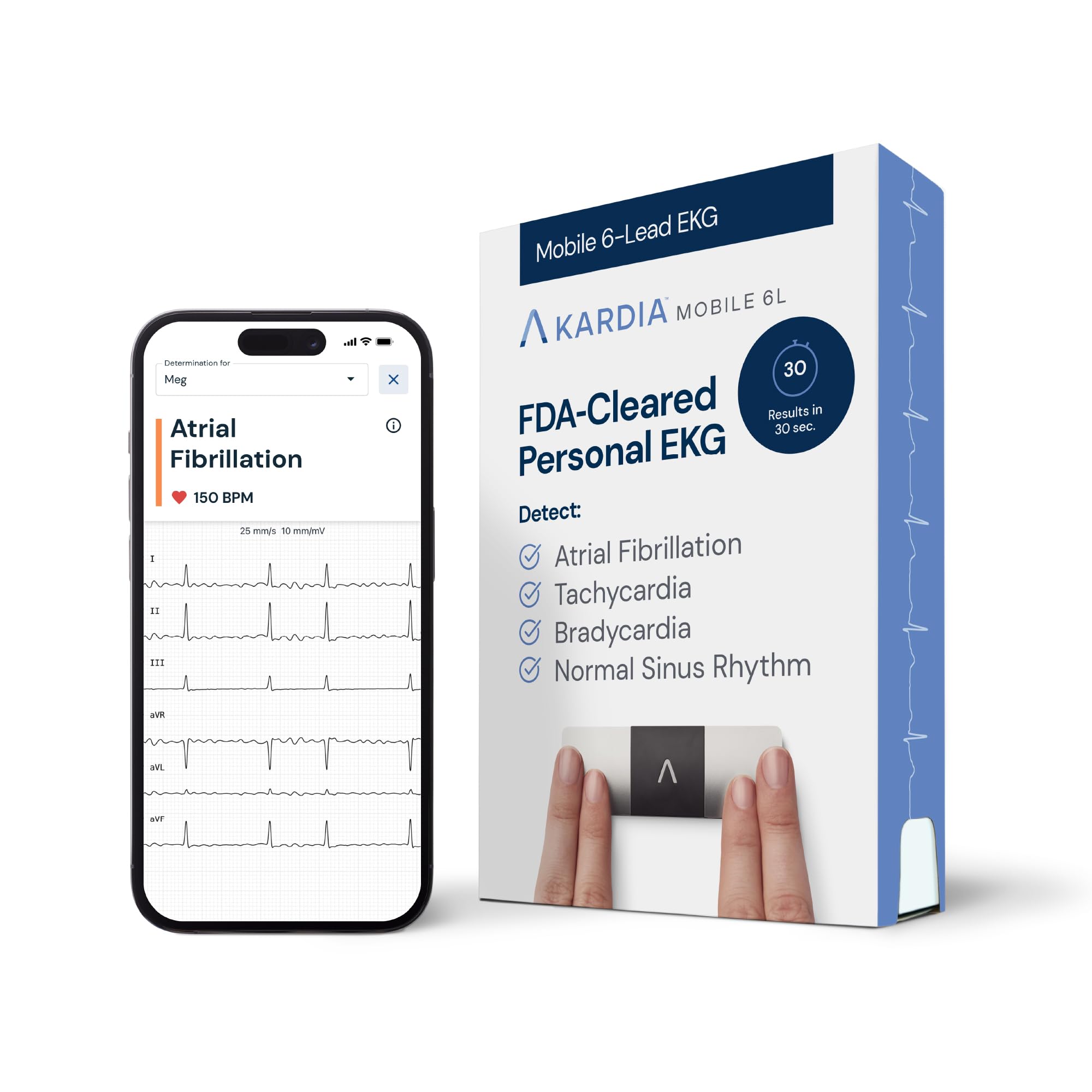
The KardiaMobile 6L stands at the pinnacle of personal heart monitoring by offering a genuine six-lead electrocardiogram. This isn’t just a heart rate check; it captures six different electrical views of your heart, providing a depth of clinical data that is remarkably close to a simplified version of what you’d get in a doctor’s office. For anyone needing to monitor AFib or other arrhythmias seriously, this level of detail is transformative.
Operation is straightforward: you place your fingers on the top electrodes and rest the device against your left leg or knee. In 30 seconds, the free app displays a clear EKG waveform and an automated interpretation (Normal, AFib, Bradycardia, etc.). The ability to instantly email a PDF of the reading to your cardiologist facilitates faster, more informed care decisions, turning episodic symptoms into actionable data.
It’s important to note that while the base app provides core detections, advanced interpretations require a subscription. However, the device itself requires no ongoing fees to capture and share unlimited EKGs. Its premium positioning is justified by its medical-grade output, compact design, and the unparalleled peace of mind it offers to those managing a diagnosed heart rhythm condition.
Why it’s great
- Clinical-grade six-lead EKG data trusted by cardiologists.
- FDA-cleared for detecting AFib and other arrhythmias.
- Extremely portable and easy to use with instant results.
- Unlimited recordings and easy sharing with doctors.
Good to know
- Positioned at the higher end of the market.
- Advanced algorithm features require a paid subscription.
- Not intended for use with some implanted devices like pacemakers.
2. KardiaMobile 1-Lead EKG Monitor
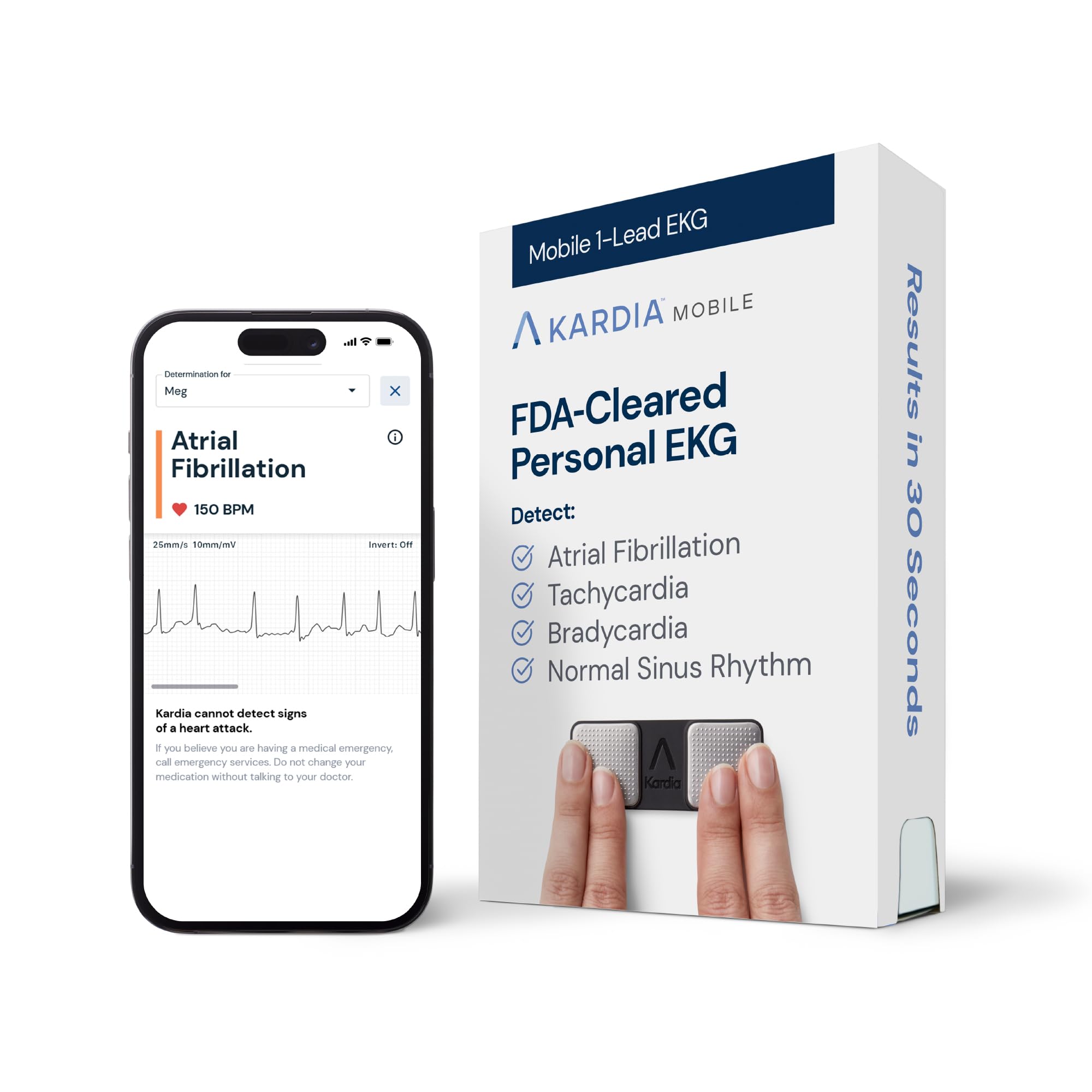
If you’re seeking entry into medical-grade heart rhythm monitoring, the single-lead KardiaMobile is a stellar starting point. It provides the core benefit of a clinically-validated EKG—actual rhythm detection—at a more accessible mid-range point. For individuals who need to check for AFib but don’t require the multi-angle detail of a six-lead, this device delivers essential, reliable information.
Its simplicity is its strength. There are no wires, Bluetooth pairing, or subscriptions required for basic use. You simply open the app, place your fingers on the metal pads, and receive a “Normal” or “Possible AFib” reading in half a minute. The form factor is incredibly slim, easily fitting in a wallet or small pocket, making it perfect for symptom-driven checks wherever you are.
User feedback consistently highlights the profound peace of mind it provides, allowing quick checks during episodes of palpitations or dizziness. While it offers less diagnostic detail than its six-lead sibling, it shares the same robust ability to email recordings to your doctor. This device proves that effective AFib monitoring doesn’t have to be complex or overly burdensome.
Why it’s great
- Authentic, FDA-cleared single-lead EKG for confirmed rhythm checks.
- Extremely simple, no-fuss operation without mandatory Bluetooth.
- Ultra-compact and highly portable for on-the-spot use.
- Provides a direct path to share data with healthcare providers.
Good to know
- Only provides a single view of the heart’s electrical activity.
- The app interface can prompt for subscription upgrades.
- Like all personal EKGs, it does not detect heart attacks.
3. OMRON Silver Blood Pressure Monitor
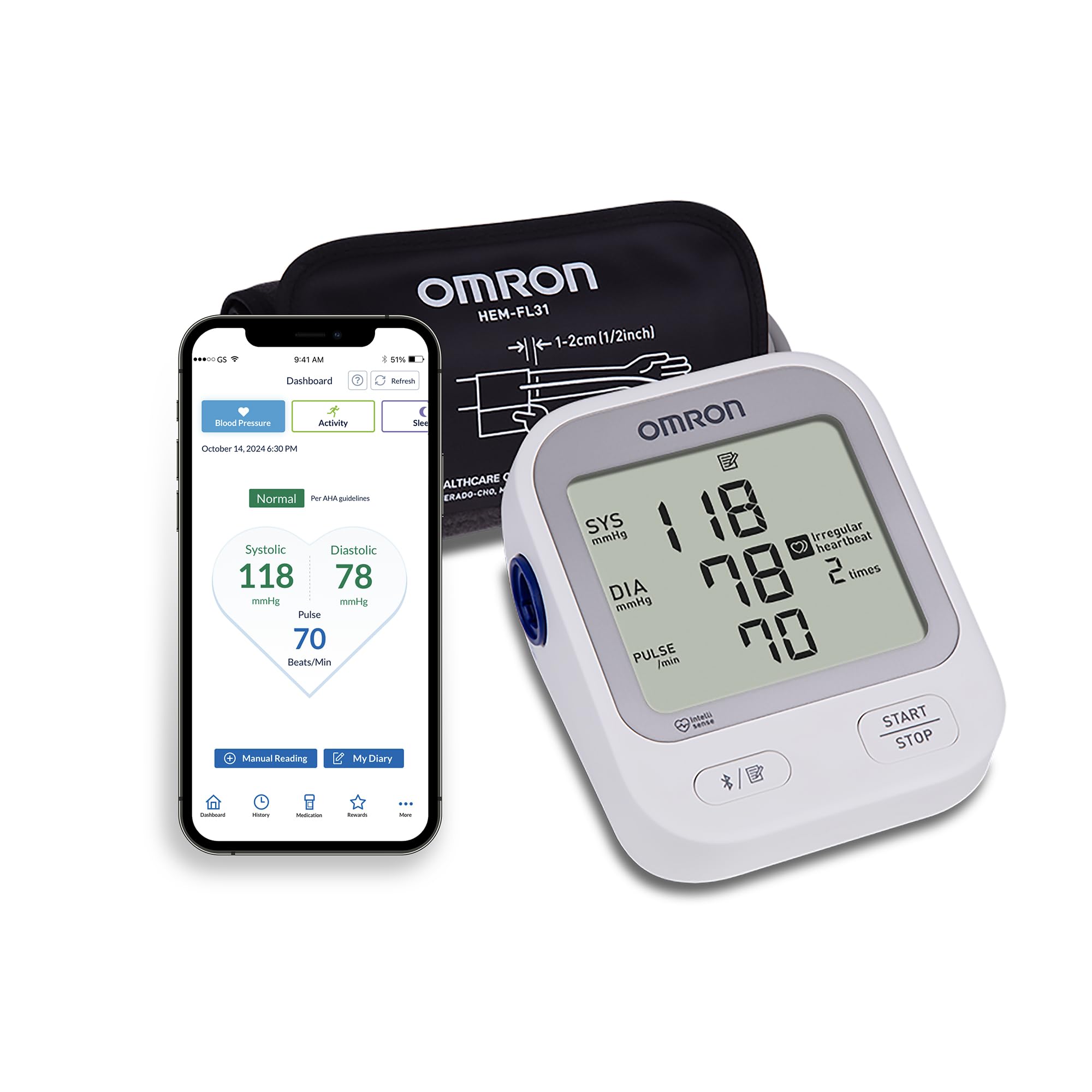
For many, managing AFib goes hand-in-hand with monitoring blood pressure. The OMRON Silver excels as a dual-purpose tool, offering highly accurate blood pressure readings while also screening for irregular heartbeats during the measurement. This makes it an intelligent choice for a comprehensive, daily health snapshot, especially for those with hypertension alongside rhythm concerns.
Its standout feature is the Irregular Heartbeat Detection, which will flag potential rhythm issues right on the display and in the connected OMRON Connect app. Unlike some higher-end models that abort the reading, this one provides both the BP numbers and the alert, giving you more complete information. The Bluetooth connectivity seamlessly syncs unlimited readings to your smartphone, creating easy-to-share trend reports for your physician.
The build quality and ease of use reflect OMRON’s reputation as a leader in home health monitoring. The pre-formed ComFit cuff is genuinely easier to put on correctly by yourself. While it doesn’t provide a diagnostic EKG waveform, its reliable screening function and excellent data management capabilities offer tremendous value for proactive, daily health tracking.
Why it’s great
- Dual-function device for blood pressure and irregular heartbeat screening.
- Trusted brand with clinical validation for accuracy.
- Excellent app for unlimited data storage and trend tracking.
- User-friendly cuff design and clear display.
Good to know
- An alert is a screening tool, not a diagnostic EKG.
- Requires batteries (included) or a separate AC adapter.
- The storage case is basic and offers minimal padding.
4. Innovo iP900BP-B Fingertip Pulse Oximeter

This Innovo oximeter bridges the gap between simple spot-check devices and connected health tools. While it measures blood oxygen (SpO2) and pulse rate, its real advantage is the integrated Bluetooth that pairs with the “Beyond Oximeter” app. This allows you to log readings over time, visualize pulse waveforms, and track perfusion index—a useful metric for signal strength that can indicate circulation.
For someone tracking recovery from an illness, monitoring fitness, or wanting a more detailed log of heart rate trends alongside oxygen levels, this feature set is compelling. The device itself is accurate and reliable, with a bright, multi-directional display that’s easy to read from any angle. The inclusion of a perfusion index helps you confirm the reading’s reliability, which is a technical step above many basic models.
It’s important to manage expectations: this is not an EKG and cannot diagnose AFib. However, a consistently irregular pulse reading or sudden drop in oxygen saturation can be a vital prompt to use a more diagnostic tool or contact your doctor. For insightful longitudinal data in a compact form, this oximeter is a standout in the mid-range category.
Why it’s great
- Bluetooth connectivity logs data in a dedicated app for trend analysis.
- Includes perfusion index and plethysmograph for reading confidence.
- Accurate and responsive sensor, even with lower perfusion.
- Rotating screen is handy for both self-use and caregiver assistance.
Good to know
- The companion app’s interface could be more intuitive.
- Designed for spot checks, not continuous overnight monitoring.
- Cannot differentiate between types of irregular heart rhythms.
5. Polar Verity Sense Optical Heart Rate Monitor

The Polar Verity Sense serves a different, yet important, niche: capturing highly accurate heart rate data during physical activity. Worn on the upper arm, forearm, or temple (with a clip), it uses optical sensing technology that is generally more reliable than wrist-based smartwatches, especially during intense movement where wrist sensors can fail or “cadence lock.”
For AFib patients who are active and need to monitor heart rate response to exercise, or for athletes wanting to track performance metrics precisely, this device is exceptional. It connects via Bluetooth or ANT+ to fitness apps, watches, and gym equipment, providing real-time data or storing sessions in its internal memory for later sync. This makes it ideal for understanding how your heart behaves under stress.
It’s crucial to understand its purpose: it is a premier fitness heart rate monitor, not a medical device for arrhythmia diagnosis. It will show you if your heart rate is unusually high, low, or erratic during a workout, which can be a useful indicator. However, it does not generate an EKG or provide rhythm analysis. For complementary activity data, it’s a top-tier tool.
Why it’s great
- Superior heart rate accuracy for exercise compared to wrist sensors.
- Versatile wearing options (arm, forearm, goggle clip).
- Long battery life and internal memory for phone-free recording.
- Trusted brand in the fitness and sports science community.
Good to know
- Premium positioning focused on fitness, not medical diagnosis.
- Requires pairing with another device or app to view data.
- Uses a proprietary charging dock, which can be easy to misplace.
6. Zacurate 500C Elite Fingertip Pulse Oximeter

The Zacurate 500C Elite is a robust, no-nonsense pulse oximeter built for dependable, quick readings. It excels in its user-friendly design, featuring a bright OLED display that can be rotated into six different orientations. This is particularly helpful for caregivers or for self-checking at awkward angles, ensuring the numbers are always easy to read.
A key upgrade in this model is the inclusion of customizable auditory alarms. You can set thresholds for SpO2 and pulse rate, and the device will beep if readings fall outside your preset limits. This provides an added layer of safety for monitoring at home, especially overnight or when you might not be constantly looking at the screen. The included silicone cover offers decent protection against minor bumps and drops.
Accuracy and speed are consistently praised in user reviews, with readings stabilizing quickly. While it lacks Bluetooth for data logging, it represents a solid, reliable mid-range choice for anyone who needs a trustworthy tool for frequent spot checks of pulse and oxygen levels, with the bonus of alert features for added peace of mind.
Why it’s great
- Highly legible, multi-directional OLED display.
- Customizable auditory alarms for low SpO2 or abnormal pulse.
- Consistently fast and accurate readings in our analysis.
- Durable build with a protective silicone cover included.
Good to know
- No connectivity for data tracking or trend analysis.
- Like all pulse oximeters, it cannot diagnose specific arrhythmias.
- Best for intermittent use, not continuous monitoring.
7. Innovo Deluxe iP900AP Fingertip Pulse Oximeter
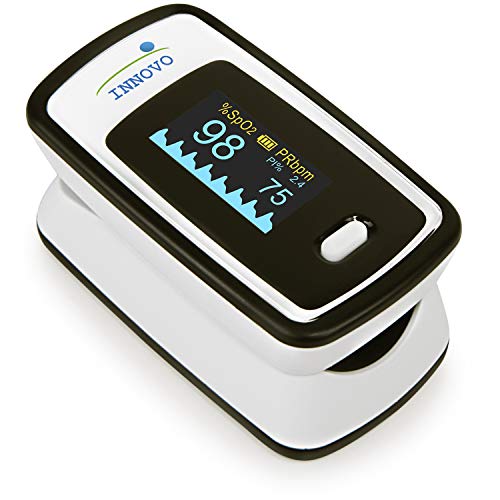
As a foundational health tool, the Innovo Deluxe iP900AP delivers reliable pulse and SpO2 monitoring without unnecessary complexity. Its standout technical feature is the clear plethysmograph—a real-time waveform display that shows your pulse beat-by-beat. This visual confirmation helps verify that the device has a strong signal and is not producing a false reading, which is a mark of a more thoughtful design.
The device is ready to use out of the box with included batteries and a lanyard. It performs well even in cases of lower blood perfusion (weaker circulation), thanks to its upgraded sensor array. The display is adjustable for brightness, and it emits a beep with each detected pulse, which some users find reassuring. For general wellness checks, post-exercise recovery, or keeping an eye on basic vitals during illness, it’s a very competent performer.
While it sits at a very accessible point, it doesn’t feel cheap. The build is solid, and the readings inspire confidence. It serves as an excellent first-line device for understanding your resting heart rate and oxygen levels, providing a simple metric that can signal when a more advanced check with an EKG might be warranted.
Why it’s great
- Plethysmograph (waveform) provides visual signal strength verification.
- Reliable performance and good accuracy for the category.
- Long battery life and includes all necessary accessories.
- Simple, straightforward operation with no app required.
Good to know
- No data logging or connectivity features.
- The plethysmograph display is small and can be hard to interpret for some.
- Pulse beep volume is not adjustable.
8. Yihou Fitness Tracker Smart Watch

This Yihou device represents the budget-friendly multi-function fitness tracker. It offers continuous heart rate monitoring, sleep tracking, step counting, and smartphone notifications on a color display. For general wellness awareness and tracking daily activity trends, it provides a lot of functionality for a very modest investment.
It’s important to set accurate expectations regarding its health metrics. The heart rate sensor can give you a general trend and alert you to sustained high or low rates, but its accuracy, especially for blood pressure and SpO2 readings, is not clinically validated. Many users note significant variances compared to dedicated medical devices. Think of it as a lifestyle tool rather than a diagnostic one.
Where it shines is in promoting overall health consciousness. The sedentary reminders, sleep stage analysis, and activity summaries can be motivating. For someone who wants a basic, always-on wearable to keep a loose tab on heart rate trends and general activity levels, it’s a viable entry-level option. However, it should not be relied upon for managing a known cardiac condition like AFib.
Why it’s great
- Very affordable way to get into all-day activity and heart rate tracking.
- Includes sleep analysis, notifications, and multiple sports modes.
- Long battery life of up to a week on a single charge.
- Comfortable to wear and has a colorful, customizable display.
Good to know
- Blood pressure and SpO2 readings are not medically accurate.
- Heart rate data can be inconsistent, especially during movement.
- Setup requires a specific third-party app (Da Fit/GloryFit).
9. Alcedo Blood Pressure Monitor

The Alcedo monitor is an entry-level blood pressure machine that includes a helpful talking function, verbally announcing your systolic and diastolic readings. This feature is excellent for those with visual impairments or who simply prefer auditory confirmation. It automatically takes three consecutive readings and averages them, which can provide a more stable result than a single measurement.
It offers separate memory for two users (120 readings each), making it suitable for couples or for tracking a patient’s readings separately from a caregiver’s. The cuff is a standard size and the device operates on either batteries or a USB connection, adding flexibility. For basic, no-frills blood pressure tracking at home, it covers the fundamentals.
User experiences regarding accuracy are mixed, with some reporting close alignment with doctor’s office readings and others noting discrepancies. This underscores the importance of proper cuff placement and following the instructions meticulously. It does not have advanced features like Bluetooth or irregular heartbeat detection. It represents a straightforward, value-conscious choice for basic BP management.
Why it’s great
- Voice output function aids accessibility and ease of use.
- Takes three readings and provides an average for better accuracy.
- Dedicated two-user memory with ample storage.
- Can be powered via USB or batteries for flexibility.
Good to know
- Does not screen for irregular heartbeats.
- Accuracy seems to be user-dependent; requires careful technique.
- Lacks connectivity features for data tracking.
10. Atuder Blood Pressure Monitor

This Atuder monitor is a quintessential budget-friendly option for basic blood pressure and heart rate checks at home. It features a large, backlit display with extra-large fonts, making readings exceptionally easy to see in various lighting conditions. The inclusion of a carrying case adds a layer of portability, which is a nice touch for a device in this category.
It stores up to 240 total readings for two users and utilizes a one-button operation for simplicity. The adjustable cuff fits a standard range of arm sizes, and the device includes an indicator to help with proper placement. For someone who needs an uncomplicated tool for periodic checks without the need for data syncing or advanced analysis, it fulfills the basic requirements.
It’s worth noting that while it mentions detecting irregular heartbeats, this should be viewed as a screening pulse irregularity alert, not a diagnostic EKG-based detection. User reviews suggest it provides consistent readings when used correctly, aligning with the expectation for a reliable entry-level device. It’s a practical choice for general household monitoring on a tight budget.
Why it’s great
- Very clear, large backlit display that’s easy to read.
- Includes a convenient carrying case for storage and travel.
- Substantial memory for two users at this price point.
- Straightforward one-button automatic operation.
Good to know
- An irregular heartbeat alert is not a specific AFib diagnosis.
- Build quality and long-term durability are typical for the budget tier.
- Lacks advanced features like app connectivity or detailed trend reports.
11. ALKOO Heart Monitor Case for KardiaMobile
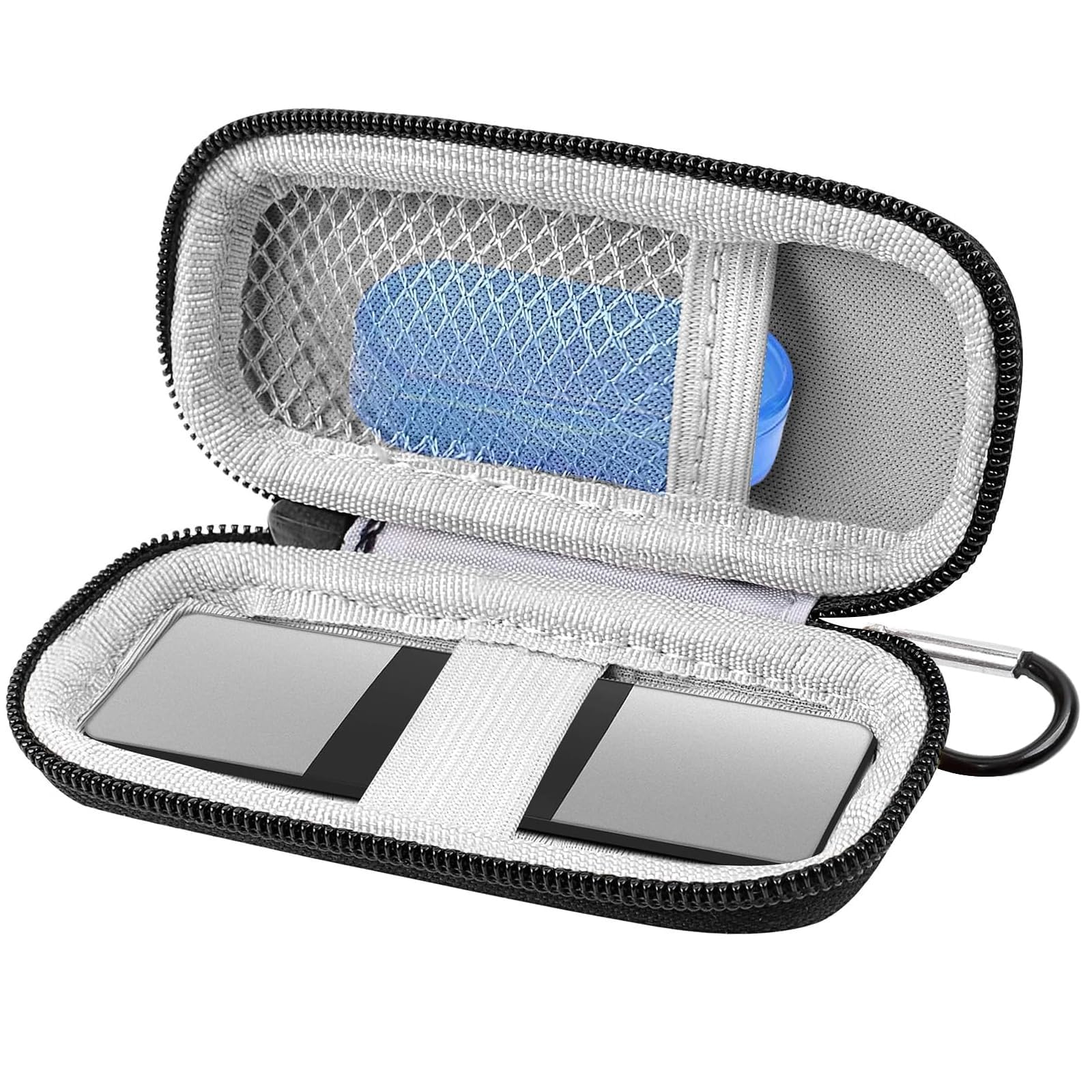
If you invest in a portable EKG like a KardiaMobile, protecting that investment is wise. The ALKOO case is a dedicated, hard-shell accessory designed specifically for KardiaMobile devices (1-Lead, 6L, and 6L Max). It provides crucial 360-degree protection against drops, crushing, and scratches in a bag or pocket, which is important for a sensitive electronic medical device.
The design is thoughtful for actual use. It includes an internal elastic strap to secure the monitor firmly and a soft lining to prevent scuffs. A standout feature is the reinforced carabiner clip, allowing you to attach the entire case to a keyring, belt loop, or backpack for ultimate portability and to ensure it’s always within reach when symptoms arise.
While it includes a small pill box, the primary function—protection and portability—is executed very well. For anyone who carries their KardiaMobile regularly, this affordable case adds a layer of durability and convenience, helping to ensure your monitor is safe, accessible, and ready to use when you need it most.
Why it’s great
- Precise, secure fit for KardiaMobile devices with protective foam.
- Durable hard-shell construction with a convenient carrying carabiner.
- Allows instant access to the monitor without removing it from the case.
- Exceptional value for protecting a more expensive medical device.
Good to know
- Only useful if you own a compatible KardiaMobile device.
- The included pill box may not be usable if the monitor is in the case.
- This is an accessory, not a monitoring device itself.
Understanding the Specs
Lead Count (EKG Devices)
This refers to the number of electrical views of the heart an EKG captures. A 1-lead device (like the basic KardiaMobile) gives a single perspective, sufficient for detecting common arrhythmias like AFib. A 6-lead device (like the KardiaMobile 6L) provides six different angles, offering a more comprehensive picture that can give your doctor deeper clinical insight.
FDA-Cleared vs. Clinical Validation
“FDA-cleared” means the U.S. Food and Drug Administration has reviewed data and determined the device is substantially equivalent to a legally marketed device for a specific use (e.g., “detection of AFib”). “Clinically validated” means it has been tested in clinical studies to prove accuracy. Both terms indicate a higher standard of reliability than general wellness devices.
Perfusion Index (PI)
Often seen on better pulse oximeters, PI is a measure of signal strength that indicates how well blood is flowing to the measurement site (your finger). A higher PI typically means a stronger, more reliable reading. It’s a useful indicator to confirm the oximeter has a good “grip” on your pulse, especially if you have cold hands or poor circulation.
Plethysmograph
That squiggly line on a pulse oximeter display is the plethysmograph or “pleth.” It’s a real-time visual waveform of your pulse. A consistent, clean wave pattern suggests a strong signal and accurate reading. A flat or erratic line can indicate poor contact, movement, or a very weak pulse, signaling you to reposition the device.
FAQ
Can a smartwatch or fitness tracker detect AFib?
What is the difference between an irregular heartbeat alert and an AFib detection?
How often should I check my heart rhythm with a personal monitor?
Do I need a subscription to use a KardiaMobile device?
Final Thoughts: The Verdict
For most people, the best afib monitor winner is the KardiaMobile 6L because it delivers clinical-grade, six-view EKG data that doctors trust, all from a pocket-sized device. If you want an excellent balance of affordability and medical-grade rhythm detection, grab the KardiaMobile 1-Lead. And for comprehensive daily tracking that combines blood pressure with irregular heartbeat screening, nothing beats the OMRON Silver. Your choice ultimately depends on the depth of data you need and how you plan to integrate monitoring into your health management journey.

Mo Maruf
I created WellFizz to bridge the gap between vague wellness advice and actionable solutions. My mission is simple: to decode the research and give you practical tools you can actually use.
Beyond the data, I am a passionate traveler. I believe that stepping away from the screen to explore new environments is essential for mental clarity and physical vitality.