Our readers keep the lights on and my smoothie glass nicely filled. As an Amazon Associate, I earn from qualifying purchases.
Finding a pair of wired headphones that deliver real sound quality without draining your wallet is a specific search. You want clear mids, punchy bass, and a durable build that doesn’t fall apart after a few months. The market is flooded with options, but the difference between a great listening experience and a frustrating one often comes down to a handful of specific specs and design choices.
I’m Mohammad Maruf — the founder and writer behind WellFizz. I spend my time analyzing frequency response curves, driver materials, impedance ratings, and user longevity reports to separate the true value picks from the ones that just look the part.
This guide breaks down seven models that prove you don’t need to spend a fortune for exceptional audio, focusing on the specific features that define the best affordable wired headphones.
How To Choose The Best Affordable Wired Headphones
Selecting the right pair of wired headphones under a budget requires focusing on a few critical areas that directly impact sound quality, comfort, and longevity. Ignoring these details can lead to a purchase that sounds hollow or breaks within weeks.
Driver Size and Driver Type
Driver diameter, measured in millimeters, is a primary factor in sound reproduction. Larger drivers, typically 40mm or 50mm, move more air, which translates to stronger bass presence and greater overall volume capability. However, driver quality matters just as much as size. Dynamic drivers, the most common type in this price range, use a magnet, voice coil, and diaphragm. The material of the magnet, such as neodymium, significantly affects efficiency and transient response, delivering cleaner highs and tighter bass.
Closed vs. Open vs. Semi-Open Back
The earcup design dictates sound isolation and soundstage. Closed-back headphones have sealed earcups that block external noise and prevent sound from leaking out, making them ideal for commuting, office use, or recording. Open-back designs have perforated earcups that allow air and sound to pass through, resulting in a wider, more natural soundstage that feels like speakers in a room. Semi-open designs blend the two, offering some isolation with a slightly more spacious sound. For mostly private listening in quiet environments, an open-back model can offer superior audio detail. For noisy spaces, closed-back is mandatory.
Impedance and Sensitivity
Impedance, measured in ohms, indicates how much electrical resistance the headphones present to the source. Lower impedance headphones (16-32 ohms) are designed for portable devices like smartphones and laptops and can reach high volumes without a separate amplifier. Higher impedance (64-250 ohms) models require more power and often benefit from, or require, a dedicated headphone amplifier to sound their best. Sensitivity, measured in decibels per milliwatt (dB/mW), indicates how efficiently the headphones convert power into volume. Higher sensitivity ratings mean louder output from lower power sources. Matching these specs to your primary devices is key to getting enough volume headroom.
Cable Type and Build Quality
A detachable cable is a strong indicator of long-term value. If the cable fails, you can replace it without throwing away the entire headset. Braided nylon cables resist tangling and are more durable than standard rubber ones. Check the connector type — a 3.5mm jack is universal for consumer devices, while a 6.35mm (1/4-inch) jack is standard for studio gear. Many models include both or an adapter. For physical durability, look for metal-reinforced headbands and hinges, as plastic components are the most common failure point on budget-friendly models.
Quick Comparison
On smaller screens, swipe sideways to see the full table.
| Model | Category | Best For | Key Spec | Amazon |
|---|---|---|---|---|
| HyperX Cloud III | Gaming | Multi-platform gaming, long sessions | 53mm angled drivers | Amazon |
| Sennheiser HD 280 Pro | Monitoring | Critical listening, noise isolation | 32 dB passive attenuation | Amazon |
| Audio-Technica ATH-M20x | Studio | Studio tracking, bass-heavy monitoring | 40mm CCAW voice coils | Amazon |
| AKG K240 Studio | Studio | Mixing, spacious soundstage | 30mm Varimotion diaphragms | Amazon |
| MAONO MH700 | Studio | Podcasting, home studio recording | 50mm dynamic drivers | Amazon |
| OneOdio Pro-10 | DJ/Monitoring | Single-ear monitoring, heavy bass listening | 50mm neodymium drivers | Amazon |
| AILIHEN C90 | Daily | Commuting, calls, general media | 40mm DLC dynamic driver | Amazon |
In‑Depth Reviews
1. HyperX Cloud III – Wired Gaming Headset

The HyperX Cloud III stands out in the crowded gaming headset market by prioritizing a key spec: the 53mm angled drivers. This larger-than-average driver size, tuned by HyperX engineers, creates an expansive soundstage where footsteps and environmental cues are precisely localized, giving you a serious competitive edge without sacrificing the punch needed for cinematic moments in single-player titles.
Comfort is engineered into the DNA here, with the signature memory foam ear cushions wrapped in premium leatherette that provides a plush seal without excessive clamping force. The aluminum alloy frame adds structural rigidity while keeping the weight manageable, meaning you can wear these for marathon sessions without fatigue. The detachable 10mm microphone is flexible and features a built-in mesh filter to minimize background noise, though the mic is sensitive enough to pick up mechanical keyboard clicks if set too high.
Connectivity is versatile, supporting USB-C, USB-A, and standard 3.5mm connections, making it a true multi-platform solution for PC, PlayStation, Xbox, and Switch. The DTS Headphone:X Spatial Audio software provides a free lifetime license, adding a convincing virtual 3D stage that enhances immersion in supported titles. The non-removable 3.5mm cable is the only minor concession to repairability, but the overall build quality and exceptional driver performance make this an easy top recommendation for gamers who want a single headset for all their consoles.
Why it’s great
- Oversized 53mm angled drivers deliver superior sound localization and punch.
- Memory foam ear pads and aluminum frame provide all-day comfort and durability.
- Multi-platform support with USB-C, USB-A, and 3.5mm connectivity out of the box.
Good to know
- Non-removable 3.5mm cable means a cable break requires a full headset replacement.
- Sensitive microphone can pick up mechanical keyboard sounds without software gate adjustment.
2. Sennheiser HD 280 Pro Headphone

The Sennheiser HD 280 Pro is a reference-class closed-back monitoring headphone that has been a staple in recording studios for years. Its defining characteristic is the 32 dB of passive ambient noise attenuation — a figure that rivals active noise cancellation in many consumer headphones. This makes it a formidable tool for tracking in noisy environments or for immersive listening on a commute without needing batteries.
The sound signature is aimed at accuracy rather than excitement. The extended frequency response delivers a warm, natural sound with controlled bass that doesn’t bleed into the mids. Vocals and acoustic instruments are reproduced with a level of clarity that reveals details often masked by fun-tuned consumer headphones. The 64-ohm impedance is moderate, meaning a phone or laptop can drive them to reasonable volumes, but a dedicated headphone amplifier will unlock cleaner output at higher levels.
Longevity is a mixed bag. Sennheiser designed the HD 280 Pro with user-replaceable ear pads, headband padding, and audio cord — a major plus for extending its life in professional use. However, the plastic headband is a known weak point, with some users reporting cracks after extended use, particularly if handled roughly. The tight clamping force is also notable; it provides excellent isolation but can be uncomfortable for those with larger heads or glasses until the foam breaks in over a week or two. For its isolation capabilities and honest sound, it remains a top-tier value.
Why it’s great
- Industry-leading 32 dB passive noise isolation blocks out ambient chatter effectively.
- User-replaceable ear pads, headband, and cable extend the product’s usable lifespan.
- Warm, natural frequency response is ideal for critical monitoring and spoken word.
Good to know
- Plastic headband is susceptible to cracking after months or years of heavy use.
- High clamping force can be uncomfortable for wide heads or users wearing glasses.
3. Audio-Technica ATH-M20x Professional Studio Monitor Headphones

Audio-Technica’s M-Series is legendary in budget studio monitoring, and the ATH-M20x is the most accessible entry point. It uses the same foundational technology as its higher-end siblings: 40mm drivers with rare earth magnets and copper-clad aluminum wire (CCAW) voice coils. This driver construction is tuned to deliver enhanced low-frequency performance, providing a bass response that is more present and impactful than the flat signature of the Sennheiser HD 280 Pro.
The circumaural design fully encloses the ears, creating a good passive seal for isolation in moderately loud environments. The single-side cable exit is a thoughtful design choice that prevents the cable from interfering with desk work. The ATH-M20x is built for straightforward studio tracking and mixing tasks where you need to hear bass lines clearly. The bass emphasis, while not true to a flat reference, makes these headphones more engaging for general music listening, movies, and gaming than a purely neutral monitor.
Comfort is a notable trade-off. The stock ear pads are firm, and the headband applies moderate clamping force. Users with glasses often report discomfort after about 30 minutes of wear. The build is entirely plastic, which keeps the weight down but doesn’t inspire the same confidence as the HyperX aluminum frame. There is no detachable cable — a major omission for durability — and no carrying case is included. For the price, you get studio-oriented tuning with strong bass, but you must accept the comfort limitations and lack of cable flexibility.
Why it’s great
- CCAW voice coils and rare earth magnets deliver punchy, bass-forward sound.
- Circumaural design provides effective passive isolation for tracking and mixing.
- Single-side cable exit keeps the cord out of the way during desk use.
Good to know
- Non-replaceable cable is the single point of failure for the entire headset.
- Stock ear pads are stiff and uncomfortable for users who wear glasses.
4. AKG K240STUDIO Semi-Open Studio Headphones

The AKG K240 Studio is a legendary semi-open headphone that has been a trusted tool in studios for decades. Its unique 30mm XXL transducers use AKG’s patented Varimotion diaphragms, which vary the thickness of the diaphragm membrane across its surface. This engineering trick controls resonance and breakup modes, resulting in a very flat, neutral frequency response that is ideal for critical mixing decisions where you need to hear the true balance of a track.
The semi-open back design is the star of the show. It offers the best of both worlds — enough isolation to monitor tracks without heavy bleed, yet an airy, spacious soundstage that feels much larger than the price suggests. For mixing and mastering, this spatial accuracy is invaluable. The self-adjusting headband is incredibly comfortable; it conforms to the shape of your head automatically and is light enough to wear for hours without feeling them, a quality that makes them a favorite among hearing aid users who need room for their devices.
The K240 is not a headphone for casual listening looking for thumping bass. Its low end is accurate but lean, requiring a good mix to sound full. The 55-ohm impedance is manageable for most audio interfaces and laptops, but a dedicated headphone amplifier noticeably improves dynamic range and volume headroom. The included 9.9-foot cable and screw-on 1/4-inch adapter are generous. The original ear pads are functional but upgrading to velour pads improves comfort and slightly widens the already impressive soundstage. For budget-conscious engineers, this is the standard to beat.
Why it’s great
- Varimotion diaphragms provide a neutral, accurate sound perfect for mixing.
- Semi-open design creates an exceptionally wide soundstage for the price point.
- Self-adjusting headband and low weight offer outstanding long-session comfort.
Good to know
- Bass response is lean and requires a good mix to sound satisfying.
- Open-back design leaks sound and offers minimal isolation in noisy environments.
5. MAONO Studio Monitor Mixing DJ Headphones (MH700)

The MAONO MH700 headphones are aimed squarely at content creators, podcasters, and home studio engineers who need closed-back monitoring that doesn’t break the bank. The star feature here is the dual detachable cable system, a rarity at this price. Included are a 1.2-meter straight 3.5mm cable for portable use and a 3-meter coiled 6.35mm cable for studio gear, with a plug-in lock design that ensures they don’t disconnect during a critical session.
The 50mm dynamic drivers deliver a sound signature that is balanced and accurate, with a slight emphasis on the mid-bass that provides warmth to vocals and bass instruments. Reviews consistently praise its excellent soundstage for a closed-back design, making it suitable for gaming positional audio as well as music monitoring. The closed-back design provides solid passive noise isolation, letting you focus on your microphone feed or mix without distraction from room noise.
Comfort is a strong point, with soft, protein leather ear cups and a lightweight metal headband that doesn’t clamp too tightly. The 180-degree rotating ear cups and foldable design make them portable for travel or sessions at different locations. Some users note that the deep bass extension is lacking compared to more expensive reference headphones, but for tracking vocals, editing podcasts, and mixing pop or rock music, the MH700 offers a professional feature set at a price that competes directly with budget-friendly consumer models.
Why it’s great
- Two detachable cables (straight 3.5mm and coiled 6.35mm) with locking mechanism.
- 50mm drivers provide balanced, accurate sound with good mid-bass warmth.
- Lightweight metal headband and soft pads are comfortable for extended recording sessions.
Good to know
- Deep sub-bass extension is somewhat limited for bass-heavy genres like EDM or hip-hop.
- Large over-ear fit may feel oversized for users with smaller head frames.
6. OneOdio Wired Over Ear Headphones (Pro-10)

The OneOdio Pro-10 is built for one specific job: providing loud, bass-heavy monitoring for DJs and producers. It uses large 50mm speaker drivers paired with neodymium magnets to deliver powerful bass, clear vocals, and crisp highs. The sound is tuned for energy, not reference-level accuracy, making it a great choice for beatmatching, tracking syncopated rhythms, or general music enjoyment where you want the low end to hit hard.
The design includes 90-degree swiveling ear cups, a feature that is crucial for single-ear DJ monitoring in loud club environments. The self-adjusting headband and soft, padded ear cushions are built for long sets and provide decent passive noise isolation. The shared audio port is a unique bonus, allowing you to daisy-chain a second pair of headphones to share a track without a splitter, useful for collaborative listening.
Durability is a common theme in user reviews, with many reporting that the Pro-10 lasts for years with heavy use. The detachable cable is a big plus for longevity, though some users note the cables feel less robust than the headphones themselves. The included 1/4-inch and 3.5mm plugs offer wide compatibility. The lack of an in-line volume control is a notable omission for a DJ headset, and the coiled cable is heavy but practical. For users who prioritize powerful, dynamic sound over analytical neutrality, the Pro-10 offers exceptional performance.
Why it’s great
- Large 50mm neodymium drivers deliver powerful bass and clear, energetic sound.
- 90-degree swiveling ear cups and self-adjusting headband are ideal for DJ use.
- Shared audio port lets you connect a second pair of headphones without a splitter.
Good to know
- No in-line volume control requires you to adjust level from the source device.
- Included cables feel less durable than the headset’s main metal and plastic construction.
7. AILIHEN Wired Headphones with Microphone (C90)
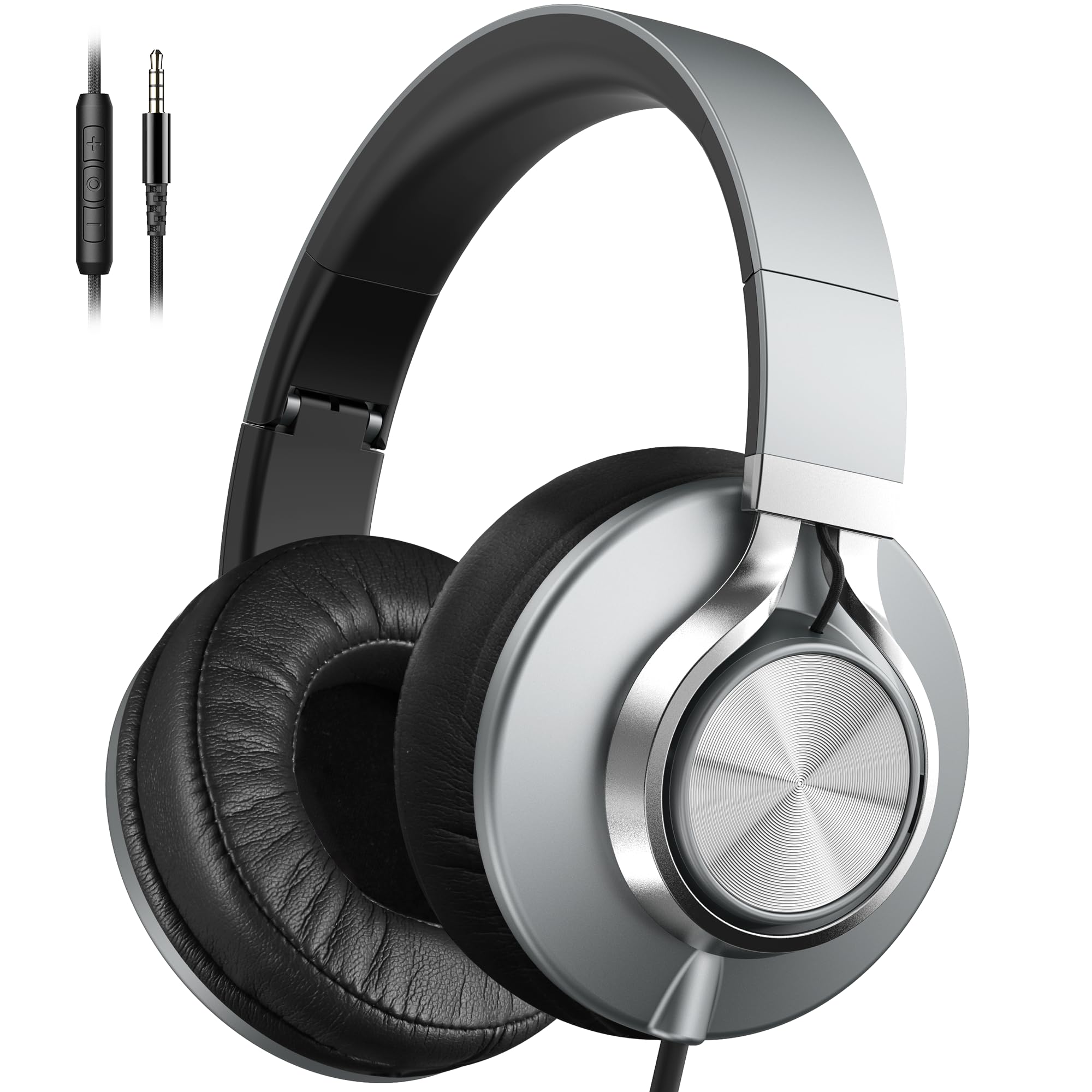
The AILIHEN C90 is a lightweight, ultra-portable option designed for the daily commuter, student, or casual listener who needs a dependable pair of headphones for calls, music, and videos. Weighing just 7 ounces, it uses a 40mm DLC (Diamond-Like Carbon) dynamic driver, a coating material typically found in higher-end audio drivers that improves stiffness and reduces distortion, resulting in a clean, balanced sound with good separation between instruments.
Comfort is a priority here, with premium protein cotton ear pads that are softer and more breathable than standard foam. The adjustable headband and foldable design make it easy to stash in a bag or the included carry bag. The 360-degree surrounding noise isolation technology is effective at blocking ambient noise — up to 90% as claimed — though it is passive, not active cancellation. The inline microphone and volume control are convenient for phone calls, though the volume control buttons may not work with all computer audio jacks.
The braided nylon cable is tangle-free and durable, resisting the kinks and knots that ruin cheap rubber cables. The 3.5mm gold-plated plug ensures a stable connection. Some users have reported that the fabric on the cable can begin to fray at the strain relief after several months of daily use, and the cable length is long enough to be cumbersome for short users. For the price, the AILIHEN C90 delivers a surprisingly smooth, balanced sound signature with a comfortable, portable package that is ideal for anyone who needs a backup pair or a first wired headphone for general use.
Why it’s great
- Lightweight 7-ounce build with foldable design is perfect for daily commuting.
- 40mm DLC driver provides clean, balanced sound with minimal distortion.
- Braided nylon cable is tangle-free and more durable than standard rubber cables.
Good to know
- Fabric on the cable may fray at the plug connection through long-term daily use.
- Cable length may be excessively long for shorter users during portable use.
FAQ
Do I need a headphone amplifier for affordable wired headphones?
What is the difference between DLC and standard dynamic drivers?
Can I use studio monitor headphones for gaming?
Final Thoughts: The Verdict
For most users, the affordable wired headphones winner is the HyperX Cloud III because its 53mm angled drivers and multi-platform compatibility cover gaming, music, and calls with superior comfort. If you want a studio-standard reference tool for mixing and analytical listening, grab the AKG K240 Studio. And for a lightweight, ultra-portable daily driver that handles commutes and calls without breaking the bank, nothing beats the AILIHEN C90.

Mo Maruf
I created WellFizz to bridge the gap between vague wellness advice and actionable solutions. My mission is simple: to decode the research and give you practical tools you can actually use.
Beyond the data, I am a passionate traveler. I believe that stepping away from the screen to explore new environments is essential for mental clarity and physical vitality.