Our readers keep the lights on and my smoothie glass nicely filled. As an Amazon Associate, I earn from qualifying purchases.
Finding a vlogging camera that delivers sharp 4K video, reliable autofocus, and usable audio without demanding a second mortgage is the central challenge for any content creator starting out. The market is flooded with options that either cripple your budget or cripple your footage with poor stabilization and grainy low-light performance.
I’m Mohammad Maruf — the founder and writer behind WellFizz. I’ve spent years analyzing camera specifications, real-world sensor performance, and the stabilization algorithms that separate usable vlogging gear from frustrating paperweights.
After sifting through hours of footage data and user reports across dozens of models, I’ve narrowed the field to the nine models that actually deliver professional-quality results at accessible price points. This guide breaks down the best affordable vlogging camera options that balance image quality, stabilization, and battery life for real creators.
How To Choose The Best Affordable Vlogging Camera
Selecting the right vlogging camera starts with understanding the trade-offs between sensor size, stabilization type, and battery endurance. Here’s what every buyer should know before clicking purchase.
Sensor Size and Low-Light Performance
A 1-inch CMOS sensor captures significantly more light than the smaller 1/1.3-inch or 1/2.3-inch sensors found in budget action cameras. This directly translates to cleaner footage in dim indoor settings or evening outdoor shoots. For indoor vloggers or travel content shot in varied lighting, prioritize cameras with larger physical sensors.
Stabilization: Gimbal vs Electronic vs Optical
Three-axis gimbal stabilization, found in pocket cameras like the Xtra Muse, physically counteracts hand shake and delivers the smoothest walking footage. Electronic image stabilization, common in action cameras like the DJI Osmo series, crops the frame slightly but works well for steady handheld shots. Optical stabilization inside the lens, seen in Sony ZV-1, reduces micro-jitters without cropping. For run-and-gun vlogging, gimbal-based or top-tier electronic stabilization is non-negotiable.
Battery Life and Real-World Recording Time
Manufacturer battery ratings often assume ideal conditions at lower resolutions or with screen-off operation. Real-world 4K recording time at 30fps is typically 50-70% of the advertised figure. A camera like the DJI Osmo Action 5 Pro, which claims 240 minutes, often delivers around 2 hours of actual 4K footage. Budget for spare batteries or a USB power bank if you record longer than one continuous session.
Autofocus and Subject Tracking
Face-tracking and eye-autofocus are not just luxuries — they are essential for selfie-style vlogging where the camera is at arm’s length. Models with contrast-detection-only focus, like the Canon PowerShot V10, are reliable in good light but can hunt in low-light conditions. Phase-detection systems found in Sony cameras provide near-instant lock-on, even when moving around the frame.
Quick Comparison
On smaller screens, swipe sideways to see the full table.
| Model | Category | Best For | Key Spec | Amazon |
|---|---|---|---|---|
| DJI Osmo Action 5 Pro | Action Camera | Low-light action vlogging | 1/1.3″ sensor, 13.5-stop DR | Amazon |
| Xtra Muse 4K Pocket Camera | Pocket Gimbal Camera | Smooth walking footage | 1″ CMOS, 3-axis gimbal | Amazon |
| Canon PowerShot V10 | Compact Vlog Camera | Ultra-portable everyday carry | 1″ sensor, 19mm f/2.8 lens | Amazon |
| DJI Osmo Nano Standard Combo | POV Action Camera | Hands-free POV vlogging | 1/1.3″ sensor, 10m waterproof | Amazon |
| DJI Osmo Action 6 Essential | Pro Action Camera | 8K resolution and color grading | 1/1.1″ square sensor, f/2.0–f/4.0 | Amazon |
| Insta360 X5 | 360° Action Camera | Immersive 360° vlogging | Dual 1/1.28″ sensors, 8K | Amazon |
| Sony ZV-1F | Compact Vlog Camera | Ultra-wide selfie vlogging | 1″ sensor, 20mm f/2.0 lens | Amazon |
| Sony ZV-1 | Point-and-Shoot Vlog Camera | Zoom versatility with fast aperture | 1″ sensor, 24-70mm f/1.8-2.8 | Amazon |
| Sony Alpha ZV-E10 | Mirrorless Vlog Camera | Interchangeable lens vlogging | APS-C 24.2MP, 4K 6K oversampled | Amazon |
In‑Depth Reviews
1. DJI Osmo Action 5 Pro Essential Combo

The DJI Osmo Action 5 Pro brings a 1/1.3-inch sensor with 2.4µm pixels and a class-leading 13.5-stop dynamic range to the vlogging table. This sensor captures exceptional low-light footage that rivals much larger cameras, and the 360° HorizonSteady stabilization keeps the horizon locked even during full body rotations. The dual OLED touchscreens make framing front-facing shots seamless, and the 1950mAh battery delivers up to four hours of recording under normal conditions.
Voice control that works with or without an external mic is a genuine convenience for solo vloggers who need hands-free recording. The 47GB of built-in storage is a safety net for backup, though most users will rely on a microSD card for regular shooting. At 4K/120fps, slow-motion clips are buttery smooth with no visible jello effect, thanks to the 4nm chip processing the image stream.
Water resistance to 20 meters without a housing makes it a true all-weather companion for travel vloggers who shoot near water or in unpredictable conditions. The color temperature sensor automatically adjusts white balance underwater and on land, eliminating the need for physical filters in most scenarios. For creators who need one camera that handles day, night, and everything between, this is the most well-rounded option.
Why it’s great
- Exceptional low-light performance with large pixels and wide dynamic range
- 360° horizon-level stabilization for active vlogging
- Long battery life with cold-resistant design
Good to know
- Essential Combo lacks the curved adhesive base found in Standard Combo
- Battery drains faster at 4K/120fps high-frame-rate recording
2. Xtra Muse 4K Pocket Camera with 3-Axis Gimbal
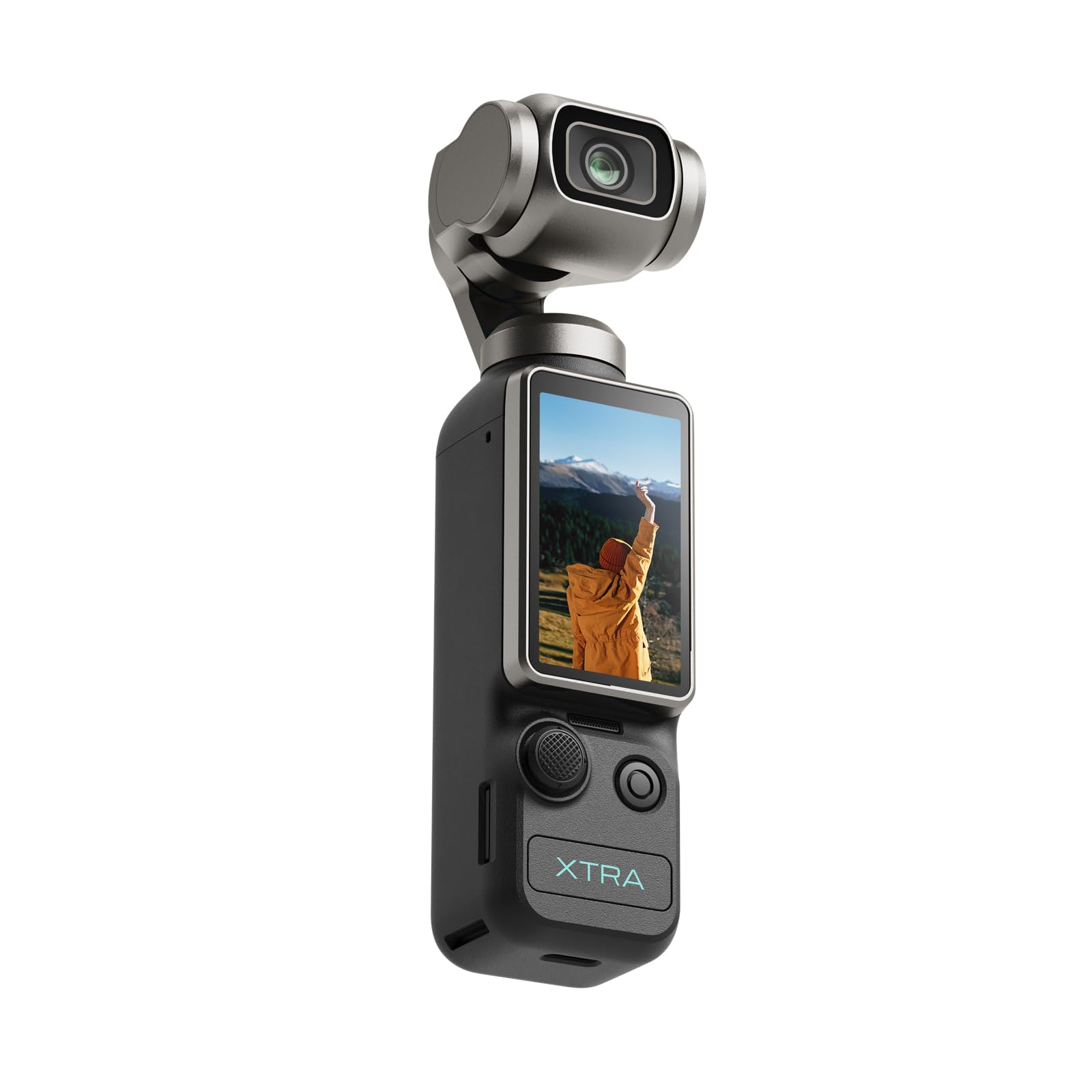
The Xtra Muse packs a 1-inch CMOS sensor and a dedicated 3-axis gimbal stabilizer into a form factor small enough to fit in a jacket pocket. This combination delivers walking footage that rivals cameras twice its price, with the mechanical gimbal eliminating the micro-jitters that electronic stabilization cannot fully mask. The 4K/120fps capture is genuinely usable for slow-motion playback, and the 10-bit X-Log color mode offers a billion colors for flexible post-production grading.
The Master Follow feature locks onto a subject using face and object tracking, keeping the user centered even while spinning or jumping — perfect for dance tutorials or active vloggers who move around the frame. The 2-inch touchscreen is responsive and supports both horizontal and vertical shooting orientation switching. Battery life averages just over 2.5 hours of mixed use, and USB-C PD charging allows top-ups from a portable power bank.
Several users report that after a firmware update, the camera pairs with DJI wireless microphones, and accessories from the DJI Pocket 3 ecosystem fit this unit physically. This gives it a significant accessory head start over other pocket cameras in its class. The included carrying bag, wrist strap, and 1/4-inch threaded handle provide most of what a beginner needs to start filming immediately without additional purchases.
Why it’s great
- True 3-axis mechanical gimbal stabilization for silky walking shots
- 1-inch sensor with 10-bit X-Log color for professional grading
- Reliable face and object tracking locks onto moving subjects
Good to know
- Gimbal lock can occur during sudden high-impact movements
- Low-light noise increases above ISO 1600 compared to larger sensor cameras
3. Canon PowerShot V10

The Canon PowerShot V10 is a purpose-built vlogging camera that prioritizes compactness without sacrificing the image quality of a 1-inch back-illuminated CMOS sensor. Its 19mm wide-angle lens (35mm equivalent) captures generous background context even when the camera is held at arm’s length for selfie-vlogging. The built-in stand folds from either direction, allowing desk-top or table-top placement without requiring a separate tripod.
The three stereo microphones include a center channel that actively cancels background noise, and the retractable front-facing flip screen makes framing intuitive for solo creators. With the firmware update to version 1.2.0, three distinct image stabilization modes are available — off, on, and enhanced — giving users control over the trade-off between stabilization strength and field of view cropping. The 8-bit 4K capture at 30fps is clean and sharp in good lighting.
Battery life hovers around one to two hours of continuous recording, which is average for this form factor but manageable with USB-C charging on the go. The fixed lens means no optical zoom — you zoom with your feet — but the wide angle covers most vlogging scenarios effectively. The 14 movie color filters offer quick mood setting without post-processing, which is ideal for beginners who want to publish straight from the camera.
Why it’s great
- Incredibly pocketable with a built-in flexible stand for hands-free use
- 1-inch sensor delivers clean video with good dynamic range
- Easy file transfer to Mac with no proprietary software required
Good to know
- Fixed wide-angle lens limits framing versatility in tight spaces
- No included lens cap or microphone windscreen for outdoor windy conditions
4. DJI Osmo Nano Standard Combo (128GB)
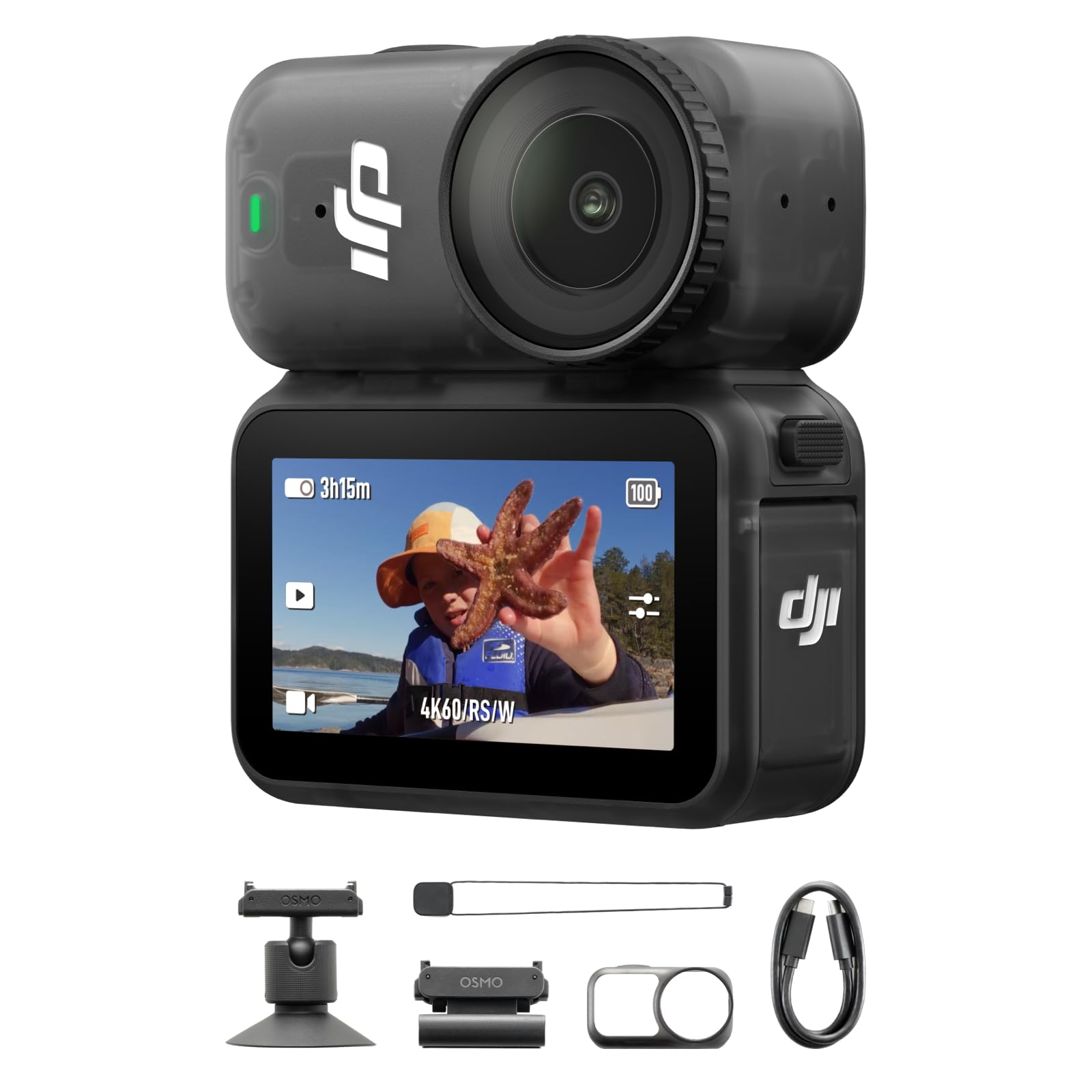
The DJI Osmo Nano is an ultra-compact POV camera that leverages a 1/1.3-inch sensor and magnetic mounting system to deliver 4K/60fps footage from angles that traditional cameras cannot reach. Its 143° ultra-wide field of view creates immersive vlogs and pet POV shots, and the magnetic lanyard or hat clip allows true hands-free operation. The built-in 128GB storage means you can start recording immediately without buying a memory card, and microSD expansion is available for longer shoots.
The 200-minute battery rating is measured with screen-off operation at lower resolutions — expect around one hour of continuous 4K recording when detached from the Vision Dock, and up to two hours when docked. The dual-purpose Vision Dock doubles as a battery extender and a protective housing with IPX4 splash resistance. OsmoAudio support allows direct wireless connection to two DJI microphones simultaneously, delivering broadcast-quality voice isolation.
Water resistance to 10 meters without any housing makes it usable for underwater vlogging, though the dock itself is only splash-resistant. The D-Log M 10-bit color profile provides ample headroom for color grading, especially given the camera’s compact size. Creators who prioritize discretion and portability — filming in public without drawing attention — will find the Nano’s form factor uniquely liberating.
Why it’s great
- Magnetic mounting system enables creative hands-free POV angles
- 128GB built-in storage plus expandable microSD slot
- Direct wireless microphone connection for clean audio
Good to know
- Vision Dock battery drains noticeably even when the camera is turned off
- Heating during high-resolution recording requires enabling Endurance Mode for long sessions
5. DJI Osmo Action 6 Essential Combo
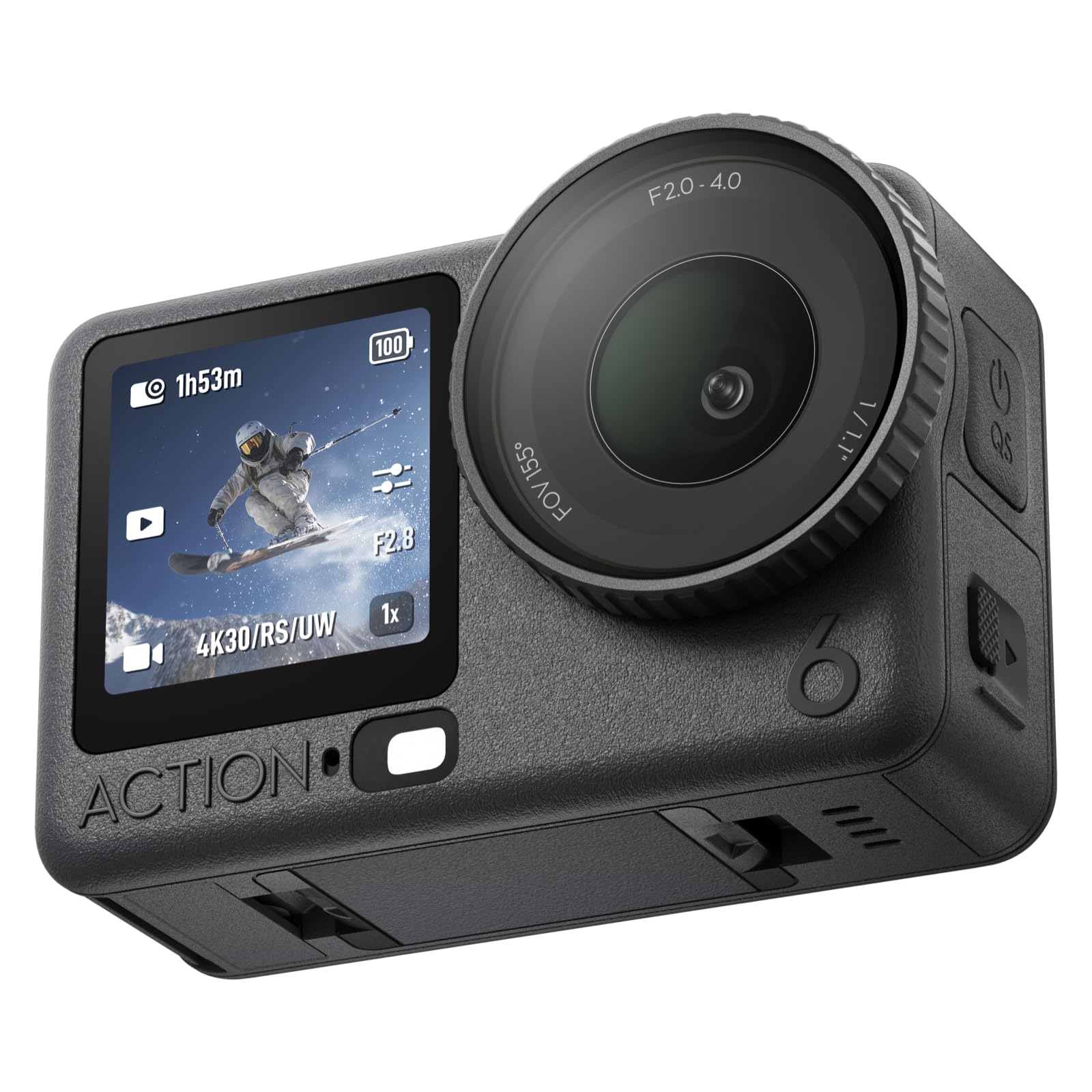
The DJI Osmo Action 6 introduces a groundbreaking variable aperture system ranging from f/2.0 to f/4.0, combined with a large 1/1.1-inch square sensor. This allows the camera to physically adapt to lighting conditions — opening wide in low light and stopping down in bright sun to maintain sharpness across the entire 8K video frame. The 4K Custom Mode enables reframing into multiple aspect ratios for social media platforms without losing resolution.
RockSteady 3.0 stabilization preserves the dynamic feel of first-person motion while eliminating gimbal-level shake, and 360° HorizonSteady corrects horizontal tilts up to complete rotations. The 4-hour battery rating is the most generous in this list, with cold-resistant operation down to sub-zero temperatures making it reliable for winter sports vloggers. Gesture and voice control allow fully hands-free operation for skiers, cyclists, and solo travelers.
The UHS-II microSD bus interface supports the high data rates required for 8K/30fps recording without dropped frames. The built-in dual audio system captures clear voice tracks even in windy environments. For content creators who need the highest resolution possible for cropping and reframing in post, the 8K sensor provides tremendous flexibility that 4K cameras simply cannot match.
Why it’s great
- Variable mechanical aperture f/2.0-f/4.0 adapts to lighting without ND filters
- 1/1.1-inch square sensor delivers class-leading dynamic range
- 4-hour battery life with cold-resistant design for extreme conditions
Good to know
- No built-in GPS or accelerometer for telemetry overlays
- Requires high-speed UHS-II memory card for 8K recording
6. Insta360 X5

The Insta360 X5 is the most versatile camera in this lineup, capturing 8K video in every direction simultaneously using dual 1/1.28-inch sensors. The invisible selfie stick effect creates impossible third-person perspectives that are impossible with any conventional camera, making it a standout choice for solo travel vloggers and outdoor action creators. The optional InstaFrame mode delivers a ready-to-share flat cropped video instantly, while preserving the full 360° capture for later editing.
The triple AI chip design powers advanced noise reduction that produces clean footage even in dim club lighting or twilight conditions — a major improvement over previous 360° cameras. FlowState stabilization combined with full 360° Horizon Lock keeps the horizon level even during full spins and rolls, eliminating the need for a separate gimbal. The replaceable lens covers are a practical upgrade; a scratch or crack no longer means replacing the entire camera.
The new 4-mic array with an advanced Wind Guard specifically filters wind noise while preserving voice clarity — a common pain point for outdoor action vloggers. Battery life averages three hours of continuous recording, which is impressive given the dual-sensor processing load. The steep learning curve of 360° editing is mitigated by the powerful mobile app and desktop Studio software, both of which offer AI-assisted reframing and auto-tracking.
Why it’s great
- Unique 360° capture enables reframing in post-production for perfect shots
- Replaceable lenses eliminate the risk of complete camera damage from lens scratches
- Excellent low-light PureVideo mode for dim environments
Good to know
- Requires high-capacity, high-speed microSD cards for 8K recording
- 360° editing workflow has a steeper learning curve than traditional flat cameras
7. Sony ZV-1F Vlog Camera

The Sony ZV-1F is purpose-built for selfie-style vlogging with its ultra-wide 20mm lens that captures generous background context even at arm’s length. The large 1-inch sensor paired with an f/2.0 aperture creates natural background defocus, and the Background Defocus button toggles the bokeh effect instantly — a feature that beginners intuitively understand without touching aperture settings. Eye-AF with real-time tracking locks onto human and animal eyes reliably, keeping the subject sharp even during movement.
The side-articulating flip screen is bright enough for outdoor use, and the directional 3-capsule microphone with the included windscreen produces clear audio that reduces handling noise. USB-C charging and micro-HDMI output provide connectivity options for monitoring or streaming. The Product Showcase Setting is a clever touch: when an object is brought near the lens, the focus smoothly transitions from the face to the product — ideal for haul videos and unboxing content.
The ZV-1F uses digital stabilization only, which crops into the frame and is less effective during walking shots than the gimbal-based or high-end electronic systems found in action cameras. Battery life is the weakest point — expect around 45 minutes to 1 hour of continuous 4K recording, so spare batteries are essential for day-long shoots. Beginners will appreciate the straightforward menu system that prioritizes vlogging functions over complex manual controls.
Why it’s great
- Ultra-wide 20mm lens is perfect for handheld selfie vlogging
- Reliable Eye-AF and real-time tracking with 425 autofocus points
- Product Showcase Setting transitions focus smoothly between face and object
Good to know
- Digital stabilization only — walking shots have noticeable shake
- Battery lasts roughly 45 minutes in 4K; spare batteries are necessary for all-day use
8. Sony ZV-1 Digital Camera

The Sony ZV-1 builds on the ZV-1F formula by adding a versatile 24-70mm equivalent zoom lens with a fast f/1.8-2.8 aperture, giving vloggers optical zoom flexibility that the fixed-lens version lacks. The stacked 20.1MP 1-inch Exmor RS sensor with DRAM provides lightning-fast readout speeds that minimize rolling shutter distortion during panning shots. Fast Hybrid Autofocus with 425 phase-detection points combined with real-time Eye-AF locks onto subjects instantly and holds focus tenaciously.
The side flip-out 3-inch LCD screen supports multiple angle positions for tripod shooting, and the Hotshoe allows attachment of external microphones for higher audio fidelity. HLG (Hybrid Log-Gamma) and S-Log3/2 gamma profiles provide serious color grading flexibility for creators who post-process their footage. The standard 3.5mm microphone jack and MI shoe open up the entire ecosystem of Sony’s professional audio accessories.
Battery life is the primary limitation — expect around one hour of continuous recording, and the included charger is a USB cable only, so a separate battery charger is recommended for multi-battery workflows. The camera can overheat during extended 4K recording sessions, especially in warmer environments or when streaming via USB. For vloggers who need a compact camera with real zoom range and professional picture profiles, the ZV-1 remains the gold standard among point-and-shoot vlogging cameras.
Why it’s great
- Optical 24-70mm zoom with fast f/1.8-2.8 aperture for flexible framing
- HLG and S-Log3 gamma profiles for professional color grading workflow
- Fast Hybrid AF with 425 phase-detection points for reliable subject tracking
Good to know
- Battery life is approximately one hour; use a dummy battery for longer streaming sessions
- Can overheat during extended 4K recording in warm environments
9. Sony Alpha ZV-E10 with 16-50mm Kit Lens
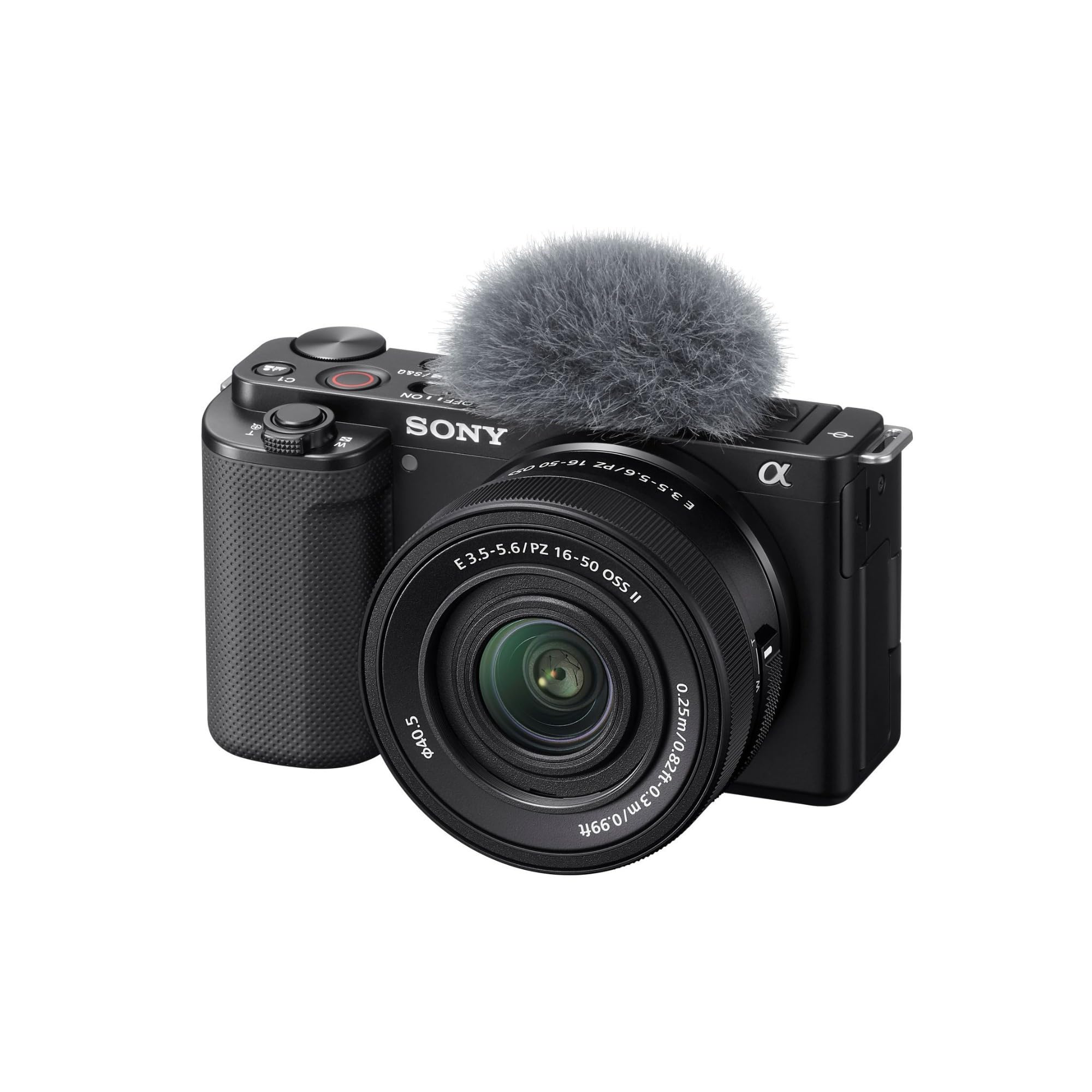
The Sony Alpha ZV-E10 is the only interchangeable lens mirrorless camera in this lineup, featuring a 24.2MP APS-C Exmor CMOS sensor that captures significantly more light and detail than any 1-inch sensor camera. The 4K movie is oversampled from a 6K readout with full pixel readout and no pixel binning, producing video that is visibly sharper and more detailed than native 4K sensors. The included E PZ 16-50mm f/3.5-5.6 OSS II kit lens covers the standard zoom range with optical stabilization built into the lens.
The Product Showcase Setting and Background Defocus button are carried over from the ZV-1 series, adapted for the larger APS-C sensor which delivers more pronounced background blur. The BIONZ X processor handles 14-bit stills and 4K video simultaneously, and the camera can live stream directly over a single USB cable without any extra hardware or software — a huge advantage for hybrid creator workflows. The 425-point hybrid autofocus system with real-time Eye Tracking works across animals, humans, and birds.
The ZV-E10’s real power is its lens ecosystem — as your vlogging needs grow, you can swap in a wide-angle lens for real estate tours, a portrait lens for interview close-ups, or a telephoto for event coverage. The kit lens is adequate for starting but upgrading to a faster prime lens like the Sigma 16mm f/1.4 dramatically improves low-light performance. The body is surprisingly compact for an APS-C camera, but the lenses add bulk compared to fixed-lens alternatives.
Why it’s great
- APS-C sensor with 6K oversampled 4K delivers exceptional video sharpness
- Interchangeable lens system grows with your vlogging skills
- USB live streaming without extra hardware is a serious workflow advantage
Good to know
- Kit lens is slow (f/3.5-5.6) and limits indoor low-light performance without upgrading
- Requires external microphone for best audio quality; built-in mic is adequate but not exceptional
FAQ
Should I buy a camera with a fixed lens or interchangeable lenses for vlogging?
Is 4K/60fps necessary, or is 4K/30fps enough for vlogging?
What memory card speed do I need for 4K vlogging?
Can I use these cameras as webcams for streaming?
Final Thoughts: The Verdict
For most users, the best affordable vlogging camera winner is the DJI Osmo Action 5 Pro because it combines best-in-class stabilization, exceptional low-light performance, and a rugged waterproof design in a single system that handles everything from indoor talking heads to outdoor action shots. If you want smooth walking footage with a compact form factor, grab the Xtra Muse 4K Pocket Camera. And for creators who need interchangeable lenses and professional color science for a full vlogging system, nothing beats the Sony Alpha ZV-E10.

Mo Maruf
I created WellFizz to bridge the gap between vague wellness advice and actionable solutions. My mission is simple: to decode the research and give you practical tools you can actually use.
Beyond the data, I am a passionate traveler. I believe that stepping away from the screen to explore new environments is essential for mental clarity and physical vitality.