Our readers keep the lights on and my smoothie glass nicely filled. As an Amazon Associate, I earn from qualifying purchases.
Selecting the right backup power for your home doesn’t require a massive investment, but it does demand smart research. An affordable generator is a crucial lifeline during outages, keeping essentials running and providing peace of mind.
I’m Mohammad Maruf — the founder and writer behind WellFizz. For over a decade, I’ve specialized in analyzing performance data and technical specifications across the consumer power market to separate truly reliable value from marketing hype.
This guide cuts through the noise, presenting a researched lineup based on output, features, and real-user experiences. Our detailed research identifies the best affordable generator for home backup, balancing cost, performance, and reliability for peace of mind during outages.
How To Choose The Best Affordable Generator For Home
Finding the right balance between capability and cost means focusing on a few critical specifications. Your choice should be dictated by what you need to power, how long you need to run, and where you’ll store and operate the unit.
Start With Your Wattage Requirements
Add up the starting (surge) and running watts of the appliances you consider essential, like refrigerators, furnaces, or sump pumps. A mid-range unit with 3000-5000 running watts typically covers basics for most homes, while higher outputs are needed for central air or well pumps.
Prioritize Fuel Flexibility and Runtime
Gasoline is common but can degrade; propane stores indefinitely and burns cleaner. Dual-fuel models offer valuable flexibility. Also, consider tank size—a larger tank means longer runtime between refuels, which is crucial during extended outages.
Consider Noise and Technology
Inverter generators produce clean, stable power safe for laptops and phones, and they operate much quieter than open-frame conventional models. If noise is a concern for you or your neighbors, look for decibel ratings under 70 dB.
Don’t Overlook Safety and Portability
Features like a CO shutdown sensor are non-negotiable for indoor-adjacent use. Also, assess weight and whether it has wheels—a heavier, powerful unit is useless if you can’t move it safely to where it’s needed.
Quick Comparison
On smaller screens, swipe sideways to see the full table.
| Model | Type | Best For | Key Feature | Amazon |
|---|---|---|---|---|
| PowerSmart 3800W | Dual Fuel Inverter | Home Backup & Camping | CO Sensor, Dual Fuel | Amazon |
| WEN 4750W | Dual Fuel | Whole House Backup | 120V/240V, Electric Start | Amazon |
| Westinghouse 4000W | Dual Fuel Inverter | Quiet RV & Home Use | Remote Start, Digital Display | Amazon |
| MaXpeedingrods 3500W | Inverter Generator | Camping & Sensitive Electronics | Super Quiet, Parallel Capable | Amazon |
| PowerSmart 7000W | Inverter Generator | Job Sites & Large Home Backup | 120V/240V, Electric Start | Amazon |
| Jackery Explorer 1000 | Portable Power Station | Indoor Use & Device Charging | Silent Operation, Solar Option | Amazon |
| WEN 5600W | Portable Generator | Emergency Backup & RV | CO Shutdown, Electric Start | Amazon |
| A-iPower 5000W | Open Frame Generator | Extended Runtime & Job Sites | 20-Hour Runtime, CO Sensor | Amazon |
| Westinghouse 9500W | Dual Fuel | Whole House & Transfer Switch | High Output, Remote Start | Amazon |
| Westinghouse 12500W | Dual Fuel | Large Home & Heavy-Duty Use | Peak Power, 50A RV Outlet | Amazon |
| Oxseryn 4400W | Inverter Generator | Entry-Level Backup & RV | Lightweight, RV Ready | Amazon |
In‑Depth Reviews
1. PowerSmart 3800 Watt Dual Fuel Inverter Generator
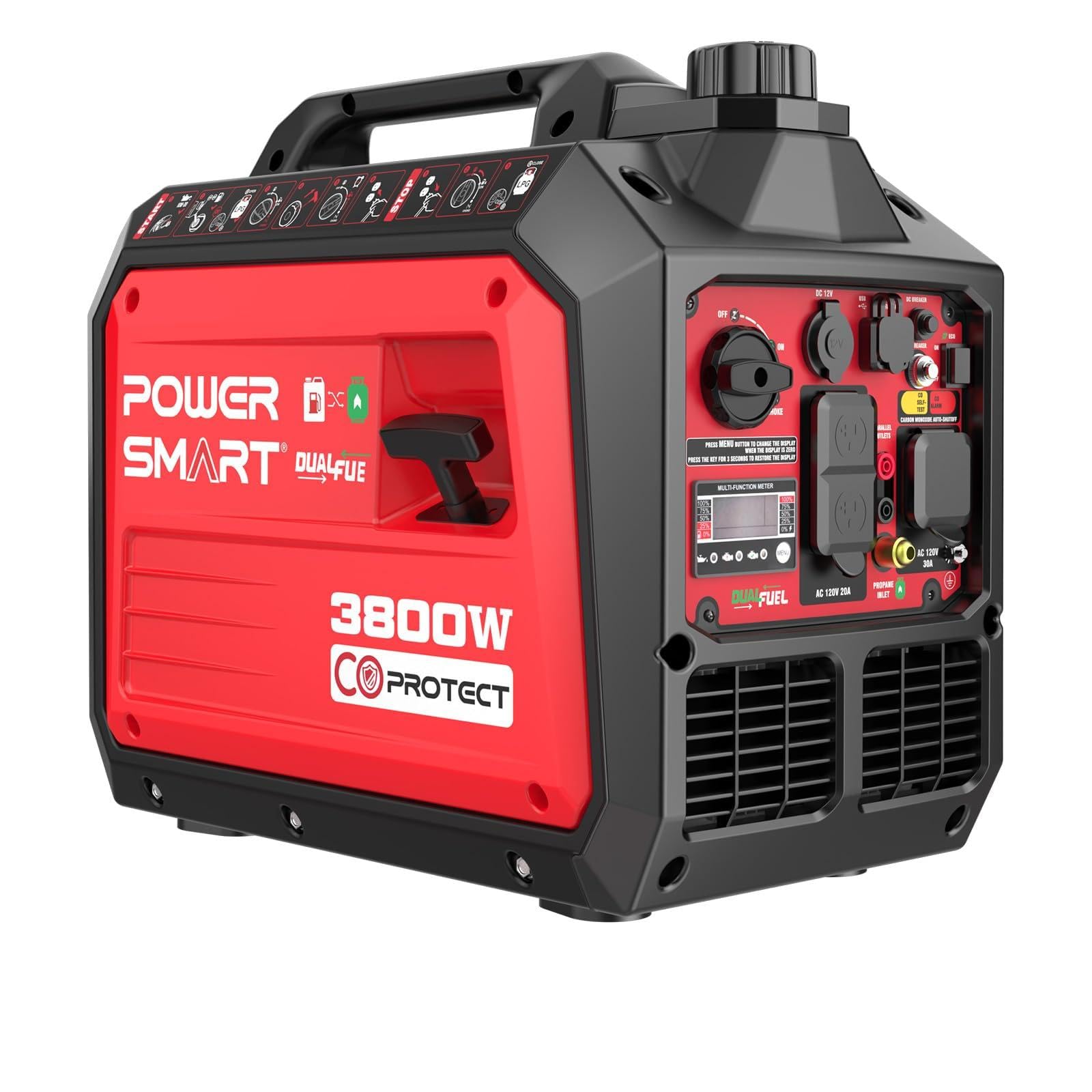
The PowerSmart 3800W strikes an ideal balance for a mid-range generator, offering the versatility of dual-fuel operation alongside clean inverter power. You can switch between gasoline and propane based on availability or cost, a crucial feature for extended emergencies. Its design prioritizes safety with a built-in carbon monoxide shutdown sensor.
Users report that it starts reliably and runs quietly, with noise levels comparable to a normal conversation. The pure sine wave output makes it safe for charging sensitive electronics like laptops and CPAP machines, which is a significant advantage over conventional generators.
While compact and relatively lightweight, it delivers substantial power for running a refrigerator, lights, and a furnace fan simultaneously. The inclusion of an RV-ready outlet adds to its utility for more than just home backup. It represents a thoughtful package that doesn’t cut corners on important features.
Why it’s great
<
- Dual-fuel flexibility with propane and gasoline
- Clean inverter power safe for sensitive electronics
- Built-in CO shutdown sensor for safety
- Quiet operation compared to conventional models
Good to know
- Runtime is shorter on propane than gasoline
- Manual start only, no electric option
- Tank size is average, so refueling may be needed for long outages
2. WEN 4,750-Watt 120V/240V Dual Fuel Portable Generator

For homeowners seeking to connect to a transfer switch for whole-house backup, this WEN model is a standout. Its ability to output both 120V and 240V power is essential for powering 240V circuits in your home panel, such as for a well pump. The electric start and dual-fuel capability make operation convenient and flexible.
Users who have integrated it with an interlock kit report it powers essentials like refrigerators, lights, furnaces, and even microwaves with ease. The option to run on propane is highly praised for eliminating carburetor issues from stale gas and providing reliable starts in cold weather.
While it’s a heavier unit, the included wheel kit makes it manageable. The substantial 4-gallon tank provides a long runtime, especially on propane. For a serious home backup solution that doesn’t require a professional standby installation, this generator offers professional-grade features.
Why it’s great
- 120V/240V output ready for transfer switch hookup
- Electric start and dual-fuel operation
- Substantial runtime on a 4-gallon tank
- Powers a significant portion of home essentials
Good to know
- Heavy and requires the wheel kit for movement
- Some users report minor assembly or battery issues
- Louder than inverter models, as expected for its class
3. Westinghouse 4000W Super Quiet Dual Fuel Inverter Generator

This Westinghouse inverter generator blends premium features with a mid-range footprint. The remote electric start is a game-changer for convenience, allowing you to start the unit from inside your home or RV. The comprehensive digital display shows fuel level, output, and remaining runtime, putting all critical data at your fingertips.
Its inverter technology ensures quiet operation, as low as 52 dBA, making it a considerate neighbor in campgrounds or suburbs. The dual-fuel capability and built-in CO sensor add layers of utility and safety. Users note its impressive fuel efficiency, especially when using the eco mode.
While positioned at a higher tier, it justifies its cost with refined features that enhance the user experience significantly. It’s powerful enough to run an RV air conditioner or a suite of home essentials, all while being remarkably quiet and easy to manage.
Why it’s great
- Remote and electric start for maximum convenience
- Extremely quiet and fuel-efficient operation
- Informative digital display with runtime data
- Dual-fuel and CO safety shutdown
Good to know
- Positioned at a higher price point
- Remote requires the unit’s main switch to be on
- Fuel tank size is modest, so runtime is good but not exceptional
4. MaXpeedingrods 3500 Watt Portable Inverter Generator

This unit is a powerhouse in a surprisingly compact and quiet package. At just 58 decibels in eco mode, it’s ideal for situations where noise is a primary concern, like camping or close-quarters neighborhoods. Its pure sine wave inverter technology reliably powers sensitive electronics without risk.
Real-world users have been amazed at its capability, with reports of it running a travel trailer’s air conditioner or, during an emergency, powering a home’s refrigerators, lights, and gas furnace for days. The parallel capability means you can link two units together for double the power if future needs grow.
While it requires the usual break-in and maintenance, its performance-to-size ratio is exceptional. It’s relatively lightweight for its output, making it one of the more portable options in this power class.
Why it’s great
- Exceptionally quiet operation, great for camping
- Compact and relatively lightweight for its power
- Clean power safe for all electronics
- Parallel ready for future expansion
Good to know
- Small fuel tank limits runtime under heavy load
- Spark plug and oil access can be tricky for maintenance
- Some users note minor quality control points
5. PowerSmart 7000-Watt Open Frame Inverter Generator
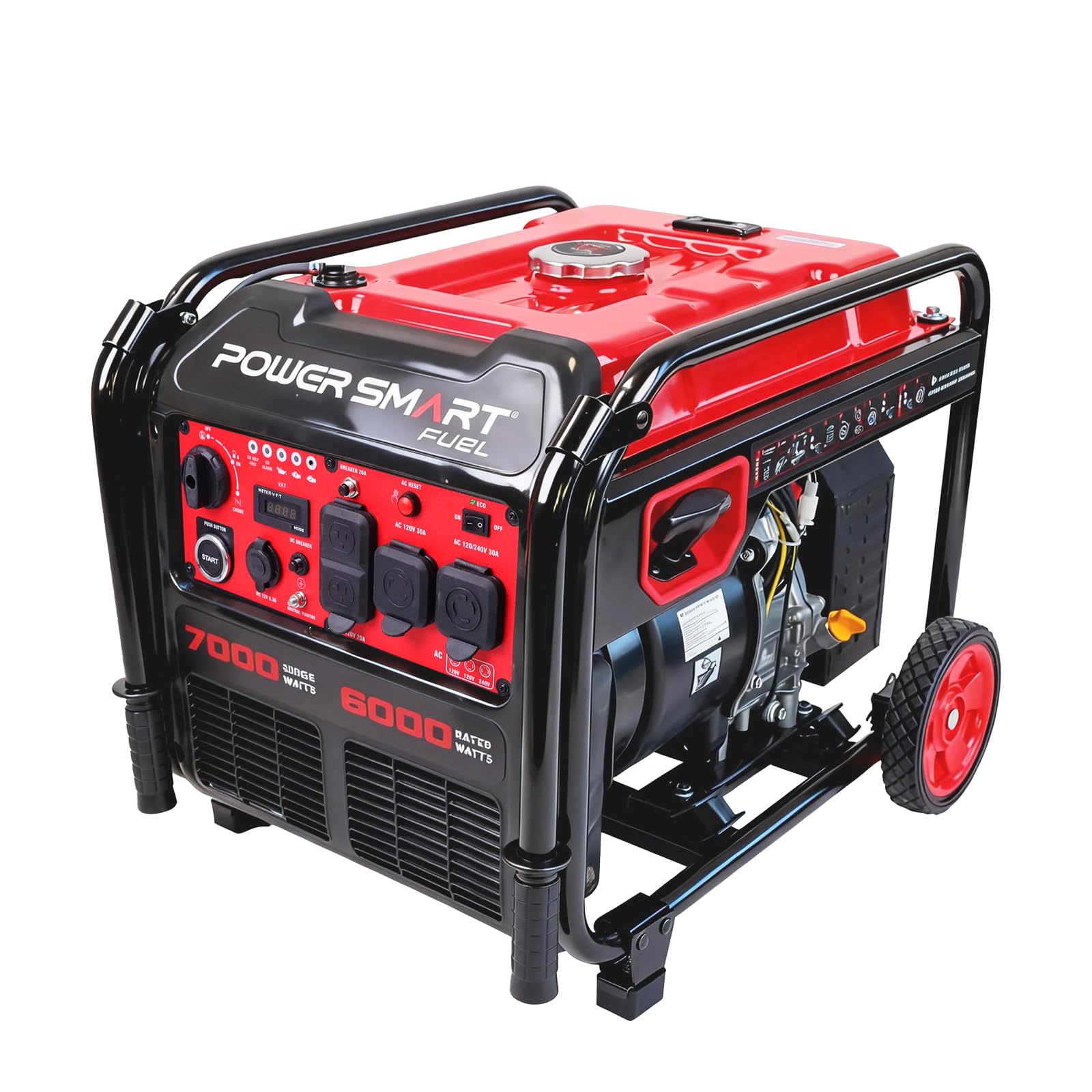
Bridging the gap between traditional loud generators and quiet inverters, this PowerSmart model uses an open-frame design to deliver high power with cleaner output. Its 7000 surge watts can handle heavy starting loads like central air conditioners or well pumps, while the inverter technology (<3% THD) protects sensitive devices.
The electric push-button start is a major convenience on a unit of this size, and the 120V/240V dual voltage makes it transfer-switch ready for whole-house backup. The open frame aids in cooling, which can promote longer engine life during extended heavy use.
It’s a robust choice for users who need substantial power for a job site or a large home but still want the benefits of cleaner inverter power. It operates quieter than a conventional generator of similar size, though not as silent as a fully enclosed inverter.
Why it’s great
- High output with clean inverter power
- Electric start and 120V/240V versatility
- Open frame design for better cooling
- Can power heavy-demand appliances and tools
Good to know
- Heavier and louder than fully enclosed inverters
- Runtime at full load is limited by tank size
- Open frame offers less protection from elements
6. Jackery Explorer 1000 v2 Portable Power Station

This is not a traditional fuel-burning generator but a high-capacity lithium power station. Its greatest advantage is silent, fume-free operation, allowing it to be used safely indoors to power devices, lights, and small appliances. The 1500W pure sine wave inverter can handle surprisingly large loads like microwaves or small refrigerators for limited periods.
The fast-charging capability via a wall outlet is a highlight, reaching a full charge in about 1.7 hours. It’s also solar-ready, offering a renewable recharge option. The LiFePO4 battery is rated for over 4,000 cycles, promising a decade of reliable service.
It’s perfect for short outages, powering work-from-home setups, or as a supplement to a larger generator for quiet indoor power. It’s the ultimate plug-and-play solution with no maintenance, fuel, or noise.
Why it’s great
- Completely silent and safe for indoor use
- No fuel, fumes, or maintenance required
- Very fast recharge from a wall outlet
- Long-life LiFePO4 battery and solar option
Good to know
- Limited runtime for high-wattage appliances
- Solar panel sold separately
- Higher upfront cost per watt-hour compared to fuel generators
7. WEN 5600-Watt Portable Generator

This WEN model delivers robust conventional power with important safety features at an accessible price point. The electric start makes operation simple, and the built-in CO shutdown sensor provides critical protection. With 5600 starting watts, it can handle multiple essential appliances.
The 4.3-gallon tank offers a solid runtime, and the unit includes outlets for household use, RV connection, and a transfer switch. It’s a straightforward, no-frills workhorse built for reliability during emergencies. The three-year warranty provides added confidence.
It is a conventional generator, so it will be louder than inverter models and produce power that may not be as clean for the most sensitive electronics. However, for powering tools, refrigerators, and lights, it remains a dependable and highly capable option.
Why it’s great
- Electric start and important CO safety sensor
- Substantial power output for the cost
- Good runtime with a 4.3-gallon tank
- Includes RV and transfer switch ready outlets
Good to know
- Louder operation than inverter generators
- Power may not be suitable for very sensitive electronics
- Heavier, though it includes a wheel kit
8. A-iPower 5000-Watt Portable Generator
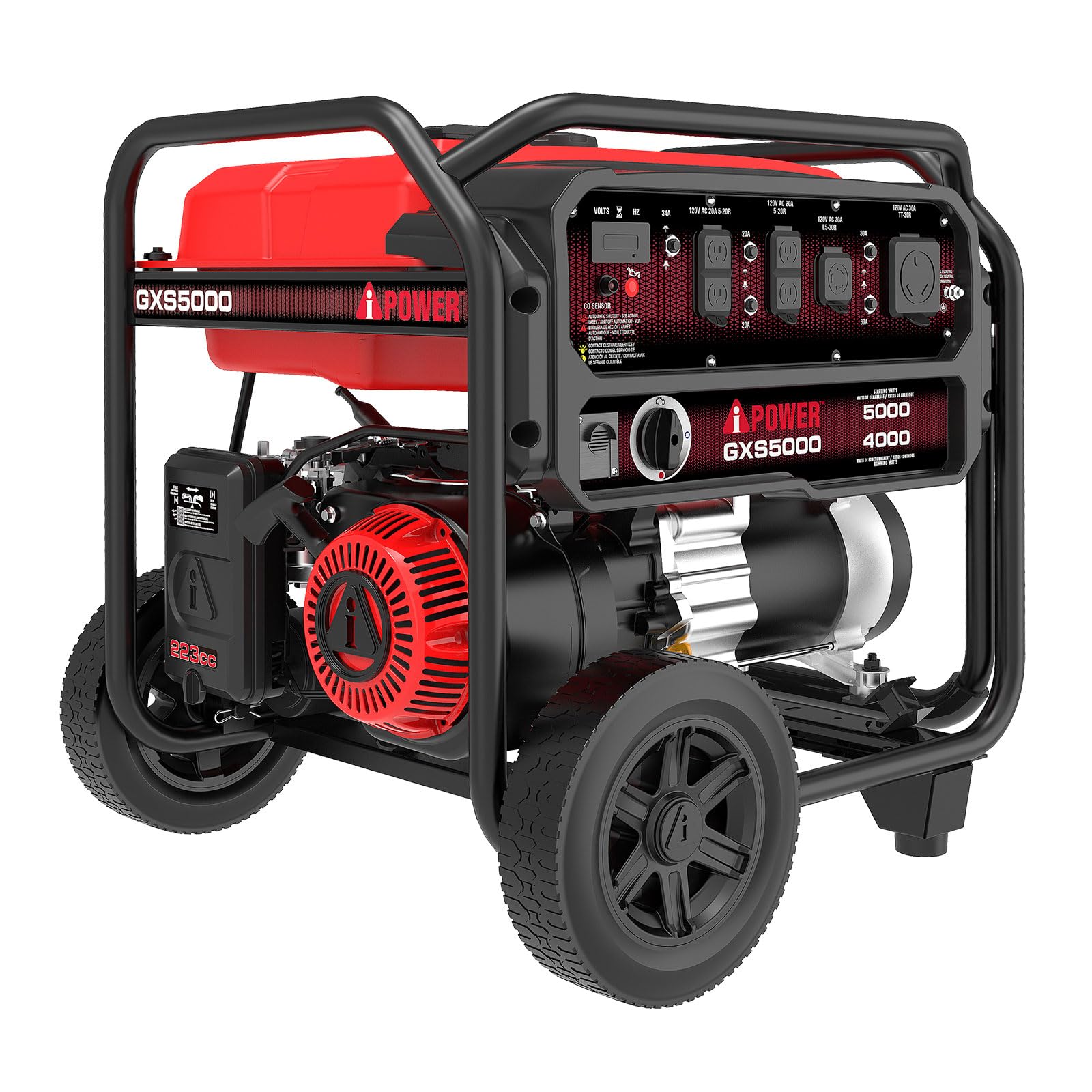
The standout feature of this A-iPower generator is its massive 6.3-gallon fuel tank, which enables a remarkable 20-hour runtime at 25% load. This means fewer risky refueling trips during a multi-day outage. It packs 5000 starting watts, enough for a wide array of home essentials and even some 240V tools.
It includes a CO sensor for safety and a data center display for monitoring. The cast iron sleeve engine is built for durability. Users report it handling heavy loads like central air conditioning and deep well pumps during testing, demonstrating its robust capabilities.
As a conventional open-frame generator, it will produce more noise than an inverter. Its size and weight are considerable, but the extended runtime it offers can be a decisive advantage for prolonged emergencies.
Why it’s great
- Exceptional 20-hour runtime on a large tank
- High power output for demanding appliances
- Durable engine with cast iron sleeve
- Includes CO sensor and digital display
Good to know
- Loud operation typical of conventional generators
- Very heavy and bulky
- Power is not inverter-clean for sensitive devices
9. Westinghouse 9500 Watt Dual Fuel Home Backup Generator

This is a serious backup power plant for a full home. With 9500 peak watts on gasoline, it can start and run multiple large appliances simultaneously, including well pumps and central air units. The dual-fuel capability and remote electric start add tremendous convenience and flexibility for emergency use.
It is designed to connect directly to a home’s electrical panel via a transfer switch, allowing you to power hardwired circuits safely. The build quality is robust, with a durable cast iron sleeve engine. The digital hour meter helps track maintenance intervals.
Its size, weight, and power output place it in the premium tier for homeowners who want maximum capability and the option for near-whole-house backup without the cost of a permanent standby generator.
Why it’s great
- Massive power output for whole-house backup
- Dual-fuel and remote start included
- Heavy-duty engine built for longevity
- Ready for transfer switch connection
Good to know
- Very heavy and requires a dedicated storage plan
- Loud operation, as expected for its class
- Higher fuel consumption under load
10. Westinghouse 12500 Watt Dual Fuel Generator

At the top of the power spectrum, this Westinghouse model is for those who need to leave no appliance behind. Its 12500 peak watts can handle virtually any home load, and it features a 50-amp RV outlet for large RVs or as a direct connection for a home transfer switch. The remote start and dual-fuel operation are standard.
The industrial-grade 457cc engine is built for heavy, sustained use. Users who have installed it with a manual transfer switch report seamless power for entire homes during outages, with ample reserve for starting motors. The comprehensive warranty and support network back its premium positioning.
This is an investment in maximum preparedness. It’s large, heavy, and consumes fuel accordingly, but for ensuring comfort and normalcy during an extended grid-down situation, it represents the pinnacle of portable backup power.
Why it’s great
- Maximum portable power for a full home
- Includes 50A outlet for heavy-duty connection
- Industrial-grade engine durability
- Remote start and dual-fuel flexibility
Good to know
- Extremely heavy and requires significant storage space
- Highest fuel consumption in this lineup
- Substantial upfront investment
11. Oxseryn 4400-Watts Inverter Generator
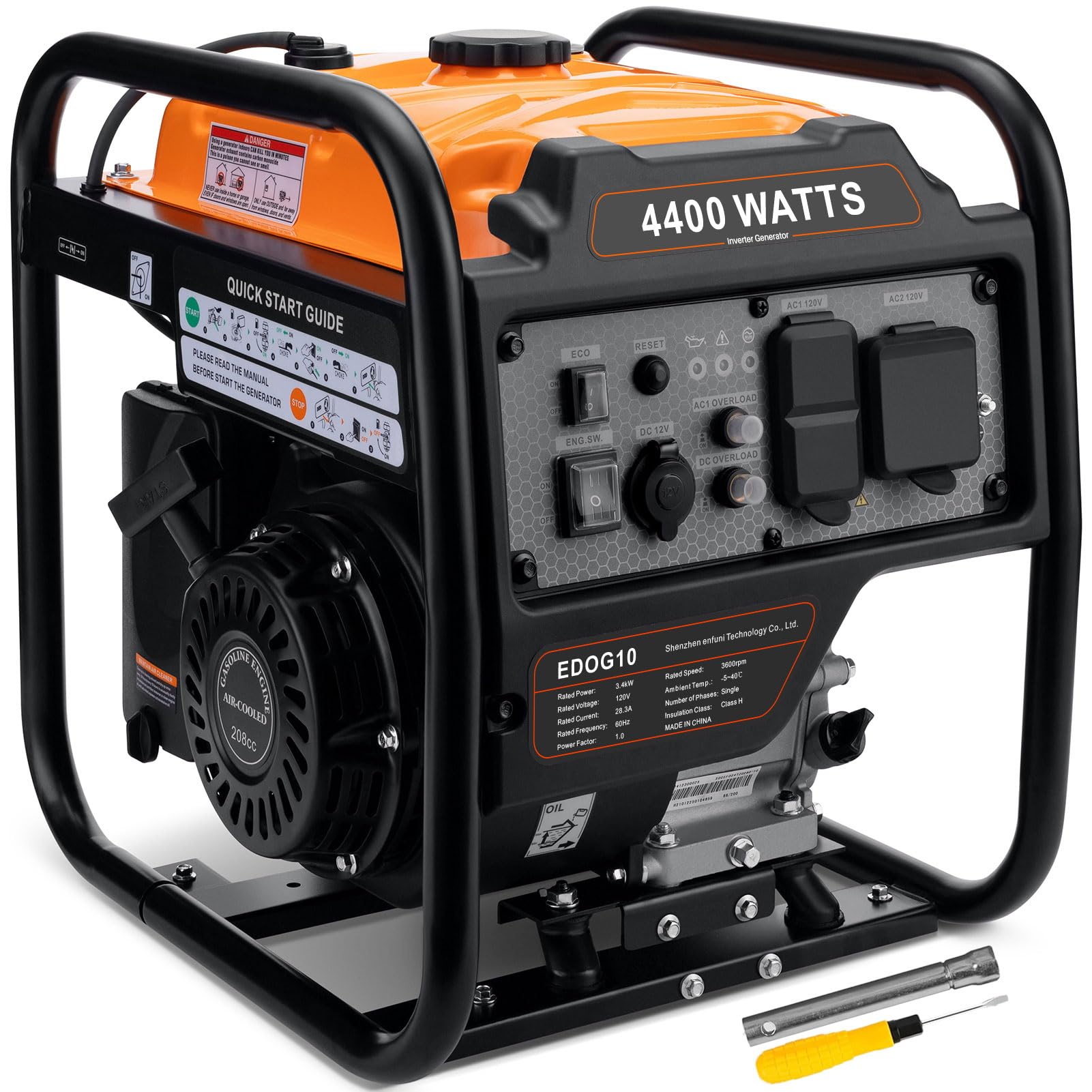
Positioned as an entry-level inverter generator, the Oxseryn offers a compelling set of specs for its cost. It provides clean inverter power, an RV-ready 30-amp outlet, and a relatively lightweight frame. For someone needing basic backup for essentials or RV power on a tight budget, it covers the fundamentals.
Users report it starts easily after proper setup and provides stable power for tools and home appliances. The eco mode helps extend runtime, and the built-in overload and low-oil protection add durability safeguards. It represents a low barrier to entry for inverter technology.
As with many value-focused products, some compromises are present, such as a basic manual and the potential for minor assembly quirks. However, for its power class and feature set, it delivers functional performance that meets core needs.
Why it’s great
- Very accessible entry point for an inverter generator
- Lightweight and portable for its output
- Includes RV outlet and clean power
- Good runtime with eco mode
Good to know
- Basic documentation and some reported labeling issues
- Shorter warranty period than some competitors
- May have a slight gas odor upon first use
Understanding the Specs
Running vs. Starting Watts
Running (or rated) watts are the continuous power the generator can supply. Starting (or surge) watts are the extra power available for a few seconds to start motor-driven appliances like refrigerators or air conditioners, which require up to three times their running wattage to start. Always size your generator based on the highest starting wattage you’ll need.
Inverter vs. Conventional
Conventional generators produce AC power directly from the engine, which can have fluctuations and harmonic distortion. Inverter generators produce DC power, convert it to clean AC power, and regulate the frequency tightly. This results in “clean” power safe for sensitive electronics (like phones and laptops) and allows for quieter, more fuel-efficient operation, especially at lighter loads.
Dual Fuel Operation
Dual-fuel generators can run on either gasoline or propane (LPG). Propane stores indefinitely without degrading, burns cleaner (leading to less engine carbon buildup), and is often safer to store. However, power output is typically 10-20% lower on propane, and BTU content means you’ll go through fuel faster. The flexibility is invaluable during extended outages when one fuel may become scarce.
CO Shutdown Sensor
Carbon monoxide is a deadly, odorless gas produced by engines. A CO shutdown sensor monitors the air around the generator and automatically shuts off the engine if dangerous levels are detected, preventing poisoning if the unit is placed too close to a home or in an enclosed space. This is a critical safety feature for any home backup generator.
FAQ
What size generator do I need to power my home?
Can I run a generator in the rain?
How often should I maintain my generator?
What is the difference between an open frame and an enclosed inverter generator?
Final Thoughts: The Verdict
For most people, the best affordable generator for home winner is the PowerSmart 3800W Dual Fuel Inverter because it masterfully balances clean power, fuel flexibility, safety features, and quiet operation at a mid-range point. If you want whole-house backup capability with a transfer switch, grab the WEN 4750W Dual Fuel. And for maximum quiet and convenience for camping or sensitive neighborhoods, nothing beats the Westinghouse 4000W with Remote Start.

Mo Maruf
I created WellFizz to bridge the gap between vague wellness advice and actionable solutions. My mission is simple: to decode the research and give you practical tools you can actually use.
Beyond the data, I am a passionate traveler. I believe that stepping away from the screen to explore new environments is essential for mental clarity and physical vitality.