Our readers keep the lights on and my smoothie glass nicely filled. As an Amazon Associate, I earn from qualifying purchases.
Choosing an affordable digital camera means balancing image quality, zoom reach, and portability without blowing your budget. The market is flooded with options that promise professional results but often deliver smartphone-grade mediocrity, so knowing which specs actually matter is the difference between a purchase you love and one you regret.
I’m Mohammad Maruf — the founder and writer behind WellFizz. I’ve spent years analyzing hardware specifications, sensor performance, and optical zoom capabilities to help buyers cut through the noise and find the real value in the affordable camera segment.
Whether you are shooting wildlife from a distance, documenting family travels, or starting a vlog, finding the best affordable digital camera requires looking beyond the megapixel count and understanding what each component actually delivers in the field.
How To Choose The Best Affordable Digital Camera
Buying an affordable digital camera is about prioritizing the features that align with your use case. A camera built for wildlife photography has completely different needs than one built for vlogging. Here are the three critical factors to evaluate before you add anything to your cart.
Optical Zoom vs. Digital Zoom
Optical zoom uses the camera’s lens to magnify the subject, preserving full image resolution. Digital zoom simply crops and enlarges the picture, which reduces clarity. When comparing affordable cameras, the optical zoom number — measured in “X” — is the only one that matters. A 50x optical zoom lets you capture a bird at 100 feet with usable detail, while any digital zoom beyond 2x will look like a blurry mess.
Sensor Size and Low-Light Performance
Larger sensors capture more light, resulting in cleaner images in dim conditions and better separation between your subject and the background. In the affordable segment, you will typically find 1/2.3-inch sensors in budget superzooms and 1-inch or APS-C sensors in higher-end models. A 1-inch sensor is roughly four times larger than a 1/2.3-inch sensor, giving you a significant advantage for evening or indoor shooting without needing a flash.
Video Capabilities and Stabilization
If you plan to record video, check for 4K resolution and optical image stabilization. Many budget cameras offer 1080p video only, which can look dated on modern screens. Optical image stabilization (OIS) is essential for handheld telephoto shots and walking videos — without it, footage at full zoom will be shaky and unwatchable. For vloggers, a flip-out screen and external mic support are equally important.
Quick Comparison
On smaller screens, swipe sideways to see the full table.
| Model | Category | Best For | Key Spec | Amazon |
|---|---|---|---|---|
| DJI Osmo Pocket 3 | Vlogging Camera | Stabilized 4K video on the go | 1-inch CMOS, 3-Axis Gimbal | Amazon |
| Sony ZV-1F | Vlogging Camera | Content creators and selfie video | 20mm Ultra-Wide, 1-inch Sensor | Amazon |
| Kodak PIXPRO AZ528 | Superzoom | Wildlife and long-distance subjects | 52x Optical Zoom, 24mm Wide | Amazon |
| Canon PowerShot SX530 HS | Superzoom | Hobbyists wanting long zoom on a budget | 50x Optical Zoom, 24-1200mm | Amazon |
| Canon EOS 2000D / Rebel T7 Bundle | DSLR | Learning photography with interchangeable lenses | 24.1MP APS-C, EF-S 18-55mm | Amazon |
| Panasonic LUMIX ZS99 | Travel Zoom | Pocketable pocket camera for trips | 30x LEICA Zoom, 4K Video | Amazon |
| Sony Alpha a6400 | Mirrorless | Fast action and interchangeable lenses | 0.02 sec AF, 11fps Burst | Amazon |
| Sony FX30 Cinema Line | Cinema Camera | Professional video production | Super 35, Dual Base ISO | Amazon |
| Minolta 64MP Digital Camera | Entry-Level | Everyday snapshots and beginners | 64MP Sensor, 10x Optical Zoom | Amazon |
In‑Depth Reviews
1. DJI Osmo Pocket 3
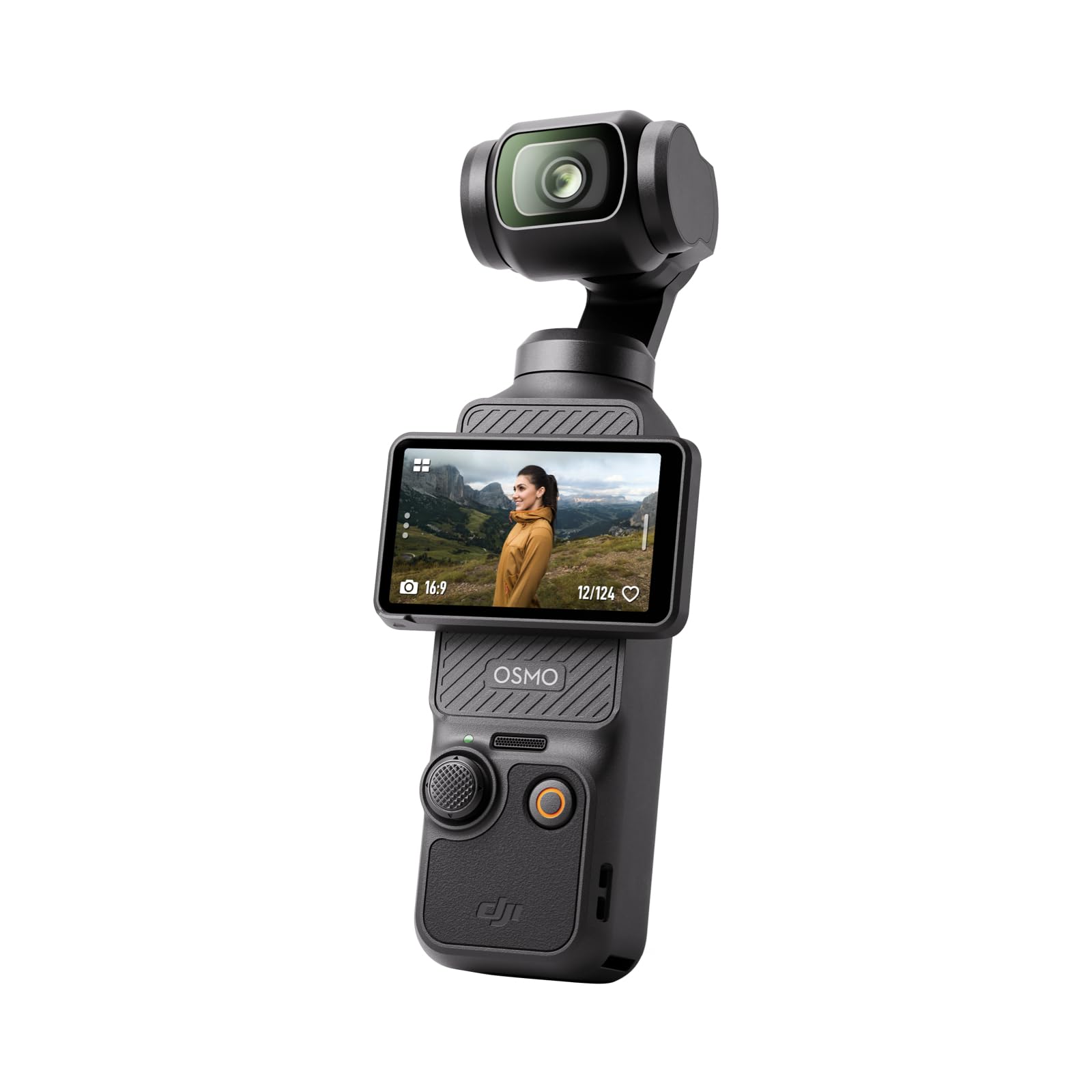
DJI packs a full vlogging studio into a device the size of a candy bar. The 1-inch CMOS sensor captures 4K footage at 120fps, giving you smooth slow-motion options that most budget cameras cannot match. The 3-axis mechanical stabilization completely eliminates walking shakes — something you simply cannot get from digital stabilization alone.
The 2-inch rotating touchscreen allows seamless switching between horizontal and vertical shooting, which is a game-changer for creators who post across YouTube and TikTok. ActiveTrack 6.0 locks onto your face even when you spin or jump, keeping you centered in the frame without a camera operator.
Battery life clocks in at roughly 166 minutes of continuous recording, and the USB-C fast charging gets you back to full quickly. The lack of a built-in lens zoom limits its versatility for distant subjects, but for handheld video, stabilization, and portability, this is the most capable device in its class.
Why it’s great
- Industry-leading 3-axis gimbal stabilization produces butter-smooth walking footage.
- 1-inch sensor and 4K/120fps deliver professional-grade video quality in a pocketable body.
Good to know
- No optical zoom limits use for distant subjects like wildlife or stage performances.
- Small sensor means still photos are adequate but not exceptional compared to dedicated cameras.
2. Sony ZV-1F

Sony designed the ZV-1F specifically for content creators who shoot selfie-style video. The fixed 20mm ultra-wide lens captures your face and your surroundings without needing to hold the camera at arm’s length, and the 1-inch sensor delivers good separation between subject and background even in automatic mode.
Eye-AF autofocus locks onto your eyes reliably, so you stay sharp while moving around the frame. The side-articulating touchscreen makes framing easy when shooting solo, and the directional 3-capsule microphone with the included windscreen captures clear voice audio for vlogs without an external mic.
The main trade-off is the fixed lens — there is no optical zoom, so you cannot pull in distant subjects. Battery life is also on the shorter side, averaging around 45 minutes of continuous recording. For seated or stationary vlogging and well-lit indoor scenes, the ZV-1F produces arguably the best image quality in the sub- bracket.
Why it’s great
- Ultra-wide 20mm lens ensures you and your background are both in the frame from arm’s length.
- Reliable Eye-AF and defocus background button make solo vlogging effortless.
Good to know
- No optical zoom forces you to physically move closer to subjects.
- Battery life is short; carrying a spare is necessary for a full day of shooting.
3. Kodak PIXPRO Astro Zoom AZ528
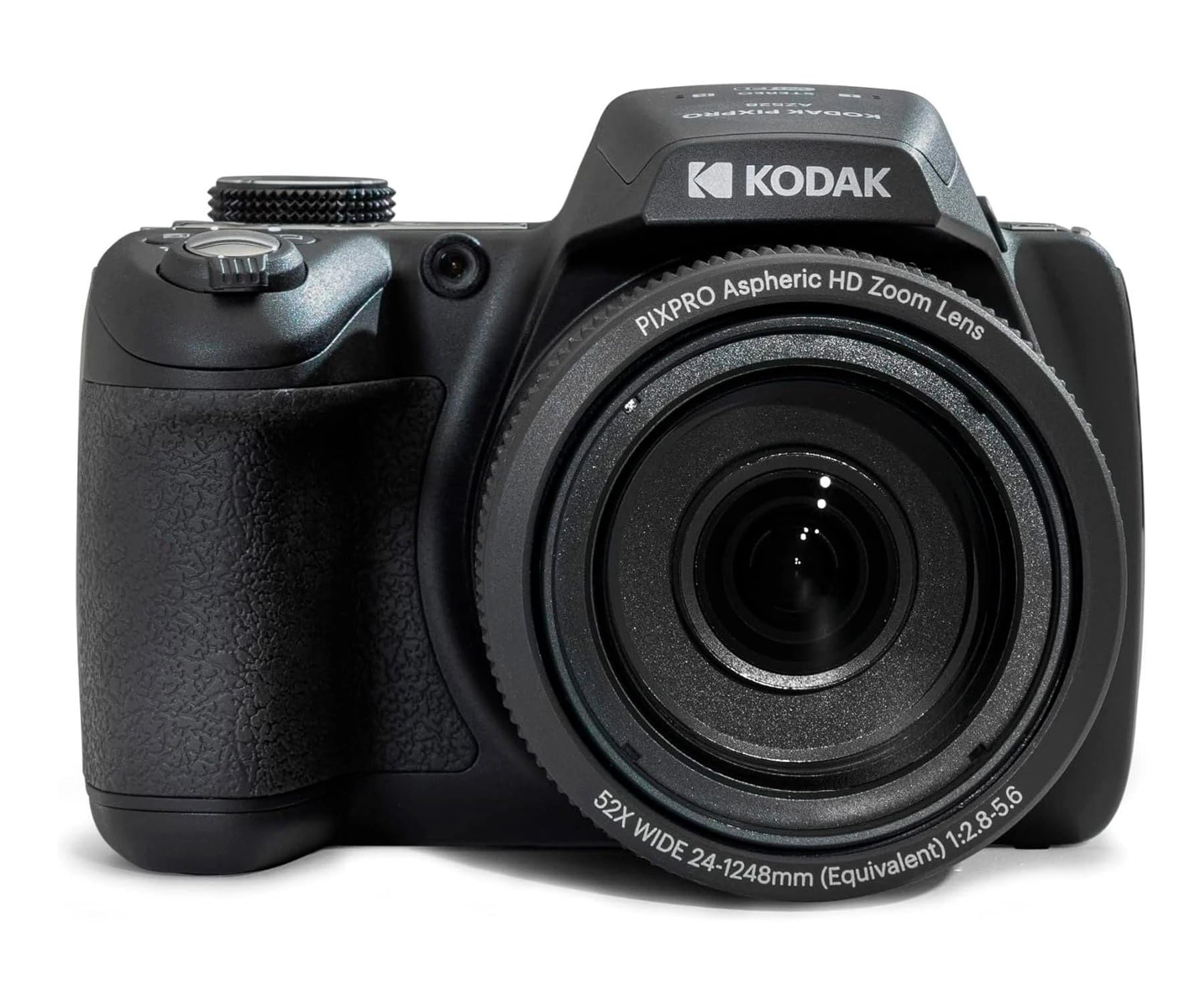
The Kodak AZ528 offers the longest optical reach in its price range — 52x magnification — letting you capture birds, sports players, and distant landmarks that would be invisible to a standard lens. The 24mm wide-angle end is useful for landscape shots, while the telephoto reach at full zoom brings subjects incredibly close without the quality loss of digital zoom.
Built-in optical image stabilization compensates for hand shake at maximum zoom, though you still need steady hands or a tripod for the sharpest results at 52x. The 16MP BSI CMOS sensor performs well in good light, and the 6fps burst mode helps capture the exact moment of fast-moving action.
Wi-Fi connectivity allows you to transfer photos to your phone and use the camera remotely. The battery life is adequate for a day of shooting but not exceptional, and the body construction feels more plastic than more expensive alternatives. If your priority is zoom range on a tight budget, this camera delivers more than anything close to its price.
Why it’s great
- 52x optical zoom provides unparalleled reach for wildlife and sports at this price point.
- Optical image stabilization makes handheld telephoto shots usable.
Good to know
- Image quality drops noticeably in low light due to the small sensor.
- Plastic casing scuffs easily; handle with care during outdoor use.
4. Canon PowerShot SX530 HS (Renewed)

The Canon SX530 HS packs a 50x optical zoom lens covering 24-1200mm, giving you massive flexibility from wide group shots to extreme close-ups. The 16MP CMOS sensor and DIGIC 4+ processor deliver pleasing color reproduction and decent dynamic range for an entry-level superzoom.
Built-in Wi-Fi and NFC make transferring images to your phone straightforward, so you can share shots immediately. The 3-inch LCD screen with 461,000 dots is bright enough for outdoor framing, though the resolution is not as crisp as higher-end models. Video tops out at 1080p, which is acceptable but not cutting-edge.
As a renewed unit, the condition can vary, but customer reports generally indicate good cosmetic shape and full functionality. The autofocus can be slightly slow when zooming from 24mm to 1200mm rapidly, so patience is required at full reach. For the price of a budget superzoom, the SX530 offers undeniable zoom range with Canon’s reliable color science.
Why it’s great
- 50x optical zoom captures subjects invisible to standard lenses at a bargain price.
- Canon’s color processing produces natural, pleasing tones straight out of camera.
Good to know
- Autofocus speed is slow at maximum zoom; requires steady hands or support.
- No 4K video recording — limited to 1080p Full HD.
5. Canon EOS 2000D / Rebel T7 Bundle (Renewed)

The Canon Rebel T7 is the entry point into DSLR photography, and this renewed bundle includes everything you need to start shooting immediately. The 24.1MP APS-C sensor is nine times larger than a typical smartphone sensor, giving you real control over depth of field and significantly better low-light performance than any point-and-shoot in the same budget.
The EF-S 18-55mm zoom lens covers standard focal lengths from wide-angle to portrait — a versatile starting point before you invest in additional glass. The bundle also includes a 64GB memory card, LED video light, tripod, and carrying case, so you can begin shooting without extra purchases. Full HD 1080p video at 30fps is sufficient for casual recording, though 4K is absent.
The optical viewfinder provides a clear, lag-free view of your subject, and the 9-point autofocus system with center cross-type point locks on reliably in good light. The body is larger and heavier than mirrorless alternatives, but the trade-off is access to Canon’s vast EF/EF-S lens library. For someone serious about learning photography fundamentals, this bundle is hard to beat at the price.
Why it’s great
- APS-C sensor provides genuine shallow depth of field and superior low-light performance.
- Complete bundle with lens, memory card, tripod, and case — ready out of the box.
Good to know
- Bulky and heavier than mirrorless or pocket cameras for everyday carry.
- Limited to 1080p video; no 4K recording option.
6. Panasonic LUMIX ZS99

Panasonic’s ZS99 is the definition of a travel camera — compact enough to slip into a jacket pocket while carrying a 30x LEICA zoom lens covering 24-720mm. The LEICA-branded optics deliver sharp, contrasty images with natural color rendition, and the intelligent zoom extends to 60x with minimal quality loss compared to pure digital zoom.
The 1,840k-dot tiltable touchscreen is one of the sharpest in its class, making composition easy even in bright sunlight. USB Type-C charging means you can recharge from a power bank on the go, and Bluetooth 5.0 with the dedicated Send Image button transfers photos to your phone in seconds. 4K video at 30fps and 4K PHOTO burst capture at 30fps give you hybrid flexibility.
Image quality is good up to ISO 1600, after which noise becomes visible. Corner softness and color aberration appear at the telephoto end, though this is typical for a 30x zoom in a pocket body. If your priority is a camera that disappears into a bag but still offers serious zoom range, the ZS99 is the most refined option under .
Why it’s great
- LEICA 30x zoom lens delivers excellent sharpness in a truly pocketable body.
- Tiltable touchscreen and USB-C charging make it ideal for travel.
Good to know
- No viewfinder — you must compose shots using the rear LCD screen.
- Corner softness and color aberration noticeable at maximum telephoto.
7. Sony Alpha a6400

The Sony a6400 is the best affordable mirrorless camera for anyone who values autofocus speed. The 0.02-second acquisition time with 425 phase-detection points covering 84% of the sensor means subjects are tracked with uncanny precision — even fast-moving pets or children stay in focus. Real-time Eye AF for humans and animals works reliably in both photo and video.
The 24.2MP APS-C sensor produces vibrant, detailed images with excellent dynamic range. Burst shooting at 11fps with continuous autofocus lets you capture decisive moments without missing a frame. The 180-degree flip-up touchscreen makes vlogging and self-portraits easy, and the E-mount system gives access to a huge library of affordable lenses.
4K video is oversampled from 6K, delivering sharp footage, though the rolling shutter is noticeable in fast pans and the lack of in-body stabilization means you need stabilized lenses or a gimbal for walking shots. The menu system is complex, and the touchscreen responsiveness is behind competitors. For stills and controlled video, the a6400 remains one of the sharpest bargains in mirrorless.
Why it’s great
- World’s fastest autofocus at 0.02 seconds with reliable eye tracking for humans and animals.
- 11fps burst shooting with continuous AF captures fast action without missing frames.
Good to know
- No in-body image stabilization; requires stabilized lenses or a gimbal for smooth video.
- Rolling shutter is noticeable in 4K video during fast panning movements.
8. Sony FX30 Cinema Line

The FX30 brings Sony’s Cinema Line technology to an APS-C sensor, offering professional video features at a fraction of the cost of full-frame cinema cameras. The Super 35 sensor oversamples 6K to deliver stunning 4K footage with rich color depth, and S-Cinetone provides a cinematic look straight out of camera without grading.
Dual Base ISO (800 and 2500) gives you clean low-light performance in two distinct ranges, and the 14+ stop dynamic range preserves highlight and shadow detail in challenging scenes. Active cooling allows for unlimited 4K recording without overheating — a critical feature for long interviews, live performances, or event coverage.
The E-mount compatibility gives you access to a massive lens ecosystem, and professional connectors like full-size HDMI and dual card slots make it suitable for paid work. Battery life is modest at around 1-2 hours of continuous recording, and the body cost is the highest on this list. For creators graduating from beginner gear who need cinematic quality, the FX30 delivers 90% of the FX3 performance.
Why it’s great
- 6K oversampled 4K with S-Cinetone delivers professional cinematic color straight out of camera.
- Active cooling allows unlimited recording time without overheating shutdowns.
Good to know
- Battery life is limited; external power or multiple batteries needed for long shoots.
- Premium price point places it at the top of the affordable segment, not the middle.
9. Minolta 64MP Digital Camera

The Minolta 64MP Digital Camera is the most affordable entry point on this list, targeting users who want a dedicated camera without spending hundreds. The 64MP sensor captures high-resolution files suitable for enlargements, and the 10x optical zoom provides moderate reach for everyday photography like portraits, family gatherings, and close-up textures via macro mode.
4K video recording and anti-shake technology help stabilize handheld shots, and the swivel LCD screen makes framing from different angles easier. The package includes a 32GB SD card, case, battery, charger, and USB cable — everything you need to start shooting immediately. Built-in Wi-Fi lets you control the camera from your phone and transfer files wirelessly.
Build quality is budget-tier, with reports of the mode selector wheel being loose and some units developing autofocus blur after a few months. Image quality is best in good light, and the sensor struggles in dim conditions. For the absolute lowest budget, this camera functions as a usable stepping stone, but reliability concerns make it a gamble for long-term use.
Why it’s great
- Complete package with SD card, case, and batteries removes the need for accessory purchases.
- 64MP resolution provides headroom for cropping and large-format printing.
Good to know
- Build quality concerns reported by some users, including loose controls and autofocus issues.
- Low-light performance is poor; best results come from well-lit scenes.
FAQ
Do megapixels matter when choosing a cheap digital camera?
Can I use an affordable camera for professional video work?
Is optical image stabilization necessary in a budget zoom camera?
Final Thoughts: The Verdict
For most users, the best affordable digital camera winner is the DJI Osmo Pocket 3 because it combines professional-grade stabilization, a large 1-inch sensor, and groundbreaking portability into a single device that outperforms everything near its price. If you want extreme optical zoom for wildlife and distant subjects, grab the Kodak PIXPRO AZ528. And for the best image quality and lens versatility in a traditional camera body, nothing beats the Sony Alpha a6400.

Mo Maruf
I created WellFizz to bridge the gap between vague wellness advice and actionable solutions. My mission is simple: to decode the research and give you practical tools you can actually use.
Beyond the data, I am a passionate traveler. I believe that stepping away from the screen to explore new environments is essential for mental clarity and physical vitality.