Our readers keep the lights on and my smoothie glass nicely filled. As an Amazon Associate, I earn from qualifying purchases.
Waking up with a stiff, aching neck is a clear signal that your pillow is working against your spine, not with it. An affordable contour pillow is the single most effective tool for realigning your cervical curve during sleep, but the market is flooded with foam slabs that promise support yet deliver a flat, lifeless pancake by week three. The difference between waking up sore and waking up refreshed comes down to three things: the foam’s density rating, the contour’s depth-to-loft ratio, and whether the design actually matches your primary sleeping position.
I’m Mohammad Maruf — the founder and writer behind WellFizz. I’ve spent years analyzing sleep product specifications, cross-referencing foam certifications, and filtering through thousands of user reports to separate pillows that actually hold their shape from those that collapse under pressure.
This guide breaks down five budget-conscious models that deliver genuine orthopedic contour support without the premium price tag. Each pick was evaluated for its foam integrity, adjustability options, and real-world neck-pain relief performance, so you can stop guessing and start sleeping better with the best affordable contour pillow for your specific needs.
How To Choose The Best Affordable Contour Pillow
Not every contour pillow delivers real cervical traction. Many rely on a single molded curve that forces your head into a fixed position, regardless of your shoulder width or sleeping style. The key is finding a pillow that lets you adjust the loft, supports the natural curve of your neck, and uses foam certified to hold its shape through months of use. Focus on these three factors before you buy.
Loft Adjustability and Sleep Position Match
Side sleepers typically need a higher loft (4.5 to 5 inches) to fill the gap between the shoulder and the head, while back sleepers perform best with a lower profile (3 to 4 inches) that maintains the cervical curve without tilting the chin upward. The best affordable contour pillows offer removable layers or dual-height designs that let you switch between both configurations without buying a second pillow.
Foam Density and Certification
Low-density memory foam degrades quickly, causing the contour to flatten and the neck to sink into improper alignment. Look for CertiPUR-US certification, which guarantees the foam is free from heavy metals and formaldehyde and that it retains its rebound properties over time. A foam density of 3.5 pounds per cubic foot or higher provides the durability needed for nightly support.
Cooling and Breathability Features
Memory foam traps heat by nature. Contour pillows with bamboo rayon covers, 3D mesh side panels, or open-cell foam cores allow heat to escape and air to circulate. If you wake up with a sweaty neck, the pillow’s cover fabric and internal ventilation structure matter more than any marketing claim about “cooling gel” inserts.
Quick Comparison
On smaller screens, swipe sideways to see the full table.
| Model | Category | Best For | Key Spec | Amazon |
|---|---|---|---|---|
| Releep Cervical Neck Pillow | Adjustable Memory Foam | All sleep positions with adjustable loft | Wave-shaped loft: 4.7″ high / 3.9″ low | Amazon |
| Core Products Tri-Core Pillow | Fiber Fill Orthopedic | Petite frames and odor-sensitive sleepers | Petite size: 19″ x 12″, fiber fill, no odor | Amazon |
| VJASD Cervical Neck Pillow | Butter-Shaped Memory Foam | Back and side sleepers needing dual-height | Dual contour: 4.2″ low / 5″ high side wings | Amazon |
| Latree 5X Pain Relief Pillow | Hollow Contour Memory Foam | Immediate neck relief with cooling foam | Open-cell foam core, 95% breathable structure | Amazon |
| Ergo Pillow for Sleep Apnea | CPAP-Friendly Memory Foam | Side sleepers using CPAP machines | Dual loft: 4.7″ high, ice silk cooling cover | Amazon |
In‑Depth Reviews
1. Releep Cervical Neck Pillow
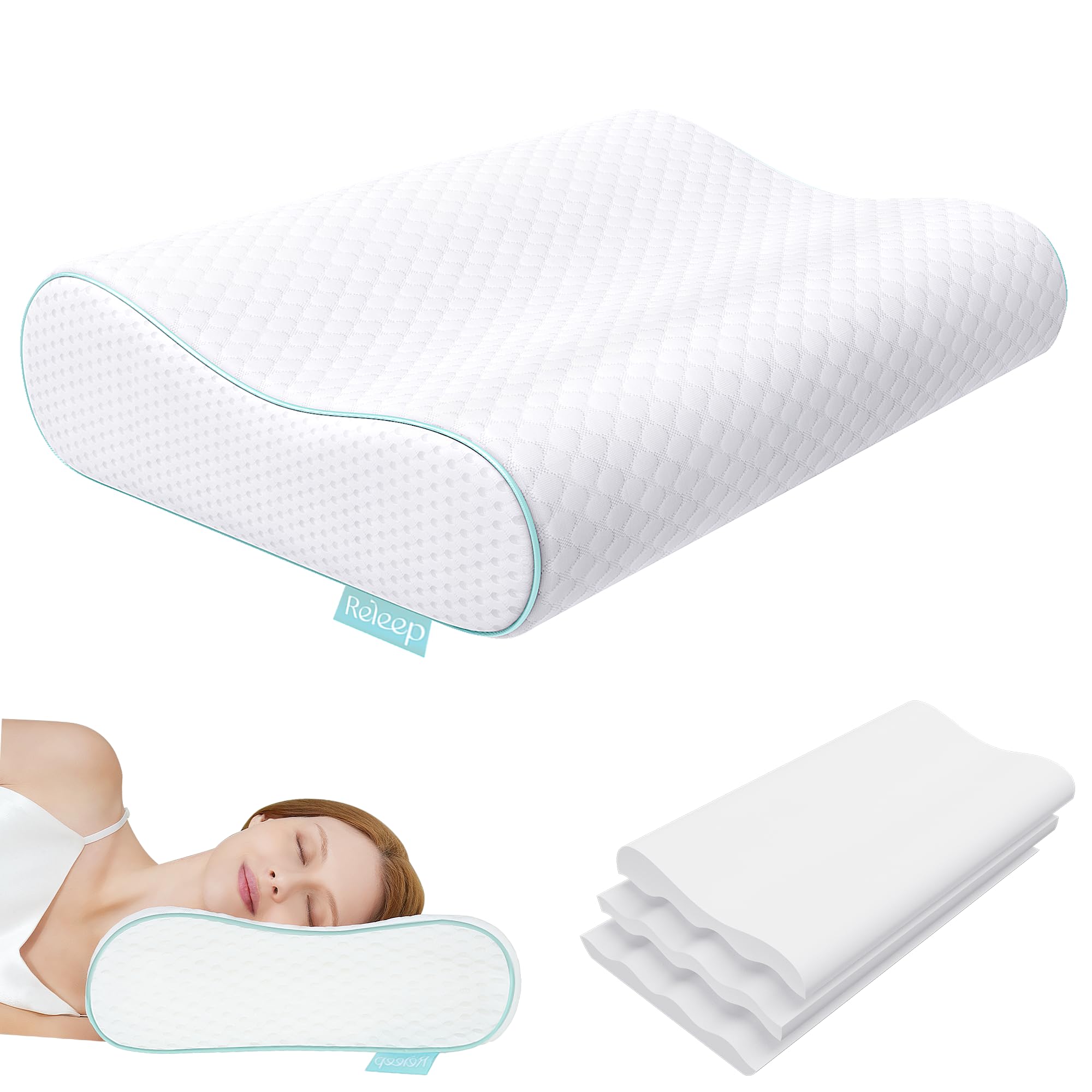
The Releep Cervical Neck Pillow earned the top spot because its wave-shaped loft system lets you choose between a 4.7-inch contour for side sleeping or a 3.9-inch contour for back sleeping by removing the middle foam layer. This adjustability means the pillow adapts to your shoulder width and preferred position without forcing a one-size-fits-all curve. The CertiPUR-US certified slow-rebound memory foam maintains its shape through repeated compression cycles, which is crucial for a contour pillow that relies on consistent loft to keep the cervical spine neutral.
Its cooling cover uses a dot-pattern knit combined with 3D mesh side panels that actively vent heat instead of trapping it against the skin. Users with CPAP machines report that the 23.6-inch length provides enough real estate for mask hoses and nighttime adjustments without knocking the pillow off alignment. The polyester outer fabric is moisture-wicking, which helps reduce the clammy feeling common in budget memory foam pillows.
Where this pillow truly stands out is in its measured approach to support firmness. It lands at medium-firm, which avoids the overly hard feel of some orthopedic pillows while still providing enough resistance to keep the neck from sinking into poor posture. The 1.02-kilogram weight also indicates a foam density that won’t degrade into a soft lump after a few months of use. If you want a single pillow that covers multiple sleep positions and doesn’t break its promise of cervical traction, this is the one to buy.
Why it’s great
- Removable foam layer allows two distinct contour heights
- CertiPUR-US certified foam resists permanent flattening
- 3D mesh side panels provide active heat ventilation
Good to know
- Initial outgassing smell requires 24-48 hours of airing
- Medium-firm feel may be too soft for those who prefer rigid cervical rolls
2. Core Products Tri-Core Cervical Support Pillow

The Core Products Tri-Core is a distinct departure from the memory foam crowd because it uses a polyester fiber fill that is naturally breathable and completely odor-free from the moment you open the packaging. Its unique value lies in its petite size (19 x 12 inches), specifically designed for sleepers under 4 feet 10 inches. Most contour pillows are simply too thick for smaller frames, causing the neck to bend upward rather than rest in a neutral line. The Tri-Core solves this with a low-profile design that includes two adjustable firm neck rolls that can be customized by manually migrating the fiber fill.
The pillow features raised side panels for side sleeping and a contoured center cradle for back sleeping. Unlike foam pillows that rely on molded shapes, the fiber fill allows for micro-adjustments to the neck roll support, which users can fine-tune over the first few nights. The 51% cotton / 49% polyester cover is soft against the skin and machine washable. Assembly in the USA from globally sourced materials adds a layer of quality control that is rare at this price tier.
Multiple users with cervical disc issues and fused necks report that the petite size eliminated morning pain that standard pillows could not address. The 1.2-pound weight is intentionally light, and the pillow compresses easily for travel. The main trade-off is that the fiber fill does not provide the same solid resistance as high-density memory foam, so sleepers who prefer a firm, non-yielding contour may find it too soft. However, for smaller body types and those who cannot tolerate foam odors, this pillow is unmatched in its category.
Why it’s great
- Zero chemical outgassing — usable immediately
- Petite size fits smaller frames without over-lifting the neck
- Adjustable neck roll via manual fiber migration
Good to know
- Fiber fill provides less structural firmness than high-density foam
- Requires a few nights of adjustment to find optimal neck roll position
3. VJASD Cervical Neck Pillow
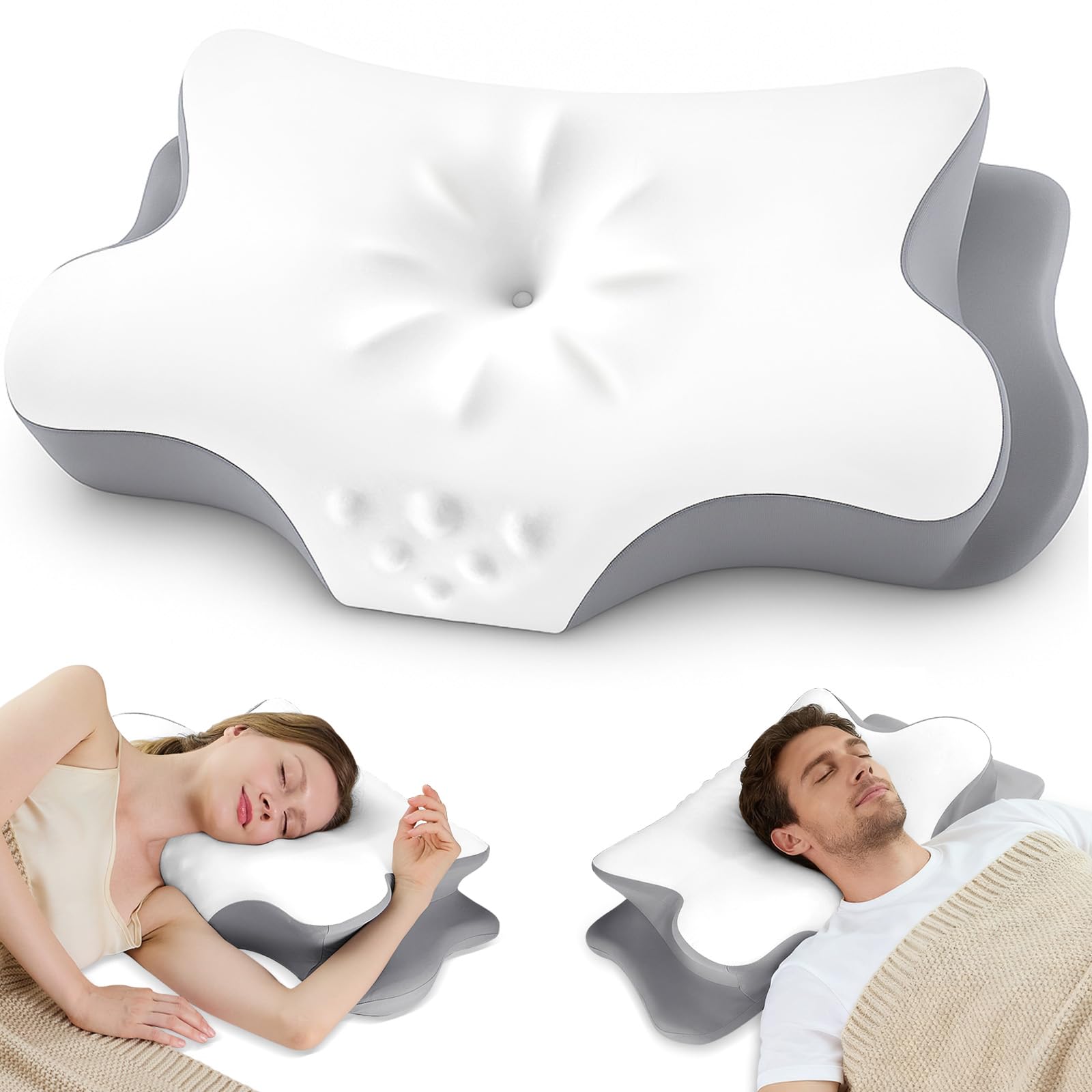
The VJASD Cervical Neck Pillow uses a butterfly-shaped contour that offers two distinct neck loft heights: 4.2 inches on the lower side for back sleeping and 5 inches on the higher side for side sleeping, with side wings reaching 5.7 inches for added cheek and shoulder clearance. This dual-height design means you can simply flip the pillow to switch between support levels without dismantling any layers. The high-density memory foam core is formulated to rebound quickly after compression, which prevents the permanent indentations that plague lower-density pillows after repeated use.
The cooling cover is a blend of 90% polyester and 10% spandex, providing a smooth, moisture-wicking surface that reduces heat buildup. The cover is removable and machine washable, which is a practical feature for those who want to maintain hygiene without spot-cleaning foam. The pillow arrives compressed in a premium gift box and requires 24 to 48 hours of airing to fully expand.
User reports indicate that this pillow notably reduces morning migraines and arm numbness caused by cervical nerve compression, with several reviews noting relief from herniated disk symptoms after two weeks of consistent use. The butterfly shape cradles the head without forcing a rigid position, which makes it suitable for people who shift between back and side sleeping during the night. The main limitation is that the shape requires proper positioning — if your head slides off the designated contour zone, the support drops off noticeably.
Why it’s great
- Flip design provides two distinct loft heights for position switching
- High-density foam rebounds quickly without sagging
- Machine-washable cooling cover reduces heat retention
Good to know
- Butterfly shape requires precise head placement for full contour benefit
- Foam expansion time of 24-48 hours before full use
4. Latree 5X Pain Relief Pillow
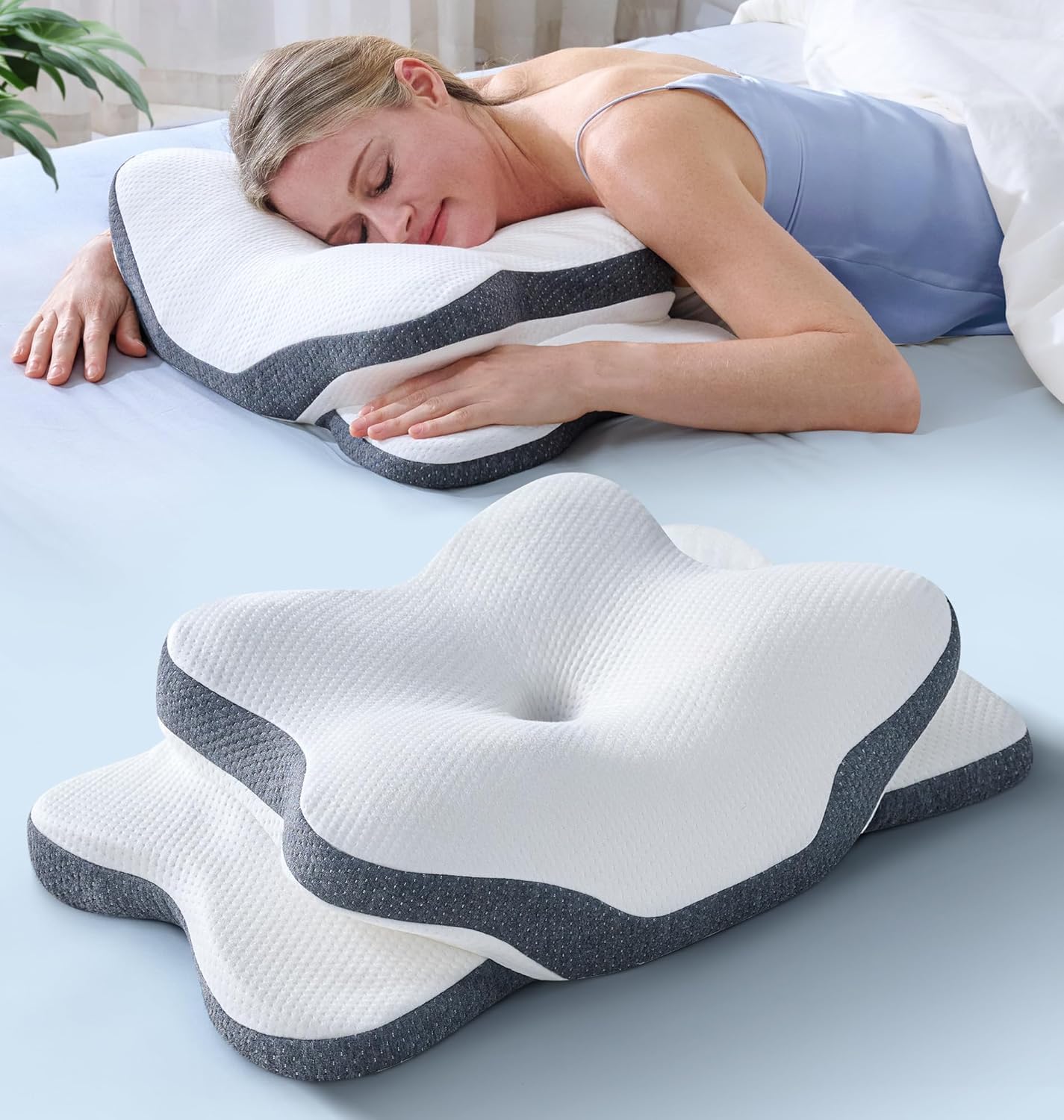
The Latree 5X Pain Relief Pillow distinguishes itself with a hollow butterfly contour that integrates six distinct support zones, including dedicated armrest cutouts for side sleepers. The core feature is its 95% open-cell memory foam structure, which the brand claims offers three times the breathability of standard contour pillows. This open-cell construction is paired with a bamboo rayon blend cover that actively wicks moisture, making it one of the coolest-sleeping foam pillows in this price range. The foam is triple-certified by OEKO-TEX, CertiPUR-US, and ISPA, which covers safety, emissions, and durability standards.
The pillow’s height can be adjusted by rotating it 180 degrees, which changes the contour angle to maintain what the manufacturer describes as a 15-degree golden ratio for cervical alignment. This rotation method is simpler than removable layers and ensures that the foam’s density remains consistent across the entire surface. The rectangular shape (22.9 x 14.3 inches) provides ample surface area for movement during sleep without falling off the contoured section.
Users with pre- and post-operative cervical fusion report that the pillow held its shape and firmness over months of use without heating up or developing soft spots. The gradual incline design allows the head to settle into a slight crater effect, which provides a natural locking mechanism that keeps the cervical spine aligned even during restless sleep. The main downside is that the hollow center can feel unusual for stomach sleepers, who generally perform better with a flatter, softer surface.
Why it’s great
- 95% open-cell foam core delivers superior heat dissipation
- Triple certification ensures low emissions and durable foam
- Armrest cutouts accommodate side sleepers with shoulder sensitivity
Good to know
- Hollow contour may feel odd for stomach sleepers
- Rotation-based height adjustment offers fewer fine-tune options than removable layers
5. Ergo Pillow for Sleep Apnea
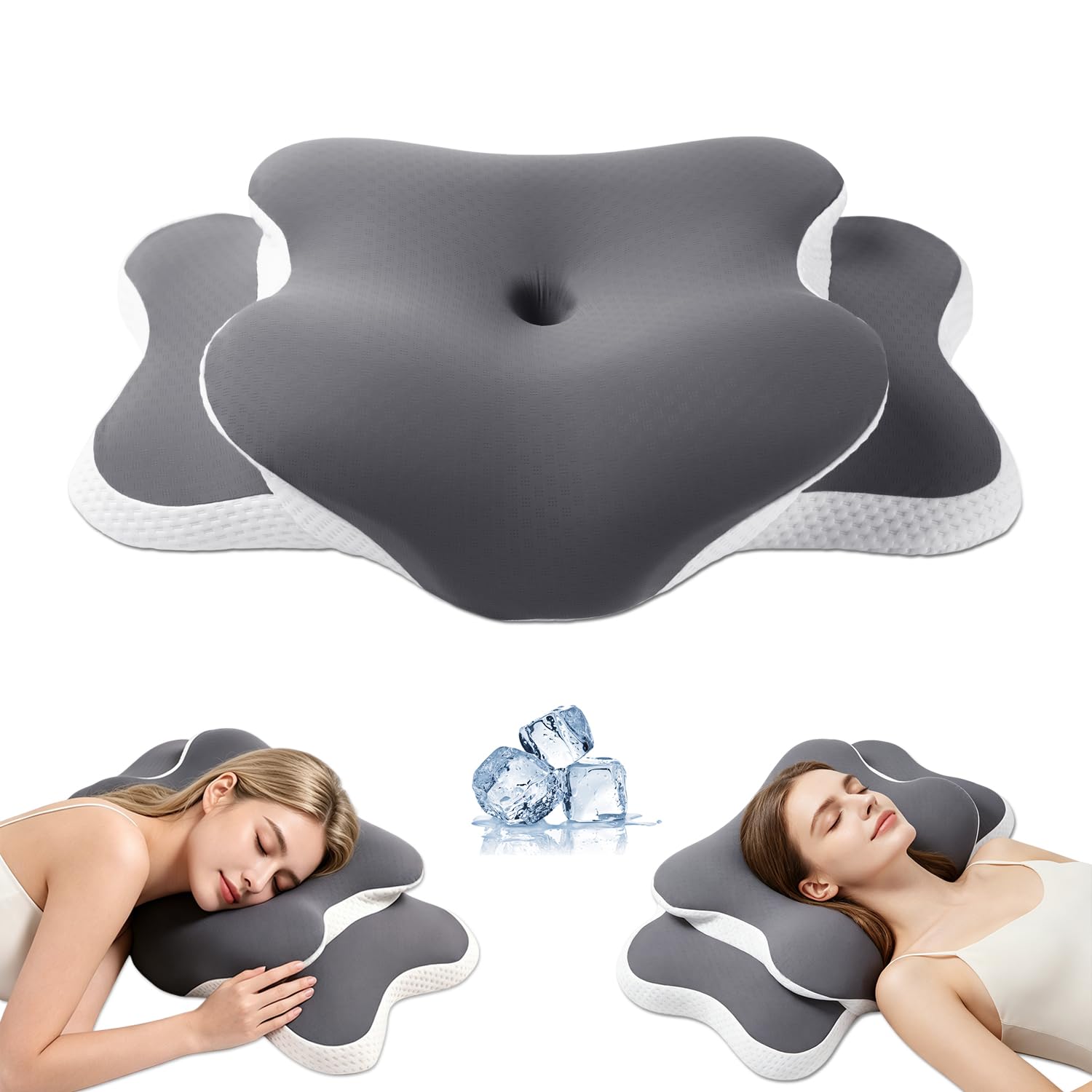
The Ergo Pillow for Sleep Apnea is engineered specifically for side sleepers who use CPAP machines and need a contour that keeps the airway open while accommodating mask hardware. Its dual-height design provides a lower loft for back sleeping and a higher loft — reaching 4.7 inches — for side sleeping, with the raised edges filling the shoulder gap to prevent the head from tilting downward. The high-resiliency memory foam offers a firm yet adaptive feel that molds to the head without collapsing, which is critical for maintaining CPAP mask seal integrity throughout the night.
The cooling system relies on an ice silk cover with a nine-hole breathable structure that wicks moisture and prevents heat buildup, a common complaint among CPAP users who already contend with mask heat. The cover is removable via a hidden zipper and is machine washable, which simplifies cleaning. The pillow dimensions (25.6 x 15.8 inches) are generous, providing enough width for side sleepers to shift positions without losing neck support.
Real-world reports from CPAP users highlight that the pillow eliminated morning stiffness and snoring by maintaining a neutral cervical alignment that standard pillows could not sustain. The pillow’s zippered cover also accommodates vibrating alarm clocks placed inside the foam, a niche but useful feature for deaf and hard-of-hearing users. The main caveat is that the initial firmness can feel too hard for the first few nights, and the compressed shipping means the pillow needs a full 24 to 48 hours to reach its intended loft.
Why it’s great
- Ice silk cover with nine-hole structure actively reduces night sweats
- Generous width supports side sleepers with CPAP mask clearance
- Hidden zipper allows easy removal and machine washing of the cover
Good to know
- Firm feel requires a short adjustment period of 2-3 nights
- Compressed packaging requires 24-48 hours for full expansion
FAQ
How do I know if a contour pillow is too high or too low for my neck?
Can a contour pillow help with snoring or sleep apnea?
How long does it take to adjust to sleeping on a cervical contour pillow?
Final Thoughts: The Verdict
For most users, the best affordable contour pillow winner is the Releep Cervical Neck Pillow because its adjustable wave-shaped loft and CertiPUR-US certified foam provide the most versatile cervical support across all sleep positions without requiring a second pillow. If you have a petite frame and cannot tolerate foam odors, grab the Core Products Tri-Core for its zero-outgassing fiber fill and size-specific fit. And for CPAP users who need cooling and mask-compatible contouring, nothing beats the Ergo Pillow for Sleep Apnea for maintaining airway openness without night sweats.

Mo Maruf
I created WellFizz to bridge the gap between vague wellness advice and actionable solutions. My mission is simple: to decode the research and give you practical tools you can actually use.
Beyond the data, I am a passionate traveler. I believe that stepping away from the screen to explore new environments is essential for mental clarity and physical vitality.